
CPI Certification for Nursing: Complete Training Guide and Requirements (2026 September)
CPI certification nursing guide: requirements, costs, renewal, and how nurses use crisis prevention skills daily. ✅ Study tips included.

CPI certification nursing is one of the most in-demand credentials for nurses working in psychiatric units, emergency departments, behavioral health facilities, and long-term care settings across the United States. The Crisis Prevention Institute (CPI) offers the Nonviolent Crisis Intervention® training program, which equips nursing professionals with evidence-based skills for de-escalating aggressive or distressed patients before situations escalate into physical confrontations.
Whether you are a new graduate or a seasoned RN, understanding what this certification involves — and how to prepare for it — can significantly impact your clinical effectiveness and your career trajectory. If you are exploring options, you can also review resources on cpi certification nursing to understand what preparatory tools are available at no cost.
Nursing staff encounter behavioral crises far more frequently than most other healthcare workers. From patients in acute psychiatric episodes to elderly residents experiencing dementia-related agitation, the range of challenging behaviors nurses must navigate is enormous. CPI training provides a structured, compassionate framework for responding to these situations — one that prioritizes the dignity and safety of the patient while also protecting nurses from injury. Hospitals, long-term care organizations, and state health departments across the country now recognize or require CPI certification for clinical staff in high-risk environments, making it a practical credential that directly enhances employability.
The Nonviolent Crisis Intervention® program is built on the Integrated Experience model, which holds that the attitudes, feelings, and behaviors of staff directly influence the attitudes, feelings, and behaviors of the people they are caring for. In other words, how a nurse enters a room during a crisis, what tone of voice she uses, and how she positions her body all affect how the patient responds.
This insight drives every element of CPI training, from verbal intervention techniques to physical management skills used only as a last resort. Nurses who internalize this model report feeling more confident and less reactive in high-pressure moments.
One of the most appealing aspects of CPI certification for nurses is its practical, scenario-based format. Rather than passive lecture content, participants work through real-life clinical vignettes that mirror the types of situations they actually face on the floor. Roleplay exercises build muscle memory for verbal de-escalation phrases, while discussion groups help participants examine their own emotional triggers and biases. By the end of training, nurses leave with a toolkit they can apply the very next shift — not a theoretical framework they must figure out how to translate into practice on their own.
The credential is not a one-time achievement. CPI certification requires renewal every two years, which means nurses must periodically refresh their skills through recertification training. This ongoing requirement keeps clinical teams current with updated protocols and ensures that skills do not atrophy over time. Many employers build this recertification cycle into their annual training calendars, covering the cost for staff and scheduling cohort sessions to minimize disruption to patient care schedules. Understanding the renewal cadence from the outset helps nurses plan their professional development budgets accordingly.
It is worth noting that CPI offers several program tiers, and not all of them are identical. The foundational Nonviolent Crisis Intervention® program is the most widely required credential for bedside nurses. Advanced programs such as Verbal Intervention™ focus exclusively on verbal de-escalation without physical management components, making them suitable for staff who work in environments where hands-on intervention is handled by security or specialized teams. Knowing which program your employer requires — or which one best matches your clinical role — is the essential first step before you register for any training session.
This guide covers everything a nurse needs to know about CPI certification: how the training is structured, what skills it develops, how much it costs, how renewal works, and how to maximize your preparation so you walk into training ready to succeed. Whether your hospital mandates the credential or you are pursuing it voluntarily to strengthen your clinical profile, the information below will help you approach the process with clarity and confidence.
CPI Certification Nursing by the Numbers

CPI Training Program Structure for Nurses
A foundational program focused entirely on verbal de-escalation. Ideal for nurses in outpatient clinics or administrative roles who do not perform physical interventions. Covers empathic listening, limit-setting, and crisis communication without hands-on management skills.
The flagship program most required by hospitals. Covers the full crisis development model, verbal de-escalation, supportive physical intervention as a last resort, and post-crisis recovery. Designed for nurses in behavioral health, ED, and inpatient psychiatric units.
An extended curriculum for staff who routinely encounter high-risk physical behaviors. Includes additional physical management techniques, team intervention strategies, and specialized scenarios. Often required for charge nurses, rapid response team members, and behavioral health techs.
CPI offers supplemental modules integrating trauma-informed principles into crisis response. Nurses learn to recognize trauma triggers, modify intervention strategies for trauma survivors, and reduce re-traumatization risk during behavioral management situations.
Experienced nurses can complete CPI's instructor certification to train their own colleagues on-site. Requires a two-day instructor training program, a formal skills evaluation, and ongoing participation in CPI's instructor network to maintain teaching credentials.
The core skills nurses develop through CPI certification go well beyond simple physical restraint techniques — a common misconception that leads some nurses to underestimate the program's clinical value. At its foundation, CPI training for nurses centers on mastering the four stages of the Crisis Development Model℠: anxiety, defensive behavior, risk behavior, and tension reduction.
Recognizing which stage a patient is in allows nurses to select the most appropriate intervention strategy in real time, rather than defaulting to a one-size-fits-all reaction that may escalate rather than defuse the situation. This diagnostic framework alone is transformative for clinicians who previously felt helpless or reactive during behavioral crises.
Verbal de-escalation is the cornerstone skill of CPI training, and nurses spend the majority of their initial certification hours developing it. The program teaches the Verbal Escalation Continuum, which maps patient behaviors — from questioning and refusal to intimidation and tension reduction — against specific staff responses.
Nurses learn how to use a calm, directive tone without being threatening, how to validate a patient's feelings without agreeing with problematic behavior, and how to set clear limits while preserving the patient's sense of dignity and control. These skills are directly applicable every day in every clinical setting, from the ED waiting room to the inpatient behavioral health floor.
Nonverbal communication receives equal emphasis in CPI training. Research consistently shows that patients in crisis respond more to body language, personal space, and vocal tone than to the actual words being spoken. CPI teaches nurses how to position themselves in relation to an agitated patient — maintaining a non-confrontational, open stance that communicates calm authority rather than aggression or fear.
Nurses also learn proxemics, the study of personal space, and how violating a patient's space at the wrong moment can rapidly accelerate a crisis rather than contain it. These subtle physical adjustments are often the difference between a situation resolving peacefully and one requiring physical intervention.
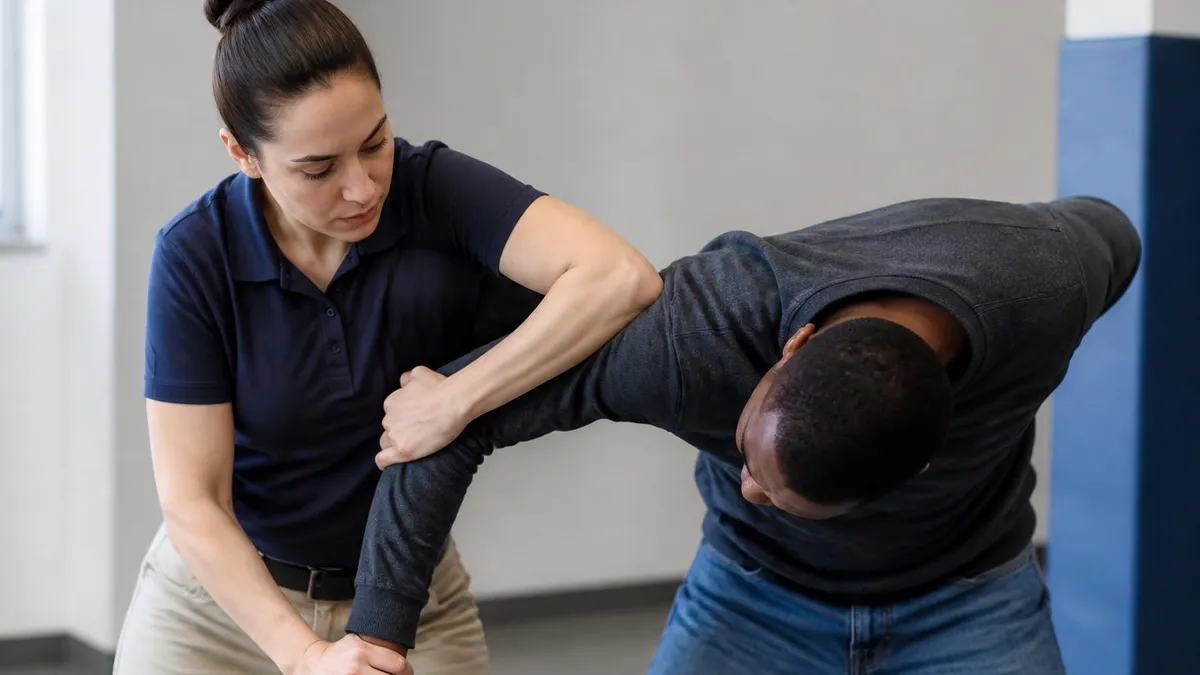
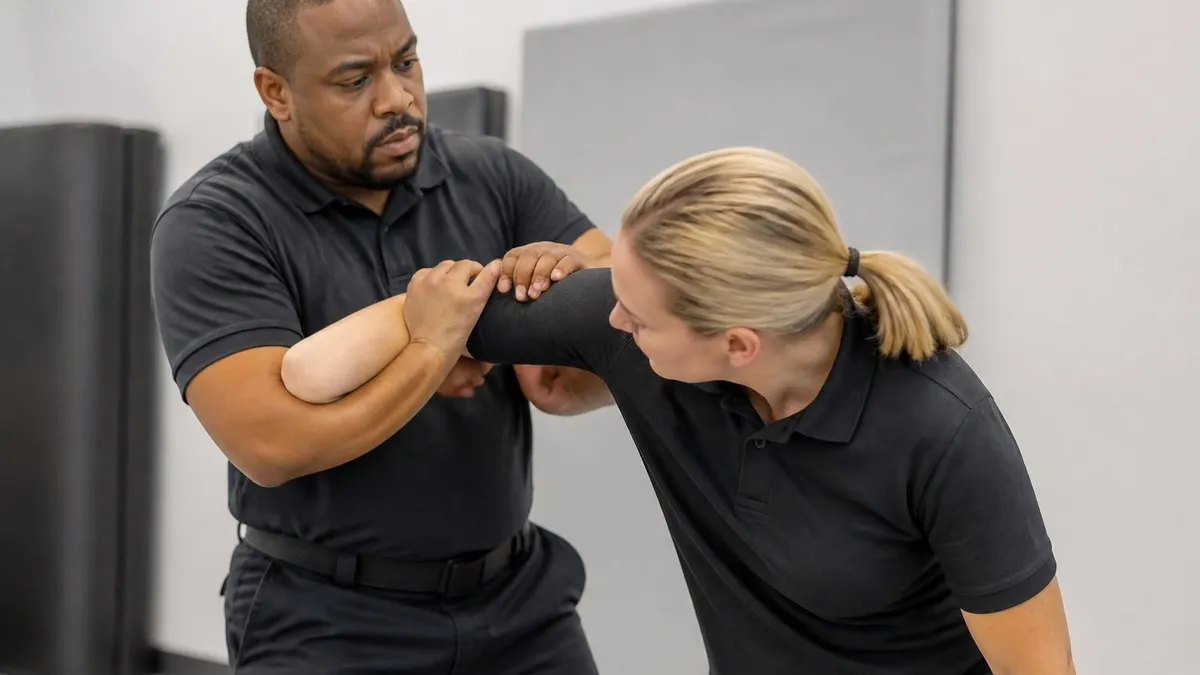
Physical management skills in the CPI program are taught as a genuine last resort, embedded within an ethical framework that prioritizes the least restrictive effective intervention. For nurses, this section of training covers safe physical disengagement from grabs and strikes, supportive escort techniques for guiding an unsteady or resistant patient, and team restraint procedures that minimize injury to both patient and staff. Every physical technique is paired with continuous verbal de-escalation, reinforcing the principle that physical intervention is never a replacement for communication — it is a temporary measure used only when imminent harm cannot otherwise be prevented.
Post-crisis response is a skill set that many nursing training programs neglect entirely, but CPI certification dedicates substantial time to what happens after a behavioral event. The Tension Reduction phase of the Crisis Development Model describes the period when a patient's adrenaline subsides and they become more receptive to communication. CPI teaches nurses how to use this window therapeutically — offering support, exploring what triggered the crisis, and collaborating with the patient on strategies to prevent future escalation. This debriefing process, done correctly, can convert a traumatic event into a turning point in the therapeutic relationship.
Documentation and reporting skills are also woven into CPI training for nurses. After any physical intervention, nurses are legally and ethically required to produce accurate, objective incident documentation that reflects the sequence of events, the interventions attempted, and the patient's response at each stage. CPI training helps nurses understand how to frame these reports in behavioral, observable terms rather than subjective or inflammatory language — a distinction that matters enormously for regulatory compliance, liability protection, and the integrity of the patient's clinical record.
Finally, CPI certification addresses staff wellness and resilience in a way that resonates deeply with nurses experiencing burnout. The Integrated Experience model makes explicit that a nurse who is dysregulated, anxious, or exhausted cannot effectively regulate a dysregulated patient. Self-care, peer debriefing, and supervisor support are positioned not as luxuries but as professional responsibilities. Nurses who complete CPI training frequently report that this reframing of self-care as a clinical skill — not a personal indulgence — is one of the most valuable takeaways they bring back to their units.
CPI Certification Pathways for Different Nursing Roles
Nurses working on inpatient psychiatric units face the highest frequency of behavioral crises in any hospital setting and are typically required to complete the full Nonviolent Crisis Intervention® program with physical management components. Many psychiatric facilities mandate annual recertification rather than the standard biennial renewal, reflecting the intensity of daily exposure to high-risk behaviors. Charge nurses on these units are often expected to complete the advanced program and may be encouraged to pursue the CPI Certified Instructor credential to reduce reliance on external trainers and build internal capacity for continuous staff development.
In psychiatric nursing contexts, CPI training is frequently integrated with other behavioral frameworks, such as trauma-informed care models, motivational interviewing, and person-centered care philosophies. CPI's Trauma-Informed Care add-on module is particularly well-suited for this population, as a significant proportion of patients admitted to inpatient psychiatric units carry histories of abuse, neglect, or interpersonal violence. Understanding how trauma histories shape crisis behavior allows psychiatric nurses to intervene earlier, more accurately, and with greater therapeutic impact than training programs that address only the presenting behavior without considering its underlying etiology.

CPI Certification for Nurses: Benefits and Limitations
- +Reduces nurse injury rates by providing evidence-based de-escalation and disengagement techniques
- +Increases clinical confidence when facing high-risk behavioral situations on the floor
- +Broadly recognized by hospitals, behavioral health facilities, and long-term care organizations nationwide
- +Improves patient outcomes by reducing reliance on restraints and emergency pharmacological intervention
- +Satisfies joint commission and CMS behavioral management training standards at many facilities
- +Strengthens career profile and may support promotion to charge nurse or leadership roles
- −Initial certification cost of $150–$250 per person may not be covered by all employers
- −Requires in-person training attendance for the physical management components, limiting fully online completion
- −Two-year renewal requirement creates an ongoing time and cost commitment throughout a nursing career
- −Physical techniques require periodic practice to maintain proficiency between renewal cycles
- −Program content is standardized nationally and may not address facility-specific protocols or patient populations
- −Instructor-led sessions vary in quality depending on the trainer's clinical experience and teaching skill
CPI Certification Nursing Renewal Checklist
- ✓Confirm your current certification expiration date with your HR or education department at least 90 days in advance.
- ✓Identify whether your employer requires the standard biennial renewal or an accelerated annual recertification cycle.
- ✓Register for a CPI-authorized renewal training session offered by a certified instructor at your facility or an approved site.
- ✓Review your original CPI training materials and refresh your knowledge of the Crisis Development Model℠ before attending.
- ✓Complete any mandatory online pre-work or CPI SafeSide® digital modules assigned as part of the renewal program.
- ✓Attend the full renewal session without leaving early — partial attendance typically does not qualify for recertification.
- ✓Successfully demonstrate physical management skills during the hands-on competency evaluation portion of renewal training.
- ✓Obtain your renewed certification documentation and provide a copy to your HR department for your personnel file.
- ✓Update your resume, professional portfolio, and any nursing licensure renewal application to reflect the new certification date.
- ✓Schedule a reminder 18 months from your renewal date so you are never at risk of lapsing during a licensure audit or Joint Commission survey.
CPI Certification Can Reduce Workplace Violence Injuries by Up to 40%
Studies from behavioral health and emergency nursing settings consistently show that facilities with comprehensive CPI training programs experience significantly fewer staff injuries from patient-related incidents. When nurses can identify crisis escalation early and intervene verbally, the frequency of physical altercations drops substantially. This makes CPI certification not just a career credential — it is a personal safety investment that pays dividends every single shift.
Understanding the cost landscape for CPI certification is essential for nurses who are financing their own professional development, as well as for nurse managers who are building training budgets for their departments. The total cost of initial CPI certification depends on several variables: whether your employer sponsors the training, whether you attend an on-site session or travel to an authorized CPI training center, and which program tier you are enrolling in.
For nurses whose employers cover the cost entirely, the primary investment is time — typically one to two full days away from clinical duties. For nurses paying out of pocket, the expense typically falls between $150 and $250 per person for the foundational Nonviolent Crisis Intervention® program.
Employers in high-acuity settings — psychiatric hospitals, children's behavioral health facilities, forensic nursing units, and Level I trauma centers — almost universally cover the cost of initial CPI certification and renewal for clinical staff.
In fact, many of these organizations budget for CPI training as a line item in their annual patient safety and risk management allocations, recognizing that the cost of a single staff injury from a preventable patient-related incident far exceeds the total annual CPI training budget for an entire nursing unit. Nurses applying for positions in these environments should ask directly about CPI training sponsorship during the interview process.
For nurses employed in settings that do not sponsor CPI training — outpatient clinics, physician group practices, school nursing programs, or community health centers — the cost of certification is typically a personal expense that may qualify as a professional development deduction on federal income taxes. Some state nursing associations and professional organizations offer group rates or subsidized training programs for members, making it worthwhile to check with your state nurses association before registering at the standard rate. CPI also periodically offers promotional pricing on program bundles for individual registrants.
The requirement landscape for CPI certification in nursing is evolving rapidly. While no federal law currently mandates CPI certification for nurses, a growing number of state health departments are incorporating behavioral management training requirements into their regulations for psychiatric facilities, assisted living communities, and school health programs. The Joint Commission's workplace violence prevention standards, revised in 2022, also increasingly reference the need for structured de-escalation training — language that many hospital accreditation teams interpret as strongly favoring recognized programs like CPI. Nurses working in accredited facilities should familiarize themselves with how their organization interprets these standards.
Insurance and liability considerations are another driver of CPI certification requirements at the organizational level. Malpractice carriers and general liability insurers have become more attentive to whether healthcare facilities can demonstrate that their staff have completed evidence-based behavioral management training. Facilities where a patient is injured during a restraint or where a nurse is assaulted by a patient may face significantly greater liability exposure if they cannot demonstrate that staff were trained in least-restrictive intervention principles. CPI certification, with its documented competency evaluation, provides a clear evidentiary record that a nurse received this training and demonstrated proficiency.
From a nursing licensure perspective, CPI certification is not currently required by any state board of nursing for initial licensure or license renewal. However, nurses who work in settings where CPI is mandated by the employer, and who fail to maintain their certification, may face employment consequences including reassignment to non-patient-facing roles, suspension pending recertification, or termination for non-compliance with facility policy. This employment-level enforcement is typically more immediate and consequential than any regulatory penalty, making timely renewal a practical professional priority rather than a bureaucratic formality.
Nurses interested in using their CPI credential as a platform for career advancement should be aware of the Certified Instructor pathway offered by the Crisis Prevention Institute. Nurses who become CPI Certified Instructors gain the authority to train their colleagues on-site, which positions them as internal subject matter experts in behavioral management. This credential is particularly valuable for nurses pursuing nurse educator roles, clinical education specialist positions, or leadership tracks in behavioral health nursing. Many facilities actively seek nurses with instructor credentials to reduce their dependence on external training vendors and build sustainable internal training capacity.

CPI certification expires every two years and most employers will not allow nurses with lapsed credentials to work in high-acuity behavioral health, psychiatric, or emergency settings until recertification is completed. If you discover your certification has lapsed, contact your facility's education department immediately — some hospitals have emergency recertification provisions, but many require you to sit out of certain patient assignments until your credential is reinstated.
The career impact of CPI certification for nurses extends well beyond compliance with an employer mandate. Nurses who have completed CPI training consistently report that the credential changes how they perceive their clinical role — shifting from a reactive responder to a proactive de-escalation practitioner who intervenes early and purposefully.
This shift in professional identity is reflected in how CPI-certified nurses communicate with patients, how they structure their initial assessments of behavioral risk, and how they collaborate with physicians and social workers when developing individualized care plans for patients with histories of behavioral crises. The credential signals clinical maturity and emotional intelligence to supervisors and colleagues alike.
Job postings for psychiatric nursing, emergency nursing, and behavioral health management roles increasingly list CPI certification as either required or preferred. In competitive hiring markets, candidates who already hold active CPI certification arrive ready to contribute without requiring the employer to invest in initial training — an advantage that can differentiate otherwise equivalent candidates in a nurse manager's hiring decision. For travel nurses who rotate through multiple facilities, holding current CPI certification eliminates a common onboarding delay and ensures immediate eligibility for high-acuity patient assignments that carry premium compensation rates.
Nurse managers and directors who hold CPI Certified Instructor credentials open doors to administrative and educational leadership roles that are not available to bedside nurses without that credential. Behavioral health organizations, correctional health systems, and children's inpatient units actively recruit nurses who can lead training programs, audit staff compliance with de-escalation protocols, and serve as the facility's internal point of contact with the Crisis Prevention Institute. These roles typically carry higher compensation, more predictable schedules, and a reduced physical burden compared to direct patient care positions, making the instructor pathway an attractive option for experienced nurses planning career transitions.
The CPI framework is also increasingly relevant to nurses in non-traditional settings. School nurses who work with students with behavioral disabilities, developmental disabilities, or trauma histories benefit from CPI training to support safe crisis response in educational environments. Home health nurses who visit patients in uncontrolled domestic settings benefit from verbal de-escalation skills that can be adapted for one-on-one encounters without backup team members immediately available. Occupational health nurses in industrial settings may encounter employees in acute psychiatric crises or substance intoxication — situations where CPI skills are directly applicable even outside a hospital context.
Nurses pursuing master's-level education in psychiatric mental health nursing (PMHNP) or nursing administration will find that CPI certification complements their academic preparation in ways that classroom content alone cannot replicate. The hands-on, scenario-based nature of CPI training develops kinesthetic learning and emotional regulation skills that textbooks and simulations approximate but rarely replicate with the same fidelity. Many PMHNP programs now encourage students to complete CPI certification during their clinical training years as a way to arrive at their first prescribing role already equipped with a robust behavioral management foundation.
From a holistic career perspective, CPI certification represents a relatively modest investment — in time, money, and effort — that pays sustained dividends across a nursing career. The skills transfer across specialties, the credential is recognized nationally by an independent and respected training organization, and the biennial renewal cycle keeps the knowledge fresh and clinically current. Nurses who view CPI certification as a one-time compliance exercise miss the deeper value; nurses who engage with the training as a genuine professional development opportunity consistently describe it as one of the most practically impactful educational experiences of their clinical careers.
For nurses who are preparing to attend initial CPI training and want to arrive ready to maximize their learning, reviewing foundational concepts in the Crisis Development Model, trauma-informed care principles, and nonverbal communication research before the session is highly beneficial.
The training day moves quickly, and participants who have familiarized themselves with core terminology and concepts in advance are better positioned to engage deeply with the scenario-based exercises rather than spending cognitive energy decoding new vocabulary during roleplay. Practice quizzes focused on CPI concepts — particularly behavioral risk assessment and post-crisis debriefing — are an excellent preparation tool in the weeks before your certification training.
Preparing effectively for CPI certification training requires more than showing up on the day of the session. Nurses who get the most out of the program treat it like any other clinical competency evaluation — they review relevant material in advance, approach roleplay scenarios with genuine professional engagement, and take notes that they can reference back on the floor.
One of the most effective preparation strategies is to review actual patient scenarios from your own clinical experience that involved behavioral escalation, and to think through how you would apply the CPI framework to those situations. This reflective exercise primes your brain to connect the training content to real-world application rather than treating it as abstract theory.
Understanding the four stages of the Crisis Development Model℠ before training begins is arguably the single highest-value preparation step you can take. If you can identify the behavioral signs of anxiety (restlessness, pacing, increased voice volume), the defensive phase (challenging behavior, refusal), risk behavior (imminent physical danger), and tension reduction (return to baseline affect and cooperation), you arrive at training with the conceptual scaffolding already in place.
The CPI instructor can then spend training time reinforcing and expanding your understanding rather than building it from zero, which means you leave with a much deeper and more durable grasp of the material.
Practice quizzes covering CPI behavioral assessment and post-crisis debriefing are a valuable self-study tool in the weeks before your certification session. These quizzes help you identify gaps in your conceptual knowledge before the training, ensure that key terminology is familiar when the instructor introduces it, and build the kind of pattern recognition that accelerates skill development during roleplay exercises. Even nurses who are highly experienced in behavioral health benefit from structured review, because CPI uses precise terminology that differs from the clinical shorthand many nurses develop informally on the floor.
During the training itself, active participation in roleplay exercises is the most important factor in skill development. Many nurses feel self-conscious about roleplay, particularly when practicing verbal de-escalation phrases out loud in front of colleagues. The CPI curriculum is designed to reduce that awkwardness progressively, starting with low-stakes verbal exercises and building toward more complex team scenarios. Nurses who push through initial discomfort and commit fully to the exercises consistently report better retention and stronger confidence in applying the skills on the floor compared to those who hold back during practice sessions.
After certification, the most effective way to maintain your CPI skills between renewal cycles is deliberate practice in low-stakes clinical moments. Every patient interaction that involves even mild frustration or anxiety is an opportunity to practice the verbal techniques taught in the program — empathic listening, limit-setting, avoiding power struggles. Nurses who consciously apply CPI principles in routine interactions rather than reserving them for full-blown crises develop a much higher level of fluency and find that the skills become automatic rather than effortful when a genuine emergency arises.
Peer debriefing after any behavioral incident is another practice that CPI-certified nurses should build into their unit culture. Taking five minutes after a patient interaction to discuss what worked, what could have been done differently, and how each team member felt during the event both reinforces CPI concepts and builds the psychologically safe team environment that the Integrated Experience model says is a prerequisite for effective crisis response. Units with strong peer debriefing cultures consistently demonstrate lower rates of staff injury, lower patient restraint use, and higher nurse retention — outcomes that benefit everyone involved in the care environment.
Finally, nurses approaching their biennial renewal should use the recertification session as an opportunity for genuine skills refinement, not just box-checking. Bring clinical scenarios you have encountered since your last certification — situations where the CPI approach worked brilliantly, and ones where it felt inadequate or unclear.
CPI instructors appreciate participants who engage at this level, and the discussion often generates insights that benefit the entire cohort. Renewal training is most valuable when it is experienced as a professional conversation among clinical peers rather than a mandatory compliance requirement — and the nurses who approach it that way consistently leave with skills that have meaningfully advanced since their last certification.
CPI Questions and Answers

CPI Certification Online Free: What's Real, What Costs Money, and How to Prepare (2026)

Rational Detachment CPI: Complete Training Guide to Staying Calm Under Pressure
CPI Training Certification: Complete Guide to Crisis Prevention Intervention Credentialing

What Does a Directive Approach Mean in CPI: Complete Training Guide to Stage 3 Crisis Intervention
CPI Decision Making Matrix: Complete Guide to Crisis Risk Assessment and Staff Response
About the Author

Educational Psychologist & Academic Test Preparation Expert
Columbia University Teachers CollegeDr. Lisa Patel holds a Doctorate in Education from Columbia University Teachers College and has spent 17 years researching standardized test design and academic assessment. She has developed preparation programs for SAT, ACT, GRE, LSAT, UCAT, and numerous professional licensing exams, helping students of all backgrounds achieve their target scores.
Join the Discussion
Connect with other students preparing for this exam. Share tips, ask questions, and get advice from people who have been there.
View discussion (8 replies)