
CNA Jobs Near Me: 7 Tips to Find and Land Your First Position 2026 September
Pass your CNA Jobs Near Me: 💡 7 Tips to Find and exam on the first attempt. Practice questions with detailed answer explanations, hints, and instant scoring.
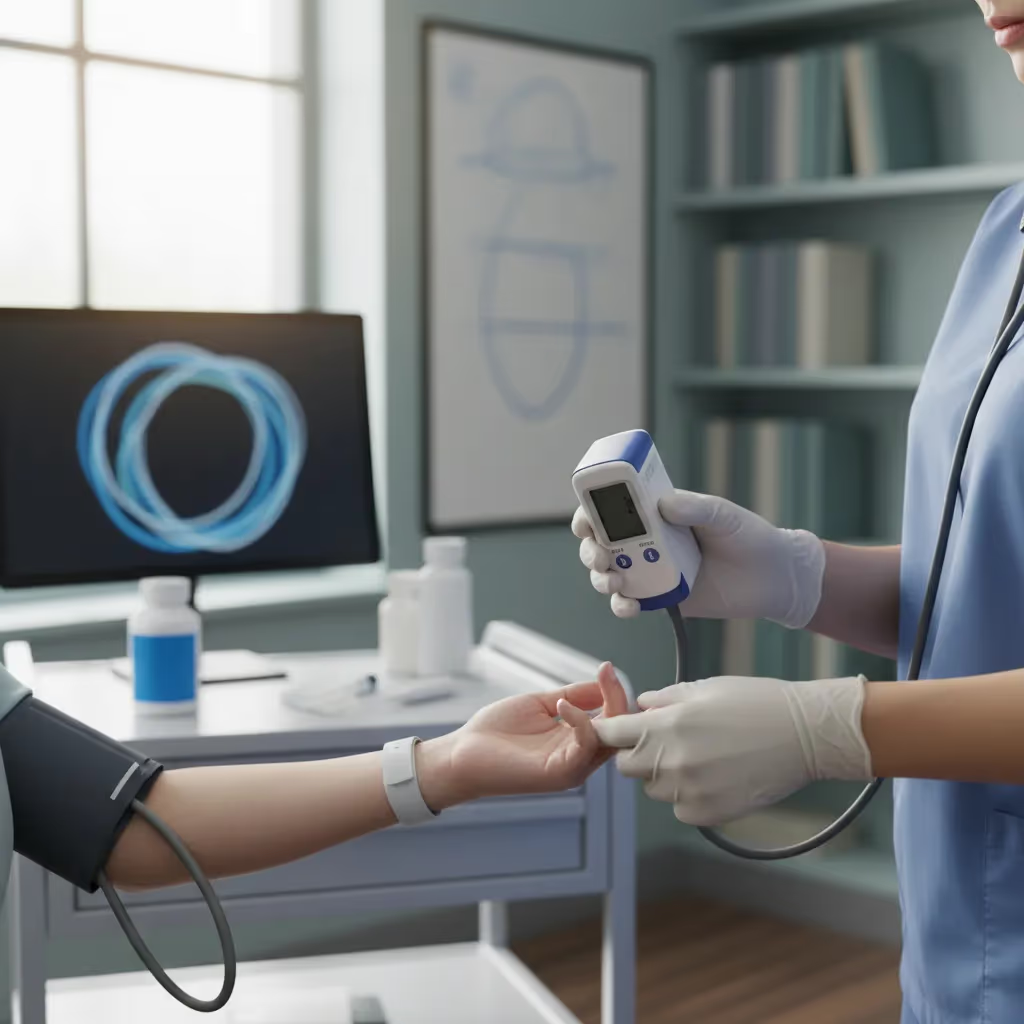
Finding CNA jobs near me isn't just about scrolling job boards at 2 AM. There's a method to it. If you're searching for certified nursing assistant jobs in your area, you need a strategy that goes beyond "apply everywhere and hope" -- because that approach burns you out fast, and you'll end up ghosted by half the facilities you contact.
This guide breaks down cna jobs near me 7 tips to know before you start applying. Whether you've already completed your cna classes near me or you're still weighing your options, these tips cover the full picture -- from picking the right training program to negotiating your first offer. Not theory. Real steps that work.
Here's what most job seekers get wrong: they treat every CNA opening like it's the same. It's not. A hospital CNA gig looks nothing like working memory care at a nursing home, and travel positions come with a completely different pay structure and lifestyle trade-off. You need to know what you actually want before you start clicking "apply."
The CNA field is growing -- fast. Facilities across the country can't hire enough certified nursing assistants, which means the leverage is yours if you play it right. But leverage only matters when you know how to use it. That's what these seven tips are for.
Let's get into it. No fluff, no generic advice you've already read ten times. Just what actually works for landing CNA positions in your area.

Tip 1: Complete Your CNA Classes Before Job Hunting
You can't work as a CNA without certification. That sounds obvious, but plenty of people start applying before they've even enrolled in a program. Don't do that. Facilities want candidates who are already certified or actively enrolled with a completion date they can count on -- not someone who's "thinking about it."
When you search for cna classes near me, you'll find options at community colleges, vocational schools, Red Cross chapters, and even some hospitals that run their own training. Costs range from free to around $2,000 depending on where you live and who's offering the program. Some nursing homes will pay for your training in exchange for a work commitment afterward. Worth checking.
CNA jobs require you to pass both a written knowledge exam and a clinical skills test. Most state-approved programs cover everything you need -- vital signs, patient transfers, hygiene assistance, infection control. The clinical portion usually includes supervised hours in an actual healthcare facility, which doubles as networking time if you're smart about it.
One thing people overlook: your training program's reputation matters. Hiring managers at hospitals know which local programs produce strong candidates and which ones just push people through. Ask around. Talk to working CNAs. They'll tell you straight.
Tip 2: Know Where to Find CNA Programs and Free Training
Finding cna programs near me is step one. But here's what changes the game -- free cna classes near me exist in more places than you'd think. Nursing homes desperate for staff will sponsor your entire certification, cover the exam fee, and guarantee you a job on completion. Medicaid-funded programs through your state's workforce development office are another route that costs you nothing out of pocket.
If you're looking for free cna training near me, start with your state's health department website and filter by approved providers. Red Cross programs run in most major cities. Community colleges with healthcare tracks often have financial aid that covers CNA courses entirely for qualifying students. Goodwill even runs CNA programs in certain states.
The catch with free programs? They fill up fast. Some have waitlists three to six months long, especially in urban areas where demand is highest. Apply to multiple programs simultaneously so you're not stuck waiting on a single slot. And don't sleep on employer-sponsored training -- facilities that pay for your certification usually fast-track you into the schedule once you pass.
CNA courses near me searches will also turn up online hybrid options. These let you do the classroom portion remotely and only come in for clinical hours. Good option if you're working another job while training. Just make sure any program you choose is state-approved -- unapproved courses won't qualify you to sit for the certification exam.
CNA Key Concepts
What is the passing score for the CNA exam?
Most CNA exams require 70-75% to pass. Check the official exam guide for exact requirements.
How long is the CNA exam?
The CNA exam typically allows 2-3 hours. Time management is critical for success.
How should I prepare for the CNA exam?
Start with a diagnostic test, create a 4-8 week study plan, and take at least 3 full practice exams.
What topics does the CNA exam cover?
The CNA exam covers multiple domains. Review the official content outline for the complete list.
CNA Training Options Compared
Community colleges offer the most structured CNA programs, typically running 6-12 weeks with both classroom and clinical components. Tuition ranges from $500 to $1,500 in most states, and financial aid usually applies. You'll get a recognized credential that transfers across state lines with reciprocity agreements. Class sizes are larger -- 20 to 30 students -- but you get access to campus resources, tutoring, and career placement services.
Tip 3: Understand the Different CNA Work Settings
Not all CNA jobs are the same. Not even close. Free cna training near me programs will get you certified, but they won't tell you which work setting actually fits your life. That's on you to figure out -- and it matters more than most new CNAs realize, because burnout usually comes from being in the wrong environment, not from the work itself.
Travel cna jobs are blowing up right now. Agencies like Aya Healthcare and Cross Country place certified nursing assistants in short-term assignments -- usually 8 to 13 weeks -- at facilities that need emergency staffing. Pay is significantly higher than permanent positions, sometimes double. You get housing stipends on top of that. The trade-off: you're constantly moving, you won't build long-term relationships with patients, and you need at least a year of CNA experience before most agencies will consider you.
Hospital CNA positions tend to be the most competitive. They pay better than nursing homes, offer more structured schedules, and come with benefits packages that smaller facilities can't match. But hospitals want experience. If you're brand new, you'll likely start in a nursing home or assisted living facility and work your way up. That's normal. Give it 6-12 months.
Home health is the wildcard. You work one-on-one with a single patient in their home. Less supervision, more autonomy, flexible scheduling. Some CNAs love it. Others feel isolated. Pay varies wildly depending on the agency and the patient's care needs. Worth trying at least once to see if it suits your personality.
Tip 4: Consider Travel and Specialty CNA Positions
Once you've got experience, cna courses near me won't be your search term anymore. You'll be searching for specialties. And this is where the money gets interesting. CNA training near me programs give you the foundation, but specialty certifications -- medication aide, phlebotomy, EKG tech -- stack on top of your CNA and push your hourly rate up by $3 to $8 depending on your state.
Travel cna jobs deserve their own deep dive because they're genuinely changing how CNAs build careers. The staffing crisis means facilities are paying travel CNAs $22 to $35 an hour in high-demand states like California, New York, and Massachusetts. That's before the tax-free housing stipend, which can add another $1,000 to $2,000 per month. It sounds too good to be true. It's not -- but the lifestyle isn't for everyone.
Here's what nobody tells you about travel CNA work: you're the outsider at every new facility. Staff may be resentful because you're making more money than permanent employees doing the same job. You'll need to learn new charting systems, new floor layouts, and new team dynamics every few months. Some assignments are great. Others are miserable. You don't know until you're there.
Specialty areas worth targeting if you want to stay local: dialysis CNA, hospice CNA, surgical prep CNA, and rehabilitation CNA. Each pays more than general long-term care. Dialysis in particular is booming -- chronic kidney disease rates keep climbing, and dialysis clinics can't find enough trained CNAs to staff their chairs. One extra certification and you're in a completely different pay bracket.
Travel CNA Jobs: Pros and Cons
- +Pay rates 50-100% higher than permanent positions in most states
- +Tax-free housing and travel stipends add significant income
- +Exposure to different healthcare systems builds your clinical skills fast
- +Freedom to pick your location and take breaks between assignments
- +Networking opportunities at multiple facilities across the country
- +Fast track to nursing school references from diverse clinical settings
- −Constant relocation every 8-13 weeks disrupts personal relationships
- −No long-term patient relationships -- you leave when the contract ends
- −Permanent staff may be hostile toward higher-paid travel workers
- −Health insurance and benefits are typically less comprehensive
- −Need at least 12 months experience before agencies will hire you
- −Assignments can be canceled with short notice if facility needs change
Tip 5: Build Your Application the Right Way
If you're searching cna school near me and thinking about applications, slow down. Your resume matters more than you think for certified nursing assistant jobs, even at the entry level. Hiring managers at facilities with high turnover -- which is most of them -- are looking for specific signals that tell them you'll actually stick around. They've been burned too many times by no-shows and two-week quits.
Your CNA resume should highlight three things: your certification details (state, license number, expiration date), your clinical hours from training (include the facility name -- it matters), and any healthcare-adjacent experience you have. Worked as a caregiver for a family member? Put it on there. Volunteered at a hospital? Absolutely include it. Even retail or food service experience matters if you frame it as patient communication and fast-paced multitasking.
The cover letter debate: some facilities don't read them. Hospitals almost always do. Write a short one -- three paragraphs max -- that answers one question: why this facility specifically? Mention something real about their unit, their patient population, their training program. Hiring managers can smell a template from across the room.
References are where new CNAs stumble. You need at least two professional references, and your mom doesn't count. Use your clinical instructor from CNA training. Use a nurse or charge nurse you worked with during clinical rotations. If you haven't graduated yet, ask your instructor now -- before you need the reference -- so they're not caught off guard when a facility calls.
CNA Job Application Checklist
- ✓Verify your CNA certification is active and not expired in your state
- ✓Update your resume with clinical hours, facility names, and license number
- ✓Prepare two professional references from healthcare settings or training
- ✓Complete a background check clearance -- most facilities require this upfront
- ✓Get your CPR/BLS certification current (American Heart Association preferred)
- ✓Gather immunization records including TB test, hepatitis B, and flu shot
- ✓Write a facility-specific cover letter for hospital applications
- ✓Create profiles on Indeed, CNA-specific job boards, and facility career pages
- ✓Prepare for behavioral interview questions about patient care scenarios
- ✓Research facility-specific pay rates so you can negotiate from an informed position
Tip 6: Use Multiple Job Search Channels Simultaneously
Don't just use Indeed. That's the biggest mistake when searching for cna hiring near me. Everybody uses Indeed, which means every posting gets flooded with 200+ applications within 48 hours. Your resume disappears into a pile. You need to work multiple channels at once, and the less obvious ones often produce better results because there's less competition.
Direct facility applications are your best bet. Go to the careers page of every hospital, nursing home, and home health agency within your commuting radius. Many facilities post openings on their own site days before they hit job boards. Some never post externally at all -- they fill positions through their own applicant pool. Bookmark those career pages and check them weekly.
Staffing agencies are another channel that new CNAs underestimate. Companies like AMN Healthcare, Maxim Healthcare, and local agencies in your area can place you in temp-to-perm positions that often convert to full-time with benefits. The agency does the job hunting for you. They also handle the credential verification, which saves time when you're applying to multiple facilities. Check for a cna training near me program that includes job placement assistance -- it's more common than you'd expect.
If there's a cna program near me that you graduated from, tap that network. Your classmates are getting hired. Your instructors know which facilities are desperate for staff. The program coordinator probably has direct relationships with nurse managers at local facilities. This is the warm introduction path, and it works far better than cold applications through a job board.
Tip 7: Negotiate Pay and Know Your Worth as a CNA
Most new CNAs accept the first offer they get. Bad move. Cna travel jobs pay $25 to $35 per hour. Cna hospital jobs average $16 to $22 depending on your state and the facility's funding. But those are averages -- and averages include the people who didn't negotiate. You can almost always get more than the initial offer, especially right now when facilities are desperate for staff.
Here's what gives you negotiating power: competing offers. This is why tip 6 matters. When you apply to 15+ places, you'll likely get multiple offers within the same window. Tell Facility A that Facility B offered you $2 more per hour. Watch what happens. Even if they can't match it dollar-for-dollar, they'll often sweeten the deal with a sign-on bonus, shift differential pay, or tuition reimbursement for nursing school.
Shift differentials are where the real money hides. Evening shifts typically pay $1 to $3 more per hour. Night shifts pay $2 to $5 more. Weekend differentials stack on top of that. A CNA making $16 base pay who works weekend nights might actually clear $23 an hour. That's a 44% increase just for choosing less popular shifts. If you don't have kids or other scheduling constraints, those off-peak shifts are a cheat code.
Benefits matter as much as hourly rate. Some facilities offer free or subsidized health insurance, retirement matching, paid time off from day one, and education assistance that covers 80-100% of nursing school tuition. A job paying $15.50 with full benefits and tuition reimbursement is worth more than a $18 gig with no benefits and no growth path. Do the math before you decide.
If a CNA job posting asks you to pay upfront for training, uniforms, or a "placement fee" before starting, it's almost certainly a scam. Legitimate facilities never charge employees to start working. Also be cautious of postings with vague facility names, unusually high pay for your area, or requests for personal banking information during the application process. Stick to verified job boards, direct facility websites, and licensed staffing agencies.
Making Your CNA Job Search Work Locally
When you search for a cna job near me, you're competing with every other newly certified CNA in your zip code. That's just reality. But the ones who get hired fastest aren't necessarily the most qualified -- they're the most visible. Showing up in person at facilities to drop off your resume still works in healthcare. It's old school. It works. Nurse managers remember faces, not email attachments.
Walk into the facility during business hours -- not during shift change, which is chaotic -- and ask to speak with the staffing coordinator or nurse manager. Bring a printed resume. Dress professionally but don't overdress. Business casual works fine. Introduce yourself, mention that you just completed your CNA certification, and ask if they're hiring or expecting openings soon. Even if they're not hiring today, your name goes on a mental shortlist.
If you're still looking for cna schools near me to complete your certification, prioritize programs affiliated with large healthcare systems in your area. These programs often guarantee interviews -- not jobs, but interviews -- at partner facilities upon completion. That built-in connection saves you weeks of cold-applying through online portals that may or may not be monitored by anyone.
Networking through social media is underrated for CNA jobs. Facebook groups like "CNA Jobs [Your State]" and "Healthcare Workers [Your City]" post openings that never hit Indeed. Nurse managers in smaller facilities sometimes post directly in these groups looking for immediate hires. LinkedIn works too, but Facebook is where the action is for CNA-level positions in most markets.
CNA Practice Test Questions
Prepare for the CNA - Certified Nursing Assistant exam with our free practice test modules. Each quiz covers key topics to help you pass on your first try.
CNA Activities of Daily Living
CNA Exam Questions covering Activities of Daily Living. Master CNA Test concepts for certification prep.
CNA Aging Process
Free CNA Practice Test featuring Aging Process. Improve your CNA Exam score with mock test prep.
CNA Anatomy and Physiology Basics
CNA Mock Exam on Anatomy and Physiology Basics. CNA Study Guide questions to pass on your first try.
CNA Assisting with Daily Living
CNA Test Prep for Assisting with Daily Living. Practice CNA Quiz questions and boost your score.
CNA Assisting with Range of Motion Exercises
CNA Questions and Answers on Assisting with Range of Motion Exercises. Free CNA practice for exam readiness.
CNA Basic Human Anatomy and Age-Related Ch...
CNA Mock Test covering Basic Human Anatomy and Age-Related Changes. Online CNA Test practice with instant feedback.
CNA Basic Nursing Skills
Free CNA Quiz on Basic Nursing Skills. CNA Exam prep questions with detailed explanations.
CNA Basic Nursing Skills 10
CNA Practice Questions for Basic Nursing Skills 10. Build confidence for your CNA certification exam.
CNA Basic Nursing Skills 11
CNA Test Online for Basic Nursing Skills 11. Free practice with instant results and feedback.
CNA Basic Nursing Skills 1
CNA Study Material on Basic Nursing Skills 1. Prepare effectively with real exam-style questions.
CNA Basic Nursing Skills 12
Free CNA Test covering Basic Nursing Skills 12. Practice and track your CNA exam readiness.
CNA Basic Nursing Skills 13
CNA Exam Questions covering Basic Nursing Skills 13. Master CNA Test concepts for certification prep.
CNA Basic Nursing Skills 14
Free CNA Practice Test featuring Basic Nursing Skills 14. Improve your CNA Exam score with mock test prep.
CNA Basic Nursing Skills 15
CNA Mock Exam on Basic Nursing Skills 15. CNA Study Guide questions to pass on your first try.
CNA Basic Nursing Skills 16
CNA Test Prep for Basic Nursing Skills 16. Practice CNA Quiz questions and boost your score.
CNA Basic Nursing Skills 17
CNA Questions and Answers on Basic Nursing Skills 17. Free CNA practice for exam readiness.
CNA Basic Nursing Skills 18
CNA Mock Test covering Basic Nursing Skills 18. Online CNA Test practice with instant feedback.
CNA Basic Nursing Skills 19
Free CNA Quiz on Basic Nursing Skills 19. CNA Exam prep questions with detailed explanations.
CNA Basic Nursing Skills 20
CNA Practice Questions for Basic Nursing Skills 20. Build confidence for your CNA certification exam.
CNA Basic Nursing Skills 21
CNA Test Online for Basic Nursing Skills 21. Free practice with instant results and feedback.
CNA Basic Nursing Skills 2
CNA Study Material on Basic Nursing Skills 2. Prepare effectively with real exam-style questions.
CNA Basic Nursing Skills 3
Free CNA Test covering Basic Nursing Skills 3. Practice and track your CNA exam readiness.
CNA Basic Nursing Skills 4
CNA Exam Questions covering Basic Nursing Skills 4. Master CNA Test concepts for certification prep.
CNA Basic Nursing Skills 5
Free CNA Practice Test featuring Basic Nursing Skills 5. Improve your CNA Exam score with mock test prep.
CNA Basic Nursing Skills 6
CNA Mock Exam on Basic Nursing Skills 6. CNA Study Guide questions to pass on your first try.
CNA Basic Nursing Skills 7
CNA Test Prep for Basic Nursing Skills 7. Practice CNA Quiz questions and boost your score.
CNA Basic Nursing Skills 8
CNA Questions and Answers on Basic Nursing Skills 8. Free CNA practice for exam readiness.
CNA Basic Nursing Skills 9
CNA Mock Test covering Basic Nursing Skills 9. Online CNA Test practice with instant feedback.
CNA Basic Restorative Services
Free CNA Quiz on Basic Restorative Services. CNA Exam prep questions with detailed explanations.
CNA Basic Restorative Services 1
CNA Practice Questions for Basic Restorative Services 1. Build confidence for your CNA certification exam.
CNA Bathing and Dressing
CNA Test Online for Bathing and Dressing. Free practice with instant results and feedback.
CNA Body Mechanics
CNA Study Material on Body Mechanics. Prepare effectively with real exam-style questions.
CNA Career Advancement and Opportunities
Free CNA Test covering Career Advancement and Opportunities. Practice and track your CNA exam readiness.
CNA Career Opportunities and Benefits
CNA Exam Questions covering Career Opportunities and Benefits. Master CNA Test concepts for certification prep.
CNA Care for Residents with Cognitive Impa...
Free CNA Practice Test featuring Care for Residents with Cognitive Impairment. Improve your CNA Exam score with mock test prep.
CNA Care of Cognitively Impaired Residents
CNA Mock Exam on Care of Cognitively Impaired Residents. CNA Study Guide questions to pass on your first try.
CNA Care of Cognitively Impaired Residents 1
CNA Test Prep for Care of Cognitively Impaired Residents 1. Practice CNA Quiz questions and boost your score.
CNA Care Of Cognitively Impaired Residents 4
CNA Questions and Answers on Care Of Cognitively Impaired Residents 4. Free CNA practice for exam readiness.
CNA Common Medical Terms and Abbreviations
CNA Mock Test covering Common Medical Terms and Abbreviations. Online CNA Test practice with instant feedback.
CNA Communication and Interpersonal Skills
Free CNA Quiz on Communication and Interpersonal Skills. CNA Exam prep questions with detailed explanations.
CNA Communication and Interpersonal Skills 1
CNA Practice Questions for Communication and Interpersonal Skills 1. Build confidence for your CNA certification exam.
CNA Communication And Interpersonal Skills 4
CNA Test Online for Communication And Interpersonal Skills 4. Free practice with instant results and feedback.
CNA Eligibility and Qualifications
CNA Study Material on Eligibility and Qualifications. Prepare effectively with real exam-style questions.
CNA Emergency Procedure
Free CNA Test covering Emergency Procedure. Practice and track your CNA exam readiness.
CNA Ethics and Professionalism
CNA Exam Questions covering Ethics and Professionalism. Master CNA Test concepts for certification prep.
CNA Exam Structure and Content
Free CNA Practice Test featuring Exam Structure and Content. Improve your CNA Exam score with mock test prep.
CNA Feeding and Hydration
CNA Mock Exam on Feeding and Hydration. CNA Study Guide questions to pass on your first try.
CNA Infection Control
CNA Test Prep for Infection Control. Practice CNA Quiz questions and boost your score.
CNA Infection Control and Safety
CNA Questions and Answers on Infection Control and Safety. Free CNA practice for exam readiness.
CNA Isolation Precautions
CNA Mock Test covering Isolation Precautions. Online CNA Test practice with instant feedback.
CNA Legal & Ethical Behaviours
Free CNA Quiz on Legal & Ethical Behaviours. CNA Exam prep questions with detailed explanations.
CNA Legal & Ethical Behaviours 1
CNA Practice Questions for Legal & Ethical Behaviours 1. Build confidence for your CNA certification exam.
CNA Legal & Ethical Behaviours 4
CNA Test Online for Legal & Ethical Behaviours 4. Free practice with instant results and feedback.
CNA Mental Health and Social Services Needs
CNA Study Material on Mental Health and Social Services Needs. Prepare effectively with real exam-style questions.
CNA Mental Health and Social Services Needs 1
Free CNA Test covering Mental Health and Social Services Needs 1. Practice and track your CNA exam readiness.
CNA Mental Health And Social Services Needs 4
CNA Exam Questions covering Mental Health And Social Services Needs 4. Master CNA Test concepts for certification prep.
CNA Nutrition and Hydration Management
Free CNA Practice Test featuring Nutrition and Hydration Management. Improve your CNA Exam score with mock test prep.
CNA Patient Care Procedure
CNA Mock Exam on Patient Care Procedure. CNA Study Guide questions to pass on your first try.
CNA Personal Care Skills
CNA Test Prep for Personal Care Skills. Practice CNA Quiz questions and boost your score.
CNA Personal Care Skills 1
CNA Questions and Answers on Personal Care Skills 1. Free CNA practice for exam readiness.
CNA Personal Care Skills 4
CNA Mock Test covering Personal Care Skills 4. Online CNA Test practice with instant feedback.
CNA Personal Care Skills 5
Free CNA Quiz on Personal Care Skills 5. CNA Exam prep questions with detailed explanations.
CNA Personal Hygiene and Grooming
CNA Practice Questions for Personal Hygiene and Grooming. Build confidence for your CNA certification exam.
CNA Practice Test - Basic Nursing Skills #2
CNA Test Online for Practice Test - Basic Nursing Skills #2. Free practice with instant results and feedback.
CNA Practice Test - Basic Nursing Skills #2 1
CNA Study Material on Practice Test - Basic Nursing Skills #2 1. Prepare effectively with real exam-style questions.
CNA Preventing Patient Falls and Injuries
Free CNA Test covering Preventing Patient Falls and Injuries. Practice and track your CNA exam readiness.
CNA Promoting Resident Independence and Ch...
CNA Exam Questions covering Promoting Resident Independence and Choice. Master CNA Test concepts for certification prep.
CNA Proper Hand Hygiene and PPE Usage
Free CNA Practice Test featuring Proper Hand Hygiene and PPE Usage. Improve your CNA Exam score with mock test prep.
CNA Resident Rights and Communication
CNA Mock Exam on Resident Rights and Communication. CNA Study Guide questions to pass on your first try.
CNA Resident’s Rights
CNA Test Prep for Resident’s Rights. Practice CNA Quiz questions and boost your score.
CNA Resident's Rights 1
CNA Questions and Answers on Resident's Rights 1. Free CNA practice for exam readiness.
CNA Resident's Rights 4
CNA Mock Test covering Resident's Rights 4. Online CNA Test practice with instant feedback.
CNA Roles and Responsibilities
Free CNA Quiz on Roles and Responsibilities. CNA Exam prep questions with detailed explanations.
CNA Safety and Emergency Procedures
CNA Practice Questions for Safety and Emergency Procedures. Build confidence for your CNA certification exam.
CNA Safety and Emergency Procedures 1
CNA Test Online for Safety and Emergency Procedures 1. Free practice with instant results and feedback.
CNA Safety And Emergency Procedures 4
CNA Study Material on Safety And Emergency Procedures 4. Prepare effectively with real exam-style questions.
CNA Safety and Infection Control
Free CNA Test covering Safety and Infection Control. Practice and track your CNA exam readiness.
CNA Scope of Practice
CNA Exam Questions covering Scope of Practice. Master CNA Test concepts for certification prep.
CNA Skills and Competencies
Free CNA Practice Test featuring Skills and Competencies. Improve your CNA Exam score with mock test prep.
CNA Supporting Rehabilitation Activities
CNA Mock Exam on Supporting Rehabilitation Activities. CNA Study Guide questions to pass on your first try.
CNA The Nurse Aide's Role and Responsibili...
CNA Test Prep for The Nurse Aide's Role and Responsibilities. Practice CNA Quiz questions and boost your score.
CNA Time Management and Prioritization
CNA Questions and Answers on Time Management and Prioritization. Free CNA practice for exam readiness.
CNA Toileting and Elimination
CNA Mock Test covering Toileting and Elimination. Online CNA Test practice with instant feedback.
CNA Using Adaptive Devices
CNA Practice Questions for Using Adaptive Devices. Build confidence for your CNA certification exam.
Beyond the Basics: Specialty CNA Paths and Long-Term Growth
Once you're working, the question shifts from "how do I get hired" to "how do I get paid more." Stna classes near me -- that's the Ohio term for what most states call CNA -- open the same doors regardless of what your state calls the credential. And certified nursing assistant jobs hospital settings are where the upward mobility really kicks in.
Here's the career ladder most CNAs don't realize exists: CNA to medication aide to LPN to RN. Each step doubles your earning potential, and each one is accessible through programs you can complete while working. Many hospitals will pay 80-100% of your LPN or RN tuition if you commit to working there for two years after graduation. That's a six-figure career path that starts with a 4-week CNA program.
Specialty certifications add immediate value. Phlebotomy certification takes about 8 weeks and adds $2-4 to your hourly rate. EKG technician certification is similar. Medication aide certification -- available in about 30 states -- lets you administer medications under nurse supervision, which is a significant scope expansion that facilities will pay for. Stack two or three of these and you're making $25+ an hour without going back to school full-time.
The healthcare industry isn't slowing down. An aging population means CNA demand will keep climbing for the next two decades at minimum. The Bureau of Labor Statistics projects 8% growth through 2032, but that's a national average -- some states are seeing 15-20% growth in CNA job postings year over year. You picked a field with real job security. Now it's about positioning yourself at the top of it.
CNA Questions and Answers
About the Author

Registered Nurse & Healthcare Educator
Johns Hopkins University School of NursingDr. Sarah Mitchell is a board-certified registered nurse with over 15 years of clinical and academic experience. She completed her PhD in Nursing Science at Johns Hopkins University and has taught NCLEX preparation and clinical skills courses for nursing students across the United States. Her research focuses on evidence-based exam preparation strategies for healthcare certification candidates.
Join the Discussion
Connect with other students preparing for this exam. Share tips, ask questions, and get advice from people who have been there.
View discussion (8 replies)