
CMRP vs CMRT: Which Maintenance & Reliability Certification Is Right for You?
CMRP vs CMRT — compare requirements, salary, exam difficulty & career paths. Find out which maintenance certification fits your goals. 🎯

When evaluating the cmrp vs cmrt decision, maintenance and reliability professionals face a defining career crossroads. Both credentials are issued by the Society for Maintenance and Reliability Professionals (SMRP) and carry genuine weight in the industrial workforce, but they are designed for different audiences, different experience levels, and different job functions. Understanding the precise differences between these two certifications will help you invest your study time wisely and choose the path most aligned with your current role and long-term ambitions.
The cmrt — Certified Maintenance and Reliability Technician — is a hands-on, technician-level credential. It validates the practical skills that keep industrial equipment running: lubrication, alignment, mechanical systems, corrective maintenance, and predictive maintenance techniques. If you spend your workday in the plant turning wrenches, reading vibration data, or executing preventive maintenance work orders, the CMRT was built for professionals exactly like you. It is widely recognized as the industry benchmark for skilled trades in the reliability space.
The CMRP — Certified Maintenance and Reliability Professional — is a more advanced, management-oriented certification targeting engineers, supervisors, and reliability managers. The CMRP exam covers five pillars: Business and Management, Manufacturing Process Reliability, Equipment Reliability, Organization and Leadership, and Work Management. Candidates are expected to demonstrate strategic thinking, not just technical execution. Most CMRP candidates hold an engineering degree or many years of supervisory experience, and the exam reflects that improved scope.
From a salary perspective, both credentials deliver measurable returns. CMRT holders typically see a bump of $4,000 to $8,000 annually after certification, landing in the $52,000 to $72,000 range depending on industry and region. CMRP holders, given the managerial focus of the credential, commonly earn between $80,000 and $110,000. However, salary is only one dimension of the comparison — career trajectory, job availability, and exam accessibility also matter enormously when choosing your certification path.
Experience requirements differ substantially between the two credentials. The CMRT requires 3 years of hands-on maintenance and reliability work experience, with no formal education requirement — a policy that deliberately makes it accessible to skilled tradespeople who learned on the job rather than in a university. The CMRP, by contrast, requires a combination of education and experience that can range from 3 years (for degreed engineers) to 10 years (for those without a high school diploma), creating a much higher barrier to entry.
Exam difficulty is another key differentiator. The CMRT exam consists of 110 multiple-choice questions delivered over 2 hours and 45 minutes, covering four technical domains. The CMRP exam contains 110 questions as well but spans a broader conceptual territory that includes business strategy and organizational leadership topics that many technicians find unfamiliar. Pass rates for both exams hover in the 50–60% range on the first attempt, making both credentials genuinely challenging rather than rubber-stamp qualifications.
For many professionals, the ideal path is sequential: earn your cmrt certification first to establish credibility at the technician level, then accumulate additional experience and pursue the CMRP as you move into supervisory or engineering roles. This staged approach builds a complete reliability skill set from the ground up and signals to employers that you have both practical expertise and strategic capability — a combination that commands premium compensation in today's industrial market.
CMRT & CMRP Certifications by the Numbers

CMRT vs CMRP: Side-by-Side Requirements
Requires 3 years of hands-on maintenance and reliability work experience. No formal education requirement. Designed for skilled tradespeople, technicians, and craft workers who execute maintenance tasks daily in industrial settings.
Requires 3–10 years of experience depending on education level. A 4-year degree reduces the experience threshold to 3 years. Targets engineers, supervisors, and reliability managers responsible for strategy and program oversight.
Both exams contain 110 multiple-choice questions. CMRT covers 4 technical domains over 2 hours 45 minutes. CMRP spans 5 pillars including business management and organizational leadership, demanding broader strategic knowledge.
Both credentials require recertification every 5 years. CMRT holders must earn 50 recertification points through continuing education or re-examination. CMRP holders must earn 75 points, reflecting the deeper ongoing learning expectations.
CMRT exam fees are $295 for SMRP members and $395 for non-members. CMRP fees are $395 for members and $495 for non-members. SMRP membership ($175/year) typically pays for itself through exam savings alone.
The CMRT certification exam is organized around four technical domains that reflect the daily realities of maintenance technician work. Domain 1, Corrective Maintenance, accounts for approximately 30% of the exam and tests your ability to diagnose equipment failures, select appropriate repair methods, and execute safe, effective corrective procedures. Domain 2, Preventive and Predictive Maintenance, covers another 30% and includes condition monitoring technologies such as vibration analysis, thermography, ultrasound, and oil analysis — tools that allow technicians to detect problems before they cause unplanned downtime.
Domain 3, Maintenance Practices and Procedures, makes up roughly 20% of the exam content. This domain covers topics including work order systems, permit-to-work procedures, lockout/tagout (LOTO) compliance, root cause analysis, and maintenance documentation standards. Accuracy and procedural discipline are central themes here — the exam tests not just what you do, but whether you follow established protocols correctly and consistently, which is critical in regulated industrial environments.
Domain 4, Reliability and Maintenance Fundamentals, accounts for the remaining 20% of the CMRT exam. This section introduces broader reliability concepts — equipment criticality ranking, failure mode analysis, reliability-centered maintenance (RCM) principles, and key performance indicators (KPIs) like Overall Equipment Effectiveness (OEE) and Mean Time Between Failures (MTBF). Technicians who can connect their daily work to these big-picture metrics are far more valuable to reliability-focused organizations.
In contrast, the CMRP exam's five pillars represent a significantly wider knowledge scope. Pillar 1, Business and Management, tests financial literacy, budgeting, capital planning, and the business case for reliability programs — topics rarely encountered on a typical technician's daily work order. Pillar 2, Manufacturing Process Reliability, covers how maintenance programs integrate with production objectives, lean manufacturing principles, and continuous improvement methodologies. These are concepts that demand a higher-altitude understanding of how maintenance fits into the overall value chain.
Pillar 3, Equipment Reliability, is where CMRP and CMRT overlap most significantly. Both exams test knowledge of failure analysis, condition monitoring, and preventive maintenance strategy. However, the CMRP treats these topics at a program design level — asking how you would build or evaluate a reliability program — while the CMRT tests at the execution level, asking how you would actually perform a specific task or procedure in the field. This distinction is crucial when deciding which credential to pursue first.
Preparing for either exam benefits enormously from structured practice testing. The cmrt hud assetto corsa practice resources available through PracticeTestGeeks offer domain-specific question banks that mirror the real exam's difficulty distribution. Spending 30 to 45 minutes daily on targeted practice questions — focusing first on your weakest domain — is consistently the most effective preparation strategy reported by successful candidates who pass on their first attempt.
One common misconception is that passing the CMRT is simply a matter of having field experience. Many experienced technicians fail the exam because they have never been formally tested on reliability concepts, documentation standards, or predictive maintenance technology terminology. The exam requires deliberate preparation even for seasoned professionals. Candidates who score highest are those who combine practical experience with structured study of the SMRP Body of Knowledge, practice testing, and review of industry reference materials in the months leading up to their exam date.
CMRT Certification: Salary, Industries & Career Paths
CMRT-certified technicians earn an average of $58,000 to $72,000 annually in the United States, with top earners in petrochemical, aerospace, and automotive manufacturing reaching $85,000 or more. Geographic location plays a significant role: technicians in the Gulf Coast petrochemical corridor, the Pacific Northwest, and industrial Midwest typically command salaries 10–15% above the national median due to concentrated industrial demand.
The salary premium for CMRT certification versus non-certified technicians averages 8–12% according to SMRP compensation surveys. Over a 30-year career, this differential compounds to a lifetime earnings advantage of $150,000 to $250,000. Many employers also provide exam fee reimbursement, paid study time, and certification bonuses of $1,000 to $3,000 upon passing — making the financial case for pursuing the credential even more compelling for technicians on the fence.

CMRT vs CMRP: Pros and Cons for Technicians
- +CMRT is accessible without a college degree — experience alone qualifies you
- +Lower exam fee ($295 for SMRP members) makes it budget-friendly for individual candidates
- +Directly validates the hands-on skills you already use daily in the plant
- +Widely recognized by industrial employers across manufacturing, oil & gas, and utilities
- +Provides a clear, achievable milestone that motivates ongoing professional development
- +Can be earned faster than CMRP — focused scope means shorter preparation time for technicians
- −CMRT does not qualify you for engineering or management roles without additional credentials
- −Recertification every 5 years requires ongoing continuing education investment
- −Some large employers require CMRP for senior reliability roles, creating a ceiling for CMRT-only holders
- −Exam pass rates around 55% mean preparation cannot be taken lightly — failure means re-exam costs
- −CMRT scope does not cover business, financial, or organizational leadership topics valued in management
- −Geographic salary variation means the financial return on investment differs significantly by location
CMRT Exam Preparation Checklist
- ✓Confirm you meet the 3-year work experience requirement before scheduling your exam.
- ✓Purchase or access the SMRP Body of Knowledge to understand all testable content areas.
- ✓Complete at least one full-length 110-question practice exam under timed conditions.
- ✓Score yourself by domain to identify which of the four CMRT areas needs the most focus.
- ✓Review corrective maintenance procedures including LOTO, root cause analysis, and failure diagnosis.
- ✓Study predictive maintenance technologies: vibration analysis, thermography, ultrasound, and oil analysis.
- ✓Memorize key reliability KPIs including OEE, MTBF, MTTR, and availability formulas.
- ✓Practice work order documentation, permit-to-work procedures, and maintenance record standards.
- ✓Join an SMRP study group or online forum to discuss difficult practice questions with peers.
- ✓Schedule your exam at least 6 weeks out to allow adequate structured preparation time.
The CMRT Delivers ROI in Under 18 Months for Most Candidates
The average CMRT-certified technician recoups their full exam and study material investment within 12 to 18 months through salary increases, shift differentials, and certification bonuses. With employer reimbursement programs covering exam fees at roughly 60% of Fortune 500 industrial companies, many candidates effectively earn this career-defining credential at zero out-of-pocket cost.
Deciding between the CMRT and CMRP ultimately comes down to honestly assessing where you are in your career and where you want to go. If you are a working technician — whether a millwright, pipefitter, electrician, instrument tech, or general maintenance mechanic — the CMRT is almost certainly the right first step. It validates the skills you have built through years of hands-on work, earns you immediate recognition from current and future employers, and positions you for advancement to lead technician or reliability specialist roles that carry significantly higher compensation.
If you are already in a supervisory or engineering role, or if you have a strong academic background and are targeting a reliability manager or director position within the next five years, the CMRP may be the more appropriate choice. The CMRP signals to senior management that you can own a reliability program, manage budgets, lead teams, and connect maintenance performance to business outcomes. Many organizations will fund CMRP preparation for high-potential employees specifically because of the strategic value it signals.
There is also a compelling case for pursuing both certifications over time. Professionals who hold both the CMRT and CMRP occupy a rare and highly marketable position in the reliability profession. They can communicate credibly with both the technician on the floor and the plant manager in the conference room. This dual-credential profile is particularly valuable in industries like petrochemical refining and aerospace, where the technical depth of field work must be tightly integrated with strategic reliability program planning.
One factor that often surprises candidates is how the certified maintenance & reliability technician CMRT certification examination tests conceptual reliability knowledge alongside practical skills. Technicians who have excellent hands-on ability but have never studied reliability theory — RCM, failure mode and effects analysis (FMEA), P-F curve concepts, or equipment criticality ranking — frequently underperform on the exam relative to their actual field competence. Bridging this theory gap is one of the most important things you can do in your preparation period.
Study resources matter enormously. The SMRP publishes the official CMRT Body of Knowledge, which serves as the authoritative blueprint for exam content. Supplementary resources include the Maintenance Engineering Handbook, the Reliability-Centered Maintenance textbook by Moubray, and online courses offered by SMRP and approved training partners. Practice testing is the most efficient last-mile preparation tool — nothing calibrates your exam readiness as accurately as working through realistic questions under timed conditions.
The cmrt assetto corsa resources available through various study platforms vary widely in quality. Focus on practice question banks that clearly map questions to SMRP Body of Knowledge domains, provide detailed explanations for both correct and incorrect answers, and include performance analytics that let you track your improvement by topic area over time. Generic multiple-choice banks that lack these features are far less effective than purpose-built CMRT preparation tools.
Regardless of which certification you target first, beginning your preparation at least 12 weeks before your scheduled exam date is strongly recommended. SMRP data indicates that candidates who study for 90 or more days before the exam pass at rates 20–25 percentage points higher than those who cram in 30 days or fewer. Consistent daily engagement with the material — even just 30 to 45 minutes on weekdays — produces dramatically better retention and exam performance than marathon weekend study sessions.

SMRP audits a percentage of certification applications to verify work experience claims. Candidates who cannot document their 3 years of hands-on maintenance and reliability experience with employer verification letters or W-2 records risk having their exam results invalidated. Gather your documentation before you apply — not after you pass.
One of the most frequently asked questions from technicians considering the CMRT vs CMRP decision is whether their specific trade background — electrical, mechanical, instrumentation, or general maintenance — affects their chances of passing. The answer is nuanced. The CMRT exam draws questions from all four technical domains regardless of your specialty, so a pure electrician who has never touched a lubrication system will encounter lubrication and tribology questions, and a mechanical technician may face questions about electrical maintenance practices. Successful candidates prepare holistically across all domains rather than relying solely on their trade specialty.
Lubrication and tribology is consistently one of the most challenging domains for candidates who lack a formal background in this area. Questions cover lubricant selection criteria, viscosity grades, contamination control, bearing lubrication intervals, and oil analysis interpretation. Many manufacturing facilities have dedicated lubrication technicians, but most maintenance techs have only casual exposure to lubricant science. Dedicating specific study time to lubrication principles — and taking targeted practice quizzes in this area — consistently improves scores for candidates who identified it as a weak point.
Mechanical systems and alignment is another domain that catches candidates off guard. While most technicians have performed shaft alignment tasks in the field, the CMRT exam tests alignment at a precision engineering level: tolerance specifications, soft foot correction, thermal growth compensation, and dial indicator versus laser alignment methodology. The exam also covers gear systems, bearing types, belt and chain drive maintenance, and coupling selection — a breadth of mechanical knowledge that rewards comprehensive study.
Predictive maintenance techniques represent perhaps the most rapidly evolving area of the CMRT Body of Knowledge. New condition monitoring technologies enter industrial practice regularly, and the SMRP updates the exam blueprint periodically to reflect current industry standards. Vibration analysis remains the highest-weighted predictive maintenance topic, covering signal analysis, FFT spectra, and fault frequency identification for common rotating equipment defects including imbalance, misalignment, looseness, and bearing defects at specific failure frequencies.
For technicians working in highly regulated environments — pharmaceutical manufacturing, nuclear power, aerospace — CMRT compliance with the certification's ethical and professional conduct standards is particularly important. The SMRP Code of Ethics applies to all certificate holders and requires ongoing adherence to professional standards, honest representation of credentials, and maintenance of competency through recertification. Employers in regulated industries actively verify certification status through the SMRP online directory before hiring or promoting into critical maintenance roles.
The question of whether SMRP membership is worth the $175 annual fee is straightforward for serious candidates. Members receive discounted exam fees that alone cover membership costs if you test once. Beyond exam savings, SMRP membership provides access to the full digital Body of Knowledge, member-only webcasts, the annual SMRP conference at reduced registration, and a professional network of over 5,000 maintenance and reliability practitioners. For anyone actively pursuing or maintaining either the CMRT or CMRP, SMRP membership is a clear value proposition.
Both the CMRT and CMRP are increasingly being referenced in job postings for maintenance technician and reliability specialist roles. A 2024 survey of industrial job listings found that CMRT or equivalent certification appeared in 34% of senior maintenance technician postings and 58% of reliability technician postings in the United States. The trend line is upward: as reliability-focused maintenance programs become standard practice in world-class manufacturing facilities, the competitive disadvantage of lacking a recognized credential grows larger year over year.
Building an effective CMRT study plan requires more than just reading the Body of Knowledge from cover to cover. The most successful candidates use a diagnostic-first approach: take a full-length practice exam before doing any structured studying, score it by domain, and then allocate study time proportionally to your weakest areas. If you score 75% on corrective maintenance but only 42% on predictive maintenance, your study plan should dedicate two to three times more hours to predictive maintenance content. This data-driven approach is consistently more efficient than studying all domains equally.
Time blocking is the single most powerful study habit reported by first-attempt passers. Rather than fitting study time into gaps in your schedule, treat exam preparation like a second job with fixed hours. Most successful candidates recommend 45-minute focused study sessions with a 10-minute break, repeated two to three times per day on study days, five days per week. This rhythm produces better retention than the irregular marathon sessions that many working technicians default to when squeezing study time around shift work.
Practice question quality matters as much as quantity. Prioritize question banks that provide detailed explanations for every answer option — including why the wrong answers are wrong. This explanatory depth accelerates learning far more than simple answer keys. When you encounter a question you got wrong, do not just note the correct answer and move on: read the explanation, identify the Body of Knowledge section it references, review that section briefly, then re-attempt similar questions within 48 hours to reinforce the learning before it fades.
For technicians preparing while working full-time rotating shifts, the logistical challenge of consistent study is real. Audio-based study resources — recorded lectures, podcast-style content reviews — allow you to engage with exam material during commutes, lunch breaks, or low-activity periods in the plant. Pairing audio content with flashcard review during your days off creates a blended approach that works with shift work schedules rather than against them.
Mock exam simulations under realistic testing conditions are essential in the final four weeks before your exam date. Sit at a clean desk with no distractions, set a timer for 2 hours and 45 minutes, and work through 110 questions without stopping. Reviewing your performance afterward — identifying which questions took too long, which topics produced the most errors, and whether you finished with adequate time — helps you refine your pacing strategy for the real exam day.
On exam day itself, time management is critical. With 110 questions and 165 minutes available, you have approximately 90 seconds per question. Flag difficult questions and return to them rather than getting stuck. Most CMRT questions are solvable through process of elimination even when you are uncertain — two of the four answer choices are typically identifiable as clearly wrong, leaving you with a 50/50 choice on harder questions. This strategic approach meaningfully improves scores compared to leaving difficult questions blank.
The decision between CMRT and CMRP is not permanent — it is a starting point. Many of the most respected reliability professionals in American industry hold both credentials, having earned the CMRT early in their careers and the CMRP after accumulating supervisory experience. Whichever certification you pursue first, beginning the process is the most important step. Each day you delay your certification is a day without the recognition, compensation premium, and career opportunities that these credentials unlock in today's competitive industrial job market.
CMRT Questions and Answers

Boost Your Career with the Maintenance & Reliability Technician Certification
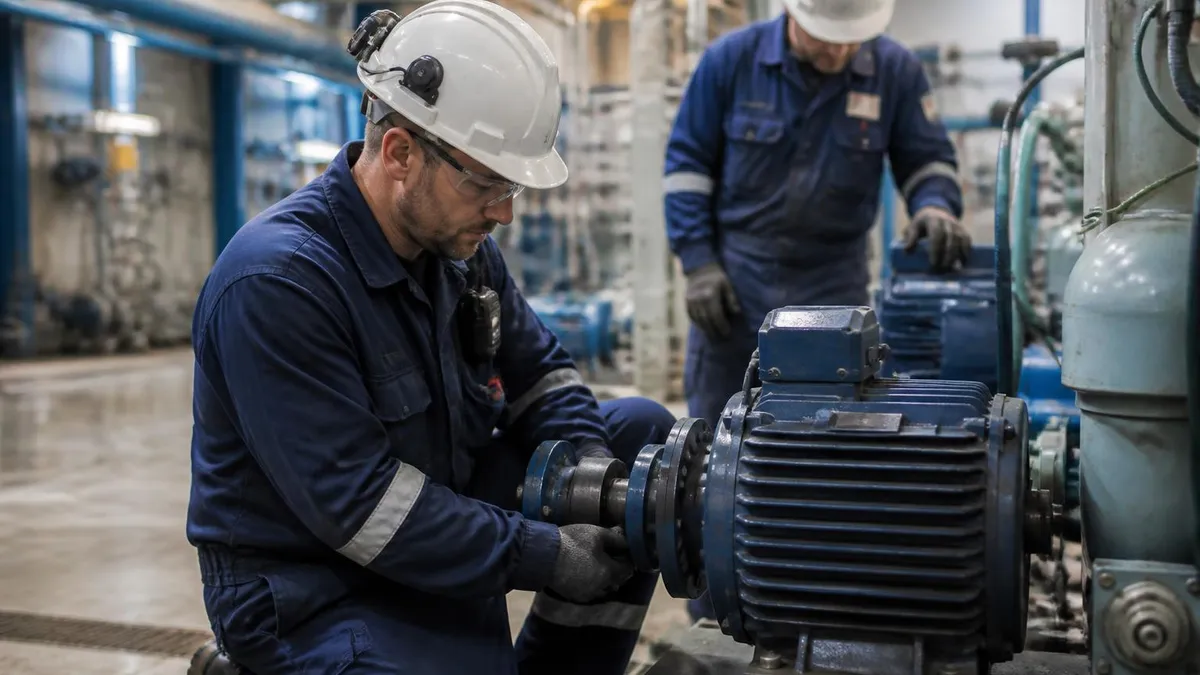
CMRT Certification Study Guide: Everything You Need to Pass in 2026
CMRT Certification: The Complete 2026 Guide to Earning the Certified Maintenance & Reliability Technician Credential
CMRT Practice Test

What Is CMRT Certification? The Complete Guide to the Certified Maintenance & Reliability Technician Credential
About the Author

Educational Psychologist & Academic Test Preparation Expert
Columbia University Teachers CollegeDr. Lisa Patel holds a Doctorate in Education from Columbia University Teachers College and has spent 17 years researching standardized test design and academic assessment. She has developed preparation programs for SAT, ACT, GRE, LSAT, UCAT, and numerous professional licensing exams, helping students of all backgrounds achieve their target scores.
Join the Discussion
Connect with other students preparing for this exam. Share tips, ask questions, and get advice from people who have been there.
View discussion (9 replies)