
CMRT Certification Study Guide: Everything You Need to Pass in 2026 October
Master the CMRT certification study guide with proven strategies, exam breakdowns, and free practice tests. 📚 Start your prep today!

A comprehensive cmrt certification study guide is the single most important resource you can have when preparing for the Certified Maintenance and Reliability Technician exam. The CMRT credential, administered by the Society for Maintenance and Reliability Professionals (SMRP), validates your hands-on expertise across mechanical systems, lubrication, corrective maintenance, preventive and predictive maintenance, and troubleshooting. Candidates who study with a structured plan consistently outperform those who rely on informal experience alone, which is why building your preparation around a proven framework matters from day one.
The CMRT exam is designed for working technicians who already have practical field experience. Unlike purely academic certifications, it tests how well you can apply knowledge on the shop floor rather than simply recall textbook definitions. Questions are scenario-based and frequently reference real equipment behavior, failure modes, and corrective actions. Understanding this distinction early shapes how you study — prioritizing application over memorization and focusing your energy on the domains that carry the most weight on the actual exam blueprint.
One of the most effective early steps is to download and internalize the SMRP CMRT Body of Knowledge. This document outlines every competency area the exam covers and assigns percentage weights to each domain. Candidates who align their study hours to these weights — spending more time on heavily tested areas and less on peripheral topics — report feeling far more confident walking into the testing center. Think of the Body of Knowledge as your master roadmap: every hour you invest should trace back to a specific competency listed there.
Practice questions are equally critical. Passive reading builds familiarity, but answering timed questions builds the pattern recognition and decision-making speed the exam demands. Research consistently shows that active recall — testing yourself repeatedly rather than re-reading notes — dramatically improves long-term retention. Incorporating regular practice sessions from the very first week of your study plan, rather than saving them for a pre-exam cram, is one of the highest-use habits you can build throughout your preparation journey.
Time management is another variable that separates passing candidates from those who fall short. The CMRT exam gives you a fixed time window to answer every question, and many test-takers are surprised by how quickly that window closes when they hesitate on unfamiliar equipment types or complex scenario stems. Practicing under timed conditions at least once per week during your preparation builds the pacing instincts you need, so that on exam day you can move confidently through each section without burning unnecessary time on any single question.
Your study materials should be diverse but focused. Textbooks, online courses, manufacturer technical manuals, and SMRP-published references all have a place in a well-rounded preparation plan. However, the goal is not to accumulate resources — it is to deeply understand the concepts that appear repeatedly across domains. Lubrication principles, shaft alignment, vibration analysis fundamentals, and failure mode recognition are examples of high-frequency topics that reward dedicated study time because they appear across multiple exam domains simultaneously.
Finally, community and accountability accelerate success in ways that solo study cannot replicate. Study groups, online CMRT forums, and mentorship from already-certified technicians give you access to diverse perspectives on exam topics and help you identify blind spots in your understanding. Committing publicly to an exam date and sharing your study milestones with a peer group creates the external accountability that keeps preparation momentum going even when motivation dips during the weeks leading up to the test.
CMRT Certification by the Numbers

CMRT Study Schedule: 12-Week Plan
- ▸Download SMRP CMRT Body of Knowledge
- ▸Map each domain to your experience level
- ▸Create a personal study calendar with weekly milestones
- ▸Study failure analysis and root cause methods
- ▸Review work order systems and documentation
- ▸Complete 30 corrective maintenance practice questions
- ▸Study PM task types and frequency setting
- ▸Review condition monitoring basics
- ▸Complete 30 preventive maintenance practice questions
- ▸Study lubricant types, viscosity, and selection
- ▸Review contamination control and storage
- ▸Complete CMRT Lubrication practice test set 1
- ▸Study lubrication application methods and intervals
- ▸Review tribological failure modes
- ▸Complete CMRT Lubrication practice test sets 2 and 3
- ▸Study shaft alignment methods and tolerances
- ▸Review bearing types, installation, and failure modes
- ▸Complete CMRT Mechanical Systems practice test
- ▸Study vibration analysis fundamentals
- ▸Review thermography, ultrasound, and oil analysis
- ▸Complete 40 predictive maintenance practice questions
- ▸Study systematic troubleshooting frameworks
- ▸Review equipment-specific failure patterns
- ▸Practice scenario-based questions across all domains
- ▸Review all five domains in sequence
- ▸Identify weakest domain based on practice scores
- ▸Spend extra time on lowest-scoring domain
- ▸Take a timed full-length mock exam
- ▸Review every incorrect answer with full explanation
- ▸Re-study any domain scoring below 70%
- ▸Focus 80% of study time on 1-2 weakest domains
- ▸Complete two additional timed 50-question practice sets
- ▸Read SMRP technical papers on weak-area topics
- ▸Light review of all domain summaries
- ▸Take one final mock exam under strict time conditions
- ▸Rest 48 hours before exam day
Understanding the five core knowledge domains of the cmrt certification is foundational to building an effective study plan. SMRP divides the exam blueprint into Corrective Maintenance, Preventive Maintenance, Predictive Maintenance, Troubleshooting and Root Cause Analysis, and Mechanical and Electrical Systems. Each domain carries a specific percentage weight, meaning some areas contribute far more questions to your final score than others. Knowing these weights allows you to allocate your study hours proportionally rather than spreading them evenly across topics of vastly different exam importance.
Corrective Maintenance covers everything that happens after equipment fails. This domain includes diagnosis of the immediate cause, selection of appropriate repair methods, documentation of the work performed, and verification that the equipment has been restored to full operational condition. Candidates are expected to understand repair procedures for common industrial equipment types, including pumps, motors, conveyors, and gearboxes. Strong performance in this domain requires both technical knowledge and familiarity with maintenance management practices like work order processing, parts requisition, and post-repair testing protocols.
Preventive Maintenance focuses on scheduled, time-based, or condition-based tasks that keep equipment running reliably before a failure occurs. The domain covers how PM tasks are developed, how frequencies are set based on manufacturer recommendations and operational history, and how PM compliance is tracked and reported. A critical subtopic is the difference between fixed-interval PMs and opportunity-based maintenance, and understanding when each approach is most appropriate. Candidates who have managed PM programs in the field typically find this domain more intuitive than those from purely repair-focused roles.
Predictive Maintenance is where technology meets reliability engineering. This domain tests knowledge of condition monitoring technologies including vibration analysis, ultrasound inspection, infrared thermography, motor current analysis, and oil analysis. The exam does not require deep expertise in any single technology — instead, it tests whether you understand what each technique detects, when each should be applied, and how to interpret basic results to trigger corrective action before failure occurs. Familiarity with the terms and concepts used by reliability engineers will serve you well throughout this domain.
Troubleshooting and Root Cause Analysis is one of the most practical and scenario-heavy domains on the exam. Questions in this area present equipment symptoms and ask you to identify the most likely cause, select the next diagnostic step, or choose the corrective action that addresses the root cause rather than just the symptom. Effective preparation for this domain involves studying structured troubleshooting methodologies like the five whys, fishbone diagrams, and fault tree analysis, along with specific failure signatures for common equipment types encountered in industrial maintenance environments.
The Mechanical and Electrical Systems domain covers the technical fundamentals underlying all maintenance work. This includes shaft alignment principles and tolerances, belt and chain drive systems, coupling types, pump curves and cavitation, bearing selection and installation, electrical motor fundamentals, and basic control circuit interpretation. This is often the domain where candidates from mechanical backgrounds feel most comfortable, while those from instrument or electrical roles may need to dedicate extra study time to the rotating equipment topics that dominate this section of the exam blueprint.
Across all five domains, the exam favors applied knowledge over pure recall. Questions are written to test judgment in realistic scenarios rather than simply asking you to recite definitions. This means the most effective study approach combines conceptual understanding with hands-on mental modeling — asking yourself not just what a term means but how you would actually apply the principle on a real piece of industrial equipment. Technicians who make this cognitive shift during their preparation consistently report that the exam feels familiar and manageable rather than abstract and unpredictable.
CMRT Study Strategies by Domain
Lubrication and tribology is one of the most heavily tested and frequently underestimated domains on the CMRT exam. Candidates need to understand lubricant types including mineral oils, synthetic fluids, and greases; viscosity selection based on operating temperature and speed; and contamination control practices including filtration, storage hygiene, and lubricant analysis. The real-world consequences of incorrect lubricant selection — accelerated wear, premature bearing failure, excessive heat generation — are exactly the kind of outcomes the exam asks you to predict and prevent.
Effective preparation for this domain starts with mastering the basic tribological concepts of friction, wear, and lubrication film theory, then building toward practical application. Work through all three CMRT Lubrication practice test sets available on PracticeTestGeeks, and review each incorrect answer carefully. Pay particular attention to questions about re-lubrication intervals, grease compatibility, and the signs of over- and under-lubrication in rotating equipment. Many candidates lose points in this domain not because they lack general knowledge but because they confuse specific application rules under exam pressure.

Is the CMRT Certification Worth It? Pros and Cons
- +Validates hands-on technical expertise recognized by employers across industrial sectors
- +Increases earning potential — CMRT holders report measurable salary premiums over non-certified peers
- +Strengthens your candidacy for senior technician and reliability roles
- +Provides a structured framework for understanding maintenance best practices across all domains
- +SMRP certification is globally recognized and portable across industries and geographic regions
- +Completing the CMRT often serves as a stepping stone toward the CMRP reliability professional credential
- −Exam preparation requires significant time investment — typically 80 to 120 hours for most candidates
- −Exam and application fees total several hundred dollars, which not all employers will reimburse
- −The certification must be renewed every three years, requiring ongoing professional development hours
- −Candidates without strong lubrication or predictive maintenance experience face steeper learning curves in those domains
- −Some employers in smaller industrial markets may not yet recognize or prioritize the CMRT credential
- −Scheduling flexibility at authorized testing centers can be limited in rural or remote regions
CMRT Exam Readiness Checklist
- ✓Download the official SMRP CMRT Body of Knowledge and highlight every domain you have gaps in.
- ✓Verify your eligibility by confirming at least three years of hands-on maintenance and reliability experience.
- ✓Submit your SMRP certification application and pay the applicable exam fee well in advance of your target date.
- ✓Schedule your exam at an authorized Prometric testing center that fits your timeline.
- ✓Complete at least one full 110-question timed mock exam under test-center-like conditions.
- ✓Score your practice results by domain and build a targeted remediation plan for any area below 70%.
- ✓Study lubrication, tribology, and predictive maintenance techniques using dedicated practice test sets.
- ✓Review all five domains in the final two weeks using summary notes rather than starting new material.
- ✓Prepare your testing center essentials: valid government-issued photo ID, confirmation number, and directions.
- ✓Rest for at least 48 hours before exam day and avoid cramming new material in the final 24 hours.

Practice Under Timed Conditions From Week One
Candidates who incorporate timed practice sessions from the very first week of their preparation score an average of 12 percentage points higher on their actual exam than those who save timed testing for the final two weeks. The CMRT is not just a knowledge test — it is a paced performance test. Building your exam-day pacing instincts early is one of the highest-return habits in your entire study plan.
Scoring well on the CMRT exam requires more than simply knowing the material — it demands understanding how the exam is constructed and how to approach it strategically on test day. The exam uses a scaled scoring system, and a passing score is determined through a standard-setting process that takes into account the difficulty of each question. This means you should not fixate on achieving a specific raw score percentage; instead, focus on demonstrating competence across all five domains consistently. A score that feels average in practice may translate to a strong passing result on the actual scaled exam.
Question elimination is one of the most powerful test-taking strategies available to you. Even when you are unsure of the correct answer, you can almost always rule out one or two clearly incorrect options. Narrowing a four-choice question to two options doubles your probability of selecting the correct answer even under genuine uncertainty. Practice this elimination habit during every practice session so that it becomes automatic on exam day, reducing the cognitive load of difficult questions and preventing you from wasting time deliberating over options that are obviously wrong once examined carefully.
Flag and return is another essential strategy. The CMRT exam interface allows you to flag questions and return to them later. When you encounter a question that requires more thought than you can quickly spare, flag it, make your best educated guess in case you run out of time, and move forward. Returning to flagged questions with fresh eyes — after completing the questions you answered confidently — often unlocks the right answer faster than prolonged initial deliberation. Many candidates who struggled on practice exams improve dramatically simply by adopting this systematic question management approach.
Domain-specific pacing matters as well. Because the exam mixes questions from all five domains throughout the test rather than grouping them by topic, you must stay mentally flexible. A lubrication question may follow immediately after a troubleshooting scenario and then precede an alignment tolerance calculation. Practice switching cognitive modes quickly during your preparation so that domain transitions do not cost you time or create confusion on exam day. This mental agility is a skill that improves directly with practice volume.
The day before your exam should be reserved for light review only — no new content, no intensive cramming, and no extended study sessions. Cognitive research consistently shows that sleep and rest consolidate memory more effectively than additional study in the final 24 hours before a high-stakes test. Instead, spend the evening before your exam reviewing your summary notes briefly, confirming your testing center logistics, and engaging in whatever routine helps you feel calm and prepared. A well-rested candidate who has studied consistently for twelve weeks will almost always outperform an exhausted candidate who crammed through the final night.
Post-exam reflection is valuable regardless of your result. If you pass on your first attempt, note which domains felt most comfortable and which felt closest to the margin — that self-awareness will serve you well in your continuing professional development and in mentoring future CMRT candidates.
If you need to retake the exam, SMRP provides score reports that indicate performance by domain, giving you a precise roadmap for what to study differently in your next preparation cycle. Many successful CMRT holders took the exam more than once before earning their credential, and the structured feedback from each attempt accelerated their eventual success.
Maintaining your CMRT credential after earning it requires completing continuing education and professional development activities every three years to satisfy renewal requirements. This ongoing commitment keeps your skills current with evolving maintenance technologies and reliability best practices, and it reinforces the value employers place on the credential. Planning your renewal activities proactively — building professional development into your annual routine rather than scrambling at the end of each three-year cycle — ensures that your investment in the CMRT continues to pay dividends throughout your career.
SMRP requires candidates to document a minimum of three years of hands-on maintenance and reliability work experience before sitting for the CMRT exam. Applications that cannot demonstrate this experience will be rejected, and exam fees may not be refunded. Review the current SMRP eligibility requirements on the official SMRP website before submitting your application to ensure your experience documentation meets all current standards.
Once you have earned your CMRT credential, the next logical step for many technicians is exploring how the certification opens doors to broader career advancement in the reliability and maintenance profession.
The certified maintenance & reliability technician cmrt certification is widely recognized as the foundational credential in the SMRP certification pathway, and many CMRT holders use it as a launchpad toward the Certified Maintenance and Reliability Professional (CMRP) designation, which is designed for engineers, supervisors, and reliability specialists rather than frontline technicians. Understanding the full credential pathway from the beginning helps you make more intentional career development decisions as your experience and expertise grow.
In terms of salary impact, the CMRT credential delivers measurable financial returns. Industry surveys conducted by SMRP and independent compensation researchers consistently show that certified maintenance professionals earn between eight and fifteen percent more than their non-certified counterparts performing equivalent roles. While base pay varies significantly by industry, geographic region, and employer size, the certification signals a level of validated competence that justifies premium compensation in hiring negotiations and annual review discussions. Documenting your CMRT credential prominently on your resume and LinkedIn profile ensures that recruiters searching for credentialed talent find your profile.
The industries that value CMRT credentials most heavily include petrochemical and refining, food and beverage manufacturing, pulp and paper, automotive assembly, pharmaceutical production, power generation, and general industrial manufacturing. Each of these sectors operates complex rotating equipment where unplanned downtime carries significant financial consequences, creating strong employer demand for technicians who can demonstrate certified competence in maintenance and reliability fundamentals. If you are evaluating a career move, targeting employers in these high-reliability industries typically yields both higher compensation and more opportunities to apply the advanced skills you developed during your CMRT preparation.
Professional networking through SMRP is one of the most underutilized benefits of CMRT certification. SMRP hosts a national conference annually and maintains regional chapters in major industrial centers across the United States. Attending chapter meetings, participating in SMRP technical committees, and engaging in online SMRP forums connects you with thousands of certified maintenance and reliability professionals who can share job leads, technical insights, and mentorship. Many CMRT holders credit their SMRP network with helping them navigate career transitions that their certification alone would not have helped.
Continuing education aligned with your CMRT renewal requirements does not have to feel like a burden. SMRP-approved courses in vibration analysis, lubrication management, reliability engineering, and maintenance planning and scheduling offer genuine skill development while simultaneously satisfying your professional development hour requirements. Many of these courses are available in online self-paced formats, making them accessible even to technicians who work rotating shifts or in locations without proximity to major training centers. Building a continuing education habit early in your certification journey makes renewal a routine milestone rather than a stressful scramble.
Mentoring less experienced technicians is another way to deepen your own mastery of CMRT topics while contributing to the profession. Teaching a concept forces you to articulate it clearly, identify gaps in your own understanding, and field questions that challenge your assumptions. Many CMRT holders who have mentored colleagues or led in-house training sessions report that the process solidified their technical knowledge more effectively than any solo study activity. If your employer does not already have a formal mentoring program, proposing one based on CMRT-aligned competencies is a visible way to demonstrate leadership that complements your technical credential.
Finally, staying connected to developments in maintenance and reliability technology ensures that your CMRT knowledge remains relevant as the field evolves. Industrial IoT sensors, AI-assisted condition monitoring platforms, digital twin technology, and advanced analytics tools are reshaping how predictive maintenance is practiced at leading industrial organizations.
Technicians who combine their CMRT foundation with emerging technology literacy position themselves as the most valuable members of any maintenance and reliability team, regardless of industry or employer size. Your CMRT study guide investment pays the highest dividends when it is treated not as a one-time exam preparation activity but as the beginning of a lifelong professional development commitment.
Building effective daily study habits is ultimately what separates candidates who pass the CMRT on their first attempt from those who need multiple tries. The most successful candidates treat their study plan like a second job — scheduled, consistent, and protected from interruption. Blocking specific time on your calendar for study, even if only 45 to 60 minutes per day, produces better retention outcomes than marathon weekend sessions because spaced repetition across multiple days gives your brain the repeated exposure it needs to consolidate technical information into long-term memory.
The way you review practice questions matters as much as the quantity of questions you complete. After each practice session, resist the temptation to simply note your score and move on. Instead, open every incorrect answer and every answer you guessed correctly, and read the full explanation. Understanding why a distractor was wrong is as valuable as understanding why the correct answer was right, because the exam uses similar distractor patterns repeatedly across different question stems. Recognizing these patterns dramatically reduces your error rate on questions where you know the concept but initially misread the intent of the question.
Physical and mental health are often overlooked components of exam preparation but have a documented impact on cognitive performance. Regular exercise, adequate sleep, and stress management practices improve memory consolidation, increase mental stamina during long study sessions, and reduce the anxiety that can impair performance on exam day. Candidates who maintain their physical routines during their study period consistently report feeling sharper and more focused during practice sessions compared to periods when they sacrificed health habits to maximize study hours.
Study environment design is a practical lever that many candidates neglect. A quiet, dedicated study space with minimal distractions — notifications silenced, phone in another room, study materials organized and accessible — reduces the cognitive switching cost of starting each session and increases the total productive study time you extract from each block. If a dedicated home study space is not available, public libraries and empty conference rooms at your workplace are effective alternatives that signal to your brain that it is time to focus.
Active recall techniques outperform passive re-reading across nearly every domain of knowledge acquisition. Flash cards, practice questions, blank-page recall exercises where you write everything you know about a topic from memory, and verbal explanation to a study partner are all forms of active recall that force your brain to retrieve information rather than simply recognize it. The retrieval effort itself, even when it produces errors initially, strengthens the memory trace and improves your ability to access the information quickly under exam conditions.
In the final two weeks of your preparation, shift from learning mode to consolidation mode. Stop introducing new resources or topics, and instead cycle through your summary notes, weak-domain practice questions, and timed full-length practice exams. This consolidation phase reinforces your strongest knowledge areas, sharpens your test-taking mechanics, and builds the exam-day confidence that comes from seeing consistent improvement in your practice scores. Candidates who maintain this discipline in the final stretch consistently report feeling prepared and calm when they sit down at the testing center.
Trust your preparation. By the time you have completed a structured twelve-week study plan, worked through hundreds of practice questions across all five domains, and taken multiple timed mock exams, you have done the work. Exam anxiety is normal, but it is not evidence of inadequate preparation — it is simply your nervous system responding to a high-stakes situation. Breathing exercises, positive self-talk, and reminding yourself of the concrete preparation you have completed are all evidence-based strategies for managing test anxiety effectively on exam day. You have built the knowledge; the exam is simply your opportunity to demonstrate it.
CMRT Questions and Answers
CMRT Practice Test

CMRT Certified Maintenance and Reliability Technician Practice Test PDF (Free Printable 2026)
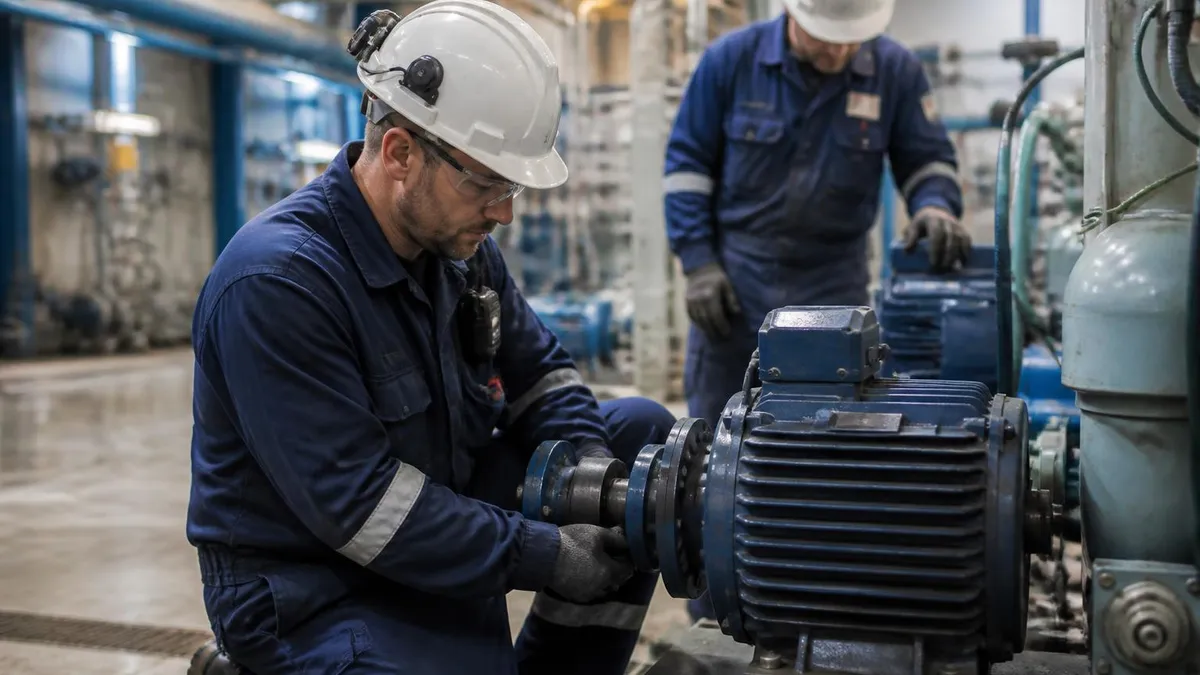
CMRT Certification: The Complete 2026 Guide to Earning the Certified Maintenance & Reliability Technician Credential

CMRT Meaning: What Certified Maintenance & Reliability Technician Really Means in 2026

Boost Your Career with the Maintenance & Reliability Technician Certification
About the Author

Educational Psychologist & Academic Test Preparation Expert
Columbia University Teachers CollegeDr. Lisa Patel holds a Doctorate in Education from Columbia University Teachers College and has spent 17 years researching standardized test design and academic assessment. She has developed preparation programs for SAT, ACT, GRE, LSAT, UCAT, and numerous professional licensing exams, helping students of all backgrounds achieve their target scores.
Join the Discussion
Connect with other students preparing for this exam. Share tips, ask questions, and get advice from people who have been there.
View discussion (9 replies)