
What Is CMRT Certification? The Complete Guide to the Certified Maintenance & Reliability Technician Credential
What is CMRT certification? 🎓 Learn exam format, eligibility, salary impact, and study tips for the Certified Maintenance & Reliability Technician credential.

Understanding what is CMRT certification is the first step toward advancing your career in industrial maintenance and reliability. The cmrt — Certified Maintenance and Reliability Technician — is a professional credential awarded by the Society for Maintenance and Reliability Professionals (SMRP). It validates a technician's competency across five core practice areas, including equipment maintenance, troubleshooting, lubrication, alignment, and predictive techniques. Earning the CMRT signals to employers that you possess the verified skills needed to reduce downtime, extend asset life, and optimize maintenance operations in real-world industrial environments.
The CMRT certification was designed specifically for hands-on maintenance professionals who work on the shop floor rather than in engineering or management roles. Unlike higher-level credentials such as the Certified Reliability Engineer (CRE) or the CMRP (Certified Maintenance and Reliability Professional), the CMRT targets skilled technicians with practical, task-level expertise. This makes it the ideal entry point for maintenance workers, millwrights, electricians, and instrument technicians who want formal recognition of the skills they apply every day on the job.
Employers across manufacturing, oil and gas, utilities, food processing, and aerospace industries actively seek CMRT-certified technicians. A certified technician demonstrates not only technical competency but also a commitment to professional development and continuous improvement. Many companies include CMRT status in job postings and use it as a criterion for hiring, promotion, and wage increases. For workers in these fields, achieving this certification can mean a direct and measurable impact on compensation and career trajectory.
The exam itself covers five SMRP practice areas drawn from the SMRP Body of Knowledge: equipment maintenance and reliability, managing the work process, manufacturing process reliability, personnel and leadership, and business management. Each of these areas contains specific task statements that describe what a competent reliability technician should know and be able to do. The exam is designed to reflect actual tasks performed in the field, so candidates with strong hands-on experience often find the content highly familiar — though formal study is still essential to succeed.
One of the most important things to understand about the CMRT is its relationship to the broader maintenance and reliability profession. The credential fits within a tiered credentialing system that supports technicians at different experience and responsibility levels. The CMRT sits at the foundational technician level, making it accessible to professionals with as little as two years of relevant work experience. This accessibility, combined with the credential's industry recognition, makes it one of the most practical and achievable certifications available to working technicians in the United States and internationally.
Preparing for the CMRT requires a strategic approach. Candidates should begin by reviewing the SMRP Body of Knowledge, which outlines every domain and task statement covered on the exam. From there, structured study resources — including textbooks, online courses, and practice questions — help reinforce both theoretical understanding and applied knowledge. Many candidates find that focused preparation over a period of eight to twelve weeks provides the depth and confidence needed to pass on the first attempt.
This guide covers everything you need to know about the CMRT: who it is for, how the exam is structured, what it costs, how to prepare effectively, and what you can expect after you earn the credential. Whether you are just beginning to explore this certification or are already deep into your study plan, the information here will help you make informed decisions and maximize your chances of success on exam day.
CMRT Certification by the Numbers
Key Facts at a Glance
| Item | Value | Details |
|---|---|---|
| Exam Duration | 3 hrs | 170 multiple-choice questions |
| Passing Score | 70% | Scaled score requirement |
| Min. Experience Required | 2 yrs | Hands-on maintenance work |

CMRT Exam Format & Structure
| Section | Questions | Time | Weight | Notes |
|---|---|---|---|---|
| Equipment Maintenance & Reliability | 51 | ~54 min | 30% | Largest domain — covers mechanical systems, failure analysis, work orders |
| Managing the Work Process | 43 | ~46 min | 25% | PM programs, CMMS, planning and scheduling |
| Manufacturing Process Reliability | 34 | ~36 min | 20% | Process reliability principles, root cause analysis |
| Personnel & Leadership | 17 | ~18 min | 10% | Communication, teamwork, training responsibilities |
| Business Management | 25 | ~26 min | 15% | KPIs, budgeting, reliability metrics and reporting |
| Total | 170 | 3 hours | 100% |
To sit for the CMRT exam, candidates must meet specific eligibility requirements established by SMRP. The primary requirement is a minimum of two years of hands-on experience in maintenance and reliability work. This experience must involve practical, task-level activities such as performing preventive maintenance, diagnosing equipment failures, conducting inspections, or executing corrective repairs. The experience cannot be purely supervisory or administrative — it must reflect direct technical engagement with equipment and maintenance systems in an industrial or manufacturing environment.
Beyond work experience, candidates are expected to demonstrate familiarity with the SMRP Body of Knowledge, which serves as the foundational reference document for all SMRP credentials. Reviewing this document before you begin studying is strongly recommended, as it maps every exam topic to a specific competency statement. Candidates who skip this step often find themselves studying the wrong material or failing to allocate study time effectively across all five practice domains. The Body of Knowledge is available as a free download from the SMRP website and is updated periodically to reflect changes in industry practice.
The application process for the CMRT is straightforward. Candidates submit an online application through the SMRP credentialing portal and provide documentation of their work experience. SMRP may request employer verification or other supporting materials. Once the application is approved, candidates receive authorization to schedule their exam at a Pearson VUE testing center. Pearson VUE operates hundreds of locations across the United States and internationally, making it relatively convenient to find a testing site within a reasonable distance from most major metro areas.
For professionals who hold an active cmrt certification, the recertification process requires earning continuing education credits every three years. SMRP accepts a variety of activities for recertification credit, including attending industry conferences, completing training courses, publishing technical papers, and participating in SMRP chapter activities. This ongoing education requirement ensures that certified technicians stay current with evolving technology, tools, and best practices in the maintenance and reliability field. Recertification is not merely a formality — it reflects the profession's commitment to continuous improvement and lifelong learning.
There are no specific educational prerequisites for the CMRT beyond the work experience requirement. You do not need a college degree or technical school diploma to be eligible. This inclusive approach recognizes that many of the most skilled maintenance technicians in the United States have built their expertise through apprenticeships, on-the-job training, and vocational programs rather than through formal academic pathways. The CMRT is designed to meet these professionals where they are and provide meaningful recognition for their hard-earned skills.
Veterans transitioning from military service are well-positioned to pursue the CMRT. Military occupational specialties in maintenance, repair, and mechanical systems often provide extensive hands-on experience that directly qualifies toward the CMRT's work experience requirement. Several SMRP chapters actively support veteran credentialing initiatives and may offer resources or networking opportunities specifically for military-to-civilian career changers. If you served in a maintenance-related role, it is worth consulting with SMRP directly to understand how your military experience can be documented and credited toward eligibility.
International candidates can also sit for the CMRT, and SMRP has worked to expand testing center availability in regions outside North America. The exam is currently administered in English only, which is worth considering if English is not your first language. That said, the exam language is technical and industry-specific, and many international candidates with strong technical English skills have passed without significant language difficulty. If English proficiency is a concern, building exam vocabulary into your study plan early can make a meaningful difference in your performance on test day.
CMRT Certification Study Domains Explained
The Equipment Maintenance and Reliability domain is the largest section of the CMRT exam, accounting for 30% of scored questions. It covers failure mode identification, root cause analysis, corrective and preventive maintenance procedures, mechanical system inspection, and basic reliability principles. Candidates should be comfortable interpreting maintenance work orders, understanding equipment degradation patterns, and applying systematic approaches to equipment troubleshooting. Real-world experience working on rotating equipment, fluid power systems, and mechanical drives provides a strong foundation for this domain.
Within this domain, lubrication and tribology are particularly important subtopics. The exam tests knowledge of lubricant selection, contamination control, oil analysis, bearing lubrication intervals, and the fundamental principles of friction and wear. Candidates who have limited experience with formal lubrication programs should dedicate extra study time here, as these questions often require precise technical knowledge rather than general reasoning. Practical resources such as the Machinery Lubrication Technician study materials can supplement your SMRP-based preparation effectively.

Is the CMRT Certification Worth It? Pros and Cons
- +Nationally recognized by employers across manufacturing, oil and gas, utilities, and aerospace industries
- +Directly tied to salary increases — certified technicians report 10-20% higher wages on average
- +Accessible to technicians without a college degree — work experience is the key requirement
- +Validates hands-on skills in a structured, credible format recognized by industry leaders
- +Supports career advancement into senior technician, reliability engineer, or maintenance supervisor roles
- +Aligns with SMRP's respected Body of Knowledge, giving your credential a clear professional context
- −Exam fee and study materials represent a significant upfront cost for many working technicians
- −Requires ongoing recertification every three years, including continuing education credit hours
- −Exam is only offered in English, which can disadvantage non-native English speakers
- −Some employers in smaller facilities may not yet be familiar with the credential or its value
- −Preparation requires 8-12 weeks of dedicated study time alongside full-time work schedules
- −Work experience requirement may delay eligibility for newer technicians entering the field
CMRT Exam Preparation Checklist
- ✓Download and read the SMRP Body of Knowledge document before beginning any study activities.
- ✓Create a study schedule that allocates time across all five exam domains proportionally to their exam weight.
- ✓Complete at least two full-length timed practice exams to build test-taking stamina and identify weak areas.
- ✓Study lubrication and tribology in depth, as this topic appears consistently on the CMRT exam.
- ✓Review your CMMS platform's workflows to reinforce work order management and planning concepts.
- ✓Learn the key reliability metrics: MTBF, MTTR, OEE, availability, and maintenance cost as a percentage of RAV.
- ✓Join an SMRP local chapter or online study group to ask questions and share study strategies with peers.
- ✓Practice alignment calculations and predictive maintenance interpretation (vibration, thermography, oil analysis).
- ✓Submit your SMRP application and get exam authorization at least four weeks before your target test date.
- ✓Schedule your Pearson VUE appointment and confirm your testing center location and required identification documents.

Lubrication & Alignment Are High-Yield Exam Topics
Many CMRT candidates underestimate the depth of lubrication and mechanical alignment questions on the exam. These subtopics appear across multiple domains and require both conceptual understanding and numerical problem-solving. Allocating at least 20% of your total study time specifically to lubrication principles, alignment procedures, and vibration analysis fundamentals can significantly improve your score on the sections that candidates most commonly miss.
One of the most compelling reasons to pursue the CMRT is the direct impact it can have on your earning potential. According to salary data from SMRP and industry compensation surveys, certified maintenance and reliability technicians earn meaningfully more than their non-certified peers. Entry-level technicians in the United States typically earn between $45,000 and $55,000 per year, while CMRT-certified technicians in similar roles often report salaries ranging from $58,000 to $72,000 annually. In high-demand industries such as oil and gas, petrochemical, and aerospace, certified technicians can command even higher wages, particularly in regions with strong industrial employment.
Beyond base salary, the CMRT credential opens doors to career advancement opportunities that may not be accessible to uncertified technicians. Many organizations use professional certifications as a criterion for promotion decisions, particularly when moving technicians into senior technician, reliability technician, or maintenance planning roles. The CMRT demonstrates that you have invested in your professional development and have the theoretical grounding to complement your hands-on experience — a combination that hiring managers in maintenance-intensive industries genuinely value.
The return on investment for the CMRT is relatively fast when compared to many other professional credentials. The total cost of certification — including application fees, study materials, and exam fees — typically ranges from $500 to $1,000 for SMRP members and somewhat more for non-members. Given that even a modest salary increase of $3,000 to $5,000 per year significantly outpaces this investment, most certified technicians recoup their costs within the first year of earning the credential. Employers who sponsor their employees' certification costs effectively subsidize an even faster ROI for the individual.
The certified maintenance & reliability technician cmrt certification also enhances your professional reputation within the maintenance community. SMRP is the leading professional organization for maintenance and reliability practitioners in North America, and its credentialing programs carry significant weight in the industry. Being SMRP-certified signals that you are engaged with the professional community, familiar with current best practices, and committed to maintaining your skills over time — qualities that set you apart in competitive job markets and layoff scenarios where credentials can influence retention decisions.
From a career resilience standpoint, the CMRT provides a portable credential that travels with you across employers and industries. Unlike company-specific training certificates or internal designations that lose relevance when you change jobs, the CMRT is recognized across sectors. A technician certified in automotive manufacturing carries the same credential value when moving to a food processing plant, a power utility, or a chemical facility. This portability makes the CMRT a particularly smart investment for professionals who want to maintain flexibility and negotiating power throughout their careers.
For technicians who aspire to move into reliability engineering or maintenance management over the long term, the CMRT serves as an excellent foundation. The knowledge domains covered by the CMRT provide the technical vocabulary and conceptual framework needed to pursue more advanced credentials, such as the CMRP (Certified Maintenance and Reliability Professional) or the CRE (Certified Reliability Engineer). Many reliability professionals who now hold these advanced credentials began their credentialing journey with the CMRT, using it to build confidence, demonstrate capability, and establish professional credibility before advancing further.
Finally, the CMRT has practical day-to-day value that goes beyond career advancement. The process of studying for the exam forces you to systematically review and consolidate knowledge across all the domains you work in, often surfacing gaps or misconceptions that you can immediately apply to improve your on-the-job performance. Many CMRT candidates report that the study process itself — independent of passing the exam — made them more effective technicians. This learning-as-preparation benefit is a unique advantage of the CMRT that candidates often cite retrospectively as one of the most valuable aspects of the entire credentialing process.
SMRP typically requires 2-4 weeks to process your application and issue exam authorization. Do not wait until the last minute to submit your application if you have a specific test date in mind. Additionally, Pearson VUE testing center availability in some regions can be limited, so schedule your appointment as soon as you receive authorization to secure your preferred date and location.
Once you have earned the CMRT credential, maintaining it requires active engagement with continuing education and professional development activities. SMRP requires certified technicians to earn recertification credits every three years to keep their credential active. The recertification process is designed to ensure that CMRT holders stay current with evolving maintenance technologies, updated best practices, and new tools entering the reliability field. This ongoing education requirement is not just a bureaucratic formality — it reflects the reality that the maintenance and reliability profession is continuously evolving in response to new technologies like Industrial IoT, predictive analytics, and condition monitoring platforms.
SMRP accepts a diverse range of activities for recertification credit. Attending the annual SMRP conference earns significant credits, as do completing online courses through SMRP's learning management system, attending local chapter events, completing university-level coursework in relevant technical areas, and publishing technical articles or presentations at industry conferences. Volunteer leadership within SMRP — such as serving on a committee or chapter board — also qualifies for recertification credits, providing an additional incentive for active participation in the professional community.
The CMRT's three-year recertification cycle aligns well with the pace at which maintenance technology evolves. Over a three-year period, significant developments can occur in areas such as condition monitoring, predictive maintenance software, lubrication technology, and reliability data analytics. The recertification requirement gives SMRP a mechanism to ensure that its certified technicians are keeping pace with these changes rather than relying solely on knowledge they acquired before passing the original exam. For technicians who work in technologically dynamic industries, this ongoing education requirement often aligns naturally with training their employers already provide.
If you allow your CMRT credential to lapse, the reinstatement process may require you to reapply, re-document your experience, and potentially retake the exam depending on how long your credential has been inactive. It is far easier and less costly to maintain your credential through the recertification process than to allow it to lapse and pursue reinstatement later. Setting a reminder to track your recertification credits throughout the three-year cycle — rather than scrambling to accumulate credits near the deadline — is strongly recommended.
For technicians who are considering the cmrt assetto corsa credential as a stepping stone to more advanced certifications, the recertification period is an ideal time to begin preparing for the CMRP. Many of the continuing education activities that count toward CMRT recertification also build the knowledge base needed for the CMRP exam. By strategically selecting recertification activities that align with CMRP domains, you can simultaneously maintain your CMRT credential and build toward your next certification — maximizing the return on every hour you invest in professional development.
The SMRP community itself is one of the most valuable benefits of holding the CMRT credential. As a certified professional, you gain access to SMRP networking events, technical webinars, industry benchmarking data, and a global community of maintenance and reliability practitioners. This network can be enormously valuable for career development, problem-solving, and staying informed about industry trends. Many CMRT holders report that the professional connections they made through SMRP have had a lasting positive impact on their careers, sometimes leading directly to job opportunities, mentoring relationships, or collaborative projects.
Looking at the long-term career arc, technicians who earn the CMRT in the early or middle stages of their careers typically have a significant advantage in the increasingly competitive industrial job market. As manufacturing and industrial facilities continue to adopt automation, predictive maintenance, and data-driven reliability programs, the demand for credentialed technicians who understand both the technical fundamentals and the strategic context of maintenance will only grow. The CMRT positions you ahead of this curve and gives you the professional foundation to grow alongside the technologies shaping the future of industrial maintenance.
Effective preparation for the CMRT exam comes down to a consistent, structured study approach that covers all five domains without over-indexing on the areas you already know well. The most common mistake candidates make is spending disproportionate time on topics where they feel confident while neglecting domains that feel less familiar. Because the exam weights domains by percentage, even a strong performance in Equipment Maintenance and Reliability cannot compensate for poor performance in Business Management or Personnel and Leadership if those sections are neglected entirely.
Start your preparation by taking a diagnostic practice test before you begin formal studying. A cold diagnostic reveals your baseline strengths and weaknesses across the five domains, allowing you to allocate study time where it will have the greatest impact. After completing the diagnostic, build a weekly study schedule that dedicates proportional time to each domain based on both its exam weight and your baseline score. Candidates who follow a data-driven study plan consistently outperform those who study haphazardly or rely entirely on their work experience without structured review.
Flashcard-based memorization is particularly effective for the technical terminology and specifications that appear throughout the CMRT exam. Terms like viscosity index, ISO cleanliness codes, vibration frequency analysis, and MTBF calculation procedures need to be immediately accessible under timed exam conditions. Building a personal flashcard deck as you study — rather than passively re-reading notes — actively reinforces retention and makes reviewing during short breaks or commutes highly productive.
Timed practice exams are non-negotiable for effective CMRT preparation. The exam gives you three hours for 170 questions, which works out to roughly 1.06 minutes per question. Under real exam conditions, some questions will take longer and others will be answered quickly, so developing a pacing strategy through repeated timed practice is essential. Aim to complete at least three full-length timed practice exams before your scheduled test date. Each practice exam should be followed by a thorough review of every question you answered incorrectly or guessed on, regardless of whether you got them right.
Study groups can significantly accelerate preparation for the CMRT. Finding two or three colleagues who are also preparing for the exam creates accountability, exposes you to different perspectives on complex topics, and allows you to teach concepts to others — which is one of the most effective learning techniques available. Many SMRP local chapters organize study groups specifically for candidates preparing for the CMRT, and online communities on LinkedIn and Reddit also have active groups where candidates share resources, ask questions, and support each other through the preparation process.
The week before your exam should be reserved for light review and mental preparation rather than intensive new learning. Attempting to cram new material in the final days before the exam typically increases anxiety without meaningfully improving performance. Instead, spend the final week reviewing your notes, completing one last practice exam under timed conditions, and ensuring that all logistical details — testing center location, required identification, arrival time — are firmly in place. Getting adequate sleep in the three nights before the exam is one of the most impactful performance factors that candidates consistently underestimate.
On exam day, read every question carefully and avoid rushing. The CMRT exam uses straightforward multiple-choice questions, but several are designed to test nuanced understanding through answer choices that are superficially similar. If you encounter a question you are unsure about, make your best guess, flag it for review, and move on rather than spending excessive time on a single item. With 170 questions in three hours, maintaining steady forward momentum is more important than achieving certainty on every individual question during your first pass through the exam.
CMRT Questions and Answers

Boost Your Career with the Maintenance & Reliability Technician Certification
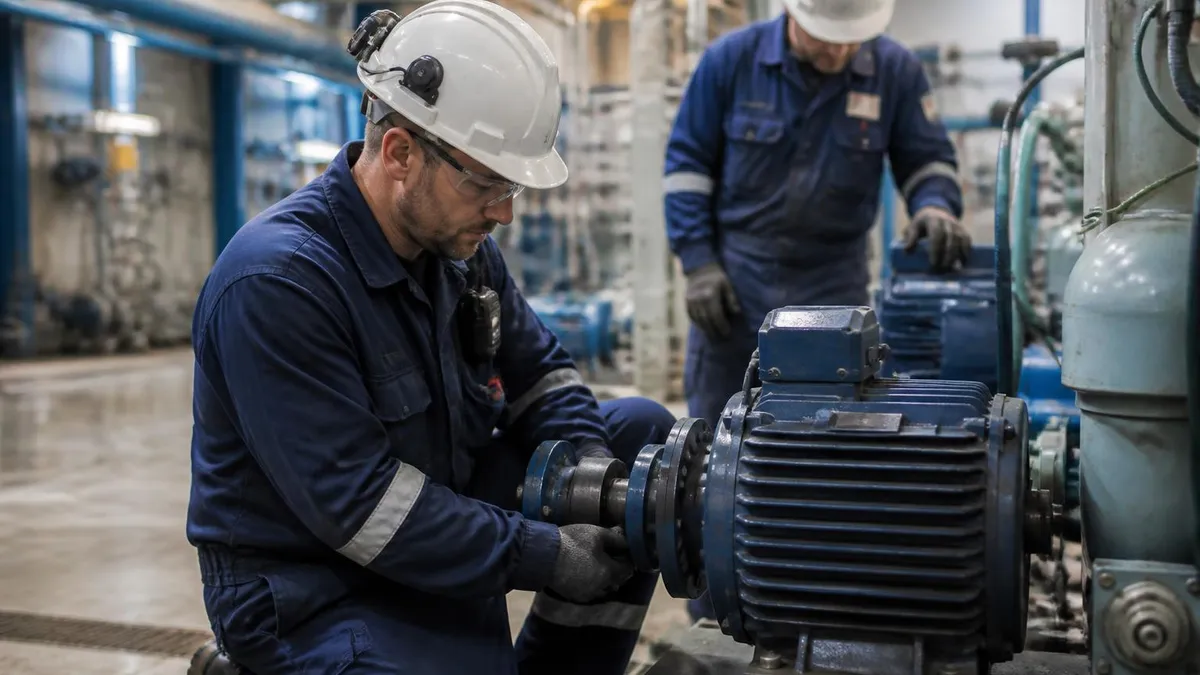
CMRT Certification Study Guide: Everything You Need to Pass in 2026
CMRT Certification: The Complete 2026 Guide to Earning the Certified Maintenance & Reliability Technician Credential
CMRT Practice Test

CMRT Certified Maintenance and Reliability Technician Practice Test PDF (Free Printable 2026)
About the Author

Educational Psychologist & Academic Test Preparation Expert
Columbia University Teachers CollegeDr. Lisa Patel holds a Doctorate in Education from Columbia University Teachers College and has spent 17 years researching standardized test design and academic assessment. She has developed preparation programs for SAT, ACT, GRE, LSAT, UCAT, and numerous professional licensing exams, helping students of all backgrounds achieve their target scores.
Join the Discussion
Connect with other students preparing for this exam. Share tips, ask questions, and get advice from people who have been there.
View discussion (9 replies)