
Do You Need a CDL to Drive a School Bus? Complete Guide to CDL Class B Requirements
🗨️ Yes - you need a CDL Class B with P and S endorsements to drive a school bus. Learn federal rules, training, age, and testing requirements here.
Short answer? Yes. If you want to drive a school bus in the United States, you'll need a Commercial Driver's License - specifically a Class B CDL with two extra endorsements stamped on the back. That's the P endorsement for passengers and the S endorsement for school buses. Skip either one and you can't legally roll a single student down the road. No exceptions, no workarounds, no "my uncle let me drive his charter bus once" stories that get you off the hook.
But the full story goes deeper than just "get a CDL." Federal law sets the floor. Each state piles its own rules on top - background checks, fingerprinting, medical certifications, age minimums that sometimes climb above the federal standard. Some states even bump you up to a Class A in certain bus configurations, particularly if the bus tows a trailer or auxiliary equipment. It's a lot to untangle, especially if you've never held a commercial license before. And the wrong assumption early on can cost you weeks of wasted prep time.
This guide walks through every requirement you'll face. We'll cover the license class, the endorsements, the testing process, the screenings, the medical exam, the training hours, and the state-by-state quirks that trip up new drivers. By the end you'll know exactly what's standing between you and that yellow bus - and how to clear each hurdle as efficiently as possible.
- To pass each Commercial Driver's License (CDL) knowledge test, an applicant must correctly answer at least 80 percent of the questions. (ecfr.gov)
- The TSA fee for a new or renewing Hazardous Materials Endorsement (HME) threat assessment is $85.25, effective January 1, 2025. (tsa.gov)
- The TSA fee for a new or renewing Hazardous Materials Endorsement (HME) threat assessment is reduced to $41.00 for applicants who already hold a valid TWIC card. (tsa.gov)
- A state must use a different version of the test when a Commercial Driver's License applicant retakes a previously failed knowledge test. (ecfr.gov)
- A commercial learner's permit (CLP) is valid for no more than one year from its initial issue date unless the holder retakes the general and endorsement knowledge tests. (ecfr.gov)
- CDL knowledge tests may be given in written form, verbally or in automated format, and in a foreign language as long as no interpreter is used. (ecfr.gov)
- A commercial learner's permit holder must be at least 18 years old and cannot take the CDL skills test in the first 14 days after the permit is first issued. (ecfr.gov)
Facts verified Oct 16, 2026 against Federal Motor Carrier Safety Administration (FMCSA), U.S. DOT; tests administered by each state driver licensing agency. Dates that have passed are removed automatically.
CDL Exam at a Glance
| Item | Detail | Official source |
|---|---|---|
| Passing score | 80% on each knowledge test | ecfr.gov |
| Exam fee (Hazmat endorsement (TSA threat assessment)) | $85.25 | tsa.gov |
| Exam fee (Hazmat endorsement, TWIC holder) | $41.00 reduced rate | tsa.gov |
| Retake policy | Retake must use a different test version | ecfr.gov |
| Validity (Commercial learner's permit) | Max 1 year from initial issuance without retesting | ecfr.gov |
| Delivery | Written, verbal or computer; foreign language allowed, no interpreter | ecfr.gov |
| Eligibility (Commercial learner's permit) | Age 18+; 14-day wait before the skills test | ecfr.gov |
Facts verified Oct 16, 2026 against Federal Motor Carrier Safety Administration (FMCSA), U.S. DOT; tests administered by each state driver licensing agency. Dates that have passed are removed automatically.
School Bus CDL by the Numbers
Let's pin down the legal definition first. Under federal regulations, any vehicle designed to carry 16 or more passengers - driver included - requires a CDL. A standard school bus blows past that threshold easily. Most full-size buses seat 60 to 80 kids. Even smaller "Type A" buses - the ones built on van chassis - usually cross the 16-passenger line. The number that matters here is the manufacturer's designed seating capacity, not how many kids you happen to be transporting on any given route.
So which class? Class B is the standard answer. Class B covers single vehicles with a gross vehicle weight rating of 26,001 pounds or more, plus any vehicle towing another that weighs under 10,000 pounds. School buses fit neatly inside that envelope. You'll see Class A come into play only when a bus is towing a heavy trailer - which is rare in the school transportation world but does happen with certain activity buses or athletic equipment haulers.
Here's the thing about the endorsements. The P endorsement applies to any vehicle hauling people for hire or as part of regular operations - think city buses, charter coaches, airport shuttles. The S endorsement is school-bus specific.
It exists because driving kids is its own beast: loading and unloading procedures, railroad crossings, the eight-way warning light system, evacuation drills, danger zone awareness. Federal law requires both before you can ferry students. You can hold a P without an S - say, if you only drive charter buses - but you cannot hold an S without first having a P. The two stack in that order.
One more wrinkle. The endorsements aren't permanent additions to your license once you earn them. They expire with the rest of your CDL on its renewal cycle, and you generally have to re-test the knowledge portions to renew. Some states require a fresh road test if you let your endorsements lapse beyond a certain window. Don't assume "earned once, earned forever."
The Three-Part License Stack
To drive a school bus legally, you need three things working together: (1) a valid Class B CDL, (2) a P (Passenger) endorsement showing you can handle vehicles built to carry people, and (3) an S (School Bus) endorsement showing you've mastered the unique safety rules around transporting kids. Missing any one of these means you can't legally carry students - even if you've driven trucks for twenty years.
Now, before you can sit for any CDL skills test, you've got to clear the commercial learner's permit stage. The CLP is the commercial-side equivalent of a regular learner's permit. You earn it by passing a written knowledge test that covers general CDL rules, air brakes, and the basics of operating a heavy vehicle.
Most states let you hold the CLP for at least 14 days before testing for the full license. That waiting period exists for a reason - it gives you time to log behind-the-wheel practice with a licensed CDL holder riding shotgun. Federal rules treat that 14-day minimum as a hard floor; some states stretch it longer.
The knowledge tests stack up. You'll take a general CDL exam first. Then a passenger transport exam for the P endorsement. Then a school bus exam for the S endorsement. Each one runs 20 to 30 multiple-choice questions, and you typically need 80% to pass. Some states bundle them into one sitting; others make you book them separately. Don't underestimate the general CDL test - it pulls from a 200-plus-page commercial driver's manual that covers everything from cargo securement to driving in adverse weather.
Study the state-specific CDL handbook. Not a generic one. Each state's manual contains regulations that don't appear in the federal materials, and test questions absolutely come from those state-specific sections. Free online practice tests can help you gauge readiness, but the official handbook is your primary source.
Licenses and Endorsements You Need
The base license. Covers single vehicles 26,001 lbs or heavier. Required for nearly all standard school buses, including full-size, mid-size, and most Type A small buses.
Proves you can safely operate vehicles designed to transport 16 or more people. Tested through a written knowledge exam plus a hands-on skills check during the road test.
School-bus specific. Covers railroad crossings, loading zones, the eight-way light system, mirror checks, and student evacuation. Required on top of the P endorsement.
A DOT physical from a certified medical examiner. Valid up to 24 months. Confirms you meet federal vision, hearing, blood pressure, and overall fitness standards.
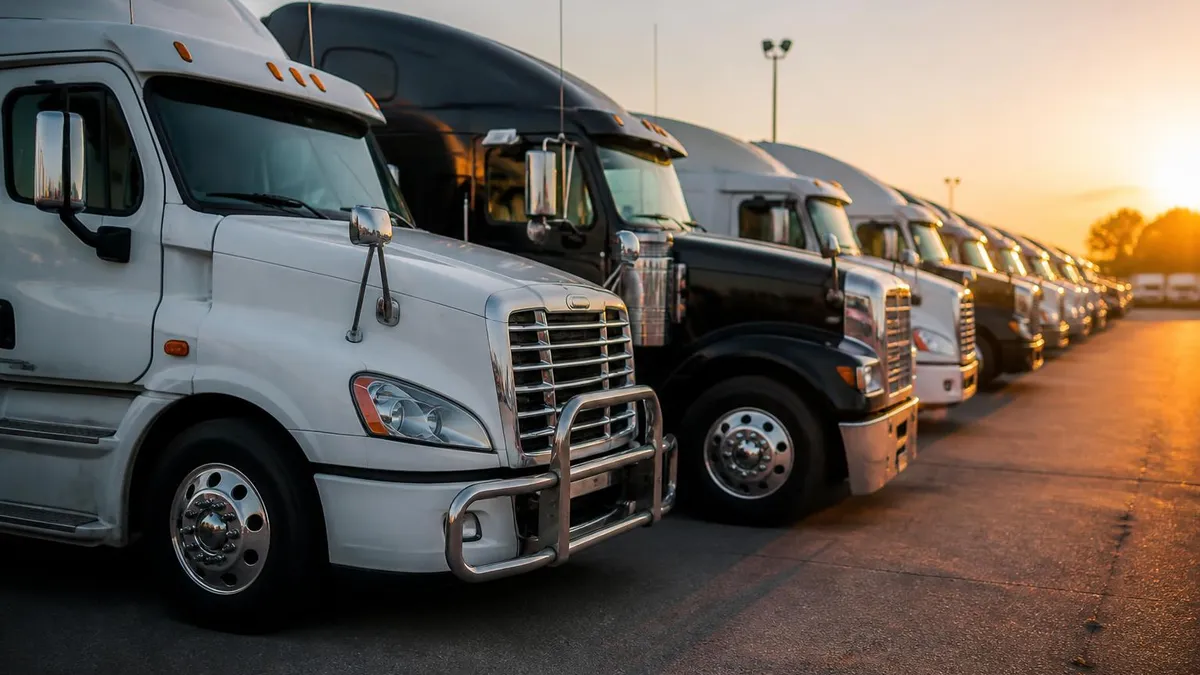
The skills test is where things get real. You'll demonstrate three things on the actual bus: a pre-trip inspection, basic vehicle control maneuvers, and an on-road drive. The pre-trip alone can take 30 minutes - you walk around the bus and verbally identify what you're checking, from brake adjustments to mirror angles to the condition of the exhaust system. Examiners want to hear the right terminology. "The tire looks fine" doesn't cut it. "The tire has at least 4/32 inch of tread, no sidewall damage, valve stem intact, and is properly inflated" - that's what they're listening for.
Basic control includes maneuvers like the offset back, the alley dock, and straight-line backing. Then the road test puts you in real traffic - intersections, lane changes, railroad tracks, school zones if available. Failing any single section usually means retesting that section. Some states let you retake just the part you failed within a window; others reset the whole process and make you redo all three.
The skills test is also where a lot of candidates panic. Nerves kill more first-attempt CDL tests than lack of skill does. The fix? Practice the pre-trip verbally - out loud, on a real bus - until it's muscle memory. Drive the test route beforehand if your training program permits it. And remember: examiners aren't trying to trick you. They're trying to confirm you can safely operate the vehicle. Slow, deliberate, and methodical beats fast and confident every time.
What the CDL Skills Test Covers
You'll walk around the bus and identify roughly 100 components - brakes, lights, mirrors, emergency exits, the warning light system, fluid levels, suspension. Examiners want specific descriptions, not generalities. Practice this section out loud with a coach until you can rattle off every item without prompts.
Beyond the testing itself, pre-employment screening is where most candidates spend the bulk of their time. Federal law requires every CDL holder to pass a DOT physical from a certified medical examiner. The physical checks vision (at least 20/40 in each eye, with or without correction), hearing (must hear a forced whisper at 5 feet), blood pressure, blood sugar, and overall cardiovascular health. Diabetics on insulin used to be automatically disqualified - that changed in 2018, but they still need an additional federal exemption and ongoing monitoring.
Drug and alcohol testing is built into the process from day one. You'll submit to a pre-employment drug screen before you're hired. After that, you're enrolled in a random testing pool. Random tests can come any day of the year. Post-accident testing kicks in after certain types of crashes. Reasonable suspicion testing happens if a supervisor sees signs of impairment.
Refuse any test - or test positive - and you're looking at a return-to-duty process that can take months and costs hundreds out of pocket. The federal Drug and Alcohol Clearinghouse tracks every positive test, refusal, and violation. Employers must query it before hiring you and annually after.
Marijuana? Still federally prohibited for CDL holders, period. Doesn't matter if your state legalized recreational or medical use. Federal regulations override state law on this point. A positive THC test ends your school bus career until you complete the return-to-duty process - which includes a substance abuse evaluation, education or treatment, and a series of follow-up tests over the next 12 to 60 months. Most candidates can't or won't put themselves through that.
School bus driving carries some of the strictest background standards of any commercial driving job. Convictions for violent crimes, sex offenses, crimes against children, and certain drug offenses are automatic disqualifiers - often for life. DUI convictions within the past several years (the window varies by state) usually disqualify you too. Many states also require fingerprinting through the FBI database. Even if your driving record is spotless, a criminal history check can end the process before it starts.
State requirements layer on top of everything federal law demands. Take age, for example. The federal minimum for interstate CDL driving is 21. But school bus driving is typically intrastate (within one state), so some states drop the minimum to 18 - while others hold the line at 21 even for in-state routes. New York requires 21. Texas allows 18 with restrictions. California sits at 18 with extra schooling. Always check your specific state DMV before you start the process - the difference between 18 and 21 can mean three lost years of earning potential.
Some states bolt on extra training hours. Federal Entry-Level Driver Training (ELDT) became mandatory in February 2022 for anyone seeking a Class B CDL or upgrading endorsements. ELDT requires both theory instruction and behind-the-wheel practice from a provider listed on the federal Training Provider Registry. The theory portion can take 30-plus hours of classroom or online study. Behind-the-wheel time isn't fixed at a specific number of hours federally - the standard is proficiency-based - but most programs run 60 to 100 hours of supervised driving.
State-mandated school bus training often runs longer. Some states require a specific number of hours of school-bus-only training in addition to standard ELDT. Pennsylvania mandates 14 hours of classroom plus 6 hours behind the wheel specifically for the S endorsement. New Jersey requires 20 hours of classroom plus 10 hours behind the wheel. Always confirm your state's hour requirements before signing up for training - and make sure your chosen school covers the full state-required curriculum, not just the federal ELDT minimum.
Your School Bus CDL Checklist
- ✓Hold a valid non-commercial driver's license for at least 1-2 years (varies by state)
- ✓Be 18 (intrastate) or 21 (interstate) years old - check your state's school bus minimum
- ✓Pass a DOT medical exam and receive your Medical Examiner's Certificate
- ✓Complete Entry-Level Driver Training (ELDT) from a registered provider
- ✓Pass the general CDL, Passenger, and School Bus knowledge tests
- ✓Hold a Commercial Learner's Permit (CLP) for at least 14 days
- ✓Pass the CDL skills test in a school bus (pre-trip, basic control, and road)
Here's something a lot of new applicants miss - your skills test has to happen in a vehicle representative of what you'll actually drive. You can't take your road test in a Class C minivan and expect a Class B school bus license to fall out. The vehicle's GVWR has to match (or exceed) the license class you're testing for. And for the S endorsement portion, the test bus needs to be configured as an actual school bus, with the warning lights and stop arm fully functional.
Most school districts and bus contractors solve this for you. They'll often hire you on as a trainee, provide a test bus, and pay for some or all of the training costs in exchange for a commitment to drive for them. That's the path most rookies take. Walking in with a CDL already in hand is rare - and frankly, you don't need to. Districts are desperate for drivers right now and most will train you from scratch, sometimes with a signing bonus on top.
School Bus Driving Pros and Cons
- +Steady part-time hours that fit around family or other work
- +Most districts pay for your CDL training and testing in full
- +Pension and benefits through state or district employment in many areas
- +Predictable schedule - summers off, holidays match the school calendar
- +Quick path to employment - high demand, training-included offers everywhere
- −Early-morning and late-afternoon split shifts are the norm
- −Lower hourly wages compared to over-the-road trucking
- −High personal responsibility - you're transporting children
- −Strict background and screening - small infractions can disqualify you
- −Behavior management challenges that other CDL jobs simply don't have
Pros and Cons at a Glance
| Pros | Cons |
|---|---|
| Steady part-time hours that fit around family or other work | Early-morning and late-afternoon split shifts are the norm |
| Most districts pay for your CDL training and testing in full | Lower hourly wages compared to over-the-road trucking |
| Pension and benefits through state or district employment in many areas | High personal responsibility - you're transporting children |
| Predictable schedule - summers off, holidays match the school calendar | Strict background and screening - small infractions can disqualify you |
| Quick path to employment - high demand, training-included offers everywhere | Behavior management challenges that other CDL jobs simply don't have |
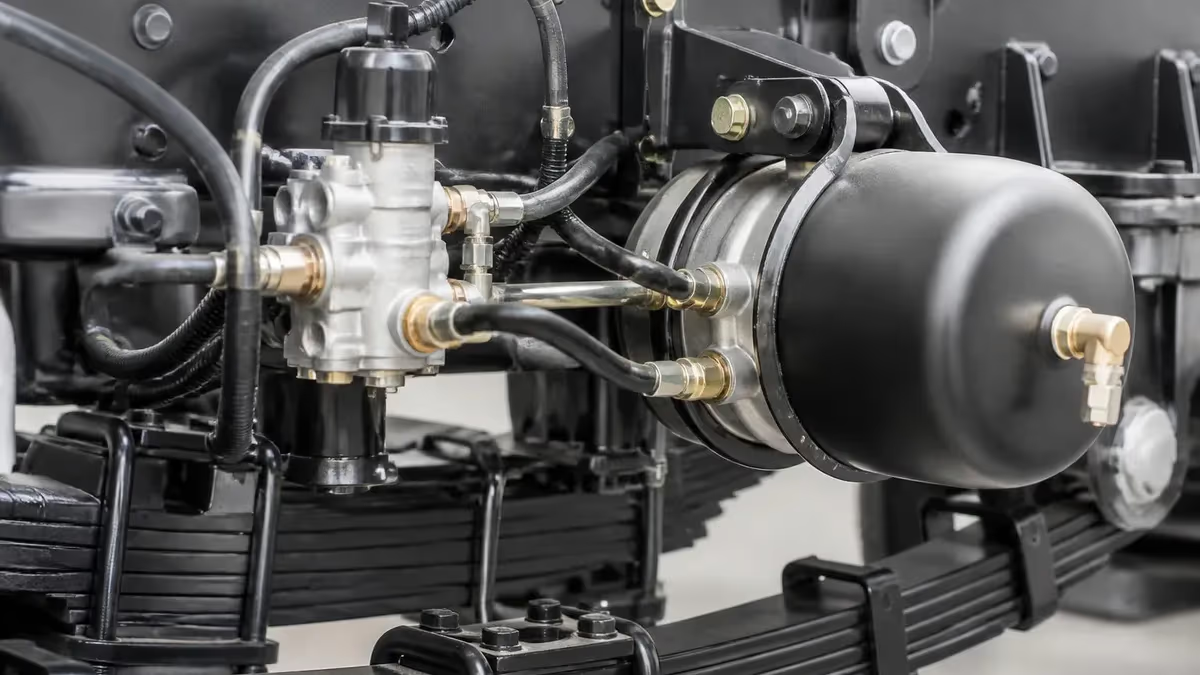
One overlooked piece of the puzzle: the air brake endorsement. School buses are heavy enough that they almost always use air brakes rather than hydraulic brakes. Taking your CDL test in an air-brake-equipped vehicle is essential. If you test in a vehicle without air brakes, your license gets stamped with an "L" restriction - meaning you can't legally drive any commercial vehicle with air brakes. That'd lock you out of nearly every school bus on the road, since fewer than 5% of full-size school buses use hydraulic systems.
You'll also study the air brake section as part of the general knowledge test. Topics include the brake check procedure, the difference between service brakes and parking brakes, what a low-air-pressure warning means, and how to handle a brake failure. It's one of the more technical chapters in the CDL manual - but skipping it isn't an option. The pre-trip portion of your skills test will require you to perform a full air brake check, including testing the warning system at low PSI and confirming the spring brakes engage automatically. Memorize the sequence early.
So how long does the whole process take from zero to behind the wheel? For most candidates, four to eight weeks. You spend a week or two getting your CLP, another two to four weeks training and racking up practice hours, then the testing itself - usually scheduled in one or two appointments. Add in background checks and fingerprinting (which can take days to weeks to come back) and you're looking at a couple months for most people. Faster if you study hard and your state's testing appointments aren't backed up. Slower if you're balancing this with full-time work.
The good news? The cost is often zero out of pocket. Districts, contractors, and even some private companies fund the entire pathway in exchange for a hire commitment. If you're paying yourself, expect $1,500 to $4,000 for training plus another few hundred for testing and licensing fees. Compared to OTR trucking school - which can run $5,000 to $10,000 - the school bus track is far cheaper. And several states offer free or subsidized training programs specifically aimed at filling the driver shortage.
What about pay? School bus driver wages have climbed steadily over the past few years thanks to ongoing shortages. National averages run $18 to $24 per hour, with experienced drivers in higher-cost areas pulling $28 or more. Many districts pay for guaranteed hours even on light days, and some include health insurance, retirement contributions, and paid time off. Special needs routes and activity trips often pay premium rates. If you string together morning runs, afternoon runs, midday charters, and weekend sports trips, full-time hours are completely doable.
Bottom line. Yes, you need a CDL to drive a school bus - specifically a Class B with P and S endorsements. The path involves a medical exam, a learner's permit, knowledge tests, training hours, a skills test, background checks, and ongoing drug screening. It sounds like a lot. But thousands of new drivers complete it every year, and most do it on someone else's dime.
If you've got a clean record, decent vision, and the patience to study, the yellow bus is closer than you think. Start by visiting your state DMV website and your local district's transportation department - both will outline the exact local steps you need to take next.
Sample CDL Practice Questions
Try these questions from our free CDL practice tests. The correct answer and an explanation follow each question.
To decide which placards to use, you need to know the hazard class, the amount shipped and
- A. The identification number
- B. The total weight of all classes of hazardous materials in your vehicle
- C. The proper shipping name
- D. The distance you are traveling
Answer: B. The total weight of all classes of hazardous materials in your vehicle
To determine which placards are required, a driver needs to know the hazard class of the material, the amount of each material, and critically, the total weight of all hazardous materials being transported in the vehicle. The cumulative weight often dictates whether placarding is necessary, especially for materials that fall under the '1,001 pounds or more' rule for 'DANGEROUS' placards.
School bus drivers need to check that they have what emergency equipment?
- A. Body fluid cleanup kit.
- B. Emergency kit.
- C. All of the listed answers.
- D. Spare electrical fuses.
- E. Three reflective triangles.
Answer: C. All of the listed answers.
School bus drivers must ensure they have specific emergency equipment on board to handle various situations. This includes a body fluid cleanup kit for sanitation, spare electrical fuses for minor electrical repairs, and three reflective triangles for roadside warning. Having all these items readily available is crucial for maintaining safety and responding effectively to emergencies involving students.
Which of the following correctly describes a vehicle that requires a Class A CDL rather than a Class B CDL?
- A. A single straight truck with a GVWR of 33,000 lbs
- B. A bus designed to transport 24 passengers
- C. A tractor-trailer combination with a combined GVWR of 80,000 lbs where the trailer GVWR exceeds 10,000 lbs
- D. A straight truck towing a trailer with a combined GVWR of 24,000 lbs
Answer: C. A tractor-trailer combination with a combined GVWR of 80,000 lbs where the trailer GVWR exceeds 10,000 lbs
Class A is defined by a combination vehicle where the total GVWR is 26,001 lbs or more AND the towed unit exceeds 10,000 lbs. A tractor-trailer at 80,000 lbs combined clearly meets both criteria. A single heavy straight truck (no towed unit exceeding 10,000 lbs) falls under Class B.
Which of the following is NOT included on a Class A Pre-trip inspection test?
- A. An inspection of the coupling system.
- B. All of the listed answers are included on a Class A Pre-trip Inspection Test.
- C. An in-cab inspection.
- D. An engine start.
Answer: B. All of the listed answers are included on a Class A Pre-trip Inspection Test.
A Class A Pre-trip Inspection Test is comprehensive and covers all critical components of a combination vehicle. This includes a detailed inspection of the coupling system (for trailers), a thorough in-cab inspection of controls and gauges, and an engine start to check for proper operation and air system build-up. Therefore, all the listed items are essential parts of the required inspection.
Take the full CDL practice test
For a fuller set of questions on this topic, see our cdl practice test pdf resource.
CDL Questions and Answers
About the Author

Licensed Driving Instructor & DMV Test Specialist
Penn State UniversityRobert J. Williams graduated from Penn State University with a degree in Transportation Management and has spent 20 years as a certified driving instructor and DMV examiner consultant. He has personally coached thousands of applicants through written knowledge tests, skills assessments, and commercial driver licensing programs across more than 30 states.