
3 Year BSN Program: Complete Guide to Requirements, Costs, and Top Schools
Complete guide to the 3 year BSN program — 🆕 admission requirements, costs, top schools, and how to finish your nursing degree faster.

A 3 year bsn program offers a streamlined path to earning your Bachelor of Science in Nursing one full year earlier than the traditional four-year route. For students who are motivated, academically prepared, and eager to enter the workforce as quickly as possible, these condensed programs compress the same rigorous nursing curriculum into six or seven semesters of intensive study. Growing demand for BSN-prepared nurses at hospitals and health systems across the United States has pushed dozens of accredited universities to develop and expand their three-year offerings, making this a more accessible option than ever before.
The appeal of finishing a full BSN degree in three years is straightforward: you save one year of tuition, fees, and living expenses while accelerating your timeline to licensure and employment. At public universities where annual tuition averages $12,000–$18,000, that single year of savings can translate to $15,000–$25,000 in direct costs avoided, not counting the additional year of registered nurse salary you begin earning sooner. For students carrying student loan debt, the math becomes even more compelling when you factor in accruing interest over a fourth year that you simply skip.
Three-year BSN programs are not the same as accelerated BSN programs, which are designed for students who already hold a bachelor's degree in another field and typically run 12–18 months. The three-year BSN is a full undergraduate degree program built for recent high school graduates or transfer students who enter with the right prerequisite credits already completed. Admission requirements are competitive — programs typically expect a GPA of 3.2 or higher, completion of anatomy, physiology, chemistry, and microbiology prerequisites, and strong scores on the HESI or TEAS admission exam before the nursing cohort begins.
Accreditation is a non-negotiable factor when evaluating any BSN program, and three-year options are no exception. Programs accredited by the Commission on Collegiate Nursing Education (CCNE) or the Accreditation Commission for Education in Nursing (ACEN) have demonstrated that their curriculum meets national standards for nursing education. Graduating from an accredited program is required to sit for the NCLEX-RN licensure examination in most states and is typically required by employers, including Magnet-designated hospital systems that mandate BSN preparation for their nursing staff.
Curriculum in a three-year BSN program covers the same foundational and advanced nursing content as a four-year program: fundamentals of nursing practice, pharmacology, pathophysiology, health assessment, medical-surgical nursing, pediatric nursing, maternal-newborn care, psychiatric and mental health nursing, and community and public health nursing. The difference is pacing — courses are scheduled across fewer semesters, summer sessions are often required, and students must manage heavier credit loads per term. Clinical rotations remain a core component, with most programs requiring 700–900 hours of supervised clinical practice across multiple healthcare settings.
Choosing the right three-year BSN program requires careful research beyond just the program length. You should evaluate NCLEX-RN first-time pass rates, which the National Council of State Boards of Nursing publishes annually by program. Programs with first-time pass rates consistently above 90% signal strong curriculum alignment with licensure requirements. You should also assess clinical placement support — does the program have established partnerships with local hospitals, community health centers, and specialty clinics? Strong clinical partnerships mean you gain exposure to diverse patient populations and practice settings before you graduate.
Financial aid, scholarship availability, and return-on-investment should factor heavily into your decision as well. Many universities offer nursing-specific scholarships that are separate from general institutional aid, and federal programs like the NURSE Corps Scholarship Program and HRSA workforce grants can provide significant funding for students committed to serving in underserved communities. Understanding the full cost picture — tuition, fees, clinical supply costs, required certification fees, and living expenses — allows you to compare programs on a true total-cost basis rather than just headline tuition numbers.
3 Year BSN Programs by the Numbers
How a 3 Year BSN Program Is Structured
Pre-Nursing Prerequisites (Before Year 1)
Year 1 — Foundational Nursing Sciences
Year 2 — Core Clinical Specialties
Year 3 — Advanced Practice & Leadership
NCLEX-RN Licensure & Employment
Admission to a three-year BSN program is competitive, and understanding what programs look for can make the difference between acceptance and rejection. Most programs begin with a minimum cumulative GPA requirement, typically 3.0–3.5, with special emphasis placed on science GPA in courses like anatomy and physiology, microbiology, and chemistry. A strong science GPA demonstrates the academic foundation needed to succeed in the rigorous biomedical content that underpins nursing coursework. Programs often evaluate science prerequisites that were completed within the last five to seven years to ensure knowledge remains current and relevant to contemporary nursing practice.
Standardized testing is another critical component of the admission process. Most nursing programs require applicants to take either the Health Education Systems Inc. (HESI) A2 exam or the Test of Essential Academic Skills (TEAS), produced by ATI. Both exams assess reading comprehension, mathematics, science knowledge, and English language skills. Competitive applicants typically score in the 75th percentile or above on these exams. Preparing thoroughly for the admission exam is one of the highest-leverage investments a pre-nursing student can make — a strong score can compensate for a slightly lower GPA and demonstrates test-taking ability that correlates with NCLEX-RN performance later.
Healthcare experience, while not always required, significantly strengthens a nursing school application. Working or volunteering as a certified nursing assistant (CNA), patient care technician, emergency medical technician (EMT), or medical assistant gives applicants firsthand exposure to clinical environments and patient care. Admissions committees value this experience because it signals that the applicant understands the demands of nursing before committing to the program. Even 100–200 hours of documented healthcare experience can meaningfully differentiate an application from those with no direct patient contact.
Letters of recommendation carry weight in the holistic review process used by most programs. A letter from a science professor who can speak to your intellectual curiosity and academic rigor is more valuable than a generic recommendation from an employer outside healthcare. If you have shadowed nurses or volunteered in clinical settings, a letter from a registered nurse or nurse manager who observed your interpersonal skills and professional demeanor can be highly compelling. Plan to ask recommenders at least four to six weeks before application deadlines to give them adequate time to write thoughtful, specific letters.
Personal statements and essays are your opportunity to explain your motivation for pursuing nursing and specifically for choosing a three-year program. Admissions readers want to understand your journey to nursing, your awareness of what the profession entails, and your personal qualities that will help you succeed as both a student and a practicing nurse. Be concrete — reference specific patient interactions, community service experiences, or professional challenges that shaped your commitment. Avoid generic statements about wanting to help people; instead, describe particular moments that clarified your professional purpose and demonstrated the resilience nursing demands.
Transfer students face a distinct set of considerations when applying to three-year BSN programs. If you completed general education and prerequisite coursework at a community college, you may enter with most of the foundational credits needed to proceed directly into the nursing sequence. However, institutions have specific transfer articulation policies, and not all credits transfer at full value. Before applying as a transfer student, request a transcript evaluation from each program's admissions office to understand exactly which credits will count and whether any coursework needs to be repeated or supplemented before you can begin nursing classes.
Financial planning is inseparable from program selection. Beyond comparing base tuition rates, factor in the cost of required uniforms, stethoscopes, clinical bags, simulation lab fees, background check and drug screening fees, and liability insurance, which can collectively add $1,500–$3,000 to your annual program costs. NCLEX-RN registration fees, nursing board application fees, and CPR certification renewal add further costs at the end of the program. Creating a detailed budget for all three years before you enroll helps you avoid financial surprises and identify the specific scholarships, grants, or work-study opportunities that can offset each category of expense.
Curriculum, Costs, and Top Schools for 3 Year BSN Programs
The nursing curriculum in a three-year BSN program is organized into three broad phases: foundational sciences, core clinical specialties, and advanced integration. Year one builds the scientific and theoretical base with courses in pathophysiology, pharmacology, health assessment, and nursing informatics. Students are introduced to clinical settings through supervised labs and early practicum rotations, typically logging 150–200 clinical hours during the first year. Evidence-based practice, therapeutic communication, and patient safety are woven throughout every course from the outset.
Years two and three advance into specialty nursing domains including medical-surgical, pediatric, maternal-newborn, psychiatric, and community health nursing. Leadership, health policy, and population-focused care dominate the final semester alongside a senior preceptorship. Most programs require a minimum of 700 supervised clinical hours in total, with placements across hospitals, outpatient clinics, schools, community health centers, and long-term care facilities. The curriculum concludes with a capstone project that integrates evidence-based practice, leadership, and quality improvement into a cohesive professional portfolio demonstrating readiness for registered nurse practice.

3 Year BSN Program: Advantages and Challenges
- +Graduate one full year earlier than traditional four-year BSN students and begin earning RN salary sooner
- +Save $15,000–$25,000 or more in tuition, fees, and living expenses compared to a four-year program
- +Enter the nursing workforce with the same BSN degree and NCLEX-RN eligibility as four-year graduates
- +Competitive advantage: employers and graduate programs see the same BSN credential regardless of program length
- +Accelerated pacing builds time management and prioritization skills that directly translate to clinical nursing practice
- +Summer semesters and intensive scheduling reduce idle time and keep academic momentum strong throughout the degree
- −Heavier per-semester course loads leave less time for jobs, research opportunities, or extracurricular activities
- −Admission requirements are typically more competitive, requiring stronger prerequisite GPAs and higher HESI or TEAS scores
- −Summer enrollment is usually mandatory, limiting internship opportunities and extended breaks between academic years
- −Fewer elective courses mean less flexibility to explore specialty areas like global health, nurse entrepreneurship, or health informatics
- −Students with incomplete prerequisites at application time may need additional semesters before the nursing cohort begins, erasing the time advantage
- −Fast pacing can increase academic stress and burnout risk; students who need more processing time may struggle with compressed schedules
Application Checklist for 3 Year BSN Programs
- ✓Complete all required prerequisites (anatomy, physiology, microbiology, chemistry, statistics) with a grade of B or better in each course.
- ✓Calculate your cumulative GPA and science GPA separately, as most programs evaluate both independently during holistic review.
- ✓Register and prepare thoroughly for the HESI A2 or ATI TEAS admission exam at least 8–12 weeks before your target test date.
- ✓Document all healthcare experience hours including CNA work, EMT service, patient care technician shifts, medical assisting, or clinical volunteering.
- ✓Request letters of recommendation from a science professor and a healthcare professional who can speak to clinical aptitude and professional character.
- ✓Draft a personal statement that tells a specific, compelling story connecting your life experiences to your commitment to the nursing profession.
- ✓Research CCNE or ACEN accreditation status for every program on your list and verify current NCLEX-RN first-time pass rates from state board websites.
- ✓Complete a full financial aid application (FAFSA) and research nursing-specific scholarships at each institution well before institutional deadlines.
- ✓Visit campuses or attend virtual open houses to meet current students and faculty and evaluate clinical simulation lab facilities.
- ✓Confirm that your prerequisite credits will fully transfer and satisfy program requirements by requesting an official transcript evaluation from each school.
NCLEX-RN First-Time Pass Rate Is Your Best Program Quality Signal
When comparing three-year BSN programs, the single most predictive quality metric is the NCLEX-RN first-time pass rate. Programs consistently above 90% demonstrate that their curriculum, faculty, and clinical preparation are tightly aligned with the knowledge and reasoning skills the exam tests. Verify current pass rates directly from your state board of nursing's annual report — program-reported numbers are not always current or calculated using the same methodology as state board data.
NCLEX-RN preparation is a critical component of success in any BSN program, and three-year programs that compress the curriculum demand intentional, ongoing exam preparation that begins in the first semester — not just in the final weeks before graduation.
The NCLEX-RN transitioned to the Next Generation NCLEX (NGN) format in April 2023, introducing new item types including extended multiple response, drag-and-drop, matrix, cloze, and enhanced hot spot questions that assess higher-order clinical reasoning and clinical judgment across the nursing process. Students in three-year BSN programs must develop fluency with these item types throughout their coursework, not just during dedicated board prep periods.
Clinical judgment is the cognitive foundation of the NGN. The National Council of State Boards of Nursing (NCSBN) developed the Clinical Judgment Measurement Model (CJMM) as the framework underlying the updated exam. This model defines six cognitive skills: recognize cues, analyze cues, prioritize hypotheses, generate solutions, take action, and evaluate outcomes.
Strong NCLEX-RN preparation requires that students actively practice these cognitive steps when analyzing patient scenarios in classroom and clinical settings. Faculty in strong three-year BSN programs explicitly teach and reinforce the CJMM throughout every clinical specialty course, using case studies and simulation exercises that mirror the NGN's layered, scenario-based question format.
ATI and Hesi are the two dominant standardized testing platforms used by nursing programs to monitor student readiness throughout the program and predict NCLEX-RN outcomes. ATI's Comprehensive Predictor exam, taken in the final semester, provides a probability score for NCLEX-RN success and identifies content domains needing remediation. Programs that require consistent ATI or HESI benchmarking throughout the curriculum — not just at graduation — tend to produce stronger NCLEX-RN outcomes because students receive early warning signals and have time to address knowledge gaps before the licensure exam.
Content mastery across all major nursing specialty areas is essential for NCLEX-RN success. Medical-surgical nursing, which encompasses the largest share of exam content, requires deep understanding of common disease processes, priority setting, delegation, and pharmacological management. Maternal-newborn nursing, pediatric nursing, and psychiatric-mental health nursing each contribute a significant portion of exam questions as well. Community and public health nursing, which is often underemphasized by students who are more focused on acute care, appears consistently in the exam blueprint and requires understanding of epidemiology, health promotion, disease prevention, and population-level care coordination.
Practice testing using NCLEX-style and NGN-style questions is the most evidence-based approach to exam preparation. Research on test preparation consistently shows that active recall through practice questions produces better retention and application of nursing knowledge than passive re-reading of textbooks.
Students who complete 2,000–3,000 quality practice questions during their program and systematically review rationales for both correct and incorrect answers consistently outperform peers who rely primarily on re-reading course notes. Building a daily practice question habit — even 20–30 questions per day beginning in the second semester — creates cumulative preparation that reduces exam anxiety and improves clinical reasoning fluency across the entire curriculum.
Career outcomes for BSN graduates remain exceptionally strong across the United States. The Bureau of Labor Statistics projects a 6% growth rate in registered nurse employment through 2033, outpacing the average for all occupations. BSN-prepared nurses command a meaningful salary premium over associate degree nurses in many markets, with BSN nurses earning approximately $5,000–$10,000 more annually in aggregate, according to salary surveys by the American Association of Colleges of Nursing.
More importantly, Magnet-designated hospitals — which are widely recognized as the premier employers in nursing — require or strongly prefer BSN preparation for staff nurses, making the BSN degree a practical requirement for the most competitive hospital jobs in most major metropolitan markets.
Graduate education pathways also open substantially with a BSN. Nurse practitioner programs, clinical nurse specialist tracks, nurse anesthesia programs, nurse midwifery programs, and nursing administration and informatics MSN programs all require a BSN for admission.
An accelerated graduate nursing pathway — completing a three-year BSN and then a two-year MSN — allows motivated nurses to reach advanced practice registered nurse (APRN) status in as few as five years from high school. For students with clear long-term career goals in advanced practice, the time savings from a three-year BSN program compound significantly when you consider the downstream effect of entering graduate school and APRN practice one year earlier.

Not all programs marketed as three-year BSN pathways carry full CCNE or ACEN accreditation at the time of enrollment. Accreditation status can change, and graduating from a non-accredited program may disqualify you from NCLEX-RN eligibility in certain states, federal nursing scholarships, and many employer tuition reimbursement programs. Always verify current accreditation status directly at the CCNE website (ccneaccreditation.org) or the ACEN website (acenursing.org) before submitting your application deposit.
Comparing a three-year BSN program to other BSN pathways helps clarify which route makes the most sense for your specific situation. The traditional four-year BSN remains the most common entry pathway and offers the most flexibility — four years allow for double majors, research opportunities, study abroad experiences, leadership roles in student nursing organizations, and internships that build professional networks before graduation. For students who are undecided about their specialty area or who want more time to mature academically and professionally before entering intense clinical practice, the additional year is a genuine investment rather than wasted time.
The accelerated BSN (ABSN) program is a separate and distinct pathway designed exclusively for students who already hold a bachelor's degree in a non-nursing field. ABSNs typically run 12–18 months of full-time, year-round study and are among the most demanding academic programs in higher education, requiring students to give up full-time employment during the program.
While the ABSN and the three-year BSN both compress the nursing curriculum, they serve entirely different populations. The ABSN leverages prior bachelor's-level coursework and academic maturity, while the three-year BSN is built for traditional college-age students entering nursing directly from high school or with early-college prerequisites completed.
The RN-to-BSN bridge program serves another distinct population: registered nurses who completed an associate degree nursing (ADN) or diploma program and are now seeking BSN credentials to meet employer requirements or pursue graduate education. These programs typically require 18–24 months of part-time online study and are designed to fit around the schedules of working nurses. If you are already a licensed RN without a BSN, the RN-to-BSN pathway is far more efficient than re-enrolling in a traditional or three-year BSN program from the beginning.
LPN-to-BSN bridge programs offer another specialized pathway for licensed practical nurses who want to advance to BSN-prepared registered nurse status without completing a full traditional BSN. These bridge programs credit prior LPN education and clinical experience, typically allowing completion of the BSN in two to three years of full-time study or three to four years part-time. For LPNs working in clinical settings who have strong patient care experience but need the theoretical and leadership preparation that the BSN provides, these bridge programs offer a pragmatic and cost-effective advancement route without starting the nursing credential process from scratch.
Online and hybrid BSN programs have expanded access to BSN education significantly, and several reputable universities now offer three-year BSN tracks with online theoretical coursework and locally arranged clinical placements. Western Governors University, Grand Canyon University, and several large state university systems have developed hybrid BSN pathways that allow students to complete nursing science courses online while fulfilling clinical hours through preceptorship agreements with local health systems.
For students in rural areas, those with family obligations, or those who work part-time during school, hybrid three-year programs offer a viable alternative to fully campus-based options without sacrificing accreditation quality or clinical preparation depth.
Cost comparison across program types reveals important patterns. Three-year BSN programs at public universities typically offer the best cost-per-outcome ratio when measured against salary earned and career opportunity accessed. When you compare total cost (including the opportunity cost of forgone salary during the program) against lifetime earnings premium for BSN versus ADN nurses, three-year BSN graduates at in-state tuition rates typically achieve positive return on investment within four to five years of graduation.
Private university three-year BSN programs can carry higher debt burdens that extend the break-even timeline, though nursing-specific scholarships and strong post-graduation employment rates in high-cost-of-living markets can offset this difference substantially.
Making a final decision between program types ultimately comes down to where you are in your academic and professional journey, what your financial constraints are, and what your long-term career vision looks like. For academically strong students entering nursing directly from high school or after completing two years of prerequisites at a community college, the three-year BSN offers the clearest combination of speed, credential quality, and career positioning.
For working professionals pivoting to nursing, the ABSN or RN-to-BSN pathways typically make more sense. Whichever pathway you choose, selecting an accredited program with strong NCLEX-RN outcomes, robust clinical partnerships, and meaningful financial aid options is the foundation of a sound decision.
Succeeding in a three-year BSN program demands more than academic intelligence — it requires deliberate habits, strong time management, and proactive use of every support resource available at your institution. The compressed timeline means there is very little margin for falling behind; a poor exam performance in week three of a semester can cascade quickly in a program where the next topic builds directly on the current one.
Establishing strong study systems from the first week of class — not after the first exam — is the single most important practical step you can take toward academic success in an accelerated nursing curriculum.
Active learning strategies consistently outperform passive review in nursing courses that require both factual recall and clinical application. Instead of re-reading textbook chapters or highlighting notes, invest study time in creating concept maps that link pathophysiology to nursing assessment findings to priority nursing interventions to pharmacological management. Concept mapping forces you to synthesize information across domains — exactly the cognitive skill that NCLEX-RN questions and real patient care scenarios require. Study groups that take turns teaching content to one another reinforce retention and identify gaps that solo studying often misses.
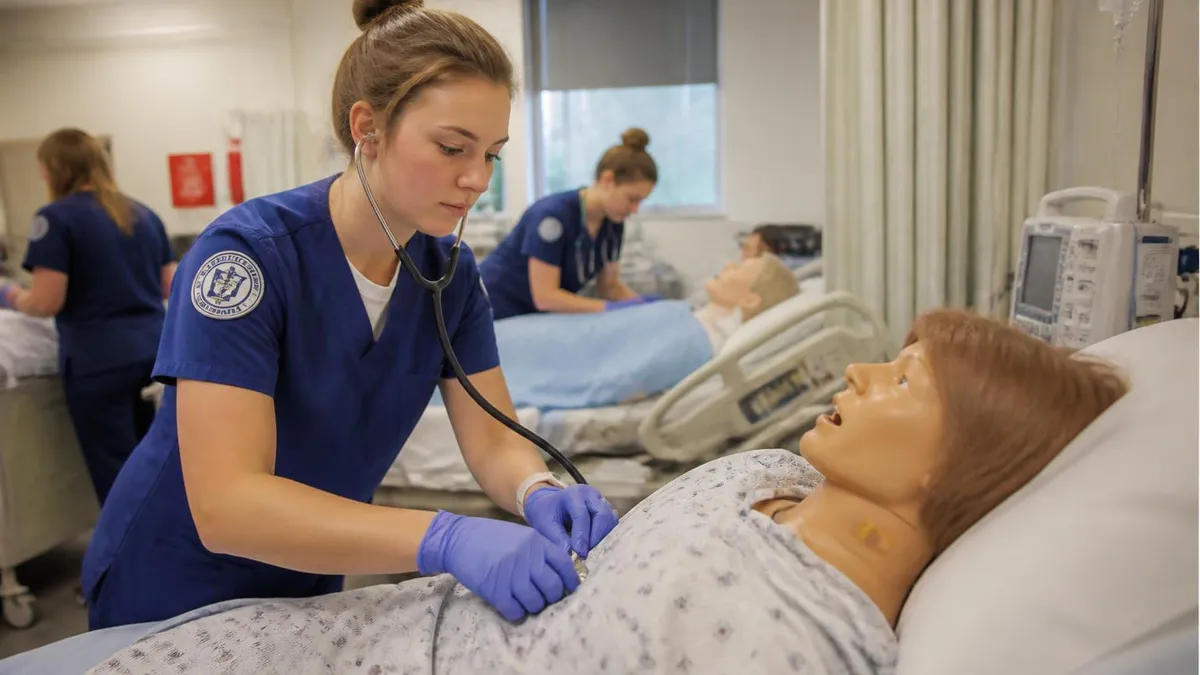
Simulation lab preparation deserves dedicated attention in any three-year BSN program. High-fidelity simulation centers allow students to practice clinical assessment, medication administration, emergency response, and therapeutic communication in a controlled, low-stakes environment before caring for real patients. Students who treat simulation scenarios with the same seriousness as actual clinical rotations — preparing assigned patient records in advance, reviewing relevant pharmacology, and conducting thorough debriefs after each scenario — develop clinical reasoning skills more rapidly than those who treat simulation as a lower-stakes activity than clinical. Faculty evaluations during simulation inform clinical placement decisions and letters of recommendation for employment.
Clinical rotation strategy matters significantly in a compressed BSN program. Each clinical placement exposes you to different patient populations, specialty nursing skills, and interprofessional team dynamics. Approach every rotation with specific learning objectives prepared in advance — not just completing assigned tasks, but developing targeted competencies like rapid assessment documentation, delegation communication, family education delivery, or IV medication administration technique. Students who articulate learning goals to their preceptors at the start of each rotation consistently report more educational depth and stronger professional mentorship from clinical nurses and charge nurses who appreciate motivated, goal-oriented students.
Building relationships with faculty is a strategy that pays dividends throughout a three-year BSN program and long after graduation. Faculty in nursing programs hold dual roles as academic educators and practicing or former clinicians with extensive professional networks.
Attending faculty office hours, participating actively in simulation debriefs, and seeking feedback on clinical performance creates the foundation for the mentorship relationships that lead to strong letters of recommendation for graduate school, introductions to clinical directors at prestigious hospital systems, and involvement in faculty-led research projects that strengthen your professional portfolio. Many BSN graduates report that faculty connections were the most valuable professional development resource of their entire undergraduate program.
Physical and mental wellness management is not optional in a three-year BSN program — it is a clinical competency. Nursing school research consistently documents elevated rates of anxiety, depression, burnout, and compassion fatigue among nursing students, particularly in accelerated and compressed programs.
Building sustainable sleep habits, maintaining physical activity, setting boundaries around study hours, and accessing counseling or peer support resources proactively — not reactively — preserves the cognitive capacity and emotional resilience needed to perform at a high level throughout the program. Programs with dedicated student wellness coordinators and peer mentorship programs for nursing students recognize this reality and provide resources that extend far beyond academic advising into holistic student success support.
Finally, begin building your professional nursing identity and network before you graduate. Join the National Student Nurses Association (NSNA), attend regional nursing conferences, create a professional LinkedIn profile highlighting your clinical rotations and competencies, and research specialty nursing organizations in areas of practice that interest you. The American Association of Colleges of Nursing, the American Nurses Association, and dozens of specialty organizations offer student membership at reduced rates and provide access to journals, webinars, networking events, and job boards that position you competitively in the employment market the moment you pass the NCLEX-RN and receive your registered nurse license.
BSN Questions and Answers




About the Author

Registered Nurse & Healthcare Educator
Johns Hopkins University School of NursingDr. Sarah Mitchell is a board-certified registered nurse with over 15 years of clinical and academic experience. She completed her PhD in Nursing Science at Johns Hopkins University and has taught NCLEX preparation and clinical skills courses for nursing students across the United States. Her research focuses on evidence-based exam preparation strategies for healthcare certification candidates.