
BSN Education: Complete Training Guide and Degree Requirements 2026 September
BSN education explained: degree requirements, program types, costs, and career outcomes. Your complete guide to earning a Bachelor of Science in Nursing. 📚
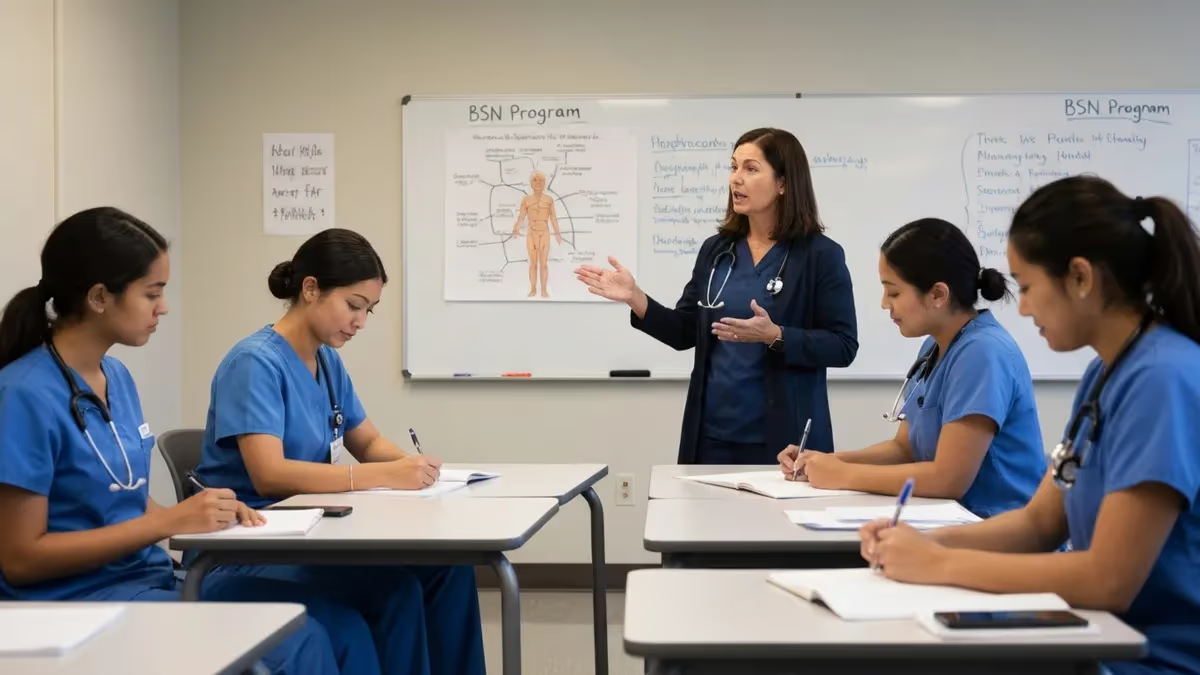
BSN education is the foundation of modern professional nursing in the United States, equipping graduates with the clinical skills, critical thinking abilities, and evidence-based practice knowledge required to thrive in today's complex healthcare environment. A Bachelor of Science in Nursing is a four-year undergraduate degree that combines rigorous coursework in biology, pharmacology, anatomy, and the social sciences with hundreds of hours of supervised clinical practicum. As hospitals increasingly mandate baccalaureate-level training for entry-level registered nurses, understanding the full scope of bsn education has never been more important for aspiring healthcare professionals.
The American Association of Colleges of Nursing reports that roughly 43 percent of all registered nurses held a BSN as their highest nursing credential in 2020, a figure that has climbed steadily every year since the Institute of Medicine's landmark 2010 report called for 80 percent of the nursing workforce to hold a baccalaureate degree by 2020.
That goal shifted the entire industry, prompting academic medical centers, Veterans Affairs facilities, and Magnet-designated hospitals to place strong hiring preferences—and in some cases outright requirements—on BSN-prepared nurses. Students who pursue this path today are positioning themselves at the center of a profession experiencing unprecedented demand.
A traditional BSN program typically spans eight semesters spread across four academic years. The first two years are dominated by prerequisite sciences and general education requirements: chemistry, microbiology, anatomy and physiology, statistics, nutrition, and psychology form the intellectual scaffolding upon which nursing theory is built. During this phase students also take introductory nursing courses that introduce the nursing process, therapeutic communication, and healthcare ethics, giving them a conceptual framework before they ever enter a clinical setting.
The upper-division nursing curriculum—generally years three and four—is where BSN education distinguishes itself most clearly from associate-degree programs. Courses in community and public health nursing, leadership and management, nursing research, evidence-based practice, and population health nursing push students to think beyond the individual patient and consider systemic, social, and policy factors that shape health outcomes at scale. These competencies are precisely what healthcare organizations seek when they write BSN-preferred job postings.
Clinical rotations are the heartbeat of any BSN program. Accreditation bodies typically require a minimum of 500 supervised direct-care hours, though many programs deliver 800 hours or more across medical-surgical, pediatric, obstetric, psychiatric, community health, and intensive care settings. Each rotation is paired with a clinical seminar where students debrief with faculty, apply classroom theory to real patient scenarios, and develop reflective practice habits that carry into their professional careers.
Choosing the right BSN program involves evaluating accreditation status, NCLEX-RN first-attempt pass rates, clinical placement quality, tuition cost, and available program formats—traditional campus-based, hybrid, accelerated, or fully online completion pathways. CCNE and ACEN are the two nationally recognized nursing accreditors in the US, and graduation from an accredited program is a prerequisite for sitting the NCLEX-RN licensure exam in most states. Investing time in this research upfront pays dividends in career flexibility and earning potential for decades afterward.
This guide covers every dimension of BSN education you need to understand: program structures and timelines, admission requirements, curriculum breakdowns, clinical hour expectations, cost and financial aid, career outcomes, and test preparation strategies to help you succeed on the NCLEX-RN and beyond. Whether you are a high school senior exploring nursing as a career, a working LPN looking to advance, or an ADN-prepared nurse pursuing a bridge program, you will find the detailed, accurate information you need here.
BSN Education by the Numbers
Key Facts at a Glance
| Item | Value | Details |
|---|---|---|
| Traditional BSN Length | 4 Years | Full-time campus program |
| Accelerated BSN Length | 12–18 Mo | For non-nursing bachelor's holders |
| Total Program Cost | $40K–$120K | Public vs. private universities |
BSN Program Structures: Which Path Is Right for You?
The standard pathway for high school graduates entering nursing directly. Students complete two years of prerequisite science and general education coursework followed by two years of intensive upper-division nursing coursework and clinical rotations across multiple healthcare settings.
Designed for career-changers who already hold a non-nursing bachelor's degree. Programs compress all nursing coursework into 12 to 18 months of intensive full-time study, with a heavier credit load per semester and condensed clinical schedules that require exceptional time management.
Allows associate-degree RNs to earn a BSN while continuing to work. Most programs are offered fully online and can be completed in 12 to 24 months. Students receive credit for prior nursing coursework and focus on upper-division theory, research, and community health content.
Some universities offer direct LPN-to-BSN tracks that award credit for practical nursing experience and licensure, allowing licensed practical nurses to bypass portions of the associate-degree level and earn a BSN in approximately three years of additional study.
Growing numbers of accredited universities deliver BSN coursework primarily online with in-person clinical placements coordinated locally. This format suits working adults and students in rural areas who cannot relocate but still need accredited, clinically rigorous baccalaureate training.
The BSN curriculum is designed to build competence progressively, moving from foundational sciences in the early semesters to complex clinical decision-making and systems-level thinking in the final year. Anatomy and physiology, microbiology, chemistry, nutrition, statistics, and developmental psychology form the pre-nursing science core at most accredited institutions.
These courses are not merely prerequisites to check off a list—they are the biological and behavioral science foundation upon which every nursing assessment, intervention, and patient education session rests. Without a firm grasp of pathophysiology, for example, a nurse cannot reliably distinguish a patient who is compensating for early shock from one who is simply anxious.
Nursing theory courses introduce students to conceptual models that organize professional practice. Nursing diagnoses, care planning frameworks, and the nursing process—assessment, diagnosis, planning, implementation, and evaluation—are taught and reinforced continuously throughout the program. Students learn to write SBAR (Situation, Background, Assessment, Recommendation) reports, complete head-to-toe physical assessments, administer medications safely using the six rights, document accurately in electronic health records, and perform essential psychomotor skills in simulation labs before practicing on live patients.
Pharmacology is among the most demanding courses in any BSN program, and for good reason: medication errors are among the leading causes of preventable patient harm in US hospitals. Students learn drug classifications, mechanisms of action, therapeutic ranges, adverse effects, contraindications, and nursing implications for hundreds of medications across every body system. They also learn to perform safe dosage calculations using weight-based and body-surface-area formulas, a skill that remains critically important in pediatric and oncology settings throughout a nurse's career.
Mental health and psychiatric nursing courses address therapeutic communication, psychiatric diagnoses under the DSM-5 framework, psychopharmacology, crisis intervention, and legal and ethical considerations unique to behavioral health. Students typically complete a dedicated clinical rotation in an inpatient psychiatric unit or community mental health center. This rotation often proves significant, reshaping students' assumptions about mental illness and deepening their capacity for empathic, non-judgmental care across every future clinical encounter.
Maternal-newborn nursing covers the entire perinatal continuum from preconception counseling through postpartum recovery. Students learn to monitor fetal heart rate patterns, manage labor progress, assist with deliveries, perform newborn assessments using the APGAR scoring system, and educate new mothers on breastfeeding, infant safety, and postpartum warning signs. Women's health content extends to gynecologic conditions, contraception counseling, sexually transmitted infection management, and menopause care—equipping graduates to support female patients across the full lifespan.
Community and public health nursing is a defining feature of BSN education that separates the baccalaureate degree from associate-degree programs. Courses in this area teach epidemiology, health promotion, disease prevention at the population level, social determinants of health, and strategies for improving health equity in underserved communities. Students learn to use tools like windshield surveys, community health assessments, and program planning frameworks to identify needs and design interventions that go far beyond the walls of any hospital. Clinical placements in schools, community health centers, and public health departments bring these concepts to life.
Leadership and management nursing courses prepare BSN graduates for charge nurse roles and the supervisory responsibilities they will encounter even as new graduates. Topics include team communication, conflict resolution, delegation, staffing and scheduling principles, quality improvement methodologies such as PDSA cycles and root-cause analysis, and regulatory frameworks including Joint Commission standards and CMS Conditions of Participation. Nursing research and evidence-based practice courses round out the upper-division curriculum, teaching students to critically appraise published studies, synthesize research findings, and apply evidence to clinical practice—a competency that underpins the entire value proposition of BSN-level training.
BSN Admission Requirements by Program Type
Applicants to traditional four-year BSN programs typically need a high school GPA of 3.0 or higher, completion of high school biology and chemistry with lab components, SAT or ACT scores at or above the university's general admission threshold, and one or two letters of recommendation from science teachers or healthcare professionals. Many programs also require a healthcare experience essay and a minimum number of documented volunteer or shadow hours in a clinical setting—usually 40 to 100 hours—to demonstrate genuine interest and exposure to the profession before the program begins.
Once admitted to the university, students must meet internal progression requirements to advance into the upper-division nursing major. These typically include a minimum GPA of 2.75 to 3.0 in prerequisite science courses, no grade below a C in any required science class, successful completion of a nursing entrance exam such as the HESI A2 or TEAS, and in some cases a criminal background check and drug screen. Competition is intense at many programs, with acceptance rates into the upper-division nursing cohort ranging from 20 to 50 percent even among students already enrolled at the university.

Is a BSN Worth It? Pros and Cons
- +Higher earning potential: BSN-prepared RNs earn an average of $5,000–$10,000 more annually than ADN-prepared nurses in many US markets
- +Broader job access: Magnet hospitals and many Level I trauma centers require or strongly prefer BSN for entry-level RN positions
- +Faster career advancement: BSN is the minimum entry point for most nurse management, education, and informatics roles
- +Graduate school eligibility: Pursuing an MSN, DNP, or CRNA program requires a BSN as a prerequisite at most institutions
- +Stronger evidence-based practice skills: BSN programs include nursing research and EBP coursework that ADN programs often omit entirely
- +Greater scope in community health: BSN graduates are trained to work in public health, school nursing, occupational health, and home care settings
- −Higher upfront cost: Traditional BSN programs cost $40,000–$120,000 in total, significantly more than community college ADN programs
- −Longer time to licensure: Four-year BSN programs delay earnings by one to two years compared to two-year ADN programs
- −Intensely competitive admission: Upper-division nursing cohorts at many universities accept fewer than 30 percent of qualified applicants
- −Heavy clinical commitment: 500–900 clinical hours require significant scheduling flexibility that can be difficult for students with jobs or family obligations
- −Accelerated formats are grueling: ABSN programs often leave no time for employment, requiring students to deplete savings or rely entirely on loans
- −Online programs vary in quality: Not all online BSN programs offer equally rigorous clinical placement support, making accreditation verification essential
BSN Clinical Hours Checklist: What to Track and Complete
- ✓Confirm your program's minimum clinical hour requirement (typically 500–900 hours) and track each rotation independently.
- ✓Complete mandatory medical-surgical rotation hours covering adult acute care, wound management, and IV therapy skills.
- ✓Log all pediatric nursing hours including child development assessments, weight-based medication calculations, and family-centered care documentation.
- ✓Document maternal-newborn rotation hours covering labor monitoring, postpartum assessment, and newborn care skills.
- ✓Record psychiatric and mental health clinical hours including therapeutic communication sessions and crisis intervention observations.
- ✓Complete community and public health hours in an approved non-hospital setting such as a school, public health department, or community health center.
- ✓Obtain clinical evaluation forms signed by your preceptor or clinical faculty after each rotation block.
- ✓Ensure your criminal background check and drug screen are current and on file before each new rotation site accepts you.
- ✓Verify that your CPR/BLS certification (American Heart Association preferred) remains valid throughout all clinical rotations.
- ✓Submit all clinical hour logs and competency validation forms to your nursing program coordinator by each semester's stated deadline.
NCLEX-RN First-Time Pass Rates Are Highest for BSN Graduates
According to NCSBN data, BSN graduates consistently outperform ADN graduates on NCLEX-RN first-attempt pass rates, with BSN programs averaging 89–93 percent compared to 83–87 percent for associate-degree programs. Choosing an accredited BSN program and using structured practice tests throughout your final year is the single most effective strategy for maximizing your first-attempt success rate.
The cost of BSN education varies enormously depending on program type, institution, and state residency status. In-state tuition at public universities for a full four-year BSN program typically ranges from $40,000 to $65,000 in total tuition and fees, while private university programs often run from $80,000 to $140,000 or more before room, board, and living expenses. Accelerated BSN programs at private institutions can reach $60,000 to $90,000 for a 12- to 18-month compressed curriculum, though the shorter timeline means lower opportunity cost if you are transitioning from a lower-paying career field.
Financial aid is widely available for nursing students at every level. Federal Pell Grants provide up to $7,395 per academic year for undergraduate students who demonstrate financial need, and the TEACH Grant program offers up to $4,000 annually for students who commit to teaching in high-need fields and schools after graduation. The Nurse Faculty Loan Program and the NURSE Corps Scholarship Program are federal resources specifically designed for nursing students, with the NURSE Corps Scholarship Program covering tuition, fees, and a living stipend in exchange for service at a Critical Shortage Facility for a minimum of two years post-graduation.
Many state governments operate their own nursing scholarship and loan forgiveness programs, particularly aimed at directing graduates toward rural communities and underserved urban areas that face chronic nursing shortages. Examples include the Texas Nursing Shortage Reduction Program, the California Song-Brown Workforce Training Act, and New York's Nursing Faculty and Workforce Scholarship programs. Students should research their specific state's health workforce office for current funding opportunities, as program availability and award amounts change annually based on legislative appropriations.
Hospital systems increasingly offer tuition reimbursement programs for employees who pursue BSN or RN-to-BSN completion while working. Some health systems, including HCA Healthcare, Ascension, and CommonSpirit Health, have partnered with universities to offer employees deeply discounted or fully subsidized BSN completion programs as part of their workforce development strategy. Working as a nursing assistant, patient care technician, or unit secretary in a hospital while completing your BSN is a financially smart approach that also builds clinical familiarity and professional networks before graduation.
The return on investment for BSN education is compelling across virtually every US market. The Bureau of Labor Statistics projects registered nursing to add over 177,000 new positions per year through 2033, with BSN-prepared nurses enjoying the broadest access to those opportunities. A nurse who earns $86,000 annually and works 35 years accumulates roughly $3 million in career earnings before accounting for overtime, shift differentials, or advancement into management and advanced practice—figures that make the upfront cost of BSN education one of the most defensible investments in American higher education today.
Loan repayment timelines depend heavily on total debt load and starting salary. A nurse with $50,000 in student loans earning $80,000 annually can realistically repay that debt within five to seven years using an aggressive repayment strategy while maintaining a comfortable standard of living. Public Service Loan Forgiveness (PSLF) is an additional option for nurses working at nonprofit hospitals or government health agencies—qualifying borrowers who make 120 on-time income-driven repayments may have their remaining federal loan balance forgiven tax-free, a benefit worth tens of thousands of dollars for nurses who plan to spend their career in public service settings.
Scholarship search engines such as Fastweb, Scholarships.com, and the American Association of Colleges of Nursing's scholarship database list hundreds of nursing-specific awards ranging from $500 one-time grants to multi-year full-tuition scholarships. Local community foundations, hospital auxiliaries, nursing honor societies such as Sigma Theta Tau International, and specialty nursing organizations including the Association of periOperative Registered Nurses, the Emergency Nurses Association, and the Oncology Nursing Society all offer member scholarships that are often less competitive than nationally advertised awards because fewer students know to apply for them.

Graduating from a non-accredited BSN program can disqualify you from sitting the NCLEX-RN in many states, make you ineligible for federal financial aid, and block admission to most graduate nursing programs. Always verify that your program holds active accreditation from either CCNE (Commission on Collegiate Nursing Education) or ACEN (Accreditation Commission for Education in Nursing) before enrolling. Check directly on the accreditor's website—do not rely solely on the school's marketing materials.
Career outcomes for BSN-prepared nurses are significantly broader than those available to nurses prepared at the associate-degree level. Entry-level hospital positions in medical-surgical, telemetry, and stepdown units remain the most common first placements for new BSN graduates, but the degree also opens direct pathways into specialty areas such as labor and delivery, emergency nursing, critical care, pediatric nursing, and oncology that many hospitals restrict to BSN-prepared applicants on their new-graduate residency programs.
These residencies—typically 12 to 18 months of structured orientation, mentorship, and specialty training—are the gold standard transition-to-practice experience for new graduates and are offered almost exclusively at hospitals that require or prefer BSN preparation.
After two to three years of clinical experience, BSN-prepared nurses become eligible for professional certification in their specialty area through organizations such as the American Nurses Credentialing Center, the Board of Certification for Emergency Nursing, and the American Association of Critical-Care Nurses. Certification typically requires passing a standardized exam, meeting minimum clinical hour requirements in the specialty, and maintaining active licensure. Certified nurses command salary premiums of $3,000 to $10,000 annually above non-certified peers, and many hospitals offer one-time certification bonuses ranging from $1,000 to $5,000 as well.
The BSN is also the required entry point for most clinical nurse leader (CNL) and nurse manager positions, which carry additional compensation in the form of management differentials, annual performance bonuses, and enhanced benefits packages. Nurse managers at mid-sized acute care hospitals typically earn $95,000 to $130,000 annually, while directors of nursing and chief nursing officers at large health systems regularly exceed $150,000. For nurses with administrative ambitions, the BSN is not merely a hiring preference—it is the baseline credential expected before any serious management career conversation can begin.
Advanced practice registered nursing—which includes nurse practitioners, certified registered nurse anesthetists, clinical nurse specialists, and certified nurse midwives—requires a BSN as the foundation for graduate-level education. Nurse practitioners with a Doctor of Nursing Practice (DNP) degree earn a median of $126,000 annually according to the Bureau of Labor Statistics, while CRNAs average over $200,000, making BSN education the first step toward some of the highest-paid healthcare careers available without a medical degree. The graduate education pathway typically requires two to four additional years of study beyond the BSN.
Non-clinical career paths are another dimension of BSN value that students often overlook. Nursing informatics specialists use clinical knowledge and technology skills to optimize electronic health record systems, earning $90,000 to $120,000 in roles at hospitals, health IT vendors, and consulting firms.
Nurse educators at community colleges and universities require at minimum an MSN, but the BSN-to-MSN pathway is well-established and many programs can be completed online in two years while working. Legal nurse consultants, case managers, utilization review nurses, insurance industry clinical directors, and pharmaceutical company clinical educators are additional roles where the BSN-prepared RN's clinical perspective commands premium compensation in non-bedside settings.
Geographic flexibility is another underappreciated advantage of BSN education. Travel nursing agencies, which place nurses on 13-week contracts at hospitals across the country, consistently report higher per-diem rates and placement priority for BSN-prepared nurses at specialty and magnet facilities. BSN-prepared travel nurses can earn $90,000 to $160,000 annually including housing stipends and completion bonuses, while simultaneously exploring different regions of the country and accumulating experience across diverse patient populations and clinical systems. The nursing license compact agreement, now active in 41 states, makes multistate travel nursing significantly easier for nurses who reside in compact member states.
For nurses interested in global health, international humanitarian work, or military nursing, the BSN is a universal baseline requirement. The US Army, Navy, and Air Force Nurse Corps all require a BSN for commissioned officer entry, with direct commissioning programs available for new BSN graduates and loan repayment incentives to attract candidates.
Organizations like Doctors Without Borders, the International Committee of the Red Cross, and the Peace Corps health extension programs also require BSN preparation plus relevant clinical experience before field deployment. BSN education, properly understood, is not simply a degree—it is a career-spanning credential that compounds in value at every stage of a nursing career.
Succeeding in a BSN program requires more than academic intelligence—it demands strategic time management, self-directed learning habits, and proactive use of every resource your program offers. One of the most effective study strategies for nursing students is concept mapping, a visual technique that connects pathophysiology, clinical signs, nursing diagnoses, interventions, and expected outcomes into a single integrated diagram for each disease process. Students who create concept maps for conditions like heart failure, sepsis, stroke, and diabetic ketoacidosis consistently outperform peers who rely on passive re-reading because concept mapping forces active retrieval and relational thinking.
Practice questions are indispensable tools throughout BSN education, not just in the weeks before NCLEX-RN. Programs like PracticeTestGeeks, Saunders, UWorld, and ATI provide thousands of NCLEX-style questions that train students to apply the nursing process in prioritization and clinical judgment scenarios.
The key to effective practice question use is active review: after answering each question, read every rationale—not just the ones for questions you missed—and annotate your notes with the clinical pearls embedded in those rationales. Aim for 50 to 75 practice questions per study day in your final semester, and track your performance by content category to identify and address weak areas systematically.
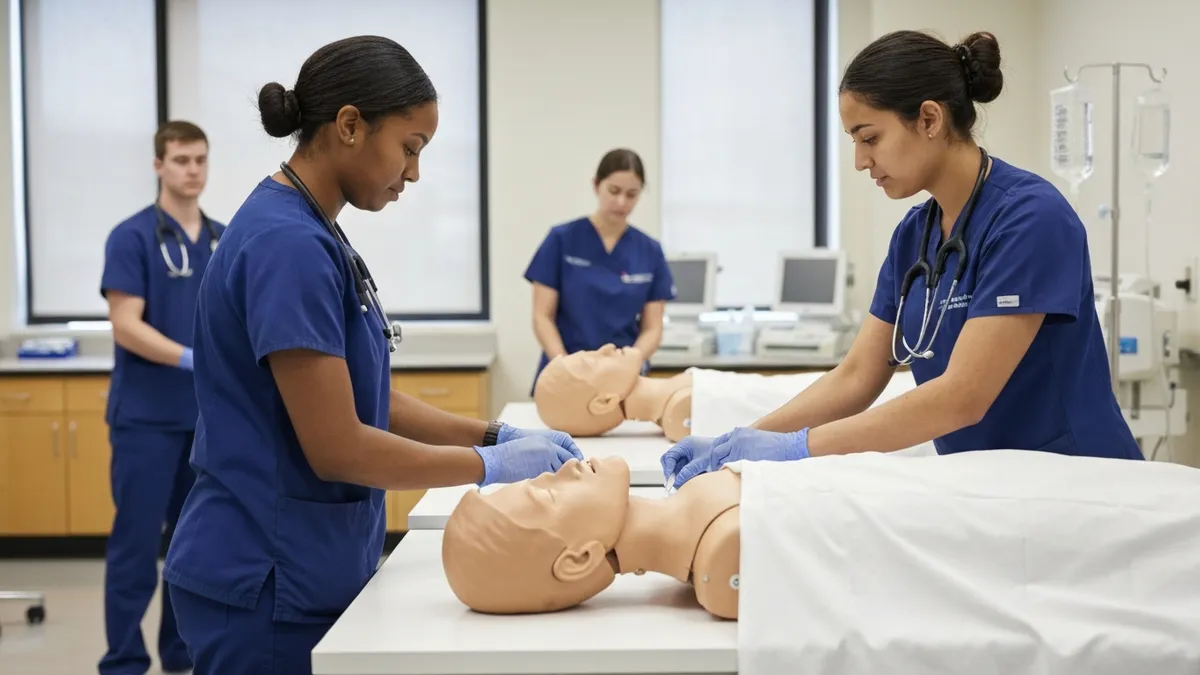
Clinical simulation lab hours, if offered as optional open-lab time beyond required coursework, should always be used. High-fidelity simulation mannequins allow students to practice skills like nasogastric tube insertion, urinary catheterization, IV cannulation, and emergency response scenarios in a no-risk environment where mistakes become learning opportunities rather than patient safety events. Students who log additional voluntary simulation hours tend to enter their clinical rotations with significantly greater psychomotor confidence and cognitive preparedness than those who only complete the required sessions.
Building relationships with clinical preceptors is one of the highest-use investments a BSN student can make. A strong preceptor relationship means more hands-on skill opportunities, honest feedback on your clinical reasoning, exposure to informal knowledge that never appears in textbooks, and a professional reference that carries real weight in your job search.
Come to every clinical day with two to three patient-specific questions prepared based on the previous night's chart review, demonstrate initiative by asking to participate in every procedure within your scope of practice, and follow up on feedback explicitly by showing your preceptor how you applied their guidance the next session.
Time management in the final two years of a BSN program is a professional survival skill. Most students underestimate the study time required per credit hour in upper-division nursing courses—a standard recommendation is three hours of outside study per one hour of classroom instruction, meaning a 15-credit-hour semester demands approximately 45 hours per week of combined class time and studying before accounting for clinical hours.
Students who attempt to hold more than 20 hours per week of employment during this phase of their education frequently struggle academically. If financial circumstances require working, discuss the situation with your academic advisor early to identify solutions such as shifting to part-time enrollment or accessing emergency grant funding.
Self-care and mental health maintenance are topics that nursing curricula discuss in the context of patient education but that students must also apply to themselves. Burnout and compassion fatigue affect nursing students as well as licensed professionals, and the habits you develop in school—regular exercise, adequate sleep, supportive peer relationships, and professional help-seeking when needed—are the same habits that will sustain you through a decades-long nursing career.
Many nursing programs offer counseling services, peer mentoring, and wellness programs specifically designed for healthcare students; taking advantage of these resources is not a sign of weakness but a demonstration of the same self-management competency that nursing employers increasingly list in their job descriptions.
Finally, begin your job search earlier than you think necessary—ideally in the fall semester of your final year. Research hospitals in your target geographic area, identify which ones run new-graduate residency programs, note their application windows (many open in January for May graduates), and attend every nursing career fair your program or local healthcare system sponsors.
Connect with nurse recruiters on LinkedIn, request informational interviews with nurses working in your specialty of interest, and ask your clinical preceptors whether their units have open new-graduate positions. A proactive job search strategy begun six months before graduation consistently yields better outcomes—more offers, more choices, and faster transitions to full-time employment—than a reactive approach begun after your diploma arrives.
BSN Questions and Answers

Accelerated BSN Programs: Requirements, Cost, and Timeline
ADN to BSN Online: Bridge Programs and Costs Complete Guide

Accelerated BSN Programs by Location: Complete US Guide With Canada Comparison for 2026

Accredited BSN Programs: Complete Guide to CCNE and ACEN Nursing Degrees in 2026

BSN RN: What It Is, Salary, and Why It Matters in 2026
About the Author

Registered Nurse & Healthcare Educator
Johns Hopkins University School of NursingDr. Sarah Mitchell is a board-certified registered nurse with over 15 years of clinical and academic experience. She completed her PhD in Nursing Science at Johns Hopkins University and has taught NCLEX preparation and clinical skills courses for nursing students across the United States. Her research focuses on evidence-based exam preparation strategies for healthcare certification candidates.