
Accelerated BSN Programs: Requirements, Cost, and Timeline 2026 September
🎯 Learn how accelerated BSN programs work, who qualifies, what they cost, and how long they take. Covers prerequisites, clinicals, and career outcomes.

Accelerated BSN Programs: Requirements, Cost, and Timeline
An accelerated BSN (ABSN) program is designed for people who already hold a bachelor's degree in a non-nursing field and want to become registered nurses. Unlike traditional four-year nursing programs, accelerated BSN programs compress the nursing curriculum into 12 to 18 months of intensive full-time study. Unlike RN to BSN programs — which are bridge degrees for existing registered nurses — an ABSN takes you from no nursing credentials to a Bachelor of Science in Nursing and eligibility to sit for the NCLEX-RN.
The appeal is straightforward: career changers get the fastest path to nursing licensure that doesn't sacrifice the bachelor's degree most employers prefer. Nurses who graduate from ABSN programs are competitive in the same job markets as traditional BSN graduates. The credential is identical — your diploma reads BSN regardless of whether you completed it in 12 months or 48. The differences are in the intensity of the path and the prerequisites you need before you can apply.
Accelerated programs have grown significantly in number and enrollment over the past decade as healthcare systems actively seek BSN-prepared nurses. The American Association of Colleges of Nursing tracked 290+ accelerated BSN programs in the U.S. as of 2024, compared to fewer than 50 two decades earlier.
Understanding what these programs require, what they cost, and what the experience is like helps career changers make the most informed decision about one of the more demanding academic commitments in healthcare education. The foundation and career opportunities provided by a BSN degree make this commitment worthwhile for motivated career changers with the right prerequisites in place.
This guide covers who qualifies, what prerequisites look like, what the experience is actually like, how much it costs, and what career outcomes look like after graduation. If you're a career changer seriously considering this path, the details here will help you evaluate whether an ABSN is the right fit or whether an alternative pathway — such as an RN to BSN after completing an ADN — might be more practical given your circumstances. The decision carries real financial and personal consequences either way, and making it with complete information is worth the time investment.
- Who qualifies: Career changers with a bachelor's degree in any field
- Duration: 12-18 months (full-time, intensive)
- Cost: $30,000-$80,000 total
- Outcome: BSN degree + eligibility to sit for NCLEX-RN
- Format: Primarily in-person — clinicals require physical presence
- GPA requirement: Typically 3.0 or higher; competitive programs average 3.4+
- Clinicals: 600-800 hours required during the program
Path to Completing an Accelerated BSN
Complete science prerequisites
Build a strong undergraduate GPA
Research and apply to programs
Complete the ABSN program
Pass the NCLEX-RN
Begin your nursing career
Who Qualifies and What Prerequisites Are Required
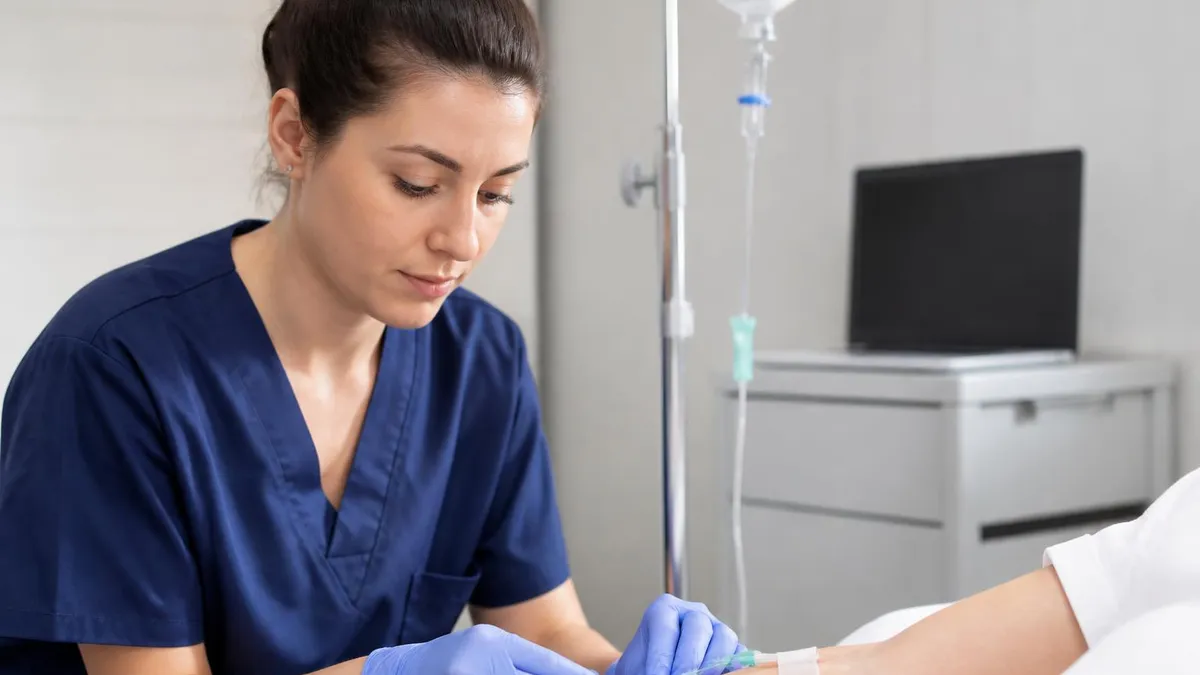
The fundamental qualification for an accelerated BSN is a prior bachelor's degree in any field. Your degree doesn't need to be in science — liberal arts, business, communications, engineering, and social science degrees all qualify. What matters more is that you've completed the required science prerequisites that programs use to verify you have the foundational knowledge needed to succeed in nursing coursework.
The standard science prerequisite list includes anatomy and physiology I and II (often with lab), microbiology (with lab), and either general chemistry or chemistry for health sciences. Many programs also require statistics, psychology, and some version of nutrition. Certain competitive programs add biochemistry or human development. These courses must typically be taken at an accredited U.S. college, completed with a grade of B or better, and completed within 5-7 years of the application date — programs don't want prerequisites that are a decade old because medical knowledge evolves.
Healthcare experience requirements vary by program. Some programs require 50-100 hours of documented patient care experience — working as a CNA, medical scribe, EMT, phlebotomist, or similar role. Others strongly recommend but don't require experience. Application requirements usually include 2-3 letters of recommendation from academic or professional references, a personal statement articulating why you're pursuing nursing, and official transcripts from all colleges attended. Some programs require interviews as a final selection step after academic screening.
Age and prior career background aren't barriers. Accelerated programs regularly enroll students in their 30s, 40s, and beyond — applicants with prior careers in management, teaching, social work, or other healthcare-adjacent fields often bring strengths that traditional 18-22 year-old nursing students haven't yet developed. Understanding how Nursing practice builds on professional maturity helps career changers frame their prior experience as an asset rather than irrelevant background.
Math and communication skills are tacit prerequisites that programs don't always state explicitly but that matter enormously in practice. Nursing requires quick mental math for medication dosing calculations, documentation skills for accurate charting, and communication skills for patient interactions, handoffs, and interprofessional coordination. ABSN students who struggle with any of these tend to have harder transitions into clinical practice — programs that include communication and documentation practice in their curriculum provide stronger preparation for real-world nursing environments.
Accelerated BSN Program Formats
12-18 month in-person intensive. All coursework and clinicals require physical attendance. The most common format. Students attend classes, labs, and clinical rotations at partner hospitals and healthcare facilities.
Combines online didactic coursework with in-person labs and clinicals. Reduces commuting time for lectures while maintaining hands-on requirements. Increasingly available but less common than fully in-person programs.
Designed for working adults. Extends the program timeline (often 20-24 months) to accommodate students who maintain some employment. Clinical rotations still require weekday availability at many programs.
An alternative for applicants who want to pursue a master's degree pathway. Leads to MSN rather than BSN — graduates are eligible for NP or CNS roles without an intermediate step. Longer and more expensive than ABSN programs.
Accelerated BSN vs. RN to BSN Programs
- For: career changers with a prior bachelor's degree in any field
- Outcome: BSN + NCLEX-RN eligibility (no nursing license before starting)
- Duration: 12-18 months full-time intensive
- Format: Primarily in-person; 600-800 clinical hours required
- Cost: $30,000-$80,000
- Intensity: Very high — most students can't work during program
- Admission: Competitive, requires prior science prerequisites

Curriculum and Clinical Requirements
The ABSN curriculum covers the same content as a four-year BSN program — compressed into about a third of the time. Foundational nursing courses come first: fundamentals of nursing practice, pharmacology, health assessment, and pathophysiology. These establish the knowledge base before students move into clinical rotations. There's no general education filler — you go straight into nursing content from day one.
Clinical rotations cycle through the major nursing specialties: medical-surgical nursing, pediatrics, maternal-newborn, psychiatric-mental health, and community health. Most programs require 600 to 800 clinical hours over the program's duration. Clinical sites are hospital units, clinics, and community health organizations where students provide direct patient care under the supervision of a registered nurse or clinical instructor. Programs coordinate clinical placements; students don't arrange their own sites.
The schedule leaves little room for other commitments. A typical week during an ABSN program might include 15-20 hours of lecture, 6-12 hours of clinical, lab sessions, simulation practice, and 15-20 hours of studying and exam preparation. Students who've come from demanding graduate programs — law, medicine, business — often report that the ABSN is more demanding than those programs in terms of sheer hourly commitment. The combination of new cognitive content, hands-on skill development, and high-stakes exams creates sustained pressure throughout the program.
Evidence-based practice, leadership, and community health content — topics that distinguish BSN from ADN education — are woven throughout the curriculum rather than isolated in separate courses. Research literacy, therapeutic communication, informatics, and cultural competence are embedded in clinical experiences rather than treated as abstract academic topics. This integration reflects how modern Nursing practice increasingly demands that clinicians think at the systems level, not just the patient level.
Simulation labs are a significant component of ABSN clinical preparation. Programs use high-fidelity simulation mannequins and standardized patient encounters to practice skills that students can't safely practice on real patients until they've demonstrated competency. Peripheral IV insertion, Foley catheter placement, medication administration, and emergency response skills are rehearsed in simulation before students encounter them in clinical settings. Programs with well-resourced simulation centers provide meaningfully better preparation than those with minimal simulation capabilities.
How to Choose an Accelerated BSN Program
- ✓ACEN or CCNE accreditation — verify on the accrediting body's website, not just the school's marketing
- ✓NCLEX first-attempt pass rate above 85% — ask admissions for the most recent data
- ✓Clinical placement network — confirm the program has established relationships with hospitals in your area
- ✓Prerequisites accepted — verify the program accepts your specific courses and their age
- ✓Cohort size and student-faculty ratio — smaller cohorts generally mean more individual attention
- ✓Location and clinical site logistics — where will you actually be doing clinicals, and can you get there
- ✓Tuition transparency — get total cost estimates including fees, books, and uniform/equipment costs
- ✓Financial aid and scholarship availability for accelerated programs
- ✓Program attrition rate — ask what percentage of students who start actually graduate
- ✓Bridge support for prerequisites if your science coursework needs refreshing or completion
Accelerated BSN Programs: Advantages and Drawbacks
- +Fastest path from no nursing credentials to BSN-prepared RN
- +Same outcome as traditional 4-year BSN — fully competitive in the job market
- +Programs recruit career changers with diverse professional backgrounds
- +Growing number of programs provides options across most major metros
- +Some programs have partnerships with health systems for clinical placement and hiring
- +Prior professional maturity often translates to stronger clinical performance
- +New nurse residency programs specifically recruit and support ABSN graduates
- −Cost significantly higher than RN to BSN ($30k-$80k vs. $8k-$40k)
- −Intensity typically precludes full-time employment during the program
- −Prerequisite completion can add 1-2 years before program start
- −Competitive admission — strong applications can still be waitlisted
- −Primarily in-person format limits geographic flexibility
- −No income from nursing during the 12-18 month program period
- −Burnout risk is real — the intensity is by design but not sustainable for everyone
Cost and Financial Aid for Accelerated BSN Programs
ABSN programs cost significantly more than RN to BSN programs, and most are offered by private universities with higher tuition rates than public institutions. Program costs typically range from $30,000 to $80,000 for the entire program — not per year. Private university programs at schools with strong nursing reputations often land in the $50,000-$80,000 range. State university ABSN programs, where available, can run $25,000-$45,000. International students pay substantially higher rates at most institutions.
Financial aid options for ABSN students are narrower than for traditional students. Federal loans — subsidized and unsubsidized Stafford loans, plus PLUS loans for graduate and professional students — are available at accredited programs. However, because ABSN is a second bachelor's degree, Pell Grant eligibility is typically limited. Scholarships specifically for ABSN students exist but are competitive and relatively small. Some hospitals offer loan repayment or tuition assistance as a recruitment incentive for ABSN students who commit to working at their facility post-graduation — these arrangements are worth exploring during program selection.
The opportunity cost matters beyond tuition. Career changers in their 30s entering an ABSN program often leave professional salaries behind for 12-18 months. Someone earning $80,000 in their prior career loses $120,000+ in income during an 18-month ABSN. When calculating the total investment, including both tuition and foregone income, the numbers can be sobering — though nursing salaries and BSN degree career trajectories make the long-term economics work for most. New grad RN salaries in major metro areas routinely start at $70,000-$90,000, rising substantially with experience and specialization.
Living expenses during the program period are the financial factor that catches many applicants off guard. Beyond tuition, an 18-month ABSN program requires living costs — rent, food, transportation, health insurance — during a period when most students aren't working or are working minimally. Building 18 months of living expenses into your financial plan before starting is more realistic than assuming part-time work will cover daily costs alongside the program's intensity. Students who run out of money mid-program face much harder choices than those who budgeted realistically.
Accelerated BSN by the Numbers
Career Outcomes After an Accelerated BSN
ABSN graduates enter the job market as BSN-prepared RNs with the same credential as traditional four-year nursing graduates. Employers don't differentiate on the transcript — a BSN is a BSN. In most nursing markets, this means access to the full range of entry-level RN positions, including positions at Magnet-designated hospitals that require or prefer BSN nurses. Starting salaries for new grad RNs with a BSN range from $55,000-$75,000 in lower-cost markets to $85,000-$120,000+ in high-cost-of-living metros like San Francisco, New York, and Seattle.
New nurse residency programs — 12-month structured transition-to-practice programs offered by major health systems — are the preferred first-employment path for ABSN graduates entering hospital nursing. These programs pair new nurses with preceptors, provide ongoing education and support during the first year, and ease the transition from student to practicing clinician. Health systems that operate these programs actively recruit from ABSN cohorts and often form pipeline relationships with specific programs.
Career advancement after the ABSN follows the same career paths as traditional BSN graduates. Charge nurse, nurse educator, case manager, and clinical coordinator roles are accessible within 2-5 years of experience. MSN, NP, CNS, CRNA, and DNP programs all accept ABSN graduates with BSN credentials.
The BSN remains a prerequisite for all these advanced practice pathways — but having it in place from day one of your nursing career means you never have to pause career development to complete it later. Reviewing study resources like the BSN practice test PDF helps you stay current on nursing knowledge throughout your career progression.
Specialty areas vary in how quickly new ABSN graduates can enter them. Emergency nursing, intensive care, and labor and delivery units sometimes require 1-2 years of general medical-surgical experience before new nurses are considered — though new graduate ICU and ED programs exist at some health systems specifically to develop new nurses into these high-acuity roles. Surgical nursing, oncology, pediatrics, and outpatient settings have their own entry expectations. Career changers who come from backgrounds in engineering, pharmacy, or other technical fields sometimes find particular affinity for procedural or highly technical nursing specialties.
Application Tips for Competitive ABSN Programs
Successful ABSN applications demonstrate both academic preparation and clinical motivation. Programs want to see that you've genuinely engaged with healthcare — not just researched it online. If you haven't already, completing 50-100 hours of patient care shadowing or volunteer experience before applying strengthens your personal statement with specific, concrete observations about nursing practice. Generic statements about wanting to help people are common; statements grounded in specific clinical moments stand out.
Your science GPA matters as much as your cumulative GPA. Many programs calculate and report both separately. If your cumulative GPA includes grades from a challenging undergraduate major that dragged down your average, focus on how your science prerequisite performance demonstrates you can handle nursing school content. A 3.8 in anatomy, physiology, and microbiology after a 3.0 undergraduate degree in English tells a clearer story than the cumulative number alone.
Applying to multiple programs simultaneously is standard practice. ABSN programs have varying admission rates — some top programs accept 15-20% of applicants, while regional programs may accept 50% or more. Targeting 4-6 programs across selectivity levels, similar to undergraduate or graduate school applications, is a reasonable strategy.
Application fees, transcript costs, and time spent on essays add up, but so does the risk of a single application cycle with no offers. The nursing programs that fit your situation geographically and financially may not be the most recognizable names — regional public university programs often deliver equivalent outcomes for substantially less cost than prestigious private institutions.
Letters of recommendation carry weight in ABSN admissions. Prioritize recommenders who can speak to your academic capability and your suitability for clinical work — a science professor who knows your work and a healthcare professional who has observed you in a patient care context are a strong combination. Generic letters from supervisors in non-healthcare roles provide less signal than targeted letters that address nursing-specific qualities.
Waitlists are common at competitive programs and worth navigating strategically. If you receive a waitlist offer, confirm your status and ask about typical waitlist conversion rates. Some programs move substantial waitlist volume as initially admitted students decline or withdraw. Accepting a waitlist offer while continuing to pursue other programs is reasonable — you can decline one offer when you receive another. Maintaining contact with admissions and reapplying if your first cycle is unsuccessful is a standard path; many successful ABSN students are admitted on their second application after addressing weaknesses in their first application.
Accelerated BSN Questions and Answers
About the Author

Registered Nurse & Healthcare Educator
Johns Hopkins University School of NursingDr. Sarah Mitchell is a board-certified registered nurse with over 15 years of clinical and academic experience. She completed her PhD in Nursing Science at Johns Hopkins University and has taught NCLEX preparation and clinical skills courses for nursing students across the United States. Her research focuses on evidence-based exam preparation strategies for healthcare certification candidates.