
Fine for Boating Without a License: What You'll Pay in Every State 2026
What's the fine for boating without a license? Learn penalties by state — Florida, California, Texas & more. ✅ Know before you go.
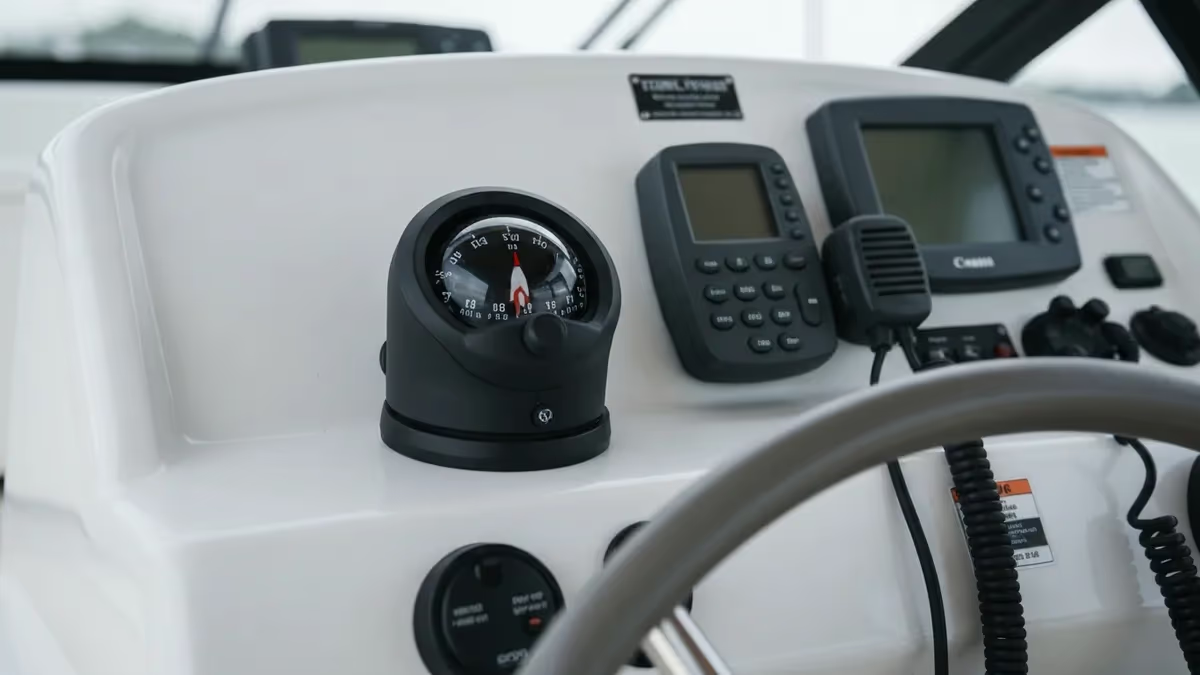
The fine for boating without a license can catch first-time offenders completely off guard. In Florida, operating a vessel without the required boating safety education certificate carries fines that typically start at $50 but can escalate to $500 or more depending on the circumstances, the officer's discretion, and whether other violations accompany the stop. Florida boating license requirements apply to anyone born on or after January 1, 1988, and failure to carry proof of compliance on the water is treated as a primary offense by the Florida Fish and Wildlife Conservation Commission.
Every state handles boating license enforcement differently, which creates genuine confusion for boaters who travel across state lines. A boater licensed under the california boating license system issued by the California State Parks Division of Boating and Waterways may assume their card is universally recognized, but penalties for non-compliance in a neighboring state can still apply if the operator does not meet that state's age or vessel-type thresholds. Understanding exactly do you have to have license to drive a boat in your specific jurisdiction is the first step toward staying legal and avoiding costly fines.
The enforcement landscape is more active than many recreational boaters realize. The U.S. Coast Guard and state natural resources agencies conducted over 4.8 million vessel contacts in a recent reporting year, issuing citations for everything from missing life jackets to unregistered boats. Among the most common citations is the failure to carry a valid boating education card, which in several states now carries mandatory court appearances rather than a simple pay-by-mail fine option.
Alabama boating license requirements represent one end of the spectrum: the state has relatively streamlined regulations and lower fine schedules, but repeat offenders can face suspension of boating privileges statewide. At the other end, states like California have layered their fine schedules with county surcharges, so a base fine of $100 can balloon to $400 or more after all assessments are added. Tennessee boating license rules occupy a middle ground, with fines indexed to the severity of the violation and the operator's age.
The financial hit from a boating citation is only part of the story. Many insurers treat a boating-without-a-license citation the same way auto insurers treat unlicensed driving: it may void your coverage for any accident that occurs during the stop, leaving you personally liable for property damage, medical bills, and even wrongful death claims. That exposure dwarfs any fine amount and is the most compelling reason serious boaters invest the time to get properly certified before launch day.
This article breaks down exactly what fines and penalties boaters face across the major boating states, explains who legally needs a license or boating education card, and gives you a clear roadmap for getting certified before your next outing. Whether you are shopping for a texas boating license course or just trying to understand the rules in your home state, the information below will help you navigate the legal side of recreational boating with confidence.
Boating License Fines by the Numbers
Who Legally Needs a Boating License?
Most states tie boating education requirements to the operator's birth year rather than issuing a traditional license. Florida requires everyone born after January 1, 1988 to carry a boater safety ID card. California phases in requirements by age cohort.
Several states exempt human-powered craft, sailboats under a certain length, or vessels below 10 horsepower. Tennessee and Alabama both use engine horsepower thresholds. Always check your vessel's motor rating against state rules.
Federal navigable waterways fall under USCG oversight, while inland lakes may be managed by state DNR or wildlife agencies. Rules can differ between a state lake and a river that crosses state lines, so verify jurisdiction before departure.
Some states exempt short-term rental operators if the rental company provides a documented safety briefing on-site. This exemption is narrow and does not apply to boats borrowed from friends or family members.
All 50 states and Canadian provinces recognize NASBLA-approved boater education cards. If your card is from a NASBLA-approved course in any state, it is typically valid nationwide, but you must still carry the physical card or a digital copy.
Fine schedules for operating a boat without proper credentials vary dramatically from one state to the next, and even within a single state the final amount you pay depends on factors you might not anticipate.
In Florida, for example, a first-time violation of the boating safety education requirement carries a base fine of $50 under Florida Statute 327.395, but the court typically adds a county surcharge, a state court cost assessment, and a driver improvement fee that push the total to roughly $150–$250. Repeat offenses within three years escalate to a $500 fine, and the court may order completion of an approved boater education course as a condition of dismissal.
California operates under a tiered infraction system administered through the court rather than a simple field fine. The base fine for boating without a valid California boating license card sits at $100, but California's penalty assessment schedule multiplies base fines by a factor of approximately 4x when all state and county surcharges are applied.
A boater who pays online without contesting the ticket can realistically expect a total obligation near $400, and those who miss the payment deadline face additional failure-to-appear penalties that can suspend their driver's license. The boating license ca system uses the California Boater Card, and compliance enforcement has intensified every year since the phased rollout began in 2018.
Texas takes a somewhat more flexible approach. Under Texas Parks and Wildlife Code, boating education requirements apply to operators born after September 1, 1993, who are operating a vessel powered by more than 15 horsepower. A first citation for non-compliance is a Class C misdemeanor, which carries a maximum fine of $500.
In practice, officers in most Texas counties issue a warning on the first contact and a $150–$250 fine on the second. However, if the operator is also cited for reckless operation, alcohol use, or equipment violations at the same stop, the combined fines and mandatory court costs can exceed $1,000.
If you want to understand do you need license to operate a boat in Minnesota specifically, the answer involves age, vessel type, and whether you are operating on a state lake versus a boundary water. Minnesota's fine schedule starts at $100 for first-time education card violations, but the state also has a provision that allows conservation officers to impound the vessel if the operator is both unlicensed and shows signs of impairment — adding towage and storage fees to what began as a simple paperwork stop.
New York State imposes some of the steepest financial penalties for boating without proper certification. Under the New York Navigation Law, operating a vessel without the required boater safety certificate can result in a fine ranging from $75 to $500 for a first offense.
The nys boating license card must be carried on the vessel at all times when the operator is underway, and the state police marine unit issues hundreds of citations each summer season on the Hudson River, Long Island Sound, and the Great Lakes shoreline. New York courts have upheld fines at the high end of the range for operators who show prior knowledge of the requirement but deliberately chose not to comply.
Washington State links its fine schedule to a point system similar to motor vehicle enforcement. A boating-without-certificate violation adds points to an operator's boating record, and accumulating enough points triggers a mandatory hearing with the Washington State Parks and Recreation Commission. First-offense fines run $87–$550 depending on county, and the hearing process itself can result in temporary suspension of boating privileges. This point system is one reason Washington consistently ranks among the states with the highest compliance rates — the long-term consequences extend well beyond the immediate fine.
It is worth emphasizing that in virtually every state, the fine for operating without a boating education card is dwarfed by the financial consequences of an accident while unlicensed. Liability exposure for property damage alone can run into tens of thousands of dollars, and personal injury claims frequently exceed insurance policy limits when the carrier discovers the operator was non-compliant at the time of the incident. Getting properly certified is not just a legal obligation — it is fundamental risk management for anyone who spends time on the water.
Do You Need a License to Drive a Boat? State Spotlights
Florida boating license rules are among the most actively enforced in the country. Anyone born on or after January 1, 1988 must carry a Florida Boater Safety Education ID Card when operating a vessel powered by 10 horsepower or more. The Florida Fish and Wildlife Conservation Commission conducts year-round patrols, and boating-related citations spike significantly between Memorial Day and Labor Day. First-time violators face fines starting at $50 plus court costs, while repeat offenders can be ordered to complete a full approved course before they are permitted to return to the water.
Alabama boating license requirements are generally less stringent than Florida's, applying primarily to operators under age 26 who are operating motorized vessels. Alabama's fine schedule starts lower — around $25 to $100 for a first offense — but the state has reciprocal enforcement agreements with Florida and Georgia, meaning a violation in one state can appear on your record in another. Tennessee boating license requirements also apply based on age and birth year, with operators born after January 1, 1989 required to carry proof of education. Tennessee fines for first offenses typically run $50 to $150 before court costs are assessed.
Getting a Boating License: Benefits vs. Burdens
- +Avoids fines ranging from $50 to $1,000+ depending on state and repeat offense status
- +Satisfies NASBLA reciprocity — one card is recognized in all 50 states and Canadian provinces
- +May qualify you for boater's insurance discounts of 5–15% with participating carriers
- +Demonstrates competency that can reduce liability exposure in the event of an accident
- +Online courses can be completed at your own pace, often in under 8 hours
- +Protects your boating privileges — avoids point accumulation and potential suspension records
- −Online course fees typically range from $25 to $75, adding an upfront cost
- −Some states require a proctored in-person final exam, adding scheduling constraints
- −Physical card must be carried on the vessel — forgetting it at home still counts as a violation
- −Requirements differ by state, so boaters who travel frequently must verify reciprocity details
- −Courses must be renewed if your card is lost and replacement fees apply in some states
- −Time investment of 6–10 hours for a quality NASBLA-approved course may feel burdensome
How to Avoid Boating License Fines: 10-Point Compliance Checklist
- ✓Confirm your state's birth-year cutoff to determine whether you legally need a boating education card.
- ✓Enroll in a NASBLA-approved course — online options from BoatUS, USCG Auxiliary, and state agencies all qualify.
- ✓Complete the course and pass the final exam before your first outing of the season.
- ✓Carry the physical or digital boating education card on the vessel every time you operate.
- ✓Verify reciprocity if boating in a state other than your home state — your card should be NASBLA-recognized.
- ✓Check your vessel's engine horsepower rating against the state threshold — exemptions often apply below 10–15 hp.
- ✓Keep a copy of the card in a waterproof pouch in your dry bag alongside registration documents.
- ✓Renew or replace a lost card promptly — most issuing agencies can reissue within 5–7 business days.
- ✓Review your state's fine schedule annually, as legislatures update penalty amounts in regular sessions.
- ✓Ensure any operator other than yourself who may take the helm also holds a valid boating education card.
A Boating Card Can Pay for Itself in One Outing
The average NASBLA-approved online boating course costs $25 to $50 and takes 6 to 8 hours to complete. A single citation for boating without a license in most states costs $150 to $400 after surcharges — making the course a straightforward financial win even before accounting for the safety knowledge and potential insurance savings it provides.
Getting certified for boating in the United States is significantly easier than most first-time boaters expect. The National Association of State Boating Law Administrators (NASBLA) maintains a directory of approved course providers, and every course that earns NASBLA approval meets a standardized curriculum covering navigation rules, emergency procedures, safe fueling, alcohol on the water, and weather judgment. Completing any NASBLA-approved course earns you a boater education card that is recognized in all 50 states, eliminating the need to repeat the process if you relocate or boat frequently in multiple states.
Online course formats have become the dominant delivery method since they allow operators to work through the material at their own pace. Most online providers break the curriculum into chapters of 20 to 40 minutes each, and you can pause, return, and review as many times as needed before taking the final exam.
Typical completion times run from 6 to 10 hours for a thorough reading of all material, though experienced boaters who are primarily taking the course to satisfy a state requirement often move faster through sections they know well. The final exam typically consists of 50 to 75 multiple-choice questions, and most states require a score of 70% to 80% to pass.
In-person classroom courses remain available through USCG Auxiliary chapters, Power Squadron clubs, and state wildlife agencies. These instructor-led options are especially valuable for new boaters who benefit from hands-on demonstrations of equipment use, knot tying, and chart reading. Many states offer these classroom sessions for free or at very low cost as part of their public safety mission, and some include a practical on-water component where students operate a vessel under instructor supervision before receiving their card.
Hybrid courses that combine online learning with an in-person skills day represent a growing middle ground. You complete the knowledge curriculum online over several evenings, then attend a single half-day session at a marina where instructors walk you through fire extinguisher use, distress signal deployment, and man-overboard recovery. Several major boating states including New York, Washington, and Massachusetts have moved toward requiring hybrid or hands-on components for younger operators who are obtaining their card for the first time before age 16.
Practice tests are an underutilized preparation tool that dramatically increases first-attempt pass rates on the final exam. The actual state exam questions are drawn from a standardized NASBLA question bank, and published practice exams cover the same topics with similar phrasing. Boaters who spend 90 minutes on practice questions before sitting the final exam report measurably higher confidence and lower re-take rates. PracticeTestGeeks offers multiple free boating license practice tests that simulate the real exam format and explain the reasoning behind correct answers, which reinforces retention better than simply memorizing answer choices.
Once you have passed your exam and paid any applicable card issuance fee — typically $10 to $30 — your card is permanent in most states. Unlike a driver's license, the boating education card does not expire and does not require periodic renewal. However, you must carry it on the vessel whenever you are operating, and a photocopy stored at home does not satisfy the requirement. Some states accept digital copies displayed on a smartphone, but officer discretion applies in the field, so a waterproof physical card in your boat bag is always the safest approach.
The most important thing to understand about boating certification is that it is not merely a bureaucratic hurdle — it is a genuine safety tool. USCG accident statistics consistently show that 88% or more of fatal boating accidents involve operators with no formal boating safety instruction. The content of NASBLA-approved courses directly addresses the scenarios that most frequently lead to fatalities: capsizing in cold water, collision avoidance at night, alcohol impairment judgment, and life jacket use. Every hour spent in certification study is an investment that pays dividends every time you push away from the dock.
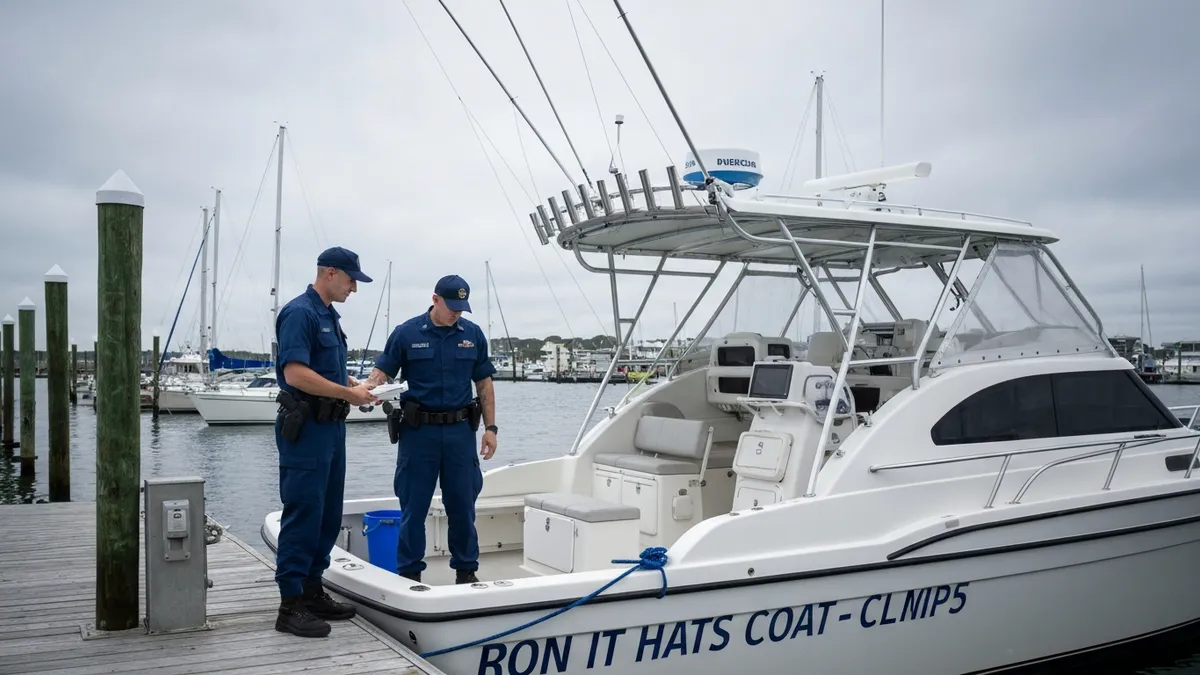
In several states including California and New York, officers are required by department policy to issue a written citation rather than a verbal warning for boating-without-education-card violations. Even if an officer was friendly and informal at the stop, a citation may be mailed to your registered address within 30 days. Check your mail carefully after any marine law enforcement contact and do not assume the matter is closed until you receive written confirmation.
After receiving a boating citation, most operators have a choice: pay the fine by mail or online, or contest the citation in court. The decision matters more than it might initially appear. Paying the fine by mail is treated as an admission of the infraction in most jurisdictions, which creates a record that affects your boating history and may be reported to your insurance carrier.
Contesting the citation allows you to present mitigating circumstances — for example, if you had recently completed a NASBLA course but had not yet received your physical card — and judges in boating court cases have historically shown willingness to reduce or dismiss fines for first-time offenders who demonstrate proactive compliance.
If you choose to contest the citation, arrive at the hearing with documentation. Bring your completed course certificate even if the card itself has not arrived, a printout of your enrollment date, and any correspondence from the issuing agency confirming your pending card status. In Florida and California specifically, courts have accepted proof of course enrollment dated before the citation as grounds for significant fine reduction, treating the situation as a paperwork timing issue rather than a deliberate violation. An attorney specializing in marine law can provide guidance for cases involving multiple citations or charges beyond the education card violation.
Insurance consequences deserve special attention. Standard recreational boat insurance policies contain a compliance warranty clause stating that the insured operator was in full legal compliance at the time of any covered incident. If an accident occurs and the post-incident investigation reveals the operator was operating without a required boating education card, the insurer can invoke this clause to deny the claim, void the policy retroactively, or rescind coverage for the specific incident.
This exposure is not hypothetical — marine insurance adjusters routinely check operator certification status as part of accident investigation, and denial letters citing compliance warranty breach are issued every boating season.
Some states have established boating court diversion programs modeled on traffic school for motor vehicle violations. Operators who complete a state-approved boating safety course within a specified period after citation can have the fine reduced or the record expunged. Florida's diversion option allows first-time offenders to complete an approved course and submit proof to the clerk, resulting in dismissal of the citation.
Tennessee offers a similar option for young operators under 18. If your state offers a diversion program, it is almost always the best outcome: you avoid the fine, avoid the record, and gain the safety knowledge the requirement was designed to provide in the first place.
The long-term record implications of boating citations differ significantly from motor vehicle records. Most states do not share boating violation data with the DMV, so a boating citation will not directly affect your driver's license or automobile insurance rates. However, your boating record is accessible to marine insurers, marinas that require proof of good standing for slip rentals, and future employers in maritime industries. Charter boat captains, fishing guide license applicants, and anyone pursuing a USCG Operator of Uninspected Passenger Vessel (OUPV) license will find that their boating citation history is reviewed as part of the application process.
For boaters who travel to texas boating license waters or other states frequently, maintaining an organized boating compliance file is worth the small effort. Keep digital copies of your boater education card, your vessel registration, your insurance policy declarations page, and any state-specific supplements in a cloud folder you can access from your phone. If you are stopped on the water and the physical card is not on board, being able to pull up a digital copy instantly demonstrates good faith and frequently results in a warning rather than a citation — a difference of several hundred dollars.
Finally, remember that enforcement intensity varies significantly by season and location. High-traffic holiday weekends on popular waterways — particularly the Fourth of July, Memorial Day, and Labor Day — see dramatically increased law enforcement presence. Marinas near urban areas and state park boat launches are frequent patrol points. Planning your first outing to coincide with a low-traffic weekday in the shoulder season is smart boating, but it is not a compliance strategy. Getting properly certified before the season begins is the only reliable way to ensure every day on the water is enjoyable rather than financially and legally stressful.
Preparing for your boating license exam is most effective when you treat it the way experienced test-takers approach any high-stakes certification: structured review, spaced repetition, and deliberate practice on your weak areas rather than passive re-reading of material you already know well. The NASBLA curriculum covers eight core domains — navigation rules, aids to navigation, weather, boat handling, personal safety, legal requirements, environmental responsibilities, and emergency procedures — and your practice strategy should ensure roughly equal coverage of each domain rather than overweighting topics that happen to interest you most.
Navigation rules consistently generate the highest number of incorrect answers on first-attempt exams. The International Regulations for Preventing Collisions at Sea (COLREGs) and their US inland water counterparts contain a substantial number of counterintuitive right-of-way scenarios that require deliberate memorization. Particularly confusing are the rules governing which vessel is the stand-on vessel versus the give-way vessel in crossings, overtaking situations, and narrow-channel encounters. Spending 30 minutes on navigation rule practice questions specifically — separate from your general study sessions — produces a disproportionate improvement in overall score.
Aids to navigation questions cover buoy colors, shapes, light patterns, and sound signals, and these are among the easiest points to earn on the exam once you have committed the core system to memory. The classic mnemonic Red Right Returning (keep red buoys on your starboard side when returning from sea toward port) handles the foundational scenario, but practice questions will also test your recognition of preferred channel buoys, safe water marks, information buoys, and regulatory markers. Flashcard-style drill is particularly effective for this domain because recognition is the key skill, not reasoning.
Weather and emergency procedure questions require a different kind of preparation. Rather than pure memorization, these questions test judgment: what should you do first if your boat takes on water rapidly, what conditions indicate a fast-approaching thunderstorm, or how should you signal distress in an area with no cell coverage. Reading scenario-based practice questions aloud and explaining your reasoning before checking the answer is an evidence-backed technique that builds the kind of situational judgment these questions assess. It also mirrors the real mental process you will use on the water when an actual emergency unfolds.
Environmental responsibility has become a growing portion of the NASBLA exam in recent years, reflecting increased legislative attention to fuel spill prevention, discharge regulations, aquatic invasive species management, and no-wake zone enforcement. Questions in this domain may ask about the legal consequences of discharging bilge water that contains oil sheens, the proper disposal method for marine sanitation device (MSD) waste in different water zones, or the inspection requirements for aquatic invasive species when crossing certain state lines. Boaters who spend time on western lakes or the Great Lakes will find this domain especially relevant to their actual boating conditions.
Scheduling your final exam attempt for early in the morning rather than late in the day is a small but real advantage. Research on cognitive performance shows that most people score measurably higher on knowledge-based tests taken within three hours of waking, before decision fatigue and distraction accumulate. If your course offers flexible scheduling for the online proctored exam, use that flexibility strategically. Similarly, avoid scheduling your exam attempt within 24 hours of a full day on the water — sun exposure, physical exertion, and dehydration all measurably impair test performance even when you do not feel tired.
Once you have earned your boating education card and are legal on the water, the learning does not need to stop. The USCG Auxiliary and United States Power Squadrons both offer advanced boating courses covering celestial navigation, advanced seamanship, marine electronics, and piloting. These courses do not replace your NASBLA card but build on it, and many insurance carriers reward completion of advanced courses with additional premium discounts.
The boating community is also an active self-reinforcing safety culture — experienced boaters at your marina are almost always willing to share practical knowledge about local hazards, weather patterns, and seasonal conditions that no standardized curriculum can fully capture.
Boating License Questions and Answers

About the Author

Master Mariner & Maritime Certification Specialist
Massachusetts Maritime AcademyCaptain David Harrington is a US Coast Guard licensed Master Mariner with a Bachelor of Science in Marine Transportation from Massachusetts Maritime Academy. He has 22 years of deep-sea and coastal navigation experience aboard commercial vessels and specializes in preparing maritime candidates for USCG licensing exams, STCW certification, dynamic positioning (DPO), and officer-of-the-watch qualifications.
Join the Discussion
Connect with other students preparing for this exam. Share tips, ask questions, and get advice from people who have been there.
View discussion (6 replies)