
Tennessee Boating License & Midwest States Guide 2026 October
Pass your Tennessee Boating License & Midwest exam on the first attempt. ✏️ Practice questions with detailed answer explanations, hints, and instant scoring.
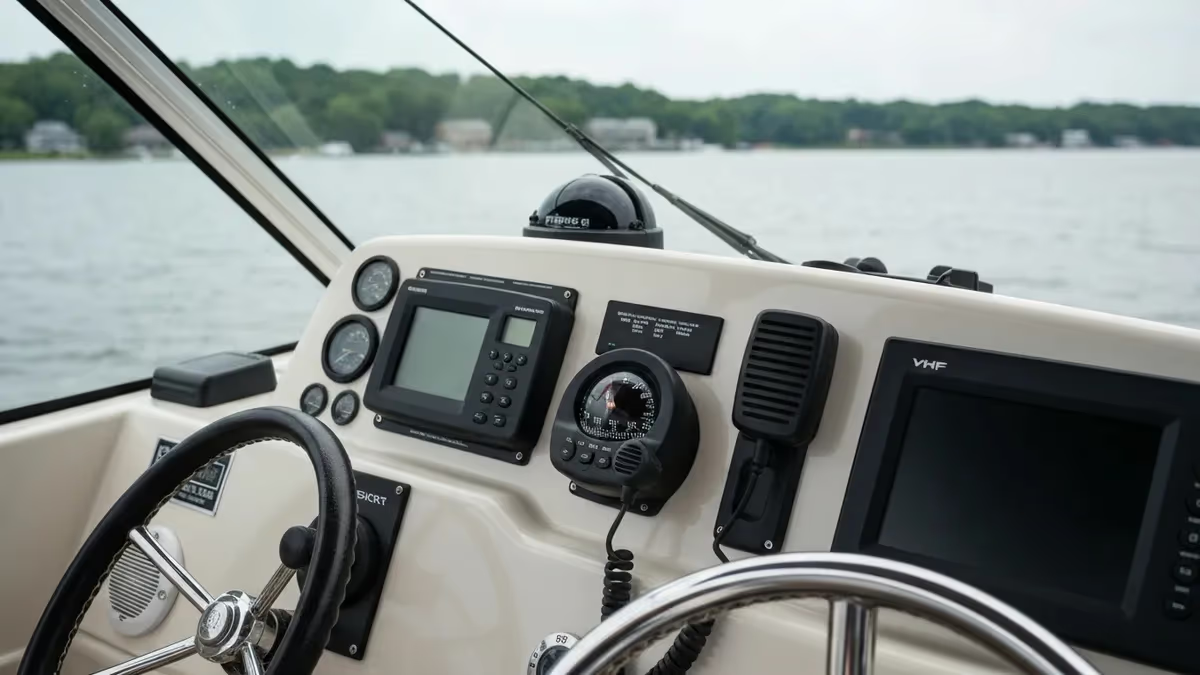
Tennessee Boating License Requirements: What TWRA Requires
The Tennessee boating license is technically a boating safety certificate issued through the Tennessee Wildlife Resources Agency (TWRA) — and if you were born after January 1, 1989, you must hold one to legally operate any motorized vessel on Tennessee waters. There is no grandfathering for casual boaters or low-horsepower engines. If the boat has a motor and you were born after that date, the certificate is required. Before you sign up for an official course, use our free boating license requirements practice test to build confidence and identify gaps in your knowledge.
One critical exception that catches boaters off guard: personal watercraft (PWCs) and jet skis carry no birth-year exemption. Any operator — regardless of age — must hold a valid TWRA boating certificate to ride a PWC on Tennessee waters. This rule applies statewide on all lakes, rivers, and reservoirs under TWRA jurisdiction.
Key facts every Tennessee boater must know:
- The certificate is permanent — no renewal fees, no expiration date once earned
- TWRA accepts online courses from Boat-Ed and BOATERexam (both NASBLA-approved) — typical cost is $29.95
- Free in-person classroom courses are available at select Tennessee state parks and TWRA-sponsored events
- Operators aged 12–15 may operate a motorized vessel only with a certificate AND adult supervision
- Operators under 12 cannot legally operate a motorized vessel in Tennessee
For the boating license TN process, completion of any NASBLA-approved course satisfies the legal requirement. Your certificate is then registered in TWRA's system and valid anywhere in Tennessee — and recognized reciprocally by most other states.
Boating license applicants can review all required safety rules, navigation laws, and equipment requirements with our Tennessee boating license 2026.
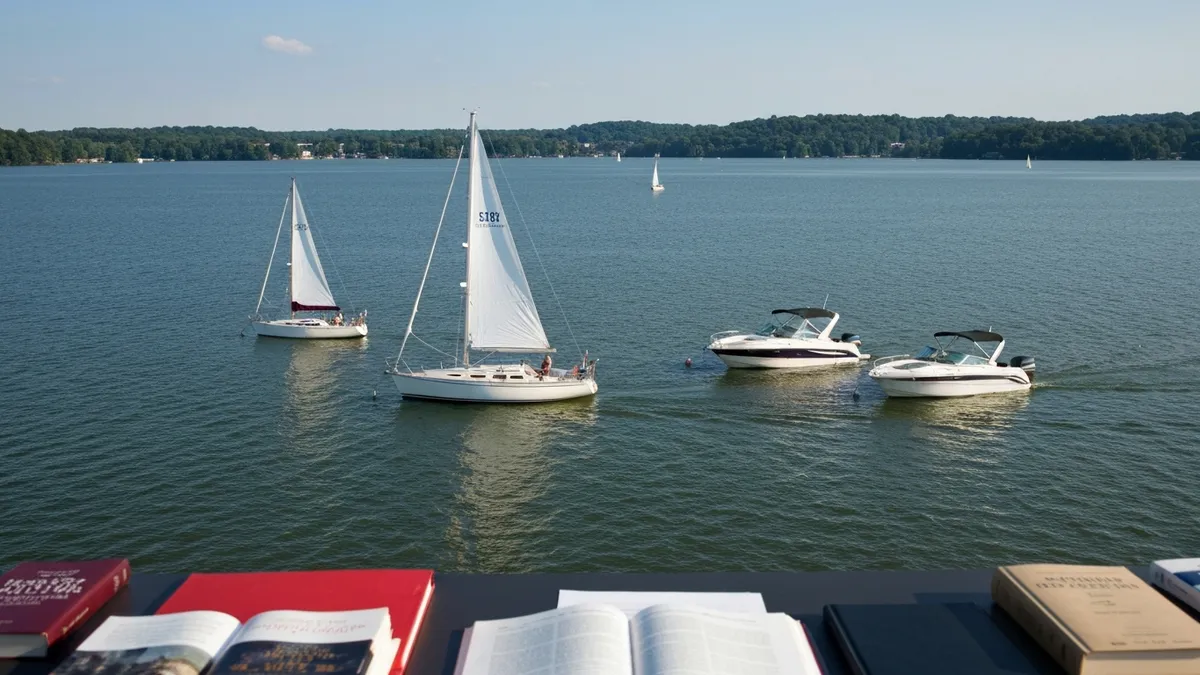
Boating License Requirements by State: Tennessee, Ohio, Minnesota, and More
Who must hold a TWRA certificate?: Anyone born on or after January 1, 1989 who operates a motorized vessel. PWC/jet ski operators of any age — no birth-year exemption applies to personal watercraft.
Minimum operating age: Age 12 minimum to operate a motorized vessel. Ages 12–15 must hold the certificate AND have a supervising adult on board.
How to get certified & cost: Complete any NASBLA-approved course online (Boat-Ed or BOATERexam, typically $29.95) or attend a free in-person class at select Tennessee state parks and TWRA-sponsored events.
Does the certificate expire?: No. The TWRA boating education certificate is permanent — no renewal, no expiration date, no ongoing fees once issued.
Is the TN certificate valid in other states?: Yes. Tennessee's NASBLA-approved certificate is recognized reciprocally by most U.S. states, including all Midwest Great Lakes states.
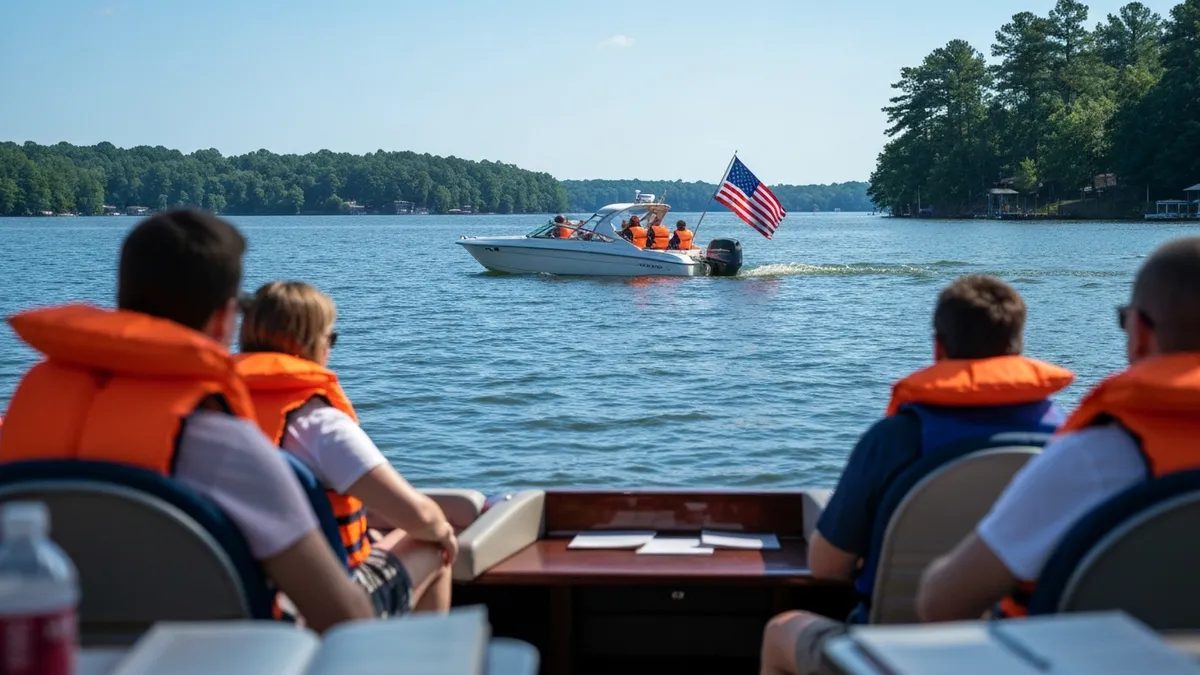
Do You Need a License to Drive a Boat? Age Rules by State
- ✓Confirm your birth year against your state's cutoff — certification is mandatory if you qualify
- ✓Tennessee: If born after 1/1/1989, you must hold a boater education certificate to operate
- ✓Ohio: Born after 1/1/1982 — no solo operation on Lake Erie or inland waters without certification
- ✓Minnesota: Born after 12/31/1986 — operators under 13 must have a certified adult aboard
- ✓Michigan: Born after 6/30/1996 — under-12 operators require a licensed adult present at all times
- ✓Illinois: Born after 7/1/1998 — no solo motorized boat operation if you are under 13
- ✓Missouri and Indiana: All operators under 14 need a boater education certificate regardless of birth year
- ✓Remember: Do you need a boating license federally? No — the U.S. Coast Guard sets no federal requirement; all rules are state-level
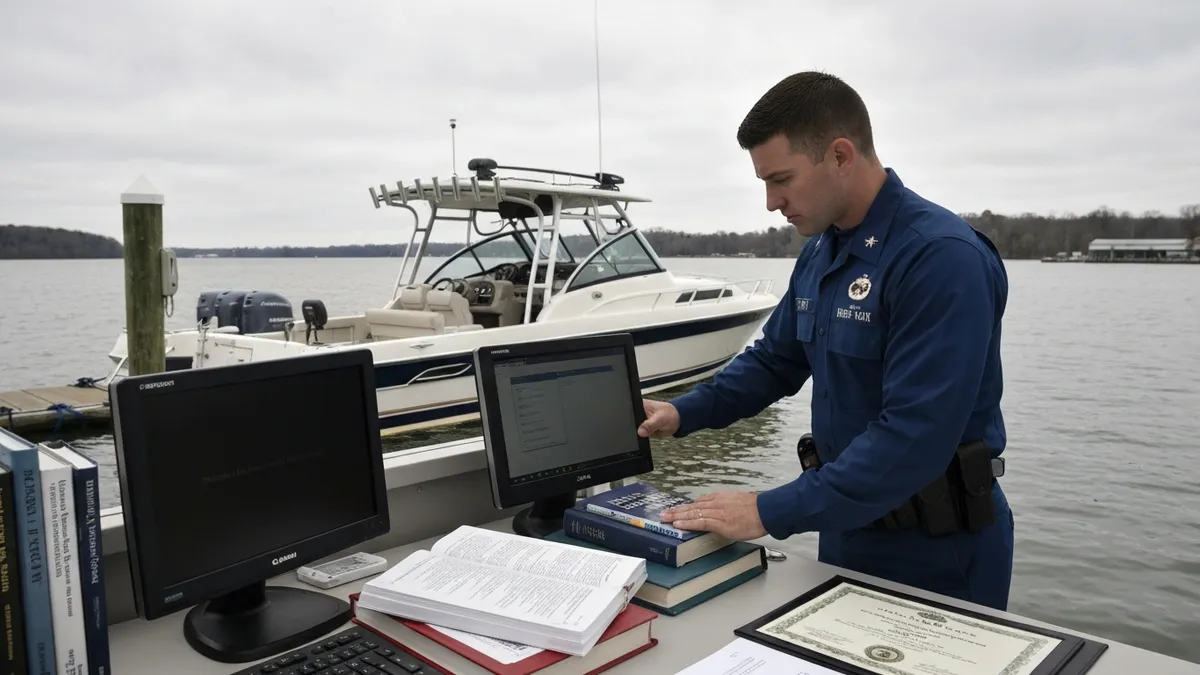
Tennessee Boating Pros and Cons
- +Boating certification is recognized across employers as evidence of verified competency, often required for specific roles
- +Certification provides a structured framework for professional knowledge that benefits daily work, not just the credential itself
- +Many certified professionals report salary increases of 10–20% compared to non-certified peers in the same role
- +Certification maintenance requirements create ongoing professional development that keeps knowledge current
- +The certification credential differentiates candidates in competitive hiring processes and promotion decisions
- −Boating certification fees can be substantial — exam costs, study materials, and renewal fees add up over a career
- −Certification requirements change over time; candidates who delay testing may face updated content requirements
- −Not all employers or markets equally value or require certification — the salary return varies significantly by geography and industry
- −Exam preparation requires significant time investment alongside existing work and personal responsibilities
- −Certification does not guarantee competency in practice — it validates knowledge at a point in time, not ongoing performance
Pros and Cons at a Glance
| Pros | Cons |
|---|---|
| Boating certification is recognized across employers as evidence of verified competency, often required for specific roles | Boating certification fees can be substantial — exam costs, study materials, and renewal fees add up over a career |
| Certification provides a structured framework for professional knowledge that benefits daily work, not just the credential itself | Certification requirements change over time; candidates who delay testing may face updated content requirements |
| Certification maintenance requirements create ongoing professional development that keeps knowledge current | Not all employers or markets equally value or require certification — the salary return varies significantly by geography and industry |
| The certification credential differentiates candidates in competitive hiring processes and promotion decisions | Exam preparation requires significant time investment alongside existing work and personal responsibilities |
Sample Boating License Test Practice Questions
Try these questions from our free Boating License Test practice tests. The correct answer and an explanation follow each question.
What is the legal Blood Alcohol Concentration (BAC) limit for operating a vessel in most US states?
- A. 0.04%
- B. 0.08%
- C. 0.10%
- D. 0.12%
Answer: B. 0.08%
The legal BAC limit for operating a vessel is 0.08% in most US states, matching the standard for motor vehicle operation.
What is the minimum age most U.S. states require before a person can operate a personal watercraft unsupervised?
- A. 16 years old
- B. 8 years old
- C. 21 years old
- D. 25 years old
Answer: A. 16 years old
Most states set the minimum unsupervised PWC operating age at 16, though it varies by state.
How long is a typical US state boat registration valid before it must be renewed?
- A. 6 months
- B. 1 year
- C. 3 years
- D. 5 years
Answer: C. 3 years
Most US states issue boat registrations valid for three years, though periods vary by state.
What is the minimum age to operate a personal watercraft (PWC) alone in most US states?
- A. 12 years old
- B. 14 years old
- C. 16 years old
- D. 18 years old
Answer: C. 16 years old
Most US states require operators of personal watercraft to be at least 16 years of age, though this varies by state.
Boating License Test Questions and Answers
More Boating License Test Resources
About the Author

Master Mariner & Maritime Certification Specialist
Massachusetts Maritime AcademyCaptain David Harrington is a US Coast Guard licensed Master Mariner with a Bachelor of Science in Marine Transportation from Massachusetts Maritime Academy. He has 22 years of deep-sea and coastal navigation experience aboard commercial vessels and specializes in preparing maritime candidates for USCG licensing exams, STCW certification, dynamic positioning (DPO), and officer-of-the-watch qualifications.
Join the Discussion
Connect with other students preparing for this exam. Share tips, ask questions, and get advice from people who have been there.
View discussion (6 replies)