
Ohio BMV Locations: Types, Services, and How to Find One Near You 2026 October
🔎 Ohio BMV locations — Deputy Registrar branches, Driver Exam Stations, services offered, what to bring, wait times, and online alternatives.
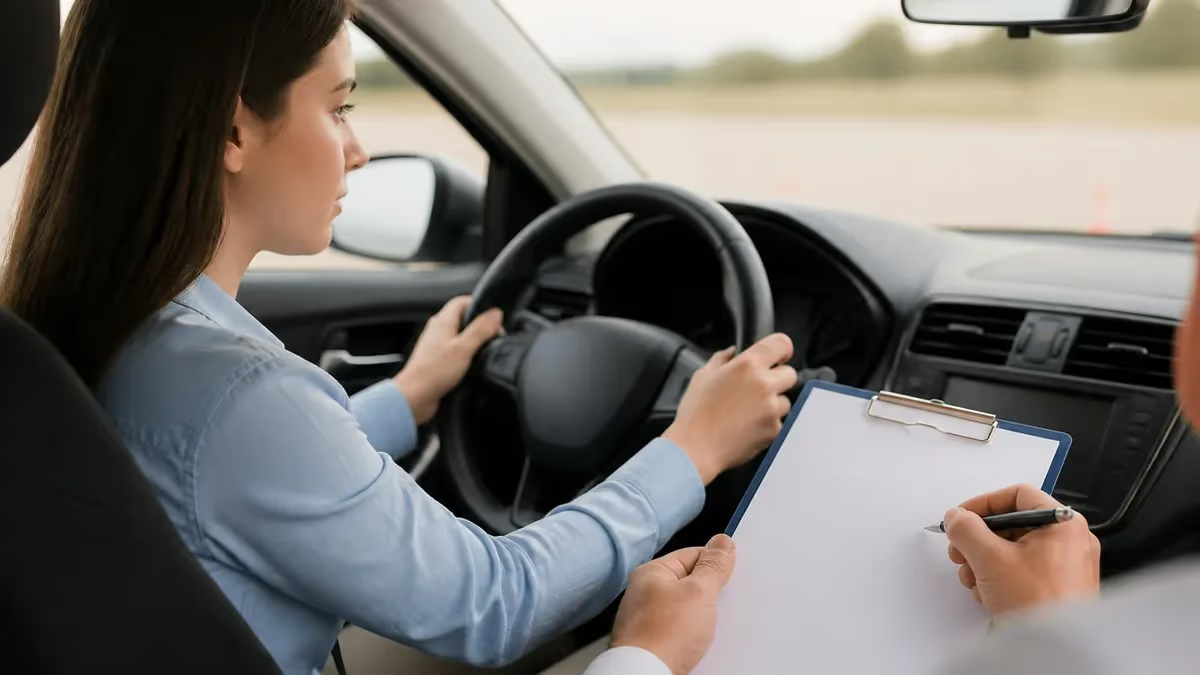
Ohio BMV locations fall into two main categories that handle different parts of the state's motor vehicle services. Deputy Registrar branches handle vehicle registration, license plates, vehicle titles, driver license issuance and renewal, and ID cards. Driver Exam Stations, run by the Ohio State Highway Patrol, handle the actual driver license tests — knowledge tests and road skills tests — but not the issuance paperwork itself. Knowing which type of location handles your specific need before you go saves a wasted trip and the frustration of standing in line at the wrong place.
This guide covers the types of Ohio BMV facilities, how to find a location near you using the official state locator, what services each type of location handles, hours of operation, the documents you need to bring for common transactions, the appointment-versus-walk-in policies that vary by location, the online services that let you skip the in-person visit entirely, and the typical wait times. We'll also cover REAL ID compliance, the standard Ohio driver license renewal process, and the vehicle registration workflow that brings most Ohioans into a BMV office at least every few years.
The official Ohio BMV website is bmv.ohio.gov. The site provides the location finder, online service portal, downloadable forms, and complete documentation requirements for each transaction type. The location finder at bmv.ohio.gov/locations.aspx is the authoritative source for current addresses, hours, and services at each location across the state. Always check the locator for the specific location you plan to visit because hours and services vary by branch — not every Deputy Registrar offers driver license services, and not every Exam Station tests every license class.
Ohio reorganized parts of its BMV system in 2024-2025, consolidating some functions and updating service offerings at certain locations. The current structure as of 2026 has roughly 180 Deputy Registrar locations across the state plus a smaller number of Driver Exam Stations operated by the State Highway Patrol. Both networks are being modernized through the BMV's appointment system, online service expansion, and self-service kiosks at high-volume branches that handle simpler transactions without staff interaction.
For first-time visitors, the most common mistake is going to the wrong location type. A new Ohio resident needing to take the driver knowledge test goes to a Driver Exam Station; the same resident then goes to a Deputy Registrar to receive the actual license once tests are passed. A vehicle title transfer goes to a Deputy Registrar (some county Clerk of Courts offices also handle titles). Plate renewals work at Deputy Registrars or, increasingly, online through bmv.ohio.gov without any in-person visit at all. Sorting out which place handles which task before driving across town saves real time.
Ohio BMV at a glance
Two facility types: Deputy Registrar branches (registration, plates, titles, license issuance, ID cards) and Driver Exam Stations (knowledge tests, road tests for driver licenses). Find locations: bmv.ohio.gov/locations.aspx with search by ZIP, county, or city. Online services: bmv.ohio.gov for plate renewals, driving record copies, address changes, REAL ID document upload, and many other transactions. Hours: typically Monday-Friday 8 AM-5 PM, some locations offer evening or Saturday hours. What to bring: proof of identity, Ohio residency, Social Security number, and any required state-mandated documents.
Deputy Registrar branches — what they do
Deputy Registrar branches are the main BMV touchpoint for most Ohioans. They handle vehicle registration and license plate issuance/renewal, vehicle title transfers and duplicate titles, driver license issuance after the State Highway Patrol exam stations administer the actual tests, license renewals (in most cases without retesting), state ID card issuance and renewal, REAL ID-compliant license and ID processing, motor vehicle insurance verification, and a range of less-common transactions like duplicate license plates, registration restoration after suspension, and driving record requests for the licensed driver.
Ohio has roughly 180 Deputy Registrar branches across the state. Some are operated by Deputy Registrars under contract with the BMV; some are operated directly by Ohio government employees. From a customer perspective, the contracted vs state-operated distinction generally doesn't affect service quality or what's available. The locations vary in size from small offices in rural counties handling several hundred transactions a week to large urban branches handling thousands. Most are open Monday through Friday during business hours, with some offering evening or Saturday hours at higher-volume locations.
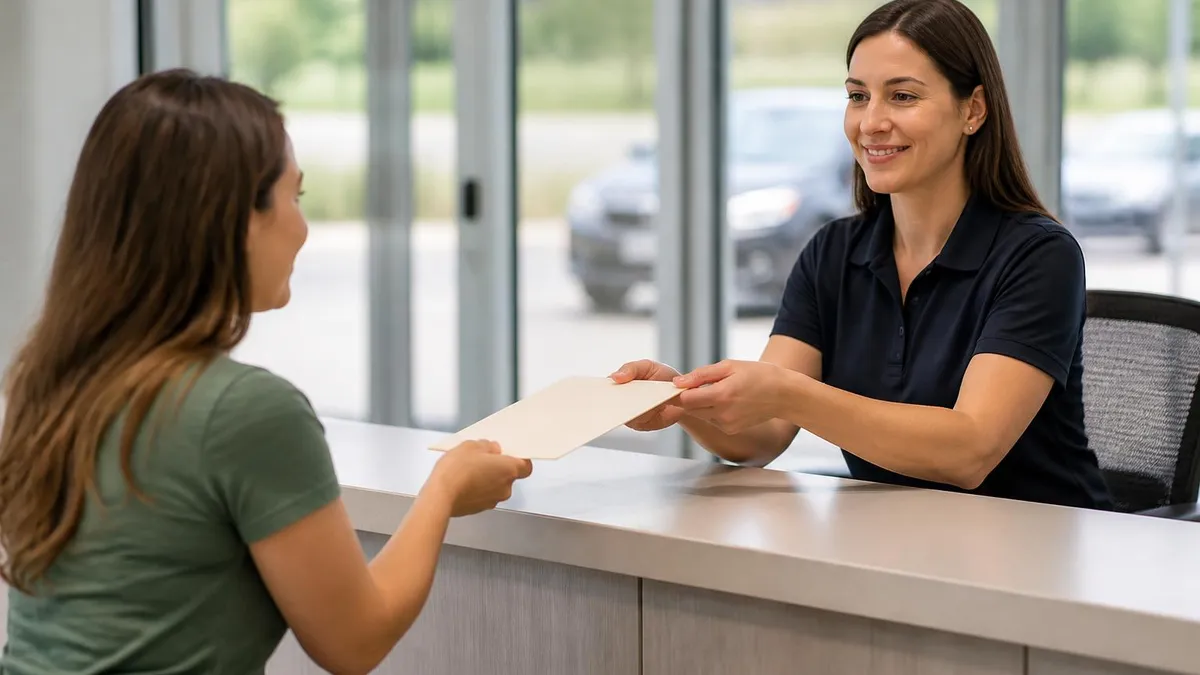
The most common transactions completed at Deputy Registrars are license plate renewals (annual renewal for most vehicles), license renewals (every 4-8 years depending on age and license class), vehicle title transfers when buying or selling a vehicle, and address changes on existing licenses or registrations. Each transaction has specific document requirements published on bmv.ohio.gov. Bringing all required documents on the first visit saves the second trip that's otherwise needed when something is missing from the application packet that staff can't process without.
For driver license services specifically, Deputy Registrars handle the issuance after testing is complete. New drivers go to the State Highway Patrol Driver Exam Station first to take the knowledge and road tests, then bring the test completion certificate to a Deputy Registrar for the actual license issuance. The two-step structure is more common than in some states that combine testing and issuance, and it occasionally surprises new Ohio residents who expect to walk out of a single visit with a license. Plan two trips for new licenses or class upgrades that require testing.

Ohio BMV facility types and services
The main BMV customer-facing locations. Roughly 180 branches across Ohio. Handle vehicle registration, plates, titles, driver license issuance after testing, ID cards, REAL ID processing, and a range of related services. Some are state-operated; some are contracted Deputy Registrar offices. Hours typically Monday-Friday 8 AM-5 PM with some locations offering evening or Saturday hours at higher-volume locations or in major metropolitan areas across Ohio.
Run by the Ohio State Highway Patrol, separate from the BMV branch network. Administer the driver license knowledge test (computer-based) and road skills test (on-road or skills course). Don't issue licenses themselves — applicants take the completed test certificate to a Deputy Registrar branch for actual license issuance. Around 50 Exam Stations across Ohio. Test scheduling through bmv.ohio.gov with appointments preferred at most locations now.
Some vehicle title transactions can be handled at the county Clerk of Courts office rather than a Deputy Registrar. The two networks split title services in Ohio, with many counties allowing title transfers, duplicate titles, and certain title corrections at the Clerk of Courts. Check your specific county's process — some require Clerk of Courts for title work while others allow Deputy Registrars to handle the same transactions.
Self-service kiosks at certain Deputy Registrar locations and other public spots allow quick license plate renewals and other simple transactions without staff interaction. The kiosks accept payment by credit/debit card and print a temporary registration sticker on the spot, with the permanent sticker mailed within a week. Useful for Ohioans who want to skip the line for routine plate renewals at peak times during the year.
The fastest option for many transactions. License plate renewals, driving record requests, address changes, REAL ID document upload, identification card renewals, motor vehicle records, and others all available online. Online transactions complete in minutes without leaving home. Most Ohioans don't realize how many transactions can be completed online and continue making in-person trips for things that could be done in a few clicks during their normal workday.
Some less-common transactions accept phone or mail submissions. Restoration of suspended licenses, certain reinstatement processes, and out-of-state license transfers sometimes start with phone or mail contact rather than in-person visits. Customer service line (1-844-OHIO-BMV) provides general information and can guide callers to the right channel for their specific situation. Check bmv.ohio.gov for the right approach to your transaction before calling.
Finding the right BMV location
The BMV's official location finder lives at bmv.ohio.gov/locations.aspx. The page lets you search by ZIP code, county, or city to find branches and exam stations near your location. Each result shows the address, hours, services offered, and contact information. Use the locator before visiting because services and hours vary — not every Deputy Registrar handles driver license services (some are registration-only), and not every Exam Station administers every test class. The locator marks each location with the specific services it provides at the current point in time.
For appointment-based transactions, schedule through the same locator after selecting your branch. Most driver license tests at Exam Stations require appointments now, with limited walk-in capacity at high-volume locations. Many Deputy Registrar transactions still accept walk-ins, but appointments are recommended at busy branches especially during peak periods like early in the year (when many vehicle registrations come due) and shortly before REAL ID compliance deadlines. The appointment system reduces wait times significantly for customers who plan ahead a few days in advance.
Wait times vary dramatically by location and time of day. Small rural Deputy Registrar branches often have minimal wait, especially mid-week and mid-day. Large urban branches in Columbus, Cleveland, Cincinnati, Akron, and Dayton can have hour-plus waits during peak periods. The BMV publishes some wait-time information through its locator, though the data isn't always real-time. Calling ahead to check is sometimes worth it for time-sensitive visits, though many locations don't answer phones reliably during busy hours when they're processing transactions.
For Ohioans considering driving across the state to a less-busy branch, the math sometimes works out to save time even with the longer drive. A 30-minute drive to a low-traffic suburban Deputy Registrar may produce a faster overall trip than 5 minutes to the urban branch with a 90-minute wait. The location finder, combined with rough knowledge of which areas are busy at which times, helps optimize the visit. For routine renewals, completing the transaction online entirely avoids the location question and is the right answer when available for the specific service you need.
Common Ohio BMV transactions
For new Ohio drivers, the path is: complete required pre-licensing course (for under-18 drivers); take written knowledge test at a Driver Exam Station (appointment recommended); complete supervised driving hours (50 for under-18, including 10 nighttime); pass road skills test at Driver Exam Station; bring test completion documents to a Deputy Registrar to receive the actual license. New residents transferring out-of-state licenses follow a similar but shortened process, often just requiring written and vision tests if they hold a current license.
What to bring — documentation requirements
Document requirements vary by transaction. For standard license renewals, bring your current license and any updated address documentation if your address has changed since the last renewal. The Social Security number on file is verified during the transaction without requiring you to bring the card. Payment method varies by location — most accept cash, check, and credit/debit cards, though specific fee schedules apply for different transaction types.
For REAL ID upgrades, requirements are stricter. Bring a primary identity document (US passport, certified birth certificate, or permanent resident card), proof of Social Security number (Social Security card, W-2, or pay stub showing the number), and two proofs of Ohio residency from the official approved list (utility bill, rental agreement, mortgage statement, bank statement, etc.). The state's REAL ID document checklist on bmv.ohio.gov is the authoritative reference; check it before going to make sure your specific documents qualify.
For vehicle registration renewals, bring the current registration card showing the vehicle's information. If the vehicle requires emissions testing (E-Check) in your county, bring the current E-Check passing certificate or know that testing must be completed before renewal can proceed. Insurance is verified electronically through the state's insurance verification system, so you don't need to bring insurance cards in most cases — but having them with you saves time if any verification issues come up at the counter.
For vehicle title transfers, bring the signed-over title, odometer disclosure (typically printed on the title for vehicles less than 20 years old), lien release if there was a previous lender on the vehicle, valid identification, and payment for transfer fees and sales tax. New Ohio residents transferring vehicles in from another state need additional documents including proof of residency, the prior state's title, and sometimes a VIN inspection. The complete checklist for any title transaction lives on bmv.ohio.gov; bring everything on the list to avoid a second trip.

Starting on the federal REAL ID enforcement deadline, a REAL ID-compliant license or ID (with gold star) is required for boarding domestic flights and entering most federal facilities. A standard non-REAL ID Ohio license won't work for these purposes after the deadline. Travelers who don't have a REAL ID can still use a US passport, military ID, or other federally approved identification, but most Ohio adults find getting a REAL ID-compliant license the simplest solution. Plan ahead — the upgrade requires specific documents and an in-person Deputy Registrar visit.
Online services — when to skip the visit
The Ohio BMV's online services have expanded significantly over recent years and now handle many transactions that previously required in-person visits. License plate renewal is fully online for most vehicles — visit bmv.ohio.gov, enter your registration information, pay the fee, and receive the new sticker by mail in 7-10 business days. The online renewal saves the entire trip to a Deputy Registrar and works any time of day. Most Ohio drivers should default to online renewal unless their vehicle has special status (commercial, salvage, custom plates) requiring in-person processing.
Address changes are online and free. The change is recorded in BMV records electronically. New cards aren't issued automatically — your existing license remains valid with the old printed address until renewal. The state requires address changes within 10 days of moving, so submit promptly after a residential move. The online address change is the easiest of all BMV transactions and takes about 5 minutes once you've created an Ohio BMV online account.
Driving record copies are available online for $5. The 3-year unofficial driving record (BMV-2255) shows traffic violations and license status. The 7-year certified driving record (BMV-1173) is sometimes required for employment background checks. Both can be ordered through bmv.ohio.gov and downloaded as PDF after payment processes. The online option replaces the older mail-in or in-person request methods that took days or weeks to fulfill.
REAL ID document pre-upload is the newer online feature that speeds in-person REAL ID upgrade visits. Upload your identity, Social Security, and residency documents in advance through bmv.ohio.gov. When you arrive at the Deputy Registrar for your in-person REAL ID issuance, the staff can verify your pre-uploaded documents quickly rather than scanning them at the counter. The pre-upload reduces in-person visit time substantially and is highly recommended for anyone planning a REAL ID upgrade visit during busy periods.
Ohio BMV visit — preparation checklist
- ✓Confirm which type of location you need — Deputy Registrar vs Driver Exam Station.
- ✓Find the specific branch near you using bmv.ohio.gov/locations.aspx.
- ✓Check whether the transaction can be completed online to skip the visit entirely.
- ✓Schedule an appointment if available for your transaction type and branch.
- ✓Bring all required documents — check the specific transaction's checklist on bmv.ohio.gov.
- ✓For REAL ID upgrade, bring identity proof, Social Security proof, and two Ohio residency proofs.
- ✓Bring payment — cash, check, or credit/debit cards accepted at most locations.
- ✓For driver license testing, schedule the test through the State Highway Patrol Exam Station system.
- ✓Plan for visit timing — early morning and mid-week tend to have shorter waits than Friday afternoons.
- ✓Verify the visit was successful and confirm any follow-up actions like documents arriving by mail.
One important workflow tip: Ohio's BMV system links across Deputy Registrar branches and online services through a single state record system. A transaction completed at one branch immediately reflects in your statewide record visible to any other branch or to online services. This means you don't need to visit your home-county branch — any Deputy Registrar can serve you for most transactions. The portability is convenient for Ohioans traveling for work, students attending college away from home, or anyone whose schedule makes a non-local branch easier to visit on a particular day.
Hours, wait times, and avoiding the rush
Most Ohio Deputy Registrar branches operate Monday through Friday from approximately 8:00 AM to 5:00 PM, with some variation by location. Higher-volume urban branches sometimes offer extended evening hours (until 6:00 PM or later) on certain weekdays and Saturday hours during peak registration periods. Driver Exam Stations operated by the State Highway Patrol have their own schedules, often including some Saturday testing slots especially in larger metro areas to accommodate working drivers and student schedules.
Wait times vary enormously by location and time. Rural branches often have walk-in waits under 15 minutes during normal hours. Major urban branches in Columbus, Cleveland, Cincinnati, Akron, Toledo, and Dayton routinely have 45-90 minute waits during peak periods, especially in the first quarter of the year when many vehicle registrations come due and around major holidays when fewer business days are available for registration tasks. Mid-week mid-day visits typically see shorter waits than Monday mornings, Friday afternoons, or the day after a holiday closure.
The BMV's appointment system, expanded since the COVID-19 pandemic, lets customers reserve a time at participating branches. Appointments are available for most license-related transactions and many registration tasks. Walk-ins still work at most branches but with no time guarantee. For driver license tests at Exam Stations, appointments are essentially required at most locations now — limited walk-in test capacity exists at some stations but cannot be relied upon for time-sensitive needs like license deadlines or new-resident requirements.
For non-urgent transactions, online completion (when available) skips the wait entirely. License plate renewal, address changes, and driving record requests are all available online with no in-person component required. The BMV's annual numbers show a substantial percentage of routine transactions now completing online rather than at branches, and the online channel continues to expand. Most Ohioans should default to checking whether their transaction is available online before planning any in-person visit at all to a physical location.
Ohio BMV — quick numbers
Common visit reasons
Most Ohioans renew their driver license every 4-8 years depending on age and license class. Standard renewals don't require retesting. Most can renew at any Deputy Registrar branch with proof of identity and payment. Online renewal is also available for many standard licenses. Note that REAL ID-compliant license issuance requires an in-person visit with the additional documentation, so first-time REAL ID holders typically renew in person.
Annual renewal of vehicle registration and license plates. Online renewal at bmv.ohio.gov is the fastest path. Walk-in renewal at any Deputy Registrar works too. Self-service kiosks at certain locations accept renewals 24/7. Annual renewals come due based on the original registration anniversary, so the timing is staggered across the year for different Ohio residents based on when they originally registered.
When buying or selling a vehicle in Ohio, the title must transfer within 30 days. Visit a Deputy Registrar (or county Clerk of Courts in some counties) with the signed-over title, odometer disclosure, lien information if applicable, and payment for transfer fees and sales tax. The buyer receives the new title in their name. Late transfers incur penalties, so complete this transaction promptly after the vehicle purchase.
REAL ID-compliant Ohio licenses and IDs are marked with a gold star and required for boarding domestic flights and entering most federal facilities. Upgrading requires bringing additional documents to a Deputy Registrar including identity proof, Social Security proof, and two proofs of Ohio residency. Online document pre-upload speeds the in-person visit substantially compared to bringing all documents to the branch on the day of the appointment.
Getting an Ohio driver's license — first-time process
For first-time Ohio drivers, the path involves several steps over multiple weeks or months. Drivers under 18 must complete an approved driver education course (24 hours of classroom instruction plus 8 hours behind-the-wheel) before testing. New residents over 18 transferring from another state typically don't need driver education but must take written and vision tests. The pre-licensing requirements vary by age and prior license status, so check bmv.ohio.gov for the specific path that applies to your situation before starting.
Once pre-licensing requirements are met, schedule the knowledge test (also called the written test) at a Driver Exam Station through bmv.ohio.gov. The test is computer-based and covers Ohio traffic laws, road signs, and safe driving practices. Ohio's official Digest of Motor Vehicle Laws is the authoritative study guide; many third-party prep materials (PracticeTestGeeks, Driving-Tests.org, Mometrix) offer practice questions matching the actual test format. Most candidates pass on first attempt with 4-8 hours of focused study using the Digest plus practice questions.
After passing the knowledge test, drivers under 18 must complete supervised driving practice — 50 hours total including 10 hours at night under the supervision of a licensed adult driver. The hours are documented on a TIPIC (Temporary Instruction Permit Identification Card) practice log. Adult new drivers don't have a fixed practice-hours requirement but should accumulate enough supervised practice to be comfortable with the road test before scheduling. The practice logs are reviewed at the road test appointment for under-18 drivers as a precondition for taking the test.
The road skills test evaluates the driver's actual driving ability — vehicle control, observation, signaling, lane changes, parking, and overall safety. Schedule the road test at a Driver Exam Station after meeting all prerequisites.
The test runs about 20-30 minutes and uses your own vehicle (or a rented one in some cases). Pass the road test, bring the test completion documentation to a Deputy Registrar branch, complete the license issuance paperwork, and receive your physical Ohio driver license. The full path from starting driver education to license in hand typically runs 6-12 months for under-18 drivers and 1-2 months for adult new residents transferring out-of-state licenses.
BMV: Pros and Cons
- +BMV credential is recognized by employers and industry professionals
- +Higher earning potential compared to non-credentialed peers
- +Expanded career opportunities and professional advancement
- +Structured learning path builds comprehensive knowledge
- +Professional development that stays current with industry standards
- −Preparation requires significant time and study commitment
- −Associated costs for exams, materials, and renewal fees
- −Continuing education needed to maintain credentials
- −Competition for advanced positions can be challenging
- −Requirements and standards may vary by state or region
Pros and Cons at a Glance
| Pros | Cons |
|---|---|
| BMV credential is recognized by employers and industry professionals | Preparation requires significant time and study commitment |
| Higher earning potential compared to non-credentialed peers | Associated costs for exams, materials, and renewal fees |
| Expanded career opportunities and professional advancement | Continuing education needed to maintain credentials |
| Structured learning path builds comprehensive knowledge | Competition for advanced positions can be challenging |
| Professional development that stays current with industry standards | Requirements and standards may vary by state or region |
Sample BMV Practice Questions
Try these questions from our free BMV practice tests. The correct answer and an explanation follow each question.
What is meant by this sign?
- A. Yield ahead
- B. Road work ahead
- C. Caution, slippery road ahead
- D. Warning, pedestrian crossing
Answer: C. Caution, slippery road ahead
This sign, typically a yellow diamond with a car skidding, warns drivers of a 'Slippery When Wet' condition ahead. It indicates that the road surface may become slick, especially during rain or other wet conditions, increasing the risk of losing traction. Drivers should reduce their speed and exercise extra caution when encountering this sign.
When driving in fog, you should use:
- A. High beam headlights
- B. Low beam headlights
- C. No lights
- D. Hazard lights while moving
Answer: B. Low beam headlights
Low beams should be used in fog because high beams reflect off the fog and reduce visibility.
What does a white rectangular regulatory sign indicate?
- A. A warning of a curve
- B. A law you must obey, such as a speed limit
- C. A scenic area
- D. Construction ahead
Answer: B. A law you must obey, such as a speed limit
White rectangular signs are regulatory signs telling you laws you must obey, such as speed limits.
When parking on a downhill grade with a curb, which way should you turn your front wheels?
- A. Straight ahead
- B. Away from the curb (left)
- C. Into the curb (right)
- D. It does not matter on a downhill
Answer: C. Into the curb (right)
When parking downhill with a curb, turn wheels into (toward) the curb so the curb will stop the car if the brakes fail.
BMV Questions and Answers
About the Author
Licensed Driving Instructor & DMV Test Specialist
Penn State UniversityRobert J. Williams graduated from Penn State University with a degree in Transportation Management and has spent 20 years as a certified driving instructor and DMV examiner consultant. He has personally coached thousands of applicants through written knowledge tests, skills assessments, and commercial driver licensing programs across more than 30 states.
Join the Discussion
Connect with other students preparing for this exam. Share tips, ask questions, and get advice from people who have been there.
View discussion (9 replies)