
Find My BLS Certificate: What Is a BLS Certification and How to Locate Yours
What is a BLS certification and how do you find yours? ✅ Learn where to locate your card, renew, and stay compliant. Full US guide.

If you have ever searched for your credentials online and typed "find my BLS certificate" into a search engine, you are not alone. Thousands of healthcare workers, nurses, paramedics, and first responders need to locate their Basic Life Support documentation every year — whether to satisfy a new employer, renew before the expiration date, or simply confirm the card is still valid. Understanding what is a BLS certification is the critical first step before you can track down your records and stay compliant with workplace requirements.
BLS stands for Basic Life Support, a category of emergency medical care designed to keep a patient alive until advanced medical help arrives. The term covers a structured set of skills including high-quality CPR compressions, rescue breaths, automated external defibrillator (AED) use, and relief of foreign-body airway obstruction. Certification programs teach these skills through hands-on practice evaluated by a trained instructor, and successful completion earns you an official card or digital credential issued by the certifying organization.
The two dominant certification bodies in the United States are the American Heart Association (AHA) and the American Red Cross. The AHA's Basic Life Support for Healthcare Providers course is the gold standard for clinical settings, while the American Red Cross Basic Life Support course is widely accepted across hospitals, clinics, schools, and community organizations. Both organizations issue credentials valid for two years before a renewal is required.
Locating your certificate depends largely on which organization issued it and when you completed your training. The AHA maintains a digital card system accessible through the Training Center that administered your course, while the Red Cross uses an online certificate verification portal tied to your email address and training record. Knowing your issuing organization is therefore the single most important piece of information you need before beginning your search.
Many healthcare professionals discover their BLS card is missing right when they need it most — during onboarding paperwork at a new hospital, prior to a clinical rotation, or when HR sends an expiration reminder. In those moments, knowing exactly where to look and what information to gather saves valuable time. This guide walks you through every channel available to locate your BLS certificate, verify its validity, and renew it if necessary so your credentials are never a barrier to employment or patient care.
Throughout this article you will also learn the difference between BLS and standard CPR, the exam requirements set by the AHA and Red Cross, and the renewal timeline you need to plan around. If you need to locate your credentials immediately, you can also find my bls certificate using the dedicated lookup tool available on PracticeTestGeeks.com, which consolidates the most common verification pathways into a single, easy-to-navigate resource.
Whether you are a first-time candidate preparing for your initial BLS class or a seasoned healthcare provider who simply misplaced their wallet card, this comprehensive guide gives you everything you need. Read on to master the BLS certification landscape, understand the exam, and keep your credentials current so you are always ready to respond when a life is on the line.
BLS Certification by the Numbers

BLS Certification Requirements at a Glance
No prerequisites are required for the AHA BLS for Healthcare Providers or Red Cross BLS courses. However, the course is designed for healthcare professionals — nurses, paramedics, medical students, and allied health workers who need a recognized clinical-grade credential.
BLS courses combine a classroom or online didactic component with a mandatory in-person skills session. Students practice chest compressions on mannequins, use an AED trainer, and demonstrate two-rescuer CPR before an instructor signs off on competency.
Instructors evaluate compression depth (at least 2 inches for adults), rate, hand placement, full chest recoil, and ventilation technique. AED operation and choking relief for adults, children, and infants are also tested in a standardized skills check.
The AHA BLS written exam contains multiple-choice questions covering algorithms, drug-free interventions, team dynamics, and special situations. A passing score is typically 84% or higher. The Red Cross uses a similar knowledge assessment with a comparable passing threshold.
Upon passing both the skills check and written exam, the Training Center issues a provider card — either a physical wallet card, a digital eCard, or both. AHA eCards are emailed within 20 days of course completion and include a unique verification code.
Getting your initial BLS certification is a straightforward process once you understand the available course formats and choose an accredited provider. The AHA offers two primary delivery modes for its Basic Life Support for Healthcare Providers curriculum: the traditional instructor-led classroom course and the blended learning HeartCode BLS option. The classroom course runs approximately four hours and covers everything from adult CPR to infant rescue breathing in a single in-person session. HeartCode BLS splits the didactic content into a self-paced online module — typically two to three hours — followed by a hands-on skills check at an authorized training center.
Selecting the right training center matters. AHA-authorized training centers are listed on the AHA's official website through their Training Network finder, while Red Cross course locations appear on the Red Cross website's course search tool. You can typically filter by zip code, date, and course type to find an in-person or blended option that fits your schedule. Prices for a full BLS provider course generally range from $50 to $100, though hospital employee health departments sometimes offer subsidized or free training for staff members.
On the day of your course, bring a valid photo ID and any prepayment confirmation if you registered online. Most instructors begin with a brief lecture or video review of the BLS algorithm before breaking students into small groups for mannequin practice. You will likely rotate through stations covering adult single-rescuer CPR, two-rescuer CPR with bag-mask ventilation, pediatric CPR, infant CPR, AED use, and choking relief. The skills session is not a race — instructors want to see deliberate, correct technique rather than speed.
The written portion of the course consists of a short multiple-choice exam, usually 25 questions for the AHA BLS provider exam. Questions draw directly from the BLS Provider Manual, so reviewing the manual's algorithms and key concepts before class significantly improves your first-attempt pass rate. Common topics include the Chain of Survival, compression-to-ventilation ratios for different patient ages, appropriate AED pad placement, and the signs and symptoms of cardiac arrest versus respiratory arrest.
Once you pass both the skills evaluation and the written exam, your instructor submits your information to the training center's administrative system. AHA students who complete HeartCode BLS receive an eCard — a digital certificate delivered to the email address you provided during registration. Traditional classroom students at AHA centers usually receive a physical provider card on the same day, though some centers also issue eCards as a backup. Red Cross students receive a digital certificate accessible through the Red Cross Training Hub, an online portal tied to your account credentials.
If you completed your BLS training through a hospital-based program that uses proprietary internal training rather than an AHA or Red Cross curriculum, your records will be housed in your employer's human resources or education department system. In that case, contact your facility's education coordinator or employee health office directly and request a copy of your completion record. Some facilities issue internal certificates that are not accepted by outside employers, so always confirm whether your destination organization requires a specific AHA or Red Cross card before scheduling training.
For healthcare students enrolled in nursing school, medical school, or allied health programs, BLS certification is often embedded in the curriculum and administered through the program itself. Your program coordinator can typically provide a letter of completion or point you to the AHA eCard portal. Keeping a personal digital copy of all your credentials in a secure cloud folder — such as Google Drive or a healthcare-specific credentialing app — is one of the best habits you can develop early in your career to avoid the stressful scramble of trying to find my bls certificate at the last minute.
AHA vs. American Red Cross Basic Life Support: Key Differences
The American Heart Association's Basic Life Support for Healthcare Providers course is the most widely recognized BLS credential in US clinical settings. It covers adult, child, and infant CPR, two-rescuer scenarios, bag-mask ventilation, AED operation, and relief of foreign-body airway obstruction. The AHA updates its guidelines every five years based on the latest resuscitation science, meaning course content reflects current evidence-based protocols used in emergency departments, ICUs, and pre-hospital care.
AHA BLS certification is valid for two years and can be renewed through a shorter renewal course — typically two to two and a half hours — that focuses on skills refreshers rather than repeating the full curriculum. The basic life support exam American Heart Association administers covers algorithm recall, rhythm recognition basics, and team CPR concepts. Students who prefer flexible scheduling can complete the HeartCode BLS online module at their own pace before attending a brief in-person skills check, making the AHA BLS one of the most convenient certifications to earn and renew.

Is BLS the Same as CPR? Benefits and Limitations Compared
- +BLS covers all CPR skills plus AED use, team rescuer roles, and airway management — far broader than lay-rescuer CPR
- +AHA and Red Cross BLS credentials are universally recognized by US hospitals and licensing boards
- +Blended online plus in-person formats make it easy to fit BLS training into a busy clinical schedule
- +Digital eCards allow instant certificate sharing with employers and credentialing committees
- +Two-year validity period provides reasonable runway before renewal is required for most healthcare roles
- +BLS renewal courses are shorter and less expensive than the initial provider course
- −Standard lay-rescuer CPR courses are NOT accepted as BLS equivalents by hospitals or clinical employers
- −In-person skills check is mandatory — fully online BLS certification is not recognized by most healthcare employers
- −AHA physical wallet cards can take up to 20 business days to arrive, creating gaps during onboarding
- −Cost of $50–$100 per course cycle adds up over a career, especially for providers who maintain multiple credentials
- −Some hospital systems accept only AHA BLS, requiring providers with Red Cross cards to retake training
- −Courses must be repeated every two years even for experienced providers with impeccable skills retention
BLS Renewal Checklist: Stay Certified Without Gaps
- ✓Mark your BLS expiration date on your calendar at least 60 days in advance so you have time to schedule renewal.
- ✓Confirm whether your employer requires AHA-specific renewal or accepts Red Cross BLS renewal equivalently.
- ✓Locate your current eCard or provider card to verify the exact expiration date and issuing organization.
- ✓Register for a BLS basic life support renewal class at an authorized Training Center near you.
- ✓Review the current BLS algorithms and Chain of Survival steps before attending your renewal session.
- ✓Complete any required online pre-work (HeartCode module) at least 48 hours before your skills check appointment.
- ✓Bring photo ID and your previous provider card or eCard confirmation email to the renewal session.
- ✓Practice compression depth (at least 2 inches for adults) and rate (100–120 per minute) before your skills check.
- ✓After renewal, save your new eCard PDF to a cloud storage folder and email a copy to yourself for backup.
- ✓Notify your employer's credentialing or HR department immediately after renewal and upload the new certificate to your personnel file.
BLS Is Not the Same as Standard CPR
Many providers ask whether BLS and CPR are the same. The short answer is no. Standard CPR courses like Heartsaver CPR AED are designed for lay rescuers and do not meet the clinical competency requirements set by hospitals. BLS for Healthcare Providers adds two-rescuer techniques, bag-mask ventilation, and team dynamics that are mandatory for anyone working in a clinical environment. Always verify that your credential says "BLS Provider" or "Basic Life Support for Healthcare Providers" before submitting it to an employer.
When it comes to finding a lost or misplaced BLS certificate, your search strategy depends entirely on which organization issued the credential and how recently you completed your training. For AHA cardholders, the most direct path is to contact the Training Center that administered your course.
Every AHA-authorized Training Center maintains a record of all students who completed courses under its umbrella, and the Training Center Coordinator can look up your record using your name, date of birth, or the email address you provided at registration. If you do not know which Training Center you used, your employer's education department may have a record of the vendor they contract with for BLS training.
AHA eCards are issued through a third-party platform, and your card is tied to the email address you used when you registered. If you remember that email address, visit the AHA's eCard verification page and enter your credentials to retrieve your digital card.
Students who have changed email addresses since completing their course will need to contact the Training Center directly to update their contact information before they can access the eCard portal. The AHA does not maintain a public-facing student record lookup — all records are held at the Training Center level, which is an important distinction many people discover only when they urgently need to find their documentation.
For Red Cross BLS certificates, the process is considerably more straightforward. The Red Cross Training Hub is a web-based portal where every student who completed a Red Cross course can log in with the email address used at registration and access their full training history, including BLS certificates, completion dates, and expiration dates.
If you cannot remember your login credentials, the Training Hub's password reset function sends a recovery link to your registered email. Students who used a work email that is no longer active should contact Red Cross customer support to request a record transfer to a personal email address.
If your BLS training was administered through a hospital or healthcare system that partnered with AHA or Red Cross but used an internal registration system, records may exist in your facility's learning management system (LMS). Common LMS platforms used by healthcare employers include HealthStream, Relias, and Cornerstone.
Log in to your facility's LMS using your employee credentials and navigate to your transcript or completed courses section — your BLS completion record should appear there along with the certificate in PDF format. If you have left that employer, contact the HR department and request that your training transcript be sent to your personal email address.
There are also third-party BLS providers — companies and independent instructors that use AHA or Red Cross curricula but operate outside the main organizational portals. If your training was delivered by such a provider, your best resource is the instructor or company directly.
Legitimate third-party providers that are AHA-affiliated will still have submitted your completion data to an AHA Training Center, so tracing the affiliation usually leads you back to a Training Center record. Be cautious of any certificate that cannot be traced to an AHA or Red Cross Training Center, as employers and licensing boards may not accept credentials from unaffiliated providers.
Employers increasingly require not just a copy of your certificate but also real-time verification of its authenticity. AHA eCards include a unique code that can be verified on the AHA website, giving employers confidence that the credential is genuine. Red Cross certificates can similarly be verified through the Training Hub's employer verification feature.
Providing your employer with both a copy of the certificate and the verification link or code eliminates disputes about authenticity and demonstrates professionalism. If you are preparing for a new role and want to streamline this process, you can use the dedicated lookup and verification resources at PracticeTestGeeks.com to understand every channel available and prepare your documentation package efficiently.
One scenario many healthcare professionals face is discovering that their BLS certificate expired while they were on medical leave, parental leave, or a career break. In this situation, most hospitals and clinical employers require the provider to complete a full renewal course rather than simply an extension. The renewal course for BLS is shorter than the initial course — typically two to two and a half hours — but it must include a skills check with a live instructor.
Online-only renewal without an in-person skills component is not accepted by the AHA or Red Cross as a complete renewal, and credentials obtained solely through online testing without hands-on evaluation are not recognized as valid BLS certifications by US healthcare credentialing standards.

Many hospitals will not allow you to work a clinical shift — even if your start date has arrived — if your BLS certificate is expired or cannot be verified. Credentialing delays caused by missing BLS documentation can push your start date back by weeks. Always have your BLS renewal completed at least 30 days before your certificate expires, and never assume your employer will grant a grace period. Some state licensing boards also flag expired BLS as a compliance issue during license renewal audits.
The AHA BLS written exam is one of the most misunderstood components of the certification process. Many candidates assume that because BLS is a skills-based course, the written portion will be simple or even optional. In reality, the written exam is a required element of the AHA BLS for Healthcare Providers course, and a passing score of 84% or higher must be achieved to receive the provider card.
The exam typically consists of 25 multiple-choice questions drawn from the BLS Provider Manual, and while the content is not complex for experienced clinicians, it can trip up candidates who did not review the manual before attending class.
The most commonly tested topics on the AHA BLS written exam include the four links of the Chain of Survival (early recognition and activation, early CPR, rapid defibrillation, and advanced care), the correct compression-to-ventilation ratio for adults and children (30:2 for a single rescuer), and the correct compression depth and rate.
The exam also covers two-rescuer scenarios in which roles must be clearly assigned, team communication principles, and the correct use of a bag-mask device during CPR. Pediatric and infant BLS variations — including appropriate compression techniques and acceptable pulse check sites — are reliably represented on the exam as well.
Questions about AED use are another consistent exam topic. Candidates should know the appropriate AED pad placement for adults, children, and infants, the correct sequence for integrating AED analysis into an ongoing resuscitation effort, and the situations in which CPR should be continued immediately after a shock delivery rather than pausing to assess the patient. The AHA's emphasis on minimizing interruptions to chest compressions is a core principle that appears in multiple exam questions across different scenarios.
Special situations covered in the BLS curriculum — and potentially on the written exam — include drowning, hypothermia, opioid-associated cardiac arrest, and pregnancy. For each scenario, the BLS algorithm is modified slightly to account for the underlying cause of cardiac arrest or respiratory failure. Drowning victims, for example, receive rescue breaths as the first intervention because respiratory failure rather than primary cardiac arrest is the typical mechanism. Candidates should review these special scenarios in the BLS Provider Manual before exam day to avoid being caught off guard by scenario-based questions.
Preparing for the BLS written exam is most effective when candidates combine manual review with practice testing. PracticeTestGeeks.com offers a full library of BLS practice questions organized by topic — high-quality CPR skills, special situations and scenarios, team dynamics, and pediatric variations.
Working through practice questions before your course helps you identify knowledge gaps, familiarize yourself with the multiple-choice format, and build the confident recall needed to answer quickly and accurately during the actual exam. Most candidates who score below 84% on their first attempt do so because they underestimated the importance of the written component and arrived at class without reviewing the manual.
The Red Cross BLS knowledge assessment follows a similar structure and difficulty level, though the exact question count and format may differ slightly between providers. Red Cross instructors typically review key concepts at the start of the course, and the knowledge check occurs after the didactic portion and before or after the skills session, depending on the Training Center's preferred schedule.
Regardless of which organization's course you are taking, arriving prepared with a solid understanding of compression ratios, AED protocols, and the BLS algorithm significantly improves your chances of passing on the first attempt and walking away with your certificate the same day.
After you pass both components and receive your BLS certification, the next task is protecting that credential. Store your eCard PDF in at least two locations — a personal cloud drive and a dedicated credentialing folder on your computer. Take a photo of your physical wallet card if you receive one and store the image in the same folder.
Set a recurring calendar reminder 60 days before your expiration date to begin researching basic life support renewal class options in your area. The two-year renewal cycle passes faster than most providers expect, especially during busy clinical rotations, and the last thing you want is to discover an expired certificate the morning before a hospital credentialing deadline.
One of the most practical strategies for BLS exam success is understanding how to approach scenario-based multiple-choice questions, which make up a significant portion of both the AHA and Red Cross BLS written assessments. Scenario questions present a brief clinical situation — such as a patient found unresponsive in a hospital hallway — and ask what the first action should be.
The correct answer almost always follows the BLS algorithm in sequence: ensure scene safety, check for responsiveness, activate the emergency response system, check for a pulse and breathing simultaneously, and begin CPR if no pulse is detected within ten seconds. Candidates who have internalized the algorithm respond to these questions quickly and confidently.
Timing your compression rate without a metronome is a skill worth practicing before your skills check. The AHA recommends 100 to 120 compressions per minute for adults, children, and infants. A helpful mnemonic is the Bee Gees song "Stayin' Alive," which has a beat of approximately 103 beats per minute — close enough to the target range to serve as a mental pacer during real or simulated resuscitation.
Instructors at skills sessions often listen for consistent rhythm, so practicing at home on a firm pillow or a purchased CPR manikin can build the muscle memory needed to stay within the target range even under the stress of observation.
Compression depth is the other technical element most frequently evaluated and most commonly performed incorrectly during skills checks. For adult patients, compressions must depress the sternum at least two inches but no more than two and a half inches. Insufficient depth — a very common error among new providers and returning renewees — fails to generate adequate cardiac output and will result in a skills recheck with the instructor.
For children, depth is approximately two inches, and for infants, compressions using two fingers over the lower half of the sternum should depress the chest about one and a half inches. Memorizing these depth ranges before your skills check eliminates one of the most preventable failure points in the evaluation.
Team communication is a component of the BLS curriculum that surprises many candidates who come from non-clinical backgrounds. The AHA emphasizes closed-loop communication — a technique where the team leader gives a clear directive, the team member confirms they heard it by repeating it back, and then reports when the task is complete. During two-rescuer CPR scenarios, the skills evaluator wants to see not just correct technique but also appropriate verbal communication between rescuers when switching compressor roles. Practicing these verbal cues with a partner before your course gives you a significant advantage during the skills evaluation.
AED integration into a resuscitation sequence is the final major skills checkpoint in most BLS courses. The correct sequence is: begin CPR, attach AED pads as soon as the device is available, allow the AED to analyze rhythm while minimizing hands-off time, deliver a shock if advised, and resume CPR immediately for two minutes before allowing the AED to re-analyze.
Common errors include pausing CPR too long before or after AED analysis and failing to ensure all rescuers are clear of the patient before shock delivery. These are straightforward steps to execute correctly when practiced, but they require deliberate rehearsal to perform confidently under observation.
For candidates who are re-certifying after a lapse — meaning their certificate expired and they are taking the full course rather than a renewal — the content and skills evaluation are identical to initial certification. The only difference is that experienced providers typically progress through the skills stations more quickly because the techniques are familiar even if rusty.
Allow extra time in your practice schedule for reviewing any protocol changes that occurred since your last certification cycle, as the AHA updates its BLS guidelines approximately every five years and specific numbers — such as acceptable opioid-related intervention sequences — may have changed since you were last certified.
Ultimately, BLS certification is not a difficult credential to earn or maintain, but it does require intentional preparation and diligent record-keeping. The providers who run into trouble are almost always those who underestimated the written exam, forgot to renew on time, or lost their certificate without a backup copy. By following the practical steps outlined in this article — from choosing the right training center to preparing for the written exam and protecting your digital credential — you will be well positioned to keep your BLS current throughout your healthcare career without unnecessary stress or interruption to your clinical practice.
BLS Questions and Answers

BLS Certificate Lookup: What Is a BLS Certification and How to Get Yours
Free Basic Life Support MCQ Questions and Answers Guide
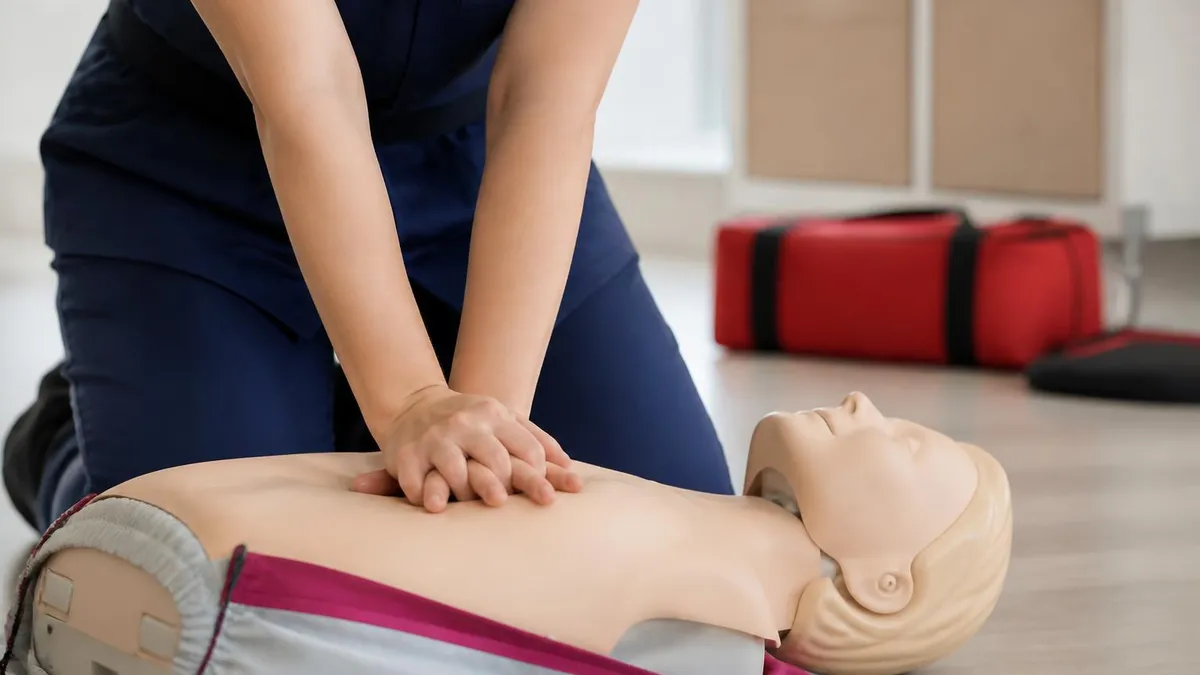
AHA BLS Certification: Course, Renewal, and Exam Guide
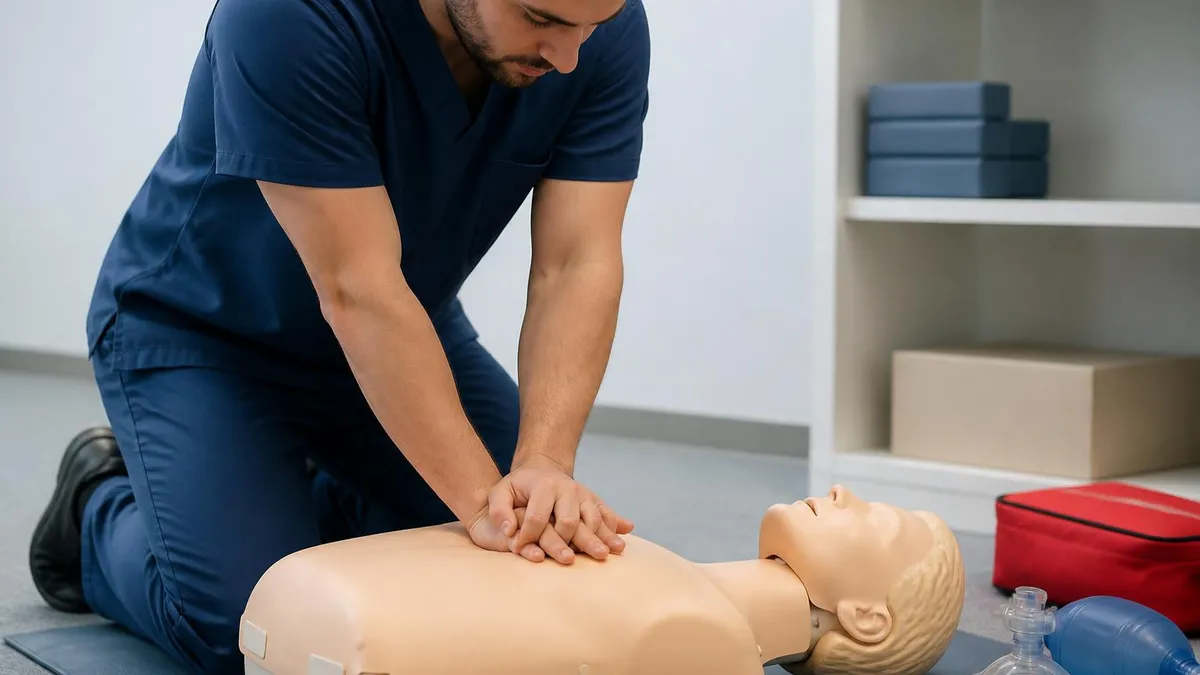
BLS Training: Course Content, Format & How to Get Certified

Online BLS: Complete Guide to Getting Your Basic Life Support Certification
About the Author

Registered Nurse & Healthcare Educator
Johns Hopkins University School of NursingDr. Sarah Mitchell is a board-certified registered nurse with over 15 years of clinical and academic experience. She completed her PhD in Nursing Science at Johns Hopkins University and has taught NCLEX preparation and clinical skills courses for nursing students across the United States. Her research focuses on evidence-based exam preparation strategies for healthcare certification candidates.
Join the Discussion
Connect with other students preparing for this exam. Share tips, ask questions, and get advice from people who have been there.
View discussion (8 replies)