
Bartender Supplies: Tools, Shakers & Home Bar Kit Guide 2026 September
Bartender supplies guide: shakers, jiggers, strainers, muddlers, aprons, roll-up kits, cherries, cleaning products. What to buy, what to skip, where. 🆕
Building Your Bar Toolkit: Where to Actually Start
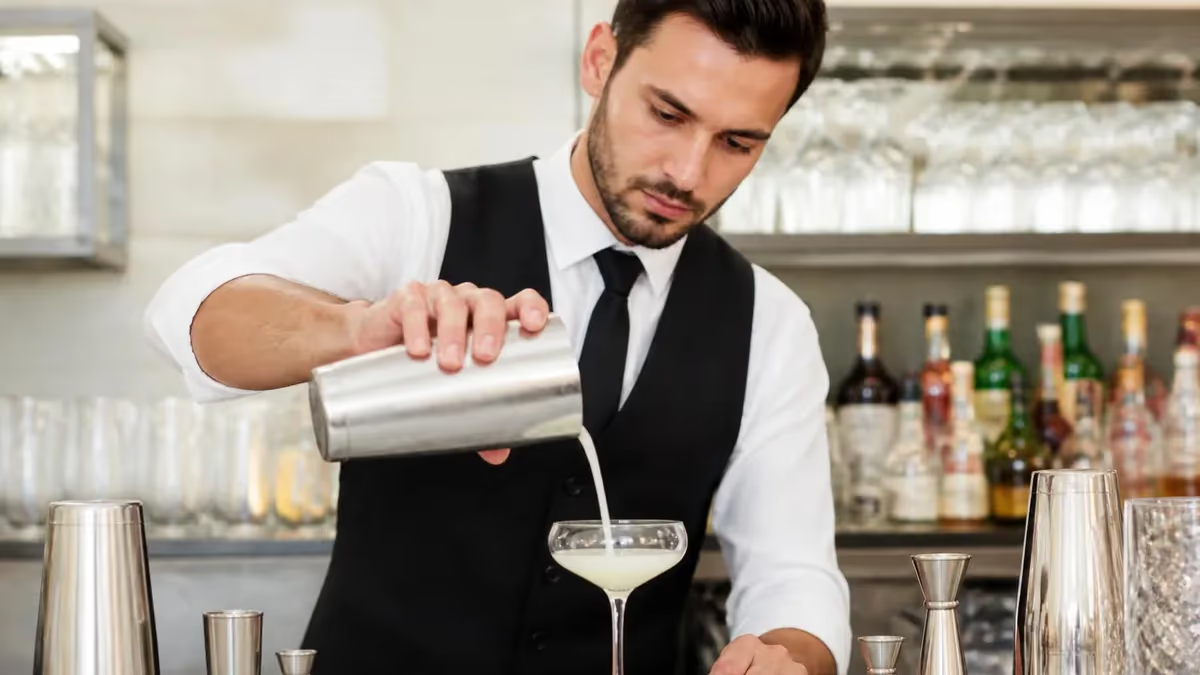
You don’t need much to start mixing serious cocktails. You need a shaker, a jigger, a strainer, a bar spoon, a muddler — and that’s about it, honestly. The rest is glassware, garnish, a few cleaning rags. The bartender supplies aisle of any restaurant-supply store can look like a circus from the outside, but the working kit a professional reaches for during a Saturday-night rush is tiny. Five tools. Maybe seven.
That’s the punchline I want to deliver up front, because most guides bury it under affiliate links and gear-list bloat. If you’re building a home bar or stepping behind a pro counter for the first time, this is the kit you actually need — the same one taught at every bartending school in the country. We’ll cover what to buy, what to skip, how to spend $50 versus $500, and where to source it without getting ripped off. Where you’ll need it, where to upgrade, and where the catalogs are trying to sell you junk.
We’ll start with shakers (Boston vs. cobbler — an old argument worth understanding), move through jiggers and strainers, talk about the bar spoon and muddler, hit glassware briefly, then cover garnish prep, aprons, the roll-up kit you carry to events, and sanitation. There’s a final section on where to actually buy this stuff, because the difference between Amazon and a real restaurant-supply house is bigger than people realize. If you’re newer to the field overall, our how to become a bartender page covers the path; this one covers the gear.
One more thing before we dig in. Almost every tool on this list comes in three tiers: cheap-and-functional, mid-range workhorse, and barware-as-art. You don’t need the top tier to make a good drink. You need the middle tier to make a good drink fast for eight hours straight. Keep that in mind as we go.
Shakers: Boston vs Cobbler — And Why It Matters
The shaker is the single piece of gear that distinguishes the pro kit from the amateur drawer. There are two main types and a third uncommon variant. The cobbler shaker — three pieces, built-in strainer, fitted cap — is what most home bartenders own. It looks clean, it’s easy to use, and it’s the one your grandparents probably had.
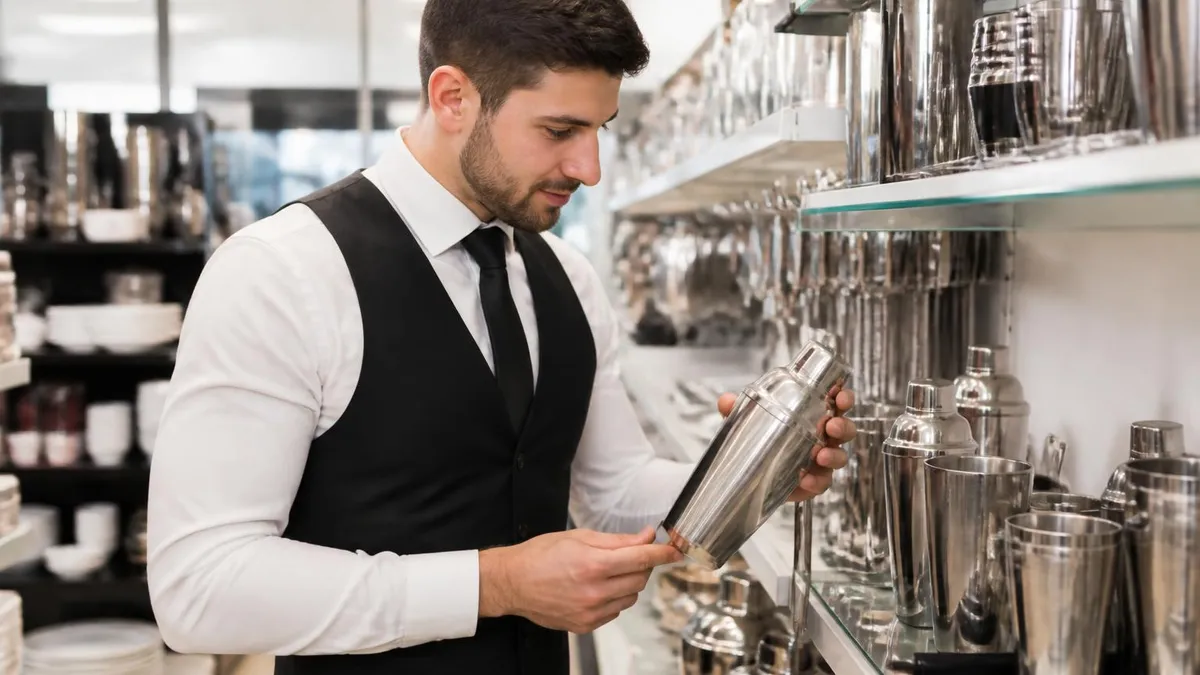
The Boston shaker — two pieces, a metal tin paired with a mixing tin or pint glass — is what every working bar in the U.S. uses. It’s simpler, faster, and once you learn the seal-and-release technique you’ll wonder why anyone makes anything else.
Why does the pro world prefer the Boston? Speed. The cobbler’s strainer cap clogs with citrus pulp on the third drink of the night. The cobbler also locks shut when chilled because metal contracts — you’ve seen the YouTube videos of bartenders banging shakers on the bar to get them open. The Boston, sealed by a quick palm-tap, opens with a single hand-strike at the right angle. Half a second, every time. Over a 200-drink shift that adds up to real minutes saved.
What about the bartender shaker set you see on Amazon — the 24-piece kit with the rainbow of jiggers and a pour-spout pack? Most of it is filler. The shaker in those sets is usually a cobbler in stainless that’s functional but light, the kind that dents when you drop it. You can absolutely start there if you’re experimenting. Just know you’ll likely replace the shaker itself within a year if you stick with the hobby. A good Boston tin-and-tin set from Cocktail Kingdom, Korin, or even Koriko runs $30-45 and lasts a decade.
The third option is the Parisian or French shaker — two pieces like a Boston but with a built-in flared seal and no glass component. Beautiful, balanced, and slightly slower to clean. Some craft cocktail bars use them as a signature touch. Skip it for now; the Boston is the right starting point.
Quick rule on shakers
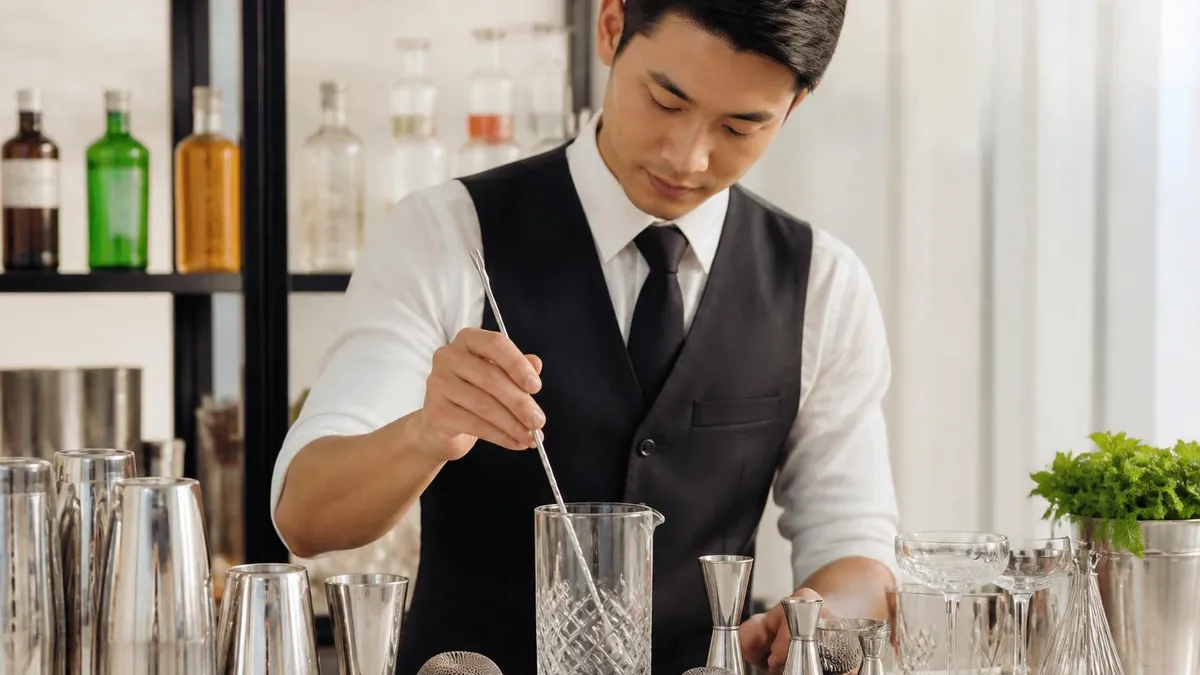
If you can only buy one shaker, get a weighted Boston tin pair (28 oz and 18 oz). Two stainless tins that nest, no glass. Around $30 from Cocktail Kingdom or any restaurant supply house. Buy a Hawthorne strainer separately for $10-15. That’s the entire shaker setup most working bartenders run with, and it outperforms a $90 cobbler every time.
If you’d rather buy it pre-assembled, browse our bartender kit roundup — we’ve curated specific kits that include all the right pieces without the filler.
Jiggers: The Most-Underrated Tool in the Kit
The jigger is what separates a drink that tastes right from a drink that tastes “close enough.” A jigger is a small double-sided measuring cup, one side typically 1 ounce and the other 2 ounces, though the variations are endless. Japanese-style jiggers — long, narrow, and graduated with internal etched lines — are increasingly popular and worth the modest upgrade.
What you need to own: at least one jigger with a 1.5 oz / 0.75 oz combo (the workhorse for most cocktails) and ideally a second jigger with 2 oz / 1 oz for stirred drinks. That covers 90% of recipes. Some bartenders carry three. Most carry two. Skip the cute decorative jiggers that look like little goblets — they hold air bubbles in the lip and pour inconsistent volumes.
The classic American jigger is two-piece stainless steel, weighted, cone-shaped, about $5-12. The Japanese Yarai-style jigger runs $15-25 and has the internal graduations for half-ounce, quarter-ounce, and three-quarter-ounce marks. If you’re going to do a lot of complex stirred drinks — manhattans, old fashioneds, negronis — the Japanese style is worth it. For a working shift jigger, the American cone is faster.
One thing to watch: jiggers from cheap sets are often inaccurate. Test yours by pouring water into a measuring cup. A good jigger pours within 0.05 oz of stated volume. A bad one can be off by a quarter-ounce, which over twenty cocktails wrecks the bar’s pour cost and the drinks taste flat or hot depending on the direction of the error. Get your jiggers from a known supplier — OXO, Cocktail Kingdom, Crafthouse, Koriko, or Mercer.
The strainer toolkit (you need three)
The flat one with the coiled spring around the edge. Fits inside a Boston tin or pint glass to strain shaken drinks. Around $8-15. The single most-used strainer in any bar — you'll use this for 80% of cocktails.
The spoon-shaped perforated strainer that sits inside a mixing glass. Used for stirred drinks like old fashioneds, martinis, and manhattans. About $10-20. Optional but classic — many pros use a Hawthorne for both.
A small handheld mesh strainer held over the glass while you pour from the Hawthorne. Catches citrus pulp, mint leaves, ice shards. Around $5-12. The 'double strain' is essential for any drink with fresh herbs or citrus.
A larger cone-shaped mesh strainer used in higher-volume bars. About $15-30. Replaces both the Hawthorne and tea strainer in a one-step pour for high-volume craft bars. Optional luxury.
Muddlers, Bar Spoons, Ice Scoops, Pour Spouts
After the shaker, jigger, and strainer trio, four more tools fill out a complete bartender kit. The muddler, the bar spoon, the ice scoop, and a set of pour spouts. Each does one thing well, none is expensive, and the upgrade path is short.
A muddler is the wooden or stainless rod you press fruit, herbs, or sugar against the bottom of a glass. The two camps: traditional wood (warm-handed, gentle on mint) and modern nylon or stainless (durable, dishwasher-safe, slightly louder). Wood muddlers come in unfinished maple or sometimes teak; avoid anything stained or varnished because the finish chips into your drinks. A 9-inch unfinished maple muddler from a restaurant supply runs $8-15 and lasts indefinitely if you wash it by hand. Mojitos, caipirinhas, smashes, and the old-fashioned’s sugar cube all need it.
The bar spoon is the long twisted-handle spoon you use to stir cocktails in a mixing glass. The twist isn’t decorative — it lets the spoon rotate smoothly in your fingers while you stir, keeping the ice in motion without sloshing. A 12-inch Japanese-style bar spoon costs $8-15. The cheap straight-handle versions you see in starter kits work but feel clumsy. Spend the extra five dollars.
Ice scoops are non-negotiable in any commercial bar — health code requires them. A stainless steel scoop with a 6-oz capacity is the standard. Never use a glass to scoop ice; if the glass chips, you’ve contaminated the entire ice well and have to dump it. A scoop runs $5-15 and is the cheapest insurance you’ll buy. For home use it’s polite rather than legally required, but the habit serves you well.
Finally, pour spouts. Those little metal or plastic nozzles you push into the neck of a liquor bottle. They control flow rate and let speed-pourers measure by count instead of jigger. A pack of twelve costs $5-10. Buy stainless if you can; the plastic ones discolor and crack within a year. Pour spouts are mandatory if you ever want to free-pour, and they reduce drips and bottle waste even if you always use a jigger.
Six glass types cover 95% of cocktails. Rocks (Old Fashioned), highball (Collins), coupe (martinis, sours), wine glass (spritzes, wine-based drinks), pint glass (beer, tall drinks), and a shot/cordial glass for neat pours. Start with a dozen rocks, dozen highballs, and six coupes — that’ll get you through any home party. Restaurant-grade Libbey or Arcoroc glasses run $15-25 per dozen and survive dishwashers; designer glassware is beautiful but breaks fast. For a working bar, expect to replace 10-20% of glassware annually from breakage alone.
Building a Home Bartender Set From Scratch
If you’re shopping for a home bartender set — either as a gift or for yourself — the temptation is to buy the giant 24-piece kit on Amazon for $50. Don’t. Those kits are roughly 60% useful tools, 30% redundant gear, and 10% pure filler. You’ll use the shaker, the jiggers, and the strainer; you’ll lose interest in the four different bottle openers, two pour spouts, three corkscrews, and decorative cocktail picks within a month.
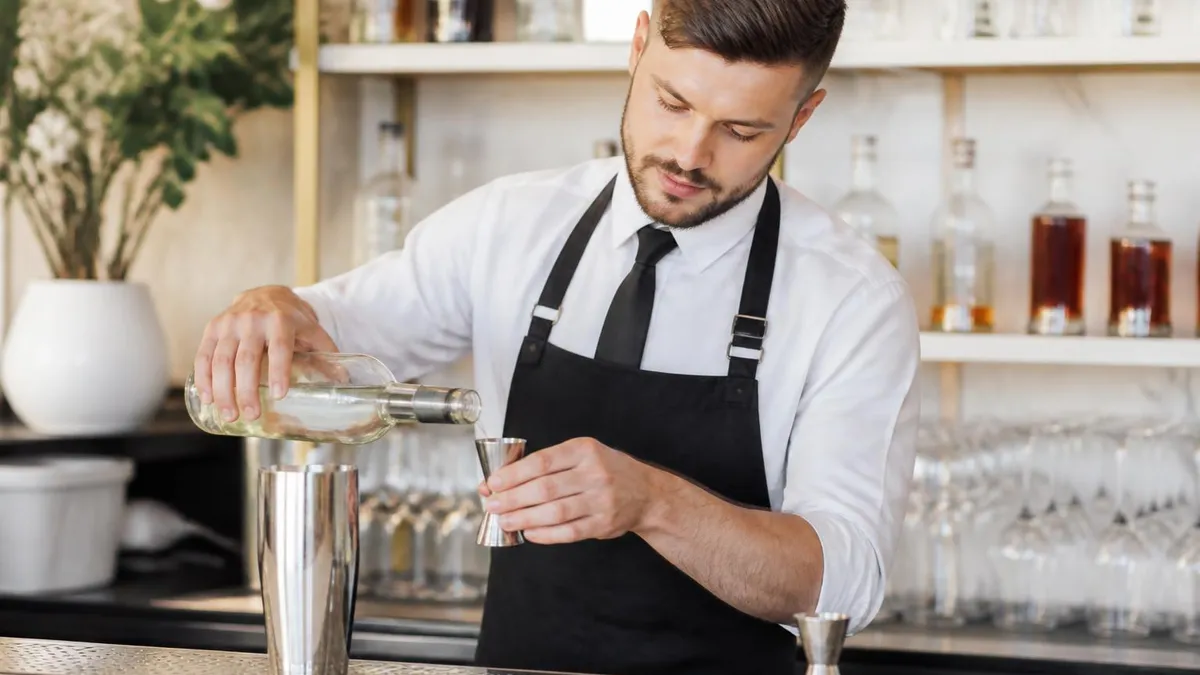
Build it piece by piece instead. For about $90 total you can put together a kit that will outlast the boxed Amazon set ten times over. Spend $30 on a Boston tin pair (Koriko or Cocktail Kingdom). Add $12 for a stainless Hawthorne strainer and $8 for a tea strainer. $15 for a Japanese-style jigger with internal graduations. $10 for a 9-inch maple muddler. $10 for a 12-inch Japanese bar spoon. That’s under $85 for the seven essential tools and they’re all upgrade-grade, not entry-level. Add a few rocks glasses and you’re mixing professionally at home.
The case for the boxed set: gifting. If you’re buying for someone who isn’t sure if they’ll like bartending as a hobby, a $50 kit is a fine starter. They’ll figure out which tools they like, replace the few they break, and upgrade gradually. The case against: if you already know you’re going to stay in the hobby (or you’re prepping for a job), skip straight to the piece-by-piece kit. You’ll save money over 12 months. For a curated package, our bartender set roundup covers options at each price tier.
One pattern we see often: people buy a beautiful kit, leave it in the box because it’s “too nice to use,” then never make a cocktail. Use your tools. Stainless steel doesn’t scratch, copper develops patina you’ll grow to like, and even the prettiest Japanese jigger is just a measuring cup. Get them dirty.
Three habits ruin more home bars than any other. First, chrome-plated tools — they look shiny on day one and flake within a year. Always buy stainless steel. Second, colored or coated jiggers — the colored finish chips into drinks and the measurements are often unreliable. Plain stainless is faster, more accurate, and lasts forever. Third, oversized novelty shakers — the 32 oz monster cobbler that holds three cocktails at once is a gimmick. The drinks get watery before they pour. Stick with a 28 oz Boston pair for the strong tin, 18 oz for the small one. Standard pro sizing exists for a reason.
Where to Buy Bartender Supplies (Without Getting Ripped Off)
Asking where to buy bartender supplies opens a surprisingly tiered marketplace. There are roughly four channels, each with different pricing, quality, and shipping speed. Knowing which channel matches your need saves both money and the frustration of returning a dented shaker.
Specialty cocktail retailers — Cocktail Kingdom, A Bar Above, Crafthouse Cocktails, Korin, Umami Mart — sell pro-grade gear at pro prices. Japanese-style jiggers, weighted Boston tins, hand-forged ice picks. Expect to pay $25-50 for a single tool but expect that tool to last a career. This is where serious home bartenders and most working pros shop for upgrades. Shipping takes 3-5 days; quality is consistently excellent.
Restaurant-supply houses — Webstaurant Store, Restaurant Supply, KaTom, even some Costco business centers — sell the same workhorse tools at 30-50% less. The brands are different (Vollrath, Update International, Winco, American Metalcraft) but the quality is solid commercial-grade. This is where working bars buy in bulk, and it’s where you should buy if you need a lot of one thing (glassware by the dozen, pour spouts by the gross, bar towels by the case).
Amazon and big-box online — convenient, cheap, and inconsistent. A $25 shaker on Amazon could be excellent or could ship dented. Read the reviews carefully and stick with established brands (OXO, Cresimo, Koriko, Mercer). Amazon is great for the small accessory items (Y-peelers, pour spouts, garnish containers) where consistency matters less. Avoid the no-name 24-piece kits.
Local restaurant-supply stores — underrated. Every major city has one or two warehouse-style stores that sell to restaurants and let walk-ins shop too. You can hold the tools before buying, return defective ones easily, and often save on shipping. Search “restaurant supply store [your city]” or check Yelp. The staff usually know the gear well and can recommend specific tools based on what you’ll actually be making.
One more option: bartending school programs sometimes bundle a starter kit with their tuition. ABC Bartending School, for instance, includes a basic toolkit with course enrollment in some markets. If you’re already planning to take bartending classes, ask whether tools are included — you may save the cost of an early kit purchase.
- ✓Boston tin pair (28 oz + 18 oz, weighted, stainless steel) — about $30
- ✓Hawthorne strainer (stainless, with tight coil spring) — about $12
- ✓Fine-mesh tea strainer for double-straining — about $8
- ✓Japanese-style jigger with internal graduations (1 oz / 2 oz) — about $15
- ✓9-inch unfinished maple muddler (avoid coated/varnished finishes) — about $10
- ✓12-inch Japanese bar spoon with twisted handle — about $10
- ✓Set of 12 stainless steel pour spouts — about $8
- ✓Six rocks glasses + six highball glasses (Libbey or Arcoroc, dishwasher-safe) — about $20-25
Sanitation and the Event Bartender Roll-Up
The unglamorous half of any bartender kit is sanitation. Bartender cleaning products are what keep a bar legal, what keep customers from getting sick, and what separate the pro who’s welcome back from the one who isn’t. The basics: food-safe sanitizer (chlorine-based or quaternary ammonium tabs), a dozen bar towels (lint-free cotton, replaced daily during a shift), a spray bottle for the bar surface, and a degreaser for the rubber bar mat.
For health-code compliance in a commercial bar, the three-compartment sink runs wash → rinse → sanitize, with the sanitizer at the right concentration (usually 50-100 ppm chlorine or 200 ppm quat). Test strips cost $5 and confirm the dilution. Inspectors check this. For home use, hot soapy water plus a final rinse with diluted bleach (one teaspoon per quart of water) does the equivalent job without the test strips. Either way, sanitize between guests if you’re serving from the same shaker.
Mobile event bartenders carry their sanitation in the same roll-up that holds their tools. A spray bottle of food-safe sanitizer, a roll of bar towels, and a dedicated sanitizing bucket are non-negotiable for any off-site catering. The mobile bartender guide covers the full event-prep kit, including the things you don’t think about until your second wedding gig — like a backup CO2 cartridge for sparkling cocktails or a portable hand-washing station.
One thing every event bartender learns the hard way: bring backups. Backup pour spouts (they fall behind the bar). Backup bar towels (you’ll burn through a dozen at a 200-person wedding). Backup jiggers (people pocket them, somehow). Backup pens, backup wine keys, backup batteries for the credit-card reader. The roll-up kit doesn’t need to weigh fifteen pounds, but it does need the duplicates that keep service moving when something goes missing in hour three.
- +Pre-built kits ship in one box, ready to use the day they arrive
- +Generally cheaper upfront than buying the same tools individually
- +Good for gifts when the recipient’s preferences are unknown
- +Take the guesswork out of which jigger or strainer to buy first
- +Include accessories (pour spouts, picks) you might forget separately
- −Shaker quality is often the kit’s weakest piece — cobbler-style, light gauge
- −Jiggers in cheap kits are frequently inaccurate by 10-15%
- −Filler items (multiple bottle openers, decorative picks) inflate the perceived value
- −Upgrade path is expensive — you replace tools instead of starting with pro-grade
- −Branded sets often skip the most-used tool: a quality tea/fine strainer
Beyond the Gear: Skills, Certification, and Career Path
Buying the right bartender supplies is step one. Knowing what to do with them is the longer game. The Boston shaker doesn’t teach you the cocktail; you teach the shaker. Most professional bartenders learn the actual technique through a combination of YouTube, books (Death & Co.’s house manual and Liquid Intelligence by Dave Arnold are standards), shadowing a working bartender, and trial-and-error behind a friendly bar.
If you’re prepping for a hiring conversation, the gear conversation is brief. Most bars supply their own tools and have a house style. What hiring managers actually care about is whether you can pour accurately, work clean, read a guest, and not panic during a rush. The tools you own at home are practice scaffolding; the tools at work are whatever the bar issues you.
That said, owning your own quality jigger and a backup wine key in your apron pocket signals professionalism on day one. Bring them. Use them when the house gear is busy. It costs $20 and it shows the manager you’re someone who invests in the craft. If you’re browsing openings, our bartender jobs board covers nationwide listings; for local search, the bartending jobs near me page filters by ZIP.
And the certification side — TIPS, ServSafe Alcohol, state-specific permits — is its own animal, covered in detail on our bartender certification page. Quick summary: in about 18 states the certification is legally required; in the others most bars demand it anyway as a hiring filter. It runs $10-40 and takes a single afternoon. Get it before you need it. If you’re in a permit state like Utah, Wisconsin, or California, the state bartending license is mandatory; the cost and time vary by state.
Quick Recap Before the FAQs
The working bartender kit is small: a Boston shaker pair, a Hawthorne strainer, a fine-mesh tea strainer, two jiggers, a muddler, a bar spoon, and a pack of pour spouts. Add glassware, a quality apron, a roll-up bag if you do events, and sanitation basics. Total cost runs $90 for a starter kit and $200-300 for a fully kitted pro. Skip the giant Amazon novelty kits and skip the chrome-plated tools. Buy from specialty retailers (Cocktail Kingdom, Korin) for hero pieces and restaurant-supply stores (Webstaurant) for bulk consumables.
The questions below cover the things we get asked most often in our quiz prep community. Read through them, and you’ll be better-equipped than most people walking into a hiring conversation or building their first home bar. For the related bartending tools deep-dive and the bartending kit shopping guide, follow those links — they pair naturally with this page.
Bartender Questions and Answers
About the Author

Executive Chef & Culinary Arts Certification Educator
Culinary Institute of AmericaChef Marco Bellini is a Certified Executive Chef and graduate of the Culinary Institute of America with over 20 years of professional kitchen experience in Michelin-recognized restaurants. He teaches culinary arts certification, food safety, and hospitality exam preparation, having guided thousands of culinary students through their ServSafe, ProStart, and professional chef certifications.
Join the Discussion
Connect with other students preparing for this exam. Share tips, ask questions, and get advice from people who have been there.
View discussion (7 replies)