
Bartender Set Guide: Essential Tools, Kit Sizes, and What to Buy First
Bartender set guide: essential tools (jigger, strainer, shaker, muddler, bar spoon), kit sizes by skill level, and the best starter kits under $100. 🟢
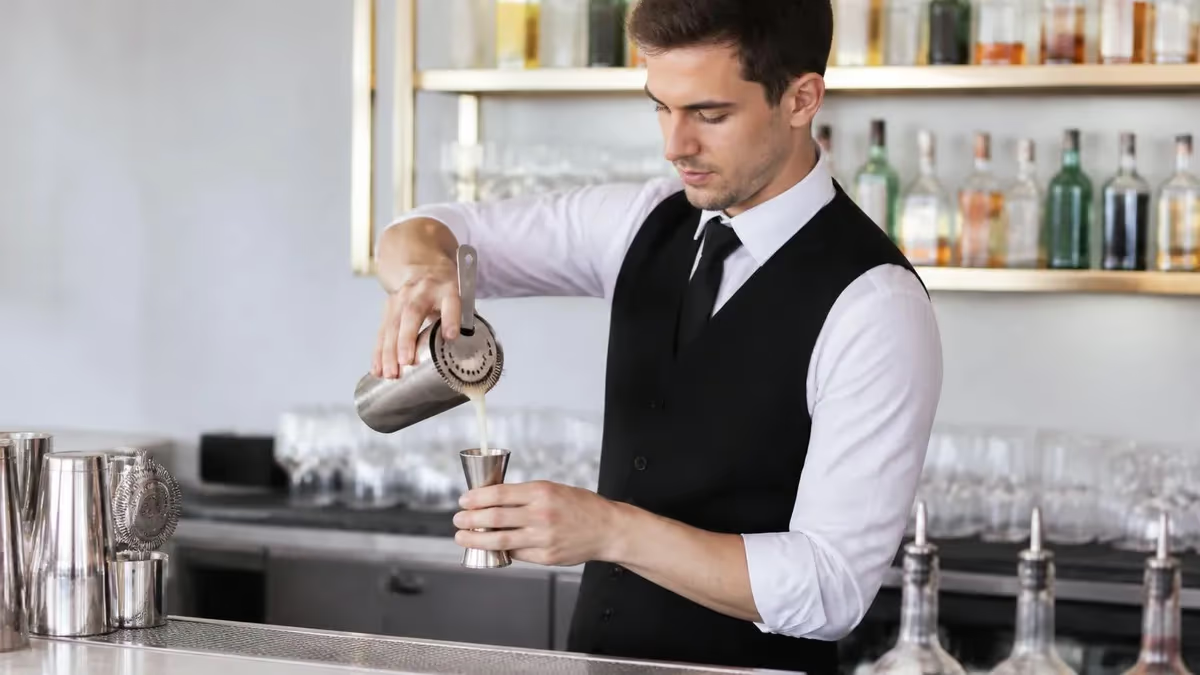
A bartender set is the foundational toolkit for anyone who makes cocktails — at home, behind a bar, or running mobile events. The standard 10-piece starter kit usually includes a shaker, two jiggers, a strainer, a bar spoon, a muddler, a citrus knife, a peeler, a pour spout, and an ice scoop. That covers about 80% of what most home bartenders ever need. Where it gets complicated is the 20% — specialty bar tools that matter once you're past the basics, professional-grade equipment for working bars, and the cheap-kit-vs-quality-kit trade-off that affects every purchase decision.
The price range for a basic bartender set runs from about $20 (the entry-level Amazon kits, plastic or thin-stamped stainless) up to $300+ (professional-grade kits from companies like Cocktail Kingdom, Yukiwa, or specialty brands). For most home bartenders, the sweet spot is $50-$120 — solid construction without paying for chef-grade tooling you'll never actually need.
The most important single piece in any bartender set is the jigger. Cocktail recipes are precise — half an ounce off on a 3-ounce drink is a significant deviation. A double-sided jigger that measures both ounces and milliliters, with internal etched marks for half-ounce, three-quarter-ounce, and ounce gradations, makes the difference between a balanced cocktail and a confusing one. Spending $15-$25 on a quality jigger (look at Cocktail Kingdom's Japanese-style jiggers or Yukiwa) returns better drinks than spending $5 on a basic jigger and $20 on something else.
The second most important piece is the shaker. Two main styles: the Boston shaker (two-piece — a mixing tin plus a smaller glass or tin) used by most professional bartenders, and the cobbler shaker (three-piece — tin, integrated strainer, and cap) more common in home kits. Boston shakers shake more efficiently and are easier to break apart cleanly after shaking; cobbler shakers are easier for beginners because the strainer is built in. The choice between them is partly preference and partly skill level.
Beyond jigger and shaker, the rest of the standard kit has tools that vary in quality but not in fundamental function. A Hawthorne strainer (the most common style, with the spring coil) works for shaken cocktails. A julep strainer (a perforated metal disc) works for stirred cocktails poured from a mixing glass.
A bar spoon (long-handled, often with a twisted shaft) is essential for stirred cocktails and for measuring small quantities. A muddler crushes herbs, citrus, and sugar at the bottom of a glass before adding other ingredients. A citrus peeler and channel knife handle garnishes. None of these tools needs to be expensive — quality matters less here than for jiggers and shakers.
This guide covers the essential bartender set components in detail, kit recommendations by budget level, the upgrade path as you advance, and a section on mobile bartending kits (specialized for events and travel). It's intended for both home bartenders starting out and aspiring professionals putting together their first working kit.
Essential Bartender Set Tools
- Jigger ($10-$30): Double-sided, measures ounces and milliliters. Most important single tool.
- Shaker ($15-$50): Boston style (two-piece) or cobbler style (three-piece). Tin construction preferred.
- Strainers ($8-$20): Hawthorne (for shaken) + julep (for stirred). Get both.
- Bar spoon ($5-$25): Long-handled, twisted shaft. Used for stirring and measuring.
- Muddler ($5-$15): Wood or food-grade plastic. Avoid painted wood (chips into drinks).
- Mixing glass ($15-$60): Heavy-bottomed, ribbed glass for stirred cocktails.
- Knife and peeler ($10-$30): Paring knife + citrus peeler for garnishes.
- Pour spouts ($5-$15 set): Fit bottle tops for measured pouring.
- Ice scoop and tongs ($10-$25): For sanitary ice handling.
- Total typical kit: $50-$120 for quality starter; $200-$400 for advanced/professional set
Where to buy a quality bartender set matters more than people realize. The $20 Amazon kits look complete in product photos but the tools themselves are usually thin stainless that bends, plastic muddlers that flake, jiggers with poorly defined gradations, and shakers that leak around the cap. A few of those kits are fine for occasional home use; most are frustrating once you actually try making drinks.
The mid-range kits ($50-$120) from brands like Mixology, Sagaform, Bar Brat, OXO, and Modern Mixology offer real upgrades — heavier stainless, better-machined parts, and tools that feel like tools rather than toys. For most home bartenders, this tier is the sweet spot.
The high-end ($150+) options come from specialty companies serving working bartenders: Cocktail Kingdom (the gold standard for serious home and professional bartenders), Yukiwa (Japanese precision tools), Erickson Woodworks (handmade wooden muddlers and bar caddies), and Üsküdar (Turkish handmade copper). These are tools that last decades and improve the actual experience of making drinks. Spending $200 on a serious kit from Cocktail Kingdom usually buys equipment that outlasts a $40 kit by a factor of 5+ years.
For a bartender set targeted at someone new to cocktail making, the Cocktail Kingdom "Starter Kit" or the Mixology "Home Bar Tool Set" hit the right balance. For more advanced users, the Cocktail Kingdom "Master Bartender Kit" or assembled-piece-by-piece purchases of higher-end individual tools gets you a working bar setup.
For mobile bartending — where you're traveling to events with your gear — the kit needs additional considerations. The tools need to fit into a transportable case (typically a roll-up tool case or a hard travel case), they need to be durable enough to survive being knocked around in transport, and the kit needs redundancy because you can't run back to the bar to grab another jigger if one goes missing. mobile bartending kits often include duplicate jiggers, extra strainers, and a more robust shaker than a typical home kit.
Mobile bartending also requires kit components that home kits often skip — a portable ice well or insulated container, garnish trays, lemon-lime squeezers (faster than fresh-squeezed for high-volume events), and sometimes pre-batched cocktail containers. The transition from home bartender to mobile event bartender doubles or triples the gear list. Companies like Bar Pros, Crafthouse, and Cocktail Kingdom all sell specifically mobile-bartending bundles.
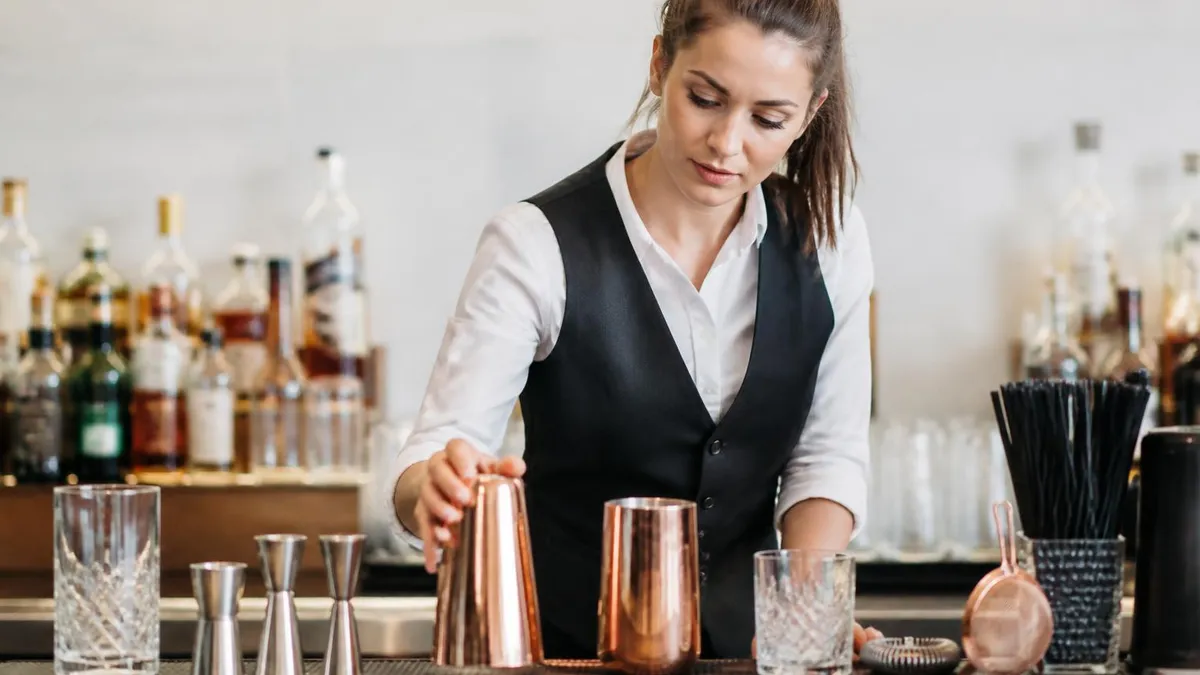
Tools by Importance
Most important single purchase. Double-sided, etched gradations for ½, ¾, and 1 oz. Cocktail Kingdom or Yukiwa jiggers are the gold standard.
Boston shaker (two-piece) for serious work, cobbler shaker (three-piece) for beginners. Stainless steel only — avoid plastic or chrome-plated.
The standard strainer for shaken cocktails. Spring coil holds back ice and pulp. Use with Boston shaker tin.
Long handle (10-12 inches) for reaching to the bottom of mixing glasses. Twisted shaft helps stir efficiency. Spoon end doubles as small measure.
Heavy-bottomed, ribbed crystal or thick glass. Used for stirred cocktails (martinis, Manhattans, etc.). Skip if you're starting with shaken drinks only.
Wood or food-grade plastic. Avoid lacquered or painted wood (chips into drinks). Needed for old fashioneds, mojitos, juleps, smashes.
The bartender kit assembly question — buy a complete kit vs. buy individual pieces — comes down to budget and learning style. Complete kits offer convenience and a coordinated visual appearance. Individual-piece purchases let you upgrade the most-used tools to higher quality without paying for premium versions of tools you barely use. Most working bartenders end up with hybrid kits — a starter purchase that gets supplemented with better individual tools over time as you identify what you actually use.
Specific upgrade recommendations: once you've used your starter kit for a few months, the upgrades that return the most value are: a better jigger (every cocktail uses it), a heavier shaker tin (lasts longer, less leak-prone), and a higher-quality strainer (cheap Hawthornes lose tension and stop sealing properly).
The materials question matters more than most kit descriptions suggest. Stainless steel is the standard — food-safe, doesn't corrode, easy to clean. Copper tools (Moscow mule cups, copper-finish shakers) are mostly aesthetic and require more care (hand-wash only, polish periodically, lined copper is safer than unlined for acidic drinks). Plastic tools are typically lower quality and less durable — avoid plastic muddlers, plastic jiggers, and plastic strainers in particular. Wooden muddlers are fine if unfinished or food-safe finished; painted or lacquered wood eventually chips into drinks.
Glass quality for mixing glasses and serving glasses also matters more than it looks like. Heavy-bottomed mixing glasses (Yarai-style, with ribbed sides) stir better and are more durable. Thin-walled mixing glasses chip and crack easily. For serving glasses, the cocktail you make determines the glass — coupes for shaken drinks served up, rocks glasses for whiskey cocktails on the rocks, Collins glasses for tall mixed drinks, martini glasses for true martinis. A starter glass set should include 6 rocks glasses, 6 coupes or martini glasses, and 4-6 Collins glasses for most home setups.
For people considering a career in bartending — not just home use — the gear conversation is different. Professional bartenders typically carry their own small "jump kit" with personally-selected jigger, bar spoon, and Hawthorne strainer regardless of what the bar provides. Restaurant bars stock their own equipment; mobile event bartenders bring everything. The personal kit is a few hundred dollars in mid-range gear that you keep for years. bartending school programs often include a basic kit as part of tuition, though the quality varies widely between programs.
Bartender Set Price Tiers
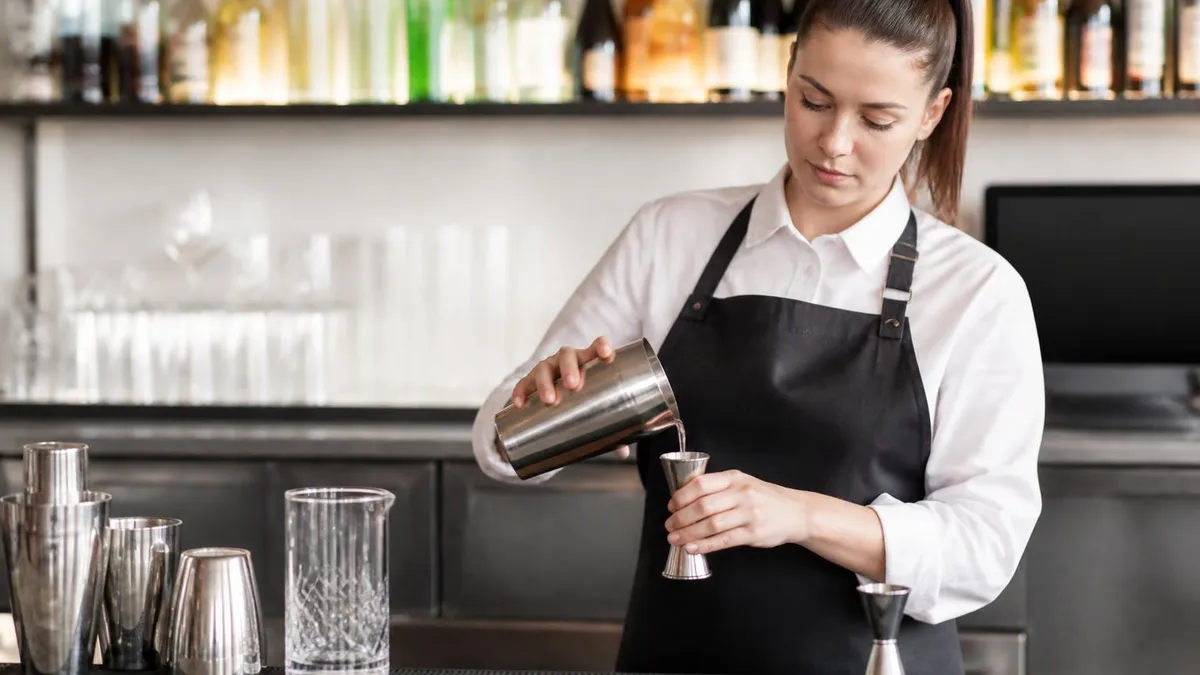
Cocktail-specific tool needs vary. If your home bar focus is whiskey cocktails (old fashioneds, Manhattans, Boulevardiers), the muddler matters more than for clear-spirit cocktails. If your focus is shaken drinks (margaritas, daiquiris, sours), the shaker quality and a good Hawthorne strainer matter most. If you do a lot of stirred cocktails (martinis, negronis, Manhattans), the mixing glass and bar spoon become primary tools.
Garnish prep tools are often underweighted in starter kits. A good Y-peeler (Kuhn Rikon is the standard) makes clean wide citrus peels that the cheap peeler in starter kits can't match. A channel knife creates citrus twists. A small paring knife handles berry cuts and lemon wheel slicing. Adding $25-$40 in garnish-specific tools significantly upgrades the presentation of cocktails you make.
Ice tools deserve specific attention. Cocktail ice is its own category — Kold-Draft and Hoshizaki are the commercial ice machines that produce dense, slow-melting ice favored by quality bars. For home use, silicone ice molds (2-inch cubes, 1-inch cubes for collins glasses, ice spheres for whiskey rocks) elevate cocktail presentation. A Lewis bag and mallet for crushed ice (Mojito, Mint Julep) is a fun specialty addition once you're past the basics.
For the people who get serious about cocktails, the next level of tool acquisition is recipe-specific. A nitro charger and whipping siphon for nitrogenated cocktails. A weighing scale (jewelry-grade gram scale) for bitters and high-precision recipes. A cocktail strainer set (fine mesh strainer for double-straining) for shaken drinks with citrus pulp or muddled herbs. A torch for caramelizing or smoking. Each of these adds $20-$80 and addresses specific cocktail styles rather than general bartending.
The kit-storage question affects daily use. A tool roll case keeps everything organized and ready to grab. A bar caddy on the counter is faster access. A drawer-based storage works if you have dedicated kitchen drawer space. Pegboard wall storage looks good and keeps tools visible. The right choice depends on your space — but having a designated home for the kit increases how often you actually use it. Tools that live in a junk drawer get used 10x less than tools in dedicated storage.
Most starter kits include items you'll rarely use that pad the piece count. Common offenders: cheap pour spouts (most home cocktails are measured with the jigger anyway), tiny tongs (use a different tool for almost any task tongs would do), bottle opener (you already have one), ice bucket (works fine but rarely necessary at home), and laminated cocktail recipe cards (printed cards age badly; use phone apps or websites instead). The kit's "piece count" is mostly marketing — a 24-piece kit with 14 throwaway pieces is worse than a 10-piece kit with all useful tools.
Bartender certification and licensing is separate from gear but worth mentioning in this context. Most U.S. states require a state-issued bartender certification to serve alcohol commercially. bartender license requirements vary — some states (Florida, Texas, Washington) have specific programs; others recognize TIPS or ServSafe Alcohol certifications. bartending license is the umbrella term used in some markets. bartender certification is the broader term that covers responsible service training plus skill certification.
Certification courses typically cover responsible alcohol service, ID checking, recognizing intoxication, legal liability for over-service, and basic alcohol regulations. Skills certification (actually making cocktails) is separate and usually optional. Most states require only the responsible service certification for commercial bartending; the cocktail skills are picked up on the job or via bartending school.
For people considering bartending school: bartending school programs run from 2-week intensive courses ($200-$500) to multi-month comprehensive programs ($1,000-$3,000). The faster programs cover the basics — common drinks, pour technique, basic responsible service — and provide a certification of completion. The longer programs add advanced cocktail creation, beverage management business knowledge, and sometimes job placement support. abc bartending school is one of the larger nationwide chains; many independent bartending schools exist locally in major cities.
The honest assessment of bartending school: it's not strictly required for getting hired. Many bartenders start as barbacks and learn on the job. The school provides a faster on-ramp and basic skills certification, which can help with first-job interviews. But the skills that matter most for a bartender — speed, accuracy under pressure, customer service, recipe memory — come from working behind a bar, not from a classroom. The school is a starting point, not a complete education.
Bartending jobs market: bartender jobs are widely available in most U.S. metros. Restaurant bars hire continuously for full-time and part-time positions. Hotels, country clubs, sports venues, and event venues hire seasonal and full-time. Mobile event bartending (weddings, corporate events) is its own market — typically higher per-hour pay but inconsistent scheduling. bartending jobs near me searches typically find dozens of openings in any metro of 500K+ people.
Bartender Set by Use Case
- Target spend: $50-$80
- Core pieces: Cobbler shaker, double-sided jigger, Hawthorne strainer, bar spoon, muddler
- Glasses: 6 rocks glasses, 6 coupes (or martini glasses), 4 Collins glasses
- First buy: Mixology starter kit or OXO bar tool set
- Skip: Cheap pour spouts, bottle opener (you have one), laminated recipe cards
- Upgrade path: Better jigger first, then heavier shaker, then quality strainer
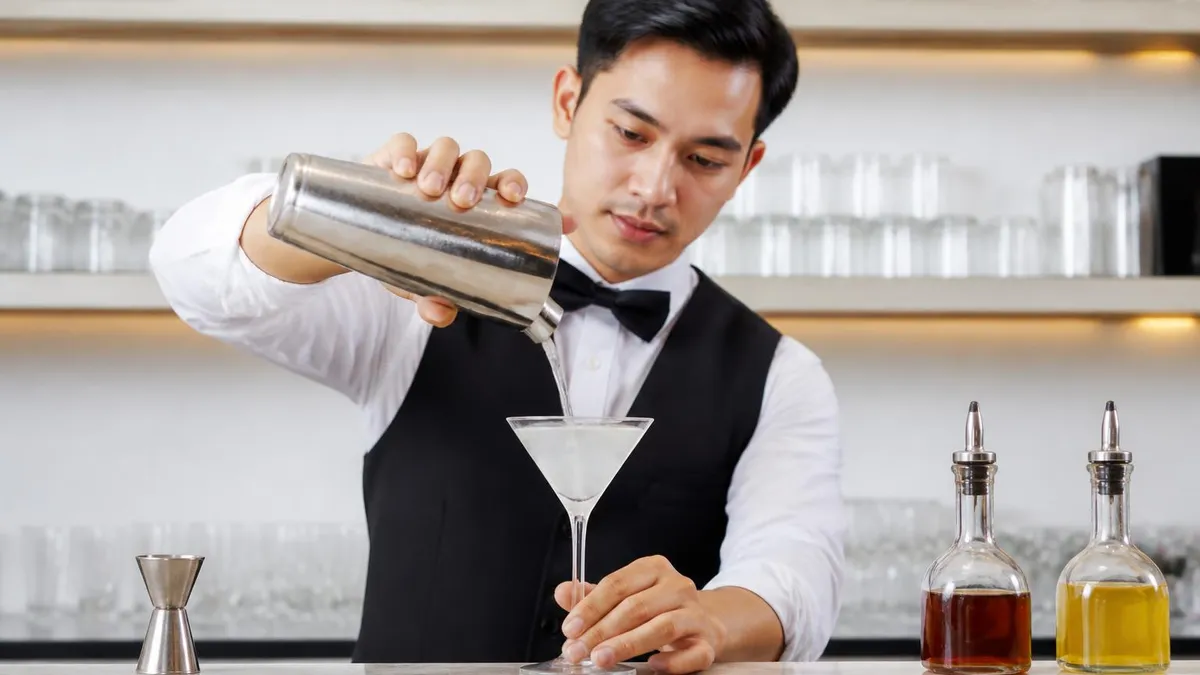
The path from home bartender to professional bartender is shorter than many people think. how to become a bartender typically follows this sequence: get your state's responsible alcohol service certification ($30-$100), apply for barback positions at local bars, learn the basics on the job for 6-12 months, then move up to bartender once a position opens. bartending classes can shorten this timeline but aren't strictly required.
For people interested in mobile bartending as a side income, the entry barrier is higher than bar work because you need your own gear, transportation, and (in some states) your own alcohol service liability insurance. But the per-event pay is meaningful — $30-$60/hour plus tips is typical, and mobile bartenders working steady weekend events can earn $1,500-$3,000 per month part-time. Starting requires a kit, marketing (Instagram and word-of-mouth), and a reliable car. Building a client base takes 6-12 months of consistent event work.
Hiring a bartender for events runs $50-$150 per hour depending on market and event type. hire a bartender services aggregate availability through platforms like The Bash, Thumbtack, and local market apps. Couples planning weddings, corporate event planners, and host families all use these services to staff events without the liability and complexity of self-serving alcohol.
The intersection of bartending tools and the broader hospitality industry is worth understanding for anyone considering bartending as a career. Bartender pay varies widely — entry-level positions in average markets pay $12-$18/hour plus tips (total $25-$45/hour typical), while upscale cocktail bars and high-volume venues can pay $40-$80/hour with tips. Mobile bartending and event work pay more per hour but less consistently. The career has unusual income variability and irregular schedules, which suits some lifestyles and doesn't suit others.
For most home bartenders, the practical conclusion is: buy a mid-range kit, learn 10-15 cocktails well rather than 100 superficially, upgrade your jigger and shaker first when you outgrow the starter kit, and don't get distracted by gear that you don't actually need. The cocktails that matter most are the classics — Old Fashioned, Manhattan, Negroni, Martini, Daiquiri, Margarita, Whiskey Sour, Mojito, Moscow Mule, Aperol Spritz. Master those with quality tools and quality ingredients, and your home bar is more capable than 90% of restaurant bars.
Upgrade Path from Starter to Pro
Use the basic kit. Make 5-10 classic cocktails. Identify which tools you use most and which you ignore. Don't buy upgrades yet.
Upgrade the jigger — biggest impact on cocktail quality. Add a Y-peeler for garnishes. Get a small paring knife if you don't have one.
Upgrade to a heavy Boston shaker set if you're making shaken drinks regularly. Better Hawthorne strainer. Add a julep strainer for stirred drinks.
Yarai mixing glass for stirred drinks. Quality muddler. Ice molds. Fine mesh strainer. Lewis bag for crushed ice if you make juleps/mojitos.
Recipe-specific tools — nitro charger, weighing scale, torch, smoke gun if you go that direction. Quality glasses for each cocktail style.
Replace worn tools (strainers lose tension, shakers develop leaks). Add specialty tools as your cocktail repertoire grows. Don't accumulate tools you don't use.
Bartender Pros and Cons
- +Bartender has a publicly available content blueprint — you know exactly what to prepare for
- +Multiple preparation pathways accommodate different schedules and budgets
- +Clear score reporting shows specific strengths and weaknesses
- +Study communities share current insights from recent test-takers
- +Retake policies allow recovery from a difficult first attempt
- −Tested content scope requires substantial preparation time
- −No single resource covers everything optimally
- −Exam-day performance can differ from practice test performance
- −Registration, prep, and retake costs accumulate significantly
- −Content changes between versions can make older materials less reliable
BARTENDER Questions and Answers
The bottom-line advice on bartender sets: don't overthink the first purchase. A solid $60-$80 mid-range starter kit covers everything a new home bartender needs for the first six months. Upgrade individual pieces — jigger first, then shaker, then strainer — as you identify what you actually use. The goal isn't to assemble a perfect kit on day one; it's to start making drinks, learn what you care about, and let your kit evolve toward your actual cocktail preferences.
For people transitioning from home to professional bartending, the kit conversation matters more — the tools you use 100+ times per shift benefit meaningfully from premium quality. But even there, the jigger, bar spoon, and Hawthorne strainer are the highest-leverage upgrades. Everything else can wait until you're sure you need it. Tools you don't use are wasted money; tools you use 50 times a week are worth their cost many times over.
About the Author
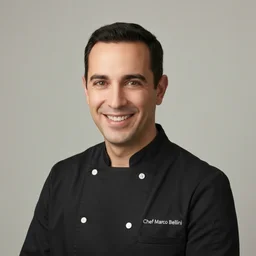
Executive Chef & Culinary Arts Certification Educator
Culinary Institute of AmericaChef Marco Bellini is a Certified Executive Chef and graduate of the Culinary Institute of America with over 20 years of professional kitchen experience in Michelin-recognized restaurants. He teaches culinary arts certification, food safety, and hospitality exam preparation, having guided thousands of culinary students through their ServSafe, ProStart, and professional chef certifications.
Join the Discussion
Connect with other students preparing for this exam. Share tips, ask questions, and get advice from people who have been there.
View discussion (7 replies)