
Bartender Pay: What You Really Earn Behind the Bar in 2026
Discover real bartender pay rates, tip income, 🟢 top markets, and how certification boosts your earning potential in 2026.
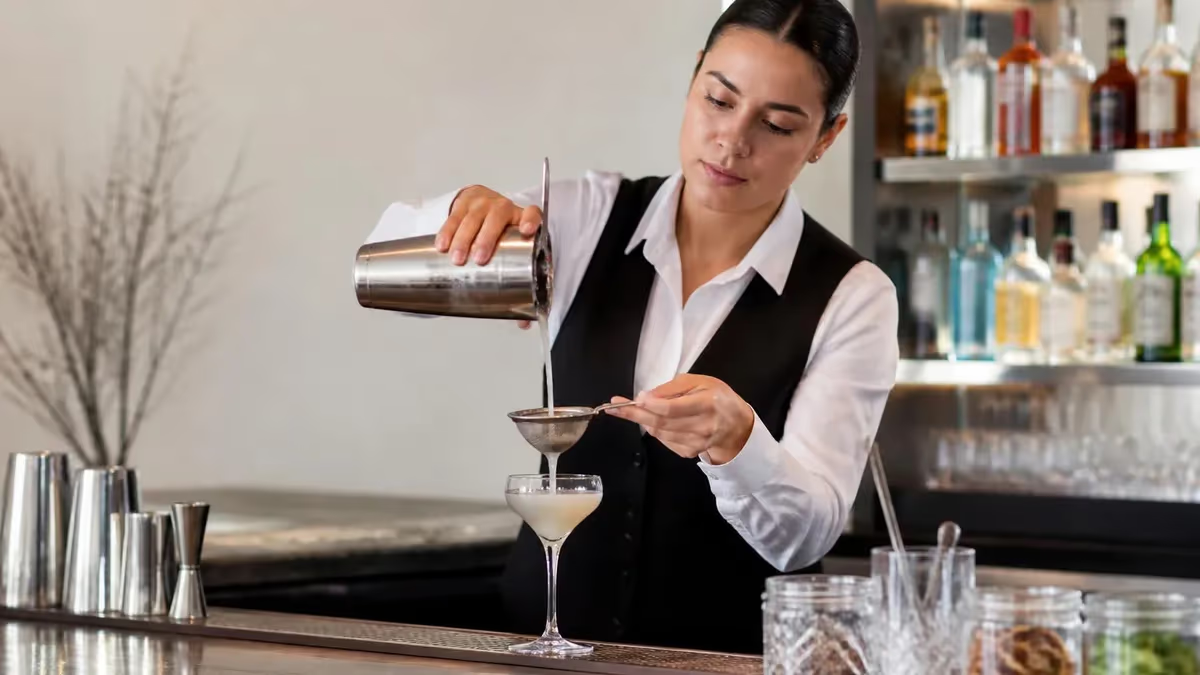
Understanding bartender pay is one of the first questions anyone asks before committing to a career behind the bar — and for good reason. The numbers can look wildly different depending on where you work, what type of establishment you choose, and whether you hold a professional certification. In 2026, the national median wage for bartenders sits around $29,000 to $34,000 in base salary alone, but total compensation including tips can push experienced bartenders well past $60,000 annually at the right venue.
What makes bartending financially unique compared to most service-industry careers is the tip-based compensation model. Unlike a fixed hourly job, your nightly earnings respond directly to your skill, speed, personality, and the volume of business your employer generates. A slow Tuesday at a neighborhood pub feels nothing like a Saturday night at a rooftop cocktail lounge — the venue, the crowd, and the drink menu all multiply your base wage in ways that a W-2 salary rarely captures on paper.
Geographic location plays an enormous role in total bartender income. Cities like New York, San Francisco, Las Vegas, and Chicago consistently rank among the highest-paying markets because the cost of living inflates menu prices, customers spend more per visit, and the hospitality industry is large enough to sustain a strong demand for skilled bartenders year-round. A bartender in rural Mississippi faces an entirely different economic reality than one working a downtown Nashville honky-tonk that draws hundreds of tourists every weekend.
Certification and formal training increasingly separate the highest earners from average ones. Employers at upscale hotels, resort pools, and craft cocktail bars actively seek bartenders with documented skills in cost control, liquor law compliance, and professional mixology. Holding a bartender certification demonstrates to hiring managers that you take the craft seriously, and it often translates directly into access to higher-paying positions that would otherwise go to candidates with years more experience.
This article breaks down bartender pay by every major variable: base hourly wage, tip averages, venue type, geographic market, and experience level. We also look at how specialty knowledge — particularly bar inventory management and liquor regulations — can position you for a management track that dramatically increases your income ceiling. Whether you are brand new to bartending or looking to negotiate your next raise, the data here will give you a clear, accurate picture of what the market actually pays.
We cover the full compensation picture — not just the number on your paycheck but the total economic value of a bartending career when you account for flexibility, advancement opportunities, and the growing demand for certified professionals. By the end of this article, you will know exactly which factors to focus on to maximize your bartender earnings in the current job market.
Free Bartender Certification Study Tools
Interactive Bartender Certification resources on PracticeTestGeeks, free to start:
- Bartender Certification flashcards — review key terms and concepts card by card
- Bartender Certification study guide — topic-by-topic overview of what the exam covers
- Bartender Certification cheat sheet — one-page printable summary for last-minute review
Bartender Pay by the Numbers
Bartender Pay by Venue Type
Top-tier establishments pay base wages of $12–$18 per hour plus tips that routinely average $150–$300 per shift. Annual total compensation for experienced bartenders often exceeds $65,000, especially in metropolitan markets.
Hotel bars combine steady tourist traffic with corporate expense accounts, producing reliable tip income. Base pay typically ranges from $14–$20 per hour, and full-service resort positions may include benefits like health insurance.
National chain restaurants offer consistent schedules and stable base wages around $9–$13 per hour, but tip averages are lower. Total comp for experienced bartenders generally falls between $35,000 and $48,000 annually.
Nightclub bartenders can earn the highest single-night tips in the industry — $400 to $800 on a busy weekend — but the work is physically demanding, hours are irregular, and the environment is high-stress.
The craft beer sector is growing rapidly. Taproom bartenders earn moderate base pay ($11–$16/hr) with modest tips, but product knowledge and brewery affiliation provide a strong career foundation and advancement opportunities.
Tips represent the single most variable and most impactful component of total bartender compensation, and understanding how tips work — legally, practically, and strategically — is essential for anyone trying to project their real income. In most US states, employers are legally permitted to pay a tipped minimum wage as low as $2.13 per hour federally, with the expectation that tips will bring total compensation to at least the standard minimum wage. In practice, experienced bartenders at busy venues earn tips that far exceed this floor.
The mechanics of tip distribution vary considerably by employer. Some establishments use a tip pool where front-of-house staff including bartenders, servers, and bussers all share from a combined pot. Others let bartenders keep every tip made at their station minus a tip-out percentage to support staff like barbacks and hosts. Understanding your employer's tip structure before accepting a job is critical, because a high-traffic venue with an aggressive tip pool may actually pay you less than a quieter bar where you retain your tips directly.
Credit card tipping has transformed how bartenders collect income. Prior to widespread card payments, cash tips were immediately available but harder to track for tax purposes. Today, most tips are processed digitally and appear on your paycheck, which means they are fully visible to tax authorities. The IRS requires bartenders to report all tip income regardless of form, and many bartenders are audited for under-reporting. Keeping accurate records of your nightly tip income protects you during tax season and helps you negotiate raises with documented proof of your total value to the business.
Shift selection significantly affects tip income in ways that new bartenders often underestimate. Friday and Saturday evenings from 8 PM onward are consistently the highest-earning windows at most bars. Brunch shifts at upscale restaurants have become surprisingly lucrative in recent years, as bottomless-mimosa crowds spend freely and turn tables quickly. Weekday happy hour shifts tend to generate steady but modest income — great for building regulars but not for maximizing nightly earnings.
Building a base of loyal regulars is perhaps the most reliable strategy for increasing tip income over time. Regulars return specifically because of you, they typically tip at a higher percentage than one-time visitors, and they refer friends who become new customers. Learning names, remembering drink preferences, and providing genuine hospitality — not just transactional service — are the behaviors that convert first-time guests into weekly visitors who contribute meaningfully to your consistent income.
Specialty cocktail knowledge directly correlates with higher tip averages. When a bartender can describe the flavor profile of a spirit, recommend a cocktail tailored to a guest's stated preferences, or explain the story behind a craft ingredient, the perceived value of the service increases. Guests who feel educated and entertained tip more generously than guests who receive mechanical order-taking. Investing time in product knowledge and cocktail technique pays dividends every shift in the form of larger gratuities from impressed customers.
Bartender Practice Test Questions
Prepare for the Bartender Certification exam with our free practice test modules. Each quiz covers key topics to help you pass on your first try.
Bartender Certification Bar Inventory and ...
Bartender Exam Questions covering Certification Bar Inventory and Cost Control. Master Bartender Test concepts for certification prep.
Bartender Certification Bar Law and Liquor...
Free Bartender Practice Test featuring Certification Bar Law and Liquor Regulations. Improve your Bartender Exam score with mock test prep.
Bartender Certification Bar Sanitation and...
Bartender Mock Exam on Certification Bar Sanitation and Safety. Bartender Study Guide questions to pass on your first try.
Bartender Certification Bar Setup and Orga...
Bartender Test Prep for Certification Bar Setup and Organization. Practice Bartender Quiz questions and boost your score.
Bartender Certification Bar Tools and Glas...
Bartender Questions and Answers on Certification Bar Tools and Glassware. Free Bartender practice for exam readiness.
Bartender Certification Basic
Bartender Mock Test covering Certification Basic. Online Bartender Test practice with instant feedback.
Bartender Certification Cocktail Recipes a...
Free Bartender Quiz on Certification Cocktail Recipes and Techniques. Bartender Exam prep questions with detailed explanations.
Bartender Certification Customer Service a...
Bartender Practice Questions for Certification Customer Service and Sales. Build confidence for your Bartender certification exam.
Bartender Certification Customer Service S...
Bartender Test Online for Certification Customer Service Skills. Free practice with instant results and feedback.
Bartender Certification Mixology Fundamentals
Bartender Study Material on Certification Mixology Fundamentals. Prepare effectively with real exam-style questions.
Bartender Certification Responsible Alcoho...
Free Bartender Test covering Certification Responsible Alcohol Service. Practice and track your Bartender exam readiness.
Bartender Certification Spirits, Beer, and...
Bartender Exam Questions covering Certification Spirits, Beer, and Wine. Master Bartender Test concepts for certification prep.
Bartender Certification Spirits, Liqueurs,...
Free Bartender Practice Test featuring Certification Spirits, Liqueurs, and Cocktails. Improve your Bartender Exam score with mock test prep.
Bartender Responsible Alcohol Service
Bartender Mock Exam on Responsible Alcohol Service. Bartender Study Guide questions to pass on your first try.
Bartender Spirits, Liqueurs, and Cocktails
Bartender Test Prep for Spirits, Liqueurs, and Cocktails. Practice Bartender Quiz questions and boost your score.
Bartender Bar Sanitation and Safety
Bartender Questions and Answers on Bar Sanitation and Safety. Free Bartender practice for exam readiness.
Bartender Bar Setup and Organization
Bartender Mock Test covering Bar Setup and Organization. Online Bartender Test practice with instant feedback.
Bartender Bar Tools and Glassware
Free Bartender Quiz on Bar Tools and Glassware. Bartender Exam prep questions with detailed explanations.
Bartender Basic
Bartender Practice Questions for Basic. Build confidence for your Bartender certification exam.
Bartender Cocktail Recipes and Techniques
Bartender Test Online for Cocktail Recipes and Techniques. Free practice with instant results and feedback.
Bartender Customer Service and Sales
Bartender Study Material on Customer Service and Sales. Prepare effectively with real exam-style questions.
Bartender Customer Service Skills
Free Bartender Test covering Customer Service Skills. Practice and track your Bartender exam readiness.
Top-Paying Markets for Bartenders by State
Nevada consistently leads all US states in bartender pay, driven almost entirely by the Las Vegas Strip's massive resort and casino ecosystem. Bartenders at major casino floors regularly report total compensation exceeding $70,000 annually, and those working VIP lounges can earn significantly more. Hawaii, Washington DC, and Massachusetts round out the top tier, with average annual wages ranging from $52,000 to $61,000 when tips are included.
New York and California occupy a unique position — base wages are high due to strong minimum wage laws (California's tipped minimum matches the regular minimum wage), but the high cost of living offsets purchasing power. Still, bartenders in Manhattan's cocktail bars and Los Angeles's upscale hotel lounges frequently report nightly earnings of $300 to $500, making these markets extremely attractive for skilled, certified professionals willing to compete in demanding urban environments.

Bartending as a Career: Honest Pros and Cons
- +Total compensation including tips can far exceed comparable service-industry jobs
- +Flexible scheduling allows for day shifts, side gigs, or pursuing other passions
- +Strong job security — bars and restaurants consistently need skilled bartenders
- +Advancement to bar manager or beverage director is achievable within 3–5 years
- +Certification and specialty knowledge create immediate wage premium over peers
- +Social work environment with daily variety — no two shifts are identical
- −Income is inconsistent — a slow week or bad weather can significantly reduce tips
- −Late-night hours disrupt sleep patterns and can strain personal relationships
- −Physical demands including standing for 8–10 hours and heavy lifting are real
- −Health insurance and retirement benefits are rarely included in bar positions
- −Exposure to difficult customers and alcohol-related conflict is part of the job
- −Peak income years can be limited by physical stamina or career pivots to management
Pros and Cons at a Glance
| Pros | Cons |
|---|---|
| Total compensation including tips can far exceed comparable service-industry jobs | Income is inconsistent — a slow week or bad weather can significantly reduce tips |
| Flexible scheduling allows for day shifts, side gigs, or pursuing other passions | Late-night hours disrupt sleep patterns and can strain personal relationships |
| Strong job security — bars and restaurants consistently need skilled bartenders | Health insurance and retirement benefits are rarely included in bar positions |
| Certification and specialty knowledge create immediate wage premium over peers | Exposure to difficult customers and alcohol-related conflict is part of the job |
| Social work environment with daily variety — no two shifts are identical | Peak income years can be limited by physical stamina or career pivots to management |
10 Steps to Maximize Your Bartender Earnings
- ✓Earn a recognized bartender certification to qualify for higher-paying venues.
- ✓Study bar inventory and cost control to position yourself for management advancement.
- ✓Learn your state's liquor regulations to avoid costly compliance mistakes.
- ✓Choose high-volume shifts like Friday and Saturday evenings to maximize tip income.
- ✓Build a loyal regular clientele by remembering names and drink preferences.
- ✓Master at least 20 classic cocktails and be able to describe each with confidence.
- ✓Track your nightly tip income accurately to report taxes correctly and document raises.
- ✓Request bar manager consideration within 18–24 months of consistent performance.
- ✓Research your local market's pay rates before accepting or renegotiating any offer.
- ✓Seek venues that offer direct tip retention rather than aggressive shared tip-pool arrangements.
Certified Bartenders Earn Up to 22% More Than Uncertified Peers
Industry surveys consistently show that bartenders who hold a formal certification in bar operations, cost control, or liquor law earn meaningfully higher wages and gain access to premium positions at hotels, resort properties, and upscale cocktail bars. In a competitive hiring market, certification is often the single factor that separates the candidate who gets the call-back from the one who doesn't. If you're serious about maximizing your bartender income, certification is the highest-return investment you can make in your career.
Certification and formal training have shifted from being a resume bonus to a genuine competitive requirement at the most lucrative bartender positions in the country. Five years ago, a hiring manager at an upscale hotel bar might have viewed certification as a nice-to-have. Today, large hospitality groups, casino operations, and Michelin-starred restaurant groups frequently list certification as a hard requirement in job postings — especially for roles that come with higher base wages, better shifts, and a path toward bar management.
The most directly relevant certifications for income growth are those focused on bar inventory and cost control. Understanding how to calculate pour cost, manage par levels, conduct physical inventory counts, and identify theft or waste is knowledge that bar owners actively need. A bartender who can demonstrate this financial literacy is not just an employee — they are a business asset. Owners will pay more to retain a bartender who helps them protect margins than one who simply pours drinks accurately.
Liquor law knowledge is equally valuable from a liability management perspective. Dram shop laws in most states make bar owners financially responsible when an over-served guest causes harm after leaving the premises. A bartender who understands responsible service, age verification requirements, cut-off protocols, and documentation procedures protects the business from lawsuits that can run into the millions of dollars. Employers at high-volume venues pay premium wages for staff who understand the legal stakes of alcohol service.
The career trajectory for a certified bartender with management ambitions typically looks like this: entry-level bar position for 12–18 months to build speed and service skills, followed by a shift to a higher-volume venue where tips are larger, then a lateral move to a role with assistant bar manager duties, and ultimately a bar manager or beverage director position with a salary that can range from $55,000 to $85,000 depending on the size and prestige of the operation. Each step in this progression is accelerated by documented certifications.
Beverage director positions at multi-unit restaurant groups and hotel chains represent the apex of the traditional bartending career path. These roles involve vendor negotiations, menu development, staff training, and financial oversight for the entire beverage program — responsibilities that require both creative expertise and business acumen. Compensation for beverage directors at mid-size groups typically ranges from $75,000 to $110,000 annually, and the role is most accessible to candidates who built their credentials through certification and demonstrated cost control competency early in their careers.
For bartenders who prefer to stay behind the bar rather than move into management, specialization offers a parallel path to higher earnings. Becoming a certified sommelier, completing advanced spirits education through WSET or the Bar Smarts program, or earning recognition as a craft cocktail specialist positions you for the most prestigious and highest-paid bar positions in the industry. These specialized credentials are taken seriously by the top hospitality employers in every major market.
Practice tests and exam preparation resources are a practical, low-cost way to build certification knowledge before investing in formal coursework. Testing your understanding of bar inventory calculations, liquor regulation scenarios, and cost control concepts through structured practice identifies knowledge gaps early and builds the confidence you need to pass certification exams on the first attempt — saving both time and money while accelerating your path to higher-paying positions.
The IRS requires all bartenders to report 100% of tip income, including cash tips. Venues with high tip volume are a known audit target, and under-reporting can result in back taxes, penalties, and interest that far exceed what you saved. Keep a daily tip log and report accurately — your Social Security and Medicare contributions, future loan applications, and tax refund calculations all depend on accurate tip reporting.
Negotiating your bartender salary is a skill that many industry workers never develop — and that hesitation costs real money over the course of a career. Unlike salaried office roles where annual reviews are standard practice, bar compensation is often set informally at hire and rarely revisited unless the employee initiates the conversation. Understanding when, how, and with what evidence to ask for higher pay is one of the most financially impactful skills a bartender can build.
The strongest position for a salary negotiation is one grounded in documented performance data. If you have been tracking your nightly tip averages and can demonstrate that your shifts consistently outperform the bar's average revenue per hour, you have a concrete, data-driven argument for a base wage increase. Employers respond to numbers far more reliably than to vague appeals based on tenure or perceived loyalty. Come to the conversation with a spreadsheet, not just a feeling.
Timing matters in bartending negotiations more than in most industries. The best moment to negotiate is after a peak season — post-New Year's, post-summer, or following a highly successful private event series — when your contribution to the business's success is fresh in the owner's mind. Negotiating during a slow period when the owner is watching costs is a much harder sell, even if your performance has been excellent throughout the year.
Competing offers are the most powerful use in any compensation negotiation. If you have received a genuine offer from another venue at a higher wage, your current employer faces a real choice: match the offer or lose a proven performer. Most experienced bar managers would rather increase a good bartender's pay than invest the time and cost of hiring and training a replacement. Be transparent but professional — present the competing offer as information, not as a threat, and give your employer the opportunity to respond before making a decision.
Certifications function as negotiating use even without a competing offer. Walking into a conversation with documented proof that you have passed bar inventory and cost control certification exams signals to an employer that you are investing in your own professional development and have skills that less-qualified candidates lack. Many owners will respond to this with a wage adjustment, particularly if they understand the value of retaining certified staff who can eventually grow into management roles.
Benefits beyond base wage are frequently negotiable at independently owned establishments, even when base pay flexibility is limited. Additional paid shifts, access to prime Friday and Saturday slots, paid time off, meal allowances, or contribution to a health insurance plan are all components of total compensation that can be negotiated separately from hourly wage. A comprehensive negotiation addresses the full package, not just the hourly rate, and skilled negotiators understand that each additional benefit has a real dollar value worth quantifying before entering the conversation.
Long-term income planning should be part of every bartender's financial strategy from early in the career. Because tip income fluctuates and benefits are uncommon, establishing your own retirement savings account — typically a Roth IRA or SEP-IRA for self-employed tip earners — is essential. Building a financial cushion to absorb the inevitable slow weeks, and investing in certifications that continuously increase your market value, creates a career with genuine upward trajectory rather than one that plateaus at the same pay level year after year.
Putting all of this income knowledge into practice starts with an honest audit of your current situation. Look at where you work, what you earn in base wages versus tips, what shifts you have access to, and whether you hold any formal certifications. Most bartenders who feel stuck in their income level have not fully used all three levers available to them: venue selection, certification credentials, and active negotiation. Identifying which lever needs the most attention is the starting point for a deliberate income growth strategy.
If venue selection is your biggest opportunity, begin researching higher-paying establishments in your market before you need a new job. Visit bars you aspire to work at as a customer, observe the service culture and customer spending patterns, and build relationships with bartenders and managers who work there. When an opening becomes available, you will already have a warm connection and a genuine understanding of the operation — both of which give you a significant advantage over cold applicants sending resumes through a website.
If certification is your biggest gap, start studying now rather than waiting for an enrollment deadline or a formal class. Practice tests and self-study resources in bar inventory, cost control, and liquor regulations allow you to build exam-ready knowledge on your own schedule, between shifts, without taking time off work. The knowledge you gain from this preparation also has immediate practical value — cost control concepts apply to your work every shift, and liquor law knowledge makes you a more confident and legally protected bartender from day one.
If negotiation is the skill you have been avoiding, commit to having the compensation conversation with your current employer within the next 60 days. Prepare your performance data, identify one or two specific contributions to the business beyond your baseline duties, and practice the conversation with a trusted colleague or mentor before the real meeting. Most bartenders who have negotiated report that the conversation was easier than expected and resulted in at least a partial win — even if not the full increase requested.
The financial ceiling for a bartending career is genuinely high for those who approach it strategically. A combination of a top-market venue, strong certification credentials, consistently excellent service, and smart negotiation can produce total annual compensation that rivals white-collar careers requiring a four-year degree — without the student loan debt. The bartenders who achieve this outcome are not simply lucky; they make deliberate choices about where to work, what to learn, and how to advocate for their own value.
Community and mentorship accelerate every aspect of this growth. Connect with experienced bartenders through industry associations like the United States Bartenders Guild, attend local cocktail competitions and trade events, and seek out mentors who have achieved the income level you are targeting. The bartending community is more open and generous with knowledge than many industries, and the connections you build through professional engagement will produce opportunities that no job board or resume can replicate.
Finally, remember that the knowledge you build for certification exams is not separate from the knowledge that makes you a better, higher-earning bartender — it is the same knowledge applied in two different contexts. Every hour you spend mastering bar inventory concepts, understanding cost percentages, or studying responsible service regulations is an investment that pays back in exam scores, hiring conversations, and nightly performance that guests recognize and tip accordingly. The path to higher bartender pay runs directly through professional knowledge and deliberate career development.
Sample Bartender Certification Practice Questions
Try these questions from our free Bartender Certification practice tests. The correct answer and an explanation follow each question.
What is the importance of knowing the bar's menu thoroughly as a bartender?
- A. It is only important for the manager to know the full menu
- B. It allows the bartender to make confident recommendations, answer questions accurately, and provide excellent customer service
- C. Menu knowledge is only needed during training
- D. Customers prefer to make all decisions independently
Answer: B. It allows the bartender to make confident recommendations, answer questions accurately, and provide excellent customer service
Thorough menu knowledge allows bartenders to make confident, accurate recommendations, answer questions promptly, and provide a higher level of professional service.
What should a bartender do if a customer complains about their drink?
- A. Immediately make a new drink or offer a replacement
- B. Argue with the customer about their taste preferences
- C. Ignore the complaint and continue with other customers
- D. Ask the customer to leave the bar
Answer: A. Immediately make a new drink or offer a replacement
Customer satisfaction is paramount in the hospitality industry. Immediately offering to make a new drink or a replacement demonstrates excellent customer service and shows that you value their experience. This quick resolution helps to rectify the situation, maintain customer trust, and ensure they leave happy, potentially leading to repeat business.
A bartender is using a three-compartment sink to wash glassware. What is the correct sequence of steps and required water temperature for the final step if using hot water for sanitization?
- A. Wash, Rinse, Sanitize, with the sanitizing water at a minimum of 110°F (43°C).
- B. Rinse, Wash, Sanitize, with the sanitizing water at a minimum of 150°F (65°C).
- C. Wash, Rinse, Sanitize, with the sanitizing water at a minimum of 171°F (77°C).
- D. Wash, Sanitize, Rinse, with the sanitizing water at a minimum of 180°F (82°C).
Answer: C. Wash, Rinse, Sanitize, with the sanitizing water at a minimum of 171°F (77°C).
The correct and legally mandated procedure for using a three-compartment sink is to first wash the items in hot, soapy water (at least 110°F), then rinse them in clean, hot water, and finally, sanitize them. When using hot water as the sanitizer, the FDA requires the water temperature to be at least 171°F (77°C) for a minimum of 30 seconds to effectively kill bacteria.
What is the best approach when a customer cannot decide what to drink?
- A. Tell the customer to look at the menu and come back when ready
- B. Ask guiding questions about flavor preferences and make a personalized recommendation
- C. Simply pour the house special and walk away
- D. Wait silently until the customer decides
Answer: B. Ask guiding questions about flavor preferences and make a personalized recommendation
Asking about flavor preferences (sweet, sour, spirit strength) allows the bartender to make a tailored recommendation, enhancing the guest experience and demonstrating expertise.
Bartender Bartender Questions and Answers
Bartending School Near Me: How to Find the Best Local Program in 2026

Bartender Interview Questions: 50+ Real Questions With Sample Answers for 2026
Bartending Kit: The Complete Tool Guide for Certification Prep
Wisconsin Bartending License: Operator's License Guide 2026
Shot Bartending Techniques: The Complete Guide to Speed, Style, and Service Behind the Bar
About the Author

Executive Chef & Culinary Arts Certification Educator
Culinary Institute of AmericaChef Marco Bellini is a Certified Executive Chef and graduate of the Culinary Institute of America with over 20 years of professional kitchen experience in Michelin-recognized restaurants. He teaches culinary arts certification, food safety, and hospitality exam preparation, having guided thousands of culinary students through their ServSafe, ProStart, and professional chef certifications.
Join the Discussion
Connect with other students preparing for this exam. Share tips, ask questions, and get advice from people who have been there.
View discussion (7 replies)