
Kaplan ASVAB Prep: The Complete Guide to ASVAB Practice Tests, Scores, and Study Strategies
Master Kaplan ASVAB prep with free asvab practice tests, score breakdowns, study schedules, and expert tips. Boost your ASVAB scores fast! 🎯
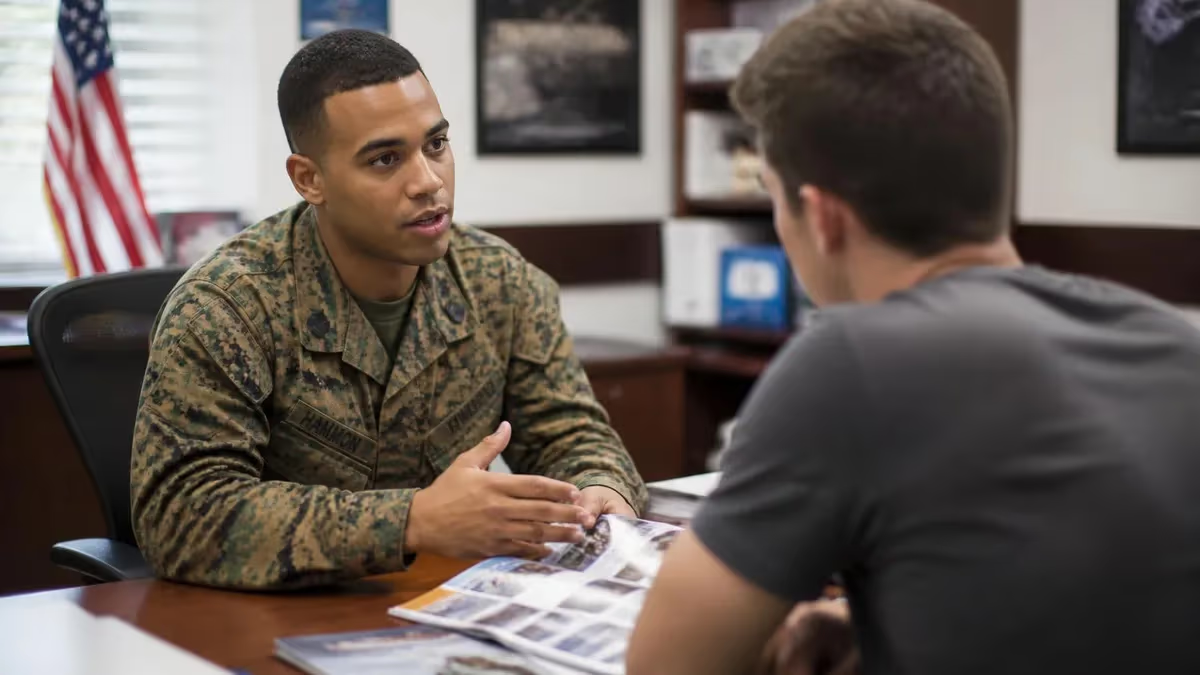
If you are serious about enlisting in the U.S. military, Kaplan ASVAB prep is one of the most trusted pathways to achieving competitive asvab practice test scores that open doors to your preferred Military Occupational Specialty. The Armed Services Vocational Aptitude Battery measures a wide range of academic and technical skills, and your composite score determines not only whether you qualify for service but which jobs you can pursue. Kaplan's structured curriculum, full-length practice exams, and targeted subject-area drills give recruits a measurable edge over self-study alone.
Understanding what the ASVAB tests — and how to prepare efficiently — can mean the difference between a disqualifying score and a career-launching result. Many first-time test takers underestimate the exam's breadth, which spans arithmetic reasoning, word knowledge, paragraph comprehension, mathematics knowledge, electronics, auto and shop, mechanical comprehension, and assembling objects. Kaplan's study guides break each subtest into manageable lessons with worked examples, helping you allocate study time where it counts most rather than reviewing material you already know.
One of the most common mistakes recruits make is focusing only on the Armed Forces Qualification Test (AFQT) score — the four-subtest composite that determines basic eligibility — while ignoring the line scores that gate specific career fields. A strong AFQT gets you in the door, but a well-rounded performance across all subtests expands your job options dramatically. Kaplan addresses this by providing detailed score explanations alongside every practice question, so you understand not just the right answer but the reasoning behind it.
The asvab study guide category is crowded, with options ranging from free YouTube channels to expensive tutoring programs. Kaplan stands out because its content is developed by educators who specialize in standardized test preparation, and its materials are updated regularly to reflect any changes in the ASVAB's format or scoring. Whether you prefer a printed book, an online course, or a mobile app, Kaplan offers a format that fits your study habits and schedule.
Many recruits also ask how Kaplan compares to the popular asvab for dummies series, which takes a more conversational, humor-driven approach to the same material. Both resources have merit, but Kaplan tends to be the preferred choice for test takers who want rigorous practice exams that closely mirror the real CAT-ASVAB's adaptive difficulty, detailed analytics on their weak areas, and a structured week-by-week study plan they can follow from day one.
Another reason Kaplan ASVAB prep resonates with military applicants is the breadth of its practice question bank. With thousands of questions organized by subtest and difficulty level, you can simulate exam conditions repeatedly until your pacing, accuracy, and confidence are all where they need to be. Research consistently shows that active recall through practice testing is far more effective for long-term retention than passive re-reading of notes or textbook chapters.
This guide walks you through everything you need to know about the ASVAB — from how it is structured and scored to how you can build a personalized study plan using Kaplan resources alongside free practice asvab quizzes available right here on PracticeTestGeeks. Whether you are just starting your military journey or retaking the exam to qualify for a better MOS, the strategies and tools in this article will help you walk into test day prepared and confident.
ASVAB & Kaplan Prep by the Numbers
Key Facts at a Glance
| Item | Value | Details |
|---|---|---|
| CAT-ASVAB Questions | 145 | Adaptive computer version |
| Typical Exam Duration | 3 hrs | Varies by test version |
| Minimum AFQT Score | 31+ | Army enlistment cutoff |

ASVAB Exam Format & Structure
| Section | Questions | Time | Weight | Notes |
|---|---|---|---|---|
| General Science (GS) | 16 | 8 min | Line Score | Natural and physical sciences |
| Arithmetic Reasoning (AR) | 16 | 39 min | AFQT | Word problems and math reasoning |
| Word Knowledge (WK) | 16 | 8 min | AFQT | Vocabulary and word meanings |
| Paragraph Comprehension (PC) | 11 | 22 min | AFQT | Reading passages and inference |
| Mathematics Knowledge (MK) | 16 | 20 min | AFQT | Algebra, geometry, and number theory |
| Electronics Information (EI) | 16 | 8 min | Line Score | Circuits, currents, and components |
| Auto & Shop Information (AS) | 11 | 7 min | Line Score | Engines, tools, and repairs |
| Mechanical Comprehension (MC) | 16 | 20 min | Line Score | Pulleys, gears, and physics |
| Assembling Objects (AO) | 16 | 16 min | Line Score | Spatial reasoning and puzzles |
| Total | 145 | 154 minutes (CAT-ASVAB) | 100% |
Kaplan ASVAB prep is built on a philosophy of deliberate, targeted practice rather than marathon study sessions that leave you mentally exhausted and retain little. The core Kaplan ASVAB book is organized so that each chapter opens with a diagnostic mini-test, identifies your specific weaknesses, and then provides focused instruction on exactly those concepts. This approach ensures that every hour you spend studying is invested in areas where improvement will have the greatest impact on your composite score.
The Kaplan online platform takes this personalization even further by tracking your performance across every practice session and dynamically adjusting which topics it surfaces for review. If you miss three consecutive arithmetic reasoning questions involving percentages, the system flags percentages as a weak area and queues up additional percentage problems until your accuracy improves. This kind of adaptive feedback loop mirrors how the real CAT-ASVAB adjusts its difficulty in response to your answers, making Kaplan practice feel more authentic than static printed tests.
One aspect of Kaplan's curriculum that many recruits find particularly valuable is its vocabulary program. Word Knowledge and Paragraph Comprehension together account for roughly half of your AFQT score, yet vocabulary is often the most neglected area of ASVAB preparation. Kaplan includes a tiered word list of approximately 500 high-frequency ASVAB vocabulary terms, organized by category and accompanied by example sentences. Spending just 15 minutes per day on vocabulary flashcards in the weeks before your exam can meaningfully boost your WK subtest score.
If you want to understand the full asvab score range and what different AFQT scores mean for your enlistment options, Kaplan's score interpretation guides are among the clearest explanations available. The AFQT score is a percentile comparing your performance to a nationally representative sample of 18-to-23-year-olds, so a score of 50 means you performed better than half of that reference group.
Kaplan explains how branch-specific cutoffs differ — the Army requires a minimum of 31, the Navy 35, the Marines 32, and the Air Force 36 — and how line scores calculated from individual subtests determine your job eligibility within each branch.
Beyond the AFQT, Kaplan's prep materials explain the Army's composite line scores in detail. The Skilled Technical (ST) score, for instance, is used to qualify for jobs like intelligence analyst and cyber operations, while the General Technical (GT) score gates positions like officer candidate eligibility. Recruits who only focus on the AFQT minimum often find themselves locked out of the careers they wanted, even after passing the enlistment threshold. Kaplan's comprehensive approach prepares you for all nine subtests, not just the four that feed into the AFQT.
The Kaplan ASVAB Premier edition also includes a full audio component, with MP3 files that walk through vocabulary lessons and reading comprehension strategies. This makes it possible to continue studying during commutes, workouts, or other times when you cannot sit at a desk with a book. For recruits who learn better through listening than reading, this multimodal approach can significantly accelerate vocabulary acquisition and conceptual understanding of subjects like mechanics and electronics.
Practice tests are the backbone of any effective ASVAB preparation program, and Kaplan includes five full-length practice tests in its flagship guide — each formatted to replicate the real exam's subtest lengths, timing constraints, and question styles. After each practice test, Kaplan provides detailed answer explanations that not only tell you what the correct answer is but walk through exactly why each wrong answer is wrong. This kind of thorough debriefing prevents you from reinforcing incorrect reasoning patterns and helps you develop the test-taking instincts that separate high scorers from average ones.
ASVAB Study Guide Strategies That Actually Work
Before opening any study guide, take a full-length asvab practice test under timed conditions to establish your baseline. Record your scores for each subtest and compare them against your target branch's enlistment minimums and your desired MOS line score requirements. This diagnostic snapshot tells you exactly where to invest your limited study hours rather than spreading effort evenly across nine subtests.
Once you have your baseline, sort your subtests from lowest to highest score and focus the first two weeks of preparation almost exclusively on your weakest two or three areas. Kaplan's diagnostic quizzes inside each chapter make this workflow seamless — they surface the specific concept types dragging your score down, whether that is percentage calculations in Arithmetic Reasoning or parallel circuit analysis in Electronics Information.
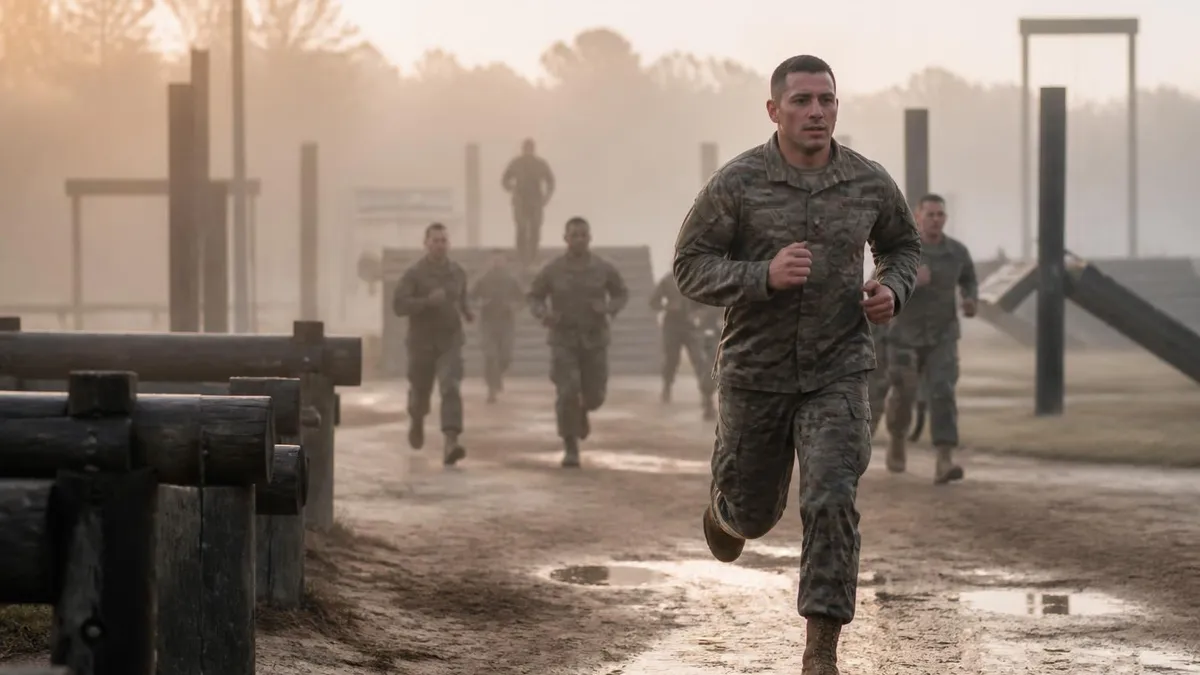
Kaplan ASVAB Prep vs. Self-Study: Is It Worth It?
- +Five full-length practice tests that mirror real CAT-ASVAB timing and question styles
- +Adaptive online platform identifies weak areas and adjusts review content automatically
- +Comprehensive vocabulary program with 500+ high-frequency ASVAB words and audio support
- +Detailed answer explanations for every practice question, including wrong-answer reasoning
- +Structured week-by-week study plans designed for 4-week, 8-week, and 12-week timelines
- +Regularly updated content that reflects the current ASVAB format and scoring methodology
- −Kaplan books and online courses cost $20-$60 more than free YouTube or government study resources
- −Some students find Kaplan's pacing too fast for subjects like Electronics where they have zero background
- −The online platform requires a stable internet connection, which can be limiting for recruits in remote areas
- −Kaplan's mobile app has received mixed reviews for technical bugs on older Android devices
- −The printed book does not include the adaptive feedback of the online course, limiting its diagnostic value
- −A few Kaplan practice questions use slightly different terminology than the actual ASVAB, which can cause minor confusion
ASVAB Prep Checklist: 10 Steps to a Competitive Score
- ✓Take a full-length diagnostic ASVAB practice test in the first week to establish your baseline scores.
- ✓Identify your three lowest-scoring subtests and allocate 60% of early study time to those areas.
- ✓Complete at least 20 Kaplan vocabulary flashcards daily for the Word Knowledge subtest.
- ✓Review arithmetic reasoning formulas — percentages, ratios, rates, and basic algebra — every other day.
- ✓Take one full-length timed practice test every weekend to track improvement and build exam stamina.
- ✓Study Electronics Information and Mechanical Comprehension even if you have no technical background.
- ✓Read the detailed answer explanations for every question you miss, not just the correct answer.
- ✓Practice the 30-to-45 second per question pacing rule to avoid running out of time on subtests.
- ✓Use Kaplan's audio files during commutes or workouts to reinforce vocabulary and concepts passively.
- ✓Research your target MOS line score requirements so you know exactly which subtests to prioritize.

Your AFQT Score Is a Percentile, Not a Percentage
Many recruits confuse their AFQT score with a percentage grade. A score of 72 does not mean you answered 72% of questions correctly — it means you scored higher than 72% of the civilian reference group. This distinction matters because it changes how you should interpret your practice test results and set realistic improvement goals based on your target branch's enlistment minimums.
Understanding asvab scores is essential for making informed decisions about your military career path. The AFQT score is the headline number most recruits focus on, but the nine individual subtest scores combine into multiple composite line scores that each branch uses differently. The Army, for instance, calculates ten different line scores — including Skilled Technical, General Technical, Electronics, and Operators and Food — and each MOS requires minimum thresholds on specific composites rather than a single number.
The AFQT score itself is derived from four subtests: Arithmetic Reasoning, Mathematics Knowledge, Word Knowledge, and Paragraph Comprehension. These four scores are combined using a specific formula — (2 × VE) + AR + MK, where VE is your Verbal Expression score calculated from WK and PC — and then converted to a percentile rank. This means improving your Word Knowledge and Paragraph Comprehension scores has a double effect because they feed into both the VE composite and the overall AFQT formula.
Score validity is another critical factor that recruits sometimes overlook. ASVAB scores are valid for two years for enlistment purposes. If your score expires before you complete the enlistment process, or if you want to qualify for a different MOS that requires higher line scores, you will need to retake the exam. You must wait at least one calendar month after your initial test before retaking, and another month after your second attempt. If you need a third try, there is an additional six-month waiting period, which underscores the importance of preparing thoroughly before your first sitting.
The percentile-based scoring system means that the ASVAB is designed so that roughly half of all test takers score below 50. For context, the national average AFQT score has historically hovered around 50, meaning a score of 60 or above places you comfortably in the upper half of all military applicants. Most high-demand career fields — including intelligence, cyber operations, medical specialties, and aviation support — require AFQT scores of 65 or higher plus strong composite line scores in specific technical areas.
If you want to explore how many questions are on the asvab and get a detailed breakdown of how those questions map to specific military career paths, the career overview resource on this site provides one of the clearest roadmaps available. Understanding the full question count and subtest composition helps you build a proportional study plan rather than spending equal time on a 16-question subtest and an 11-question one.
Many recruits find it helpful to reverse-engineer their target score by starting with the MOS they want and working backward to the required line scores. For example, if you want to become an Army Cryptologic Linguist (35P), you need a Skilled Technical score of at least 101, which requires strong performance on General Science, Word Knowledge, Paragraph Comprehension, and Mathematics Knowledge. Knowing this in advance lets you tailor your Kaplan prep to prioritize those exact subjects rather than distributing study time generically.
The aft score chart — which many recruits search for when trying to understand the Army Combat Fitness Test — is a separate scoring system from the ASVAB, but the two exams often arise in the same conversation because recruits prepare for both simultaneously. While the ASVAB measures cognitive and technical aptitude, the ACFT measures physical readiness across six events: three-repetition maximum deadlift, standing power throw, hand-release push-up, sprint-drag-carry, leg tuck or plank, and a two-mile run. Excelling on both exams gives recruits the strongest possible foundation for the enlistment process.
ASVAB scores are valid for exactly two years from the date of testing. If your scores expire before you complete the enlistment process — due to medical reviews, background checks, or life changes — you will need to retake the entire exam from scratch. Plan your timeline carefully so that your scores remain valid through your projected ship date, especially if you are considering delayed entry programs.
The army combat fitness test and the ASVAB are the two pillars of Army enlistment readiness, and many recruits underestimate how much simultaneous preparation for both exams can affect their cognitive and physical performance. Training for the ACFT while studying for the ASVAB requires careful scheduling to avoid mental fatigue undermining study sessions and physical exhaustion limiting workout quality. Most fitness coaches and military prep experts recommend separating intense ACFT workouts from peak cognitive study sessions by at least four to six hours.
The army fitness test — now formally known as the Army Combat Fitness Test after replacing the Army Physical Fitness Test in 2022 — uses a 600-point scoring scale across six events. Each event is scored on age- and gender-specific performance standards published in Army Regulation 600-9. Unlike the old APFT, which only measured push-ups, sit-ups, and a two-mile run, the ACFT is designed to assess functional military fitness across a broader range of movement patterns that better predict readiness for combat operations.
For recruits asking about the army pt test score requirements for different career fields, it is important to know that certain MOS categories impose higher physical fitness standards than others. Special Forces, Rangers, and Airborne units require scores well above the minimum threshold, while administrative and technical career fields may accept scores closer to the branch-wide minimum. Researching the specific fitness requirements for your target MOS before you begin training helps you set appropriate performance goals.
Connecting ASVAB preparation to your overall military readiness strategy means thinking about both cognitive and physical development as complementary rather than competing priorities. Recruits who perform well on both the ASVAB and the ACFT are statistically more likely to receive their first-choice MOS, complete basic training successfully, and advance more quickly through early career milestones. Kaplan's ASVAB prep gives you the cognitive edge, while a structured physical training program delivers the fitness baseline.
If you are looking for a free asvab test sample online to benchmark your current performance before committing to a paid Kaplan course, PracticeTestGeeks offers full-length practice exams organized by subtest. These free resources let you identify your starting point, assess which subtests need the most work, and experience the format and pacing of real ASVAB questions without spending a dollar. Once you know your weak areas, you can decide whether a comprehensive Kaplan course or targeted supplemental practice is the right next investment.
The test asvab practice test experience is most valuable when you treat each session as a genuine exam simulation rather than casual review. That means sitting down without distractions, setting a timer for the exact subtest duration, avoiding the temptation to look things up mid-test, and reviewing your results immediately afterward while the questions are still fresh. This discipline during practice translates directly into composure and accuracy on the actual test day, when the stakes are real and the environment is unfamiliar.
Building a support network of fellow recruits preparing for the ASVAB can also accelerate your preparation. Study groups allow you to quiz each other on vocabulary, explain mechanical concepts you understand to reinforce your own knowledge, and share strategies for time management and question-skipping techniques. Kaplan's online community forums and social media groups connect thousands of ASVAB test takers who share resources, motivate each other through difficult study stretches, and celebrate score improvements together.
With your study plan established and your target scores clear, the final weeks before your ASVAB should shift from learning new material to consolidating and sharpening what you already know. This consolidation phase is where Kaplan's full-length practice tests do their most important work. Take one complete practice test every four to five days, review every missed question thoroughly, and track whether your subtest scores are trending upward. If a particular area is not improving despite consistent review, consider changing your approach — switch from re-reading explanations to actively working through new practice problems on that concept.
Sleep and nutrition are often dismissed as soft factors in test preparation, but cognitive science strongly supports their importance for exam performance. The hippocampus — the brain region most responsible for memory consolidation — is most active during sleep, meaning that the material you study each evening is literally being encoded into long-term memory overnight. Pulling all-nighters in the days before your ASVAB is counterproductive; a consistent seven to nine hours of sleep per night, especially during the final two weeks, will do more for your score than any last-minute cramming session.
On the morning of your actual ASVAB, arrive at the testing center at least 30 minutes early so you have time to check in, review any administrative requirements, and settle your nerves before the exam begins. Bring government-issued photo identification, dress comfortably in layers since testing rooms can be cold, and avoid eating an unusually heavy or unusual breakfast that might cause digestive discomfort during the three-hour session. A moderate, familiar meal with complex carbohydrates and protein provides steady energy without the spikes and crashes associated with high-sugar breakfasts.
During the exam itself, trust the preparation you have put in. When you encounter a difficult question, apply the elimination method: immediately rule out any answer choices that are obviously wrong, which narrows your odds even if you need to guess from the remaining options. On the paper-and-pencil ASVAB, mark difficult questions and return to them if time permits. On the CAT-ASVAB, commit to an answer within 45 seconds and move on — spending three minutes on one question while leaving later ones unanswered is a far worse outcome than making an educated guess and keeping pace.
After your exam, your recruiter will receive your scores within a few days and review them with you. Use this conversation to fully understand not just your AFQT but each of your line scores, how they map to available MOS options, and whether retesting might be worth pursuing if a particular career field is just out of reach. Many recruits discover that a modest improvement in one or two subtests opens access to significantly better career options, making a second attempt a worthwhile investment of preparation time.
For recruits who discover that their Mechanical Comprehension or Electronics Information scores are holding back their desired line score composites, targeted supplemental practice is the most efficient remedy. These technical subtests draw on very specific conceptual knowledge — gear ratios, pulley systems, series versus parallel circuits, voltage and resistance — that can be learned systematically with the right resources. Kaplan dedicates entire chapters to these subjects with clear diagrams and progressively harder practice questions that build understanding from first principles.
The most important advice any ASVAB expert can offer is deceptively simple: start early, practice consistently, and review your mistakes relentlessly. Recruits who begin preparation at least eight weeks before their scheduled exam consistently outperform those who cram in the final two weeks. Kaplan ASVAB prep, combined with the free practice asvab resources available on PracticeTestGeeks, gives every recruit regardless of academic background the tools to achieve a score that reflects their true potential and opens the military career path they deserve.
Sample ASVAB - Armed Services Vocational Aptitude Battery Practice Questions
Try these questions from our free ASVAB - Armed Services Vocational Aptitude Battery practice tests. The correct answer and an explanation follow each question.
Of 480 applicants, 5/8 pass the physical test. Of those who pass, 1/3 advance to the next stage. How many applicants advance?
- A. 100
- B. 90
- C. 120
- D. 160
Answer: A. 100
480 × 5/8 = 300 pass the physical; 300 × 1/3 = 100 advance to the next stage.
Solve for y: 2y + 8 = 3y - 5
- A. 3
- B. 13
- C. 8
- D. 11
Answer: B. 13
Subtracting 2y from both sides gives 8 = y - 5, then y = 13.
A scientist discovers a new organism that has a cell wall but no nucleus. What kingdom does it most likely belong to?
- A. Fungi
- B. Plantae
- C. Monera (Bacteria)
- D. Protista
Answer: C. Monera (Bacteria)
Prokaryotes like bacteria have cell walls but lack a membrane-bound nucleus, placing them in kingdom Monera.
A solid steel cylinder and a hollow steel cylinder of the same outer diameter and length are both rolled down an incline. Which reaches the bottom first?
- A. The solid cylinder
- B. The hollow cylinder
- C. They reach at the same time
- D. Depends on the incline angle
Answer: A. The solid cylinder
The solid cylinder has a lower moment of inertia relative to its mass, so it accelerates faster down the incline.
Take the full ASVAB - Armed Services Vocational Aptitude Battery practice test
ASVAB Questions and Answers




About the Author
Retired Military Officer & Armed Forces Test Preparation Specialist
United States Army War CollegeColonel Steven Harris (Ret.) served 28 years in the US Army, earning a Master of Arts in Military Science from the Army War College and a Bachelor of Science in Criminal Justice. He has coached thousands of military enlistment and officer candidate program applicants through the ASVAB, AFQT, AFCT, OAR, and officer selection assessment processes across all military branches.
Join the Discussion
Connect with other students preparing for this exam. Share tips, ask questions, and get advice from people who have been there.
View discussion (5 replies)