
ARRT Practice Test 2026 September: Free Questions & Full Exam Prep Guide
Free ARRT practice test questions covering all exam domains. Prepare smarter with realistic quizzes, study tips, and a full format breakdown for 2026 September. ⏳
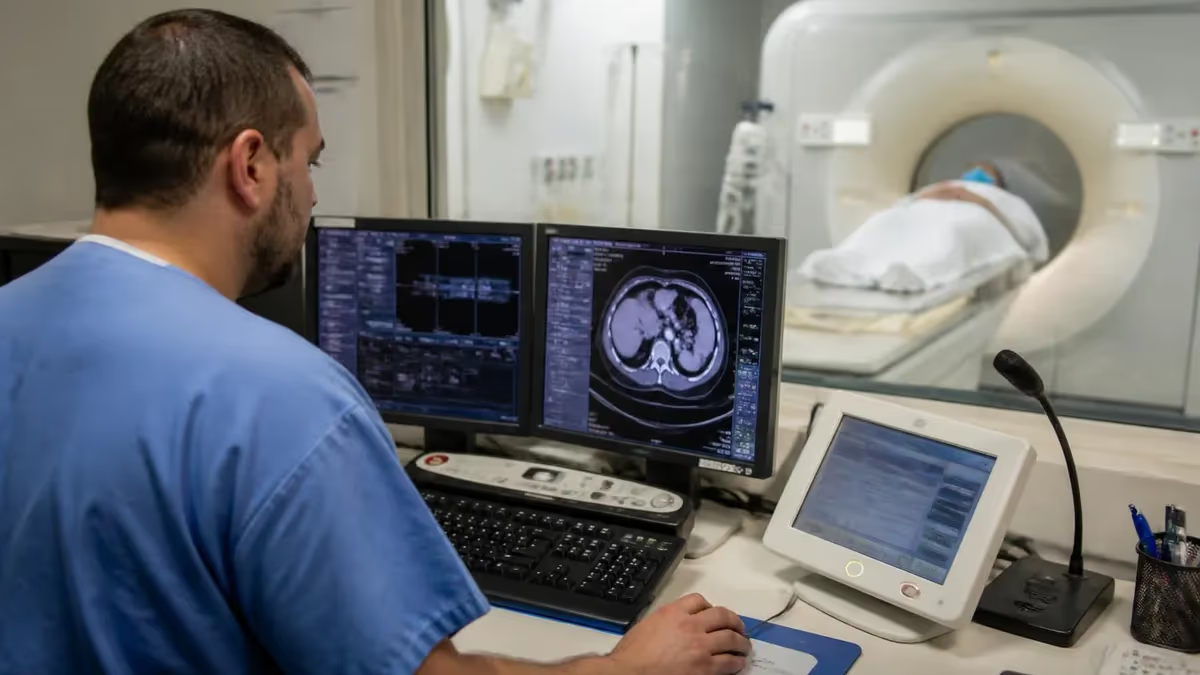
An ARRT practice test is one of the most effective tools you can use when preparing for the American Registry of Radiologic Technologists certification exam. The ARRT radiography exam is rigorous, covering five major content domains that demand both factual recall and clinical reasoning skills. Candidates who spend dedicated time on realistic practice questions consistently outperform those who rely on passive review alone.
Whether you are taking the exam for the first time or attempting a re-examination, structured practice helps you identify knowledge gaps early, prioritize your study hours efficiently, and build the test-taking stamina needed for a three-hour, 170-question sitting. You can also download a arrt practice test in printable format if you prefer to study offline.
The ARRT certification exam is administered by Pearson VUE at authorized testing centers across the United States. Before you can sit for the exam, you must meet eligibility requirements set by the ARRT, including completion of an accredited educational program in radiologic technology and compliance with the ARRT's Standards of Ethics.
Once your application is approved, you receive a 90-day window to schedule and complete your exam. Understanding the timeline and requirements beforehand prevents costly delays and ensures your application is processed without complications. Knowing exactly what to expect on exam day reduces anxiety and allows you to perform at your highest level.
The content of the ARRT radiography examination is organized around a detailed content specification published by the ARRT. The five primary domains are Radiation Protection (approximately 24% of the exam), Equipment Operation and Quality Assurance (13%), Image Acquisition and Evaluation (31%), Radiographic Procedures (30%), and Patient Care and Management (the remaining portion). Each domain contains multiple subcategories that test your ability to apply knowledge in realistic clinical scenarios.
The ARRT updates its content specifications periodically, so it is critical that you study from current materials aligned with the most recent examination blueprint rather than outdated prep books that may not reflect current weighting.
Effective ARRT exam preparation combines multiple study strategies working together. Practice tests expose you to the format and phrasing of questions, helping you learn to identify what each question is really asking. Flashcards and concept maps help you retain foundational knowledge in physics, anatomy, and patient care. Reviewing textbooks and ARRT-aligned study guides fills gaps in understanding.
Joining a study group or online forum connects you with peers who can explain concepts differently and share mnemonics. The candidates who pass on their first attempt typically combine all of these strategies over a preparation period of eight to twelve weeks rather than cramming in the days before the exam.
One of the biggest advantages of taking practice tests early in your study schedule is diagnostic power. A full-length practice exam taken in week one of your prep reveals which content areas are already strong and which need the most attention.
For example, a candidate who scores 85% on radiation protection questions but only 52% on image acquisition questions should allocate significantly more study time to image evaluation concepts like density, contrast, recorded detail, and distortion. Without data from practice tests, it is easy to spend too much time reviewing material you already know well while neglecting the areas that will actually cost you points on exam day.
The ARRT uses a scaled scoring system with a passing score of 75 on a scale from 1 to 99. This means you do not need to answer every question correctly to pass, but you do need consistent competence across all content domains. The examination includes both scored questions and unscored pretest questions that are being evaluated for future use.
You will not be able to identify which questions are pretest items, so you should treat every question with equal focus and effort. Understanding the scoring system takes the fear out of encountering a few questions that seem unusually difficult or outside your main study areas.
Our free practice quizzes on PracticeTestGeeks are built to mirror the difficulty, phrasing, and content distribution of the real ARRT exam. Each quiz focuses on a specific content domain, allowing you to drill targeted areas in sessions as short as fifteen minutes. After completing any quiz, you receive immediate feedback on correct and incorrect answers along with detailed explanations that help you understand the underlying concept rather than just memorizing the right answer. This feedback loop accelerates learning and helps you retain information far more effectively than re-reading the same chapter multiple times.
ARRT Radiography Exam by the Numbers
Key Facts at a Glance
| Item | Value | Details |
|---|---|---|
| Total Exam Questions | 170 | 150 scored + 20 pretest |
| Exam Time Limit | 3 hrs | At Pearson VUE centers |
| Passing Score | 75 | On a 1–99 scaled score |
| Content Domains | 5 | Radiation to patient care |

ARRT Exam Format & Structure
| Section | Questions | Time | Weight | Notes |
|---|---|---|---|---|
| Radiation Protection | 36 | ~42 min | 24% | ALARA principles, shielding, dose limits |
| Equipment Operation & Quality Assurance | 20 | ~24 min | 13% | X-ray circuits, generators, image receptors |
| Image Acquisition & Evaluation | 47 | ~55 min | 31% | Exposure factors, image quality, artifacts |
| Radiographic Procedures | 45 | ~53 min | 30% | Positioning, anatomy, projection selection |
| Patient Care & Management | 22 | ~26 min | ~13% | Communication, contrast media, emergency care |
| Total | 170 | 3 hours | 100% |
Building an effective study plan for the ARRT exam begins with an honest self-assessment. Before you open a single textbook, take a full-length diagnostic practice test under timed conditions. Score your results by domain and use those percentages to decide how many study hours to allocate to each content area.
A candidate scoring below 60% on image acquisition and evaluation, the largest domain at 31% of the exam, should plan to spend roughly one-third of total study time on that area alone. Candidates who already demonstrate strong clinical backgrounds may find radiation protection comes naturally but struggle with equipment operation concepts they rarely encounter in daily practice.
A typical eight-week ARRT study schedule divides the exam content into weekly focuses. Weeks one and two can cover radiation physics, biology, and protection principles. Weeks three and four tackle equipment operation, quality assurance, and digital imaging systems. Weeks five and six should address image acquisition, exposure factor selection, image evaluation, and artifact identification. Weeks seven and eight focus on radiographic procedures, patient positioning, and patient care protocols. Reserve the final few days for full-length practice exams rather than introducing new material, which can increase anxiety without improving scores. Consistency beats cramming every single time.
When studying radiographic procedures, which accounts for 30% of the examination, use a systematic approach for each body part. Start with positioning terminology, then review the anatomy visible on each projection, the central ray angulation and direction, the relevant bony landmarks used for positioning, and finally the image evaluation criteria that indicate a diagnostic-quality radiograph.
For example, when studying the lateral lumbar spine, know that the patient is in a true lateral position, the central ray is directed to the level of the iliac crest, and the image should demonstrate open intervertebral disk spaces with superimposed vertebral bodies. Linking anatomy, positioning, and evaluation criteria together makes the information far easier to recall under exam pressure.
Equipment operation and quality assurance questions often trip up candidates because they require understanding of concepts like generator waveforms, rectification, automatic exposure control, and computed radiography versus digital radiography systems. Many programs dedicate less classroom time to equipment physics than to positioning and patient care, leaving gaps in candidate preparation.
When reviewing this domain, focus on how different kilovoltage and milliamperage settings affect image quality, how automatic exposure control devices terminate exposure, how spatial resolution is measured in line pairs per millimeter, and how quality control test tools like the spinning top, wire mesh, and sensitometer work. These are high-yield test topics that appear frequently across all versions of the exam.
Patient care and management questions test your ability to respond appropriately to clinical situations involving communication, infection control, contrast media reactions, venipuncture, and emergency protocols. This domain rewards candidates with strong clinical rotation experience because the scenarios mirror real workplace situations. When preparing, review the signs and symptoms of mild, moderate, and severe contrast media reactions along with the appropriate nursing and radiographer response for each level.
Know the difference between vasovagal reactions and anaphylactic reactions. Review standard precautions, transmission-based precautions, and the correct sequence for donning and removing personal protective equipment. These are not just test-taking exercises — they are clinical competencies that protect your future patients.
Radiation protection is foundational knowledge for every radiologic technologist and represents 24% of the ARRT exam. Core concepts include the inverse square law, which describes how radiation intensity decreases as distance from the source increases; ALARA (As Low As Reasonably Achievable), the guiding principle behind every radiation safety decision; occupational dose limits set by the Nuclear Regulatory Commission; and the proper use of shielding materials including lead aprons, thyroid shields, and gonadal shields.
Practice calculating dose rates at varying distances using the inverse square law formula, because mathematical calculation questions do appear on the exam and require comfort with the arithmetic involved rather than just conceptual understanding.
Study tools available to ARRT candidates have improved dramatically in recent years. In addition to traditional textbooks like Bontrager's Handbook of Radiographic Positioning and Related Anatomy and Bushong's Radiologic Science for Technologists, candidates now have access to adaptive learning platforms, mobile flashcard apps, video lecture series, and community forums where thousands of candidates share practice questions and study strategies.
The ARRT itself publishes a detailed content specification document on its official website that lists every testable topic with its approximate weight on the examination. Downloading and reviewing that document early in your preparation ensures you are studying the right material from the very first day rather than relying on outdated or incomplete sources.
ARRT Content Domain Study Strategies
Radiation protection accounts for 24% of the ARRT exam and tests your ability to apply ALARA principles in clinical settings. Focus on memorizing occupational dose limits (50 mSv annually for whole body), the inverse square law formula, and the three cardinal principles of time, distance, and shielding. Practice solving mathematical dose calculations because numerical questions appear regularly and require both formula recall and arithmetic confidence. Understanding the difference between stochastic and deterministic effects of radiation exposure is also a frequently tested concept that many candidates overlook.
When reviewing shielding materials and techniques, connect each concept to a clinical scenario. For example, know not only that gonadal shielding reduces reproductive organ dose but also the specific conditions under which it is appropriate — gonads within five centimeters of the primary beam. Review the proper use of collimation as both a dose reduction tool and an image quality factor. Understanding that tight collimation reduces scatter radiation, improves contrast, and reduces patient dose simultaneously is the kind of multi-concept integration that earns points on higher-difficulty exam questions.
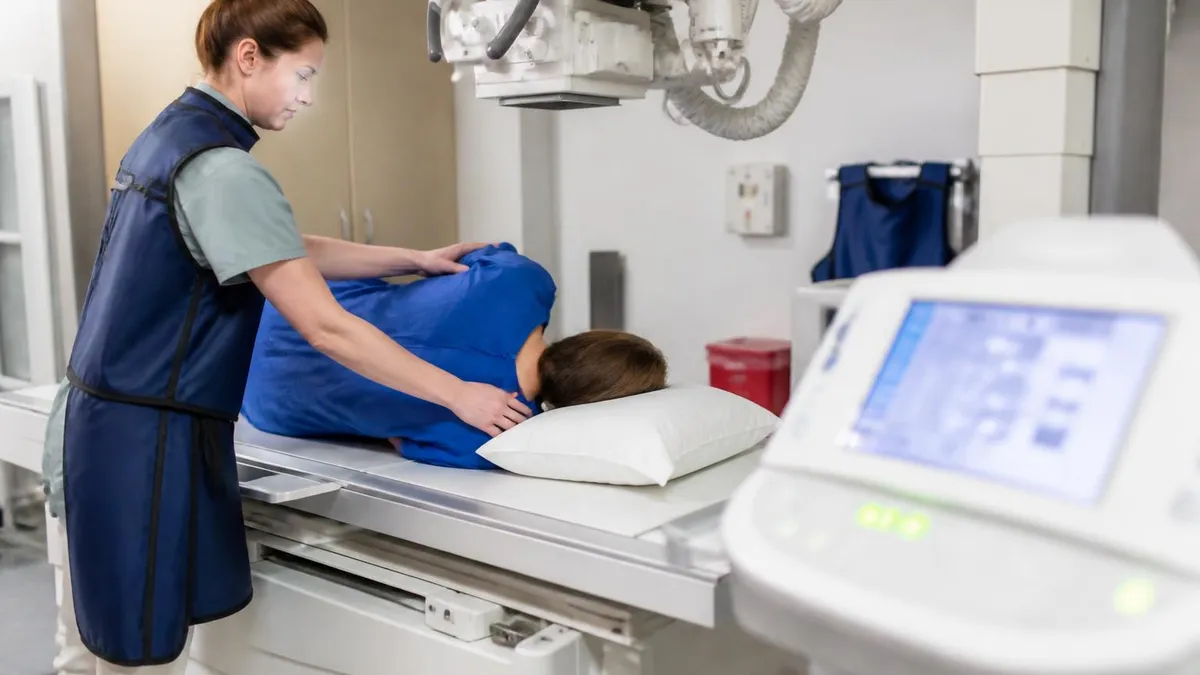
ARRT Practice Tests: Benefits and Limitations
- +Identify weak content domains early in your study schedule so you allocate study time effectively
- +Build familiarity with ARRT question phrasing and format to reduce test-day anxiety
- +Measure score improvement week over week to confirm your preparation is working
- +Practice time management across 170 questions under realistic timed conditions
- +Receive immediate answer explanations that accelerate understanding of difficult concepts
- +Reinforce memory through active recall, which research shows is more effective than passive re-reading
- −Free practice tests vary widely in quality and may not accurately reflect current ARRT content specifications
- −Repeatedly practicing the same question bank can produce inflated scores from answer memorization rather than true learning
- −Practice tests alone cannot replace studying foundational concepts in physics, anatomy, and clinical protocols
- −High practice scores can create overconfidence that leads to insufficient preparation in specific sub-domains
- −Screen fatigue from excessive online testing may reduce concentration during actual exam sessions
- −No practice test perfectly replicates the cognitive pressure and physical environment of a live Pearson VUE testing center
ARRT Exam-Day Preparation Checklist
- ✓Confirm your testing appointment date, time, and Pearson VUE center location at least one week before your exam.
- ✓Review your ARRT Authorization to Test (ATT) letter and bring required government-issued photo identification on exam day.
- ✓Complete a full-length timed practice exam two to three days before your scheduled test date.
- ✓Avoid introducing new study material in the 48 hours before your exam to reduce cognitive overload.
- ✓Plan your travel route to the testing center and account for parking or public transit time.
- ✓Get at least seven to eight hours of sleep the night before the exam — sleep deprivation measurably impairs recall.
- ✓Eat a balanced meal before your exam to maintain steady energy and concentration throughout the three-hour session.
- ✓Arrive at the testing center at least 30 minutes early to complete check-in procedures without rushing.
- ✓Leave prohibited items including phones, notes, and smartwatches in your car or locker provided at the center.
- ✓Use the optional tutorial time at the start of the exam to settle your nerves before answering scored questions.
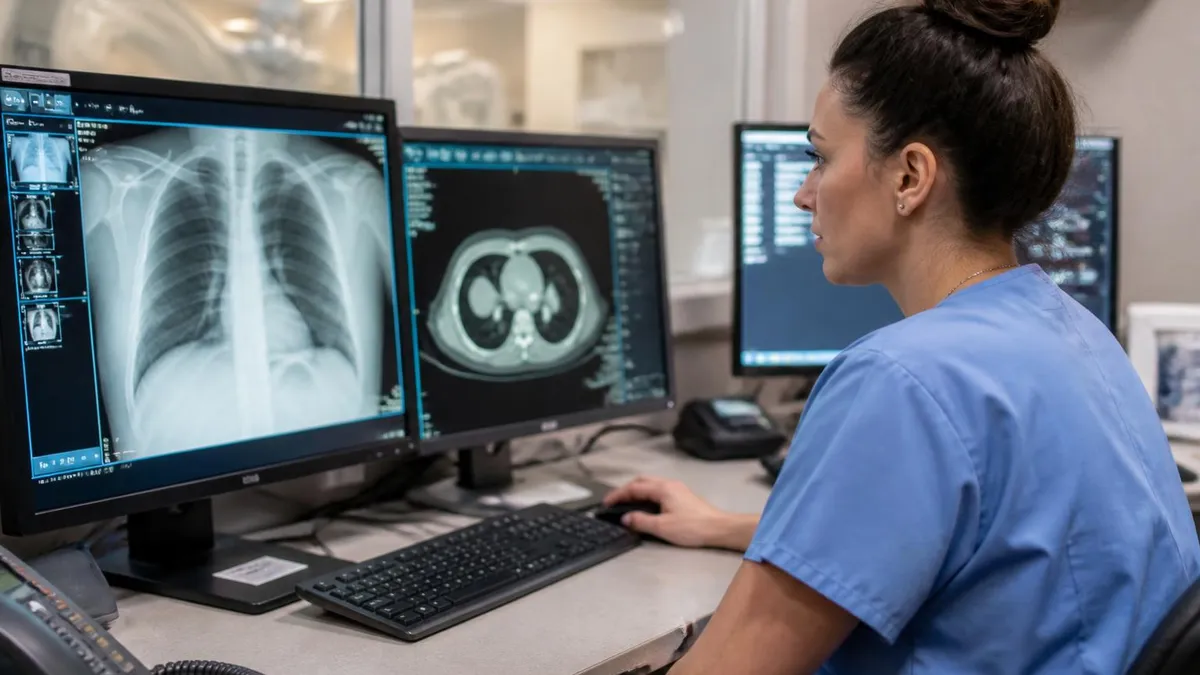
Focus on Image Acquisition — It's 31% of Your Score
Image acquisition and evaluation is the single largest content domain on the ARRT exam, making up nearly one-third of your total score. Candidates who score above 80% in this domain alone significantly improve their overall pass probability. Prioritize exposure factor relationships, digital imaging systems, and image quality criteria early in your study plan to capture these high-value points.
Understanding how the ARRT scores the radiography examination helps you approach the test strategically. The ARRT uses a scaled scoring system where raw scores — the number of questions answered correctly out of the 150 scored items — are converted to a scaled score ranging from 1 to 99. The passing scaled score is 75.
This conversion accounts for minor variations in difficulty between different versions of the exam, ensuring that a passing score on one form represents the same level of competency as a passing score on any other form. The conversion also means that there is no single fixed number of questions you must answer correctly to pass, as the cutoff may shift slightly depending on the specific exam version you receive.
The 20 unscored pretest questions embedded throughout the exam are indistinguishable from the 150 scored questions. The ARRT includes these pretest items to evaluate them for potential use in future exams. Because you cannot identify which questions are pretest items, you must treat every question as though it counts toward your final score.
Candidates who attempt to identify and skip questions they perceive as pretest items waste mental energy on an impossible task and risk ignoring scored questions they might have answered correctly with careful attention. The only correct strategy is to engage fully with every single question from the first to the last.
Time management during the exam significantly affects performance. With 170 questions and a 180-minute time limit, you have approximately 63 seconds per question. In practice, many questions can be answered in 20 to 30 seconds, while more complex clinical scenario questions may require 90 seconds of careful reasoning.
Candidates who become stuck on a difficult question and spend three or four minutes on it risk running out of time later in the exam. The Pearson VUE testing interface allows you to flag questions and return to them after completing the rest of the exam. Use this feature strategically — mark difficult questions, move forward, and return at the end with remaining time.
After completing the exam, most candidates receive unofficial pass/fail results immediately on the Pearson VUE screen before leaving the testing center. Official score reports are posted to your ARRT account within approximately one week. If you receive an unofficial pass result, your ARRT credentials will be confirmed in your online account once the official processing is complete.
If you do not pass on your first attempt, your score report will include a diagnostic profile showing your performance across each content domain. This feedback is invaluable for planning a targeted retake preparation strategy rather than simply reviewing everything from the beginning again.
Candidates who do not pass the ARRT exam on their first attempt are permitted to retest. The ARRT allows up to three examination attempts within a three-year eligibility period. Before each retake, you must submit a new application and pay the applicable examination fee. The ARRT also requires a waiting period of 90 days between examination attempts, giving candidates sufficient time to address the content gaps identified in their score report.
Candidates who approach retakes strategically — focusing intensively on low-scoring domains while maintaining their strengths — typically see significant score improvement on their second attempt compared to those who simply repeat the same study approach that did not work the first time.
The diagnostic score report provided after a failed attempt breaks performance down into the five content domains and their subcategories. If your report shows 72% correct in radiation protection but only 48% correct in image acquisition, your retake preparation should allocate three times as many study hours to image acquisition as to radiation protection. Many retake candidates make the mistake of studying everything equally, which wastes their limited preparation time on areas they have already mastered. Treat the diagnostic report as a personalized study prescription and follow it rigorously in the weeks leading up to your next examination date.
Passing the ARRT examination opens the door to a rewarding career as a credentialed radiologic technologist. The R.T.(R) credential is recognized by hospitals, outpatient imaging centers, orthopedic clinics, and urgent care facilities across the United States as the standard mark of clinical competency in radiography.
Many employers require active ARRT certification as a condition of hire, and some states require ARRT credentials for state licensure. Beyond the credential itself, the knowledge and clinical reasoning skills you develop during your examination preparation form the professional foundation that will serve every patient who walks through your department for the entirety of your career.
Once the ARRT approves your application, you have a 90-day window to schedule and complete your examination. If you fail to test within that window, your application expires and you must reapply and pay the examination fee again. Schedule your exam promptly after receiving your Authorization to Test letter and begin structured practice testing immediately to make the most of your preparation time.
The weeks following your ARRT exam preparation will feel vastly different depending on how systematically you approached your study plan. Candidates who studied consistently over eight to twelve weeks typically describe walking into the testing center feeling prepared and focused. Those who crammed in the final week often describe feeling overwhelmed, fatigued, and uncertain about their recall accuracy under pressure.
The difference is not just psychological — research on learning and memory consistently shows that spaced repetition over longer periods produces far more durable retention than massed practice compressed into a short window. Build a study schedule that respects how the human brain actually learns and consolidates information.
One underused preparation strategy is reviewing high-quality rationales for practice questions you answered correctly, not just the ones you missed. When you answer a question correctly through reasoning, reading the explanation confirms your logic and deepens your understanding. When you answered correctly by guessing, reading the explanation converts a lucky guess into genuine knowledge. This approach transforms every practice question — right or wrong — into a learning opportunity rather than just a pass/fail data point. Over the course of hundreds of practice questions, this habit compounds into significantly stronger exam performance compared to candidates who only review their mistakes.
Mock exams simulate the physical and cognitive demands of the real ARRT examination in ways that topic-by-topic quizzes cannot. Sitting through a full 170-question practice exam without breaks trains your concentration to sustain focus across a three-hour period, something that is surprisingly difficult even for well-prepared candidates.
During mock exams, replicate testing center conditions as closely as possible: sit at a desk rather than a couch, silence your phone, set a timer for exactly 180 minutes, and resist the urge to pause and look things up. The discomfort of simulated exam conditions prepares your mind and body for the real experience in ways that comfortable studying simply cannot replicate.
Study groups can be valuable when structured properly but counterproductive when they devolve into social gatherings. The most effective study groups use practice questions as their primary discussion tool, with each member explaining their reasoning for choosing a particular answer before the group reviews the correct rationale together.
This peer-teaching approach forces each participant to articulate their knowledge, which reveals misunderstandings more effectively than solitary review. Limit study group sessions to two to three hours with defined objectives for each meeting, and follow up every session with individual review of the topics discussed to reinforce what you learned from your peers.
Mnemonics and memory devices are legitimate tools for ARRT preparation, particularly for lists and anatomical landmarks that are difficult to memorize in isolation. For example, the mnemonic RITE (Rostrum, Infundibulum, Tuber, Eminence) helps candidates remember the four parts of the hypothalamus visible on cranial radiographs. Creating your own mnemonics for content you find difficult often works better than borrowing someone else's because the act of creating the memory device itself encodes the information more deeply. Keep a running list of mnemonics in your study notes and review them weekly to prevent forgetting.
Technology has given today's ARRT candidates access to study resources that previous generations could not have imagined. YouTube channels maintained by radiologic technology educators provide free video explanations of positioning techniques, complete with demonstrations that are far more intuitive than text-based descriptions.
Podcast series covering radiologic science allow you to review content during commutes, exercise, or household tasks. Mobile apps with built-in spaced repetition algorithms present flashcards at optimal intervals to maximize retention. These tools do not replace systematic study, but they make it possible to review content in the small pockets of time throughout your day that would otherwise go unused.
As your exam date approaches, shift your preparation focus from learning new content to refining your test-taking technique and consolidating what you already know. Practice reading questions carefully and identifying the key clinical variable being tested. Watch for qualifiers like "most appropriate," "first," "immediately," and "contraindicated," which often change the correct answer significantly.
Review your most commonly missed question types one final time and create a brief personal summary sheet of your top ten most difficult topics to review the morning of your exam. Then trust the preparation you have done, approach the exam with calm confidence, and know that the hours of practice have prepared you well for this important professional milestone.
The final days before your ARRT exam should be calm, focused, and strategic. Avoid the temptation to study new material in the 48 hours before your test. Your brain needs time to consolidate the information you have been learning over the past weeks, and introducing new content at this stage is more likely to create confusion than add useful knowledge.
Instead, use these final days to review your personal summary notes, revisit your most-missed practice question categories, and practice mental readiness techniques like deep breathing, positive visualization, and mindfulness exercises that reduce test-day anxiety. Your preparation is largely complete — trust it.
On the morning of your exam, eat a nutritious breakfast that includes protein and complex carbohydrates for sustained mental energy. Avoid excessive caffeine, which can increase anxiety and reduce fine motor control. Dress comfortably in layers since testing centers vary in temperature. Bring your required identification documents and your Authorization to Test confirmation.
Leave home earlier than you think necessary to account for unexpected traffic or navigation issues. Arriving at the testing center with plenty of time to spare allows you to complete check-in procedures without rushing and take a few minutes to breathe deeply and settle your mind before the exam begins.
During the exam itself, trust your first instinct when answering questions unless you have a specific, logical reason to change your answer. Research consistently shows that test-takers who change answers without clear reasoning tend to change from correct to incorrect answers more often than the reverse.
When you encounter an unusually difficult question, use the flag feature to mark it, make your best educated guess, move forward, and return later if time permits. Never leave a question unanswered — there is no penalty for guessing on the ARRT exam, so an educated guess always gives you a chance at credit whereas a blank answer guarantees zero.
Pace yourself throughout the exam by checking the question counter periodically. After answering the first 85 questions, you should ideally have between 85 and 95 minutes remaining. If you are significantly behind this pace, quicken your decision-making on straightforward questions. If you have extra time after reaching question 170, return to your flagged items and review them with fresh eyes before submitting. The Pearson VUE interface makes it easy to navigate between flagged questions, and a second look sometimes reveals a detail you missed on your first reading that changes your answer with confidence rather than uncertainty.
The ARRT radiography exam covers an enormous breadth of material, but the majority of questions cluster around core clinical competencies that every entry-level radiologic technologist must demonstrate. Questions about proper patient positioning account for a significant portion of the radiographic procedures domain, and many of these questions can be answered correctly by candidates who have completed strong clinical rotations and paid close attention during positioning labs.
Connect your test preparation to your clinical experience — think about patients you have positioned, equipment you have operated, and radiation safety protocols you have followed. These real clinical memories provide a powerful context for recalling exam content under pressure.
After submitting your exam and receiving your preliminary result, take a moment to acknowledge the significant achievement of completing the ARRT examination regardless of the outcome. If you passed, celebrate a milestone that represents years of academic preparation, demanding clinical training, and dedicated exam study. If the result requires a retake, use the diagnostic report strategically and approach your next attempt with the advantage of knowing exactly where to focus your preparation energy. Either way, your commitment to the ARRT credentialing process reflects a dedication to professional excellence and patient safety that will define your career as a radiologic technologist.
Maintaining your ARRT credentials after passing the exam requires ongoing professional development through the ARRT's Continuing Qualifications Requirements (CQR) program, which replaced the previous Continuing Education requirements. The CQR framework requires certified technologists to periodically demonstrate that their clinical and cognitive competencies remain current.
This commitment to lifelong learning ensures that ARRT-credentialed technologists continue delivering the highest standard of care throughout their careers. Understanding the continuing requirements before you sit for your initial exam helps you plan a career trajectory that keeps your credentials active and your professional knowledge current in an imaging technology field that evolves rapidly with every passing year.
ARRT Questions and Answers

ARRT Practice Test PDF (Free Printable 2026)

ARRT Certification: Requirements, Exam & How to Get Certified
American Registry of Radiologic Technologists: Complete Training Guide & Requirements
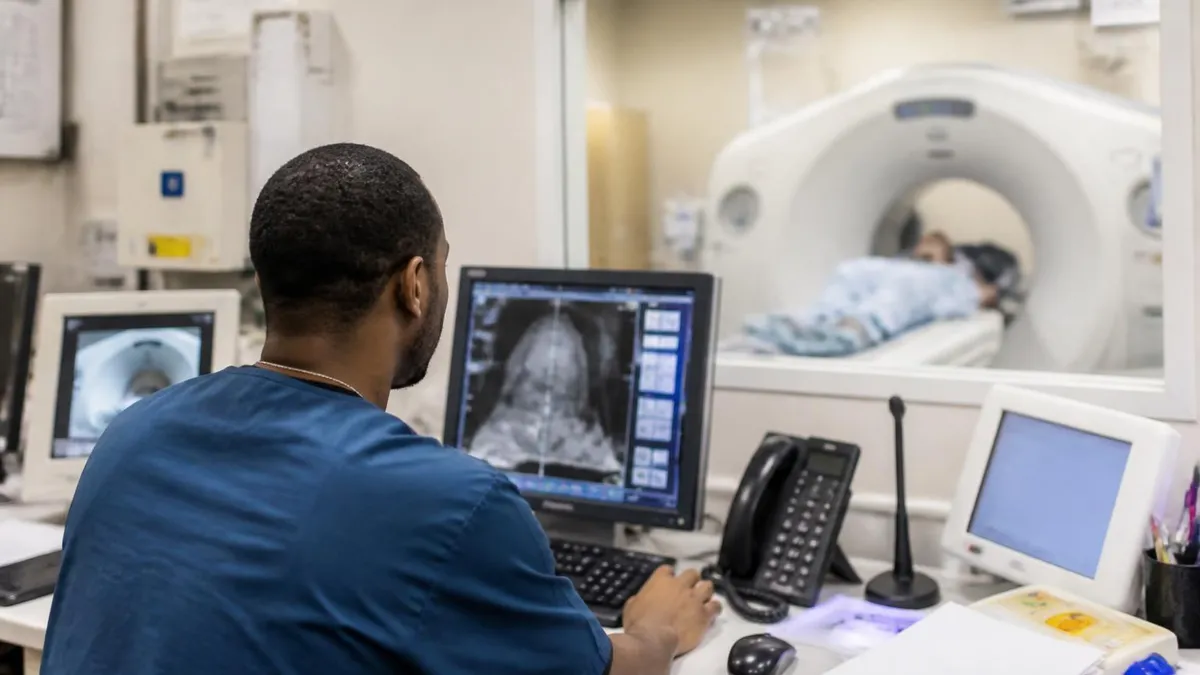
ARRT Credentials: Complete Guide to Types, Requirements & How to Earn Them

What Is ARRT Certification? A Complete Career Overview for Radiologic Technologists
About the Author

Medical Laboratory Scientist & Clinical Certification Expert
Johns Hopkins UniversityDr. Sandra Kim holds a PhD in Clinical Laboratory Science from Johns Hopkins University and is certified as a Medical Technologist (MT) and Medical Laboratory Scientist (MLS) through ASCP. With 16 years of clinical laboratory experience spanning hematology, microbiology, and molecular diagnostics, she prepares candidates for ASCP board exams, MLT, MLS, and specialist certification tests.