
ARRT Credentials: Complete Guide to Types, Requirements & How to Earn Them
Learn everything about ARRT credentials — types, eligibility, exam steps, and how to maintain certification. Complete 2026 September guide for radiologic technologists. 🏆
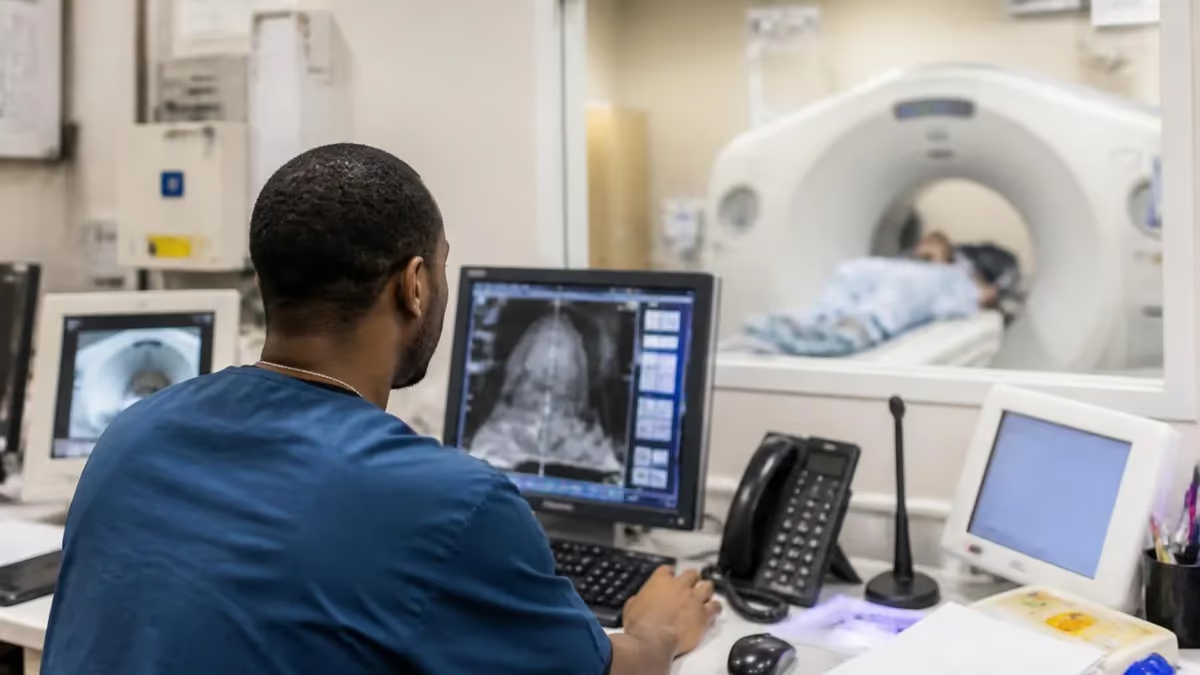
ARRT credentials are the gold standard for radiologic technologists working in the United States, recognized by employers, licensing boards, and healthcare institutions across all 50 states. Earning an ARRT credential signals that a technologist has met rigorous education requirements, demonstrated strong ethical standards, and passed a nationally administered examination in their chosen imaging or radiation therapy discipline. If you are entering the radiologic sciences field or considering adding a specialty, understanding these credentials is the essential first step. Exploring an arrt credentials practice resource can help you gauge your readiness before exam day.
The American Registry of Radiologic Technologists has been credentialing professionals since 1922, making it one of the longest-standing certification bodies in healthcare. What started as a single radiography credential has evolved into a comprehensive portfolio of more than a dozen distinct credentials spanning everything from computed tomography and magnetic resonance imaging to bone densitometry and vascular interventional radiography. Each credential reflects a specialized body of knowledge and a commitment to patient safety that employers rely on when staffing their imaging departments.
Many people confuse ARRT credentials with state licenses, but the two are separate and complementary. An ARRT credential is a national, voluntary certification that demonstrates competency, whereas a state license is a legal requirement to practice in a particular state. However, most state licensing boards use ARRT certification as the primary qualifying standard, which means that in practice, obtaining an ARRT credential is functionally mandatory for most imaging professionals. Without it, employment in a licensed state becomes nearly impossible.
The pathway to an ARRT credential involves three core pillars: completing an approved educational program, passing an ethics review, and successfully sitting for the discipline-specific examination. Each pillar is non-negotiable and carries equal weight in the application process. Education programs must hold accreditation from recognized bodies such as JRCERT, JRCNMT, or ACEND, and graduates must apply within a defined eligibility window after completing their program to avoid additional scrutiny.
Once credentialed, technologists must maintain their certification through ARRT's Continuing Qualifications Requirements, which include 24 continuing education credits every two years, adherence to the Standards of Ethics, and periodic structured self-assessment activities. These ongoing requirements ensure that credentialed professionals stay current with rapid advances in imaging technology, patient safety protocols, and radiation protection standards. Failing to complete renewal requirements results in credential lapse, which can jeopardize both employment and state licensure.
For technologists looking to advance their careers, ARRT also offers post-primary credentials in specialized areas that can be added after earning a primary credential. These post-primary pathways are increasingly sought after by employers who want imaging professionals with demonstrated expertise in high-demand specialties such as cardiac interventional radiography, magnetic resonance imaging, and computed tomography. Adding a post-primary credential typically requires documented clinical experience, continuing education, and a separate examination, making thorough preparation essential for success.
ARRT Credentials by the Numbers

Types of ARRT Primary Credentials
The foundational ARRT credential covering conventional X-ray imaging. Most radiologic technology graduates pursue this credential first because it serves as the prerequisite for nearly every post-primary specialty credential offered by ARRT.
For professionals who plan and deliver therapeutic radiation to cancer patients. This credential requires specific clinical competency documentation in treatment planning, simulation, and dose calculation alongside the written examination.
Covers radiopharmaceutical preparation, administration, and imaging of organ function. Graduates of JRCNMT-accredited programs are eligible, and this credential is often paired with CT post-primary certification in modern imaging facilities.
A standalone primary credential for MRI-specific programs, as well as a post-primary credential for existing ARRT registrants. Demand for MRI-credentialed technologists has surged as scanner availability expands across outpatient settings.
ARRT offers sonography credentials in abdomen, breast, vascular, and obstetric/gynecologic specialties. Though ARDMS and ARRT both offer sonography credentials, some employers now specifically prefer the ARRT-issued designation for cross-trained staff.
Eligibility for an ARRT primary credential rests on three requirements that must all be satisfied before an application can be submitted: an ethics review, completion of an accredited educational program, and documented clinical competencies. The ethics requirement is often underestimated by candidates, but ARRT takes professional conduct seriously and will review any misdemeanor or felony convictions, as well as certain licensing board actions, before approving an application. Candidates with a history they are uncertain about can request a pre-application ethics review to avoid surprises after investing time and money in exam preparation.
Educational eligibility means graduating from a program that holds accreditation from a body recognized by ARRT. For radiography, the accrediting body is JRCERT. For nuclear medicine technology, it is JRCNMT or an equivalent recognized organization. For radiation therapy, JRCERT also holds accreditation authority. Programs that were accredited at the time of graduation satisfy the requirement even if the program later loses accreditation, which provides some protection for graduates who applied years after completing their training. Verifying your program's accreditation status before enrolling is a smart precaution that many students overlook.
Clinical competency documentation is the hands-on component of eligibility. ARRT requires that candidates demonstrate a specified list of procedures and patient care tasks under direct or indirect supervision before their program director signs off on their application. For radiography candidates, this includes general positioning competencies, fluoroscopy assisting, and image quality assessment. Programs typically track these throughout the curriculum, but students should maintain their own records and communicate proactively with clinical coordinators to ensure no competencies are left uncompleted near graduation.
The application window for primary credentials is critical to understand. Candidates must apply within 5 years of graduating from their accredited program for most disciplines. Waiting too long can result in additional review requirements or outright ineligibility, so graduates who delay entry into the workforce for personal or financial reasons should be aware of this clock. ARRT does offer a reinstatement pathway for lapsed credentials, but prevention is far preferable to reinstatement, which involves additional fees and documentation burdens.
For post-primary credentials, eligibility requirements shift slightly. In addition to holding a qualifying primary credential, candidates must meet discipline-specific requirements that typically include a combination of structured education (continuing education courses or formal coursework) and clinical experience hours. For example, the Computed Tomography post-primary credential requires 16 hours of structured education and a clinical experience component documented by a supervising technologist. The Cardiac Interventional post-primary credential has more extensive clinical documentation requirements given the complexity of the procedures involved.
International educated technologists face additional eligibility hurdles, including credential evaluation by a recognized foreign credential evaluation service and, in some cases, additional examination requirements. ARRT has a specific pathway for internationally educated applicants that includes a credential evaluation process and may require demonstration of English language proficiency. These requirements exist to ensure that all credentialed technologists, regardless of where they trained, meet the same standards that protect patients and maintain the integrity of the certification across healthcare systems nationwide.
ARRT Application Process Step by Step
Before submitting an ARRT application, confirm three things are in order: your program holds or held recognized accreditation at the time of your graduation, all clinical competency requirements have been documented and signed by your program director, and your ethics history has been reviewed. Gather official transcripts, your program completion letter, and any required identity verification documents. If you have any prior criminal history or professional board actions, submit a pre-application ethics inquiry to ARRT before paying the application fee.
Also verify that you are applying within the eligibility window for your discipline, typically five years from program completion. Research the specific credential you are pursuing because requirements vary between primary and post-primary pathways. For post-primary credentials, confirm you have the required structured education hours logged and that your supervising technologist can verify your clinical experience. Having all documentation organized before beginning the online application saves time and reduces the chance of delays from incomplete submissions.
ARRT Credentials: Benefits and Challenges to Consider
- +Nationally recognized by employers, hospitals, outpatient centers, and licensing boards across all 50 states
- +Significantly improves earning potential — credentialed technologists earn substantially more than non-credentialed peers
- +Required by most state licensing boards, making it functionally mandatory for legal practice
- +Post-primary credentials allow specialization into high-demand areas like CT, MRI, and cardiac interventional imaging
- +ARRT's public registry lets employers quickly verify credentials, streamlining the hiring process
- +Demonstrates a commitment to professional standards, ethics, and lifelong learning valued by healthcare employers
- −Application and examination fees can total several hundred dollars, creating a financial barrier for new graduates
- −Eligibility window of five years from graduation means delayed applicants may face additional requirements
- −Continuous education and renewal requirements add ongoing time and cost obligations every two years
- −Ethics review can delay or deny applications for candidates with prior legal or professional issues
- −Post-primary credentials require additional clinical experience documentation that can be difficult to obtain without employer support
- −Exam failure results in waiting periods and re-application fees, adding pressure for first-time test takers
ARRT Credential Application Checklist
- ✓Confirm your educational program holds or held ARRT-recognized accreditation at the time you graduated.
- ✓Obtain official transcripts showing your degree or certificate of completion from your accredited program.
- ✓Have your program director complete and sign the required clinical competency verification documentation.
- ✓Review your personal ethics history and submit a pre-application ethics inquiry if you have any prior incidents.
- ✓Create an account on the ARRT official website and complete all sections of the online application form.
- ✓Pay the credential-specific application fee at the time of submission to avoid processing delays.
- ✓Monitor your ARRT online account for your Authorization to Test letter, typically issued within four to six weeks.
- ✓Schedule your Prometric examination appointment within the 90-day testing window specified in your ATT letter.
- ✓Study all content areas on the ARRT content specifications document for your specific discipline.
- ✓Apply for your state radiologic technology license using your ARRT certification number immediately after passing.
Apply Early — The 5-Year Window Closes Faster Than You Think
ARRT requires that most primary credential applications be submitted within five years of graduating from an accredited program. Graduates who enter non-imaging careers, take extended personal leaves, or simply delay their applications can find themselves ineligible when they eventually decide to pursue certification. If you are approaching the five-year mark, contact ARRT directly to discuss your options before the deadline passes.
Post-primary credentials represent the next tier of professional development for ARRT registrants who want to expand their clinical scope and earn higher salaries. Unlike primary credentials, which require completion of an accredited educational program as the foundation, post-primary credentials are built on top of an existing qualifying primary credential combined with documented specialty-specific training. ARRT currently offers post-primary credentials in areas including computed tomography, magnetic resonance imaging, cardiac interventional, vascular interventional, mammography, bone densitometry, quality management, and several others, giving technologists significant flexibility in how they develop their careers.
Computed tomography is one of the most widely pursued post-primary credentials because CT scanners are ubiquitous in emergency departments, trauma centers, and outpatient imaging facilities. Technologists with a radiography primary credential and CT post-primary certification are among the most versatile and marketable professionals in diagnostic imaging. The CT post-primary credential requires 16 hours of structured education specific to CT physics, image optimization, and patient safety, along with documented clinical experience verified by a supervising CT technologist. Many employers fund the required continuing education as part of staff development programs, making the pathway accessible even for technologists working full-time.
Magnetic resonance imaging post-primary credentials are growing in demand as MRI utilization continues to expand rapidly. MRI credential holders command salary premiums in many markets because the technology is complex, safety considerations around magnetic field exposure require specialized training, and scanner availability often outpaces the supply of trained technologists. For radiography-primary technologists who want to add MRI, the post-primary pathway requires structured education in MRI physics, safety screening, and contrast administration protocols. Some states also require MRI-specific licensing, so checking your state's requirements before investing in MRI training is recommended.
Mammography post-primary credentials have taken on added importance as the Mammography Quality Standards Act mandates specific personnel qualifications for facilities that perform screening and diagnostic mammography. ARRT-credentialed technologists with the mammography post-primary designation meet MQSA personnel standards, which gives employers confidence in their compliance with federal regulations. The mammography post-primary pathway requires 40 hours of continuing education in mammography-specific topics, 8 hours of which must cover mammographic positioning, plus documented clinical experience performing examinations under direct supervision. Given the regulatory and patient safety implications of mammography, this credential is valued at a level disproportionate to its relatively modest preparation requirements.
Bone densitometry is a shorter post-primary pathway that appeals to technologists working in orthopedic, endocrinology, or women's health settings where DXA scanning is performed. This credential requires only 8 hours of structured education, making it one of the faster post-primary credentials to complete. Despite its accessibility, the credential carries meaningful value for employers who want to demonstrate compliance with bone density scanner technologist qualification standards. Many technologists pursue bone densitometry post-primary certification as an add-on to their primary credential to increase their versatility in smaller outpatient facilities that need staff capable of covering multiple modalities.
Quality management is a post-primary credential that diverges from clinical imaging credentials in that it targets technologists who move into supervisory, quality assurance, or imaging management roles. The quality management credential covers topics including process improvement, performance measurement, quality control testing, and regulatory compliance.
For technologists interested in administrative advancement, this credential provides a formal recognition of their expertise in managing imaging operations, and it can be combined with degrees in healthcare administration for an even stronger management profile. Employers looking to fill imaging department director or lead technologist roles increasingly prefer candidates who hold both a clinical credential and the quality management designation.
ARRT's Standards of Ethics apply not only at the time of initial application but throughout the lifetime of your credential. Convictions for crimes involving drugs, weapons, or dishonesty, as well as disciplinary actions by state licensing boards, must be reported to ARRT and can result in credential suspension or revocation. Proactively disclosing issues is always treated more favorably than ARRT discovering them independently — honesty in the application process is a professional obligation, not just a procedural requirement.
Understanding the full cost of earning and maintaining arrt credentials helps technologists and students budget appropriately and avoid unexpected financial surprises. The primary credential application fee is approximately $200 for most disciplines, but that is only the starting point of the total investment. Exam preparation materials, including study guides, question banks, and review courses, typically add another $100 to $500 depending on the resources chosen. Test center fees are included in the ARRT application fee, so there is no separate Prometric fee at the time of testing, which is a common misconception among first-time applicants.
If a candidate fails the examination and needs to retake it, ARRT charges a retake fee for each additional attempt. The retake fee and mandatory waiting period between attempts are designed to encourage thorough preparation before testing rather than treating the exam as something to attempt casually. Candidates who are financially stretched and cannot afford multiple retakes should invest heavily in preparation resources and practice examinations before their first sitting, even if it means delaying the application by a few weeks to allow additional study time.
Ongoing credential maintenance carries its own annual cost profile. Continuing education credits can be obtained for free through professional society websites, ARRT's own online learning modules, and conference attendance, or they can require significant expense if a technologist pays for premium CE courses or travels to national meetings. Budgeting approximately $50 to $200 per year for continuing education is reasonable for most technologists, though those who pursue post-primary credentials requiring structured education will face higher one-time costs in the range of $200 to $500 for the required course content.
Despite these costs, the return on investment for ARRT credentials is exceptionally strong. Bureau of Labor Statistics data consistently shows that radiologic technologists earn a median annual salary well above the national median for all occupations, with the premium for specialty credentials adding further earning potential. Computed tomography technologists, magnetic resonance technologists, and cardiovascular interventional technologists all earn measurably more than general radiographers, with salary differentials that typically exceed $5,000 to $15,000 per year depending on market and employer. The payback period on the total credential investment is measured in months, not years.
Geographic variation in credential value is also worth considering when planning your career trajectory. States with strong hospital systems, large outpatient imaging networks, or significant population density tend to offer higher salaries for credentialed technologists, particularly in specialty areas.
Technologists in California, New York, Massachusetts, and Washington command the highest average salaries, while those in rural southern and midwestern states may see lower base pay but benefit from lower costs of living and stronger job security due to technologist shortages in those regions. Understanding your regional market helps you assess which additional credentials will yield the greatest salary impact in your specific location.
Employer-sponsored credential support is an important financial resource that many new technologists overlook when planning their career development. Many hospital systems and large imaging chains offer tuition reimbursement, paid study time, or bonus pay for employees who earn post-primary credentials. Asking about credential support during the job interview process is a smart career move that can significantly reduce the out-of-pocket cost of advanced certification. Some employers even offer sign-on bonuses for candidates who hold in-demand specialty credentials such as MRI or cardiac interventional, reflecting the competitive market for highly trained imaging professionals.
Preparing effectively for an ARRT examination requires a structured study strategy that aligns with the discipline-specific content specifications published by ARRT on their official website. Every ARRT exam is built from a detailed content outline that specifies which topics are covered and the approximate weight of each category. Downloading and studying this content outline should be the first step in your exam preparation, as it prevents wasted time studying material that is not on the exam and highlights the high-weight areas where your study effort will have the greatest impact on your score.
Practice examinations are widely recognized as one of the most effective preparation strategies for standardized tests, and the ARRT exam is no exception. Working through large volumes of practice questions under timed, exam-like conditions builds both content knowledge and test-taking stamina.
Focus especially on questions in your weakest content areas as identified by your practice exam performance, and revisit those topics in your primary study materials before returning to more practice questions. Spaced repetition — reviewing material at increasing intervals — has strong research support for long-term retention and is particularly effective for the dense factual content of imaging physics, anatomy, and patient care that features heavily on ARRT examinations.
For the radiography primary examination specifically, the three major content domains are patient care and education, safety, and image production. Image production — which includes exposure technique selection, equipment operation, image evaluation, and positioning — typically carries the largest weighting, making it the most important domain for study time allocation.
Patient care and safety together typically account for roughly 40 percent of the examination content, covering patient assessment, pharmacology basics, contrast agent reactions, infection control, and radiation protection principles. Familiarizing yourself with both the content weighting and the typical style of ARRT questions — which tend to be scenario-based and require applied reasoning rather than simple recall — helps you prepare in the right register.
Study group participation can significantly accelerate preparation, especially for candidates who struggle with self-directed study or who benefit from verbal explanation of complex concepts. Forming a study group with classmates or colleagues who are preparing for the same credential allows knowledge-sharing, accountability, and the opportunity to teach material back to others — a technique that solidifies understanding more effectively than passive review. Many imaging programs have established study group traditions that new graduates can tap into, and online communities on professional forums offer a virtual version of the same support for those studying independently after program completion.
Time management during the actual examination is a skill worth practicing explicitly. The ARRT radiography exam provides three hours to complete 220 questions, of which 200 are scored and 20 are unscored pilot items. That gives you approximately 49 seconds per question on average. Candidates who spend too long on difficult questions early in the exam can run short of time for easier questions later. Practicing with strict time limits during your preparation builds the mental discipline to move past uncertain questions, flag them for review, and return to them only after completing all questions you can answer more confidently.
In the days immediately before your examination, shift your preparation toward light review and rest rather than intensive new learning. Attempting to cram large amounts of new content in the 24 to 48 hours before testing is a well-documented ineffective strategy that primarily serves to increase anxiety without meaningfully improving performance. Trust the preparation you have completed, get adequate sleep in the nights before your exam, eat a proper meal on examination day, and arrive at the Prometric testing center with time to spare so that administrative check-in procedures do not add stress before your testing session begins.
ARRT Questions and Answers

ARRT Practice Test PDF (Free Printable 2026)

ARRT Certification: Requirements, Exam & How to Get Certified

American Registry of Radiologic Technologists: Complete Training Guide & Requirements

What Is ARRT Certification? A Complete Career Overview for Radiologic Technologists
American Registry of Radiologic Technologists (ARRT): Complete 2026 Training Guide & Certification Requirements
About the Author

Medical Laboratory Scientist & Clinical Certification Expert
Johns Hopkins UniversityDr. Sandra Kim holds a PhD in Clinical Laboratory Science from Johns Hopkins University and is certified as a Medical Technologist (MT) and Medical Laboratory Scientist (MLS) through ASCP. With 16 years of clinical laboratory experience spanning hematology, microbiology, and molecular diagnostics, she prepares candidates for ASCP board exams, MLT, MLS, and specialist certification tests.