
Unit 3 Progress Check MCQ Part A AP Physics: Complete Guide for 2026 September
Boost your Unit 3 Progress Check MCQ Part A AP exam score 💯 with practice questions and detailed answer explanations. Track progress with instant feedback.
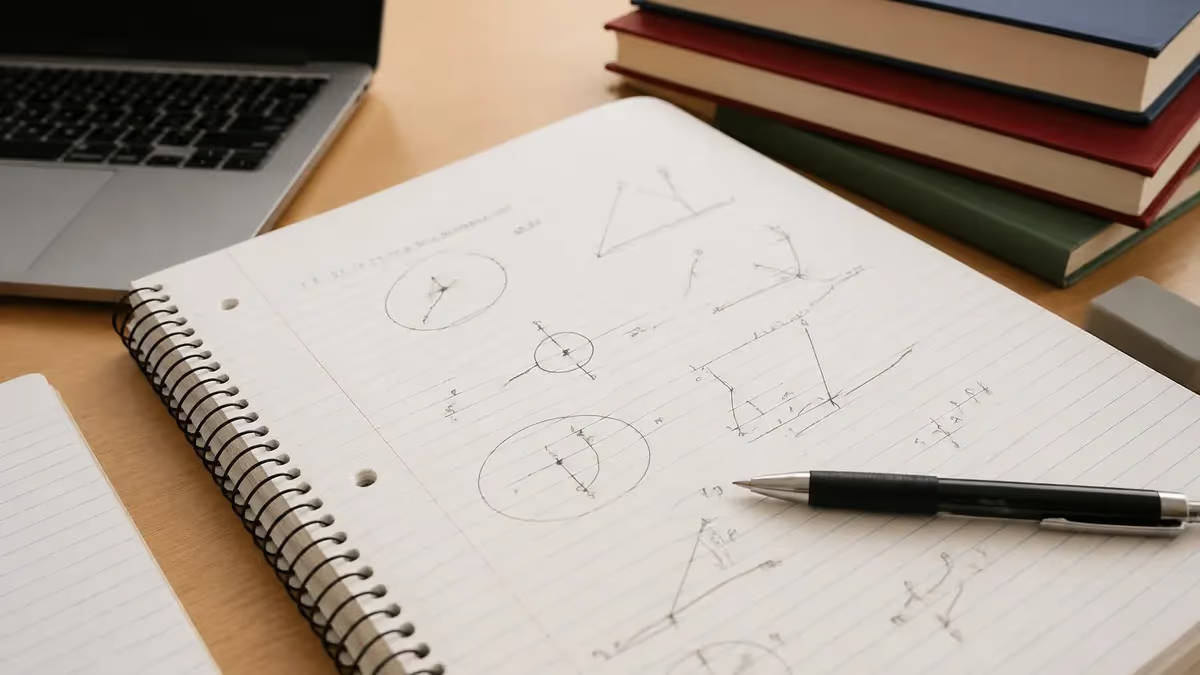
If you're tackling the unit 3 progress check mcq part a ap physics complete guide, you're in the right place. The AP Physics progress checks are designed to gauge your mastery of core concepts before the big exam — and Unit 3 is where many students hit their first real wall.
We've put together everything you need to navigate these assessments with confidence, from question strategies to the specific topics AP Classroom tests most heavily. Whether you're looking for a quick review or a deep dive into the material, this guide covers it all. Start with unit 3 progress check mcq part a ap physics practice to benchmark where you stand.
Progress checks aren't just busywork — they're scored, they give you real College Board data on your strengths, and they're a rehearsal for the actual MCQ section. Understanding how to approach unit 2 progress check mcq part a ap calculus answers alongside physics can sharpen your analytical thinking across disciplines. The MCQ format rewards pattern recognition and process of elimination, so the more familiar you are with how College Board phrases questions, the better you'll perform.
This guide walks through every major topic in Unit 3, explains the question formats you'll face, and gives you actionable strategies to maximize your score. You'll also find links to practice quizzes, topic breakdowns, and tips borrowed from high-scoring students. Don't just memorize formulas — understand the underlying physics, and the MCQs become a lot more predictable.

One of the most searched resources right now is unit 2 progress check mcq part a ap calculus answers — and that's no accident. Students taking both AP Physics and AP Calculus quickly realize the two subjects share a conceptual backbone. Derivatives show up in kinematics; integrals define displacement and work. If you've already wrestled with calculus progress checks, you're better prepared for physics than you think.
When it comes to ap classroom unit 8 progress check mcq answers, the pattern is the same: AP Classroom structures every unit check to mirror real exam conditions. Each MCQ block tests application, not just recall. You'll see scenario-based questions, graph interpretations, and multi-step reasoning problems. Preparing for one unit check genuinely makes all the others easier, because the question logic is consistent across the AP program.
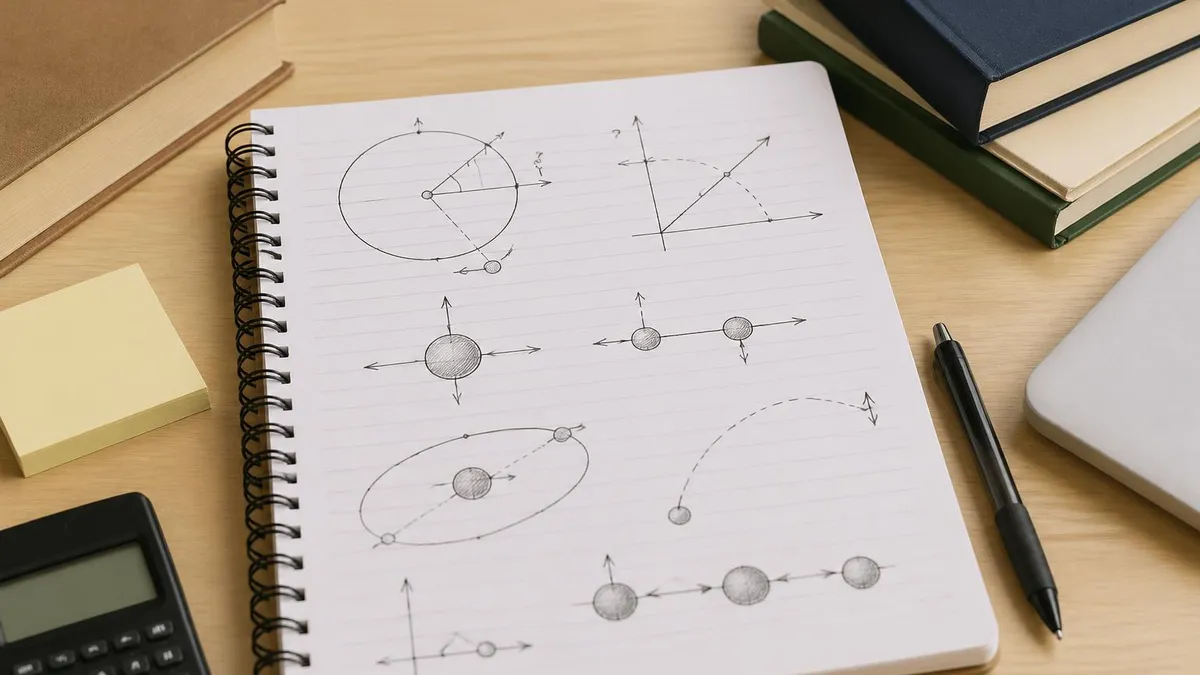
Unit 3 in AP Physics 1 covers circular motion and gravitation — two topics that show up heavily in MCQ Part A. Expect questions on centripetal acceleration, gravitational force relationships, and orbital mechanics. These aren't plug-and-chug problems; they require you to understand why the formulas work, not just how to apply them. Sketch free-body diagrams on scratch paper, even for MCQs.
One thing students often overlook: the College Board releases sample questions and scoring guidelines for every AP course. These aren't hidden — they're on the AP Central website, free to download. Spending even 30 minutes reviewing official sample questions before a progress check gives you a much clearer picture of what's expected. Don't rely solely on third-party prep books when the source material is right there.
Searching for ap classroom unit 7 progress check mcq answers? Unit 7 typically covers torque and rotational motion in AP Physics 1 — a topic that trips up a surprising number of students because it feels abstract. The trick is to always anchor rotational concepts back to their translational equivalents. Torque is to rotation what force is to linear motion; moment of inertia is the rotational analog of mass. Once that clicks, Unit 7 MCQs get much more manageable.
For students also studying English, ap literature unit 2 progress check mcq answers require an entirely different skill set — close reading, inference, and tone analysis. It's worth noting that AP Classroom's MCQ format is consistent: you're always being tested on how well you apply course concepts, whether it's physics equations or literary devices. Reviewing the ap classroom unit 8 progress check mcq answers guide gives you the platform overview to navigate all AP Classroom tools efficiently.
AP Classroom is more than just a gradebook — it's where College Board hosts progress checks, AP Daily videos, and personal progress reports. Make it a habit to review your score breakdowns after each unit check. The diagnostic data tells you exactly which skills need more work, which means you can study smarter rather than just harder.
AP Progress Check Strategies by Subject
For AP Physics Unit 3 MCQ Part A, focus on circular motion and gravitational concepts. Draw diagrams for every scenario question — even quick sketches clarify direction of forces. Practice identifying what's constant vs. what's changing in each problem. College Board loves questions where one variable changes while others stay fixed.
Time yourself. Each MCQ section has a strict pace, and Unit 3 questions can be deceptively time-consuming if you try to derive everything from scratch. Know your key equations cold: centripetal acceleration (a = v²/r), gravitational force (F = Gm₁m₂/r²), and orbital period relationships.
Students frequently search for ap classroom unit 6 progress check mcq answers ap lang because AP Language and Composition Unit 6 covers argumentation — one of the hardest skills to master quickly. The MCQ questions in this unit test your ability to identify rhetorical strategies, analyze logical structure, and evaluate evidence quality. It's less about what an author says and more about how and why they say it.
Meanwhile, ap classroom unit 1 progress check mcq answers represent the foundation of every AP course. Unit 1 is where College Board establishes baseline expectations and introduces the key concepts that everything else builds on. Students who nail Unit 1 progress checks tend to maintain momentum throughout the year — not because Unit 1 is easy, but because it builds the right study habits.
The common thread across all AP progress checks is active retrieval practice. Instead of re-reading your notes, quiz yourself. Close the textbook and try to reconstruct key formulas, concepts, or arguments from memory. This technique — spaced retrieval — is consistently shown to produce stronger long-term retention than passive review. Use it before every progress check, and you'll see the difference.
For ap classroom unit 1 progress check mcq answers ap lang, the focus shifts to reading rhetorical situations and understanding how context shapes an author's choices. Unit 1 in AP Language introduces the rhetorical triangle — speaker, audience, purpose — and every MCQ in subsequent units builds on this framework. If you skipped Unit 1 review, go back. The foundational concepts show up in every later progress check.
Thinking about ap united states history? AP US History (APUSH) is one of the most demanding AP courses, and its progress checks reflect that. The MCQs require you to analyze primary sources, identify historical arguments, and understand cause-and-effect relationships across centuries of American history. Unlike science courses, APUSH MCQs rarely have a single formula — context and interpretation matter enormously. Check out the ap united states history practice resources for additional historical thinking skills.
Across all AP subjects, students who treat progress checks as genuine learning opportunities — not just grades to maximize — tend to perform better on the actual exam. Use your score report to identify weak spots, then spend the next few days drilling those exact skills. Consistency matters more than cramming.
AP Classroom Progress Checks: Pros and Cons
- +Immediate score feedback identifies gaps before the real exam
- +Questions mirror actual AP exam format and difficulty
- +Free access through AP Classroom — no extra cost
- +Unit-by-unit structure keeps studying organized and manageable
- +Personal progress reports show skill-level data, not just totals
- +Helps build test-taking stamina with timed practice
- −Questions can't be retaken for a higher score once submitted
- −Some students treat scores as grades rather than diagnostics
- −Limited answer explanations compared to third-party resources
- −Access requires a teacher-linked AP Classroom account
- −MCQ-only format doesn't fully prep you for FRQ writing
- −Question banks are smaller than commercial prep materials
When you're searching for an ap united states history practice test, you want material that actually mirrors the APUSH exam structure — not generic history quizzes. The real APUSH MCQ section includes stimulus-based questions with maps, charts, and primary sources. Practice tests that replicate this format are significantly more effective than traditional review books.
Don't overlook ap chemistry unit 5 progress check mcq answers if you're taking AP Chem. Unit 5 covers kinetics — reaction rates, rate laws, and activation energy. It's one of the most math-heavy units in AP Chemistry, and the MCQs test both conceptual understanding and quantitative problem-solving. Students who spend extra time on unit 5 often see the biggest score jumps because kinetics questions appear throughout the entire exam.
The best prep strategy combines official AP Classroom resources with targeted practice tests. Use AP Daily videos to learn or review concepts, then immediately test yourself with progress check-style MCQs. The active practice after passive learning is what actually builds the neural pathways you need under exam pressure. Give yourself at least two full days between learning a concept and testing yourself on it.
AP Progress Check Prep Checklist
- ✓Watch AP Daily videos for the current unit before attempting the progress check
- ✓Review your previous unit check score report for recurring weak areas
- ✓Practice at least 20 MCQs under timed conditions before each unit check
- ✓Draw diagrams or concept maps for any physics or chemistry topic
- ✓Review key formulas and their conceptual meanings, not just the math
- ✓Use the process of elimination on every question you're unsure about
- ✓Flag and return to hard questions instead of spending too long on them
- ✓After each practice session, review every wrong answer in detail
- ✓Schedule progress check prep at least 3 days before the AP Classroom deadline
- ✓Use your personal progress report to prioritize skills, not just units
The ap classroom unit 1 progress check frq answers matter just as much as MCQ prep — maybe more. Free-response questions require you to construct arguments, show work, and demonstrate understanding in writing. For AP Physics, FRQs test experimental design, data analysis, and mathematical derivation. For AP Language, they require full rhetorical essays. Many students neglect FRQ prep until it's too late; don't be one of them.
Understanding unit 3 progress check mcq ap chemistry answers goes beyond looking up the right option. You need to understand why each answer is correct and why the wrong answers are wrong. This deeper analysis is what separates students who score 3s from those who score 5s. Take time after every practice session to articulate the reasoning behind each answer — ideally out loud or in writing.
It's also worth building a personal formula sheet as you work through each unit. Even though you can't use it during AP Classroom progress checks, the act of building it consolidates your knowledge. When exam day comes, you'll find that most of what's on your formula sheet is already committed to memory — because you made it yourself rather than passively reading someone else's.
Reviewing ap united states history dbq rubric can actually improve your MCQ performance — and here's why. The DBQ rubric breaks down historical thinking into discrete skills: contextualization, sourcing, corroboration, and argumentation. These are the same skills tested in APUSH MCQs, just in shorter form. Students who internalize the DBQ rubric develop stronger analytical instincts across all question types.
For ap classroom unit 6 progress check mcq answers, the content varies by subject. In AP Language, Unit 6 covers argument — crafting and deconstructing claims. In AP Physics, Unit 6 might address simple harmonic motion. In every case, the MCQ format remains consistent: choose the best answer from four options, usually within a stimulus or scenario. Understanding the format lets you focus cognitive energy on content rather than navigation.
One often-overlooked strategy is peer teaching. After you complete a unit, try explaining the core concepts to a classmate or family member. The gaps in your explanation reveal exactly what you haven't fully internalized. Teaching forces you to organize knowledge in a way that passive studying never does — and it's a surprisingly reliable predictor of progress check performance.
Keep a running error log as you prep. Every time you miss a question, write down the concept it tested and the reason you got it wrong. Review this log weekly. You'll quickly spot patterns — maybe it's always conservation of energy questions, or always primary source attribution. Targeted effort on those specific patterns is the fastest path to a higher score.
AP Classroom progress checks can only be submitted once per assignment window. Once you submit, you can't change your answers. Before submitting, take 2-3 minutes to flag and revisit any questions you skipped or felt uncertain about. A quick second pass often catches careless errors — the kind that come from rushing rather than not knowing the material. That review time can be the difference between a 3 and a 4.
If you're curious about an ap united states history calculator — there isn't one for APUSH, but the concept of having the right tools for each AP exam matters. AP Physics and AP Calculus allow specific calculators on certain sections. Knowing which tools are permitted, and practicing with those exact tools, eliminates surprises on exam day. Treat your calculator as part of your prep, not an afterthought.
When it comes to ap bio units, the AP Biology curriculum is organized into eight units covering everything from cell biology to ecology. Each unit has its own progress check in AP Classroom, and the MCQ format here emphasizes scientific reasoning and data analysis. Graph interpretation and experimental design questions appear in nearly every AP Bio progress check — practice these specifically.
Across all AP sciences, the key to strong MCQ performance is understanding experimental logic. College Board consistently asks you to evaluate data, identify variables, and draw conclusions. Students who practice reading scientific graphs and tables outside of class build a real edge on these question types. It's a transferable skill that pays off in physics, chemistry, and biology alike.
AP Practice Test Questions
Prepare for the AP - Advanced Placement exam with our free practice test modules. Each quiz covers key topics to help you pass on your first try.
AP Acids and Bases
AP Exam Questions covering Acids and Bases. Master AP Test concepts for certification prep.
AP America in the World
Free AP Practice Test featuring America in the World. Improve your AP Exam score with mock test prep.
AP American & National Identity
AP Mock Exam on American & National Identity. AP Study Guide questions to pass on your first try.
AP Atomic Structure and Periodicity
AP Test Prep for Atomic Structure and Periodicity. Practice AP Quiz questions and boost your score.
AP Biology Trivia
AP Mock Test covering Biology Trivia. Online AP Test practice with instant feedback.
APCE Acids & Bases
Free AP Quiz on APCE Acids & Bases. AP Exam prep questions with detailed explanations.
APCE Atomic Structure & Periodicity
AP Practice Questions for APCE Atomic Structure & Periodicity. Build confidence for your AP certification exam.
APCE Chemical Bonding & Molecular Structure
AP Test Online for APCE Chemical Bonding & Molecular Structure. Free practice with instant results and feedback.
APCE Chemical Reactions & Stoichiometry
AP Study Material on APCE Chemical Reactions & Stoichiometry. Prepare effectively with real exam-style questions.
APCE Electrochemistry
Free AP Test covering APCE Electrochemistry. Practice and track your AP exam readiness.
APCE Intermolecular Forces & Properties
AP Exam Questions covering APCE Intermolecular Forces & Properties. Master AP Test concepts for certification prep.
APCE Kinetics & Chemical Equilibrium
Free AP Practice Test featuring APCE Kinetics & Chemical Equilibrium. Improve your AP Exam score with mock test prep.
APCE Organic Chemistry & Biochemistry
AP Mock Exam on APCE Organic Chemistry & Biochemistry. AP Study Guide questions to pass on your first try.
APCE Thermodynamics & Thermochemistry
AP Test Prep for APCE Thermodynamics & Thermochemistry. Practice AP Quiz questions and boost your score.
AP Chemical Bonding and Molecular Structure
AP Questions and Answers on Chemical Bonding and Molecular Structure. Free AP practice for exam readiness.
AP Chemical Reactions and Stoichiometry
AP Mock Test covering Chemical Reactions and Stoichiometry. Online AP Test practice with instant feedback.
AP Electrochemistry
Free AP Quiz on Electrochemistry. AP Exam prep questions with detailed explanations.
AP English Literary Terms
AP Practice Questions for English Literary Terms. Build confidence for your AP certification exam.
AP European History: 1815-1914
AP Test Online for European History: 1815-1914. Free practice with instant results and feedback.
AP European History: 1914 to Present
AP Study Material on European History: 1914 to Present. Prepare effectively with real exam-style questions.
AP European History
Free AP Test covering European History. Practice and track your AP exam readiness.
AP Government & Politics
AP Exam Questions covering Government & Politics. Master AP Test concepts for certification prep.
AP Human Geography: Thinking Geographically
Free AP Practice Test featuring Human Geography: Thinking Geographically. Improve your AP Exam score with mock test prep.
AP Intermolecular Forces and Properties
AP Mock Exam on Intermolecular Forces and Properties. AP Study Guide questions to pass on your first try.
AP Kinetics and Reaction Rates
AP Test Prep for Kinetics and Reaction Rates. Practice AP Quiz questions and boost your score.
AP Practice Test Psychology
AP Questions and Answers on Practice Test Psychology. Free AP practice for exam readiness.
AP Psychology: Biological Bases of Behavior
AP Mock Test covering Psychology: Biological Bases of Behavior. Online AP Test practice with instant feedback.
AP Psychology: Learning & Cognition
Free AP Quiz on Psychology: Learning & Cognition. AP Exam prep questions with detailed explanations.
AP Psychology: Memory
AP Practice Questions for Psychology: Memory. Build confidence for your AP certification exam.
AP Psychology: Sensation & Perception
AP Test Online for Psychology: Sensation & Perception. Free practice with instant results and feedback.
AP Thermodynamics and Thermochemistry
AP Study Material on Thermodynamics and Thermochemistry. Prepare effectively with real exam-style questions.
AP US History: Period 1 (1491 - 1607)
Free AP Test covering US History: Period 1 (1491 - 1607). Practice and track your AP exam readiness.
AP US History: Politics & Power
AP Exam Questions covering US History: Politics & Power. Master AP Test concepts for certification prep.
AP Chemistry Exam
AP Mock Exam on Chemistry Exam. AP Study Guide questions to pass on your first try.
AP Chemistry Exam Trivia
AP Test Prep for Chemistry Exam Trivia. Practice AP Quiz questions and boost your score.
AP English Language & Composition MCQ
AP Questions and Answers on English Language & Composition MCQ. Free AP practice for exam readiness.
AP English Language & Composition
AP Mock Test covering English Language & Composition. Online AP Test practice with instant feedback.
AP English Literature And Composition
Free AP Quiz on English Literature And Composition. AP Exam prep questions with detailed explanations.
AP European History Exam 1815-1914
AP Practice Questions for European History Exam 1815-1914. Build confidence for your AP certification exam.
AP European History Exam 1914 to Present
AP Test Online for European History Exam 1914 to Present. Free practice with instant results and feedback.
AP European History Exam
AP Study Material on European History Exam. Prepare effectively with real exam-style questions.
AP Human Geography Exam: Industrial & Econ...
Free AP Test covering Human Geography Exam: Industrial & Economic Development. Practice and track your AP exam readiness.
AP Human Geography Exam: Political Pattern...
AP Exam Questions covering Human Geography Exam: Political Patterns & Processes. Master AP Test concepts for certification prep.
AP Human Geography Exam: Thinking Geograph...
Free AP Practice Test featuring Human Geography Exam: Thinking Geographically. Improve your AP Exam score with mock test prep.
AP Psychology Abnormal Behavior Exam
AP Mock Exam on Psychology Abnormal Behavior Exam. AP Study Guide questions to pass on your first try.
AP Psychology Biological Bases of Behavior
AP Test Prep for Psychology Biological Bases of Behavior. Practice AP Quiz questions and boost your score.
AP Psychology Developmental Psychology & P...
AP Questions and Answers on Psychology Developmental Psychology & Personality. Free AP practice for exam readiness.
AP Psychology History & Research Methods Exam
AP Mock Test covering Psychology History & Research Methods Exam. Online AP Test practice with instant feedback.
AP Psychology Learning & Cognition
Free AP Quiz on Psychology Learning & Cognition. AP Exam prep questions with detailed explanations.
AP Psychology Memory Exam
AP Practice Questions for Psychology Memory Exam. Build confidence for your AP certification exam.
AP Psychology Sensation & Perception
AP Test Online for Psychology Sensation & Perception. Free practice with instant results and feedback.
AP US America in the World
AP Study Material on US America in the World. Prepare effectively with real exam-style questions.
AP US American & National Identity
Free AP Test covering US American & National Identity. Practice and track your AP exam readiness.
AP US Geography & the Environment
AP Exam Questions covering US Geography & the Environment. Master AP Test concepts for certification prep.
AP US Government & Politics
Free AP Practice Test featuring US Government & Politics. Improve your AP Exam score with mock test prep.
AP U.S. Government & Politics Trivia
AP Mock Exam on U.S. Government & Politics Trivia. AP Study Guide questions to pass on your first try.
AP US History Period 1 (1491 - 1607)
AP Test Prep for US History Period 1 (1491 - 1607). Practice AP Quiz questions and boost your score.
AP US History Period 8 (1945–1980)
AP Questions and Answers on US History Period 8 (1945–1980). Free AP practice for exam readiness.
AP US History Period 9 (1980–Present)
AP Mock Test covering US History Period 9 (1980–Present). Online AP Test practice with instant feedback.
AP US Migration & Settlement
Free AP Quiz on US Migration & Settlement. AP Exam prep questions with detailed explanations.
AP US Politics & Power
AP Practice Questions for US Politics & Power. Build confidence for your AP certification exam.
AP US Work, Exchange & Technology
AP Test Online for US Work, Exchange & Technology. Free practice with instant results and feedback.
AP World History
AP Study Material on World History. Prepare effectively with real exam-style questions.
AP World History Trivia
Free AP Test covering World History Trivia. Practice and track your AP exam readiness.
AP Best AP World History
AP Exam Questions covering Best AP World History. Master AP Test concepts for certification prep.
AP Knowledge of AP English Literature
Free AP Practice Test featuring Knowledge of AP English Literature. Improve your AP Exam score with mock test prep.
For students tracking ap chem units, AP Chemistry is divided into nine units ranging from atomic structure to electrochemistry. Each unit is tested in AP Classroom, and the cumulative nature of chemistry means that weak foundations in early units create problems in later ones. Unit 3 (intermolecular forces) and Unit 5 (kinetics) are especially important because their concepts resurface in almost every subsequent unit.
If you're reviewing ap lit unit 7 progress check mcq answers for AP Literature, Unit 7 typically focuses on longer prose or poetry analysis. The MCQ section in AP Lit is notably harder than in AP Language because every question is tied to a specific passage, and there's less room for general knowledge. Strong AP Lit MCQ performance requires slow, careful reading — resisting the urge to rush through passages to get to the questions.
The final weeks before the AP exam are not the time to discover new material. They're for consolidating what you already know, practicing under timed conditions, and building exam-day confidence. Use AP Classroom's full practice exams and your personal progress reports to focus those final study sessions. You've put in the work — trust the process, simulate exam conditions, and go in with a clear head.
A final word on mindset: AP exams are designed to be challenging, but they're also designed to be passable — even scoreable at the 4 or 5 level — with the right preparation. Thousands of students earn college credit every year through consistent study and smart use of the resources available to them, including AP Classroom progress checks. Use every tool at your disposal, and you'll be ready.
AP Questions and Answers
More AP Courses: Central Place Theory, General Election & Key Definitions

AP Classroom Unit 8 Progress Check MCQ Answers & Complete Study Guide

30-Day AP Study Plan — Pass on Your First Try
How to Pass the AP Exam in 2026 — Complete Study Guide

Unit 2 Progress Check Mcq Part A Ap Calculus Answers: Everything You Need to Know in 2026
About the Author

Educational Psychologist & Academic Test Preparation Expert
Columbia University Teachers CollegeDr. Lisa Patel holds a Doctorate in Education from Columbia University Teachers College and has spent 17 years researching standardized test design and academic assessment. She has developed preparation programs for SAT, ACT, GRE, LSAT, UCAT, and numerous professional licensing exams, helping students of all backgrounds achieve their target scores.
Join the Discussion
Connect with other students preparing for this exam. Share tips, ask questions, and get advice from people who have been there.
View discussion (3 replies)