
Exercises for the Anatomy and Physiology Laboratory: A Complete Student Guide
Master exercises for the anatomy and physiology laboratory with our complete guide. Real techniques, study strategies, and practice tests. 🧠

When students first walk into a university biology department, few experiences prove as transformative as completing structured exercises for the anatomy and physiology laboratory. These hands-on activities bridge the gap between textbook diagrams and real biological structures, giving learners a concrete understanding of how the human body is organized and how its systems function together. Whether you are dissecting a sheep heart, examining microscope slides of muscle tissue, or measuring blood pressure responses during exercise, every laboratory session deepens conceptual understanding in ways that lectures alone simply cannot achieve.
The anatomy and physiology laboratory curriculum in the United States typically spans two semesters and covers ten to fifteen major body systems. Each semester includes between twelve and sixteen formal lab exercises, and students are evaluated through practical exams, written lab reports, and quizzes on anatomical identification. The volume of material can feel overwhelming at first, but organized preparation and consistent hands-on practice make the coursework manageable — and even enjoyable — for the vast majority of committed students who approach it systematically.
Understanding what to expect from laboratory exercises before you walk into the room dramatically reduces anxiety and improves performance. Most anatomy and physiology labs follow a predictable format: a pre-lab reading assignment covering key terminology, a hands-on investigation using models or specimens, data collection and analysis, and a post-lab assessment. Knowing this structure allows you to prepare your vocabulary beforehand, arrive with questions already formulated, and leave with completed, accurate data that will form the backbone of your written report.
The skills you develop in anatomy and physiology laboratory settings extend far beyond the classroom. Nursing students learn to correlate cardiac anatomy with auscultation findings. Pre-med students build the spatial reasoning they need for surgical procedures and diagnostic imaging interpretation. Exercise science majors develop a visceral understanding of muscle fiber types, joint mechanics, and cardiovascular responses to physical stress. The laboratory is not just an academic requirement — it is professional preparation for careers that depend on precise anatomical knowledge.
Modern anatomy and physiology labs increasingly blend traditional dissection and model-based activities with digital tools, including virtual dissection software, 3D anatomical visualization platforms, and real-time physiological measurement devices. Programs like Visible Body, Anatomy.TV, and ADInstruments PowerLab systems are now standard in well-equipped departments, giving students multiple pathways to examine the same structures and processes. This multimodal approach helps learners with different cognitive styles access the material in ways that best match their individual learning strengths.
One of the most important things students can do before each laboratory session is review the relevant anatomy from their textbook and identify the specific structures or processes they will be examining. Creating a simple checklist of structures to identify, measurements to record, and concepts to explain gives you a roadmap that prevents the disorganized, rushed feeling that plagues underprepared students. Laboratory time is limited — typically two to three hours per session — and arriving with a clear plan ensures you use every minute productively and leave with complete, accurate data.
This guide covers the full scope of anatomy and physiology laboratory exercises, from foundational body orientation activities in week one to complex system integration exercises in the final weeks of the semester. You will find concrete preparation strategies, descriptions of what each major lab exercise involves, advice on writing effective lab reports, and tips for performing well on practical examinations. Whether you are just beginning your anatomy and physiology journey or looking to strengthen your laboratory skills mid-semester, this resource will give you the tools and confidence to succeed.
Anatomy and Physiology Lab by the Numbers

Major Types of Anatomy and Physiology Laboratory Exercises
Students examine preserved specimens — sheep hearts, cow eyes, fetal pigs — or cadaveric material to identify structures by name, location, and function. These exercises build spatial understanding and reinforce textbook diagrams with three-dimensional reality.
Using compound light microscopes, students examine prepared slides of epithelial tissue, muscle fibers, neurons, and organ cross-sections. The goal is to recognize tissue types, cell morphology, and structural adaptations that reflect physiological function.
Lab activities measuring blood pressure, heart rate, respiratory volume, muscle fatigue, and nerve conduction velocity require students to collect live data and analyze how the body responds to changing conditions like exercise, posture changes, or temperature.
Plastic anatomical models of the brain, skeleton, heart, kidney, and other organs allow students to handle and examine structures safely and repeatedly. Most practical exams draw heavily on model identification, making model review sessions essential preparation.
Enzyme activity assays, blood typing, urine analysis, and spirometry experiments teach students to apply the scientific method to physiological questions, recording variables, controlling conditions, and interpreting results in the context of homeostasis and normal ranges.
Effective preparation for each anatomy and physiology laboratory exercise begins days before the scheduled session, not in the parking lot five minutes before class. The single most impactful preparation strategy is to read the entire laboratory exercise from start to finish before arriving. This means reading the objectives, the background information, the procedure steps, and the questions you will need to answer — effectively completing a mental rehearsal of the entire session before you touch a specimen or microscope. Students who do this consistently report feeling calmer, more organized, and better able to focus during limited lab time.
After reading the exercise, create a vocabulary list of every anatomical term, tissue type, or physiological concept mentioned. For a lab on the cardiovascular system, this might include terms like chordae tendineae, aortic semilunar valve, interventricular septum, and sinoatrial node. Write each term, look up its definition and pronunciation, and sketch a simple diagram showing its location. Research consistently shows that drawing anatomical structures by hand — even crudely — dramatically improves retention compared to simply reading or highlighting text. The motor act of drawing forces the brain to process structural relationships actively rather than passively.
Arrive at lab early enough to review the available models and specimens before your instructor begins the pre-lab lecture. Many laboratory rooms are accessible during open lab hours, and students who take advantage of this time gain a significant advantage on practical exams. During open lab, quiz yourself on model structures using flashcards, or partner with a classmate and take turns pointing to structures and asking each other to name them. This retrieval practice — actively recalling information rather than passively reviewing it — is one of the most thoroughly validated learning strategies in educational psychology research.
During the laboratory session itself, write detailed notes on your observations rather than relying on memory or generic diagrams. When examining a sheep heart, note the relative thickness of the left versus right ventricular walls and write down why that difference exists functionally. When examining a microscope slide of skeletal muscle, note the banding pattern and the location of nuclei relative to what you observe in smooth muscle. These comparative observations transform isolated facts into a coherent network of knowledge that is far easier to recall under exam pressure than disconnected memorized labels.
Data collection during physiological measurement labs requires particular attention to accuracy and consistency. When recording blood pressure measurements, for example, record both systolic and diastolic values, note which arm was used, whether the subject was seated or standing, and how many minutes had elapsed since the subject last exercised. These details matter both for scientific accuracy and for demonstrating to your instructor that you understand the variables that affect physiological measurements. Sloppy data collection produces unreliable results that make lab report analysis nearly impossible.
Post-lab review is an underutilized but critical component of laboratory learning. Within 24 hours of completing a lab session, review your notes, sketch the key structures you examined, and attempt to answer the discussion questions in your lab manual without looking at your notes.
This self-testing process reveals gaps in your understanding while the material is still relatively fresh, giving you time to address confusion before it accumulates. If your program uses an online lab platform like McGraw-Hill Connect or Pearson Mastering A&P, complete the associated digital activities within the same 24-hour window to reinforce the session content through a different modality.
Finally, treat each laboratory exercise as preparation for the practical exam rather than a standalone activity. As you complete each lab, mentally note which structures or measurements would make effective practical exam questions. Create a running list of "exam-worthy" items from each session, organized by body system. By the time practical exams arrive, you will have a curated study guide built from your own direct observations rather than generic review materials. This personalized study resource, grounded in your actual laboratory experiences, is one of the most effective exam preparation tools available to anatomy and physiology students.
Key Lab Skills: What You Need to Master by Body System
Cardiovascular laboratory exercises require students to identify the four chambers of the heart, the major vessels entering and leaving each chamber, and the valves that control unidirectional blood flow. In a typical sheep heart dissection, you will locate the pulmonary trunk, the aorta, the superior and inferior vena cava, and the pulmonary veins, then cut through the ventricular walls to compare their thickness and explain why the left ventricle is substantially thicker than the right given the pressure differential between the pulmonary and systemic circuits.
Respiratory lab exercises build on cardiovascular knowledge by examining the mechanics of breathing and the structures of the upper and lower airways. Students use spirometry equipment to measure tidal volume, inspiratory reserve volume, expiratory reserve volume, and residual volume, calculating total lung capacity from these measurements and comparing individual results against predicted values based on height, age, and sex. Histology slides of tracheal and bronchial tissue reveal the pseudostratified ciliated columnar epithelium and the underlying cartilage rings — structural features that directly explain functional properties like mucociliary clearance and airway rigidity.

Hands-On Lab vs. Virtual Lab: Weighing Your Options
- +Direct tactile experience with real tissue texture, weight, and three-dimensional structure is impossible to replicate digitally
- +Dissection and specimen examination develop professional composure that clinical students will need in healthcare settings
- +Real physiological measurements capture natural biological variability that helps students understand normal ranges and outliers
- +Working in a team during lab builds communication and collaborative skills essential for healthcare professions
- +Microscopy with real slides teaches the ability to adjust focus, find structures, and interpret imperfect preparations
- +Physical model handling builds spatial reasoning that supports clinical imaging interpretation and procedural skill development
- −Lab specimens carry exposure risks including chemical preservatives like formaldehyde that require proper ventilation and PPE
- −Access to physical lab is restricted to scheduled hours, limiting review opportunities compared to always-available digital tools
- −Dissection and specimen labs can trigger significant anxiety or ethical concerns in students opposed to animal use
- −Physical lab equipment varies enormously in quality between institutions, creating unequal learning experiences
- −Mistakes in dissection are permanent — cutting the wrong structure eliminates the opportunity to examine it intact
- −Physical labs require significant institutional investment in specimens, models, and equipment that smaller programs may lack
Lab Report and Practical Exam Preparation Checklist
- ✓Read the entire lab exercise before arriving, including all discussion questions and objectives
- ✓Create a vocabulary list of all anatomical terms in the exercise and practice their pronunciation aloud
- ✓Sketch key structures from memory and label them without looking at your textbook or atlas
- ✓During lab, write observational notes that go beyond the minimum required data — record comparisons and functional explanations
- ✓Photograph specimens and models with your phone during open lab sessions for later study reference
- ✓Complete your lab report discussion questions within 24 hours of the session while memory is freshest
- ✓Visit the open lab at least twice before each practical exam to handle models and review pinned structures
- ✓Quiz yourself on models using a covered atlas technique — identify structures before checking your reference
- ✓Partner with a classmate for reciprocal testing: one names a structure, the other locates it on the model
- ✓Review your data from all completed labs one week before practical exams and identify any gaps in your identification knowledge
Retrieval Practice Beats Re-Reading by a Factor of Two
Research from cognitive psychology consistently shows that actively recalling information — testing yourself on model structures, writing definitions from memory, or answering practice questions — produces approximately twice the long-term retention of passive re-reading or re-highlighting. Every minute you spend quizzing yourself on anatomical structures during open lab is worth two minutes of passive review with an atlas. Build retrieval practice into every study session from week one, and your practical exam performance will reflect that investment.
Performing well on anatomy and physiology practical examinations requires a fundamentally different preparation strategy than written exams. While written tests assess your ability to recall and explain concepts in narrative form, practicals evaluate your ability to identify specific structures on models, slides, or specimens — often under significant time pressure, with only 60 to 90 seconds per station before a timer signals you to move on. This format rewards rapid, confident recognition over slow, deliberate reasoning, which means your preparation must build automaticity rather than mere familiarity.
The most effective strategy for practical exam preparation is to simulate the actual exam format during your study sessions. Set a timer for 90 seconds, look at a single model or diagram, identify the pinned or highlighted structure, write your answer, then check it against your key. Repeat this process for every structure in the exam scope without spending additional time deliberating or second-guessing.
This timed self-testing approach trains your brain to retrieve anatomical names quickly under pressure, which is precisely the skill the practical exam measures. Students who prepare this way consistently outperform those who study the same content for longer periods without time pressure.
Organize your practical exam review by body system, working through each system completely before moving to the next. For each system, create a master list of every structure your instructor has indicated is exam-eligible — this list typically comes from the learning objectives in your lab manual or from your instructor's explicit review guidance.
If your instructor says a structure is fair game, treat it as certain to appear. Do not make the mistake of predicting which items are most likely and selectively preparing only those — practical exams frequently test structures that students assume are too obscure or too obvious to appear.
Pay particular attention to structures that look similar to one another on models, since instructors frequently place pins near boundaries between adjacent structures to test whether students can distinguish them. The difference between the trachea and esophagus on a torso model, the left and right kidneys from an anterior versus posterior view, or the triceps versus biceps brachii from an unusual angle — these boundary cases are classic practical exam challenges. During your open lab review, specifically seek out these easily confused pairs and spend extra time practicing their differentiation from multiple viewing angles.
Histology slides present unique practical exam challenges because they require you to identify tissue types from microscopic images that may be photographed at unfamiliar magnifications or from unusual orientations.
Build your histology recognition by examining each tissue type at multiple magnifications during open lab, noting the characteristic features that remain visible regardless of magnification — such as the striation pattern of cardiac muscle, the goblet cells interspersed in intestinal epithelium, or the concentrically arranged lamellae of osteons in compact bone. When you can identify a tissue type from a brief glance at its characteristic features rather than a detailed analytical survey, you are ready for practical exam conditions.
On the day of the practical exam, manage your time and mental energy carefully. Read the question at each station completely before committing to an answer — instructors sometimes ask for the organ containing the structure rather than the structure name itself, and misreading the question wastes an otherwise correct identification.
If you are genuinely uncertain about a structure, write your best guess and move on without dwelling — time lost at one station cannot be recovered at subsequent stations. Review all your answers during any remaining time at the end, prioritizing stations where you felt uncertain over stations where you felt confident.
After the practical exam, use your results diagnostically regardless of your score. Review which structures you missed and identify the pattern — were misses concentrated in one body system, one tissue type, or one viewing angle? This pattern reveals the specific gaps in your preparation that need targeted remediation before the next exam. Students who treat each practical exam result as data for improving their next performance consistently show the steepest improvement curves over the course of the semester, transforming early struggles into strong final grades.
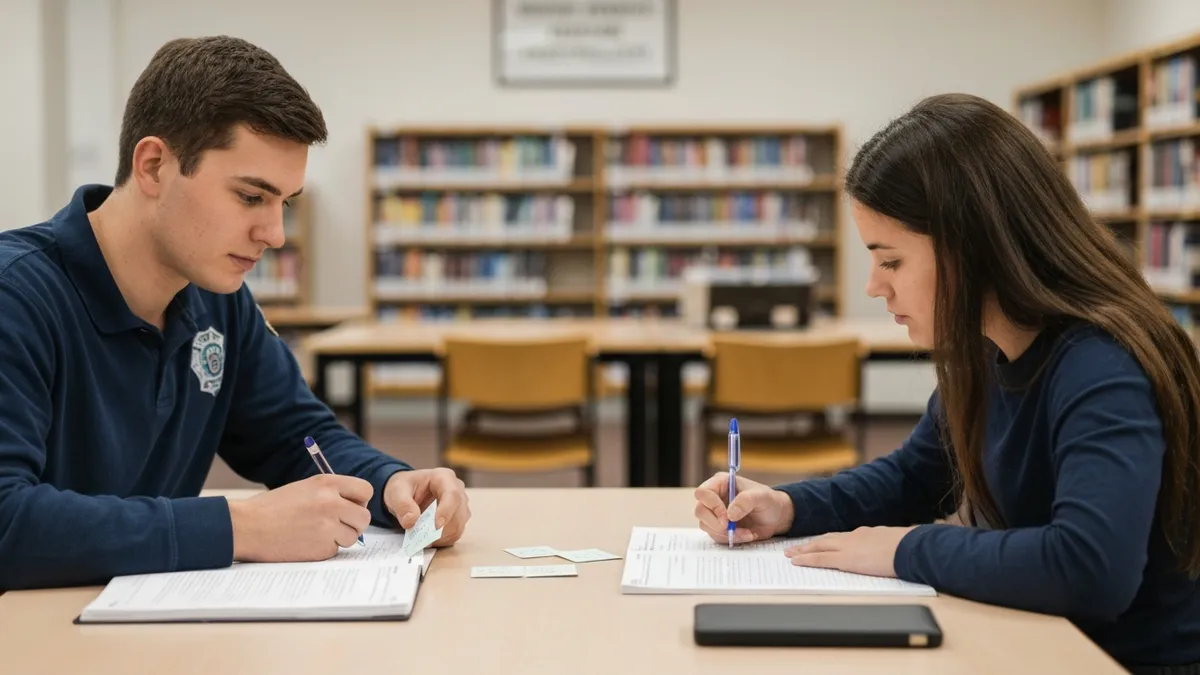
Many students underestimate the weight of practical examinations in their final anatomy and physiology grade. In most US programs, practical exams and lab reports together account for 25 to 35 percent of the overall course grade — enough to shift a student from a B to an A or from a C to a D. Open lab hours exist specifically to give you unstructured time to review models and practice identification. Students who attend open lab consistently significantly outperform those who rely solely on textbook and lecture review for practical exam preparation.
The digital revolution in anatomy education has produced an expanding toolkit of resources that complement traditional laboratory exercises in powerful ways. Three-dimensional anatomy visualization platforms like Visible Body Human Anatomy Atlas, Complete Anatomy by 3D4Medical, and the Anatomy Learning app allow students to rotate, layer-strip, and zoom into detailed anatomical models on a smartphone or tablet. These apps are particularly valuable for reviewing structures from unusual angles — exactly the kind of viewing challenge that appears on practical exams — and for understanding spatial relationships between adjacent structures that are difficult to appreciate from flat atlas images.
Physiological simulation software bridges the gap between anatomy identification and functional understanding. Programs like Physioex, which accompanies many Marieb and Hoehn A&P textbooks, allow students to conduct virtual experiments in enzyme activity, neurophysiology, cardiovascular dynamics, and renal function with results that reflect real physiological principles. While these simulations do not replace hands-on measurement experience, they allow students to repeat experiments with different variables, observe idealized outcomes that clarify the underlying principles, and complete lab activities when physical lab access is unavailable due to illness or scheduling conflicts.
Online flashcard platforms, particularly Anki and Quizlet, are widely used by anatomy and physiology students for structure identification and terminology review. Anki's spaced repetition algorithm is especially well-suited to the vocabulary-heavy demands of anatomy education, scheduling review of each card at intervals calibrated to your individual forgetting curve. Pre-made Anki decks for Marieb and Hoehn, Tortora and Derrickson, and other major A&P textbooks are freely available and provide a ready-made vocabulary review system that requires only consistent daily use to produce remarkable retention results over the course of a semester.
YouTube channels dedicated to anatomy and physiology education have grown substantially in quality and scope, with channels like Anatomy Zone, Professor Dave Explains, and Ninja Nerd providing detailed, professionally produced video explanations of every major body system.
These videos are particularly valuable for understanding physiological mechanisms — the cardiac cycle, the sliding filament theory of muscle contraction, countercurrent multiplication in the kidney — where the dynamic, animated format communicates processes more clearly than static diagrams. Watching a high-quality video explanation of a process you struggled to understand from your textbook often produces the kind of instant conceptual clarity that accelerates all subsequent learning in that domain.
Peer study groups represent one of the most underutilized resources available to anatomy and physiology students. Research consistently shows that explaining concepts to others is one of the most powerful learning strategies available, forcing you to confront gaps in your understanding that passive review conceals.
Form a study group of three to five classmates who share your commitment level, assign each member responsibility for summarizing a different section of each week's lab exercise, and spend your sessions teaching each other rather than studying silently in parallel. The student who explains the brachial plexus to the group learns it more durably than the student who only listens to the explanation.
It is worth noting that the intensity and depth of preparation required for anatomy and physiology laboratory exercises is itself excellent preparation for the professional certification and licensing exams that follow in allied health careers.
The disciplined study habits, the comfort with technical vocabulary, and the ability to connect structural form to physiological function that you develop in the A&P laboratory are precisely the skills that nursing boards, physical therapy licensing exams, and medical school curricula will demand. Every hour you invest in mastering laboratory exercises is building the professional competence that will define your clinical practice for the remainder of your career.
Students wondering about the overall challenge level of anatomy and physiology as a course often benefit from reading honest assessments of course difficulty before enrolling, so they can set realistic expectations and allocate sufficient study time from the beginning of the semester.
The laboratory component specifically demands a time investment of three to five hours of outside preparation per scheduled lab session — a commitment that surprises many students who underestimate the course during registration. Building this time into your weekly schedule before the semester begins, rather than scrambling to find it after falling behind, is the single most important logistical decision you can make as a prospective anatomy and physiology student.
Developing effective laboratory habits early in the semester creates compounding benefits that become most visible during the high-stakes final weeks of the course. Students who establish consistent preparation routines from the first laboratory session — pre-reading exercises, vocabulary review, post-lab self-testing — find that their practical exam preparation in weeks twelve through sixteen feels like organized review rather than panicked cramming. The architecture of the course is designed so that early body systems provide the vocabulary and conceptual framework for understanding later, more complex systems, making early mastery a prerequisite for late-semester success.
Time management is the hidden challenge that causes otherwise capable students to underperform in anatomy and physiology laboratory courses. A typical full-time student enrolled in A&P while working part-time or managing family responsibilities faces genuine competition for the study time the course demands. The most successful approach is to treat anatomy and physiology preparation as a non-negotiable daily appointment rather than a task to be completed when other obligations allow. Even thirty minutes of daily vocabulary review and model visualization on an anatomy app produces better retention than equivalent study time compressed into infrequent marathon sessions before major exams.
Writing effective laboratory reports is a skill that develops over the course of the semester and contributes significantly to your overall laboratory grade. Strong lab reports demonstrate that you not only collected accurate data but also understand what that data means in a physiological context. In the results section, present your data clearly in tables or graphs with appropriate labels and units.
In the discussion section, explain whether your results align with expected physiological principles, and if they do not — which is common in real laboratory settings due to measurement error or subject variability — analyze the likely sources of discrepancy rather than simply stating that results were unexpected. This analytical approach is what distinguishes an A lab report from a C lab report.
Common mistakes in anatomy and physiology laboratory reports include using informal language instead of correct anatomical terminology, failing to answer all discussion questions completely, presenting data without contextual interpretation, and submitting reports with careless errors in structure names or measurements. Before submitting any lab report, use the laboratory exercise objectives as a checklist — have you addressed every learning objective in your written work? Instructors frequently use these objectives as a grading rubric, and reports that visibly engage with every stated objective earn higher marks than those that answer only the most obvious questions while neglecting others.
Safety in the anatomy and physiology laboratory deserves explicit attention, particularly for students who have limited prior experience with preserved biological specimens or chemical reagents. Always wear your personal protective equipment — safety glasses, gloves, and a lab coat — whenever the exercise involves specimens, stains, chemical reagents, or sharps.
Formaldehyde and glutaraldehyde, commonly used in specimen preservation, are respiratory irritants and potential carcinogens that require adequate ventilation and prompt washing of any skin contact. Understanding and following safety protocols is not bureaucratic compliance — it is the foundation of professional conduct that will be expected of you throughout your clinical career.
Building a strong relationship with your anatomy and physiology laboratory instructor is one of the most practically valuable things you can do throughout the course. Laboratory instructors are typically graduate students or dedicated adjunct faculty with deep expertise in the specific exercises they teach, and they can provide targeted guidance on exactly which structures and concepts to prioritize for practical exams, how to interpret ambiguous data in your lab reports, and how to improve your identification accuracy for the structures you consistently miss.
Students who attend office hours, ask specific questions during open lab, and demonstrate genuine engagement with the material receive more detailed feedback and mentorship than those who remain anonymous faces in the lab coat crowd.
As you complete the final laboratory exercises of your anatomy and physiology course, take time to reflect on how dramatically your understanding of the human body has grown since the first session. The student who struggled to distinguish the trachea from the esophagus in week two can now trace the complete pathway of a bolus from oral ingestion through intestinal absorption.
The student who could not identify a single bone surface marking in week one can now name sixty-five skeletal landmarks and explain their functional significance. This growth represents not just academic achievement but genuine professional preparation — the kind of deep, embodied anatomical knowledge that will support clinical reasoning and patient care throughout a rewarding career in the health sciences.
Anatomy Physiology Questions and Answers

How Hard Is Anatomy and Physiology? The Complete Honest Guide for Students

Eye Anatomy and Physiology: The Complete Guide to Understanding How Your Eyes Work
Anatomy and Physiology PDF: Complete Free Download Guide for 2026 Students
Human Anatomy and Physiology Book: The Complete Guide to Choosing, Using, and Mastering the Best Textbooks for 2026

Best Way to Learn Anatomy and Physiology: A Complete Student Guide
About the Author

Educational Psychologist & Academic Test Preparation Expert
Columbia University Teachers CollegeDr. Lisa Patel holds a Doctorate in Education from Columbia University Teachers College and has spent 17 years researching standardized test design and academic assessment. She has developed preparation programs for SAT, ACT, GRE, LSAT, UCAT, and numerous professional licensing exams, helping students of all backgrounds achieve their target scores.