
How Hard Is Anatomy and Physiology? The Complete Honest Guide for Students
How hard is anatomy and physiology? 🧠 Honest breakdown of difficulty, study strategies, and what to expect. Real data for US students.
How hard is anatomy and physiology? It is one of the most common questions asked by nursing students, pre-med hopefuls, and allied health majors before they register for what many instructors call the gatekeeper course of the health sciences.
The honest answer is that A&P ranks among the most demanding courses offered at community colleges and universities across the United States, not because the concepts are mathematically abstract, but because the sheer volume of material — hundreds of anatomical terms, dozens of physiological processes, and complex organ system interactions — demands a level of sustained memorization and conceptual integration that most students have never attempted before.
The difficulty is not uniform. Anatomy, which focuses on structures and their names, challenges students through pure memorization. Physiology, which explains how those structures function and regulate one another, demands logical reasoning and an ability to trace cause-and-effect chains across multiple organ systems simultaneously. When the two subjects are combined into a single two-semester sequence — as they are in virtually every US nursing and allied health program — the cognitive load compounds rapidly. Students who struggle with one component often find the other magnifies their weaknesses rather than offering relief.
National survey data consistently show that A&P courses carry some of the highest withdrawal and failure rates in pre-professional health curricula. Studies published in nursing education journals report D/W/F rates ranging from 25 to 40 percent in introductory A&P, with the highest attrition occurring in the first eight weeks when terminology density peaks. These numbers are not meant to discourage you — they are meant to calibrate your expectations so that you approach the course with an appropriately serious study plan rather than the casual attitude that derails so many otherwise capable students.
Understanding how hard is anatomy and physiology before you begin gives you a strategic advantage. Students who research the course difficulty, build their vocabulary before day one, and assemble a study toolkit in advance consistently outperform peers who wait until the first exam to discover how much material is covered. The gap between a C and an A in A&P is almost always a study strategy gap, not an intelligence gap — the content rewards students who revisit material repeatedly using spaced repetition rather than those who cram the night before an exam.
A&P is also challenging because it is a prerequisite for almost every clinical program that matters — registered nursing, physical therapy, physician assistant studies, respiratory therapy, and radiologic technology all require at least one semester of A&P with a grade of C or better, and many competitive programs want a B or higher. That downstream pressure adds psychological weight to every exam, making test anxiety a real performance factor that students must learn to manage alongside the academic content itself.
The good news is that thousands of students successfully complete A&P every semester, including working adults taking evening sections at community colleges, students who struggled in high school science, and individuals re-entering education after years away from a classroom. What they share is not exceptional intelligence — it is a structured, consistent approach to studying that treats A&P as a part-time job rather than a subject to be squeezed in between other obligations. This guide will give you the honest picture of what makes A&P hard and exactly what strategies help students push through it successfully.
Throughout this article you will find difficulty ratings, time commitment data, specific study techniques validated by educational research, and a clear breakdown of which units trip up students most often. Whether you are deciding whether to enroll, preparing for your first exam, or trying to recover after a poor start to the semester, the information here will help you make smarter decisions about how to spend your study hours and where to focus your energy first.
Anatomy and Physiology Difficulty by the Numbers

What Makes Each A&P Unit Difficult
The first two to three weeks introduce biochemistry, cell membrane transport, and organelle functions. Students with weak chemistry foundations often struggle here because physiological processes like osmosis and active transport require understanding molecular behavior at a level that surprises many first-year students.
Naming 206 bones, their landmarks, and the origin and insertion points of over 600 muscles is a pure memorization marathon. Many students underestimate this unit and fall behind during the first major exam, which often covers 40 or more muscles in detail.
Arguably the hardest unit in A&P, the nervous system requires students to understand neuron physiology, action potentials, synaptic transmission, and the anatomical organization of both the central and peripheral nervous systems — all simultaneously, across three to four weeks of lectures.
The heart and circulatory system combine anatomy (chambers, valves, vessels) with complex physiology (cardiac cycle, blood pressure regulation, Frank-Starling mechanism). Students must trace blood flow through the pulmonary and systemic circuits while understanding the electrical conduction system.
Hormones are notoriously difficult because students must memorize the gland, the hormone name, the target organ, the effect, and the feedback loop — all as one integrated unit. There are over 50 hormones covered in most A&P courses, each with its own cascade of effects.
The time commitment required to succeed in anatomy and physiology is almost always larger than students anticipate. Educational research on A&P courses at both community colleges and four-year universities consistently recommends a minimum of two to three hours of independent study for every hour spent in lecture.
In a standard three-credit course that meets for three hours per week, that translates to at least nine hours of outside study — meaning your total weekly commitment should be 12 to 15 hours before you factor in lab preparation, homework, or quiz review. Students who budget eight or nine hours often find themselves unable to keep pace with new material.
The time demand is not evenly distributed across the semester. The first four weeks are deceptively manageable — the cell biology and tissue chapters are dense but narrower in scope than what follows. Weeks five through ten represent the steepest part of the learning curve, when the skeletal, muscular, and nervous systems arrive in rapid succession.
Students who maintained adequate study hours in weeks one through four often try to coast at the same pace during weeks five through ten and find their grades drop sharply. Successful students increase their study time by 20 to 30 percent as the muscle and nerve units arrive.
Lab sessions add their own time burden on top of lecture preparation. Most A&P labs run two to three hours per week and require pre-lab preparation that many students skip, treating the lab as a separate entity from the lecture. In reality, lab practical exams — where students must identify structures on models, slides, or cadavers within a strict time limit — account for 20 to 40 percent of the final course grade in many programs. Students who neglect lab preparation discover too late that practical exam skills require a completely different kind of study than written exam preparation.
Online and hybrid A&P sections introduce additional time management challenges. Without the forced schedule of a face-to-face class, many students fall behind on lecture material in the first two weeks and never fully recover. Research from community college distance learning departments shows that failure and withdrawal rates for online A&P sections run five to fifteen percentage points higher than their in-person equivalents. If you are considering an online section, you should build in even more rigorous self-imposed scheduling than you would for a traditional course.
Sleep and physical recovery also belong in your time budget. Cognitive neuroscience research is unambiguous: sleep consolidates memory, and anatomy and physiology is an intensely memory-dependent subject. Students who study until 2 a.m. the night before an exam may cover more material but retain less of it than students who study until 10 p.m. and sleep a full eight hours. Building a study schedule that protects your sleep is not a luxury — it is a performance strategy with direct impact on exam scores.
Spaced repetition is the single most time-efficient study technique for A&P vocabulary, and understanding how it works will change how you allocate your study hours. Instead of reviewing all of your notes once per week, spaced repetition schedules each term or concept for review at increasing intervals — one day, three days, seven days, fourteen days — based on how well you recalled it in the previous session.
Digital flashcard platforms implement this algorithm automatically. Students who use spaced repetition report being able to maintain command of 300 or more anatomical terms simultaneously with only 20 to 30 minutes of daily review, compared to the hours of cramming that non-spaced methods require.
The practical takeaway is straightforward: treat A&P like a part-time job. Block your calendar for specific study sessions, protect those blocks the way you would protect a work shift, and never skip a scheduled session because the upcoming material seems lighter. The cumulative nature of A&P means that every gap in your knowledge creates downstream confusion — the student who skimmed the muscle chapter will struggle with the nerve chapter, and the student who skimmed the nerve chapter will be lost when the autonomic nervous system arrives.
Study Strategies That Work for Anatomy and Physiology
The most effective memorization strategies for A&P combine visual association with active recall. Instead of reading your textbook passively, draw the structures you are studying from memory and label them without looking at your notes. This retrieval practice forces your brain to strengthen the neural pathways associated with each term far more effectively than re-reading. Mnemonics, songs, and rhymes also work exceptionally well for ordered lists like cranial nerves or the sequence of structures in the nephron filtration process.
Color-coding your notes by organ system helps build the visual memory architecture that practical exams demand. Use the same color for every structure in the cardiovascular system, a different color for the nervous system, and so on. When you review, try to reconstruct entire diagrams from memory using only blank paper and a set of colored pens. Students who practice this technique report dramatically improved performance on lab practicals, where the ability to identify structures quickly under time pressure is the primary skill being tested.

Is Anatomy and Physiology Worth the Difficulty?
- +Opens the door to nursing, physical therapy, PA school, and virtually every allied health career
- +Builds a permanent foundation of body knowledge that directly improves clinical reasoning skills
- +Completion demonstrates academic rigor to competitive program admissions committees
- +The memorization and critical thinking skills you build transfer to every subsequent health science course
- +A strong A&P grade significantly raises your GPA and your competitiveness for selective programs
- +Understanding your own body's systems has real personal health benefits that last a lifetime
- −Extremely high weekly time commitment that conflicts with full-time work or heavy course loads
- −High failure and withdrawal rates create significant academic risk if approached casually
- −Requires consistent daily effort — you cannot cram A&P effectively the way you might other courses
- −Lab practical exams add a separate high-stakes skill set that requires its own preparation strategy
- −Anxiety about the course's gatekeeping role can impair performance on exams
- −Students with weak chemistry or biology backgrounds face a steeper initial learning curve
A&P Success Checklist: What High-Scoring Students Do
- ✓Read the assigned textbook chapter before attending lecture, not after
- ✓Create your own labeled diagrams from memory within 24 hours of each lecture
- ✓Use spaced-repetition flashcard software (Anki or similar) and review daily for 20-30 minutes
- ✓Attend every lab session and complete all pre-lab assignments before arriving
- ✓Form or join a study group that meets at least once per week to quiz each other verbally
- ✓Take at least one full-length practice test per unit before each exam
- ✓Visit your instructor during office hours at the first sign of confusion — do not wait
- ✓Schedule nine or more hours of independent study per week and protect those time blocks
- ✓Review your graded exams to understand why you missed each question, not just what the right answer was
- ✓Protect seven to eight hours of sleep the night before every exam without exception
The Gap Between C Students and A Students Is Almost Always Strategy, Not Intelligence
Research on A&P student outcomes consistently shows that high scorers study more frequently but not necessarily longer total hours — they spread their study sessions across the week rather than concentrating them. A student who studies 90 minutes every day retains dramatically more than one who studies seven hours on Sunday. If you change one thing about your approach, make it the distribution of your study time across the week.
The hardest individual topics in anatomy and physiology are well-documented by instructors across the country, and understanding which units trip up the most students can help you prioritize your preparation time before those weeks arrive. The nervous system consistently ranks as the most difficult single unit in the A&P sequence.
It combines dense anatomical vocabulary — axons, dendrites, nodes of Ranvier, the twelve cranial nerves and their functions — with highly abstract physiological concepts like graded potentials, action potential propagation, and synaptic integration. Students who feel confident through the muscle unit are sometimes blindsided by how abruptly the nervous system raises the difficulty level.
The endocrine system is the second unit most frequently cited by students as overwhelmingly difficult. The core challenge is that each endocrine gland produces one or more hormones, each hormone targets specific cells, each interaction has a specific effect, and most of these interactions are regulated by negative feedback loops that require understanding the entire chain to answer exam questions correctly.
Instructors commonly include questions that require students to predict what happens to hormone levels when part of the feedback loop is disrupted — for example, what happens to TSH levels if the thyroid gland is surgically removed? These application questions cannot be answered by memorization alone; they require genuine mechanistic understanding.
Renal physiology, covered in the urinary system unit, is the third area where large numbers of students struggle. The nephron — the functional unit of the kidney — carries out filtration, reabsorption, and secretion in a sequence of anatomically distinct segments, each with different permeability characteristics and transport mechanisms. Students must understand not just what happens in each segment but why, and how hormones like ADH and aldosterone modify the process dynamically. The countercurrent multiplier mechanism for producing concentrated urine is widely regarded as the single most conceptually difficult topic in the entire two-semester A&P sequence.
Cardiovascular physiology presents difficulty not in the anatomy — most students can memorize the chambers and valves reasonably quickly — but in the integrated physiology of cardiac output, blood pressure regulation, and the baroreceptor reflex. Instructors frequently test these concepts by presenting clinical scenarios: a patient hemorrhages and loses 30 percent of their blood volume — what happens to heart rate, stroke volume, peripheral vascular resistance, and blood pressure in sequence?
Answering correctly requires understanding sympathetic nervous system activation, renin-angiotensin-aldosterone physiology, and cardiovascular anatomy simultaneously, which is precisely the kind of multi-system integration that makes A&P so demanding at the advanced level.
Muscle physiology — specifically the sliding filament mechanism and excitation-contraction coupling — is a unit that deceptively seems manageable on first reading but becomes much harder on exams because instructors ask questions at the molecular level. Students must understand the role of calcium ions, troponin, tropomyosin, and ATP at each step of the contraction cycle, and they must be able to explain what would happen if any one component were absent or inhibited. Neuromuscular junction pharmacology, which explains how nerve agents, curare, and organophosphates disrupt normal muscle function, extends the difficulty by requiring application of the mechanism to novel scenarios.
Respiratory physiology adds another layer of mathematical reasoning that pure memorization cannot handle. Boyle's law governs the relationship between lung volume and pressure during breathing, and students must be able to explain what happens to alveolar pressure as the diaphragm contracts and lung volume increases.
Gas exchange at the alveolar-capillary membrane involves partial pressure gradients, oxygen-hemoglobin dissociation curves, and the Bohr effect — each of which adds a quantitative dimension to the physiological reasoning required. Students who are comfortable with the qualitative concepts sometimes still struggle with questions that present a shift in the dissociation curve and ask what physiological conditions caused it.
Immunology, which arrives in the final weeks of the second semester in most A&P sequences, introduces a new vocabulary of B cells, T cells, antigens, antibodies, complement, and cytokines at a point in the semester when many students are already exhausted from the cardiovascular and respiratory units. The distinction between innate and adaptive immunity, the difference between humoral and cell-mediated responses, and the mechanism of clonal selection must all be understood as an integrated system. Students who treat immunology as a vocabulary exercise rather than a conceptual framework typically perform poorly on the unit's application questions.
Many readers pair this guide with the anatomy physiology pre test to check their readiness before exam day.
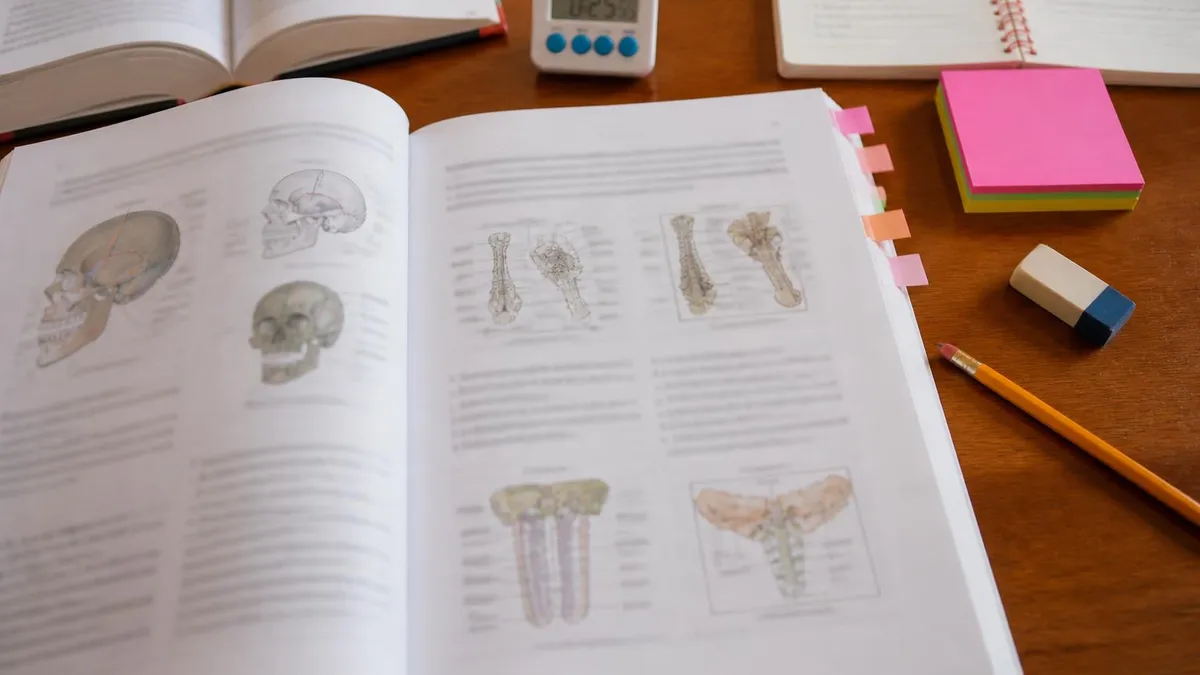
The most common pattern among students who fail or withdraw from A&P is waiting until after the first midterm to seek tutoring or instructor help. By then, the missed conceptual foundations have created cascading confusion in every subsequent unit. If you find yourself struggling to understand even one topic — the resting membrane potential, the sliding filament theory, the RAAS cascade — seek help within 48 hours. Most community colleges offer free tutoring and supplemental instruction specifically for A&P, and early intervention has a dramatic positive effect on final outcomes.
Passing anatomy and physiology on the first attempt requires a combination of preparation that begins before the semester starts, study habits that are maintained consistently throughout, and test-taking strategies that match the question formats your instructor uses.
Students who walk into the first week already familiar with basic biochemistry terminology — atoms, molecules, covalent bonds, hydrogen bonds, acids and bases — have a measurable advantage over students encountering those concepts for the first time. Spending three to five hours reviewing a high school chemistry summary in the week before the semester begins is one of the highest return-on-investment activities available to incoming A&P students.
The first exam in A&P — typically covering cells, tissues, and the integumentary system — sets the psychological tone for the rest of the course. Students who score well on the first exam build confidence and maintain their study habits. Students who score poorly often spiral into anxiety that undermines their preparation for subsequent exams. Treating the first exam with maximum seriousness, even when the material seems manageable, pays dividends that extend across the entire semester. There are no throwaway units in A&P — every topic connects to the ones that follow.
Instructor-specific test banks are one of the most underutilized resources available to A&P students. Many instructors reuse questions from previous semesters, and past exams — often available through your school's tutoring center, study group networks, or the instructor's own office hours materials — give you the clearest possible signal about what level of detail and what type of application questions to expect. If your instructor posts old exams, treat them as your primary study document and build your notes around the question types they reveal.
Group study works exceptionally well for A&P when structured correctly. The highest-performing study groups assign specific topics to different members, who then teach those topics to the rest of the group. Teaching forces you to identify gaps in your own understanding that passive review conceals — if you cannot explain the countercurrent multiplier to a peer in clear language, you do not actually understand it yet. Rotating the teaching role ensures every member develops genuine mastery rather than a superficial familiarity borrowed from listening to others explain.
Visual learners benefit enormously from anatomy atlases, 3D anatomical modeling apps, and narrated video lectures that walk through physiological processes step by step. Khan Academy's MCAT biology section covers most A&P topics at the right depth and is freely available. YouTube channels dedicated to anatomy and physiology offer animated explanations of action potentials, cardiac cycles, and nephron function that many students find clearer than textbook descriptions. Using these resources to supplement — not replace — your primary textbook and lecture notes gives you multiple encoding pathways for the same material, which dramatically improves retention.
The lab practical exam is a distinct skill that requires dedicated preparation separate from your written exam studying. Practical exams in A&P typically present you with models, microscope slides, or cadaveric specimens tagged with numbered pins, and you have 30 to 60 seconds per station to identify the structure. Speed of identification is as important as accuracy — students who know every structure but take three minutes to recognize each one will not finish the practical. The only way to develop the speed required is repeated, timed practice on the actual lab models using a timer to simulate exam pressure.
Finally, understand that a single poor exam grade does not end your chances of passing the course. Many A&P instructors weight the final exam heavily — 25 to 35 percent of the course grade — precisely because it is comprehensive and demonstrates cumulative mastery.
Students who earn a 65 percent on the first midterm but then build consistent study habits can absolutely earn an A on the final and achieve a passing grade for the course. Analyze every exam you receive, identify the specific knowledge gaps that caused each wrong answer, and address those gaps systematically before the next exam rather than treating the graded test as a finished document to be filed away.
Practical tips for managing the day-to-day challenge of anatomy and physiology start with your relationship with your textbook. Most A&P courses use a major publisher's textbook — Marieb and Hoehn's Human Anatomy and Physiology, Tortora and Derrickson's Principles, or Saladin's Anatomy and Physiology are the most common — and these books are written to be read actively, not passively.
Every chapter begins with learning objectives that function as a blueprint for what your instructor expects you to know. Reading the learning objectives first, then reading the chapter with those objectives as your filter, saves time and ensures you are studying the right level of detail rather than trying to memorize every sub-point in a 60-page chapter.
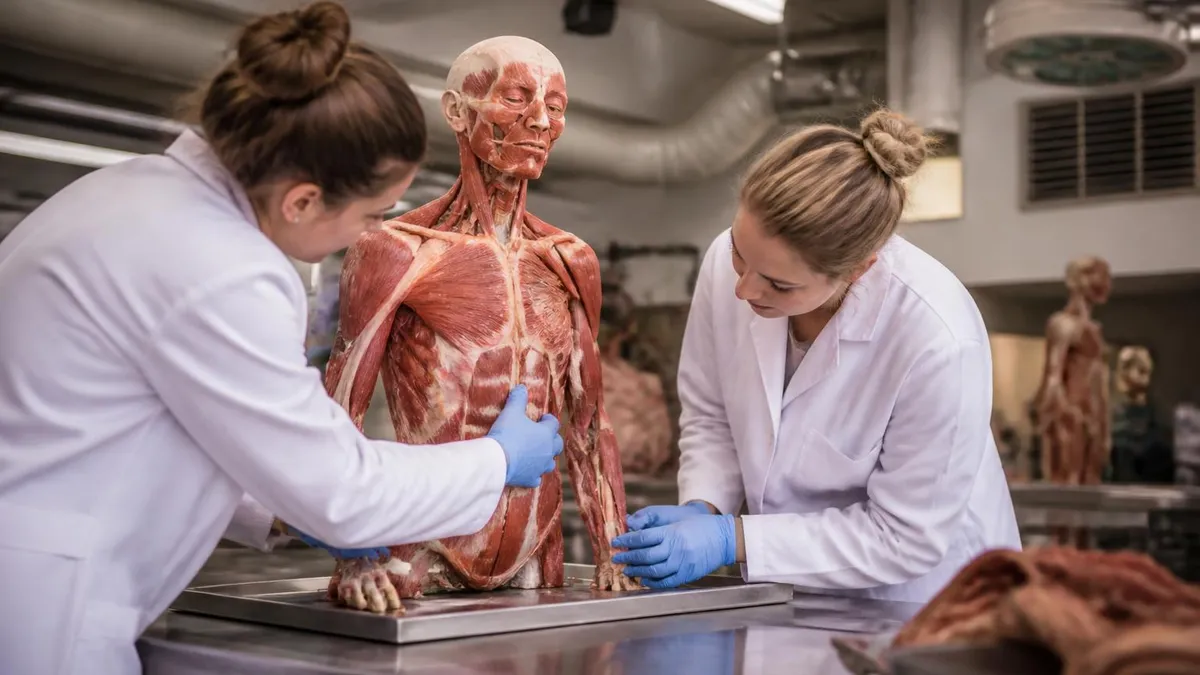
Anatomy lab time is precious and irreplaceable. The cadaveric specimens or high-quality plastic models in your lab are the closest thing to clinical reality that most pre-professional students will encounter before their clinical rotations, and the three-dimensional spatial understanding you build by examining real tissue cannot be replicated from photographs. Arrive at every lab session prepared, with the relevant models already mapped in your mind, so that lab time is spent reinforcing and deepening your spatial understanding rather than starting from zero with unfamiliar structures.
Medical terminology has its own internal logic based on Greek and Latin roots that, once learned, makes new terms self-explanatory. The prefix 'brady-' means slow; 'tachy-' means fast. The suffix '-itis' means inflammation; '-ectomy' means surgical removal; '-plasty' means surgical repair. Students who invest two to three hours learning the 50 most common prefixes, roots, and suffixes early in the semester find that new vocabulary throughout the course becomes much easier to decode and remember. This is one of the highest-use preparation investments available to incoming A&P students.
Practice connecting organ systems to each other rather than studying each system in isolation. The cardiovascular system does not operate independently of the renal system, the endocrine system, or the nervous system — blood pressure regulation, for example, involves baroreceptors (nervous system), the heart and vessels (cardiovascular system), the kidneys (renal/urinary system), and aldosterone (endocrine system) all simultaneously. Instructors who write strong exam questions test exactly this kind of cross-system integration, and students who have studied each system as a self-contained unit struggle with these questions even when they know each system individually.
Mindset matters more in A&P than in almost any other pre-professional course. The students most likely to succeed are not those who believe A&P will be easy — those students consistently underperform because they do not prepare adequately. The students most likely to succeed are those who believe A&P is hard but achievable with the right effort, who approach early difficulties as feedback about study strategy rather than evidence of inadequate intelligence, and who treat each exam as a diagnostic tool that reveals where to direct more attention rather than a verdict on their academic potential.
Consider your physical and mental health as performance variables throughout the semester. A&P is a long-distance cognitive race, not a sprint. Students who maintain regular physical exercise, adequate nutrition, and social connection throughout the semester consistently outperform those who sacrifice all non-academic activities in a misguided attempt to maximize study hours. A 45-minute walk or run three times per week has been shown in educational research to improve memory consolidation and reduce the cortisol levels that impair exam performance — it is time well spent, not time stolen from studying.
When exam day arrives, read every question carefully and identify the organ system, the physiological process, and the level of analysis the question is targeting before selecting your answer. Many A&P exam errors are comprehension errors — students who know the material but misread the question's scope.
A question that asks what happens to blood osmolarity if a patient drinks four liters of pure water is testing a different concept than a question about what happens to blood osmolarity during exercise-induced dehydration, even though both questions use the word 'osmolarity.' Slowing down and parsing the question precisely saves points on exams where a single misread can cost you three to five percentage points.
Anatomy Physiology Questions and Answers

Fundamentals of Anatomy and Physiology 11th Edition: The Complete Study Guide for Students
Human Anatomy and Physiology Book: The Complete Guide to Choosing, Using, and Mastering the Best Textbooks for 2026

Eye Anatomy and Physiology: The Complete Guide to Understanding How Your Eyes Work
Anatomy and Physiology PDF: Complete Free Download Guide for 2026 Students

Best Anatomy and Physiology Book: The Complete Guide to Top Textbooks for 2026
About the Author

Educational Psychologist & Academic Test Preparation Expert
Columbia University Teachers CollegeDr. Lisa Patel holds a Doctorate in Education from Columbia University Teachers College and has spent 17 years researching standardized test design and academic assessment. She has developed preparation programs for SAT, ACT, GRE, LSAT, UCAT, and numerous professional licensing exams, helping students of all backgrounds achieve their target scores.