
Eye Anatomy and Physiology: The Complete Guide to Understanding How Your Eyes Work
Master eye anatomy and physiology with our complete guide. Learn structures, functions, and how the visual system works. 🔎 Perfect for students.

Understanding eye anatomy and physiology is foundational for anyone studying health sciences, nursing, optometry, or general biology. The human eye is one of the most complex sensory organs in the body, containing over one million nerve fibers in the optic nerve alone and capable of distinguishing approximately ten million different colors.
Whether you are preparing for a professional certification exam, taking an undergraduate anatomy course, or simply want to deepen your knowledge of how vision works, mastering the structures and functions of the eye is an essential step. A thorough study of eye anatomy and physiology reveals just how precisely engineered this organ truly is.
The eye functions as a biological camera, converting light energy into electrical signals that the brain interprets as visual images. This process, called phototransduction, happens within milliseconds and involves a sophisticated relay of structures working in perfect coordination. Light enters through the cornea, passes through the aqueous humor, is focused by the lens, travels through the vitreous body, and finally strikes the retina where photoreceptor cells — rods and cones — begin the process of converting photons into neural impulses. Each layer and component plays a non-negotiable role in producing clear, accurate vision.
The outer fibrous tunic of the eye includes the sclera and cornea. The sclera, commonly called the white of the eye, provides structural protection and serves as an attachment point for the extraocular muscles that control eye movement. The cornea is transparent and accounts for approximately 65–75 percent of the eye's total refractive power. Unlike most tissues, the cornea contains no blood vessels — it receives oxygen directly from the tears and aqueous humor, which also explains why contact lens misuse can cause serious corneal damage over time.
The middle vascular layer, known as the uvea, consists of three components: the choroid, ciliary body, and iris. The choroid is a highly vascularized layer that supplies oxygen and nutrients to the outer retina. The ciliary body produces aqueous humor and houses the ciliary muscle, which controls the shape of the crystalline lens through a process called accommodation.
This allows you to shift focus from distant to near objects seamlessly. The iris regulates the amount of light entering the eye by adjusting the size of the pupil — contracting in bright light and dilating in dim conditions through the action of sphincter and dilator pupillae muscles.
The retina, which lines the inner surface of the posterior eye, is the key sensory layer responsible for image formation. It contains two types of photoreceptors: approximately 120 million rods, which are sensitive to low-light conditions but cannot distinguish color, and around 6 million cones, which are concentrated in the central fovea and responsible for high-acuity color vision. The fovea centralis, a tiny pit at the center of the macula, contains only cones and is the point of sharpest visual focus. When you look directly at something, you are directing its image onto the fovea for the most detailed perception.
Intraocular pressure (IOP) is maintained by the continuous production and drainage of aqueous humor. The ciliary body produces approximately 2–3 microliters of aqueous humor per minute, which flows through the posterior chamber, around the lens, through the pupil, and into the anterior chamber before draining through the trabecular meshwork at the iridocorneal angle. Disruption of this drainage pathway leads to improved IOP, the hallmark of glaucoma — one of the leading causes of irreversible blindness worldwide. Normal IOP ranges from 10 to 21 mmHg, and values above this threshold require clinical attention.
Visual information from the retina travels through the optic nerve, which exits the eye at the optic disc — a region that contains no photoreceptors, creating the physiological blind spot. At the optic chiasm, fibers from the nasal half of each retina cross to the opposite side of the brain, while temporal fibers remain ipsilateral. This arrangement means that the left visual cortex processes information from the right visual field of both eyes, and vice versa. Understanding these pathways is critical for interpreting clinical findings such as visual field defects that indicate lesions at specific points along the visual pathway.
Eye Anatomy and Physiology by the Numbers
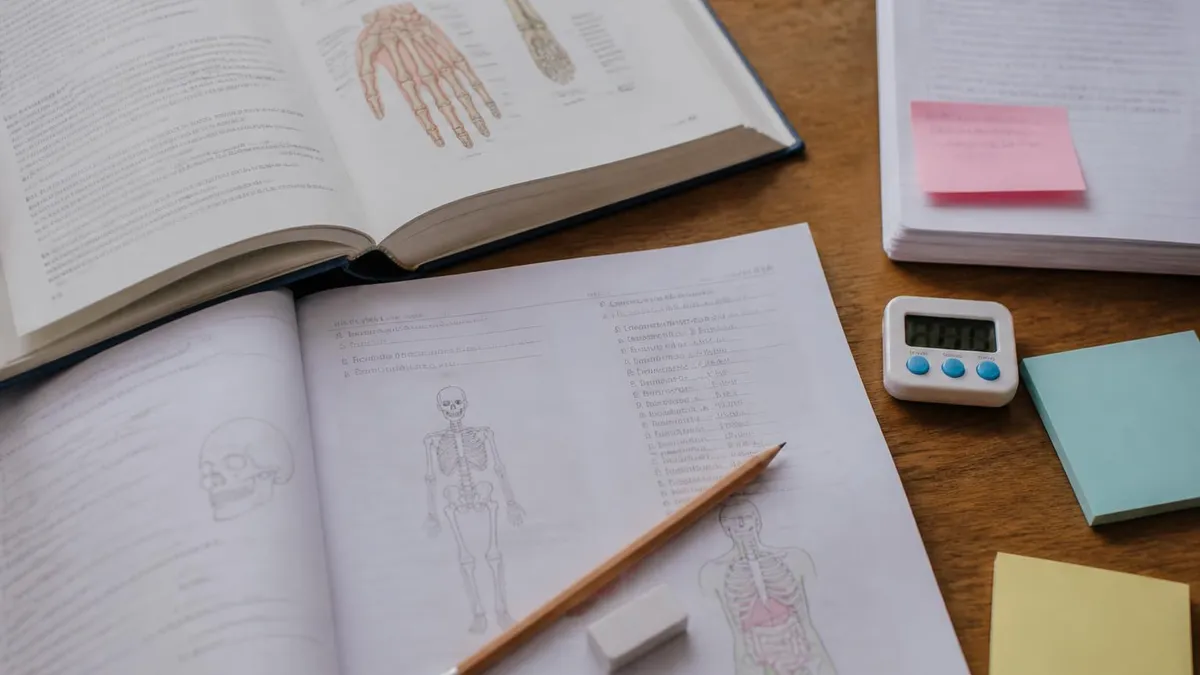
Key Structures of the Eye and Their Functions
The transparent, avascular anterior surface of the eye. It provides 65–75% of total refractive power, bending light rays before they reach the lens. Its five layers — epithelium, Bowman's layer, stroma, Descemet's membrane, and endothelium — each serve distinct structural and optical roles.
A biconvex, transparent structure suspended by zonular fibers (zonules of Zinn) attached to the ciliary body. The lens changes shape during accommodation to fine-tune focus for near and distant objects. Opacity of the lens leads to cataracts, the world's leading cause of treatable blindness.
The light-sensitive inner lining of the eye containing rod and cone photoreceptors, bipolar cells, and ganglion cells. The retina converts light into electrical signals and performs preliminary image processing before signals travel via the optic nerve to the visual cortex.
The iris is the colored, muscular diaphragm that controls pupil diameter. In bright light, the sphincter pupillae contracts, narrowing the pupil to reduce light intake. In dim conditions, the dilator pupillae widens the pupil. Pupil size also affects depth of field and visual acuity.
The choroid is a pigmented, vascular layer between the retina and sclera, supplying oxygen to the outer retinal layers. The sclera forms the tough outer coat of the eye, maintaining its shape and protecting internal structures. Together they form the outer two layers of the ocular wall.
The physiology of vision begins the moment photons of light strike the photoreceptor cells of the retina. Rod cells contain the photopigment rhodopsin, a compound formed by the protein opsin bound to the chromophore retinal — a derivative of vitamin A. When a single photon strikes rhodopsin, retinal changes shape from the 11-cis form to the all-trans form. This conformational change triggers a G-protein cascade involving transducin and phosphodiesterase, ultimately leading to the closure of cGMP-gated ion channels. The resulting hyperpolarization of the rod cell reduces glutamate release onto bipolar cells, initiating the visual signal.
Cone cells operate on the same basic principle as rods but use different opsins tuned to specific wavelengths of light. The three types of cones — S-cones (short wavelength, sensitive to blue light at ~420 nm), M-cones (medium wavelength, sensitive to green at ~530 nm), and L-cones (long wavelength, sensitive to red at ~560 nm) — form the basis of trichromatic color vision.
Color perception depends not on a single cone type firing, but on the relative activation levels across all three cone populations. This opponent-color processing is further refined as signals travel from the retina through the lateral geniculate nucleus of the thalamus to the primary visual cortex (V1).
Accommodation is the process by which the eye adjusts its focal power to see objects at varying distances. When viewing a near object, the ciliary muscle contracts, releasing tension on the zonular fibers. Without this tension, the elastic lens assumes a more spherical shape, increasing its refractive power and pulling the focal point forward.
For distant vision, the ciliary muscle relaxes, zonular fibers become taut, and the lens flattens, reducing its power. The maximum range of accommodation, measured in diopters, declines with age — a condition known as presbyopia — typically becoming noticeable around age 40–45 as the lens loses elasticity.
The aqueous humor plays a dual role in ocular physiology: it maintains intraocular pressure to keep the eye inflated and in proper shape, and it delivers nutrients (glucose, oxygen, amino acids) to the avascular cornea and lens while removing metabolic waste products. Aqueous humor is actively secreted by the non-pigmented epithelium of the ciliary body through a combination of active transport and ultrafiltration. It drains primarily through the trabecular meshwork into Schlemm's canal and then into episcleral veins. A secondary, pressure-independent drainage route — the uveoscleral pathway — accounts for 20–50% of drainage in humans.
The vitreous humor fills the large posterior cavity of the eye between the lens and the retina. Unlike aqueous humor, it is a gel-like substance composed mainly of water (98–99%), collagen fibers, and hyaluronic acid. It provides mechanical support to the retina and maintains the spherical shape of the eye.
As people age, the vitreous tends to liquefy and contract — a process called syneresis — which can lead to posterior vitreous detachment (PVD). PVD itself is usually benign and causes the floaters many adults notice, but if the vitreous pulls on the retina, it can cause retinal tears or detachment, which is a medical emergency.
The extraocular muscles control precise eye movements and are essential for binocular vision and depth perception. Six muscles control each eye: the medial and lateral rectus muscles move the eye horizontally; the superior and inferior rectus muscles primarily move the eye vertically; and the superior and inferior oblique muscles handle torsional movements. These muscles are innervated by cranial nerves III (oculomotor), IV (trochlear), and VI (abducens). The coordinated movement of both eyes — called conjugate gaze — ensures that both foveas remain directed at the same point in space, preventing double vision (diplopia).
Tear production is another critical aspect of ocular physiology. The lacrimal gland, located in the superolateral orbit, secretes the aqueous component of tears in response to reflex stimulation or emotional triggers.
Tears form a three-layer film over the corneal surface: a lipid layer (outermost, produced by the Meibomian glands, reducing evaporation), an aqueous layer (middle, from the lacrimal gland, supplying oxygen and antimicrobial proteins like lysozyme and lactoferrin), and a mucin layer (innermost, from goblet cells in the conjunctiva, enabling the tear film to adhere to the hydrophobic corneal epithelium). Deficiency in any layer can lead to dry eye disease, affecting an estimated 16 million Americans.
Photoreceptors, Neural Pathways, and Visual Processing
Rods and cones differ fundamentally in their distribution, sensitivity, and function. Rods number approximately 120 million and are concentrated in the peripheral retina, making them ideal for detecting motion and enabling scotopic (dim-light) vision. A single rod can respond to a single photon of light, making them extraordinarily sensitive. However, rods all contain the same photopigment, rhodopsin, so they cannot distinguish between colors — only differences in light intensity. This is why colors appear washed out in low-light conditions.
Cones, numbering around 6 million, are densely packed in the fovea centralis and fall off rapidly toward the retinal periphery. They require much more light to activate but provide high spatial resolution and color discrimination through three photopigment variants. The fovea contains roughly 150,000 cones per square millimeter, enabling the sharp, detailed central vision you use for reading and recognizing faces. Color blindness occurs when one or more cone types are absent or dysfunctional, most commonly affecting the L- or M-cones in a condition called red-green color deficiency.

Studying Eye Anatomy and Physiology: Academic Benefits and Challenges
- +Directly applicable to clinical fields including optometry, ophthalmology, nursing, and emergency medicine
- +Builds a strong foundation for understanding neurological visual pathways tested on licensing exams
- +Eye disorders like glaucoma, cataracts, and macular degeneration are among the most prevalent globally — this knowledge is immediately relevant
- +The eye is self-contained and well-defined, making it an excellent model for understanding broader sensory physiology principles
- +High-quality 3D models, histology slides, and virtual labs are widely available to support visual learners
- +Cross-disciplinary relevance: eye physiology connects optics, biochemistry, neuroscience, and clinical medicine in one system
- −High volume of specialized terminology (uvea, trabecular meshwork, iridocorneal angle, zonules of Zinn) creates a steep initial learning curve
- −The visual pathway from retina to cortex involves multiple brain structures that require solid neuroanatomy background knowledge
- −Phototransduction biochemistry — involving cGMP, transducin, and phosphodiesterase cascades — is highly detailed and easy to confuse
- −Distinguishing between similar-sounding conditions (e.g., anterior vs. posterior uveitis, open- vs. closed-angle glaucoma) requires careful study
- −Clinical correlations require integration across multiple body systems (vascular, neurological, endocrine) making isolated memorization insufficient
- −Exam questions frequently present clinical vignettes where structural knowledge must be applied to diagnose pathology under time pressure
Pros and Cons at a Glance
| Pros | Cons |
|---|---|
| Directly applicable to clinical fields including optometry, ophthalmology, nursing, and emergency medicine | High volume of specialized terminology (uvea, trabecular meshwork, iridocorneal angle, zonules of Zinn) creates a steep initial learning curve |
| Builds a strong foundation for understanding neurological visual pathways tested on licensing exams | The visual pathway from retina to cortex involves multiple brain structures that require solid neuroanatomy background knowledge |
| Eye disorders like glaucoma, cataracts, and macular degeneration are among the most prevalent globally — this knowledge is immediately relevant | Phototransduction biochemistry — involving cGMP, transducin, and phosphodiesterase cascades — is highly detailed and easy to confuse |
| The eye is self-contained and well-defined, making it an excellent model for understanding broader sensory physiology principles | Distinguishing between similar-sounding conditions (e.g., anterior vs. posterior uveitis, open- vs. closed-angle glaucoma) requires careful study |
| Cross-disciplinary relevance: eye physiology connects optics, biochemistry, neuroscience, and clinical medicine in one system | Clinical correlations require integration across multiple body systems (vascular, neurological, endocrine) making isolated memorization insufficient |
Eye Anatomy and Physiology Study Checklist
- ✓Identify and label all three tunics of the eye: fibrous (sclera and cornea), vascular (uvea), and neural (retina).
- ✓Memorize the five layers of the cornea and explain why the cornea is avascular and transparent.
- ✓Describe the path of aqueous humor from production in the ciliary body to drainage through the trabecular meshwork.
- ✓Explain the mechanism of accommodation, including the roles of the ciliary muscle, zonular fibers, and lens elasticity.
- ✓Distinguish between rod and cone photoreceptors: location, photopigment, light sensitivity, and function in color vs. scotopic vision.
- ✓Trace the visual pathway from the retinal ganglion cells through the optic nerve, optic chiasm, LGN, optic radiations, and primary visual cortex.
- ✓Define the four major refractive errors (myopia, hyperopia, astigmatism, presbyopia) and the optical basis of each.
- ✓Explain the physiological basis of intraocular pressure and describe what happens when aqueous humor drainage is impaired.
- ✓Identify the six extraocular muscles and their cranial nerve innervations (III, IV, VI) with associated movements.
- ✓Describe the three layers of the tear film and explain how deficiency in each layer contributes to dry eye disease.
The Fovea Contains Only Cones — No Rods
One of the most clinically significant facts in eye anatomy is that the fovea centralis — the point of sharpest vision — contains exclusively cone photoreceptors and no rods. This explains why you can see dim stars more clearly when you look slightly away from them (using your peripheral, rod-rich retina) rather than directly at them — a technique astronomers call averted vision. Damage to the fovea, as in age-related macular degeneration, destroys central vision while leaving peripheral vision largely intact.
Several of the most prevalent and clinically important diseases affect the eye's anatomy and physiology directly. Glaucoma, often called the "silent thief of sight," encompasses a group of conditions characterized by progressive optic nerve damage, typically associated with improved intraocular pressure.
There are two main forms: open-angle glaucoma, where the trabecular meshwork becomes less efficient at draining aqueous humor over time, and angle-closure glaucoma, where the iris physically blocks the iridocorneal angle, causing a rapid and painful pressure spike that constitutes an acute emergency. Open-angle glaucoma affects over 3 million Americans and is often asymptomatic until significant peripheral vision is lost — making regular tonometry screenings essential after age 40.
Cataracts represent the progressive opacification of the crystalline lens, disrupting its transparency and reducing visual clarity. The lens is composed mainly of crystallins — specialized proteins arranged in precise layers to maintain optical clarity. Ultraviolet radiation, oxidative stress, diabetes, corticosteroid use, and aging all contribute to protein aggregation and lens yellowing over time. Cataracts are the leading cause of reversible blindness worldwide, responsible for 51% of global blindness according to the World Health Organization. Treatment is surgical: phacoemulsification, in which ultrasound energy breaks up the cloudy lens, followed by implantation of an artificial intraocular lens (IOL).
Age-related macular degeneration (AMD) is the leading cause of vision loss in people over 50 in developed countries, affecting the macula and central vision. Dry AMD (85–90% of cases) is characterized by the accumulation of extracellular deposits called drusen beneath the retinal pigment epithelium (RPE) and gradual atrophy of RPE and photoreceptor cells. Wet AMD involves the abnormal growth of new blood vessels (choroidal neovascularization) from the choroid into the subretinal space. These fragile vessels leak fluid and blood, causing rapid central vision distortion and loss. Anti-VEGF (vascular endothelial growth factor) injections are the primary treatment for wet AMD.
Diabetic retinopathy is a microvascular complication of diabetes mellitus and the leading cause of new blindness among working-age adults in the United States. Chronic hyperglycemia damages the retinal capillaries, causing microaneurysms, intraretinal hemorrhages, hard exudates, and eventually neovascularization in proliferative diabetic retinopathy. The new vessels grow along the inner surface of the retina and into the vitreous, creating traction that can lead to retinal detachment. All patients with diabetes should receive annual dilated fundus examinations. The duration of diabetes and level of glycemic control are the strongest predictors of retinopathy development and severity.
Retinal detachment occurs when the neurosensory retina separates from the underlying retinal pigment epithelium, cutting off the photoreceptors from their nutrient supply. The most common type — rhegmatogenous retinal detachment — results from a break or tear in the retina through which liquefied vitreous seeps behind the retina.
Risk factors include high myopia, trauma, prior cataract surgery, and posterior vitreous detachment. Symptoms include sudden-onset floaters, flashes of light (photopsia), and a curtain or shadow in the visual field. This is a true ophthalmic emergency: without prompt surgical intervention (pneumatic retinopexy, scleral buckling, or vitrectomy), permanent vision loss occurs as photoreceptors die from ischemia.
Uveitis, inflammation of the uveal tract, can affect the iris (anterior uveitis/iritis), ciliary body (intermediate uveitis), choroid (posterior uveitis), or all three layers (panuveitis). Causes include autoimmune conditions (ankylosing spondylitis, sarcoidosis, IBD), infections (toxoplasmosis, CMV, herpes viruses), and idiopathic mechanisms. Anterior uveitis presents with redness, pain, photophobia, and blurred vision; slit-lamp examination reveals inflammatory cells and flare in the anterior chamber. Untreated uveitis can lead to complications including posterior synechiae (adhesions between iris and lens), secondary glaucoma, cataract, and macular edema. Treatment depends on the underlying cause but often includes corticosteroid eye drops or systemic immunosuppression.
Strabismus — misalignment of the eyes — affects approximately 4% of the U.S. population and is particularly important to detect and treat early in children. If the brain receives two conflicting images due to ocular misalignment, it may suppress the image from one eye to avoid double vision.
This suppression, if chronic and untreated, leads to amblyopia (lazy eye): a permanent reduction in visual acuity in the suppressed eye that cannot be corrected with glasses or contacts alone once visual development is complete (generally by age 7–10). Treatment involves correcting any refractive error, patching or penalizing the fellow eye to force use of the amblyopic eye, and sometimes surgical realignment of the extraocular muscles.

Certain ocular symptoms require immediate medical evaluation and should never be dismissed during study or practice settings. Sudden onset of floaters and flashes may indicate retinal tear or detachment — a surgical emergency. Acute eye pain with headache, nausea, and halos around lights suggests angle-closure glaucoma, which can cause permanent blindness within hours if untreated. Any sudden loss of vision, painless or painful, warrants same-day evaluation by an ophthalmologist. Knowing these red flags is as important as knowing normal eye anatomy for any health professional.
Preparing for anatomy and physiology exams that include eye-related content requires a strategic, layered approach. Begin by building a solid structural map of the eye before attempting to understand physiology. Use high-quality diagrams — cross-sectional illustrations that label every layer and structure — and practice drawing the eye from memory. This active recall technique is significantly more effective than passive rereading, and it forces you to confront gaps in your knowledge immediately rather than discovering them during an exam. Digital flashcard apps like Anki are particularly useful for drilling terminology and embryological origins of ocular structures.
Once structural knowledge is secure, shift focus to physiological mechanisms. Work through phototransduction step by step: begin with the resting state of the rod cell (cGMP-gated channels open, cell depolarized, glutamate released), then walk through each step after photon absorption (cis-retinal isomerizes, opsin activates transducin, cGMP hydrolyzes, channels close, cell hyperpolarizes, glutamate release decreases). Being able to explain this cascade in your own words — not just memorize it — is the level of understanding required for higher-order exam questions and clinical application.
For students who need supplementary resources, detailed explorations of this material can be found in leading textbooks covering this subject.
Clinical correlation is the highest level of preparation for any eye anatomy exam. For every structure you learn, connect it to a pathological state: the trabecular meshwork fails → glaucoma; the lens proteins aggregate → cataract; the foveal cones degenerate → macular degeneration; the ciliary muscle weakens → presbyopia.
This disease-anchored approach turns abstract anatomical facts into clinically relevant knowledge that is both more memorable and more useful in real-world professional settings. Case-based questions are standard on NCLEX, USMLE Step 1, and optometry board exams, so the student who can apply anatomy to patient scenarios will consistently outperform the student who can only recite definitions.
Practice questions are indispensable for exam success. Research in cognitive science consistently shows that retrieval practice — actively trying to recall information under test-like conditions — produces significantly better long-term retention than restudying material. Start practice questions early, even before you feel ready, because the experience of not knowing an answer is itself a powerful learning signal that directs attention to weak areas. Review all incorrect answers thoroughly, not just to learn the right answer but to understand why each distractor is wrong. Pattern recognition across multiple practice questions reveals the high-yield concepts that exam writers consistently test.
Time management during study sessions matters as much as total hours logged. Research on spaced repetition shows that reviewing material at gradually increasing intervals (one day, three days, one week, two weeks) yields far superior retention compared to massed practice (cramming). Build a study schedule that revisits eye anatomy material several times across weeks rather than concentrating all review into a single marathon session before the exam. Interleaving eye content with other body system content also strengthens retrieval by making the brain work harder to access stored information, which deepens encoding.
Group study and peer teaching are highly effective strategies that many students underutilize. Teaching a concept to another person forces you to identify the boundaries of your own understanding and fill in any gaps. If you can explain the pupillary light reflex pathway — from the retina through the optic nerve, pretectal nucleus, Edinger-Westphal nucleus, ciliary ganglion, and short ciliary nerves to the sphincter pupillae — to a classmate who has never seen the material before, you genuinely understand it. This approach also reveals common misconceptions and alternative framings that may sharpen your comprehension of nuanced exam questions.
One of the most important things students can do when preparing for anatomy content on professional licensing exams is familiarize themselves with the format and question style of their specific exam. Board-style questions for eye anatomy typically present a patient scenario with a visual field defect, pupillary abnormality, or visual complaint, and ask you to localize the lesion or identify the underlying mechanism.
Knowing that a bitemporal hemianopsia indicates a lesion at the optic chiasm, that an afferent pupillary defect points to optic nerve pathology, and that a left homonymous hemianopsia reflects damage to the right optic tract or visual cortex are the kind of high-yield associations that reliably appear on these examinations and reward students who have mastered the visual pathway in depth.
Building effective study habits for eye anatomy and physiology starts with organizing your material around functional units rather than trying to memorize isolated facts. For example, group the structures involved in aqueous humor dynamics — ciliary body, posterior chamber, pupil, anterior chamber, trabecular meshwork, Schlemm's canal, and episcleral veins — and study them as a single physiological circuit.
Then connect that circuit to its clinical correlate (glaucoma) and the pharmacological interventions used to reduce IOP (prostaglandin analogs that increase uveoscleral outflow, beta-blockers that reduce aqueous production, carbonic anhydrase inhibitors). This systems-based approach mirrors how clinicians actually think and how the best exam questions are written.
When studying the retina, prioritize the organization of cell layers from the outermost (nearest the choroid) to the innermost (nearest the vitreous). In order: retinal pigment epithelium (RPE), photoreceptor outer segments, photoreceptor inner segments, external limiting membrane, outer nuclear layer (photoreceptor cell bodies), outer plexiform layer (photoreceptor-to-bipolar synapses), inner nuclear layer (bipolar, horizontal, and amacrine cells), inner plexiform layer (bipolar-to-ganglion synapses), ganglion cell layer, nerve fiber layer (ganglion cell axons), and inner limiting membrane.
Knowing this order is essential for interpreting optical coherence tomography (OCT) images — the standard clinical imaging tool for retinal pathology — and for understanding which layers are affected in conditions like diabetic macular edema or geographic atrophy from AMD.
The embryological origins of ocular structures provide another high-yield framework. The retina, optic nerve, and retinal pigment epithelium all derive from neuroectoderm (specifically, outgrowths of the developing diencephalon called optic cups). The lens derives from surface ectoderm — induced to form by signals from the optic cup.
The corneal stroma and endothelium derive largely from neural crest cells, which migrate into the anterior segment. The sclera, choroid, and most connective tissues of the eye also have neural crest contributions. This developmental knowledge helps explain why certain systemic syndromes — like DiGeorge syndrome, which affects neural crest development — are associated with specific ocular anomalies.
Pharmacology intersects deeply with eye anatomy and physiology and represents a rich source of exam questions. Sympathomimetics (like phenylephrine) dilate the pupil by stimulating the dilator pupillae muscle (alpha-1 adrenergic receptor) and are used clinically to help fundoscopic examination. Parasympathomimetics (like pilocarpine) stimulate the sphincter pupillae (muscarinic M3 receptor), constricting the pupil and also stimulating the ciliary muscle to enhance aqueous outflow — useful in glaucoma treatment. Cycloplegic agents like cyclopentolate or atropine paralyze the ciliary muscle, preventing accommodation and dilating the pupil — used to help refraction in young children and to treat uveitis by preventing posterior synechiae formation.
The pupillary light reflex is one of the most clinically tested pathways in all of neurology and ophthalmology. When light is shone into one eye, the afferent limb travels along the optic nerve to the pretectal nucleus in the midbrain. From there, bilateral projections go to both Edinger-Westphal nuclei, which send preganglionic parasympathetic fibers via CN III to the ciliary ganglion.
Post-ganglionic fibers (short ciliary nerves) innervate the sphincter pupillae of both eyes, producing direct constriction in the illuminated eye and consensual constriction in the fellow eye. A relative afferent pupillary defect (RAPD, or Marcus Gunn pupil) — detected by the swinging flashlight test — indicates asymmetric optic nerve or retinal disease and is one of the most important clinical signs in ophthalmology.
For students who find the biochemistry of vision challenging, it helps to approach it through the lens of broad physiological principles first. The key concept is that rod photoreceptors are depolarized (active) in the dark, continuously releasing glutamate, which inhibits downstream bipolar cells — a counterintuitive arrangement called the dark current.
Light absorption converts the resting state to hyperpolarization, reducing glutamate release and disinhibiting bipolar cells. This "off-in-the-dark, on-in-the-light" logic is consistent with how ON-center and OFF-center bipolar cells and ganglion cells are wired, and understanding this fundamental circuit logic makes all the downstream complexity of retinal processing much more tractable to learn and retain.
Finally, never underestimate the value of integrating your study of eye anatomy with actual clinical observation whenever possible. Shadow an optometrist or ophthalmologist, volunteer in a low-vision clinic, or review online fundus photograph libraries and OCT image databases.
Seeing a real optic disc with cupping that exceeds a cup-to-disc ratio of 0.6, or a fundus photograph showing flame-shaped hemorrhages and soft exudates in a patient with hypertensive retinopathy, cements anatomical knowledge in a way that no amount of re-reading a textbook chapter can achieve. The integration of visual memory with conceptual understanding creates a far more durable and flexible knowledge base — exactly the kind of mastery that leads to top scores on anatomy and physiology examinations and confident, accurate clinical practice.
If you want more targeted practice, the anatomy and physiology practice test page covers the same material with additional questions and explanations.
Sample Anatomy and Physiology Practice Questions
Try these questions from our free Anatomy and Physiology practice tests. The correct answer and an explanation follow each question.
The tricuspid valve is located between which two structures?
- A. Left atrium and left ventricle
- B. Right ventricle and pulmonary artery
- C. Right atrium and right ventricle
- D. Left ventricle and aorta
Answer: C. Right atrium and right ventricle
The tricuspid valve, named for its three cusps, separates the right atrium from the right ventricle and prevents backflow during contraction.
What quality assurance measure supports core concepts and principles?
- A. Quality checks are unnecessary for experienced professionals
- B. Regular self-assessment, peer review, and adherence to established standards
- C. Quality only matters for new practitioners
- D. Annual review is sufficient
Answer: B. Regular self-assessment, peer review, and adherence to established standards
Ongoing quality assurance through self-assessment, peer review, and standards adherence ensures continuous improvement.
The sinoatrial (SA) node, the heart's natural pacemaker, is located in which chamber?
- A. Left ventricle
- B. Right ventricle
- C. Left atrium
- D. Right atrium
Answer: D. Right atrium
The SA node is located in the wall of the right atrium near the opening of the superior vena cava and initiates each heartbeat.
What ethical standard governs assessment and evaluation practice?
- A. Ethics are personal opinions, not professional requirements
- B. Adherence to the profession's code of ethics and applicable laws and regulations
- C. Ethics only apply in academic settings
- D. Ethical standards are optional for certified professionals
Answer: B. Adherence to the profession's code of ethics and applicable laws and regulations
Professional ethics codes and applicable laws provide the framework for ethical practice in every professional field.
Anatomy Physiology Questions and Answers
Human Anatomy and Physiology Book: The Complete Guide to Choosing, Using, and Mastering the Best Textbooks for 2026
Anatomy and Physiology PDF: Complete Free Download Guide for 2026 Students

Best Anatomy and Physiology Book: The Complete Guide to Top Textbooks for 2026

McGraw-Hill Anatomy and Physiology Textbook: The Complete Guide to Editions, Features, and Study Strategies
Anatomy and Physiology Definitions: The Complete Beginner's Guide to Key Terms and Concepts
About the Author

Educational Psychologist & Academic Test Preparation Expert
Columbia University Teachers CollegeDr. Lisa Patel holds a Doctorate in Education from Columbia University Teachers College and has spent 17 years researching standardized test design and academic assessment. She has developed preparation programs for SAT, ACT, GRE, LSAT, UCAT, and numerous professional licensing exams, helping students of all backgrounds achieve their target scores.