
ACLS Cost: Complete 2026 October Guide to Certification, Renewal & Hidden Fees
How much does ACLS certification cost in 2026 October? 💡 Full breakdown of initial, renewal, and employer-covered fees for nurses, doctors & paramedics.
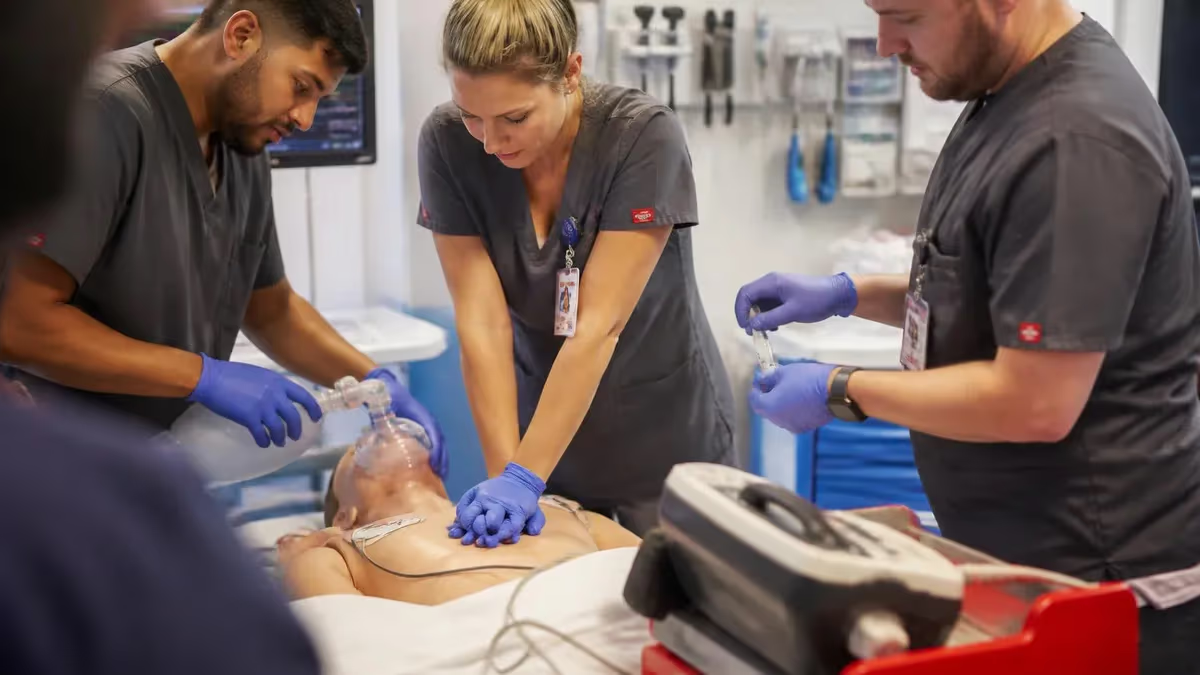
Understanding the full ACLS cost before you enroll can save you hundreds of dollars and prevent last-minute surprises on the day of your skills session. Advanced Cardiovascular Life Support certification is a non-negotiable credential for nurses, physicians, paramedics, and respiratory therapists who work in high-acuity settings, but the price tag varies widely depending on the training format, the provider you choose, and whether your employer subsidizes the expense. This guide breaks down every line item you should budget for in 2026.
The American Heart Association (AHA) is the gold-standard certifying body for ACLS in the United States, and most hospital credentialing departments require an AHA-issued card specifically. AHA-affiliated training centers set their own course fees within loose guidelines, which means a classroom course in Manhattan can cost nearly twice as much as the same curriculum offered at a community college in rural Tennessee. Knowing the national averages — and the factors that push prices up or down — lets you shop intelligently without sacrificing card validity.
Initial certification and renewal carry different price structures. A first-time student must complete a full provider course that covers the entire ACLS curriculum, including ECG rhythm recognition, megacode scenarios, and pharmacology. Renewal candidates who hold a current card may qualify for a shorter HeartCode or blended-learning format, which typically costs $50–$80 less than the full provider course because less instructor contact time is required. Understanding where you fall in this spectrum is the first step to accurate budgeting.
Hidden fees are a real concern. Many advertised prices cover only the AHA course fee itself and exclude the required AHA Provider Manual ($35–$55), skills-check lab fees billed separately by the training center, and replacement card fees if you lose your original wallet card. Some online providers charge convenience fees for on-demand video access or proctored remote testing, which can add $25–$40 to the headline price. Always request an itemized quote before you register.
Employer sponsorship changes the math significantly. According to a 2025 survey by the American Nurses Association, approximately 68 percent of hospital-employed nurses reported that their facility fully covered initial ACLS certification costs, and 74 percent had renewal costs reimbursed. Even if your employer does not pay upfront, many health systems offer a reimbursement policy that kicks in after you pass, provided you commit to staying employed for a defined period — typically six to twelve months — following certification.
The stakes of choosing a substandard or non-AHA course are high. Some online-only providers issue certificates that are not AHA-compliant and will not satisfy hospital credentialing requirements. Spending $39 on a certificate that your HR department rejects forces you to take — and pay for — an approved course anyway, doubling your out-of-pocket expense. Always verify that the course is affiliated with the AHA, the American Red Cross, or another nationally recognized organization accepted by your specific employer before purchasing.
This guide walks through initial certification costs, renewal pricing, employer reimbursement strategies, format comparisons, and money-saving tips so you can earn your card without overspending. For context on the clinical content you will be tested on, explore resources related to acls cost and the algorithm frameworks that drive ACLS exam scenarios. Whether you are budgeting for the first time or comparing renewal options, the sections below give you the numbers you need.
ACLS Cost by the Numbers
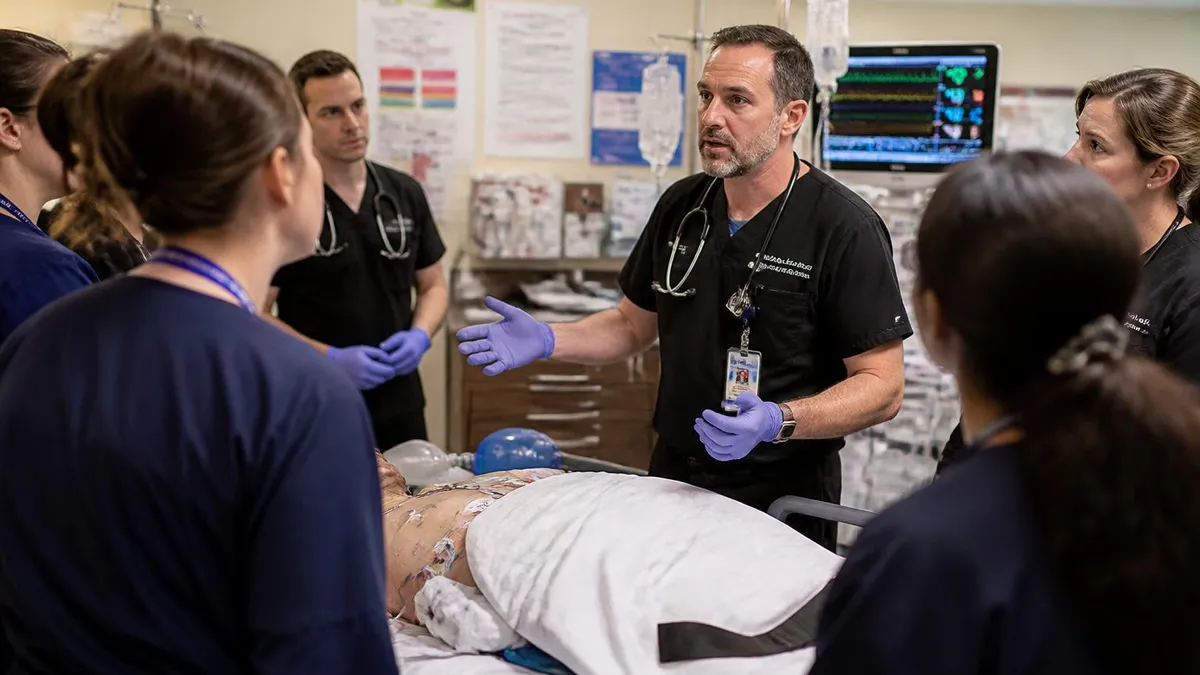
Initial ACLS Certification Cost Breakdown
When you are weighing the true ACLS renewal cost against initial certification, it helps to understand exactly why the two differ in price and what you are paying for in each case. A first-time ACLS provider course is designed to build knowledge from the ground up: you study rhythm recognition, learn the systematic ACLS approach, practice megacode scenarios on high-fidelity mannequins, and must demonstrate competency in BLS and airway management. This comprehensive curriculum requires more instructor hours and more equipment time, which is why course fees tend to be higher for first-time candidates.
Renewal candidates who hold a valid, unexpired AHA ACLS card can take advantage of the HeartCode ACLS renewal pathway — a blended format that moves the majority of didactic content online and then pairs it with a short two-to-four-hour skills check at a local AHA training center.
The online portion typically costs $75–$110 directly through the AHA website, and the skills lab fee ranges from $50–$90 depending on your geographic market. Total renewal cost using this model is generally $125–$200, compared to $150–$300 for a full classroom course — a meaningful difference if you recertify every two years throughout a thirty-year career.
Some clinicians whose cards have lapsed by more than 30 days are required by their training center to repeat the full provider course rather than the shorter renewal pathway. If your card has been expired for six months or more, budget accordingly and do not assume you qualify for the discounted renewal track. Check with your specific AHA training center before purchasing any online modules, because the skills lab instructor makes the final determination about which course is appropriate for your situation.
Group pricing is another dimension that separates initial and renewal costs. Hospitals, large physician groups, and EMS agencies often negotiate volume pricing with AHA training centers, bringing per-person classroom costs down to $85–$130 per provider when fifteen or more people certify in a single session. If you are coordinating certification for a department or unit, request a group rate quote — most training centers offer discounts starting at as few as eight participants, and the savings can exceed 40 percent of the individual course price.
The AHA also offers ACLS Essentials for Experienced Providers, an abbreviated renewal format designed specifically for clinicians with at least two years of active resuscitation experience. This course can be completed in under four hours, covers only content that has been updated since the 2020 guidelines revision, and carries a lower price point of $95–$160 at most training centers. Ask your training center coordinator whether you qualify based on your documented clinical experience, because not all centers advertise this option prominently.
Timing your renewal smartly also affects cost. The AHA allows you to renew up to three months before your card expiration date without losing time on your certification cycle — your new card will still expire two years from your original expiration date, not from the date you renewed. Renewing in advance prevents the schedule scrambling and potential late fees that come when you wait until the month your card expires, and it gives you more flexibility to comparison-shop course providers rather than booking whatever has availability.
Comparing total cost of ownership across a two-year cycle is useful. A clinician who pays $225 for initial classroom certification, $45 for the provider manual, and then $175 for blended renewal every two years spends an average of $177.50 per year on ACLS credentialing if their employer does not reimburse. That annual figure drops to near zero for the majority of hospital-employed clinicians whose facilities cover recertification costs as part of mandatory competency programs.
ACLS Training Format Cost Comparison
Traditional classroom ACLS courses run six to eight hours for initial certification and four to six hours for renewal. You attend in person, practice on mannequins with immediate instructor feedback, and receive your AHA card the same day you pass your skills test. Classroom prices range from $150 to $300 depending on the city, the training center's overhead, and whether the manual is bundled. Urban hospital-affiliated centers tend to be pricier than independent community training sites.
The main advantage of classroom training beyond the social learning environment is that you can ask questions in real time and get hands-on corrections during megacode practice. Instructors can spot poor CPR technique, incorrect mask seal, or hesitation during the ACLS algorithms and give immediate feedback that online modules cannot replicate. For first-time ACLS candidates or clinicians who are not confident in their rhythm recognition skills, the added cost of classroom instruction often pays for itself in confidence and first-attempt pass rates.
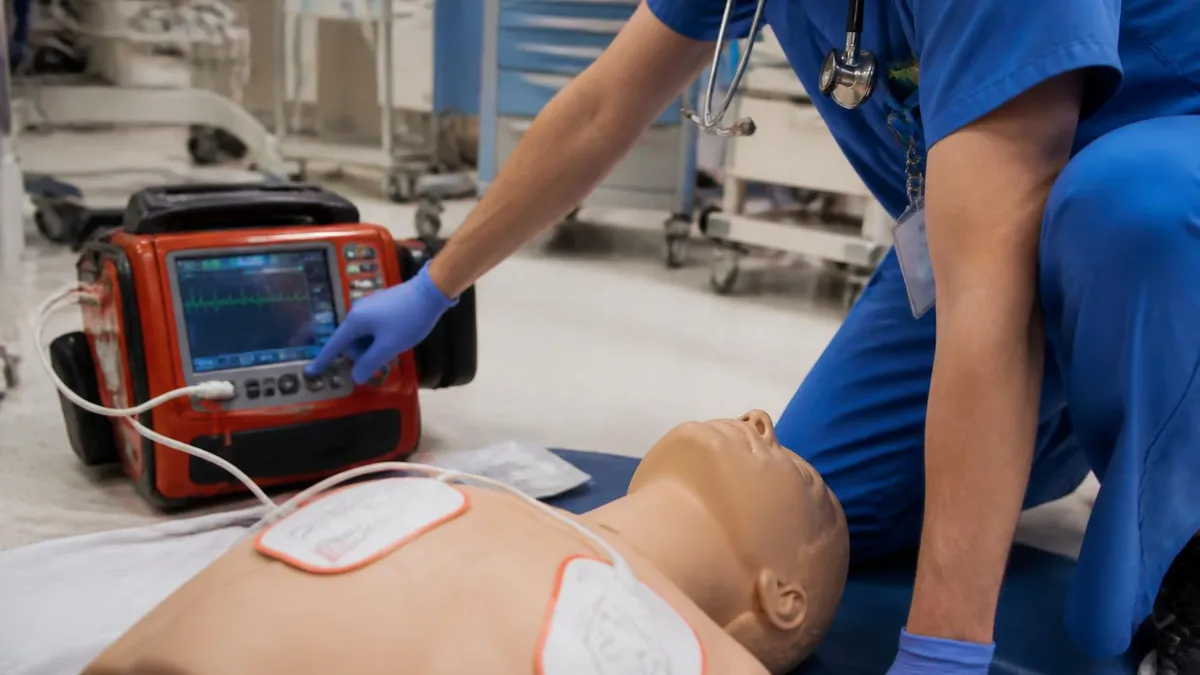
Is Paying for ACLS Out of Pocket Worth It?
- +Credential opens doors to higher-acuity, better-paying positions in ICU, ER, and critical care transport
- +Most employers reimburse or fully cover the cost after hiring, making out-of-pocket expense temporary
- +AHA card is nationally recognized and portable across employers and states
- +Self-paying before job search demonstrates proactive commitment to interviewers
- +Blended learning options keep total cost under $200 for renewal candidates
- +Two-year validity cycle means annual cost averages below $100 when spread across the certification period
- −Upfront cost of $150–$300 can be burdensome for student nurses or new graduates with loan debt
- −Non-AHA online certificates risk rejection by credentialing departments, doubling total spend
- −Manual and lab fees often sold separately, inflating the advertised headline price
- −Urban training center prices can reach $300+ for initial certification with no employer subsidy
- −Missed renewal deadlines may require a full provider course instead of the cheaper renewal track
- −Some employers require a specific AHA training center, limiting ability to comparison-shop for better pricing
Pros and Cons at a Glance
| Pros | Cons |
|---|---|
| Credential opens doors to higher-acuity, better-paying positions in ICU, ER, and critical care transport | Non-AHA online certificates risk rejection by credentialing departments, doubling total spend |
| Most employers reimburse or fully cover the cost after hiring, making out-of-pocket expense temporary | Manual and lab fees often sold separately, inflating the advertised headline price |
| AHA card is nationally recognized and portable across employers and states | Missed renewal deadlines may require a full provider course instead of the cheaper renewal track |
| Self-paying before job search demonstrates proactive commitment to interviewers | Some employers require a specific AHA training center, limiting ability to comparison-shop for better pricing |
ACLS Certification Cost Prep Checklist
- ✓Confirm your employer's accepted certification providers before purchasing any course.
- ✓Request an itemized price quote that includes the manual, lab fee, and card issuance charge.
- ✓Ask your HR or education department if upfront sponsorship or post-course reimbursement is available.
- ✓Verify whether you qualify for the renewal track or must take the full provider course.
- ✓Compare at least three AHA training centers in your area before booking.
- ✓Check whether a group rate applies if five or more colleagues also need certification.
- ✓Purchase or borrow the current AHA ACLS Provider Manual before your course start date.
- ✓Review AHA HeartCode pricing directly on the AHA website before buying through a third-party.
- ✓Schedule your renewal at least 60 days before your card expires to allow rescheduling flexibility.
- ✓Keep your original AHA card safe — replacement fees are $20–$35 and can be avoided easily.
Most Hospital Employers Cover ACLS Fees
According to 2025 American Nurses Association data, 74 percent of hospital-employed clinicians have their ACLS renewal costs covered by their facility. Before paying out of pocket, always ask your nurse manager or education department — you may qualify for full sponsorship, and the answer only takes one email to find out.
Navigating employer reimbursement for ACLS certification requires a small amount of advance planning but can eliminate your out-of-pocket cost entirely. Most large hospital systems run structured tuition assistance or professional development programs that cover the cost of mandatory clinical credentials, and ACLS almost always qualifies because it is either required by hospital policy for certain units or strongly encouraged as part of nurse residency and orientation programs. The key is to ask before you enroll, not after.
Start by locating your employer's education benefits policy, which is usually accessible through your HR portal or employee handbook. Look for keywords such as continuing education reimbursement, professional development fund, mandatory credential support, or clinical education stipend. Some facilities distinguish between credentials that are required for your current role and those that are elective professional development; ACLS is more likely to be covered under the required category if your unit requires it for employment or annual competency verification.
The reimbursement process typically works one of two ways: upfront sponsorship, where your employer pays the training center directly and you attend at no personal cost, or post-completion reimbursement, where you pay out of pocket and submit receipts for repayment after passing. If your employer offers post-completion reimbursement, be careful about saving all receipts — the course fee, the provider manual, parking, and sometimes even mileage to the training center may be covered. Some reimbursement programs have annual caps of $500–$1,500, more than enough to cover a single ACLS course cycle.
For travel nurses and per-diem staff, reimbursement works differently. Staffing agencies frequently include ACLS certification maintenance as a condition of placement and will either provide a stipend for recertification or directly pay an AHA training center. Review your agency contract carefully before accepting an assignment that requires current ACLS; if the agency does not cover it, negotiate for a certification allowance as part of your placement package, especially if you are bringing a high-demand specialty skill set.
Graduate students in nursing, medicine, or respiratory therapy programs often have access to discounted certification rates through their academic institution. University health science programs frequently maintain relationships with local AHA training centers and can offer student pricing as low as $80–$120 for a full provider course. Check with your program's clinical education coordinator — the discount is rarely advertised broadly but is available at most institutions upon request with a valid student ID.
Federal and state grant programs occasionally fund ACLS certification for clinicians working in underserved or rural settings. If you practice in a federally qualified health center, a critical access hospital, or a rural health clinic, check whether your facility receives Health Resources and Services Administration (HRSA) workforce development grants that include a certification training component. These programs have funded hundreds of rural clinicians who otherwise could not afford the time or cost of travel to urban training centers.
Military and Veterans Affairs clinicians have access to DoD and VA-funded ACLS certification as part of their clinical training requirements. Active duty medical personnel typically receive certification at no personal cost through their base or installation medical education department. VA-employed clinicians can similarly access no-cost certification through their facility's simulation center or education department. If you are transitioning from military to civilian practice, bring your most recent military ACLS certificate to your credentialing appointment — many civilian credentialing offices will accept a current military AHA-equivalent card while you arrange civilian recertification.
Hundreds of websites sell ACLS certificates for under $50 with no skills check required. These certificates are not AHA-compliant and will be rejected by the vast majority of hospital credentialing departments. Purchasing one forces you to pay a second time for an approved course. Always verify your employer's accepted providers before spending a single dollar on certification.
Cutting your ACLS certification cost without cutting corners on quality is entirely achievable with the right strategy. The single most impactful step you can take is to comparison-shop AHA-affiliated training centers in your area before committing to the first course you find on a Google search. Because AHA training centers set their own prices within AHA guidelines, costs for the identical course can vary by $75–$150 across providers in the same metropolitan area. The AHA's online training center finder lets you search by zip code and call each center for a price quote in under thirty minutes.
Bundled packages represent the next layer of savings. Some training centers offer combined BLS and ACLS packages that discount both courses when purchased together, a useful option for new graduates who need both credentials simultaneously. BLS plus ACLS combined classroom packages commonly range from $175 to $280, versus $60–$100 for BLS alone and $150–$300 for ACLS alone — a potential saving of $70–$120 depending on the center. Ask specifically about combination pricing even if it is not listed on the center's website.
Timing your enrollment around promotional periods also reduces cost. Many AHA training centers run January and August discounts aligned with hospital new-hire orientation cycles, and some community education centers offer subsidized rates during National CPR and AED Awareness Week in early June. Signing up for email newsletters from two or three local training centers can alert you to promotional pricing that never makes it onto the center's main booking page.
Free or heavily subsidized ACLS preparation resources are widely available and can reduce the likelihood of needing a costly retake by improving your first-attempt pass rate. The AHA's free ACLS precourse self-assessment is available on the AHA website and covers rhythm recognition, pharmacology, and BLS skills. Supplementing that with free practice questions from sites like PracticeTestGeeks costs nothing and meaningfully improves exam performance. Given that a failed megacode attempt may require you to schedule and pay for a remediation session, investing time in free prep resources has a clear financial upside.
Purchasing the AHA ACLS Provider Manual in advance of your course is another budget-friendly move. Buying directly from the AHA website or from major online retailers typically costs $35–$45, compared to $50–$55 when purchased on the day of your course through some training centers. The 2020 guidelines edition remains current, so there is no risk of buying an outdated version. Reading the manual before your course also shortens the cognitive load on course day, making it easier to focus on hands-on practice rather than absorbing new information.
If your renewal date is more than 90 days away but approaching, use the waiting period to complete free online refreshers rather than cramming everything into the week before your course. Spreading your review over four to six weeks improves retention of the ACLS algorithms, which reduces the chance of a retake and the associated extra cost. Many experienced ACLS providers report that they underestimated how much the 2020 guideline updates changed specific drug doses and algorithm steps, making pre-course review more valuable than it might seem for veterans who have held the credential for years.
Finally, document every expense related to your ACLS certification even if you do not currently expect reimbursement. Tax rules for unreimbursed employee business expenses have changed over the years, but some clinicians who are self-employed, work as independent contractors, or are required to maintain ACLS as a licensure condition in their state may be able to deduct certification costs on their federal return.
Consult a tax professional familiar with healthcare worker deductions — the amount involved is modest, but over a thirty-year career the cumulative deductions add up. For a deeper dive into the clinical content that governs what you will actually be tested on, exploring the ACLS algorithms and drug protocols is the most efficient use of your study time between now and your course date.
If you want more targeted practice, the aha acls algorithms page covers the same material with additional questions and explanations.
Preparing effectively for your ACLS course — regardless of whether you are taking it for the first time or renewing — is the single best investment you can make to protect your certification dollars. A failed first attempt is not just an inconvenience; it can trigger remediation fees of $50–$100, require rescheduling of a skills session, and delay your credential at a time when your employer may need it for staffing compliance. Treating your pre-course study as seriously as you treat the course itself is the mindset that separates first-time passers from those who need a second attempt.
Focus your preparation on the areas most commonly cited in ACLS failure reports: rhythm recognition and the systematic approach to unstable tachycardia and bradycardia. Many candidates who fail the written exam do so not because they lack clinical experience but because they have not memorized the specific rate and interval criteria that distinguish sinus tachycardia from SVT or third-degree AV block from Mobitz II. Flashcards and timed rhythm strips are effective low-cost tools, and the free rhythm quizzes available on sites like PracticeTestGeeks mirror the format and difficulty of actual AHA course assessments.
The megacode — the hands-on team resuscitation scenario that caps most ACLS skills evaluations — rewards preparation but does not require perfection. Instructors are looking for systematic application of the BLS-to-ACLS sequence: high-quality CPR, early defibrillation for shockable rhythms, timely epinephrine administration, airway management without prolonged interruptions to chest compressions, and clear team communication. Practicing the verbal script of team leader cues out loud, even alone at home, dramatically improves performance under the pressure of the real evaluation environment.
Pharmacology is the second most common stumbling block. The ACLS algorithms reference a manageable set of about a dozen drugs — epinephrine, amiodarone, lidocaine, adenosine, atropine, dopamine, magnesium sulfate, and a few others — but the specific doses, routes, and indications must be recalled quickly and accurately in megacode scenarios. Creating a single reference sheet with drug name, dose, route, and indication for each medication and reviewing it daily for two weeks before your course is an approach that consistently produces strong performance on the pharmacology portion of the exam.
Time management during the written ACLS exam matters more than most candidates expect. The AHA written exam for initial certification contains 50 questions and must be completed within a defined time window. Candidates who spend too long on unfamiliar rhythm strips early in the exam often run short of time for the pharmacology and algorithm questions where they would have scored easily. Practice timed question sets in the days before your course to build the pacing instincts that prevent this pattern.
BLS competency is a prerequisite for ACLS, and many candidates who struggle in the megacode do so because their CPR mechanics have degraded since their last BLS renewal. Rate, depth, full chest recoil, and compression fraction are all assessed in the ACLS skills evaluation, and instructors will call out a megacode if CPR quality falls below standards. Doing 10 minutes of CPR practice on a firm surface — a couch cushion or a CPR feedback device if you have one — in the days before your course refreshes muscle memory that pure cognitive study cannot replicate.
After passing, protect your investment by storing your AHA eCard information in a password manager or a dedicated credentialing folder. The AHA has issued digital cards since 2019, and your eCard can be retrieved from the AHA website at any time with your name and date of birth, but having the card number and expiration date readily accessible prevents the $20–$35 replacement fee and eliminates the frantic searching that happens when a credentialing deadline is imminent.
Set a calendar reminder for 90 days before your expiration date so you have time to shop for the best renewal price rather than booking in a panic.
ACLS Questions and Answers

ACLS Acute Coronary Syndrome Algorithm: Complete Study Guide for Certification Prep
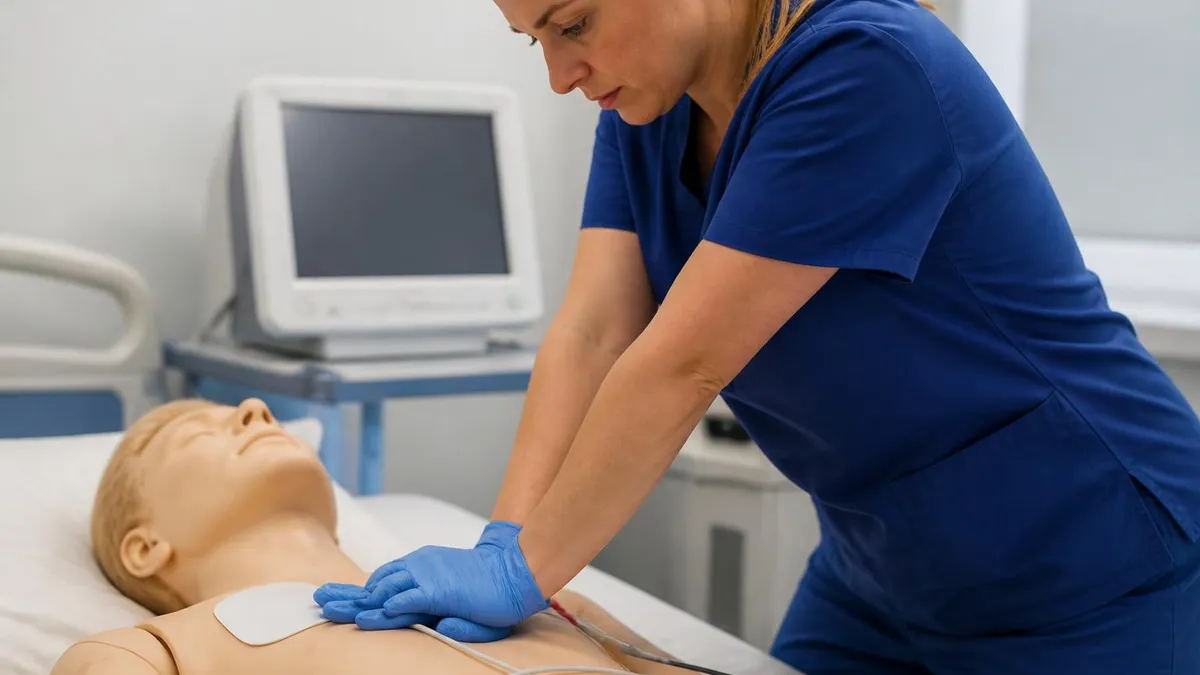
ACLS Renewal Class: Complete 2026 Guide to Recertification Requirements, Costs, Formats & Pass Strategies
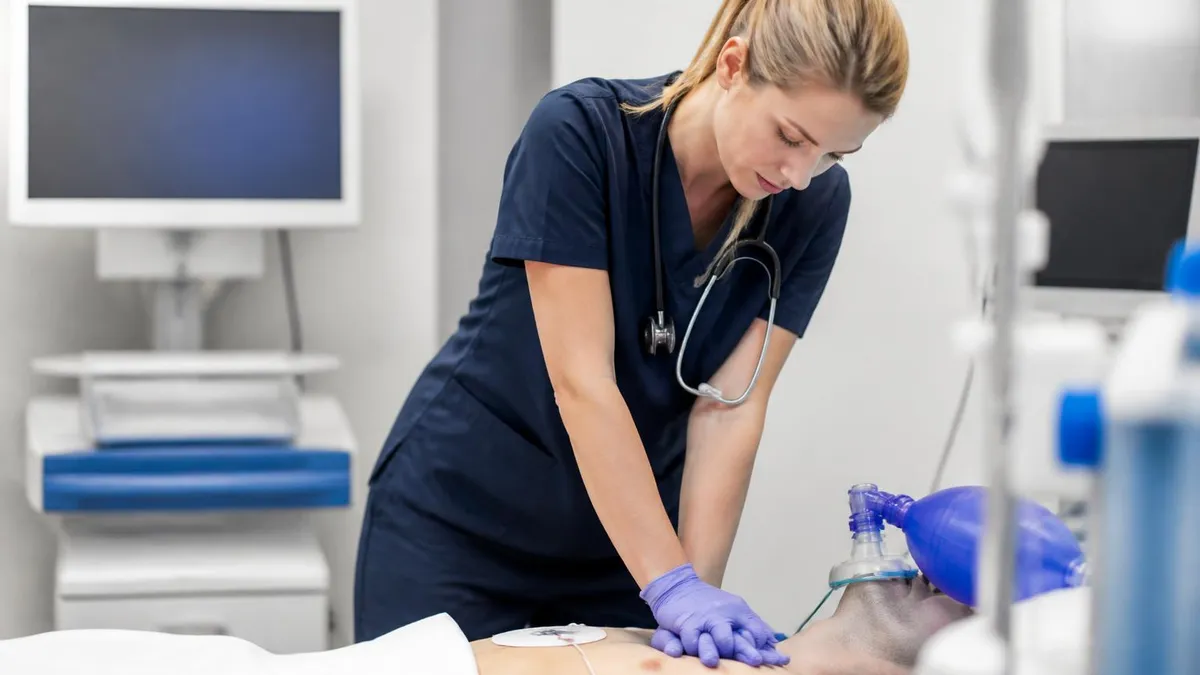
ACLS Guidelines 2026: Complete AHA Update on Algorithms, Drugs, CPR Quality & Post-Arrest Care
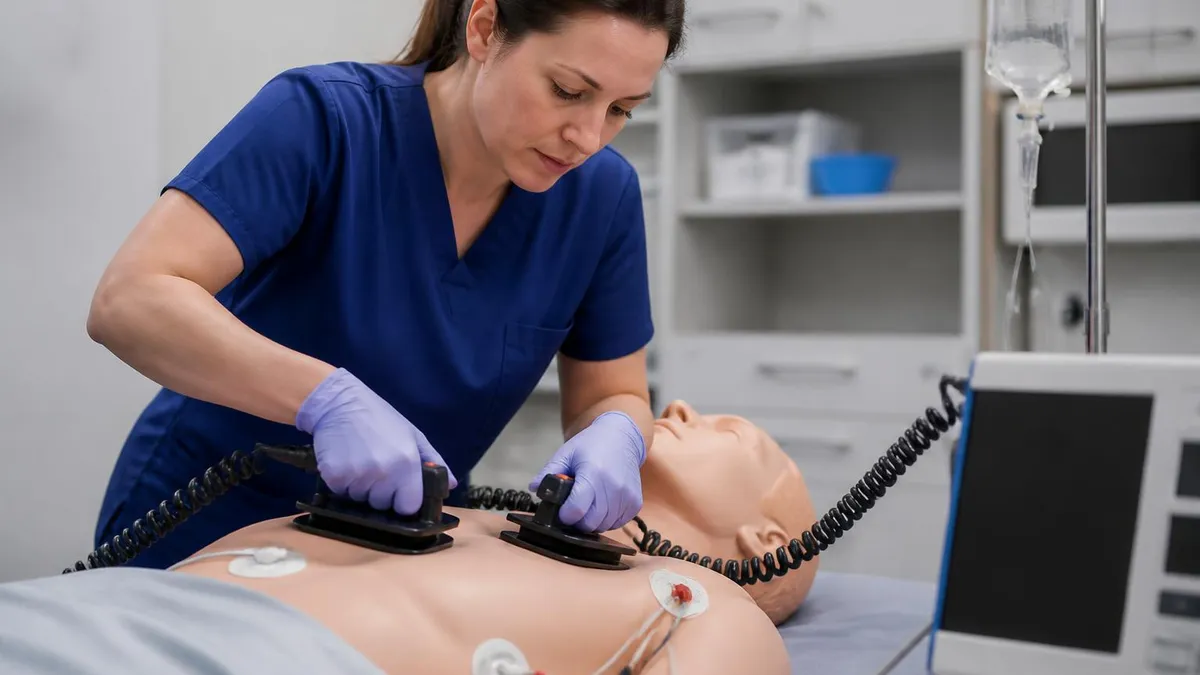
ACLS Bradycardia Algorithm: Complete 2026 Guide to Recognition, Treatment Steps & Drug Doses
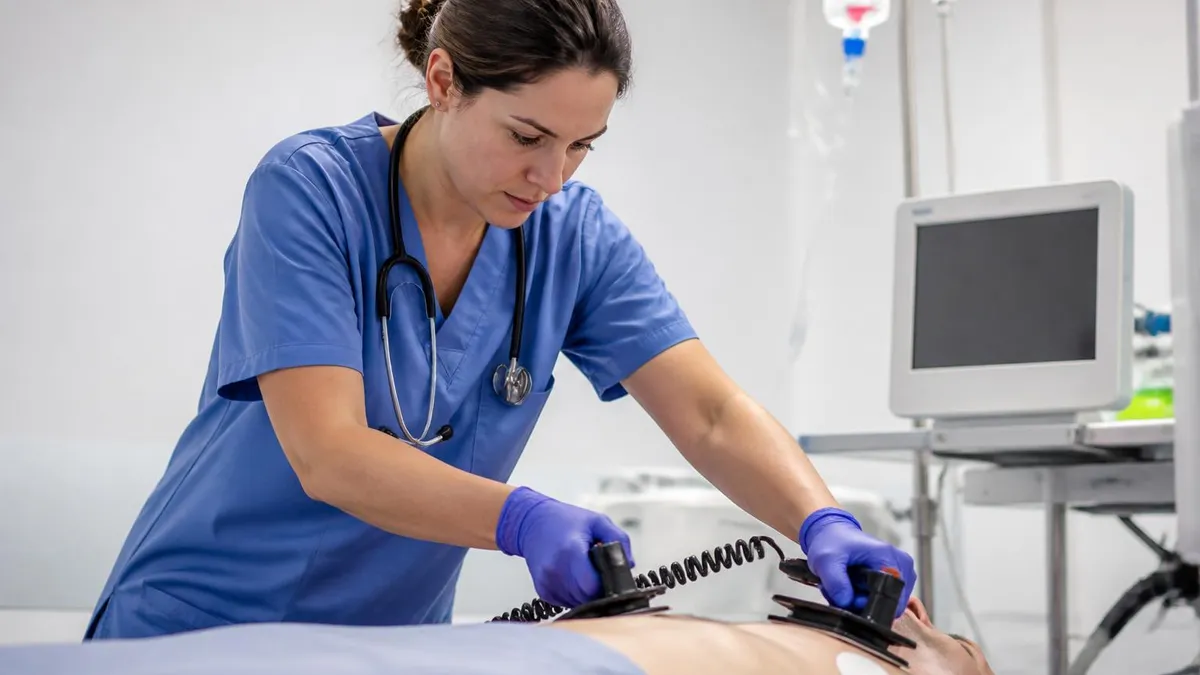
ACLS Drugs: Complete 2026 Guide to Medications, Doses, Indications & Algorithm Use
About the Author

Registered Nurse & Healthcare Educator
Johns Hopkins University School of NursingDr. Sarah Mitchell is a board-certified registered nurse with over 15 years of clinical and academic experience. She completed her PhD in Nursing Science at Johns Hopkins University and has taught NCLEX preparation and clinical skills courses for nursing students across the United States. Her research focuses on evidence-based exam preparation strategies for healthcare certification candidates.