
Hydrocolloid in Wound Care: How It Works, When to Use It, and Types in 2026 September
⏳ Hydrocolloid dressings explained: how they work, when to use them, their pros and cons, and how they compare to hydrogel and other wound care dressings.
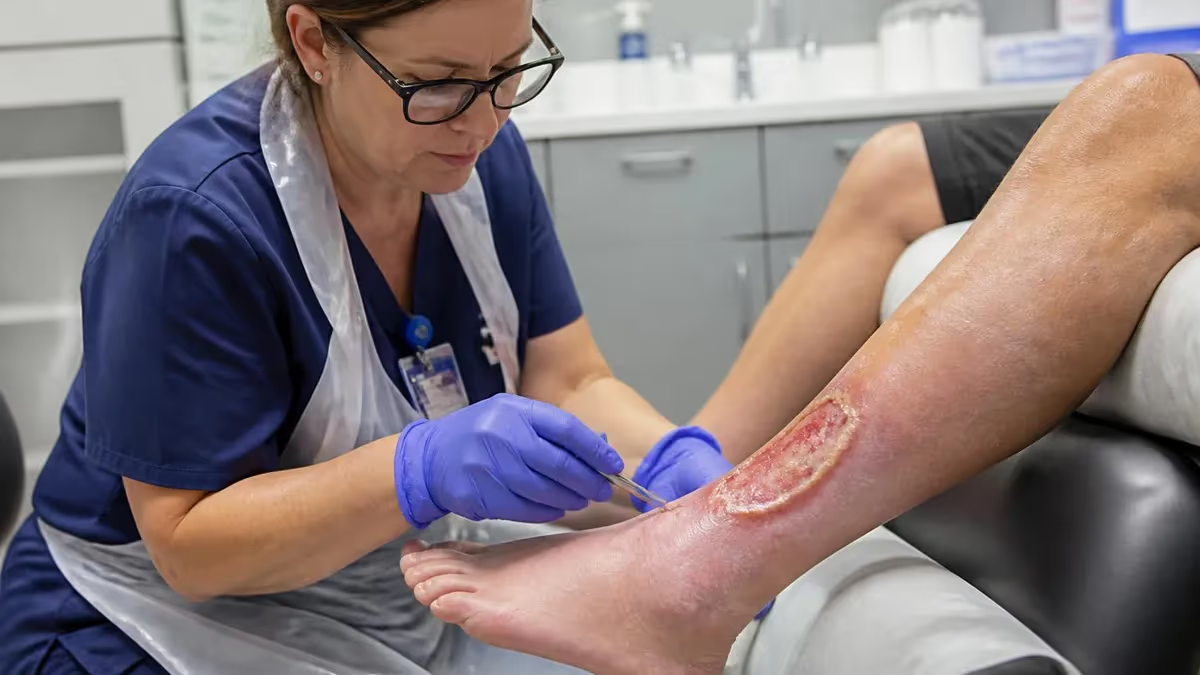
Hydrocolloid dressings are among the most popular and recognizable products in modern wound care—you may even have used one without knowing the name, since many over-the-counter blister and acne patches are hydrocolloids. In clinical wound care, they're a versatile, widely used dressing valued for creating an ideal healing environment while protecting the wound. Understanding how they work and when to use them is fundamental wound care knowledge.
At their core, hydrocolloid dressings are made of a gel-forming material bonded to a flexible, occlusive outer layer. When they contact wound fluid, the inner material absorbs it and forms a gel, creating and maintaining the moist environment that wounds heal best in—while the outer layer seals the wound off from the outside world. This combination of moisture management and protection is what makes hydrocolloids so useful.
This guide explains how hydrocolloid dressings work, the situations they're best for, their advantages and limitations, and how they compare to other dressings like hydrogel. As one key category among many wound care dressings, hydrocolloid fits a specific niche, and knowing that niche is part of the clinical judgment that defines good wound care treatments.
One framing point up front, echoing a theme in all wound care: no single dressing suits every wound. Hydrocolloids excel in particular scenarios—wounds with light to moderate drainage that benefit from a protective, moist seal—and are poorly suited to others, like heavily draining or infected wounds. The skill lies in matching the dressing to the wound, and hydrocolloid is one important, well-defined tool in that toolkit.
Hydrocolloid in Wound Care at a Glance
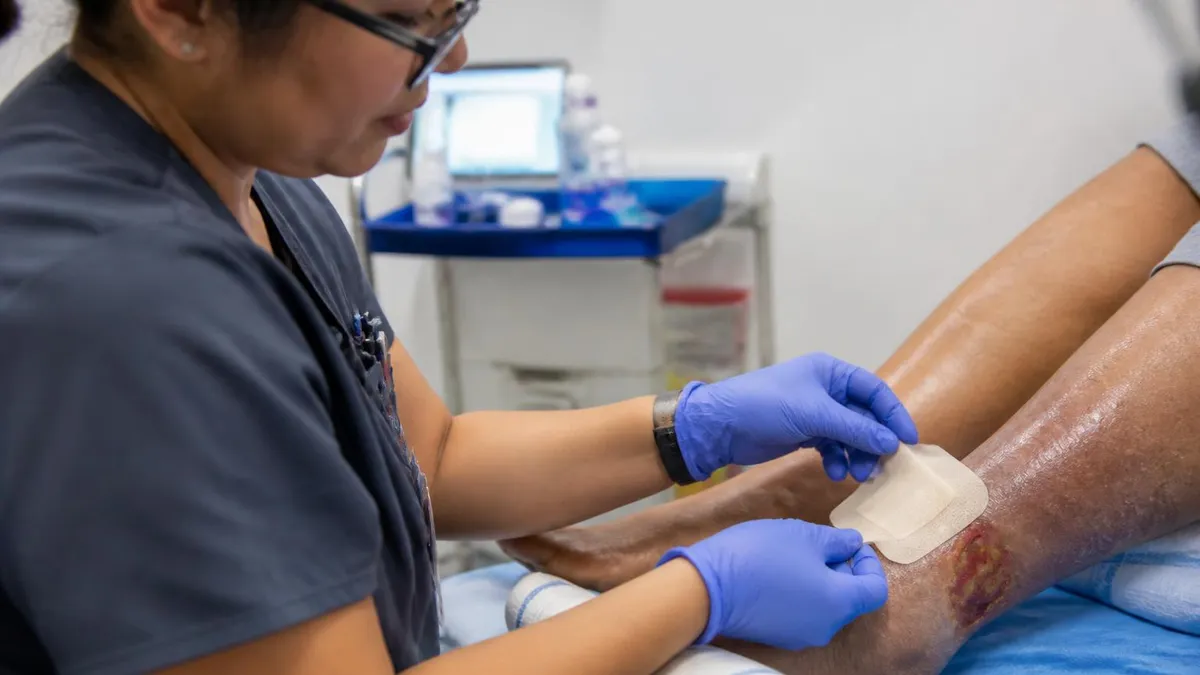
What Hydrocolloid Dressings Do
The inner hydrocolloid material absorbs wound exudate and forms a gel against the wound, managing light to moderate fluid while keeping the wound bed moist for optimal healing.
The flexible outer layer seals the wound, blocking bacteria, water, and contaminants. This protective occlusion is a defining feature, shielding the wound while it heals underneath.
By holding moisture in while absorbing excess, hydrocolloids maintain the balanced moist environment that speeds healing—the same moist wound healing principle central to modern wound care.
The moist, sealed environment encourages gentle autolytic debridement, helping the body break down dead tissue naturally over time, similar to other moisture-retentive dressings.
Let's look at how hydrocolloid dressings actually work, since the mechanism explains their uses. A hydrocolloid dressing has two parts: an inner layer of gel-forming agents (substances like gelatin, pectin, and carboxymethylcellulose) and a flexible, waterproof, occlusive outer film. When applied to a wound, the inner layer absorbs exudate and reacts with it to form a soft gel against the wound surface, while the outer film seals everything off from the environment.
This dual action delivers two benefits at once. First, by absorbing fluid and forming a gel, the dressing manages light to moderate exudate while keeping the wound bed in the moist state that promotes healing—it neither dries the wound out nor lets it become waterlogged, within its absorption capacity. Second, the occlusive outer layer protects the wound from bacteria, water, dirt, and friction, providing a secure barrier as healing proceeds underneath.
The moist environment hydrocolloids create supports healing in the same way other moisture-retentive dressings do. Cells involved in healing function best in a balanced moist setting, and the gel that forms keeps the wound bed appropriately moist. This also enables autolytic debridement—the body's own gentle breakdown of dead tissue—since the moist, sealed environment supports the natural enzymatic processes that clear a wound of devitalized tissue over time.
The occlusive, sealed nature is a defining and useful feature, but also the source of hydrocolloid's main limitation. Because the dressing seals the wound, it's excellent for protection and moisture retention, but it's the wrong choice for wounds that are infected or heavily draining. Sealing in an infected wound or one producing more fluid than the dressing can absorb can worsen the situation, which is why hydrocolloids are reserved for non-infected wounds with manageable exudate.
A practical advantage of the design is wear time. Because hydrocolloids absorb fluid gradually, form a protective gel, and seal the wound, they can often stay in place for several days before needing a change, depending on the wound and exudate level. This reduces the frequency of dressing changes, which is less disruptive to the healing wound and more comfortable and convenient for the patient—a genuine clinical benefit.
One characteristic that surprises people is the appearance and odor when a hydrocolloid is removed. As it absorbs exudate and forms gel, the area can develop a yellowish, sometimes malodorous gel that may look like pus but is simply the normal product of the dressing interacting with wound fluid. Knowing this is normal—not a sign of infection by itself—prevents unnecessary alarm, though genuine signs of infection always warrant assessment.
Understanding this mechanism—absorb and gel, seal and protect, maintain moisture, support gentle debridement, but only for non-infected wounds with light-to-moderate exudate—is the foundation for using hydrocolloids correctly. It explains both why they're so widely used and where their boundaries lie, which is exactly the kind of knowledge a wound care specialist applies in matching dressings to wounds.
Using a Hydrocolloid Dressing
Assess the wound
Clean and dry the edges
Apply the dressing
Leave in place
Change when indicated
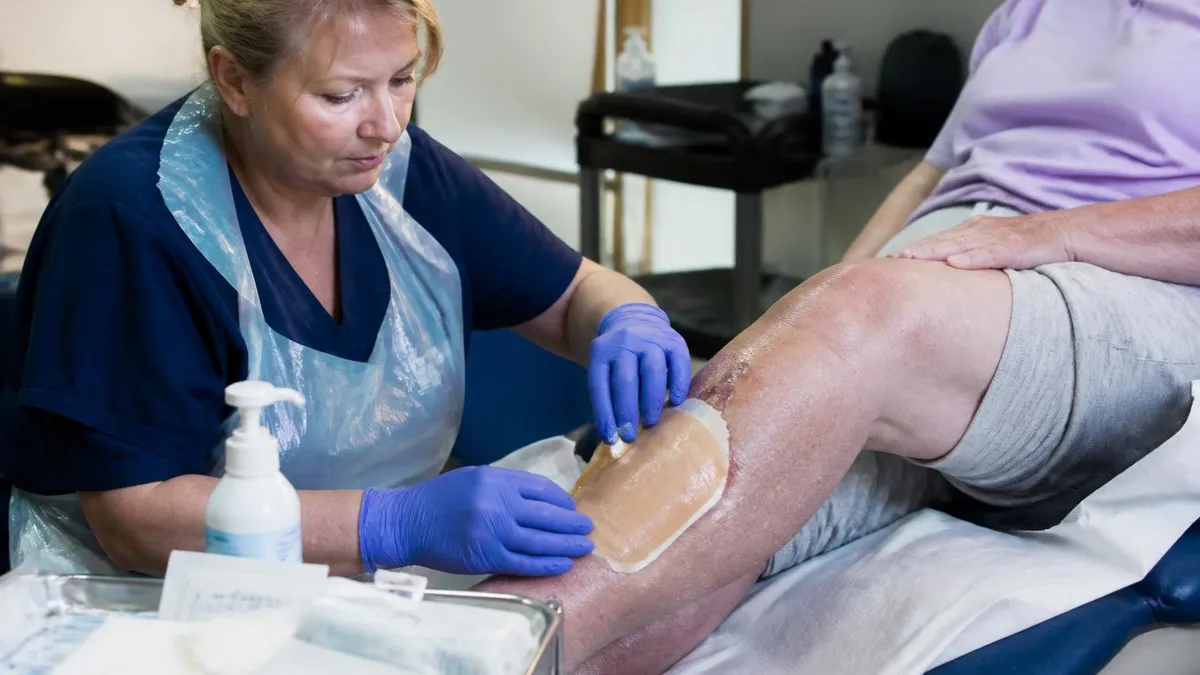
So when should hydrocolloid dressings be used? The clearest indication is wounds with light to moderate exudate that are not infected. Hydrocolloids manage this level of drainage well while protecting the wound, so they suit wounds that are draining a little but not heavily. For a clean, mildly-to-moderately exuding wound that would benefit from a protective, moist environment, hydrocolloid is often an excellent choice.
Pressure injuries in their earlier or shallower stages are a common, appropriate use. Hydrocolloids protect these wounds from friction and contamination while maintaining the moist environment that supports healing, and their ability to stay in place for days suits the management of pressure ulcers. They're frequently used in this context, though deeper, heavily exuding, or infected pressure injuries call for different dressings.
Minor burns, abrasions, and similar superficial wounds are well suited to hydrocolloids. The protective seal shields the healing skin, the moist environment supports recovery, and the dressing's adhesion keeps it in place. For partial-thickness burns and scrapes with limited drainage, hydrocolloids provide comfort and protection while the wound heals, which is part of why they appear in consumer first-aid products as well as clinical settings.
The everyday examples most people know—blister and acne patches—illustrate the principle perfectly. Hydrocolloid blister plasters protect the blister, cushion it, and maintain a moist healing environment, while hydrocolloid acne patches absorb fluid from a blemish and protect it. These consumer products work on exactly the same mechanism as clinical hydrocolloid dressings, just at a smaller scale, which is why they've become so popular.
Equally important is knowing when not to use hydrocolloids. They're contraindicated for infected wounds, because the occlusive seal can trap bacteria and worsen an infection that needs to breathe and be actively managed. They're also unsuitable for heavily exuding wounds, since they can't absorb large volumes of fluid and would become overwhelmed, risking leakage and skin maceration. Heavily draining wounds need more absorbent dressings instead.
Wounds with significant dead tissue requiring aggressive debridement, or wounds needing close frequent monitoring, may also be poor candidates, since the whole point of a hydrocolloid is to seal and leave undisturbed for days. As always, the decision rests on assessing the specific wound—its exudate level, infection status, depth, and needs—and choosing accordingly. Hydrocolloid is the answer for protected, moist management of clean, lightly-to-moderately draining wounds, and the wrong answer for infected or heavily exuding ones.
This assessment-driven matching is the heart of competent wound care and why dressing selection is a learned skill. Recognizing that a wound's characteristics point to hydrocolloid—versus an absorbent dressing for heavy drainage, or an antimicrobial for infection—is exactly the clinical judgment that wound care education and certification develop, with hydrocolloid being one well-defined tool among several.
Hydrocolloid Essentials
An inner gel-forming layer absorbs exudate and forms a gel against the wound, maintaining a moist healing environment, while a flexible occlusive outer film seals the wound from bacteria and water. It manages light-to-moderate drainage, supports autolytic debridement, and can stay in place for days.
Using Hydrocolloid Correctly
- ✓Confirm the wound has light-to-moderate exudate and isn't infected.
- ✓Don't use hydrocolloid on infected or heavily draining wounds.
- ✓Clean the wound and dry the surrounding skin before applying.
- ✓Apply with a margin onto intact skin to seal the wound.
- ✓Leave in place for days; don't change it unnecessarily often.
- ✓Expect a yellowish gel and odor on removal—usually normal.
- ✓Reassess and switch dressings if the wound's needs change.
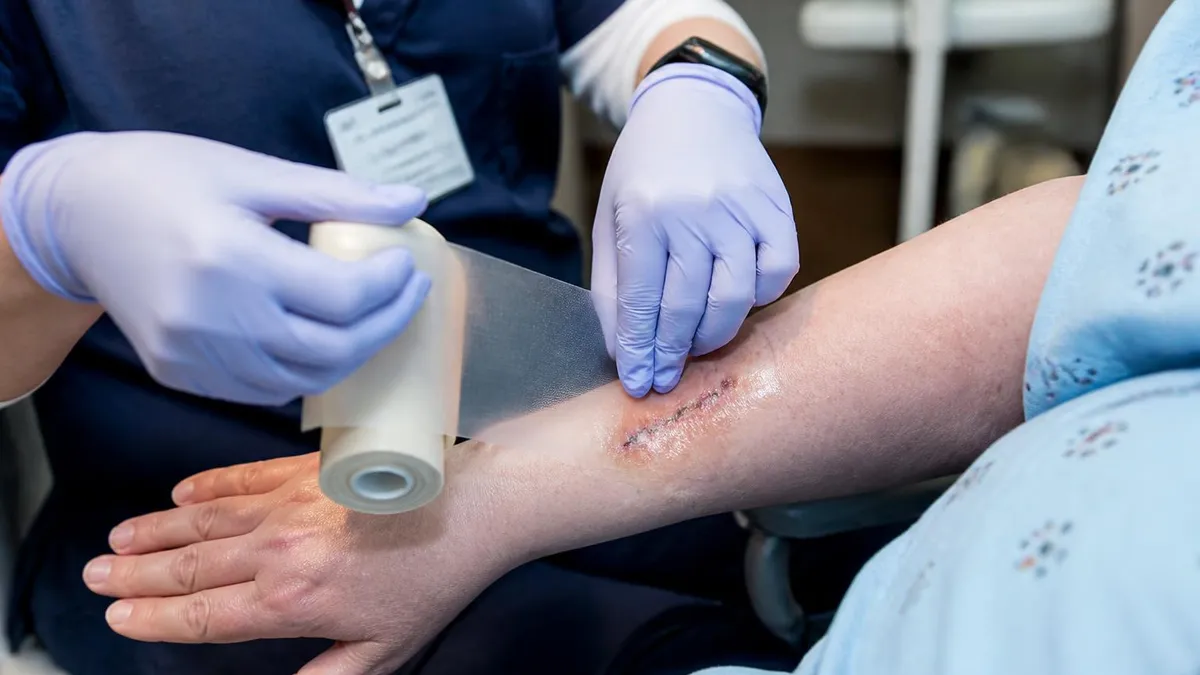
Hydrocolloids come in several forms and a range of shapes and sizes, which adds to their versatility. The most common form is the flat sheet or wafer—a square or rectangular dressing applied directly over a wound. These come in various thicknesses and sizes, from small spots for minor wounds to larger sheets, and many are shaped or beveled at the edges to improve adhesion and comfort, especially on awkward body areas.
Beyond standard sheets, hydrocolloids are made in anatomically shaped versions designed for specific locations like heels, elbows, or the sacrum—areas prone to pressure injuries where a flat dressing wouldn't conform well. These contoured shapes maintain the seal and moisture management on curved or high-friction areas, extending hydrocolloid's usefulness to the body sites that most often develop pressure-related wounds.
There are also thinner, more flexible hydrocolloid dressings for areas needing discretion or flexibility, and thicker versions for more absorption or cushioning. The consumer blister and acne patches are thin, transparent or translucent hydrocolloids designed to be unobtrusive. This range of thicknesses and designs lets clinicians and consumers choose a hydrocolloid suited to the wound's location, drainage, and the wear characteristics they need.
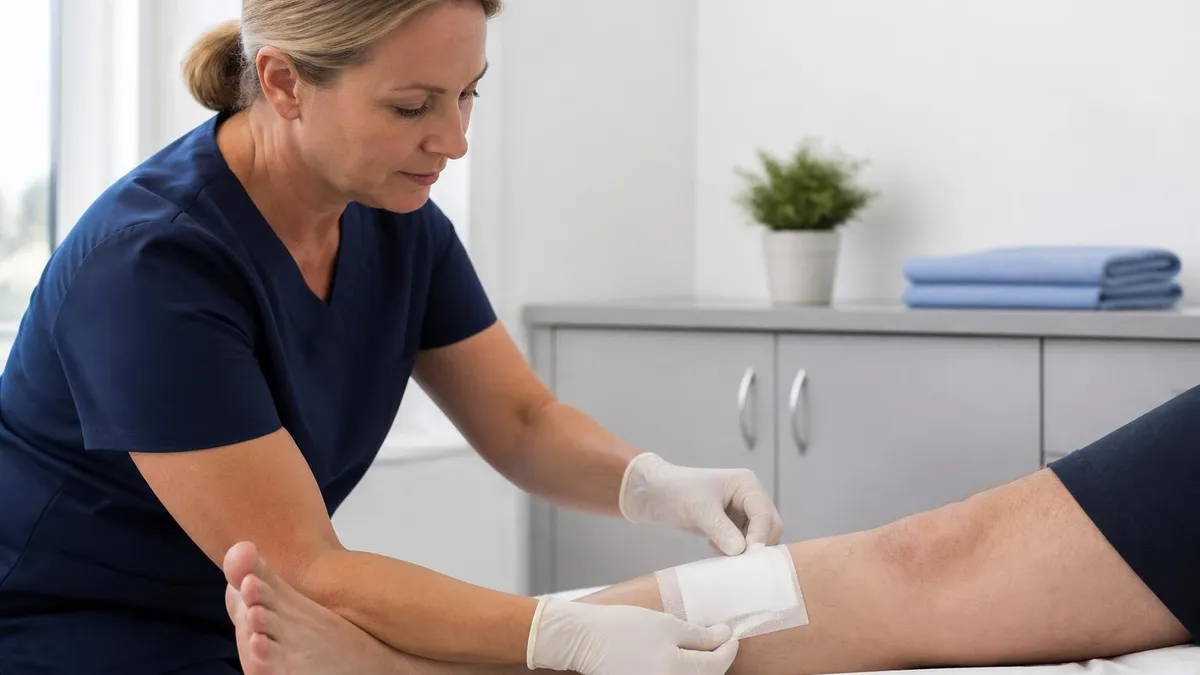
Application technique matters for getting the benefits. The surrounding skin should be clean and dry so the dressing adheres well, and the hydrocolloid should be applied with a margin extending onto intact skin around the wound to create the seal. Warming the dressing slightly with your hands after application can improve adhesion. Proper application ensures the occlusive seal forms correctly, which is essential to the dressing functioning as intended.
Knowing when to change a hydrocolloid is part of using it well. Rather than changing on a fixed daily schedule, hydrocolloids are typically left in place until the absorbed gel spreads near the edges of the dressing, the dressing begins to leak, or it loosens—or according to the care plan. This change-when-needed approach, often allowing several days of wear, is part of what makes hydrocolloids convenient and gentle on the healing wound.
The normal appearance on removal deserves repeating because it alarms people. When you remove a hydrocolloid, the gel that has formed is often yellowish or tan and may have an odor, which can resemble pus. This is the normal result of the dressing absorbing exudate and is not, by itself, a sign of infection. Genuine infection signs—spreading redness, increasing pain, fever—are different and warrant assessment, but the gel and odor alone are expected.
Used with correct selection, application, and change timing, hydrocolloids are a reliable, convenient, and effective dressing for the wounds they suit. Their combination of moisture management, protection, extended wear, and ease of use explains their popularity across both clinical and consumer settings, and mastering their proper use is a practical, high-value piece of wound care competence.
The yellow gel on removal is usually normal
When you remove a hydrocolloid dressing, you'll often find a yellowish, sometimes smelly gel that can look like pus—but this is simply the normal product of the dressing absorbing wound fluid, not a sign of infection by itself. Knowing this prevents needless alarm. Genuine infection shows as spreading redness, increasing pain, warmth, or fever, which always warrant assessment; the gel and mild odor alone do not.
Hydrocolloid: Advantages and Limitations
- +Maintains a moist healing environment while protecting the wound
- +Occlusive seal blocks bacteria, water, and friction
- +Can stay in place for days, reducing disruptive changes
- +Supports gentle autolytic debridement of dead tissue
- +Versatile, widely available, and easy to use, even at home
- −Contraindicated for infected wounds—the seal can trap bacteria
- −Limited absorption, so unsuitable for heavily draining wounds
- −Normal gel and odor on removal can be mistaken for infection
- −Not ideal for wounds needing frequent close monitoring
- −Adhesive can irritate or strip fragile surrounding skin
Hydrocolloid's occlusive seal makes it excellent for protecting clean wounds with light-to-moderate exudate, but the wrong choice for infected wounds (where sealing can trap bacteria) or heavily draining wounds (which exceed its absorption capacity). As with all dressings, selection should follow a proper assessment of the specific wound, and significant or non-healing wounds should be guided by a qualified wound care professional.
How does hydrocolloid compare to other dressings, especially hydrogel, which is often discussed alongside it and sometimes confused with it? The names sound similar, but they do different jobs. Hydrogel is mostly water and donates moisture to dry wounds, while hydrocolloid absorbs light-to-moderate exudate and forms a protective, occlusive seal. In short, hydrogel adds moisture to dry wounds; hydrocolloid manages some fluid while sealing.
This distinction guides selection between them. For a dry wound or one with dry necrotic tissue needing rehydration and gentle debridement, hydrogel is the choice. For a clean wound with light-to-moderate drainage that benefits from a protective, moisture-retentive seal and extended wear, hydrocolloid fits better. They occupy adjacent but different points on the moisture-management spectrum, and confusing them leads to using the wrong tool for a wound's actual needs.
Compared to absorbent dressings like foams and alginates, hydrocolloid handles much less fluid. Foams and alginates are built for moderate-to-heavy exudate, soaking up significant drainage, whereas hydrocolloid manages only light-to-moderate amounts before becoming overwhelmed. For a heavily draining wound, an absorbent dressing is correct and hydrocolloid is wrong—a clear example of matching capacity to the wound's output.
Compared to simple dressings like gauze, hydrocolloid offers far more: a moist healing environment, an occlusive protective barrier, extended wear time, and support for autolytic debridement, versus gauze's basic, non-occlusive, frequently-changed coverage. Hydrocolloid is an advanced moisture-retentive dressing, reflecting the modern moist wound healing approach, while plain gauze represents an older, more basic method now used differently.
Against antimicrobial dressings, the contrast is about infection. Antimicrobial dressings (like those with silver) actively fight infection and are used for infected or high-risk wounds—precisely the wounds where hydrocolloid is contraindicated because of its seal. So hydrocolloid and antimicrobial dressings serve opposite situations: hydrocolloid for clean wounds needing protection and moisture, antimicrobials for wounds needing infection control. They're not interchangeable.
The overarching lesson, consistent across wound care, is that each dressing category has its place and competent care matches the right one to each wound. Hydrocolloid's place is clear: clean, non-infected wounds with light-to-moderate exudate that benefit from a protective, moist, long-wearing seal—pressure injuries, minor burns, abrasions, and blisters. It's one valuable, well-defined tool, not a universal solution, and understanding where it fits is what makes it useful.
To sum up hydrocolloid in wound care: it's a dressing with a gel-forming inner layer and an occlusive outer film that absorbs light-to-moderate exudate, maintains a moist healing environment, protects the wound, supports gentle debridement, and can stay on for days. It's ideal for clean wounds with manageable drainage and wrong for infected or heavily draining ones. Used with proper assessment, it's a reliable, convenient, and effective part of the wound care toolkit—and a core concept for anyone studying or practicing in the field.
If there's a single mental model to carry away, it's the moisture spectrum: dry wounds want hydrogel to add moisture, lightly-to-moderately draining clean wounds want hydrocolloid to seal and balance, and heavily draining wounds want absorbent foams or alginates to remove fluid—while infected wounds want active antimicrobial management instead of any occlusive seal. Place a wound on that spectrum and the right dressing category becomes obvious, which is exactly the practical reasoning that turns wound care from guesswork into skill. Internalize that one spectrum and most dressing decisions you face will answer themselves quickly and correctly at the bedside.
Hydrocolloid Wound Care Questions and Answers
About the Author

Registered Nurse & Healthcare Educator
Johns Hopkins University School of NursingDr. Sarah Mitchell is a board-certified registered nurse with over 15 years of clinical and academic experience. She completed her PhD in Nursing Science at Johns Hopkins University and has taught NCLEX preparation and clinical skills courses for nursing students across the United States. Her research focuses on evidence-based exam preparation strategies for healthcare certification candidates.