
Does MLB Have Female Umpires? The Complete History and Current Status of Women in Baseball Officiating
Does MLB have female umpires? Explore the full history of women in baseball officiating, milestones, barriers, and what it takes to break in. 📚
Does MLB have female umpires? It is one of the most frequently asked questions in American baseball, and the honest answer is nuanced: no woman has yet served as a full-time, permanent umpire on an MLB crew — but the sport has come closer than most fans realize. Several women have officiated in professional and affiliated minor league games, and the push to see a female umpire working a major league game on a regular basis has never been stronger or better supported. Understanding where things stand requires looking at more than 150 years of baseball history.
The road for women in baseball officiating has been long and winding. Starting from an era when women were largely excluded from professional sports administration entirely, progress has been incremental but meaningful. Pioneers like Bernice Gera, who became the first woman to officiate a professional baseball game in 1972, cracked open a door that had been sealed shut for generations. Her courage — and the legal battles she fought to get onto the field — set the stage for every woman who followed her into a pair of shin guards.
In recent decades, MLB and its affiliated organizations have made deliberate structural investments to support women in umpiring. The establishment of formal development programs, mentorship pipelines, and diversity initiatives has given aspiring female umpires clearer pathways to the professional level than ever before. Organizations like USA Baseball and the Professional Baseball Umpire Corporation (PBUC) have played active roles in recruiting and developing women who want to build careers behind the plate or on the bases.
What does it actually take to become a professional umpire in baseball? The process is demanding for anyone, regardless of gender. Candidates must complete accredited umpire school, work years in lower minor leagues, receive performance evaluations, and survive a highly competitive promotion system. Fewer than one percent of umpire school graduates ultimately reach the major leagues. That statistic alone explains why the breakthrough of a permanent female MLB umpire, while achievable, has not yet occurred — the pipeline is long and unforgiving.
Interest in female umpires goes beyond the question of MLB. Women have successfully officiated at the youth, high school, college, and independent league levels across the country. In softball — both fastpitch and slowpitch — female umpires are common at every level of competition. The skills developed on those fields transfer directly to baseball officiating, and many women have used softball experience as a launching pad into baseball's umpire development system.
The cultural landscape around female umpires has also shifted dramatically in the past decade. Media coverage, social media visibility, and advocacy organizations have amplified the stories of women in officiating in ways that were simply impossible in Bernice Gera's era. Today, when a woman officiates a spring training game or works a Double-A contest, it generates discussion and awareness that creates role models for the next generation. Understanding female umpires and their contributions to the game means examining not just individual milestones but systemic change.
This article covers the full scope of women in baseball officiating: the history of female umpires, the key milestones and trailblazers, what current programs exist to support women entering the profession, the realistic path to MLB, and what barriers remain. Whether you are a fan curious about the sport's evolution or someone who aspires to become an umpire yourself, this guide provides the most complete picture available of women's role in America's pastime.
Female Umpires in Baseball by the Numbers

Key Milestones: Women in Baseball Officiating History
1972 — Bernice Gera Makes History
1975 — Christine Wren Joins the Northwest League
1988 — Pam Postema Reaches Triple-A
2007 — Ria Cortesio Works Double-A
2022 — MLB Adds Female Umpire Observers
Present — The Pipeline Has Never Been Fuller
The path to becoming a professional baseball umpire is identical for men and women: it begins with attending one of two accredited umpire schools — the Minor League Baseball Umpire Training Academy in Vero Beach, Florida, or the Wendelstedt Umpire School in Daytona Beach, Florida. These five-week intensive programs cover the rules of the game, mechanics, field positioning, communication with players and managers, and the physical demands of working multiple games in a single day. Admission is open to anyone who meets the basic prerequisites, including age and physical fitness standards.
After umpire school, graduates are evaluated and a small percentage are selected to receive professional contract offers. Those who advance begin working in the lowest levels of minor league baseball — historically the short-season or Rookie leagues — where they are closely supervised and evaluated on every aspect of their performance. The evaluation system is detailed and demanding: umpires receive written critiques of their ball-strike accuracy, base call quality, positioning, game management, and demeanor under pressure. Only those who excel at each level receive promotions.
Working up through the minor leagues takes years. An umpire typically spends several seasons at each level — Low-A, High-A, Double-A, Triple-A — before being considered for MLB staff. Most umpires who reach the major leagues have spent anywhere from eight to fifteen years in the minor league system. During that time, they work six-day weeks for six-to-eight months per year, drive hundreds of miles between cities, and earn relatively modest salaries. The commitment required is extraordinary, which is part of why so few people of any background complete the journey.
For women specifically, one of the structural challenges has been visibility and access at the earliest stages. Historically, fewer women have been aware that umpiring is a career open to them, and even fewer have had role models who showed them what success in the profession looks like. Youth softball officiating has served as an important on-ramp: women who began umpiring recreational or travel softball games as teenagers have discovered a passion for officiating that eventually led them to explore baseball umpiring as well. That crossover pathway has become increasingly recognized by umpire development organizations.
Physical conditioning is another area where preparation matters. Umpires behind the plate work in full gear — chest protector, shin guards, mask, and protective cup — in heat, rain, and cold. The demands of catching pitches, maintaining accurate vision in real time, and moving efficiently across the field require genuine athletic conditioning. Many aspiring umpires, both male and female, underestimate how physically demanding the job is until they experience umpire school firsthand. Preparation programs that address these physical demands head-on are increasingly available, and some are specifically designed to help women candidates build the conditioning needed to succeed.
The rules knowledge component of becoming a professional umpire is equally demanding. Baseball's rulebook is one of the most complex in American sports, filled with situational nuances, special provisions, and interpretations that take years to master. Umpires are expected to apply rules correctly and instantly under pressure, often in front of tens of thousands of fans and a television audience. Study programs, mock game simulations, and rules exams are all part of the process. Candidates who arrive at umpire school having already invested time in serious rules study have a measurable advantage over those who do not.
One encouraging development in recent years has been the growth of pre-school preparation programs specifically designed for aspiring umpires from underrepresented backgrounds. Some of these programs offer financial assistance for umpire school tuition, mentorship from working professional umpires, and networking opportunities that can accelerate a candidate's development. Women who are serious about pursuing professional baseball umpiring are encouraged to research these programs carefully and connect with organizations that can help them navigate the system from the very beginning of their journey.
Development Programs Supporting Female Umpires
Major League Baseball has invested in diversity and inclusion programs that directly benefit women pursuing umpiring careers. These include the MLB Diversity Pipeline Program, which identifies candidates from underrepresented groups and provides structured support through umpire school preparation, coaching, and introductions to the professional evaluation system. MLB's Office of the Commissioner has also collaborated with youth baseball organizations to expand awareness of umpiring as a career option for girls and young women who participate in baseball and softball at the grassroots level.
Beyond recruitment, MLB has worked with the Professional Baseball Umpire Corporation to ensure that evaluation criteria are applied consistently regardless of a candidate's background. This means that women who reach affiliated minor league umpiring are assessed on the same performance standards as their male colleagues — a critical safeguard that ensures advancement is based on merit. The transparency of these standards has helped build trust among women considering whether to invest years in the umpire development pipeline.

Pros and Cons of Pursuing a Career as a Female Baseball Umpire
- +Breaking genuine historical ground — becoming part of a select group of trailblazers in American sports
- +MLB and minor leagues offer competitive salaries at the major league level, reaching six figures for senior umpires
- +Growing structural support through diversity pipeline programs that provide mentorship and financial assistance
- +A career built on objective skill — ball-strike accuracy and rules mastery are measurable and merit-based
- +Travel, variety, and the experience of working in ballparks across the country throughout the season
- +Opportunities to inspire the next generation of girls who see officiating as a realistic career path
- −No woman has yet held a permanent full-time MLB umpire position — the final ceiling remains unbroken
- −The minor league salary and lifestyle are financially demanding, with modest pay during the multi-year development process
- −Persistent cultural resistance and unwanted scrutiny from a small subset of players, coaches, and fans
- −Physical demands of full gear in extreme weather require sustained conditioning not everyone can maintain
- −The promotion pipeline is extremely narrow — fewer than 1% of umpire school graduates reach the major leagues
- −Isolation during the season, with long road trips and limited community support structures for officials
Pros and Cons at a Glance
| Pros | Cons |
|---|---|
| Breaking genuine historical ground — becoming part of a select group of trailblazers in American sports | No woman has yet held a permanent full-time MLB umpire position — the final ceiling remains unbroken |
| MLB and minor leagues offer competitive salaries at the major league level, reaching six figures for senior umpires | The minor league salary and lifestyle are financially demanding, with modest pay during the multi-year development process |
| Growing structural support through diversity pipeline programs that provide mentorship and financial assistance | Persistent cultural resistance and unwanted scrutiny from a small subset of players, coaches, and fans |
| A career built on objective skill — ball-strike accuracy and rules mastery are measurable and merit-based | Physical demands of full gear in extreme weather require sustained conditioning not everyone can maintain |
| Travel, variety, and the experience of working in ballparks across the country throughout the season | Isolation during the season, with long road trips and limited community support structures for officials |
What It Takes to Advance as a Female Umpire: 10 Action Steps
- ✓Begin umpiring youth or recreational baseball and softball games to build real-time officiating experience.
- ✓Study the Official Baseball Rules thoroughly — aim to understand every rule, not just the most common situations.
- ✓Attend a reputable umpire school such as the Minor League Baseball Umpire Training Academy or Wendelstedt Umpire School.
- ✓Build physical conditioning that supports extended time in umpire gear during hot, humid, or cold weather conditions.
- ✓Connect with local and state umpire associations to access mentorship, clinics, and game assignments.
- ✓Work up through high school varsity baseball to gain experience in competitive, high-pressure officiating environments.
- ✓Apply for diversity pipeline programs offered by MLB and affiliated organizations that provide financial and professional support.
- ✓Seek out independent league umpiring opportunities to gain professional-level game experience while building your resume.
- ✓Record and review your calls and mechanics on video to identify weaknesses before evaluators do.
- ✓Network with working professional umpires, attend umpire clinics, and stay current with rule changes and interpretations every season.
Pam Postema Umpired 13 Seasons in Professional Baseball
Pam Postema spent 13 seasons as a professional baseball umpire, reaching Triple-A — one step from the majors — and working several major league spring training games. Her career remains the longest of any female umpire in affiliated professional baseball history, and her experience demonstrates that sustained excellence over many seasons is both possible and recognized within the system.
Understanding the trailblazers who have pushed the door open for female umpires requires starting at the very beginning. Bernice Gera was born in 1931 and developed a deep love for baseball long before she ever considered officiating it. After completing umpire school in the late 1960s, she was denied certification by the New York-Penn League despite meeting all requirements.
She sued the league in a legal battle that lasted years, eventually winning in court and becoming the first woman to umpire a professional baseball game on June 24, 1972. The hostility she encountered on and off the field was severe, and she resigned after a single game — but her legal victory permanently established that women could not be categorically excluded from officiating professional baseball.
Christine Wren followed Gera into the professional ranks in 1975, working in the Northwest League for three seasons. Unlike Gera, Wren had a sustained career in affiliated ball, demonstrating that a woman could not only break into professional umpiring but actually maintain a career in it. Her presence normalized the idea of female officials in professional baseball environments and gave evaluators real evidence that women could handle the demands of the job at a high level. Wren later transitioned to softball officiating, where she continued to contribute to the development of the officiating community.
Pam Postema remains the most prominent name in the history of female baseball umpires. She attended Al Somers Umpire School in 1977, received a professional contract, and spent the next 13 years working her way from the lowest levels of minor league ball all the way to Triple-A. Postema worked under enormous scrutiny at every level — she documented many of her experiences in her book, in which she described the persistent double standards, inappropriate comments from players and managers, and institutional resistance she encountered throughout her career.
Despite all of that, she reached the highest level any female umpire has achieved in affiliated professional baseball.
Ria Cortesio represents the third generation of women in affiliated professional umpiring. A graduate of the Jim Evans Academy of Professional Umpiring, Cortesio worked in the minor leagues during the 2000s, reaching the Double-A Southern League. She also worked a spring training game in 2007 for the Chicago Cubs, making her one of only a handful of women ever to officiate in a major league spring training context. Cortesio later left affiliated ball and transitioned to other endeavors, but her career demonstrated that the pathway to professional umpiring was still open to women who completed the formal training process.
Beyond these historical figures, there are women currently working in youth, high school, college, and independent league baseball who represent the next wave of potential pioneers. Several are enrolled in or have recently graduated from professional umpire schools and are in early stages of their careers. The names of tomorrow's trailblazers may not yet be known publicly, but the infrastructure now exists to support their development in ways that simply did not exist for Bernice Gera or Pam Postema.
International context matters here as well. Women have officiated baseball at the international level through the World Baseball Classic and other WBSC (World Baseball Softball Confederation) competitions. The WBSC has been more aggressive than MLB in promoting female umpires to high-profile international assignments, and several American women have benefited from those opportunities. International experience at high-profile events adds credibility to a candidate's profile and creates additional visibility that can support their advancement in the domestic professional system.
The cultural recognition of female umpires has accelerated dramatically through documentary films, news coverage, and social media storytelling. Films about Bernice Gera and Pam Postema have introduced their stories to new generations of fans who had no idea women had ever reached those levels of professional baseball. That awareness creates both demand for female umpires and a cultural environment in which their success is more likely to be celebrated than contested — a significant shift from the environment that Gera faced in 1972.

Several female umpires have worked major league spring training games — a significant milestone that puts them in direct contact with MLB players, managers, and evaluation staff. Working spring training does not guarantee a permanent roster spot, but it demonstrates that a candidate's mechanics and game management skills have been recognized at the highest level of the evaluation process. Any woman working spring training games should treat each contest as an audition with an audience that includes the people who make MLB umpire staffing decisions.
The future of women in baseball officiating is genuinely optimistic in ways that were not true even ten years ago. The structural changes that have occurred — formal pipeline programs, media visibility, organizational commitment from MLB itself — have created conditions in which the first permanent female MLB umpire is a question of when, not if. What remains uncertain is how long the pipeline will take to produce a candidate whose development aligns with an opening on an MLB crew at the right moment in time. That intersection of preparation and opportunity is what has eluded female umpires so far.
MLB's 30-team roster of umpires is a relatively small pool — approximately 90 full-time umpires at any given time — and turnover is limited. Retirements create openings, but not on a predictable schedule, and each opening attracts dozens of candidates from the Triple-A evaluation list. A woman would need to be at or near the top of that evaluation list at the moment an opening occurs. That combination of sustained excellence over many seasons and fortunate timing is a tall order, but it is exactly the challenge that exists for every candidate in the system, male or female.
Youth baseball and softball organizations represent the most important long-term investment in the pipeline for female umpires. The more girls who discover umpiring as a meaningful activity in their teens and early twenties, the larger the pool of experienced female candidates who will eventually reach umpire school age. Organizations like Girls of Summer Baseball and Little League's officiating recruitment programs have made concrete progress in this area, and the results should become more visible in the professional ranks over the next decade as those younger cohorts mature.
Technology is playing a new role in umpire development and evaluation. The introduction of Automated Ball-Strike (ABS) technology — which uses tracking systems to call balls and strikes with machine precision — has reshaped conversations about what umpires do and how they should be evaluated.
While ABS does not eliminate the need for human umpires on the bases or in game management roles, it does change the nature of the job. Some advocates for female umpires have noted that if ball-strike calling is automated, the barriers related to perceived differences in physical attributes become even less relevant — further leveling the playing field.
Media representation continues to be one of the most powerful tools for expanding the pipeline of female umpires. When young girls see women confidently managing a professional baseball game, making decisive calls, and earning the respect of players and coaches, it reshapes their understanding of what is possible.
Sports broadcasters, documentary filmmakers, and social media creators have a meaningful role to play in ensuring that female umpires at every level receive appropriate visibility. The ripple effects of even a single well-told story about a working female umpire can reach thousands of young people who might never have considered officiating as a career path otherwise.
Mentorship is perhaps the single most impactful intervention available to support female umpires at every stage of their development. Having access to a working professional umpire — male or female — who understands the system from the inside, can provide honest feedback, and knows which organizations to connect with makes an enormous practical difference.
Formal mentorship programs run by MLB, state umpire associations, and independent advocacy groups have begun filling this gap, but demand for mentors consistently outpaces supply. Women who are already working in officiating at any level are encouraged to serve as mentors to those just entering the pipeline, creating a virtuous cycle of development and support that benefits the entire community.
In the near term, the most meaningful indicator of progress will be the presence of women on affiliated minor league rosters at higher levels — Double-A and Triple-A — and their visibility in spring training assignments. These milestones are the clearest signals that the evaluation system is producing female umpires who are genuinely competitive for MLB consideration.
When those milestones accumulate consistently, the breakthrough to a permanent MLB crew becomes not just possible but probable. The question of whether MLB has female umpires in a permanent capacity will eventually have a different answer — and the foundation for that answer is being built right now, one season at a time.
If you are serious about pursuing a career in baseball umpiring — whether your goal is youth leagues, high school, college, or the professional ranks — the most important first step is simply to start. Work a game. Join your local umpire association. Take a rules clinic.
The gap between aspiring to be an umpire and actually being one is smaller than most people think, and every hour of experience you accumulate makes you more competitive and more confident on the field. Waiting for the perfect moment or the perfect preparation is a trap; the field is where real development happens.
Invest seriously in your rules knowledge from the beginning. The Official Baseball Rules are publicly available, and you should own a copy and refer to it regularly. Many aspiring umpires underinvest in rules study and rely on muscle memory and common sense instead — an approach that works until the exact moment it does not.
Complex situations involving interference, obstruction, the infield fly rule, and runner positioning come up more often than you expect, and being the umpire who knows the rule confidently — rather than the one who hesitates — is the difference between a successful career and a short one.
Physical preparation is equally non-negotiable. Umpire school is physically demanding, and the minor league grind of working games in summer heat while wearing a full set of gear is genuinely taxing. Strength training, cardiovascular fitness, and flexibility work should all be part of your preparation regimen before you arrive at umpire school. Candidates who arrive physically prepared are better able to focus on the technical and mental aspects of the program rather than fighting through fatigue during late-game situations.
Build your network deliberately and early. The umpiring community is smaller than it appears from the outside, and relationships with evaluators, fellow umpires, and administrators can meaningfully influence your career trajectory. Attend clinics, volunteer at tournaments, and introduce yourself to experienced umpires in your area. Most working umpires are generous with their knowledge and genuinely want to see the next generation succeed — but you have to show up and make yourself known. Passivity will not build the connections that accelerate careers.
Use video review as a genuine learning tool, not just a formality. Film yourself working games whenever possible and watch the footage with a critical eye — or better yet, with an experienced mentor who can identify mechanical issues you may not notice yourself. Ball-strike accuracy is harder to assess without data, but your positioning, footwork, timing on calls, and communication with players are all visible on film. Umpires who use film review systematically improve faster than those who rely solely on in-game feedback.
Stay current with rule changes and points of emphasis issued each season by the governing bodies that oversee the level at which you umpire. Rules interpretations evolve, new emphasis areas emerge, and the game itself changes over time. An umpire who studied the rulebook thoroughly five years ago and has not reviewed it since is operating with an increasingly outdated mental model of the game they are officiating. Annual review of rules updates, participation in pre-season clinics, and engagement with officiating publications are all part of maintaining the standard of knowledge that professional-level umpiring demands.
Finally, approach every game — regardless of the level — as if it matters completely. The evaluators who decide professional umpire careers are not always the ones you can see. Word travels in the umpiring community, and a reputation for bringing full professionalism to every assignment is one of the most valuable things you can build.
Whether you are working a 10-year-old travel ball tournament or a Double-A playoff game, the habits you develop are the habits you will carry forward. Female umpires who have made history in professional baseball uniformly describe a commitment to preparation and professionalism that began long before anyone was watching closely — and that is no coincidence.
Sample Umpire Certification Practice Questions
Try these questions from our free Umpire Certification practice tests. The correct answer and an explanation follow each question.
Where should a plate umpire position themselves during a pitch in baseball or softball?
- A. Directly behind the pitcher
- B. Behind the catcher, slightly offset to the slot position
- C. Near the first base
- D. Behind the shortstop
Answer: B. Behind the catcher, slightly offset to the slot position
The plate umpire's primary responsibility is to accurately call balls and strikes, and plays at home plate. Positioning behind the catcher, specifically in the 'slot' (between the catcher and batter), provides the best unobstructed view of the strike zone and the action at home plate. This optimal vantage point is essential for consistent and precise decision-making.
Which of the following is an umpire responsible for in baseball?
- A. Keeping track of player statistics
- B. Calling balls, strikes, and outs
- C. Determining the lineup order
- D. Coaching base runners
Answer: B. Calling balls, strikes, and outs
In baseball, the umpire is specifically tasked with making critical in-game decisions that directly impact play. Calling balls and strikes determines the outcome of at-bats, while calling outs dictates the progression of the game. These responsibilities are central to the umpire's role in enforcing the rules and managing the flow of baseball.
What is the proper procedure when an umpire crew needs to confer on a ruling?
- A. The senior umpire has final authority and other umpires may not be consulted on any call
- B. Any crew member may request a conference and the crew confers to reach the correct ruling
- C. Only the plate umpire may initiate an umpire conference during a game
- D. Umpires may never change a ruling once it has been publicly announced
Answer: B. Any crew member may request a conference and the crew confers to reach the correct ruling
Any crew member may request a conference, and the crew should briefly confer to ensure the correct ruling is made — getting the call right is the priority.
If a coach repeatedly questions the umpire's decisions, the umpire should:
- A. Argue back to defend their calls
- B. Ignore the coach entirely
- C. Issue a warning and escalate to penalties if the behavior continues
- D. Change the calls to satisfy the coach
Answer: C. Issue a warning and escalate to penalties if the behavior continues
Umpires must maintain authority and control over the game. While coaches are permitted to respectfully question calls, repeated or excessive questioning becomes disruptive and undermines the umpire's role. Issuing a warning clearly communicates that the behavior is unacceptable, and escalating to penalties like technical fouls or ejections is necessary to restore order and ensure the game proceeds without undue interference.
Umpire Questions and Answers
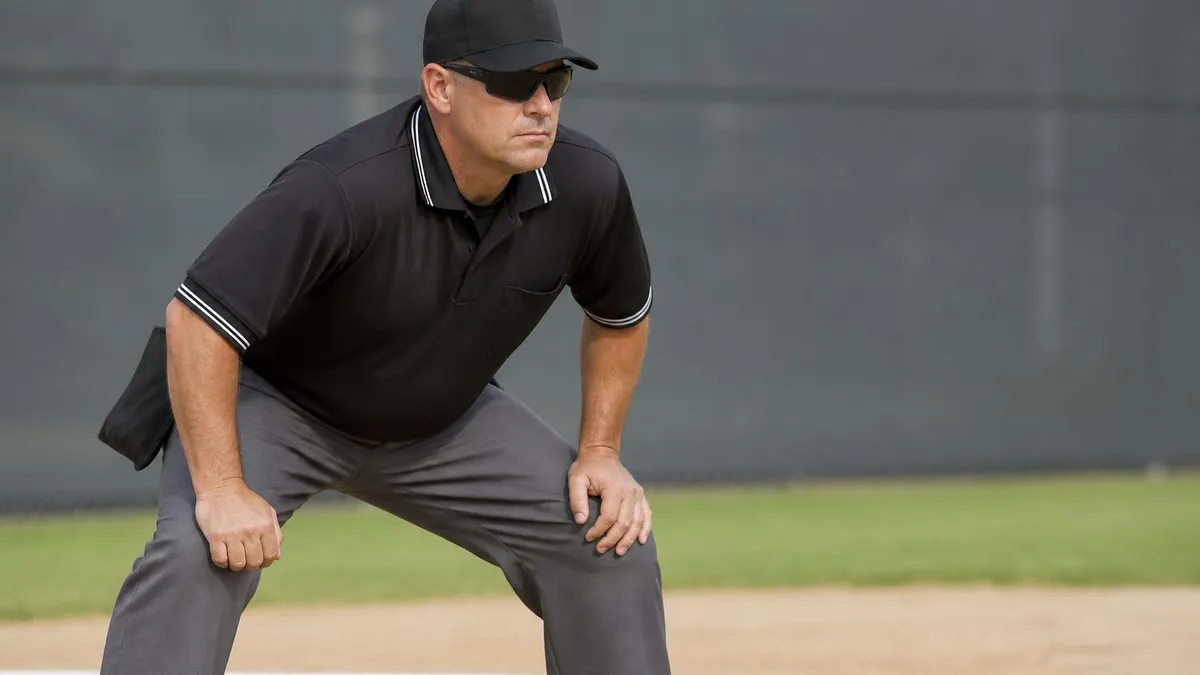
Umpire Signals: The Complete Visual Guide to Every Call Behind the Plate and on the Bases

Umpire Positioning: The Complete Guide to Field Coverage, Mechanics, and Crew Coordination
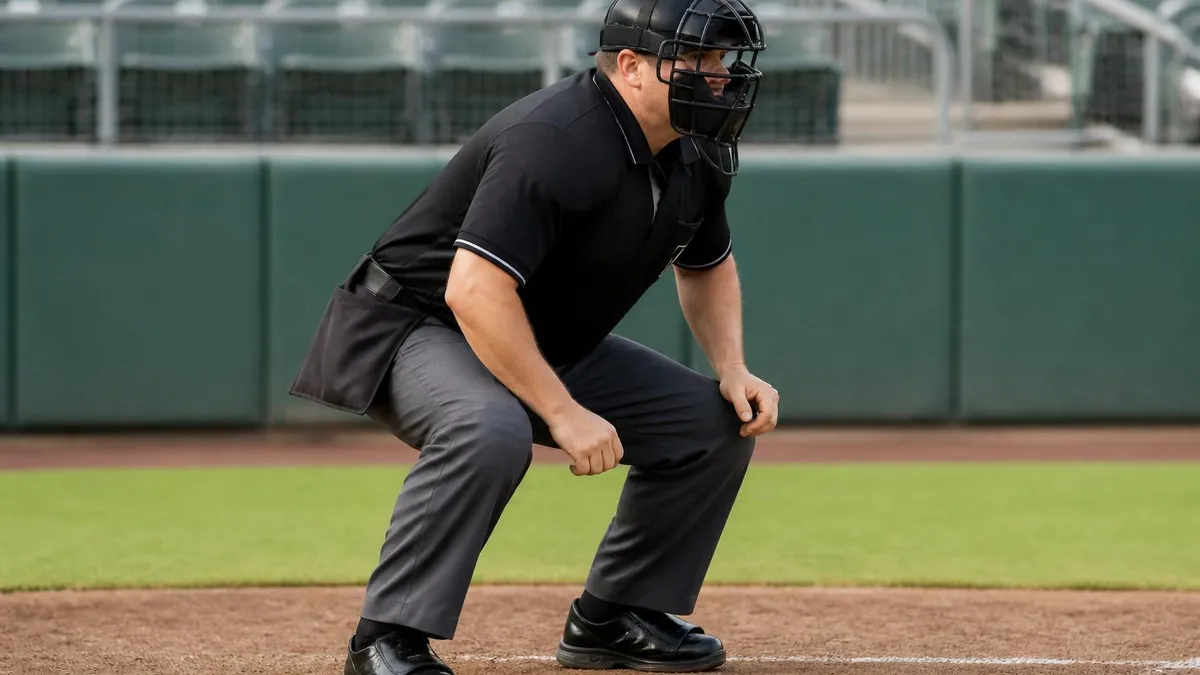
Umpire News: Profession, Career, and Industry Updates

Umpire Jobs: A Complete Career Overview, Duties, and Path to the Field

Umpire in Arkansas: How to Get Certified, Find Games, and Build Your Career
About the Author

Educational Psychologist & Academic Test Preparation Expert
Columbia University Teachers CollegeDr. Lisa Patel holds a Doctorate in Education from Columbia University Teachers College and has spent 17 years researching standardized test design and academic assessment. She has developed preparation programs for SAT, ACT, GRE, LSAT, UCAT, and numerous professional licensing exams, helping students of all backgrounds achieve their target scores.