
LF Forklift Licence (TLILIC0003): Complete Australian Training & Requirements Guide
Everything you need to know about the LF forklift licence in Australia — TLILIC0003 requirements, training, costs, and how to get certified. 📝

The lf forklift licence — formally known as TLILIC0003 Licence to Operate a Forklift Truck — is the nationally recognised qualification required to legally operate a counterbalance forklift in Australia. Issued under the High Risk Work (HRW) licensing framework and administered by state and territory regulators such as SafeWork NSW, WorkSafe Victoria, and Workplace Health and Safety Queensland, the LF licence is one of the most in-demand occupational licences in the country, with hundreds of thousands of workers holding it across warehousing, manufacturing, logistics, and construction industries.
Understanding what the TLILIC0003 licence involves before you enrol can save you significant time and money. The qualification covers a broad range of competencies including pre-operational checks, load handling, stability theory, refuelling and recharging procedures, and safe operation in pedestrian traffic environments. Candidates must demonstrate both theoretical knowledge and practical operating skills assessed by a registered assessor from a Registered Training Organisation (RTO). There is no shortcut — both components are mandatory and must be completed to a satisfactory standard before your licence application is lodged with the relevant state authority.
Training programs typically run between one and five days depending on the provider and the candidate's prior experience. Experienced operators who have been working informally — often in family businesses or agriculture — sometimes complete assessments more quickly if they can demonstrate a strong existing skill base. However, complete beginners should budget for a full multi-day program that includes structured yard practice sessions before the formal assessment takes place. Most RTOs offer both group classroom sessions and flexible one-on-one training to accommodate different learning styles and work schedules.
The cost of obtaining a TLILIC0003 forklift licence in Australia varies considerably depending on the state, the RTO, and whether you choose a classroom-based or workplace-based delivery model. Nationally, training fees typically range from $400 to $900 for the full course including assessment. On top of training fees, you will also pay a government licence application fee, which differs by jurisdiction — in NSW this is currently around $70, while Victorian fees sit closer to $60. Additional costs such as personal protective equipment, medical checks, or re-assessment fees can also apply in certain circumstances.
One important detail that confuses many first-time applicants is the difference between the training unit and the licence itself. The TLILIC0003 unit of competency is the training standard developed by the Australian Industry Skills Committee (AISC), while the actual High Risk Work licence is issued by your state or territory regulator once your RTO submits your assessment results. You do not receive your licence directly from the training provider — the RTO lodges your results electronically, and your regulator then issues either a physical card, a digital licence, or both, depending on jurisdiction.
Licence duration is also a point of confusion. High Risk Work licences in Australia, including the LF forklift class, are valid for five years and must be renewed before expiry. Renewal does not require a full reassessment in most states — typically you simply complete a renewal application and pay the renewal fee — but if your licence has been expired for more than three years, you will generally be required to undergo a full reassessment.
Keeping your licence current is therefore very much in your financial interest, as lapsing and having to retrain from scratch can cost several times the renewal fee.
Whether you are a school leaver entering the workforce, a tradesperson expanding your ticket collection, or an employer looking to upskill your team, this guide walks you through everything you need to know about the TLILIC0003 qualification — from entry requirements and training structure through to assessment, costs, and career opportunities that open up once you hold an LF forklift licence.
Free Forklift Licence Study Tools
Interactive Forklift Licence resources on PracticeTestGeeks, free to start:
- Forklift Licence practice test — 300+ questions with instant scoring and answer explanations
- Forklift Licence flashcards — review key terms and concepts card by card
- Forklift Licence study guide — topic-by-topic overview of what the exam covers
- Forklift Licence cheat sheet — one-page printable summary for last-minute review
LF Forklift Licence — Key Numbers

TLILIC0003 Training Structure: What the Course Covers
Candidates learn to conduct systematic pre-shift checks covering tyres, forks, mast, hydraulics, horn, lights, and fluid levels. Understanding how to identify and report faults before operation is a core competency assessed in the practical component.
This module covers the load capacity plate, load centre calculations, stability triangle principles, and safe stacking heights. Students learn how shifting load weight affects forklift balance and how to prevent tip-overs in real warehouse conditions.
Covers travelling with loads, negotiating ramps and uneven surfaces, operating in pedestrian zones, loading and unloading trucks, and working in confined spaces. Hazard identification and risk management form a significant part of this theoretical module.
Operators must be able to safely refuel LPG and diesel forklifts and recharge electric models. This includes identifying fire hazards, handling LPG cylinders, understanding battery charging sequences, and following spill management procedures.
The hands-on assessment requires candidates to demonstrate all operating skills under observation from a qualified HRW assessor. This includes pre-op checks, manoeuvring drills, load picks and placements, and emergency shutdown procedures.
Getting your LF forklift licence in Australia involves a clearly defined process, but many candidates underestimate the preparation required at each stage. The journey begins with selecting an RTO that is registered with the Australian Skills Quality Authority (ASQA) and authorised to deliver the TLILIC0003 unit in your state. Not every RTO is approved to conduct High Risk Work assessments — the assessor must hold a TAE-qualified HRW assessor credential recognised by your state regulator — so it is worth confirming this before you book. A quick check on your state regulator's website will show you which providers are approved.
Entry requirements for TLILIC0003 are relatively accessible compared with many vocational qualifications. There is no formal prerequisite qualification, and no minimum age in most states beyond being old enough to hold a licence (typically 18, though some states permit supervised training from 16 for apprenticeship purposes). You will need to demonstrate sufficient language, literacy, and numeracy (LLN) skills to understand operational instructions and complete written assessment tasks. Some RTOs conduct a brief LLN screening before enrolment, and support pathways are available if you need additional assistance — this is worth discussing with your chosen provider before you start.
The training itself is divided into two streams: theory and practical. Theory sessions can be delivered face-to-face in a classroom, via online modules (in blended delivery models), or through a combination of both. Practical sessions must be conducted at an approved site with actual forklifts — these cannot be replaced by simulation tools alone, though some RTOs use simulators as a supplementary learning aid before moving to real machines.
During practical sessions you will spend time on the yard performing specific manoeuvres, including picking loads from floor level and elevated racking, placing loads into tight bays, and reversing around corners — all skills assessed in the final practical component.
Once your training is complete and both the theory and practical assessments have been passed, your RTO will electronically submit your results to the relevant state regulator through the HRW results notification system. In most states this triggers automatic processing of your licence application, particularly if your RTO bundles the licence application fee into the training cost and lodges it on your behalf.
However, in some jurisdictions you may need to complete a separate licence application form and pay the government fee directly. Turnaround times vary — NSW and Victoria typically process applications within two to four weeks, though some states offer expedited processing for an additional fee.
It is important to understand that until your physical or digital licence arrives, you cannot legally operate a forklift unsupervised on a commercial worksite — even if your RTO has already confirmed you passed the assessment. Some employers will accept a Statement of Attainment issued by the RTO as evidence of competency during the processing window, but this is at the employer's discretion and does not change the legal position.
If your work situation requires you to operate urgently, it is worth contacting your state regulator to ask about interim arrangements — some will issue a confirmation letter that satisfies WorkCover requirements during the processing period.
Candidates who fail one component of the assessment are generally able to attempt a re-assessment without repeating the entire course. Most RTOs offer one re-assessment attempt included in the course fee, with additional attempts attracting a fee of $100 to $250. There is no regulatory limit on the number of times you can attempt the assessment, but repeated failures may indicate that more practice time is needed before attempting again. Your assessor is required to give you detailed feedback on why you were not deemed competent, which should guide your preparation for any re-sit.
For candidates coming from overseas, Australian forklift licences are not automatically recognised from foreign qualifications. If you hold a forklift licence from New Zealand, you may be able to apply for recognition under the Trans-Tasman Mutual Recognition Arrangement (TTMRA), but you will still need to meet Australian-specific requirements including holding a current NZ High Risk Work equivalent. For all other countries, you will need to complete the full TLILIC0003 training and assessment regardless of your overseas experience or qualifications. Some RTOs offer bridging programs for experienced operators that acknowledge prior learning and reduce the time required on the practical component.
LF Forklift Licence Operating Requirements Explained
Holding an LF forklift licence means you are legally responsible for operating safely within the bounds of your training and your employer's Safe Work Method Statement (SWMS). Before commencing any shift, you must conduct a documented pre-operational inspection and report any defects to your supervisor in writing. Operating a forklift with a known defect — even a minor one — can constitute a breach of your duty of care and expose both you and your employer to prosecution under Work Health and Safety legislation.
Your licence also imposes an obligation to only operate forklift models you have been assessed on, or models that are substantially similar in configuration. For example, if you were assessed on a three-wheel counterbalance forklift, you may not be immediately competent to operate a reach truck, an order picker, or a very-narrow-aisle machine — each of these requires separate training and, in some cases, a separate HRW licence class. Always discuss equipment differences with your supervisor and request familiarisation training if you are assigned to an unfamiliar model.

LF Forklift Licence: Advantages and Limitations
- +Nationally recognised — valid in all Australian states and territories without needing to retrain
- +Opens doors to warehouse, logistics, manufacturing, and construction employment immediately after issue
- +Relatively low training cost compared to many other HRW licence classes, with strong return on investment
- +Five-year licence validity reduces the administrative burden of frequent renewals for most workers
- +Can be stacked with other HRW licences (e.g. LO order picker, LL order picking forklift) to increase employability
- +High and consistent demand across industries means licence holders rarely struggle to find work in major cities
- −Does not cover reach trucks, order pickers, or very-narrow-aisle equipment — separate training required for these
- −Practical assessment must be conducted in-person with real equipment — no fully online pathway available
- −Processing times for the physical licence card can take 2–4 weeks, which may delay urgent employment start dates
- −Training quality varies significantly between RTOs — cheaper providers do not always deliver better learning outcomes
- −Expired licences (over 3 years) require full reassessment, not just renewal, which can be costly and time-consuming
- −Physical fitness requirements are informal but real — prolonged forklift operation in heat or cold environments can be demanding
Pros and Cons at a Glance
| Pros | Cons |
|---|---|
| Nationally recognised — valid in all Australian states and territories without needing to retrain | Does not cover reach trucks, order pickers, or very-narrow-aisle equipment — separate training required for these |
| Opens doors to warehouse, logistics, manufacturing, and construction employment immediately after issue | Practical assessment must be conducted in-person with real equipment — no fully online pathway available |
| Relatively low training cost compared to many other HRW licence classes, with strong return on investment | Training quality varies significantly between RTOs — cheaper providers do not always deliver better learning outcomes |
| Five-year licence validity reduces the administrative burden of frequent renewals for most workers | Physical fitness requirements are informal but real — prolonged forklift operation in heat or cold environments can be demanding |
TLILIC0003 Assessment Day Checklist: What to Bring and Do
- ✓Bring your government-issued photo ID (driver's licence or passport) — assessors are required to verify identity before the assessment begins.
- ✓Wear or bring approved steel-capped boots that meet AS/NZS 2210.3 — most assessment sites will refuse entry without appropriate footwear.
- ✓Arrive at least 15 minutes early to review the assessment criteria sheet and ask any last-minute questions before the clock starts.
- ✓Complete your pre-operational inspection methodically and out loud — verbally narrating your checks demonstrates competency to the assessor.
- ✓Check the load capacity plate before every lift and confirm the load weight is within the rated capacity at the correct load centre.
- ✓Keep the load as low as safely possible during travel — no more than 150–300mm off the ground depending on terrain and site rules.
- ✓Apply the parking brake every time you dismount the forklift, even briefly — failure to do this is one of the most common assessment fail points.
- ✓Approach and depart from ramps straight-on, never at an angle, and always travel with the load on the uphill side of the ramp.
- ✓Scan intersections and pedestrian zones and sound the horn before entering — active hazard awareness is explicitly assessed.
- ✓If you are unsure about any instruction during the practical assessment, ask the assessor for clarification — do not guess or proceed unsafely.
Parking Brake — The #1 Reason Candidates Fail
Industry assessors consistently report that failing to apply the parking brake when dismounting is the single most common reason candidates are marked not competent on their TLILIC0003 practical assessment. This applies even when the candidate only steps away from the machine for a few seconds. Make it a non-negotiable habit during training so it becomes automatic on assessment day — a single omission can result in a fail and an additional re-assessment fee.
The financial case for obtaining a TLILIC0003 forklift licence is compelling, particularly for workers entering the logistics and warehousing sectors. Entry-level forklift operator roles in Australia typically start at $28 to $34 per hour, depending on the state, industry, and enterprise agreement in place. Full-time operators working 38 hours per week at $30 per hour earn approximately $59,000 per year before overtime and allowances. When shift penalties, Saturday rates, and overtime are factored in, total annual earnings for experienced forklift operators frequently exceed $70,000 — a solid income that requires a relatively modest initial training investment of $500 to $900.
From a pure return-on-investment perspective, the TLILIC0003 licence is one of the most efficient qualifications available in the Australian vocational sector. Assuming training costs of $750 and a starting wage of $30 per hour, a worker recoups the full cost of their licence within roughly 25 hours of paid work — less than a single working week. Compare this to a Certificate III or IV qualification that costs $5,000 to $15,000 and takes 12 to 24 months to complete, and the forklift licence looks very attractive as a fast pathway into stable, well-paying employment.
Regional and remote areas of Australia often pay significantly higher rates for forklift operators due to labour shortages and the cost-of-living allowances built into enterprise agreements for remote worksites. Mining and resources sector forklift operators in Western Australia and Queensland routinely earn $85,000 to $110,000 per year on fly-in-fly-out rosters, particularly when working with heavy industrial equipment like container handlers or rough-terrain forklifts in addition to standard counterbalance machines. However, these positions almost always require additional HRW licences beyond the base LF class, along with site induction requirements and physical capability assessments.
Employers in the warehousing, third-party logistics (3PL), and food and beverage distribution industries are among the largest employers of forklift operators in Australia. Companies like Woolworths, Coles, Amazon, Toll Group, and DHL operate large distribution centres that run continuous three-shift operations, meaning forklift operators can access regular overtime and shift penalty payments that substantially boost base pay. These employers often value reliability and safety record above all other attributes, and will frequently sponsor existing workers through TLILIC0003 training if operational demand justifies it.
The TLILIC0003 qualification also acts as a stepping stone to supervisory and logistics coordination roles. Many warehouse supervisors and operations coordinators began their careers on the forks, using that floor-level experience to understand material flow, storage systems, and WHS obligations before moving into management. If you are interested in this career trajectory, combining your LF licence with a Certificate III in Warehousing Operations (TLI30319) provides an excellent credential combination that covers both the practical and operational knowledge required for team leader roles.
Cost cards for typical TLILIC0003-related expenses vary by state and provider, but the following breakdown is broadly representative of what you can expect to pay across most of Australia. Training and assessment fees represent the largest single cost, followed by the government licence application fee, which is set by your state regulator and is non-negotiable. If you require PPE such as steel-capped boots or a high-visibility vest, budget an additional $80 to $150 for compliant gear. Some RTOs include the application fee in their course price — always confirm this explicitly when comparing quotes, as headline prices can be misleading.
Employer-funded training is worth investigating if you are already employed and your current employer operates forklifts. Under the Australian Apprenticeships framework and various state government co-contribution training schemes, employers can access subsidised training funding for their workforce that significantly reduces the out-of-pocket cost. In Queensland, the User Choice program subsidises TLILIC0003 training for eligible workers. In NSW, Smart and Skilled subsidies apply to certain skill sets including forklift units. Victoria's Skills First program also lists forklift training among eligible qualifications — check with your employer's HR team or training provider for current subsidy availability in your state.

Operating a forklift on a commercial worksite without a current High Risk Work licence is a serious breach of Work Health and Safety legislation in every Australian state and territory. Penalties for individuals can reach $10,000 or more, and employers who knowingly allow unlicensed operators to work face fines exceeding $50,000. Your RTO statement of attainment does not substitute for a licence — wait until your physical or digital licence is confirmed as issued before operating without direct supervision from a licensed operator.
Renewing your TLILIC0003 forklift licence before it expires is far simpler and cheaper than allowing it to lapse and having to requalify. In most Australian states, renewal involves completing a short online or paper application form through your state regulator's portal, paying the renewal fee (typically $60 to $80), and in some jurisdictions, providing evidence of continued operation such as an employer declaration. You do not need to resit the theory or practical assessments for a standard renewal — the assumption is that you have maintained your skills through regular workplace use during the licence period.
However, if your licence expires and remains unrenewed for more than three years, most state regulators will require you to undergo a full reassessment before they will issue a new licence. This is not simply a bureaucratic hurdle — it reflects genuine safety concerns about skill fade over extended periods of non-use. If you have been out of the workforce, travelling, or working in a non-forklift role for three or more years, a refresher training course is highly advisable even if not strictly mandated. The practical skills of load handling, stability management, and emergency procedures do deteriorate without regular reinforcement.
Beyond the base LF counterbalance forklift class, a number of related HRW licence classes can significantly extend your employability and earning potential. The LO licence (Licence to Operate an Order Picking Forklift Truck) is commonly sought by workers in high-density storage operations, cold stores, and e-commerce fulfilment centres. The LL licence covers low-level order picking forklifts, while the LM class covers an industrial lift truck with mast. Each requires a separate unit of competency and assessment, though experienced LF holders typically complete these additional units in one to two days given their existing foundational skills.
Mutual recognition of High Risk Work licences between Australian states and territories means your NSW, Victorian, Queensland, or other state-issued licence is valid for work in any other jurisdiction without needing to obtain a separate licence. If you move interstate, you should notify your new state regulator and may need to transfer your licence registration to the new state authority — this is generally a straightforward administrative process and does not require reassessment. The exception applies to South Australia, which historically maintained separate licensing arrangements, though harmonisation efforts under the model WHS laws have largely resolved these discrepancies.
Some operators choose to hold their HRW licence in a state with a longer validity period or lower renewal fees, which is legal provided you remain a genuine resident of or worker in that jurisdiction. However, regulators in each state can and do cross-check licence databases, and holding a licence in a state where you do not reside or work primarily could create complications during an audit or incident investigation.
The safest approach is to hold your licence in the state where you primarily work and pay the applicable renewal fees when due — the difference in cost between jurisdictions is rarely significant enough to warrant the administrative complexity.
For operators interested in expanding into management or training roles, the TAE40122 Certificate IV in Training and Assessment provides the pathway to becoming a workplace trainer and, with additional endorsements, an HRW assessor. HRW assessors are in consistent demand given the volume of forklift licence assessments required nationally, and the role offers flexible work including part-time and contract arrangements with RTOs across the country. Many experienced operators find that transitioning into a training role in their mid-career extends their involvement in the industry while reducing the physical demands of full-time forklift operation.
Staying informed about changes to the WHS regulations and the TLILIC0003 unit requirements is an ongoing obligation for all licensed operators and trainers. The unit of competency is reviewed periodically by the AISC, and updates are typically flagged on the training.gov.au website.
If the unit is superseded by a new version, there is usually a transition period during which both the old and new versions remain valid, after which the superseded version can no longer be assessed. Your RTO will notify you of any material changes during training, but it is worth bookmarking the training.gov.au entry for TLILIC0003 so you can monitor updates independently.
Preparing effectively for your TLILIC0003 assessment requires more than just showing up for the scheduled training days. The candidates who perform best on assessment day are those who have invested time outside of class reviewing the theoretical components — particularly load stability calculations, pre-operational inspection sequences, and the relevant WHS regulations for high risk work. Understanding why the rules exist, not just what they are, makes it far easier to apply correct judgment in practical scenarios where the assessor presents you with unfamiliar situations or asks open-ended questions about your decision-making process.
One of the most effective preparation strategies is to practise your pre-operational inspection until you can complete it from memory in a consistent sequence every time. Most assessors use a standardised checklist aligned with the manufacturer's pre-use inspection guide, and they are looking for both thoroughness and efficiency. Developing a personal mnemonic or systematic walk-around routine during your training days means you will not panic or skip steps when you are under observation. Ask your trainer for a copy of the inspection checklist and rehearse it mentally before each practice session.
Theory preparation is equally important and is where practice questions and mock assessments prove most valuable. The written component of the TLILIC0003 assessment typically involves 20 to 40 multiple-choice and short-answer questions drawn from the unit's knowledge requirements. Common topics include the load capacity plate and how to interpret it, stability triangle principles and tip-over prevention, LPG handling and safety procedures, pedestrian management rules, load restraint and stacking requirements, and the legal obligations of an HRW licence holder. Reviewing these topic areas systematically in the week before your assessment significantly improves performance.
Physical preparation is a dimension that candidates sometimes overlook. Forklift operation involves extended periods of seated work with repeated twisting motions as you look over your shoulder while reversing, sustained concentration for extended periods, and exposure to vibration through the seat.
If you are not used to this type of work, even a single day of intensive practical training can leave you fatigued. Arriving well-rested, hydrated, and having eaten a solid meal before assessment day makes a measurable difference to your concentration and reaction time — assessors are experienced at spotting fatigue-related errors, and tiredness is often a contributing factor in assessment failures.
On the day of your practical assessment, be prepared for the assessor to ask you to stop mid-task and explain your reasoning, or to present you with a scenario — for example, a damaged pallet, an overloaded rack, or a pedestrian entering your work zone — and observe how you respond.
These interventions are not tricks; they are an opportunity for you to demonstrate your situational awareness and safety decision-making. The correct response is always to stop and assess before proceeding, to communicate clearly with other workers, and to escalate to a supervisor if you identify a hazard that you cannot safely resolve independently.
After your assessment, if your RTO reports you as competent, you will receive a Statement of Attainment relatively quickly — in many cases on the day or within 24 hours. Keep this document as it serves as official evidence of your training completion and can be required by employers, labour hire agencies, and site induction coordinators during the gap between assessment completion and physical licence issue.
Some employers will allow you to commence employment under direct supervision of a licensed operator during this window, though this arrangement must be explicitly approved by the site WHS manager and documented in the induction records.
Finally, take advantage of all the free resources available to you while studying. Regulator websites such as SafeWork NSW, WorkSafe Victoria, and WHS Queensland publish free guidance materials, operator bulletins, and incident case studies related to forklift safety. Reading real incident reports is one of the most powerful ways to internalise why the safety rules matter — seeing the consequences of a stability triangle violation or an unchecked tyre failure in a documented case study makes the theoretical content far more memorable than reading a textbook definition ever will.
Sample Forklift Licence Practice Questions
Try these questions from our free Forklift Licence practice tests. The correct answer and an explanation follow each question.
What supervisory requirements exist for Forklift Pre-Operational Checks activities?
- A. No supervision needed
- B. Adequate supervision by competent persons, proportionate to the level of risk
- C. Supervision is optional
- D. Only new workers need supervision
Answer: B. Adequate supervision by competent persons, proportionate to the level of risk
The level of supervision must be proportionate to the risk level, with competent supervisors overseeing the work.
What consultation requirements exist for Forklift Pre-Operational Checks under WHS law?
- A. None — management decides alone
- B. Workers must be consulted on matters affecting their health and safety, with genuine opportunity to provide input
- C. Consultation is voluntary
- D. Only senior workers are consulted
Answer: B. Workers must be consulted on matters affecting their health and safety, with genuine opportunity to provide input
WHS law requires genuine consultation with workers on matters affecting their safety, including through HSRs and committees.
What is the significance of Australian Standards for Forklift Pre-Operational Checks?
- A. They are advisory only
- B. Many are referenced in legislation making compliance legally required, and they set minimum technical requirements
- C. They are outdated
- D. They only apply to imported products
Answer: B. Many are referenced in legislation making compliance legally required, and they set minimum technical requirements
Australian Standards referenced in WHS Regulations become legal requirements and set the minimum technical benchmarks for compliance.
Under Australian law, what rights do workers have regarding Forklift Pre-Operational Checks safety?
- A. No specific rights
- B. Rights to information, training, consultation, representation through HSRs, and to cease unsafe work
- C. Only the right to complain
- D. Rights depend on seniority
Answer: B. Rights to information, training, consultation, representation through HSRs, and to cease unsafe work
Workers have specific legal rights under WHS legislation including information, training, consultation, representation, and refusal of unsafe work.
TLILIC0003 Questions and Answers
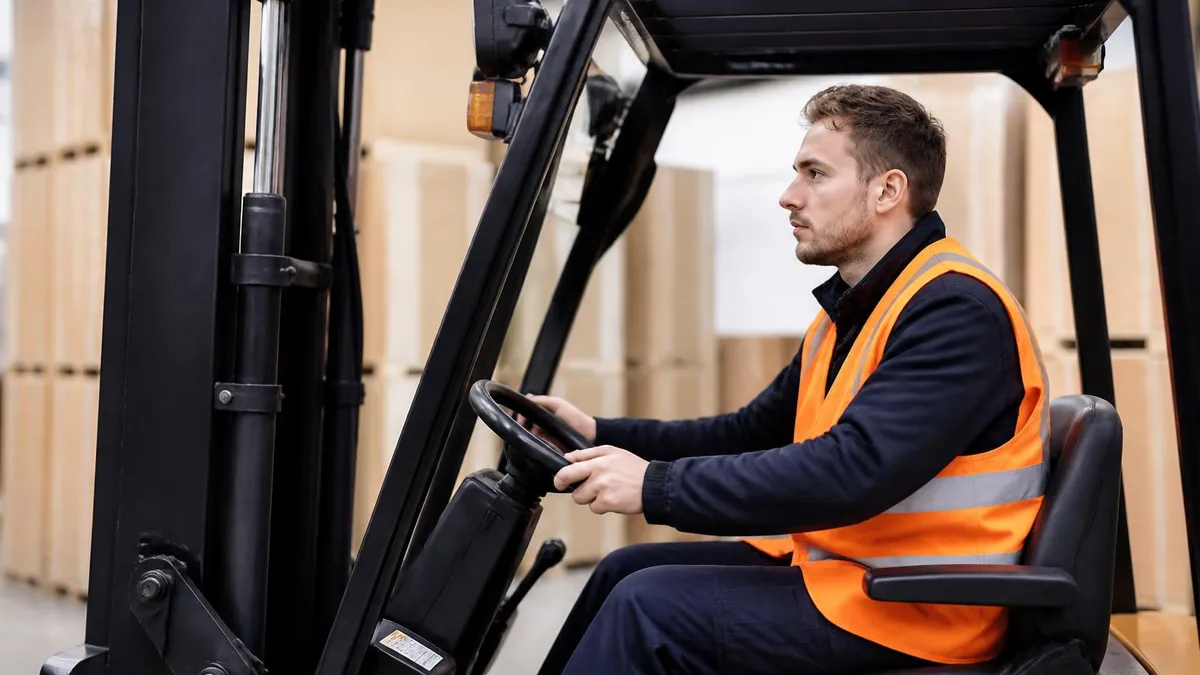
Forklift Models — Complete Guide (2026)
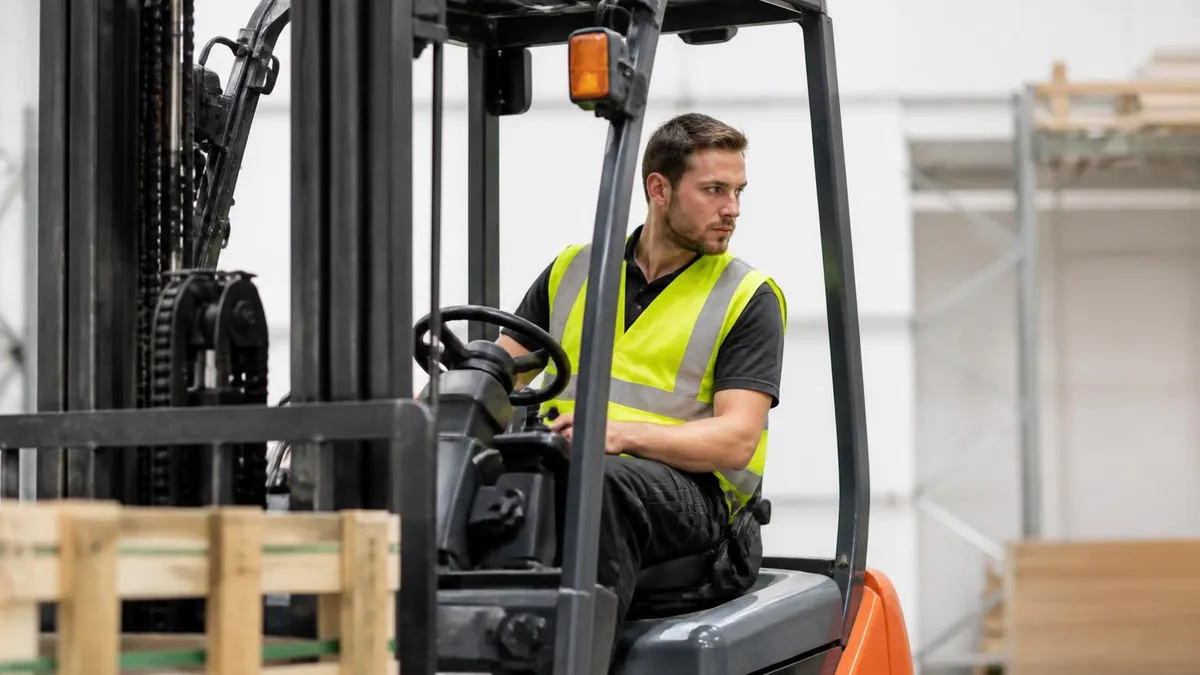
TLILIC0003 Forklift Maintenance: Pre-Shift Checks & Service Guide (2026)
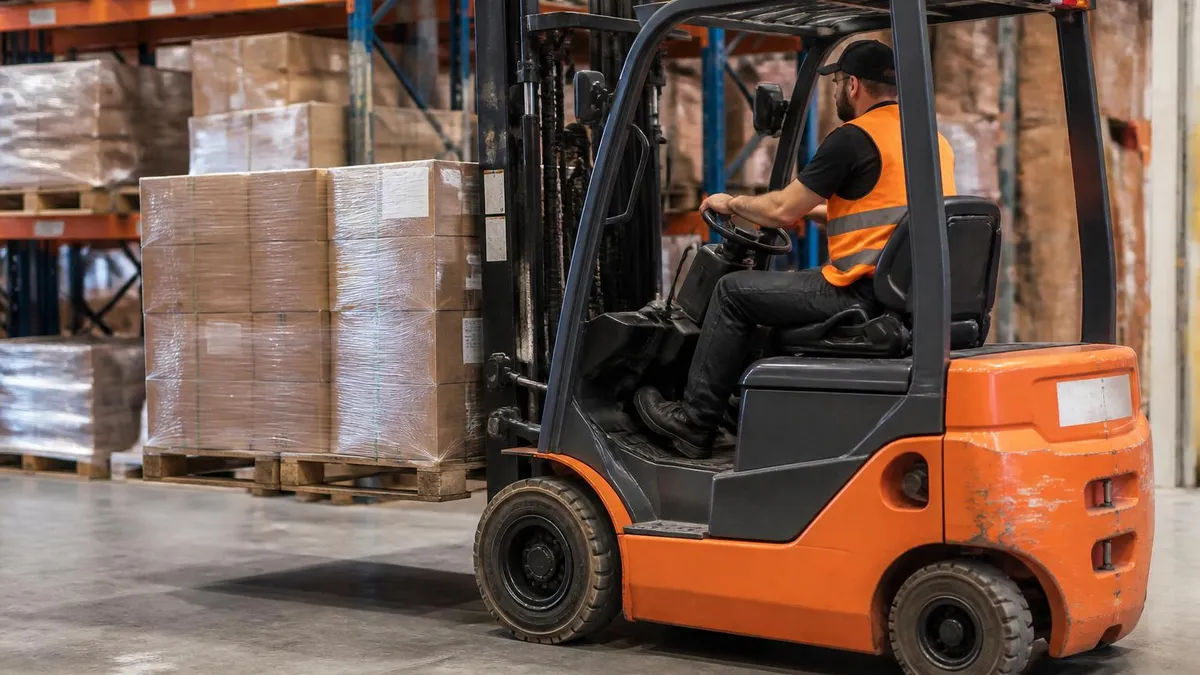
Forklift Licence Renewal Australia: Complete TLILIC0003 Guide (2026)
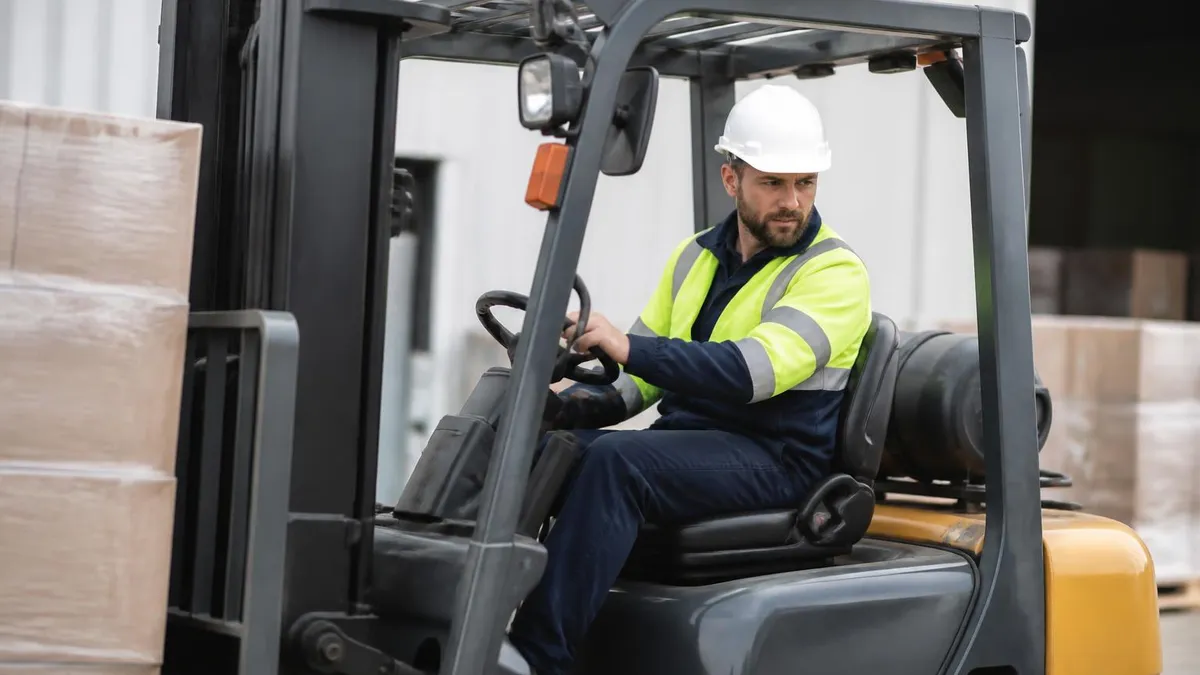
Electric 3 Wheel Forklift: Complete Guide to Electric Forklift Types for TLILIC0003 Operators in Australia
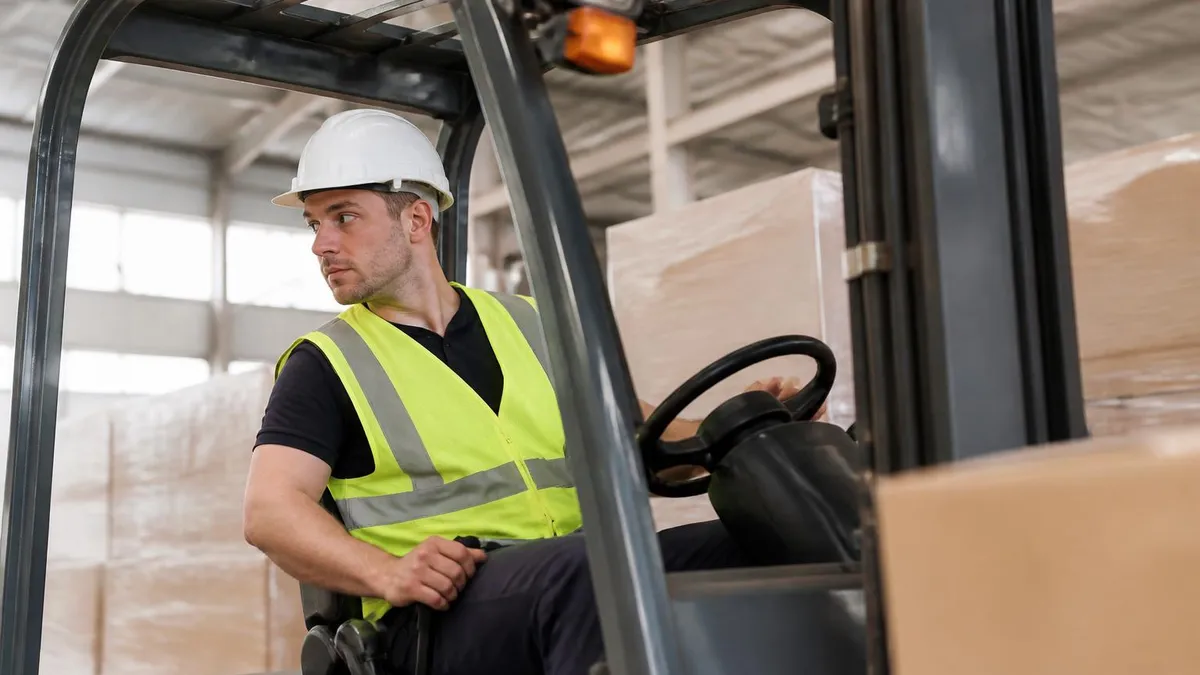
Forklift Sale Brisbane: Complete TLILIC0003 Operator Guide to Buying Forklifts in Australia
About the Author

Certified Crane Operator & Skilled Trades Exam Specialist
Ferris State UniversityRobert Martinez is a Journeyman Ironworker, NCCCO-certified crane operator, and forklift trainer with a Bachelor of Science in Construction Technology from Ferris State University. He has 21 years of ironworking, rigging, and heavy equipment operation experience across high-rise and industrial construction sites. Robert prepares candidates for crane operator, rigger, forklift, and skilled trades certification examinations.