
Forklift Training Near Me: Complete Guide to Finding TLILIC0003 Courses in Australia
Forklift training near me: 📗 find accredited TLILIC0003 courses across Australia. Compare costs, duration, RTO providers, and licensing steps.
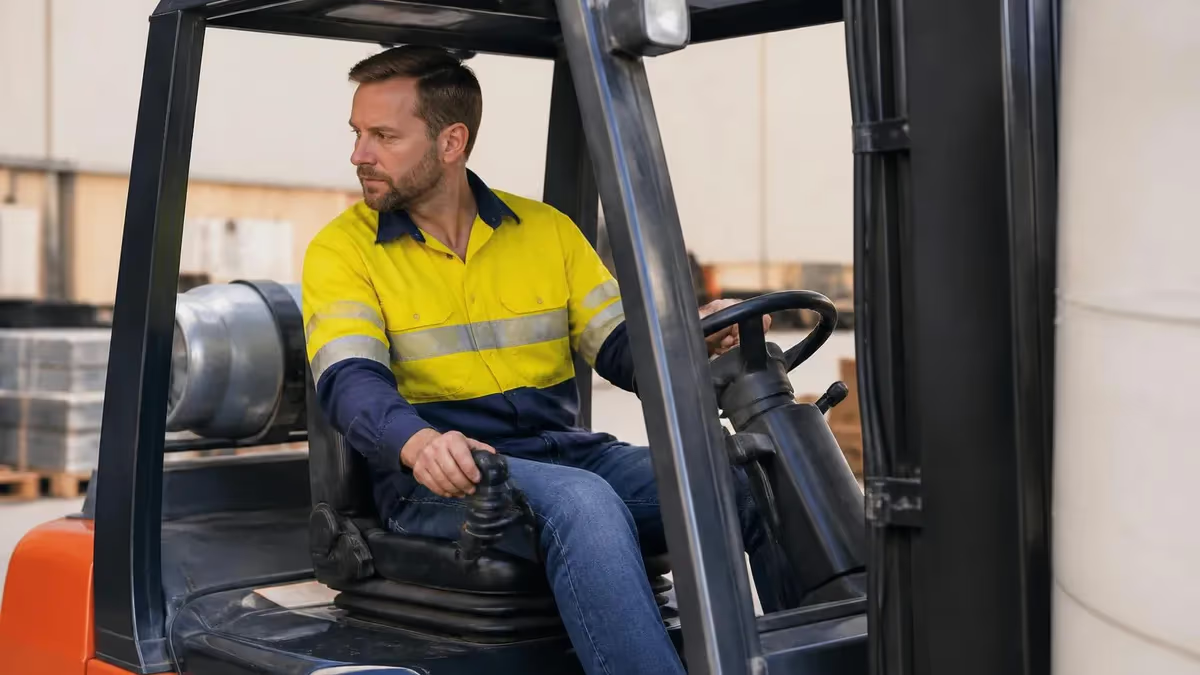
Searching for forklift forklift licence training near me me is the first step thousands of Australians take each year when they decide to pursue a high-risk work licence under forklift operator salary to Operate a Forklift Truck. Whether you live in Sydney, Melbourne, Brisbane, Perth, Adelaide, or a regional town, accredited training providers exist within reasonable distance of almost every postcode. This guide unpacks how to choose the right Registered Training Organisation (RTO), what the course covers, how much it costs, how long it takes, and what you need to bring on day one.
The TLILIC0003 unit of competency replaced the older TLILIC2001 in late 2021 and is now the national standard recognised by every state and territory work health and safety regulator. Completing the course with a SafeWork-approved RTO leads to a high-risk work (HRW) licence with the LF class endorsement, which is mandatory before you operate any counterbalance forklift with a rated capacity over one tonne. Without it, both you and your employer face penalties under the Work Health and Safety Act.
Finding training near you matters because forklift courses combine theory with hands-on assessment. You need physical access to a yard with a real forklift, instructor supervision, and a designated assessment area. Online-only forklift training does not exist in Australia for the practical component, although some RTOs offer pre-course theory through a learner portal to reduce classroom time. Most reputable providers operate within a 30 to 60 minute drive of every capital city CBD and many regional hubs.
This article walks through everything you need to compare providers fairly. We cover average pricing ranges in 2026 dollars, how to verify RTO credentials on training.gov.au, what the assessment day looks like, the eligibility checks required before booking, and the documentation you must bring to qualify for the licence application. We also address common pitfalls such as expired learner permits, unreadable photo ID, and refresher requirements for operators returning to the industry after extended breaks.
For job seekers, the forklift ticket remains one of the highest return-on-investment qualifications in Australia. Course fees typically sit between $250 and $600, training takes one to five days depending on prior experience, and the resulting licence opens roles in warehousing, logistics, manufacturing, construction, ports, and retail distribution. Many workers recover the entire course cost within their first week of paid work, and the licence remains valid for five years before renewal.
Before booking, take time to understand exactly what the assessor is looking for and the specific skills you will be tested on. Knowing the structure of the practical evaluation, the load-handling exercises, and the verbal questioning gives you a significant confidence boost on assessment day. Many candidates also benefit from reviewing a guide on forklift licence near me to compare local providers and understand the licensing journey end-to-end.
By the end of this guide you will know how to shortlist three RTOs, what questions to ask before paying a deposit, how to spot red flags such as unrealistically short courses or providers without a current scope of registration, and how to prepare so you walk into assessment day calm, ready, and on track to pass first time.
Forklift Training in Australia by the Numbers
Key Facts at a Glance
| Item | Value | Details |
|---|---|---|
| Typical Course Fee | $250–$600 | State and RTO dependent |
| Course Duration | 1–5 Days | Shorter for experienced operators |
| Licence Validity | 5 Years | Before renewal required |
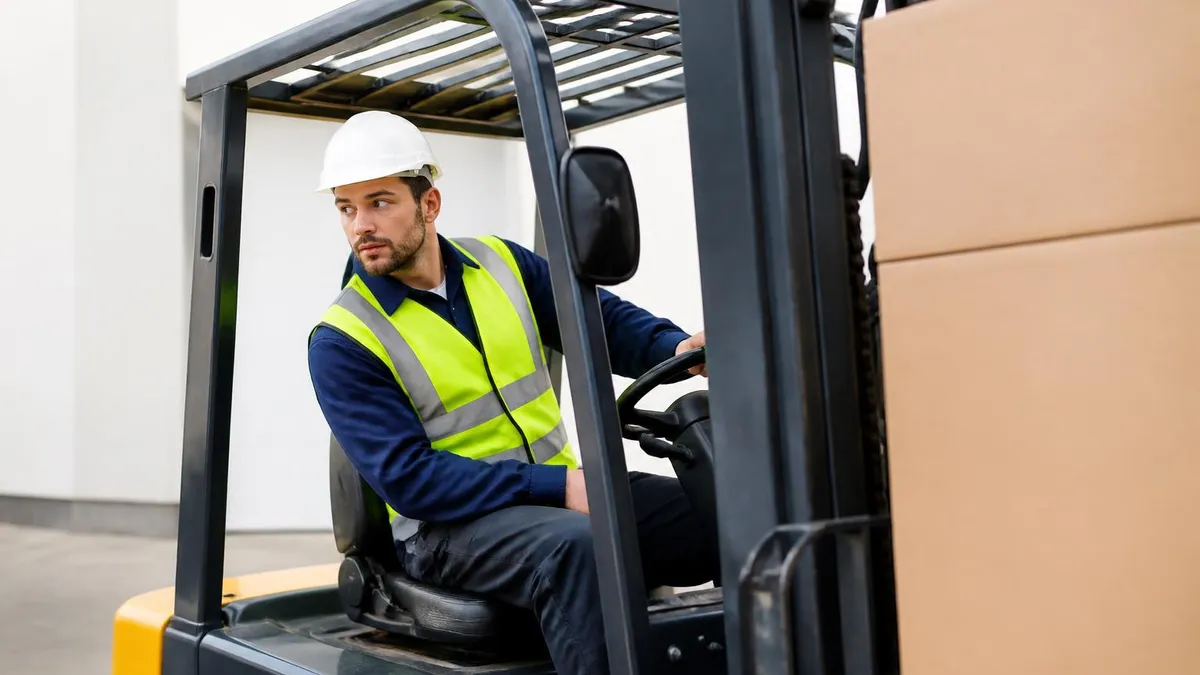
What Forklift Training Looks Like Day by Day
Day 1: Theory & Legislation
Day 2: Pre-Start & Familiarisation
Day 3: Manoeuvring Drills
Day 4: Load Handling
Day 5: Assessment
Locating quality forklift training near me starts with the official training.gov.au register. This federal database lists every RTO authorised to deliver TLILIC0003, alongside their current scope of registration, contact details, and any compliance audit history. Type the unit code into the search bar, filter by state, and you will see every legitimate provider within your region. Avoid any provider not on this register because qualifications they issue will not be accepted by SafeWork, WorkSafe, or any state regulator when you apply for your licence card.
State-based safety regulators also maintain their own approved provider lists. SafeWork NSW, WorkSafe Victoria, Workplace Health and Safety Queensland, SafeWork SA, WorkSafe WA, WorkSafe Tasmania, NT WorkSafe, and WorkSafe ACT each publish accredited assessor databases. Cross-checking a provider against both training.gov.au and your local regulator gives you double confirmation that the RTO can issue a Statement of Attainment leading to a valid HRW licence application.
Geographic convenience matters but should never be the only factor. A training centre fifteen minutes from your home is appealing, but if their fleet consists of a single ageing forklift, your hands-on time will be limited and your skills will not generalise to modern workplaces. Larger RTOs typically operate multiple forklifts of different capacities, electric and LPG models, and a mix of pneumatic and cushion tyre units. This exposure makes you more employable because you can step into varied environments confidently.
Ask each shortlisted RTO about instructor-to-student ratios. Industry best practice is one instructor for every six students during theory and one for every three or four during practical. Ratios above five-to-one in the yard mean reduced seat time per learner and a higher chance of leaving without confidence. Reputable trainers will quote ratios freely and may even allow you to observe a current group before enrolling so you can judge facility quality firsthand.
Public transport access is worth considering if you do not drive. Many RTOs operate from industrial estates with limited bus or train services, so plan how you will arrive on time each morning. Some providers offer pickup arrangements from nearby stations, while others partner with neighbouring training centres to share facilities. Always confirm parking availability if driving, because industrial estates often restrict street parking and tow vehicles parked outside designated bays.
Read independent reviews on Google, Facebook, and forklift operator community forums. Look for patterns rather than isolated complaints. Repeated mentions of rushed assessments, hidden fees, or instructors who fail students unnecessarily are red flags. Conversely, consistent praise for patient teaching, modern equipment, and clear communication signals a quality RTO. Cross-reference reviews with the Australian Skills Quality Authority register to confirm no recent sanctions or scope reductions. Reviewing a comprehensive overview of forklift mast of forklift components also helps you prepare technical conversations with trainers.
Finally, contact each shortlisted RTO by phone rather than email. The way administrative staff handle your questions reveals a great deal about the organisation. Quick, clear, courteous answers about scope, fees, refund policies, and assessment criteria suggest a well-run business. Vague replies, pressure to pay deposits immediately, or reluctance to confirm course content in writing are warning signs worth heeding before committing your money.
TLILIC0003 Practice Test Questions
Prepare for the Forklift Licence Australia - TLILIC0003 exam with our free practice test modules. Each quiz covers key topics to help you pass on your first try.
TLILIC0003 Forklift Licence Australia Atta...
TLILIC0003 Exam Questions covering Forklift Licence Australia Attachments and Modifications. Master TLILIC0003 Test concepts for certification prep.
TLILIC0003 Forklift Licence Australia Batt...
Free TLILIC0003 Practice Test featuring Forklift Licence Australia Battery and Fuel Safety. Improve your TLILIC0003 Exam score with mock test prep.
TLILIC0003 Forklift Licence Australia Emer...
TLILIC0003 Mock Exam on Forklift Licence Australia Emergency Procedures. TLILIC0003 Study Guide questions to pass on your first try.
TLILIC0003 Forklift Licence Australia Fork...
TLILIC0003 Test Prep for Forklift Licence Australia Forklift Pre-Operational Checks. Practice TLILIC0003 Quiz questions and boost your score.
TLILIC0003 Forklift Licence Australia Haza...
TLILIC0003 Questions and Answers on Forklift Licence Australia Hazard Identification. Free TLILIC0003 practice for exam readiness.
TLILIC0003 Forklift Licence Australia Load...
TLILIC0003 Mock Test covering Forklift Licence Australia Load Centre Calculations. Online TLILIC0003 Test practice with instant feedback.
TLILIC0003 Forklift Licence Australia Load...
Free TLILIC0003 Quiz on Forklift Licence Australia Load Handling and Capacity. TLILIC0003 Exam prep questions with detailed explanations.
TLILIC0003 Forklift Licence Australia Oper...
TLILIC0003 Practice Questions for Forklift Licence Australia Operating in Different Environments. Build confidence for your TLILIC0003 certification exam.
TLILIC0003 Forklift Licence Australia Oper...
TLILIC0003 Test Online for Forklift Licence Australia Operating Techniques. Free practice with instant results and feedback.
TLILIC0003 Forklift Licence Australia Pede...
TLILIC0003 Study Material on Forklift Licence Australia Pedestrian Safety. Prepare effectively with real exam-style questions.
Forklift Training Cost Breakdown Across Australia
A standard novice TLILIC0003 course typically costs between $400 and $600 in metropolitan areas, including theory, practical training, assessment, and the Statement of Attainment. This price assumes you have no prior forklift experience and need the full four to five day program. Many RTOs include morning tea and printed learner workbooks in the fee, though lunch is usually self-catered.
Be cautious of providers advertising courses under $250 unless you have verified experience and qualify for an experienced operator pathway. Extremely low pricing often signals rushed training, inadequate seat time, or hidden charges added during enrolment. Always request a full quote in writing showing the course fee, assessment fee, certificate issuance fee, and any optional extras such as refresher hours or licence application assistance before paying any deposit.
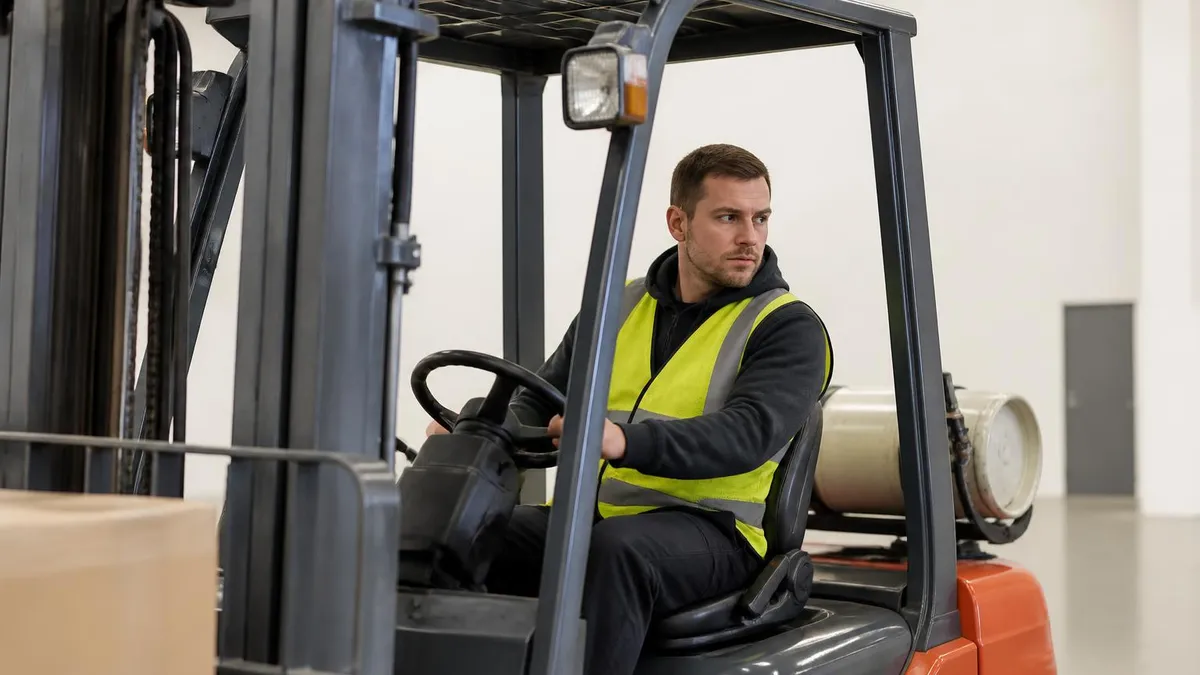
Is Forklift Training Worth the Investment?
- +Course fees recovered within one to two weeks of paid work
- +Licence valid across all Australian states and territories
- +Opens roles in warehousing, logistics, manufacturing, and construction
- +High-risk work licences command premium hourly rates
- +Five year validity before renewal is required
- +Stackable with other high-risk work classes like order picker and EWP
- +Strong job market with persistent demand for licensed operators
- −Requires physical fitness for prolonged sitting and visual scanning
- −Eyesight and hearing checks may disqualify some applicants
- −Annual medical reviews required for some industrial worksites
- −Refresher needed if you stop operating for extended periods
- −Initial assessment failure means re-sitting at additional cost
- −Some employers expect attachments, racking, or container experience
Pre-Course Checklist: What to Bring to Forklift Training
- ✓Government-issued photo ID with current address (driver licence or passport)
- ✓Unique Student Identifier (USI) — create free at usi.gov.au before day one
- ✓Steel-capped safety boots, hi-vis vest, long trousers, and long-sleeve shirt
- ✓Safety glasses if you wear prescription lenses or sun-sensitive eyes
- ✓Notebook and pen for theory session and practical debrief notes
- ✓Water bottle and packed lunch unless catering is confirmed
- ✓Reading glasses if needed for fine print on load charts
- ✓Cash or card to cover any optional licence application fee on the day
- ✓Recent payslip or employer letter if claiming refresher eligibility
- ✓Pre-course learner workbook completed if provided by the RTO
Your Unique Student Identifier is mandatory
Without a valid USI on file with the RTO, your Statement of Attainment cannot be issued and you cannot apply for the HRW licence. Create yours free at usi.gov.au using your Medicare card, driver licence, or passport. This is a five-minute task that many candidates leave until the last minute and regret.
Assessment day is structured to confirm you can operate a forklift safely without supervision in a real workplace. The day usually begins with a final theory review and short knowledge questions, followed by the practical assessment in the yard. Most RTOs allow forty-five to ninety minutes per candidate for the practical, depending on assessor workload. You will not be asked to perform anything you have not already practised under instruction during the preceding days.
The pre-start inspection is your first scored task. Approach the forklift methodically, walk around it clockwise, and verbalise each check as you go. Examine tyres for cuts and pressure, forks for cracks at the heel, mast chains for tension, hydraulic hoses for weeping, the load backrest extension for security, and the data plate for legibility. Inside the cab, check seat belt, horn, lights, parking brake, gauges, and warning labels. Document any defects you find rather than ignoring them.
After pre-start, you start the engine and complete a series of operating tasks. Typical exercises include collecting a pallet from a ground-level pickup point, transporting it through a coned slalom, placing it on a second-tier rack, retrieving a second pallet from height, and returning everything to a designated drop zone. The assessor watches for correct mast tilt-back during transit, smooth controls, observation through turns, horn use at blind spots, and travel speed appropriate to load and visibility.
Verbal questioning runs alongside or after the practical. Expect around thirty questions covering stability triangle, load centre and capacity derating, attachments and their effects, refuelling procedures, battery safety, pedestrian interaction, refuelling versus battery exchange protocols, emergency stop response, and legislation. Answers do not need to be word perfect, but you must demonstrate understanding rather than rehearsed phrases. Assessors probe with follow-up questions if they suspect rote memorisation without comprehension.
Common reasons for assessment failure include forgetting to apply the parking brake during pickup, travelling with the load raised above 150 millimetres clearance, failing to observe behind before reversing, and incorrect mast tilt when carrying high loads. None of these errors require advanced skill to avoid, but nerves can cause experienced operators to skip steps they normally perform automatically. Slow down, breathe, and verbalise your actions to keep yourself disciplined.
If you do not pass on the first attempt, the assessor will provide written feedback identifying specific gaps. Most RTOs offer a re-assessment within two weeks for a reduced fee of around $150 to $250, focused only on the failed elements. Take the time to address weaknesses with additional practice rather than rushing back too quickly. Reviewing forklift forklift clearance height and load specifications between attempts builds the deeper technical confidence assessors expect.
Once you pass, the RTO issues a Notice of Satisfactory Assessment (NSA), which acts as your interim authorisation to work for up to sixty days while your formal HRW licence card is processed. Take a photo of the NSA, email a copy to your employer, and apply for the licence card through your state regulator within the validity period. Working without either an NSA or a current licence card is illegal and exposes both you and your employer to prosecution.
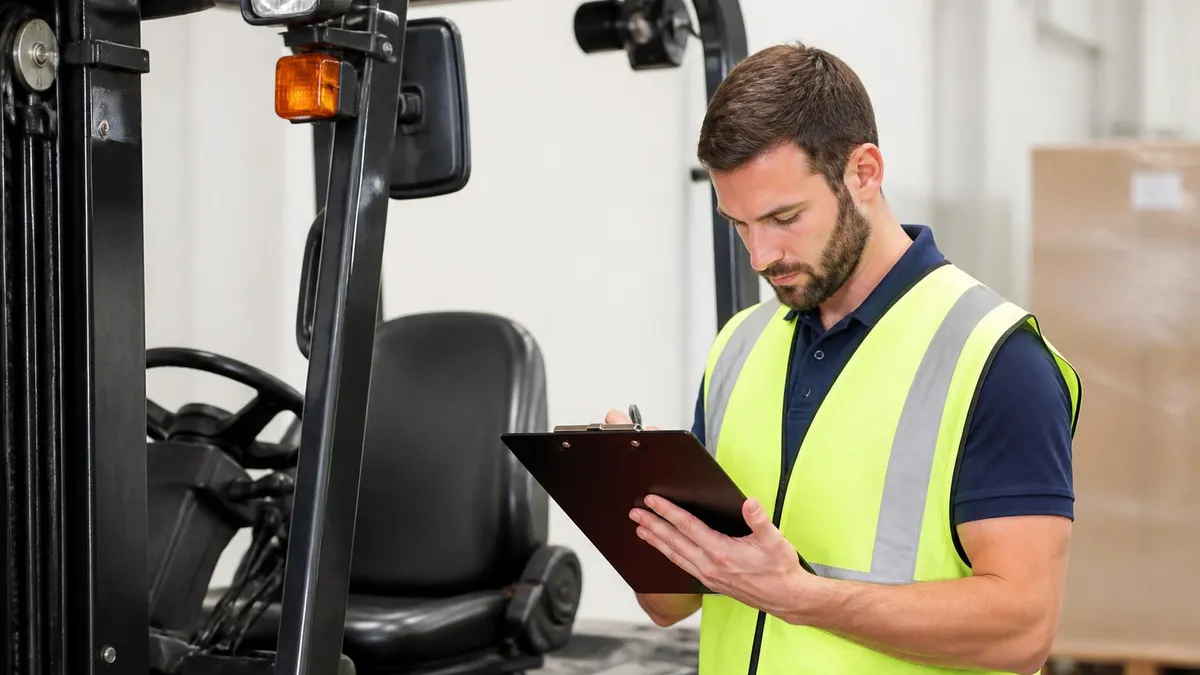
Your Notice of Satisfactory Assessment is only valid for sixty days from the assessment date. You must lodge your HRW licence application with your state regulator within this window, otherwise you will need to be reassessed at full cost. Australia Post outlets and Service NSW, VicRoads, and equivalent agencies handle applications in person.
Once you have passed assessment and received your NSA, the next step is converting it into a high-risk work licence card. Each state and territory handles applications slightly differently, but the broad process is consistent. You attend an Australia Post outlet, Service NSW centre, VicRoads office, Department of Transport branch, or equivalent agency in person, present your NSA, photo ID, and proof of address, pay the licence application fee, and have your photograph and signature captured for the card.
The licence application fee sits between $75 and $130 depending on jurisdiction. Processing takes between two and six weeks, although the NSA continues to authorise your work in the meantime. When the card arrives, store it in a wallet or work-issued lanyard because employers are legally required to sight it before assigning you forklift duties. A photo of the card is not sufficient under inspection conditions by the regulator.
Your HRW licence is national. A licence issued by SafeWork NSW is valid for forklift operation in Victoria, Queensland, South Australia, Western Australia, Tasmania, the ACT, and the Northern Territory. You do not need to reapply when moving interstate, although you should update your address with the issuing regulator within twenty-eight days of any move. Failure to maintain a current address risks expiry reminders not reaching you before renewal lapses.
The licence is valid for five years. Renewal is straightforward provided you have operated a forklift within the previous two years and can demonstrate ongoing competency. Some regulators require a short refresher assessment for operators who have been inactive for extended periods, particularly if there are records of incidents or breaches. Plan to renew at least six weeks before expiry to avoid any lapse that could affect your right to work.
Beyond the basic forklift class, many operators progress to related HRW classes such as order picker (LO), elevated work platform (WP), boom-type EWP (BT), or non-slewing crane (CN). Each additional class is a separate competency unit with its own course and assessment, but bundled training is often available at a discount. Stacking classes makes you significantly more employable in mixed warehouse and construction environments where one operator might use multiple machine types in a single shift.
Workplace inductions are different from forklift licence training near me. Even with a current LF licence, every new site will run you through site-specific procedures, pedestrian zones, racking layouts, and emergency protocols. These inductions typically take one to four hours and are not optional, even for highly experienced operators. Approach inductions with the same care you brought to the original training because site-specific knowledge prevents the majority of operational incidents.
Finally, keep your skills sharp through regular practice and continuous learning. Reading guides about multi directional forklift trucks and other equipment variations expands your hireable range beyond the standard counterbalance unit. Industry forums, supplier safety bulletins, and manufacturer training videos are free resources every working operator should engage with periodically to maintain currency between formal refreshers.
Practical preparation in the weeks before training pays large dividends on assessment day. Start by reading the TLILIC0003 unit of competency outline freely available on training.gov.au. Familiarise yourself with the performance criteria so that nothing in the course feels foreign. Even ten minutes a day of reading the assessment language and matching it to YouTube footage of forklift operations builds the mental model assessors expect. Knowledge does not replace practical skill, but it eliminates the surprise factor that derails many first-time candidates.
Sleep, hydration, and nutrition matter more than most candidates realise. Forklift operation places sustained demand on visual scanning, fine motor coordination, and reaction speed. Arriving at training fatigued or dehydrated reduces performance markedly and can lead to careless errors that snowball through the day. Aim for at least seven hours of sleep the night before each training day, drink water steadily through the morning, and eat a balanced breakfast that avoids heavy sugar crashes by mid-morning.
Practise verbalising safety actions aloud at home. This sounds odd but works powerfully. Sit at your kitchen table and walk yourself through a pre-start inspection out loud, naming each component and what you check on it. Repeat the load handling sequence from approach, fork insertion, tilt-back, transport, placement, withdrawal, and return. Hearing yourself perform the routine builds muscle memory that transfers directly into the yard when adrenaline tries to scramble your thinking on the day.
Dress appropriately and arrive at least fifteen minutes early. Industrial yards demand steel-capped boots, full-length trousers, long sleeves, and high-visibility vests. Some RTOs supply hi-vis but most expect you to bring your own. Cold mornings in winter and hot afternoons in summer require layered clothing you can adjust through the day. Avoid loose jewellery, scarves, or anything that could catch on controls or be drawn into moving machinery.
Manage anxiety using simple techniques. Box breathing — four seconds in, four hold, four out, four hold — slows your heart rate before assessment. Visualise the full task sequence before stepping into the cab. Talk briefly with the assessor to humanise the interaction rather than treating them as an adversary. Most assessors want you to pass and will give clarifying prompts if you misinterpret an instruction. Listen carefully and ask for repetition rather than guessing.
After passing, build a small portfolio that opens job opportunities quickly. Save a digital photo of your licence card, your NSA, your Statement of Attainment, your USI transcript, and any reference letters from supervisors who observed your training. Recruiters and employers expect to see at least the NSA or licence card during application screening, and candidates who can email documents within minutes of being asked stand out positively from those who delay by days.
Finally, treat your first six months as a licensed operator as an extension of training. Ask experienced colleagues to spot you during difficult lifts, volunteer for varied tasks across pallet handling and racking, and request feedback after the first month. Confidence builds through reps, not assumptions. Operators who keep learning past assessment day become the safest, most valued staff members on any site, and their careers progress noticeably faster than those who consider the licence the finish line.
Sample Forklift Licence Practice Questions
Try these questions from our free Forklift Licence practice tests. The correct answer and an explanation follow each question.
What is the PCBU's obligation for worker training in Attachments and Modifications?
- A. No obligation exists
- B. To provide information, training, instruction, and supervision adequate for the worker to perform the task safely
- C. To provide a manual only
- D. To tell workers to be careful
Answer: B. To provide information, training, instruction, and supervision adequate for the worker to perform the task safely
The PCBU must ensure workers receive adequate information, training, instruction, and supervision appropriate to the nature of the work and risks.
What training is required before workers perform Load Handling and Capacity activities?
- A. No training — learn on the job
- B. Appropriate training covering hazards, procedures, equipment use, and emergency response
- C. A quick verbal briefing only
- D. Self-study from a pamphlet
Answer: B. Appropriate training covering hazards, procedures, equipment use, and emergency response
Workers must receive comprehensive training appropriate to the risks before performing the activity.
What training is required before workers perform WHS Legislation activities?
- A. No training — learn on the job
- B. Appropriate training covering hazards, procedures, equipment use, and emergency response
- C. A quick verbal briefing only
- D. Self-study from a pamphlet
Answer: B. Appropriate training covering hazards, procedures, equipment use, and emergency response
Workers must receive comprehensive training appropriate to the risks before performing the activity.
Which hazard is MOST likely to cause a forklift to tip sideways?
- A. Travelling on a smooth, level concrete floor
- B. Turning at speed on a sloped or uneven surface with an elevated load
- C. Operating in a temperature-controlled warehouse
- D. Lowering an empty pallet to floor level
Answer: B. Turning at speed on a sloped or uneven surface with an elevated load
Turning at speed on a slope or uneven surface while carrying an elevated load shifts the centre of gravity outside the stability triangle, creating a high risk of lateral tip-over.
TLILIC0003 Questions and Answers
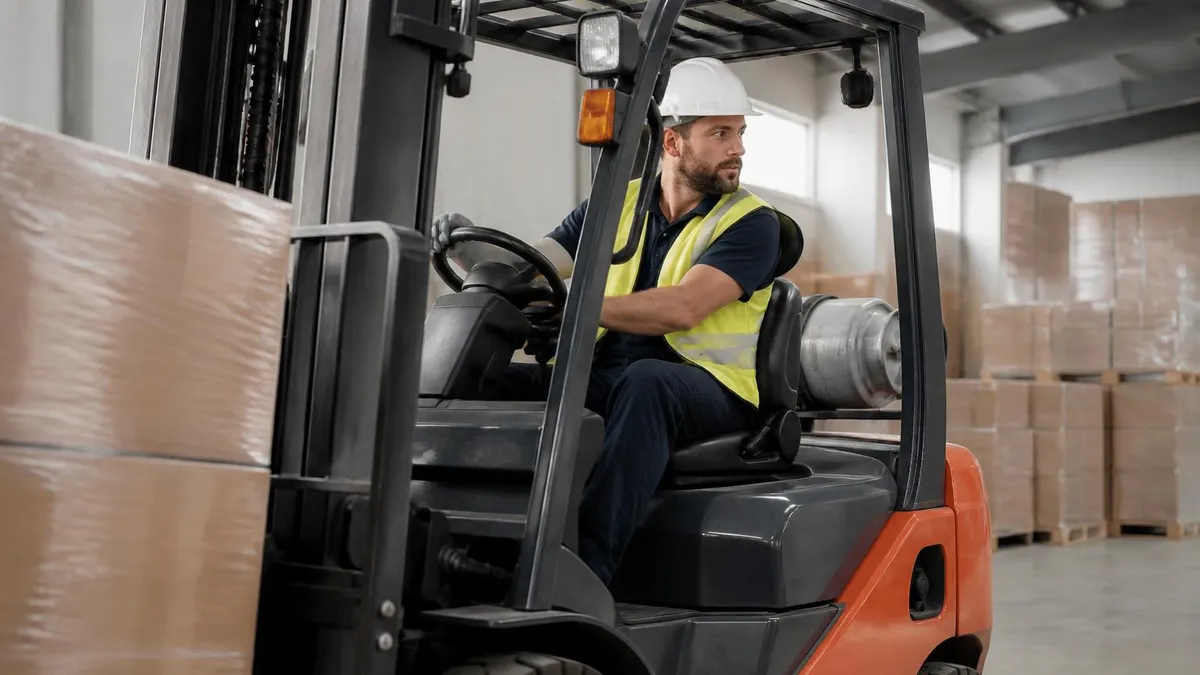
Mast of Forklift: Complete Guide to Forklift Parts for TLILIC0003 Operators in Australia
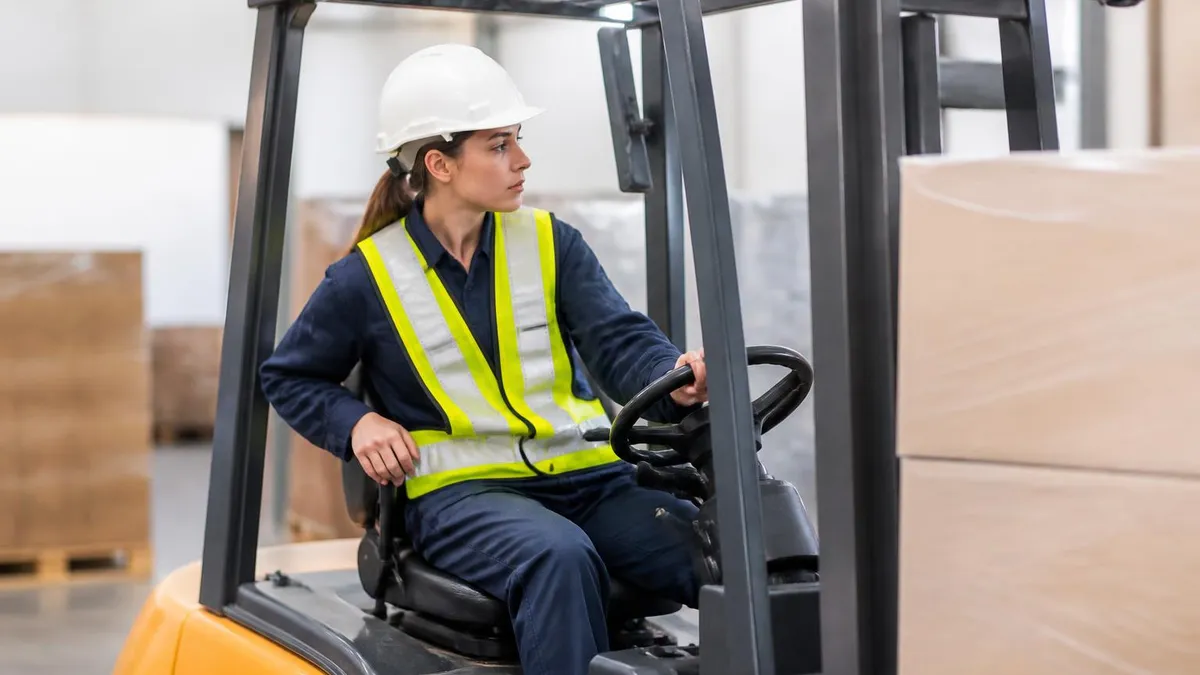
Multi Directional Forklift Trucks: Complete Guide to Forklift Types and Parts for TLILIC0003 Operators in Australia
Free Forklift Practice Test 2026 - Forklift Exam Questions
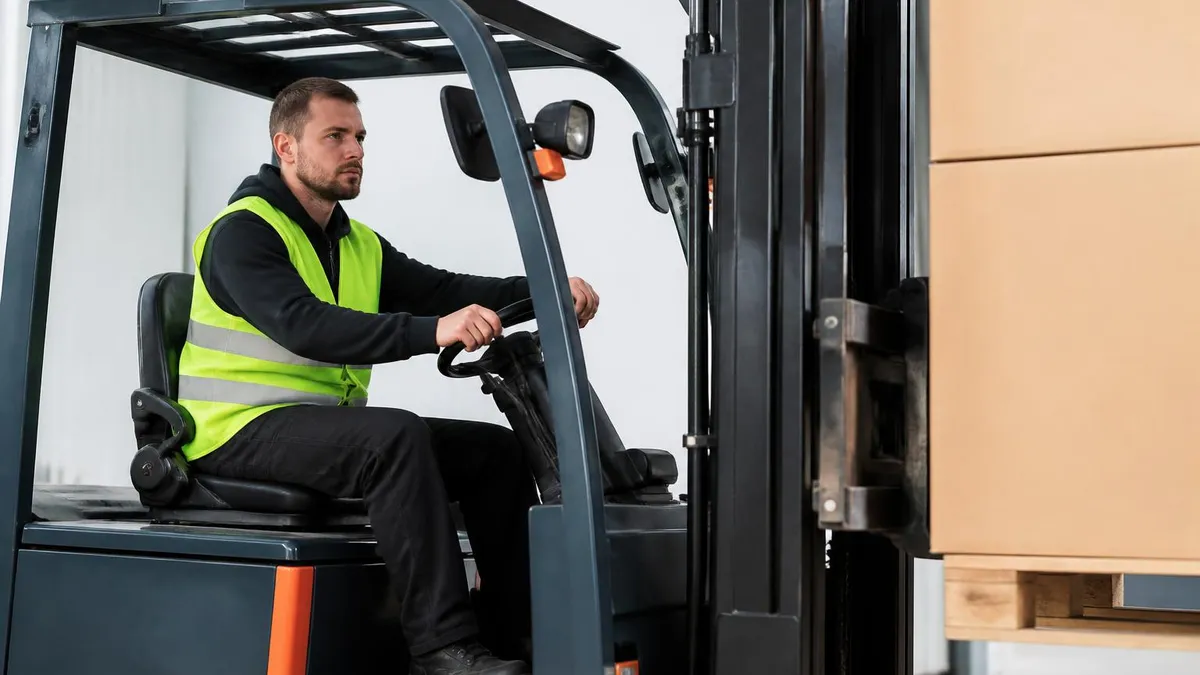
Forklift Clearance Height: Complete Guide to Forklift Specifications for TLILIC0003 Operators in Australia
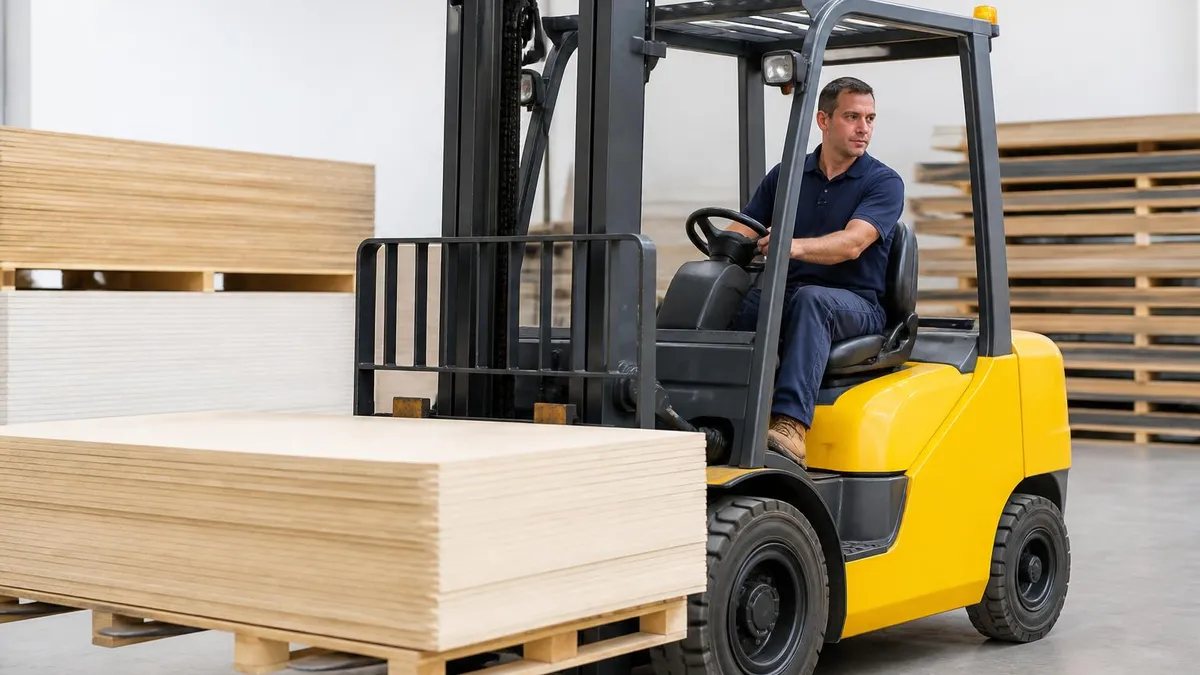
Forklift Licence Near Me: How to Find Local TLILIC0003 Training Providers in Australia
About the Author

Certified Crane Operator & Skilled Trades Exam Specialist
Ferris State UniversityRobert Martinez is a Journeyman Ironworker, NCCCO-certified crane operator, and forklift trainer with a Bachelor of Science in Construction Technology from Ferris State University. He has 21 years of ironworking, rigging, and heavy equipment operation experience across high-rise and industrial construction sites. Robert prepares candidates for crane operator, rigger, forklift, and skilled trades certification examinations.