
Forklift Nissan: Equipment and Parts Explained for TLILIC0003 Operators in Australia
🎓 Forklift Nissan equipment and parts explained for Australian operators: masts, forks, tyres, attachments and pre-start checks for TLILIC0003.
If you search for a forklift nissan, you are probably trying to work out what the machine in front of you actually is, what its parts do and what an operator needs to know before climbing aboard. Nissan-badged forklifts have worked in Australian warehouses, factories, timber yards and wharves for decades, and many are still running today. Understanding their parts is not trivia. It sits at the heart of safe operation, correct pre-start checks and the knowledge assessed in TLILIC0003.
This guide covers forklift equipment and parts in plain language, using the Nissan-style counterbalance truck as the working example. Most Australian sites run counterbalance machines powered by LPG, diesel or battery electric, and the layout is remarkably consistent between brands. Once you can name the mast, carriage, forks, overhead guard, counterweight, tyres, steering axle and capacity plate, you can walk up to a Nissan, Toyota, Hyster or Crown and read it confidently.
A forklift is really a lever system on wheels. The front axle is the fulcrum, the load hangs ahead of it, and the heavy counterweight at the rear balances the load. Every part you will learn about either supports that balance, controls it or protects the person sitting in the seat. When a part is worn, bent, leaking or missing, the balance changes, and a machine that felt stable yesterday can tip today without warning.
Australian operators also need to understand why parts matter legally. A High Risk Work Licence for forklift operation, issued after TLILIC0003 assessment, confirms that you can operate the truck safely, but it also expects you to recognise defects. Under work health and safety laws, an operator who ignores a damaged fork, a leaking hydraulic hose or a missing seatbelt is not just risking the machine. They are risking colleagues, stock and their own licence.
Nissan forklifts are a useful teaching example because they are so common in second-hand fleets and hire pools. You may sit your assessment on one, work your first job on another, and then be handed a different brand the following month. The names printed on the badge change, but the principles stay the same. Learn the functions first, and the model numbers become simple labels you can look up in a manual.
It also helps to know that the Nissan forklift business has changed ownership and branding over the years. For you as an operator, that matters in one practical way: spare parts and service support today usually run through authorised dealers and parts specialists who can match components using the machine's serial number. Never guess a part from a photograph. The serial number and data plate tell the supplier exactly which truck you have.
By the end of this article you will know the main structural parts, the wear items to inspect, how attachments change a truck's rated capacity, and how to prepare for the equipment questions you are likely to meet on assessment day. Work through the sections in order, use the practice quizzes to test yourself as you go, and keep the checklist handy for your first few weeks on the job.
Forklift Equipment and Parts by the Numbers
The Main Components of a Counterbalance Forklift
The mast is the vertical channel assembly that lifts and lowers the load, while the carriage slides up and down within it. Lift chains, rollers and hydraulic cylinders do the work. Tilt cylinders let you angle the mast slightly to cradle the load during travel.
Forks carry the load, and the load backrest stops items sliding back toward the operator. Forks hang on the carriage and lock in place with a retaining pin or latch. Check the heel, blade and tips for cracks, bends and uneven wear every shift.
The overhead guard protects the operator from falling objects and must never be removed or cut. The seat, seatbelt, mirrors, lights and horn sit within the operator's compartment. A working seatbelt is a core safety control, not an optional extra.
The heavy cast counterweight at the rear balances the load at the front. The chassis holds the drive axle, steering axle, tank or battery and operator controls. Never add weight to the counterweight or alter it, as the stability calculations depend on it.
The data plate records the model, serial number, weight and rated capacity at a stated load centre. It must be legible and match the truck. If attachments are fitted, the capacity plate must show the revised rating. Operators should read it before lifting.
Reading a Nissan forklift starts at the data plate, usually riveted near the operator's compartment or on the chassis. It lists the manufacturer, model code, serial number, unladen weight, rated capacity, load centre and often the lift height. These details are not decoration. A parts supplier, a service technician and a licensed assessor will all ask for them. Photograph the plate on your phone so you can quote it without climbing back onto the truck.
Model codes on older Nissan trucks usually combine letters and numbers indicating the power type and lifting capacity. A truck rated for 2.5 tonnes at a 500 mm load centre will not lift 2.5 tonnes if the load centre is longer, for example a bulky crate that extends 700 mm from the fork heel. The rating is a promise tied to a specific distance, which is why operators learn to judge load centres by eye.
The mast is the next thing to read. Mast types are described by how many stages they have. A standard or duplex mast has two stages, while triplex masts add a third stage for greater lift height with lower collapsed height. Free lift is the distance the forks rise before the mast itself begins to extend. High free lift is valuable when working inside shipping containers or under low doorways and sprinkler pipes.
Look at the lift chains and the hoses that run alongside them. Chains should sit evenly, with no stiff or twisted links, and should carry a light film of lubricant. Hydraulic hoses must be free of bulges, chafing and weeps. A damp patch under the mast after the truck has been parked overnight is a defect worth reporting. Never run your hand along a suspected hose leak, because pressurised fluid can inject through skin.
Tyres reveal a lot about how a Nissan has been treated. Cushion tyres, which are solid rubber pressed onto a steel band, suit smooth indoor floors. Pneumatic tyres, filled with air or solid foam, suit rougher yards and slopes. Uneven wear across a tyre, chunks missing from the tread or rubber lifting off the band all reduce grip and stability and should be raised with your supervisor before the truck is used.
Controls follow a common pattern. The lift, tilt and any attachment levers sit to the operator's right, and direction is selected by a forward and reverse lever or switch. The steering wheel often carries a spinner knob, which speeds up turning but encourages one-handed driving. Park brake, horn, lights and the hour meter complete the dash. Know where each sits before starting the engine, not after you are moving.
Finally, learn the warning devices. Many Nissan trucks include a hour meter, a battery discharge indicator on electric units, and warning lights for oil pressure, coolant temperature and park brake. A seat switch cuts hydraulic or drive functions when the operator leaves the seat. Never bypass a seat switch or tape over a warning lamp. If an indicator is lit, stop, find out why, and tag the truck out of service if needed.
Forklift Nissan Power Types and Tyres Compared
LPG-powered counterbalance trucks are among the most common Nissan-style machines in Australian warehouses. They run on a removable gas cylinder mounted at the rear, which can be swapped in minutes, so the truck stays productive across long shifts. LPG engines suit mixed indoor and outdoor work, produce less smoke than diesel and deliver steady power for lifting and travelling on ramps and slopes.
Cylinder handling is a skill in itself. Always wear gloves and eye protection, turn the service valve off before disconnecting, and check the hose and O-ring for cracks or damage. The cylinder must be seated correctly in its bracket and locked down. Never store spare cylinders near heat or ignition sources, and report any smell of gas immediately. Ventilation matters whenever an engine runs indoors.
Is a Second-Hand Nissan Forklift a Smart Choice?
- +Often cheaper to buy than a comparable new truck
- +Simple counterbalance layout is familiar to most operators
- +Many spare parts and service skills are available through dealers
- +Strong reputation for durability in long-running fleets
- +LPG, diesel and electric versions suit different sites
- +Good training platform for learning core forklift components
- −Older machines may lack modern safety features
- −Parts for discontinued models can take longer to source
- −Past damage or poor maintenance may not be obvious
- −Capacity plate may not match fitted attachments
- −Service history is sometimes missing or incomplete
- −Fuel and tyre costs can still add up over time
Forklift Nissan Pre-Start Parts Checklist
- ✓Read the data plate and confirm it matches the truck.
- ✓Inspect forks for cracks, bends and heel wear.
- ✓Check the fork retaining pins or latches are secure.
- ✓Look over lift chains for stiffness, rust and uneven tension.
- ✓Scan hydraulic hoses and cylinders for weeps or bulges.
- ✓Check tyres for cuts, missing chunks and correct pressure.
- ✓Test the seatbelt, horn, lights and reversing alarm.
- ✓Confirm the overhead guard and load backrest are undamaged.
- ✓Check fuel, oil, coolant or battery charge level.
- ✓Test brakes, park brake and steering before moving off.
The plate overrides your instincts
The capacity plate is the truck's legal and engineering limit. If an attachment is fitted, the plate must show the reduced capacity at the new load centre. Never trust memory, guesswork or what the last operator told you. If the plate is missing or unreadable, tag the truck out of service until it is replaced.
Wear parts are the components that are designed to degrade through normal use, and every operator should know them by name. On a counterbalance truck these include forks, lift chains, mast rollers, tyres, brake pads or shoes, hydraulic hoses, seals and filters. A good operator does not wait for a breakdown. They notice the early signs, such as a slower lift, a spongy brake pedal or a new squeal when the mast extends.
Forks deserve special attention because they carry every load. As the blade wears, the thickness under the load reduces, and the fork can bend or snap under a load it once handled easily. A widely used guide is to remove forks from service when the blade thickness has worn by about ten percent. Check the heel in particular, where wear and cracking concentrate. Never straighten, weld or heat bent forks on site.
Lift chains stretch over time, and uneven stretch means the forks no longer rise level. Signs of trouble include rust, stiff links, bright wear marks, pins sticking out and loud snapping noises when lifting. Lubrication slows wear, but it does not replace inspection. If one chain looks different from its partner, report it. Chains are normally replaced as a matched set because a new chain beside an old one carries uneven load.
Hydraulic systems rely on clean oil and sound hoses. Leaks reduce lifting power and create slip hazards on the floor, and pressurised fluid can cause serious injury. Operators should note any drop in lift speed, jerky tilt movement or forks that slowly creep downward while the load is held. These symptoms point to internal seal wear or a failing valve and require a qualified technician, not an on-the-spot fix.
Brakes and steering are equally critical. Service brakes should stop the loaded truck smoothly without pulling to one side, and the park brake must hold the truck on a gentle slope. Steering should feel consistent, with no excessive play. Because forklifts steer with the rear wheels, small steering faults are magnified when turning with a load. Report any change in feel immediately, and do not drive the truck until it is checked.
For LPG machines, check the fuel hose, regulator and cylinder mounting at each shift. For electric machines, inspect the battery connector, cables and the restraint that holds the battery in the compartment. For diesel units, look for oil leaks, damaged belts and a clogged air filter. Each fuel type has its own hazards, and a competent operator knows which checks apply to the machine they are about to drive.
Keep a simple habit: inspect, record, report and tag out. Complete the daily checklist, write down any defect, tell your supervisor, and attach a danger tag if the fault affects safety. Never assume the next operator will notice. Repairs and parts replacement belong with qualified technicians using correct components for the model and serial number. Genuine or approved parts keep the truck within its original design limits.
If a safety-critical part such as the brakes, steering, forks, chains, seatbelt or overhead guard is damaged, stop using the truck immediately. Tag it out and report it. Operating a defective forklift can put you and others at risk and may breach your WHS duties as an operator.
Attachments let one forklift do many jobs. Common examples include side shifters that move the load left or right, fork positioners, clamps for cartons or drums, rotators, push-pull devices and extended or telescopic forks. Each attachment changes how the truck behaves, because the added weight sits ahead of the front axle and moves the combined load centre further forward. That is why attachments are tightly linked to capacity ratings.
When an attachment is fitted, the original rated capacity usually drops. A side shifter, for instance, is relatively compact but still adds weight and shifts the load centre slightly forward. A heavy clamp or rotator can reduce capacity considerably. The reduced capacity must appear on a revised plate, issued or approved by the manufacturer or a competent person, so operators know the actual safe working load.
Long forks are a classic trap. Standard forks are often about 1,070 or 1,200 mm long, but some sites fit longer forks for large or awkward loads. Longer forks push the load further from the carriage, extending the load centre beyond the standard 500 mm. The truck's capacity at that longer distance is lower, and exceeding it can lift the rear wheels, causing the steering to lose grip.
Modifications go beyond attachments. Changing the counterweight, fitting different tyres, altering the mast, replacing the overhead guard or adding cabin components can affect stability or operator protection. Such changes should only be carried out with manufacturer approval or engineering certification, and the data plate must be updated. Operators should never make informal changes, however minor they seem, because the original stability testing no longer applies.
In Australia, forklifts are regulated under work health and safety laws, and relevant standards such as AS 2359 cover powered industrial trucks. Employers must ensure that plant is safe, maintained and used within its design limits. Operators hold a duty to take reasonable care, follow training and report hazards. If you are unsure whether an attachment is approved, ask for the documentation before lifting anything.
Before using an attachment for the first time, receive specific instruction. Operating a clamp, for example, requires a different feel than driving forks. You must understand clamp pressure, how it affects fragile loads, and how the combined weight changes your stopping distance. Learn how to lock out hydraulic functions safely and how to stow the attachment correctly when parked. Training records should reflect these additional skills.
Assessors often test this area because it links equipment knowledge to real decisions. Expect questions asking what to do when a plate is missing, who can approve a change, or how a longer fork alters capacity. The safest answer is consistently the same: stop, check the plate and documentation, and consult your supervisor or a competent person. If the paperwork does not match the truck, do not lift.
The best way to learn forklift equipment and parts is to combine reading with hands-on observation. Ask your trainer or supervisor if you can spend ten minutes walking around a parked truck with this guide in hand. Point to each part, say its name and explain its purpose aloud. It feels awkward at first, but speaking the names aloud locks vocabulary into memory far more effectively than silent reading.
Build a simple pre-start routine and use it every single time. Start at the front left, move around the truck clockwise, and finish in the seat. Forks, carriage, chains, mast, hoses, tyres, counterweight, fuel or battery, then seatbelt, controls and brakes. A consistent route means you never skip a component, and it turns the pre-start check into an automatic habit rather than a rushed glance.
When you study capacity questions, practise the arithmetic with real numbers. A truck rated 2,500 kg at a 500 mm load centre does not simply lift 2,500 kg at 700 mm. Capacity falls as the load centre moves outward. Work through sample plates with attachments, note the reduced rating, and decide whether a given load is within limits. Assessors like candidates who can explain their reasoning, not just give an answer.
Use practice quizzes strategically. Take one cold to find your weak areas, review every wrong answer, then retake a different quiz a few days later. Pay special attention to questions on attachments, plates, stability and defect reporting, because these are the topics where small misunderstandings cause real incidents. Treat each mistake as useful information rather than failure, and write down the correct reasoning in your own words.
On the day of assessment, arrive early and rested. Wear enclosed footwear, high-visibility clothing and any PPE your training provider requires, and bring identification and your logbook if you have one. During the practical component, narrate your pre-start check clearly so the assessor hears what you are looking at. If you find a genuine defect, say so and explain what action you would take. That demonstrates competence.
After you earn your licence, keep learning. Every new truck, attachment or site layout brings new details to absorb. Ask questions when something looks unfamiliar, read the operator's manual, and check the capacity plate whenever you change machines. Experienced operators are not the ones who think they know everything. They are the ones who still inspect every shift and still speak up when something does not look right.
Finally, remember that licences expire and standards evolve. Keep your renewal date in your calendar well before it arrives, and refresh your knowledge with periodic practice tests. If you move between employers, ask for a site induction covering traffic routes, pedestrian zones, speed limits and local rules. Good equipment knowledge is the foundation, but it works best alongside awareness, communication and a calm, unhurried approach to every lift.
TLILIC0003 Questions and Answers

Forklift Training Course: Complete TLILIC0003 Guide for Australian Operators

Forklift Safety, Types & Licensing Guide (Australia 2026)

How to Get a Forklift Licence in Australia: Complete TLILIC0003 Guide for 2026
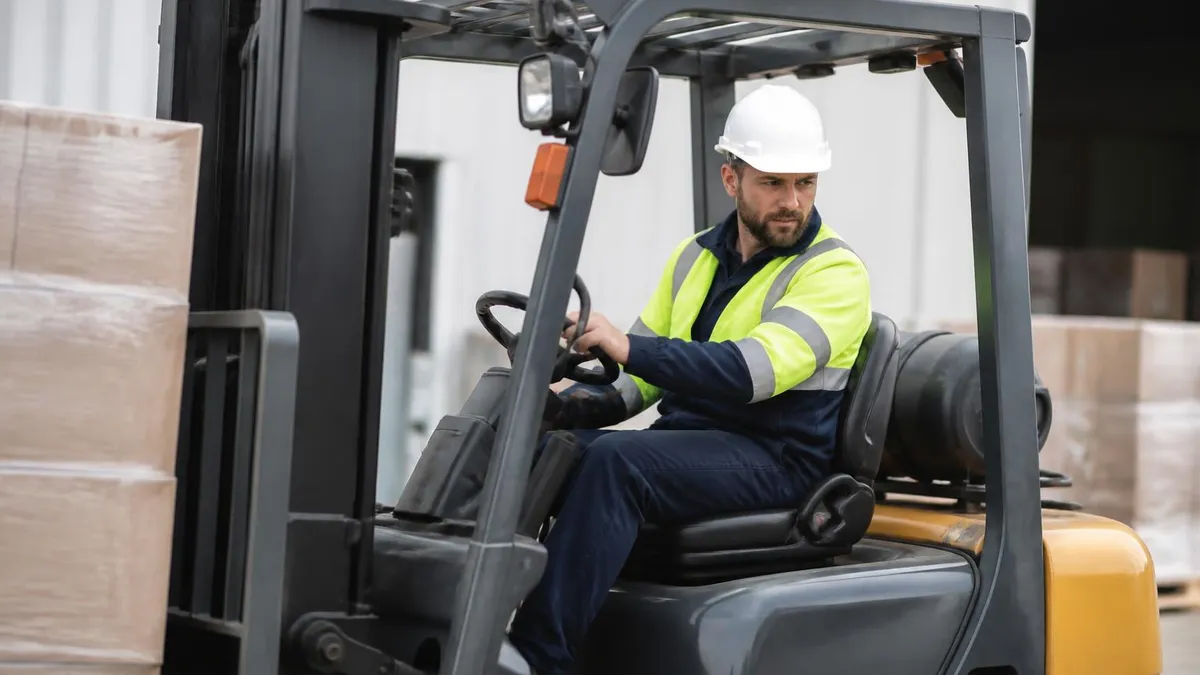
Electric 3 Wheel Forklift: Complete Guide to Electric Forklift Types for TLILIC0003 Operators in Australia
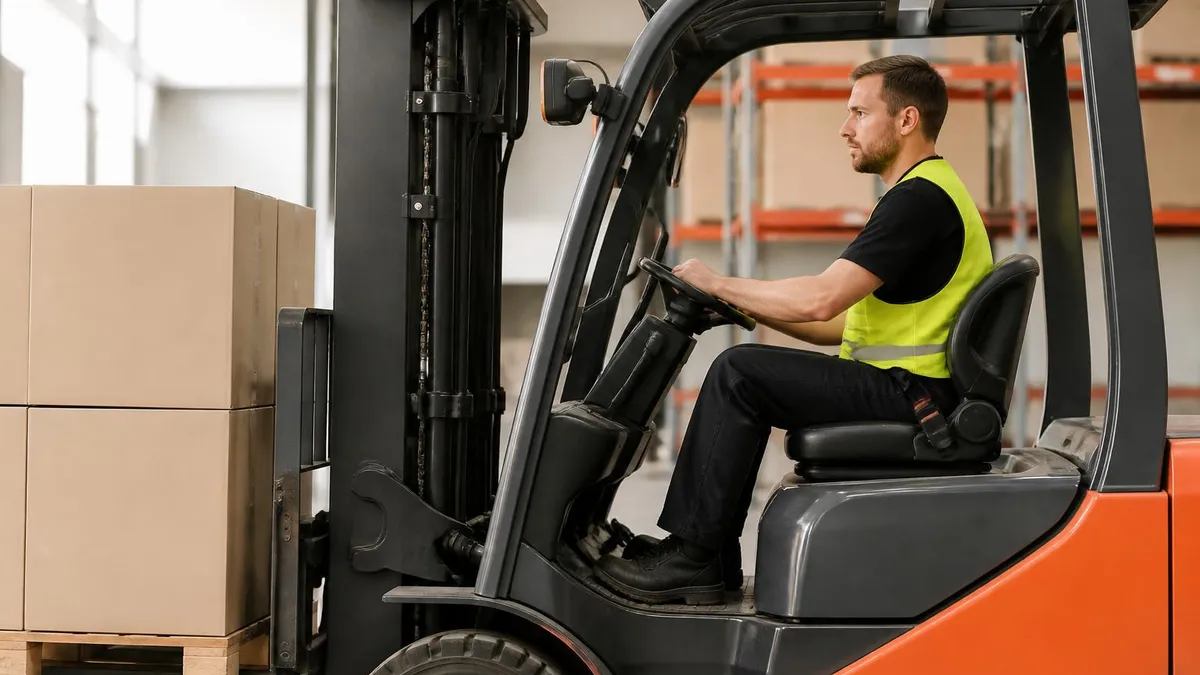
Traffic Management Plan Forklift: Complete Guide to Forklift Safety and Operations for TLILIC0003 Operators in Australia
How this page was made: written with AI tools and published by Nathan Beja, founder of Practice Test Geeks, who is responsible for its content. Exam facts are checked against the official sources listed below. Not reviewed by a subject-matter expert. Editorial policy
Sources & references
Exam facts on this page (fees, format, dates, passing scores) are checked against these official sources; the date is our last check. Editorial policy
- worksafe.vic.gov.au — Fees, renewal · verified Oct 2026
- wa.gov.au — Fees, renewal · verified Oct 2026
- safework.nsw.gov.au — Fees, renewal, eligibility · verified Oct 2026
- safeworkaustralia.gov.au — Registration deadline, score validity · verified Oct 2026
- app.safework.sa.gov.au — Renewal · verified Oct 2026
- accesscanberra.act.gov.au — Renewal · verified Oct 2026