
A and K Forklifts: Complete Guide to Forklift Companies and Dealers for TLILIC0003 Operators in Australia
A and K forklifts and other major Australian dealers explained for TLILIC0003 operators. Compare brands, parts, service, and licensing requirements. 🎓
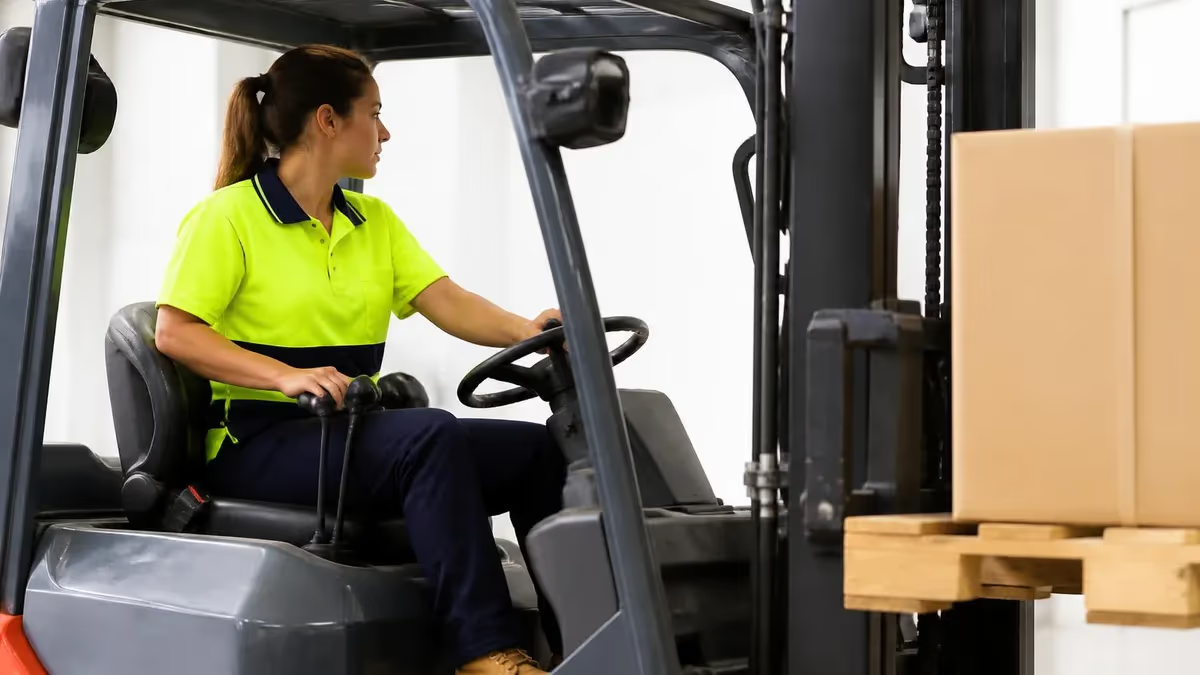
Understanding the landscape of forklift companies and dealers is a practical part of preparing for your TLILIC0003 high risk work licence in Australia, and names like a and k forklifts often come up when operators discuss reliable suppliers, parts availability, and after-sales service across New South Wales and beyond. While the TLILIC0003 unit itself focuses on safe operation rather than brand knowledge, recognising who supplies, services, and maintains the machines you operate gives you context that translates directly into safer, more confident work on the warehouse floor.
Forklift dealers in Australia range from large multinational manufacturers like Toyota, Crown, and Linde, through to regional specialists, used equipment yards, and family-owned operations that have served local industries for decades. Each dealer typically offers a mix of new sales, used machines, short and long-term rentals, parts, service contracts, and operator familiarisation. As a TLILIC0003 candidate, knowing how these services fit together helps you understand maintenance logs, pre-start checks, and why certain attachments or modifications appear on the machine you have been assigned.
A and K Forklifts, based in the Sydney region, is one of many independent dealers that has built a reputation around servicing Counterbalance, reach, and warehouse trucks for businesses that need a single point of contact for parts, repairs, and training referrals. Independent dealers often work alongside RTOs that deliver the forklift licence training near me, supplying loan machines for assessment days or offering workshop tours where learners can see how trucks are inspected before being released to a customer.
The dealer network matters to you as an operator because the condition of any forklift you climb into depends on how well that machine has been maintained, serviced, and inspected. A dealer with a strong service department keeps detailed records, fits genuine parts, and follows manufacturer schedules for hydraulics, brakes, mast chains, and forks. When you complete a pre-operational check during your assessment, you are essentially auditing the work of that dealer or in-house workshop, so understanding their role makes the inspection process more meaningful.
This guide walks through the major forklift companies and dealers operating in Australia, the brands they typically represent, how rental and finance arrangements affect site operations, what to look for in service documentation, and how all of this connects to the practical skills assessed under TLILIC0003. We will also cover how attachments, modifications, and load capacity recalculations are handled by dealers, since these are common exam topics and real workplace concerns.
Whether you are about to sit your assessment, working towards a job at a logistics centre, or simply trying to understand the paperwork that comes with your employer's fleet, the information below is designed to be practical, Australia-specific, and aligned with how WorkSafe regulators expect operators to think about the equipment they use every day. Brand familiarity will not appear on your test, but the underlying knowledge of how machines are sourced, maintained, and signed off absolutely will.
Australian Forklift Market by the Numbers
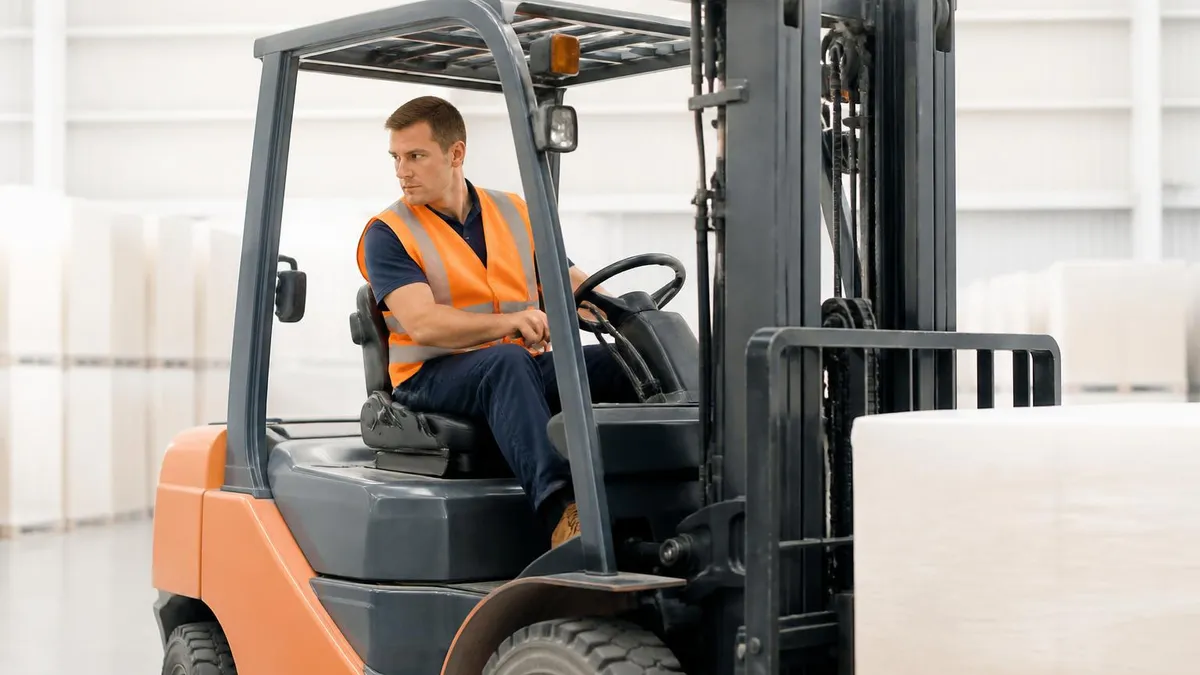
Major Forklift Brands Serviced by Australian Dealers
The largest forklift brand in Australia by market share. Toyota dealers cover all states with strong parts availability, the System of Active Stability safety feature, and a wide range from 1.0 to 25 tonne capacities.
American-built warehouse specialist known for reach trucks, order pickers, and pallet jacks. Crown dealers often focus on cold storage and high-bay distribution centres where electric trucks dominate.
German engineering with hydrostatic transmissions and ergonomic cabins. Linde dealers service heavy industry, ports, and timber yards where high duty cycles and operator comfort matter most.
Strong Counterbalance machines popular in construction, recycling, and outdoor yards. Independent dealers like A and K Forklifts often carry these brands new and used with competitive service rates.
Multi-directional and side-loading specialists for long loads such as timber, steel, and pipes. Sold through niche dealers with specific operator familiarisation requirements beyond standard TLILIC0003.
Forklift dealers in Australia do far more than sell trucks. Their service departments are the backbone of fleet reliability, and as an operator you interact with their work every shift through the maintenance stickers, hour meters, and logbooks attached to each machine. Understanding what a dealer actually provides helps you read those records correctly and raise the right questions when something looks off during a pre-start inspection on the day of your TLILIC0003 assessment.
The typical dealer offers scheduled servicing at 250, 500, 1000, and 2000 hour intervals, with each service covering specific items such as engine oil, hydraulic filters, mast chain lubrication and tension, brake adjustment, and battery testing for electric units. A and K Forklifts and similar independents publish these schedules so customers can plan downtime, and the resulting service stickers on the truck tell you when the next inspection is due. If you see a sticker that is overdue by hundreds of hours, that is a legitimate safety concern worth flagging.
Parts supply is another core dealer function. Genuine OEM parts matter for safety-critical components like forks, mast rollers, lift chains, and hydraulic hoses, because non-genuine substitutes can fail under load with serious consequences. Reputable dealers stock common wear items locally and can source specialty parts within 24 to 48 hours from manufacturer warehouses in Sydney, Melbourne, or Brisbane. This is why many businesses prefer to buy from established dealers rather than chase the cheapest unit on Gumtree.
Rental and short-term hire is where dealers earn much of their revenue. A business might rent a 2.5 tonne Counterbalance for a single project, a wet seasonal peak, or as a temporary replacement while their owned unit is being repaired. Rental trucks come with the dealer's service guarantee, meaning if it breaks down they swap it out, which is a significant advantage for sites running tight deadlines. Many TLILIC0003 holders work primarily on rental fleets, so it pays to understand the paperwork that comes with each delivery.
Operator familiarisation is a quiet but important dealer service. Even though TLILIC0003 certifies you to operate any LF class forklift, individual machines have different control layouts, attachment quick-release systems, and warning indicators. When a dealer delivers a truck, they should walk the nominated operator through these specifics, and many dealers provide a brief written checklist. This familiarisation is not a substitute for your high risk work licence, but it is a workplace obligation under WHS regulations.
Finance and lease arrangements influence what trucks you operate. Operating leases often run for 3 to 5 years and include full service contracts, which means the dealer effectively owns and maintains the machine while your employer pays a monthly fee. This arrangement usually produces well-maintained equipment because the dealer carries the risk of breakdowns. Chattel mortgages and outright purchases shift maintenance responsibility back to the employer, which can result in deferred servicing if budgets tighten.
Finally, dealers play a role in compliance documentation. They issue capacity plates, fit and certify attachments, supply manufacturer manuals, and can provide written verification of modifications. If a load capacity has been derated because of an attachment, the dealer or a qualified engineer must produce the new data plate. Knowing this chain of responsibility means you can ask the right questions when a forklift you are about to operate carries an attachment that has changed its rated capacity.
TLILIC0003 Practice Test Questions
Prepare for the Forklift Licence Australia - TLILIC0003 exam with our free practice test modules. Each quiz covers key topics to help you pass on your first try.
TLILIC0003 Forklift Licence Australia Atta...
TLILIC0003 Exam Questions covering Forklift Licence Australia Attachments and Modifications. Master TLILIC0003 Test concepts for certification prep.
TLILIC0003 Forklift Licence Australia Batt...
Free TLILIC0003 Practice Test featuring Forklift Licence Australia Battery and Fuel Safety. Improve your TLILIC0003 Exam score with mock test prep.
TLILIC0003 Forklift Licence Australia Emer...
TLILIC0003 Mock Exam on Forklift Licence Australia Emergency Procedures. TLILIC0003 Study Guide questions to pass on your first try.
TLILIC0003 Forklift Licence Australia Fork...
TLILIC0003 Test Prep for Forklift Licence Australia Forklift Pre-Operational Checks. Practice TLILIC0003 Quiz questions and boost your score.
TLILIC0003 Forklift Licence Australia Haza...
TLILIC0003 Questions and Answers on Forklift Licence Australia Hazard Identification. Free TLILIC0003 practice for exam readiness.
TLILIC0003 Forklift Licence Australia Load...
TLILIC0003 Mock Test covering Forklift Licence Australia Load Centre Calculations. Online TLILIC0003 Test practice with instant feedback.
TLILIC0003 Forklift Licence Australia Load...
Free TLILIC0003 Quiz on Forklift Licence Australia Load Handling and Capacity. TLILIC0003 Exam prep questions with detailed explanations.
TLILIC0003 Forklift Licence Australia Oper...
TLILIC0003 Practice Questions for Forklift Licence Australia Operating in Different Environments. Build confidence for your TLILIC0003 certification exam.
TLILIC0003 Forklift Licence Australia Oper...
TLILIC0003 Test Online for Forklift Licence Australia Operating Techniques. Free practice with instant results and feedback.
TLILIC0003 Forklift Licence Australia Pede...
TLILIC0003 Study Material on Forklift Licence Australia Pedestrian Safety. Prepare effectively with real exam-style questions.
New, Used, and Rental Forklift Options from Australian Dealers
New forklifts from authorised dealers come with full manufacturer warranties typically covering 12 to 24 months or 2000 hours, whichever comes first. Prices in Australia range from around $18,000 for an entry-level 1.5 tonne electric walkie pallet truck through to $80,000 or more for a 5 tonne diesel Counterbalance with cabin and premium options. New trucks include current emissions compliance, the latest operator assistance features, and a clean service history starting from zero hours.
For TLILIC0003 candidates, new machines are easier to inspect because every component is in factory condition and the data plate, capacity chart, and operator manual are all present and legible. Dealers usually deliver with a full pre-delivery inspection signed off by a licensed technician, and this PDI document forms the first entry in the maintenance log that you will encounter on your assessment day or first shift.
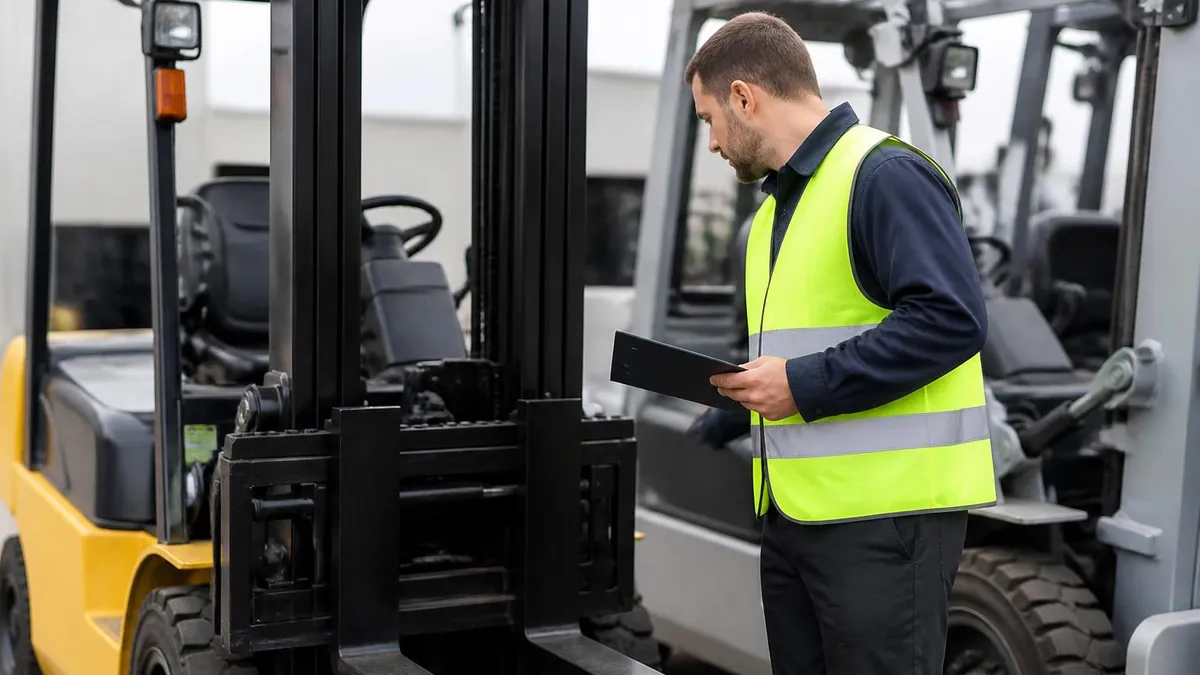
Buying from a Major Dealer vs an Independent Dealer like A and K Forklifts
- +Major dealers offer nationwide service coverage and consistent parts supply
- +Authorised manufacturer warranties are honoured at any branch
- +Latest technology, telematics, and operator assistance features available
- +Standardised pre-delivery inspections with documented sign-off
- +Larger rental fleets allow easier swap-outs when breakdowns occur
- +Strong training partnerships with RTOs delivering TLILIC0003 courses
- −Independent dealers often beat major dealers on used truck pricing
- −Local independents typically offer faster on-site service response times
- −Independent technicians often service multiple brands under one contract
- −Smaller dealers build closer customer relationships and flexible payment terms
- −Independents may stock more obscure brands like TCM, Mitsubishi, or Doosan
- −Family-owned dealers often retain experienced technicians for longer periods
Pros and Cons at a Glance
| Pros | Cons |
|---|---|
| Major dealers offer nationwide service coverage and consistent parts supply | Independent dealers often beat major dealers on used truck pricing |
| Authorised manufacturer warranties are honoured at any branch | Local independents typically offer faster on-site service response times |
| Latest technology, telematics, and operator assistance features available | Independent technicians often service multiple brands under one contract |
| Standardised pre-delivery inspections with documented sign-off | Smaller dealers build closer customer relationships and flexible payment terms |
| Larger rental fleets allow easier swap-outs when breakdowns occur | Independents may stock more obscure brands like TCM, Mitsubishi, or Doosan |
Checklist: What to Verify Before Operating a Dealer-Supplied Forklift
- ✓Confirm the capacity plate is present, legible, and matches the fitted attachments
- ✓Check the service sticker for the next due service date and current hours
- ✓Verify the operator manual is in the cabin or accessible on site
- ✓Inspect forks for visible wear, cracks, or bent heels using a fork gauge if available
- ✓Test the horn, lights, reverse alarm, and seatbelt before moving the truck
- ✓Check hydraulic hoses for leaks, chafing, or perished rubber sections
- ✓Confirm mast chains are evenly tensioned with no broken or stretched links
- ✓Check tyre condition for chunks, flat spots, or excessive wear on cushion tyres
- ✓Verify the delivery paperwork lists all attachments and any capacity derating
- ✓Confirm familiarisation has been completed if the truck model is new to you
Your TLILIC0003 assessor expects you to read and interpret the data plate
On assessment day, the assessor will often ask you to read the capacity plate and explain how it applies to a specific load. If the truck has a dealer-fitted attachment, the original capacity may have been derated and a second plate fitted. Knowing that dealers are responsible for this paperwork helps you find and interpret it under pressure.
Attachments and modifications are where the relationship between dealers and operators becomes most safety-critical, and this is also one of the most heavily examined topics in the TLILIC0003 assessment. Any device fitted to a forklift that changes how it lifts, carries, or stabilises a load is technically an attachment, and almost every attachment changes the rated capacity of the truck. Dealers are the gatekeepers for ensuring this is documented correctly, and you as the operator are responsible for verifying their work before lifting anything.
The most common attachments fitted by Australian dealers include side-shifters, fork positioners, rotators, slip-sheet push-pull devices, paper roll clamps, drum handlers, carton clamps, and bale clamps. Each of these adds weight to the carriage, often moves the load centre forward, and reduces the rated capacity of the truck. A 3 tonne forklift fitted with a heavy rotator might only be rated to lift 2.2 tonnes at a 600 mm load centre, and that derating must appear on a second data plate fitted alongside or replacing the original.
Dealers handle this certification through manufacturer engineering calculations or by engaging a qualified engineer to assess the combination. The resulting capacity plate is a legal document under Australian Standard AS 2359, and operating outside the rated capacity is a serious WHS breach. When the assessor on your TLILIC0003 day asks about attachments, they want to hear you describe this process, find the plate, and adjust your lifting decisions accordingly.
Modifications go beyond attachments and include changes to the mast height, fork length, counterweight, fuel system, or guarding. Any such modification must be approved by the manufacturer or a qualified engineer, and the dealer is usually the conduit for organising this work. Fork extensions are a common example: a dealer might supply slip-on extensions that increase fork length from 1070 mm to 1830 mm, but the truck capacity must be recalculated and a derated plate fitted. Home-made extensions are illegal and dangerous.
Battery and fuel modifications also fall into this category. Switching an LPG-powered truck to dual-fuel petrol/LPG requires manufacturer approval, dealer fitment, and updated documentation. Electric truck battery upgrades, particularly the move from lead-acid to lithium-ion, similarly require dealer involvement because the counterweight balance changes when battery weight is reduced. Operators may not notice the change visually but stability characteristics differ, and familiarisation should be provided.
Tyre modifications are another dealer responsibility worth understanding. Switching between pneumatic, solid pneumatic, and cushion tyres changes the truck's height, stability, and capacity for outdoor versus indoor use. A and K Forklifts and similar dealers carry stocks of replacement tyres in various profiles, and they can advise on which configuration suits a particular site. As an operator, you should know which tyre type you are working on and how it affects performance on ramps, gravel, or wet floors.
Finally, guards and protective equipment such as load backrests, overhead guards, and fork tip caps are sometimes considered modifications when changed from factory specification. A and K Forklifts and other dealers can supply Australian Standard compliant replacements, and any change should be recorded in the truck's modification log. When you complete your assessment, being able to point to these items and explain their purpose demonstrates the safety mindset assessors look for. For more on how attachments connect to forklift design, the related article on multi-directional forklift trucks expands on this topic.
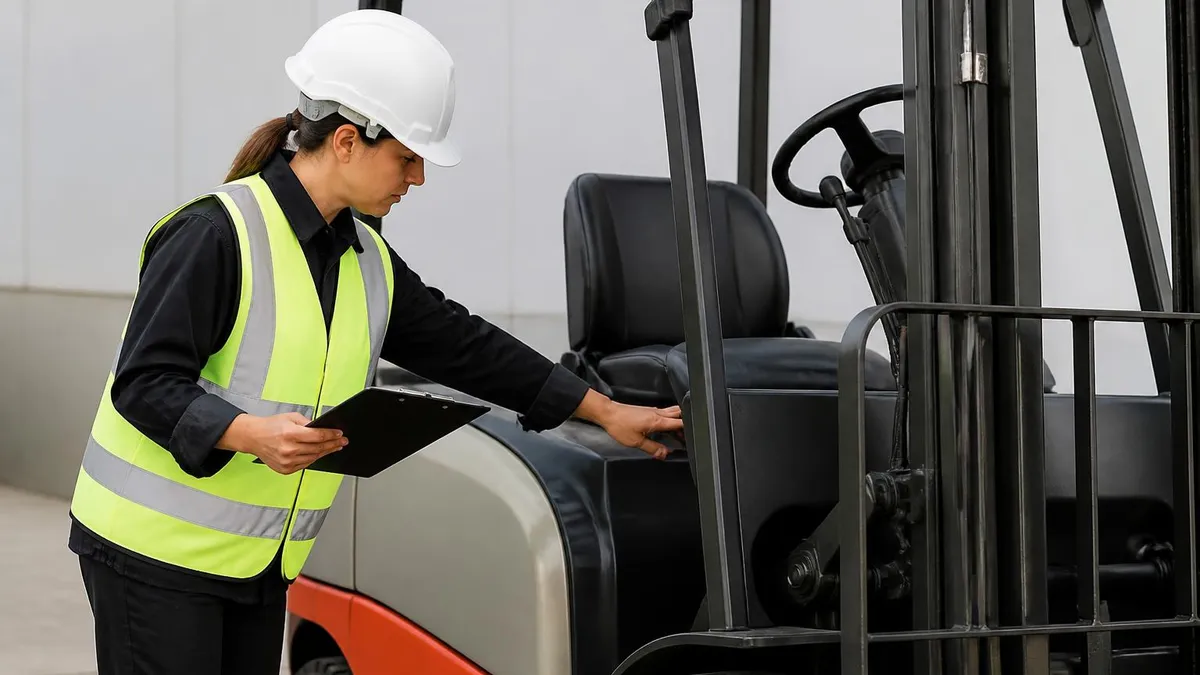
If a forklift has an attachment fitted but no derated capacity plate or written engineering approval, do not operate it for load handling. Report the issue to your supervisor and the dealer if applicable. Operating an uncertified combination is a personal WHS breach that can result in fines for you as well as your employer, regardless of who fitted the attachment.
Connecting dealer knowledge to your TLILIC0003 assessment is where the rubber meets the road. The unit of competency does not test you on brand names or dealer identities, but it does test you on the documentation, inspection routines, and operating decisions that depend entirely on how well dealers have done their job. Assessors look for candidates who can read paperwork critically, identify gaps, and stop work when something is not right, all of which are dealer-related skills in practice.
The practical assessment typically includes a pre-operational inspection, load handling tasks, travel with and without loads, stacking and de-stacking from racking, and refuelling or battery handling. During the pre-op inspection, you will be expected to find and read the capacity plate, check the service sticker, identify any attachments, and verify that documentation is consistent. If the truck you are assigned has a side-shifter but only the original capacity plate, you should call this out to the assessor as a documentation issue.
Load handling decisions also depend on dealer-supplied information. The capacity chart, sometimes called a load centre chart, shows how the rated capacity changes as the load centre moves forward. This chart is typically printed on the data plate or in the operator manual that the dealer supplies on delivery. Assessors often ask candidates to calculate or estimate whether a given load is within capacity, and the answer requires reading the chart correctly.
Battery and fuel safety is another dealer-influenced area. Electric trucks require correct charging procedures, ventilation for lead-acid batteries, and protective equipment when handling acid. LPG trucks require correct bottle change procedures, leak checks, and storage protocols. Dealers supply the manuals and decals that describe these procedures, and assessors expect you to follow them. Independent dealers like A and K Forklifts often run short familiarisation sessions covering these basics for new operator hires.
Documentation literacy is increasingly important. Modern fleets often use telematics systems that track operator logins, impact events, and service due dates. Many of these systems are supplied and maintained by dealers under managed service contracts, and forklift safety log in with a personal code before driving. Knowing how to interact with these systems, where to find your operator profile, and what happens when you record an impact is part of working safely in a modern Australian warehouse.
Finally, your post-operational responsibilities include parking in approved zones, lowering forks to the ground, applying the park brake, removing the key, and reporting any defects in the logbook. The logbook is a shared document between you, your employer, and the servicing dealer, so accurate entries are critical. When the assessor checks your finish-of-shift routine, they want to see you complete this paperwork properly, because incomplete logbooks lead to missed services, undetected defects, and serious incidents downstream. See the related article on TCM forklift specifications and parts for more detail on how brand-specific information feeds into these checks.
Practical tips for the final stretch of your TLILIC0003 preparation start with becoming comfortable around the brands and dealers most active in your area. If you live in Sydney, that might mean familiarising yourself with Toyota, Crown, Linde, and independents like A and K Forklifts. In Melbourne, Adaptalift, BT, and CFM are common names. In Brisbane, Lencrow and Hyster dominate certain sectors. Knowing who supplies the trucks at your future employer's site means you can read paperwork faster and ask better questions during induction.
Visit a dealer if you can. Many independent dealers welcome prospective operators or RTO students for short tours of their workshop, especially if you call ahead and explain you are preparing for TLILIC0003. Seeing forks being checked with a heel gauge, mast chains being measured for stretch, and hydraulic hoses being pressure-tested gives you a much deeper understanding of why pre-start inspections matter. You will never look at a service sticker the same way again.
Collect and study operator manuals. Most major manufacturer manuals are available as free PDF downloads, and even reading the table of contents teaches you which checks the manufacturer considers daily, weekly, and periodic. Dealers usually supply printed manuals with new trucks, but used trucks often arrive without them. Knowing how to locate the right manual online is a practical skill that will serve you for your entire operating career.
Practice reading capacity plates and charts. Make a habit, even before you start work, of looking at the plate on any forklift you walk past in a warehouse, retail outlet, or workshop. Note the rated capacity, the load centre, the mast height, and any attachments. Try to imagine how the capacity would change if the load centre moved forward by 100 mm or if a side-shifter was added. This mental rehearsal is invaluable on assessment day.
Build a relationship with your assessor or trainer. RTOs delivering TLILIC0003 in Australia often have long-standing relationships with local dealers, and your trainer can answer specific questions about brands you will encounter on your first job. Do not be afraid to ask questions about dealer paperwork, capacity calculations, or attachment certification. Trainers want you to succeed, and clarifying these topics before the assessment is far better than guessing on the day.
Take advantage of practice tests. The quiz tiles throughout this article link to TLILIC0003 question sets that focus specifically on attachments, modifications, and dealer-related documentation. Repeated exposure to these question formats builds the recognition you need to answer correctly under exam pressure. Aim for at least 85 percent on each practice set before booking your real assessment, and review any incorrect answers carefully.
Finally, remember that the dealer network is your ally throughout your operating career, not just during licensing. Good dealers respond quickly to defect reports, supply genuine parts, fit certified attachments, and provide familiarisation when new machines arrive. Knowing how to engage with them professionally, document your concerns, and follow up on outstanding work makes you a more valuable employee and a safer operator. The TLILIC0003 ticket is your entry point, but the relationship with dealers and the documentation they produce is what keeps you safe every day after that.
Sample Forklift Licence Practice Questions
Try these questions from our free Forklift Licence practice tests. The correct answer and an explanation follow each question.
When must a forklift operator record an entry in the logbook?
- A. Only when a serious fault is found during pre-operational checks
- B. At the start and end of each shift, including any faults or damage found
- C. Only when instructed to do so by a supervisor
- D. Once per week, summarising all operations performed
Answer: B. At the start and end of each shift, including any faults or damage found
Logbook entries must be made at the start and end of each shift, recording pre-operational check results and any faults, damage, or incidents that occurred during operation.
What penalties apply for non-compliance with Forklift Pre-Operational Checks regulations in Australia?
- A. No penalties
- B. Significant fines (up to millions of AUD for corporations) and potential imprisonment for serious offences
- C. A verbal warning only
- D. A small administrative fee
Answer: B. Significant fines (up to millions of AUD for corporations) and potential imprisonment for serious offences
Australian WHS penalties are severe, with Category 1 offences carrying fines up to AUD 3 million and potential imprisonment.
Under the Work Health and Safety (WHS) Act, what duty does a forklift operator have regarding hazards in the workplace?
- A. Report hazards only if they are in the operator's immediate work area
- B. Take reasonable care to identify hazards and report them to the person conducting the business or undertaking (PCBU)
- C. Ignore minor hazards and only report serious injuries
- D. Only follow instructions from supervisors, with no independent duty to report
Answer: B. Take reasonable care to identify hazards and report them to the person conducting the business or undertaking (PCBU)
Under the WHS Act, workers have a duty to take reasonable care for their own and others' health and safety, which includes identifying and reporting hazards to the PCBU.
Under WHS legislation, who is responsible for ensuring forklift operators hold a valid High Risk Work (HRW) licence?
- A. The forklift operator only
- B. The person conducting the business or undertaking (PCBU)
- C. The state transport authority
- D. The equipment hire company only
Answer: B. The person conducting the business or undertaking (PCBU)
The PCBU has the primary duty to ensure that only workers holding a valid HRW licence for the class of forklift operate the equipment at their workplace.
TLILIC0003 Questions and Answers
Mast of Forklift: Complete Guide to Forklift Parts for TLILIC0003 Operators in Australia
Multi Directional Forklift Trucks: Complete Guide to Forklift Types and Parts for TLILIC0003 Operators in Australia
Free Forklift Practice Test 2026 - Forklift Exam Questions
TCM 2.5 Ton Forklift Specifications and Parts: Complete Guide for TLILIC0003 Operators in Australia
Forklift Clearance Height: Complete Guide to Forklift Specifications for TLILIC0003 Operators in Australia
About the Author

Certified Crane Operator & Skilled Trades Exam Specialist
Ferris State UniversityRobert Martinez is a Journeyman Ironworker, NCCCO-certified crane operator, and forklift trainer with a Bachelor of Science in Construction Technology from Ferris State University. He has 21 years of ironworking, rigging, and heavy equipment operation experience across high-rise and industrial construction sites. Robert prepares candidates for crane operator, rigger, forklift, and skilled trades certification examinations.