
Trailer for Forklift: Complete Guide to Forklift Accessories and Attachments for TLILIC0003 Operators in Australia
Trailer for forklift guide for TLILIC0003 operators. Learn about accessories, attachments, load ratings, and safety rules for Australian forklift 🎓

Choosing the right trailer for forklift work in Australia is one of the most underrated decisions a TLILIC0003 licence holder makes on a daily basis. Whether you are towing a load between warehouse bays, shifting equipment around a freight yard, or moving stock across a manufacturing site, the trailer you connect to your forklift directly affects safety, productivity, and compliance with WHS regulations. Getting this choice wrong can void insurance, damage equipment, and injure workers in seconds.
Forklift accessories cover a much broader category than just trailers. They include attachments like jibs, slippers, drum clamps, carpet poles, work platforms, side shifters, rotators, and fork extensions. Each accessory changes the lift truck's centre of gravity, load capacity, and operational footprint. For TLILIC0003 candidates, understanding how accessories affect the forklift's data plate rating is a core assessment outcome under the national unit of competency.
The Australian regulatory landscape for forklift accessories is governed by AS 2359 (Powered industrial trucks), the model Work Health and Safety Regulations 2011, and state-based codes of practice. Safe Work Australia explicitly states that any attachment fitted to a forklift must be approved by the manufacturer or a competent engineer, and that the operator must be trained on the specific combination. A trailer for forklift use is no exception — it requires a rated tow point, matching coupling, and a documented load capacity.
This guide walks you through everything a TLILIC0003 operator needs to know about forklift trailers and accessories. We cover the categories of attachments most common in Australian workplaces, the rules around derating, the inspection checklists that should run before every shift, and the common assessment scenarios you will face during your high-risk work licence test. The goal is to make you safer, faster, and more confident on the floor.
You will also learn how trailers fit into the wider ecosystem of warehouse logistics. Forklift-towed trailers — sometimes called tugger trailers, mother-daughter trailers, or industrial tow trailers — are increasingly replacing single-load fork lifting in lean manufacturing environments. Toyota, Hyster, Linde, and Crown all manufacture forklifts with optional tow couplings rated between 1,000 kg and 5,000 kg of drawbar pull, which opens up multi-trailer train configurations across long distances.
By the end of this article you should be able to identify whether a particular trailer is suitable for your forklift model, calculate the derated capacity when an attachment is fitted, recognise the warning signs of an unsafe coupling, and answer the kinds of multiple-choice questions that appear on the TLILIC0003 knowledge assessment. We will also point you to free practice quizzes you can use to test yourself before the real assessment day.
Remember that even though forklift accessories make jobs easier, every single attachment adds complexity. A side shifter raises the load centre forward by 50 mm or more. A jib doubles the effective fork length. A trailer changes the truck from a lifting device into a tractor unit. Each of these changes must be understood, documented, and applied to your daily pre-operational checks before you turn the key.
Forklift Accessories in Australia by the Numbers

Main Categories of Forklift Accessories
Includes trailers, tow hitches, drawbars, and pintle couplings. Used to multiply load capacity across long warehouse distances. Must be rated for the forklift's drawbar pull capacity.
Side shifters, fork positioners, rotators, push-pull units, paper roll clamps, and bale clamps. These change how you grip and place loads but reduce nominal lifting capacity.
Jibs, booms, carpet poles, and fork extension slippers. They extend the load centre forward, which significantly derates the truck and demands recalculation of the safe working load.
Approved work platforms (man cages) used for occasional elevated work. Must meet AS 2359.2 and require a separate risk assessment, harness, and secondary trained ground operator.
Drum handlers, fork-mounted sweepers, snow ploughs, magnetic sweepers, and hopper bins. Used in specific industries like food, recycling, foundries, and construction yards.
A trailer for forklift operations is fundamentally different from a road-going trailer because it operates inside a controlled workplace and is towed at low speeds, typically below 10 km/h. The Australian Standard AS 2359.2 covers operating instructions for powered industrial trucks, and it requires that any towing operation be carried out only when the forklift is fitted with a manufacturer-approved tow coupling. You cannot simply weld a hook to the counterweight — it must be engineer certified or factory-fitted.
The most common configurations are the pintle hook with lunette ring, the automatic pin-style coupling, and the ball coupling for lighter trailers. Pintle hooks are favoured in heavy industry because they tolerate slight misalignment and shock loading. Automatic couplings allow single-operator hitching without leaving the seat, which is a huge productivity gain in mother-daughter train applications where dozens of swaps happen per shift across a manufacturing facility.
Drawbar pull capacity is the single most important specification when matching a trailer to a forklift. It is expressed in newtons or kilograms and represents the horizontal force the truck can sustainably exert. A counterbalance forklift rated at 2,500 kg lift capacity might only produce 1,000 to 1,500 kg of drawbar pull. Exceeding this rating causes wheel slip, transmission damage, and uncontrolled trailer momentum on slopes.
When sizing a trailer train, the rule of thumb in Australian distribution centres is that total trailer gross mass should not exceed three times the forklift's rated lift capacity, and the total length of the train should not exceed 15 metres unless a documented risk assessment supports a longer configuration. Some sites cap trains at four trailers regardless of mass because of swept-path concerns at intersections and dock plates.
You can read more about the mechanical anatomy of these trucks in our guide to the mast of forklift, which covers how the lifting carriage interacts with attachments and load weight. Understanding the mast geometry helps you visualise how forces transfer from a trailer hitch back through the chassis to the front axle, which is what determines tipping risk during towing operations on uneven warehouse floors.
Trailer braking is another area of confusion. Most forklift-towed trailers in Australia rely on inertia (over-run) brakes or no brakes at all for loads under 750 kg. For heavier configurations, electric brakes controlled from the forklift cab are mandatory. The Heavy Vehicle National Law does not apply inside private workplaces, but WHS duty of care still requires effective deceleration without jackknifing the trailer.
Finally, every trailer used in a workplace must have a compliance plate listing its tare mass, rated capacity, manufacturer, and serial number. If you encounter a trailer without this plate, it should be tagged out until an engineer's certification is obtained. This is one of the most common audit findings during SafeWork NSW and WorkSafe Victoria site inspections of warehouse and freight operations across Australia.
TLILIC0003 Practice Test Questions
Prepare for the Forklift Licence Australia - TLILIC0003 exam with our free practice test modules. Each quiz covers key topics to help you pass on your first try.
TLILIC0003 Forklift Licence Australia Atta...
TLILIC0003 Exam Questions covering Forklift Licence Australia Attachments and Modifications. Master TLILIC0003 Test concepts for certification prep.
TLILIC0003 Forklift Licence Australia Batt...
Free TLILIC0003 Practice Test featuring Forklift Licence Australia Battery and Fuel Safety. Improve your TLILIC0003 Exam score with mock test prep.
TLILIC0003 Forklift Licence Australia Emer...
TLILIC0003 Mock Exam on Forklift Licence Australia Emergency Procedures. TLILIC0003 Study Guide questions to pass on your first try.
TLILIC0003 Forklift Licence Australia Fork...
TLILIC0003 Test Prep for Forklift Licence Australia Forklift Pre-Operational Checks. Practice TLILIC0003 Quiz questions and boost your score.
TLILIC0003 Forklift Licence Australia Haza...
TLILIC0003 Questions and Answers on Forklift Licence Australia Hazard Identification. Free TLILIC0003 practice for exam readiness.
TLILIC0003 Forklift Licence Australia Load...
TLILIC0003 Mock Test covering Forklift Licence Australia Load Centre Calculations. Online TLILIC0003 Test practice with instant feedback.
TLILIC0003 Forklift Licence Australia Load...
Free TLILIC0003 Quiz on Forklift Licence Australia Load Handling and Capacity. TLILIC0003 Exam prep questions with detailed explanations.
TLILIC0003 Forklift Licence Australia Oper...
TLILIC0003 Practice Questions for Forklift Licence Australia Operating in Different Environments. Build confidence for your TLILIC0003 certification exam.
TLILIC0003 Forklift Licence Australia Oper...
TLILIC0003 Test Online for Forklift Licence Australia Operating Techniques. Free practice with instant results and feedback.
TLILIC0003 Forklift Licence Australia Pede...
TLILIC0003 Study Material on Forklift Licence Australia Pedestrian Safety. Prepare effectively with real exam-style questions.
Common Forklift Attachments Explained
A side shifter is a hydraulic attachment that allows the forks to move laterally 100 to 150 mm in each direction without repositioning the entire truck. This is the most popular attachment in Australian warehousing because it dramatically reduces double-handling at racking and pallet truck transfer zones across busy distribution centres nationwide.
However, fitting a side shifter typically derates the forklift's lifting capacity by 5 to 10 per cent because it adds 100 to 200 kg of mass at the carriage and pushes the load centre forward by 25 to 40 mm. The forklift data plate must be updated to reflect this combination, and operators need to be trained on the specific truck plus attachment pairing before legally using it.

Should You Tow a Trailer With Your Forklift?
- +Multiplies load capacity across long distances without multiple trips
- +Reduces operator fatigue by eliminating repeated pallet handling movements
- +Supports lean manufacturing tugger train delivery systems efficiently
- +Lower fuel and battery consumption per pallet moved across site
- +Improves traffic flow by reducing forklift count in main aisles
- +Compatible with most counterbalance forklifts above 2,000 kg capacity
- +Enables single-operator delivery of multiple stops in one trip
- −Requires manufacturer-approved tow coupling and engineer certification
- −Drawbar pull rating limits maximum train mass significantly
- −Trailer brakes mandatory above 750 kg gross mass under WHS duty
- −Increased swept path makes intersections and doorways harder
- −Operators need additional training beyond standard TLILIC0003 unit
- −Trailer reversing requires advanced skill and ground spotter
- −Higher pedestrian collision risk with longer multi-trailer trains
Pre-Operational Checklist for Trailer and Attachment Use
- ✓Verify the attachment compliance plate matches the forklift's data plate combination
- ✓Inspect the tow coupling for cracks, excessive wear, or loose mounting bolts
- ✓Check trailer tyres for adequate pressure, tread, and no visible sidewall damage
- ✓Test hydraulic hoses on powered attachments for leaks or chafing damage
- ✓Confirm the safety pins on the attachment are fully engaged and secured
- ✓Verify the trailer's safety chain or secondary retention device is fitted
- ✓Inspect the drawbar for straightness, with no bending or twisting evident
- ✓Check the trailer braking system, including over-run mechanism if fitted
- ✓Confirm load distribution does not exceed any axle or hitch rating
- ✓Review the route for overhead clearances, floor condition, and pedestrian crossings
- ✓Test the forklift horn, lights, and reversing beeper before moving
- ✓Document any defects in the pre-start logbook and report to supervisor
Never modify a coupling or attachment yourself
Any modification to a forklift tow coupling, attachment mounting bracket, or load handling device must be authorised in writing by the manufacturer or a chartered mechanical engineer. Unauthorised welding, drilling, or grinding voids the compliance plate and exposes both the operator and PCBU to prosecution under the Work Health and Safety Act 2011 across all Australian states.
Load capacity derating is where most TLILIC0003 candidates lose marks during their assessment. The forklift data plate lists a nominal capacity at a specific load centre, typically 500 mm for Australian counterbalance trucks under 5 tonnes. The moment you fit an attachment, you must recalculate the safe working load because the attachment adds mass, shifts the load centre forward, and may add hydraulic plumbing that further reduces the residual capacity available for the actual cargo.
The general formula is straightforward but easy to apply incorrectly under pressure. New capacity equals nominal capacity multiplied by the standard load centre divided by the new effective load centre, then reduced by the attachment's own weight. For example, a 2,500 kg forklift at 500 mm load centre fitted with a 200 kg jib that extends the load centre to 1,200 mm produces a residual capacity of approximately 840 kg — far less than the bare truck rating.
This is precisely why every attachment must be paired with an updated capacity plate that lists the truck-plus-attachment combination. Some manufacturers provide separate plates that operators must fit when swapping attachments. Others issue a printed load chart that must be kept inside the cabin. WorkSafe regulators check for these documents during site inspections, and missing capacity plates are one of the most common improvement notices issued during routine compliance audits.
The concept of effective load centre is critical to understand. It is not just the distance from the heel of the fork to the centre of mass of the load — it includes any extension caused by the attachment itself. A carpet pole shifts the load centre to roughly the middle of the pole length. A push-pull attachment adds 100 to 150 mm of additional forward offset. A drum handler adds the drum's radius plus the clamp depth, which can add another 250 mm beyond the standard fork length.
For trailer towing, the calculation focuses on drawbar pull rather than vertical load capacity. The maximum drawbar pull is usually around 40 to 60 per cent of the forklift's lift capacity for diesel and LPG counterbalance trucks, and 25 to 40 per cent for electric units. Battery-powered trucks have lower towing limits because sustained current draw heats the motor and accelerates battery discharge, which limits tugger applications to shorter shift periods.
Slope handling deserves special attention. Even a 2 per cent gradient can dramatically increase the towing force required to maintain trailer momentum. On a 5 per cent ramp, a 2,000 kg trailer requires roughly 100 kg of additional drawbar pull just to overcome gravity. Combined with rolling resistance from worn castor wheels or debris on the floor, this can quickly exceed the forklift's rated capability and cause uncontrolled rollback on inclines.
Documentation is the operator's best protection. Before each shift, confirm which attachment is fitted, locate the matching capacity plate, photograph the data plate if necessary, and record the load you will be handling. If anything seems inconsistent — wrong attachment for the load, missing plate, suspicious modifications — refuse to operate and escalate to your supervisor. This is your legal right and obligation under the Work Health and Safety Act in every Australian jurisdiction without exception.

The TLILIC0003 high-risk work licence covers operation of forklifts and order pickers, but it does not automatically authorise you to operate every attachment configuration. PCBUs are required under WHS Regulations to provide additional task-specific training for each attachment before assigning work. Operating an unfamiliar attachment without documented competency can result in licence suspension and personal liability for any resulting incident on site.
Compliance with Australian safety law around forklift accessories is layered across federal model laws, state-based regulations, and Australian Standards. The Work Health and Safety Act 2011 sets the overarching duty of care. The model WHS Regulations 2011 require high-risk work licences for forklift operation and impose specific obligations for plant safety. AS 2359 series covers the technical requirements for powered industrial trucks, while AS 4024 applies to safeguarding of machinery in general workplaces.
Each state implements these obligations slightly differently. SafeWork NSW, WorkSafe Victoria, Workplace Health and Safety Queensland, SafeWork SA, WorkSafe WA, WorkSafe Tasmania, NT WorkSafe, and WorkSafe ACT all conduct site inspections and can issue improvement or prohibition notices. The fines for non-compliance with attachment regulations can exceed $10,000 for individuals and $50,000 for corporate entities, with criminal prosecution possible following serious incidents involving worker injury or death.
The PCBU (Person Conducting a Business or Undertaking) carries the primary duty for ensuring attachments are safe, but operators also have personal duties under section 28 of the WHS Act. You must take reasonable care for your own safety and that of others, follow reasonable instructions, and comply with workplace policies. Knowingly operating with a defective attachment or unrated trailer breaches these duties and exposes you to personal liability under the Act.
Manufacturer guidance is the most authoritative source for attachment compatibility. Toyota Material Handling Australia, Crown Equipment, Linde Material Handling, Hyster-Yale Asia-Pacific, and Komatsu Forklift all publish detailed compatibility matrices and load capacity charts. These documents typically list approved attachment models by part number, the derated capacity at standard load centres, and any specific operational restrictions such as maximum lift height or tilt angle limits for safe use.
Third-party attachments from manufacturers like Cascade, Bolzoni, Kaup, Meyer, and Stabau are widely used in Australia and are generally compliant when supplied with their own certification. However, the responsibility for verifying compatibility with your specific forklift rests with the PCBU, not the attachment manufacturer. Always request written confirmation that the attachment is approved for your truck model, serial number range, and intended application before placing it into service.
For those looking to refresh fundamentals before tackling attachment-specific competency, our comprehensive free forklift practice test 2026 resource covers the core knowledge required for the TLILIC0003 unit assessment. Pairing this general practice with the attachment-focused quizzes linked throughout this article gives you the broadest possible preparation before your real high-risk work licence assessment day with a registered training organisation.
Finally, remember that even the most expensive attachment cannot compensate for poor operator decisions. A well-maintained, correctly rated trailer or attachment fitted to a competently operated forklift is one of the safest tools in Australian industry. The reverse — an unverified attachment combined with rushed or untrained operation — is one of the most dangerous combinations possible and accounts for a disproportionate share of serious workplace forklift incidents reported nationally.
Practical preparation for your TLILIC0003 assessment should include hands-on time with at least one major attachment beyond the standard fork carriage. Most registered training organisations across Australia provide a side shifter as part of standard training because it is the most universal attachment in modern Australian warehousing. Ask your RTO whether you can also see a jib, drum clamp, or tow coupling demonstrated even if you will not be assessed on each one individually during your formal session.
When reviewing the theory component, focus heavily on the load capacity calculations because these consistently appear in the multiple-choice and short-answer sections of the assessment. Memorise the standard load centre of 500 mm for trucks under 5 tonnes and 600 mm for larger units. Practise calculating residual capacity for at least three different attachments using realistic example numbers — this builds the muscle memory needed to perform calculations quickly under assessment conditions.
Pre-operational inspection is also a heavily weighted assessment area. Examiners watch for systematic, thorough checks rather than a quick walk-around. Verbalise what you are checking as you go — pointing to the tow coupling, naming the safety pin you are testing, calling out any defect you observe. This demonstrates structured competency rather than habit-driven inspection, and assessors reward operators who clearly explain their thinking and decision-making throughout the practical assessment.
For the practical operating component, practise smooth acceleration and braking. With a trailer attached, sudden movements amplify load shift and can cause jackknifing in tight spaces. Plan your route ahead of each move, especially when approaching intersections or pedestrian crossings. Use the forklift horn at all blind corners, and reduce speed below 5 km/h whenever there is potential pedestrian conflict near loading docks, storage aisles, or external yards during normal day shift operations.
Reversing with a trailer is the single most difficult skill in tow operations. Unlike a road vehicle, forklift trailers often have rigid drawbars that pivot only at the coupling point, making reversing direction less intuitive. Practise small steering inputs in low-traffic areas before attempting tight reversing manoeuvres in production zones. If reversing is unavoidable in a confined space, use a trained spotter on foot with clear hand signals or two-way radio communication for additional visibility and safety control.
To deepen your understanding of how attachments interact with different forklift designs, study our guide on multi directional forklift trucks. Multi-directional forklifts present unique attachment considerations because their wheel configuration changes how lateral forces transfer through the chassis when towing or carrying offset loads, which is genuinely useful knowledge for any operator working in mixed-equipment Australian sites with varied forklift fleets.
Finally, make use of free online practice tests in the days leading up to your assessment. Spaced repetition over five to seven days dramatically outperforms last-minute cramming for retention of regulatory detail. Aim to complete at least three full attachment-focused practice quizzes, identify your weakest topics, and revisit the relevant sections of this guide before booking your formal TLILIC0003 assessment with your chosen registered training organisation in your state or territory.
TLILIC0003 Questions and Answers
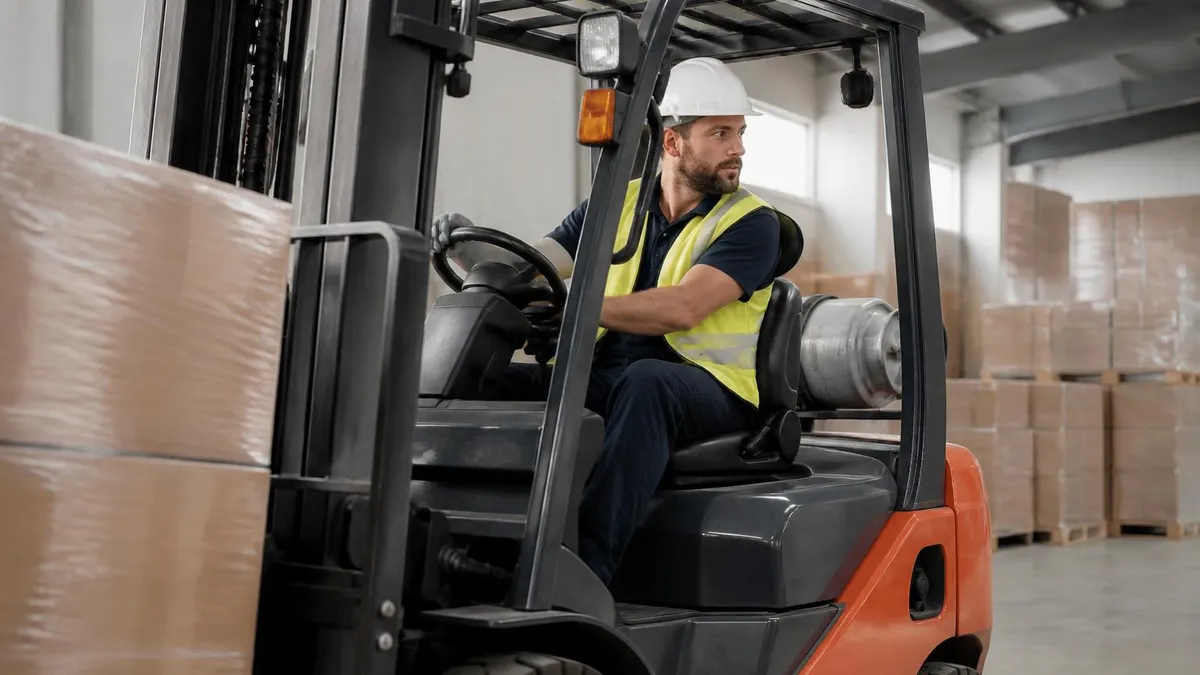
Mast of Forklift: Complete Guide to Forklift Parts for TLILIC0003 Operators in Australia
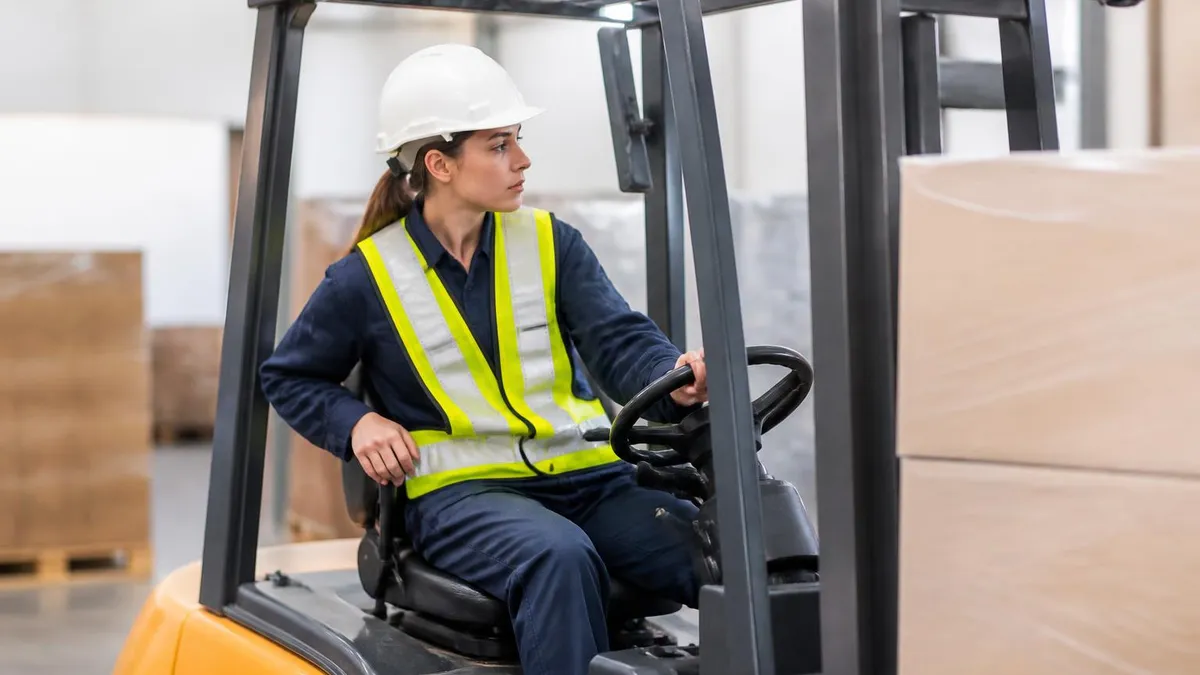
Multi Directional Forklift Trucks: Complete Guide to Forklift Types and Parts for TLILIC0003 Operators in Australia
Free Forklift Practice Test 2026 - Forklift Exam Questions
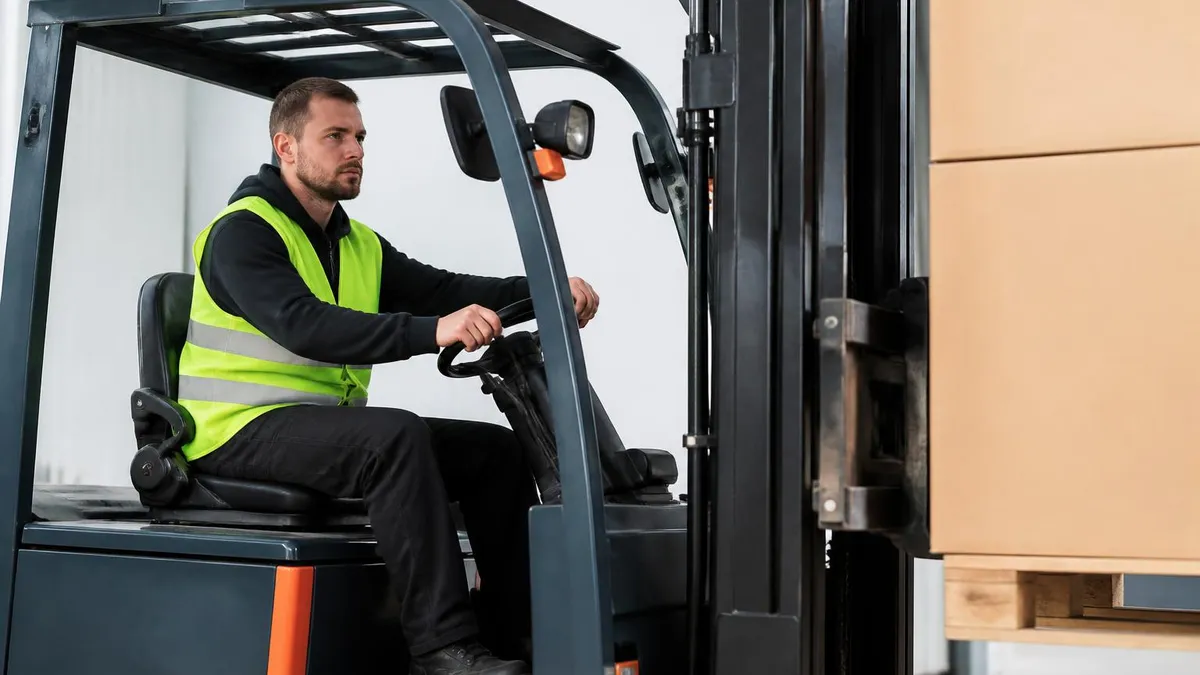
Forklift Clearance Height: Complete Guide to Forklift Specifications for TLILIC0003 Operators in Australia
Forklift Licence Near Me: How to Find Local TLILIC0003 Training Providers in Australia
About the Author

Certified Crane Operator & Skilled Trades Exam Specialist
Ferris State UniversityRobert Martinez is a Journeyman Ironworker, NCCCO-certified crane operator, and forklift trainer with a Bachelor of Science in Construction Technology from Ferris State University. He has 21 years of ironworking, rigging, and heavy equipment operation experience across high-rise and industrial construction sites. Robert prepares candidates for crane operator, rigger, forklift, and skilled trades certification examinations.