
Do I Need a Car Licence to Drive a Forklift? TLILIC0003 Requirements Explained for Australia
✅ Do I need a car licence to drive a forklift in Australia? See how a TLILIC0003 forklift licence differs from a driver licence, plus costs and steps.

If you are wondering do i need a car licence to drive a forklift, the short answer in Australia is no, not for operating one inside a workplace. A forklift is classified as high risk work plant, so the licence you need is a High Risk Work Licence with the forklift (LF) class, not a car or heavy vehicle licence. There are still a few situations where a standard driver licence matters, and misunderstanding them trips up many new operators.
The confusion is understandable. Many people assume that because a forklift has a steering wheel, pedals and an engine or battery, it must sit somewhere on the same licensing ladder as cars, trucks and tractors. In reality, Australia treats road licensing and workplace licensing as two separate systems. Road licences are issued by state transport authorities, while high risk work licences are issued by workplace health and safety regulators such as SafeWork NSW, WorkSafe Victoria and WorkSafe Queensland.
To earn the forklift licence, you complete training and assessment against the nationally recognised unit TLILIC0003 Licence to operate a forklift truck through a registered training organisation. You then apply to your state or territory regulator for the licence card itself. You must be at least 18 years old, able to prove your identity, and show language, literacy and numeracy skills that let you read load charts, signs and safety documents. A car licence does not appear anywhere on that list of requirements.
Many readers also ask do i need a forklift licence when they only move a few pallets now and then. The answer is yes. Under the model Work Health and Safety Regulations, anyone operating a forklift at work must hold the correct high risk work licence, regardless of how often they use the machine or how short the task is. Occasional use does not create an exemption, and employers who allow it risk serious penalties.
There are genuine situations where a driver licence becomes relevant. If your job involves driving a registered vehicle on a public road, such as a truck carrying a tail-mounted forklift, you need the correct road licence for that vehicle. Some employers also list a car licence as a hiring requirement because the role includes delivery runs or travel between sites. In those cases the car licence is an employment condition, not a legal requirement for operating the forklift itself.
Holding a car licence also gives you no shortcut. Even an experienced truck driver with a heavy rigid or multi-combination licence must still complete TLILIC0003 assessment and obtain the LF class before operating a forklift at work. Regulators want evidence that you can manage load stability, mast operation, pre-start checks, hazard identification and pedestrian safety, and none of those skills are measured by a road driving test of any kind.
This guide walks through exactly what you need, what you do not, and where the two licence types overlap. You will find typical costs, the steps to apply, common mistakes and a practical checklist, followed by study tips and answers to the questions Australian learners ask most. By the end you should know precisely which licence applies to your situation and how to prepare for the assessment with confidence and without wasting money on the wrong course.
Forklift Licensing in Australia by the Numbers
What You Actually Need to Operate a Forklift in Australia
Confirm You Meet Eligibility
Choose a Registered Training Organisation
Complete Training and Assessment
Receive Your Statement of Attainment
Apply to Your State Regulator
A car licence and a forklift licence exist for different purposes and are governed by different laws. A car licence, issued by a state road authority such as Transport for NSW, VicRoads or the Queensland Department of Transport and Main Roads, authorises you to drive a registered vehicle on public roads. A forklift licence, formally a High Risk Work Licence, authorises you to operate a specific class of plant in a workplace under work health and safety legislation.
The assessments also test completely different skills. A road test checks that you can obey traffic rules, judge gaps, park between vehicles and react to other drivers. TLILIC0003 assessment checks that you can complete pre-operational checks, interpret a load chart, pick up and place a load safely, stack at height, travel with the mast lowered and manage pedestrians. Passing one test says almost nothing about your competence in the other.
Eligibility rules differ as well. Car licences in Australia move through learner, provisional and full stages, with age limits and demerit rules that vary by state. A forklift licence has no stages. You are either competent and licensed in the LF class, or you are not. The only age requirement is that you must be at least 18, and there is no minimum period of prior driving experience in a car.
Duration and renewal also work differently. A full car licence in most states can be held for ten years before renewal, and some states offer five-year options. A High Risk Work Licence lasts five years. When it expires, you must renew it through your regulator, and if you leave it too long you may need to complete a fresh assessment. Losing your car licence through demerit points does not automatically cancel your forklift licence.
It is worth knowing that the two systems sometimes interact in practice. If you lose your car licence due to a drink driving offence, your forklift licence remains valid, but an employer who needs you to drive between sites may restrict your duties. Conversely, a regulator can suspend or cancel a High Risk Work Licence for safety breaches without any effect on your ability to drive a car on the road.
Another distinction is the range of machines covered. A car licence covers cars, and extra classes cover trucks, motorbikes and buses. The LF forklift class covers counterbalanced and reach forklifts, and it does not extend to order picking trucks, which require the separate LO class. Other high risk work classes, such as scaffolding or crane operation, need their own licences and units, so one class never covers another.
Understanding these differences helps you choose the right training. If your goal is warehouse, logistics, manufacturing or construction work, the forklift licence is the credential employers check on your first day. If your goal also includes delivery driving, you will need both licences, but they are obtained separately, at different times, from different bodies, and with entirely different fees, forms and assessments to complete.
Do I Need a Car Licence to Drive a Forklift on Site, on Roads and at Work?
Inside a warehouse, factory, yard or construction site, the legal requirement is the High Risk Work Licence with the LF class. Work health and safety law focuses on the plant being operated, not on whether you can drive a car. A person with no car licence at all can lawfully operate a forklift at work once they have completed TLILIC0003 and been issued their licence by the regulator.
This surprises many young job seekers who have not yet passed their driving test. If you are 18 and can prove your identity, you can start forklift training without a learner permit or provisional licence. Your employer must still provide site induction, supervision where appropriate and a safe traffic management plan, but they cannot lawfully insist on a car licence as a safety requirement for operating the forklift.
Is It Worth Holding Both a Car Licence and a Forklift Licence?
- +Opens up more job listings that list a driver licence as essential
- +Lets you commute to early or late shifts in industrial areas with limited transport
- +Allows you to progress into delivery, yard or multi-site roles
- +Makes you more attractive to employers who need flexible staff
- +Provides a pathway toward heavy vehicle licences later on
- +Gives you identification options that suit regulator application requirements
- −Each licence has its own separate fees, forms and renewal dates
- −A car licence does not shorten or replace forklift training in any way
- −Young drivers may face provisional restrictions that limit work travel
- −You must keep track of two renewal cycles and two regulators
- −Losing your car licence can limit duties even if your forklift licence is valid
- −Combined costs can be significant for someone starting out in the industry
Do I Need a Car Licence to Drive a Forklift? Your Pre-Training Checklist
- ✓Confirm you are at least 18 years old before booking.
- ✓Gather approved photo identification for the regulator and the RTO.
- ✓Check your state regulator's website for current licence requirements.
- ✓Choose a registered training organisation that delivers TLILIC0003.
- ✓Ask which forklift types you will train and be assessed on.
- ✓Request a written breakdown of the course fee and inclusions.
- ✓Arrange any language, literacy or numeracy support you may need.
- ✓Read your workplace's forklift procedures and traffic management plan.
- ✓Decide whether your job also requires a road driver licence.
- ✓Diarise your licence expiry date and renewal reminder once issued.
A forklift licence and a car licence are completely separate
You can hold a forklift licence without ever holding a car licence, and a car licence will never let you operate a forklift at work. Only TLILIC0003 assessment followed by a High Risk Work Licence with the LF class does that.
Cost is usually the first practical question after eligibility. A TLILIC0003 course in Australia commonly costs somewhere between about $200 and $450, depending on the provider, state, group size and whether the price includes assessment and paperwork. Cheaper offers exist, but always check whether the quoted price covers everything. Some providers charge extra for reassessment, ID checks or certificate processing, which can raise the real cost noticeably.
On top of the course fee, you pay a separate application fee to your state or territory regulator for the licence card. These fees vary by jurisdiction and change from time to time, so check the regulator's website for the current figure instead of relying on an old quote. Budget for both amounts when you plan, because the statement of attainment from your RTO is not the licence itself.
Course length is typically one to two days. Experienced operators who only need formal assessment may finish in a day, while complete beginners often need two days or more to cover theory, supervised practice and assessment comfortably. A quality provider will not rush you. If you are offered a licence in a couple of hours with no practical time on the machine, treat that as a warning sign.
The assessment itself has two main parts. The knowledge component usually involves written or verbal questions covering legislation, hazards, load charts, stability and safe work practices. The practical component involves a pre-start inspection, travelling with and without a load, picking up and placing loads on the ground and at height, stacking and unstacking, and parking safely. The assessor watches for consistent habits, not just a single correct attempt.
Common reasons people fail first time include skipping parts of the pre-start check, travelling with the mast raised, misjudging the load centre, failing to sound the horn at blind corners and not checking the rated capacity on the data plate. These are habit problems more than skill problems. Practising a fixed routine out loud helps assessors see that you understand why each step matters, and builds the discipline you will need at work.
If you do not pass first time, you are usually offered reassessment, sometimes at extra cost. Ask about the provider's reassessment policy before enrolling so there are no surprises. A competent result is recorded against specific tasks, so a good assessor will tell you exactly which areas need work. Use that feedback to practise before the second attempt instead of simply repeating the same approach.
Once you are marked competent and the regulator approves your application, you receive your licence card. Some jurisdictions allow a limited period of operation on the strength of your statement of attainment while the card is processed, but rules differ by state, so confirm with your regulator before assuming you can start work. Always carry your licence while operating, because inspectors can request it at any time.
Training without a licence is not a licence. Operating a forklift at work before your High Risk Work Licence is issued, unless your regulator specifically allows it, can lead to substantial fines for you and your employer. Always check your state rules first.
A High Risk Work Licence is valid for five years, and it is your responsibility to renew it before it expires. Regulators usually allow renewal without reassessment if you apply on time, provided you still meet the requirements, such as having a current identity record and, in some jurisdictions, evidence of recent work in the class. Missing the renewal window can mean you must complete a full TLILIC0003 assessment again.
If your licence lapses, the consequences vary by state. Some regulators allow a grace period after expiry, during which you can still renew by paying the fee and meeting the conditions. Beyond that, you may need to repeat the training and assessment from the beginning. Rules change, so rely on your regulator's current information instead of advice from colleagues, who may remember an older system.
Licences are generally recognised across Australia under mutual recognition arrangements, so moving from Queensland to Victoria or New South Wales does not usually mean starting over. You may need to notify the new regulator of your change of address or apply to transfer your details, and some states have specific procedures. Check before you start a job in a different state so you are not caught without valid paperwork.
Penalties for operating without a licence can be significant. Under work health and safety laws, both the operator and the person conducting the business or undertaking can face prosecution. Fines for companies can reach very large amounts in serious cases, and individuals can also be penalised. Beyond legal consequences, an unlicensed operator is a genuine danger to colleagues, because forklift incidents involving pedestrians are among the most serious workplace accidents.
A frequent mistake is assuming that experience replaces a licence. Someone who has driven forklifts informally for years on a family farm or in an overseas workplace still needs a current Australian High Risk Work Licence to operate at an Australian workplace. Experience can help you pass assessment faster, but it does not substitute for the licence, and employers who accept it are putting themselves at legal risk.
Another common error is confusing forklift classes. The LF class covers forklift trucks, while the LO class covers order picking trucks, which have an operator platform that rises with the load. If your job involves picking from racking on a lift-up platform, check which class is required. Booking the wrong course wastes both time and money, and your employer may still not be able to roster you.
Finally, keep your records tidy. Store your licence card, statement of attainment and any training certificates somewhere safe, and photograph them as backup. If you lose your card, contact your regulator to arrange a replacement promptly. Employers, inspectors and agencies will ask to sight your licence, and having it ready demonstrates professionalism, protects you from avoidable delays and makes starting a new job far smoother.
Start your preparation by reading the unit requirements and any learner guide your RTO provides. TLILIC0003 is practical, but the knowledge questions still catch people out if they only rely on hands-on experience. Spend time understanding terms such as load centre, rated capacity, stability triangle and attachment derating, because assessors often phrase questions in different ways to check genuine understanding rather than memorised answers.
Practise your pre-start check as a fixed routine. Walk around the machine in the same order every time, checking tyres, forks, chains, mast, hydraulic hoses, seat belt, lights, horn and brakes, and note defects before you turn the key. Say what you are checking out loud while you practise. Assessors want to see a methodical approach, and a consistent routine under pressure is much easier to deliver than improvising.
Develop safe travel habits early. Keep forks low, typically around 100 to 150 millimetres off the ground when moving, tilt the mast back slightly when carrying a load, travel in reverse when your view forward is blocked, and slow down on corners and ramps. Always travel with the load on the uphill side when on a gradient. These habits are tested in practice and in questions, so they are well worth drilling.
Learn how to read a data plate and load chart. The plate shows the rated capacity at a specified load centre, usually 500 millimetres, and the capacity reduces as the load centre increases or the lift height rises. If you fit an attachment, the capacity reduces further. Practising calculations with real examples helps you answer scenario questions quickly and, more importantly, prevents genuine overloading once you are working.
Use practice questions to find gaps. Quizzes on attachments and modifications, in particular, highlight how side shifters, fork positioners and other fittings change the machine's capacity and require updated documentation. Reviewing explanations for each wrong answer is more useful than simply repeating the quiz. Aim to understand why an answer is correct, so you can apply the same reasoning to unfamiliar questions on the day.
On assessment day, arrive early, bring your identification and wear appropriate clothing, including enclosed safety footwear and high-visibility clothing if required. Listen carefully to the assessor's instructions, ask for clarification if anything is unclear, and work at a steady pace. Rushing causes most practical errors. If you make a mistake, stop, correct it safely and continue, because demonstrating awareness is better than hiding the error.
Afterward, plan the next step. Submit your regulator application quickly, diarise your renewal date and keep refreshing your knowledge, especially if you do not operate daily. Consider whether additional credentials such as an order picker licence or a road licence would help your career. Treat your forklift licence as the start of ongoing safe practice rather than a one-off hurdle, and you will stay safe, employable and confident.
TLILIC0003 Questions and Answers

Forklift Training Course: Complete TLILIC0003 Guide for Australian Operators

How to Get a Forklift Licence in Australia: Complete TLILIC0003 Guide for 2026
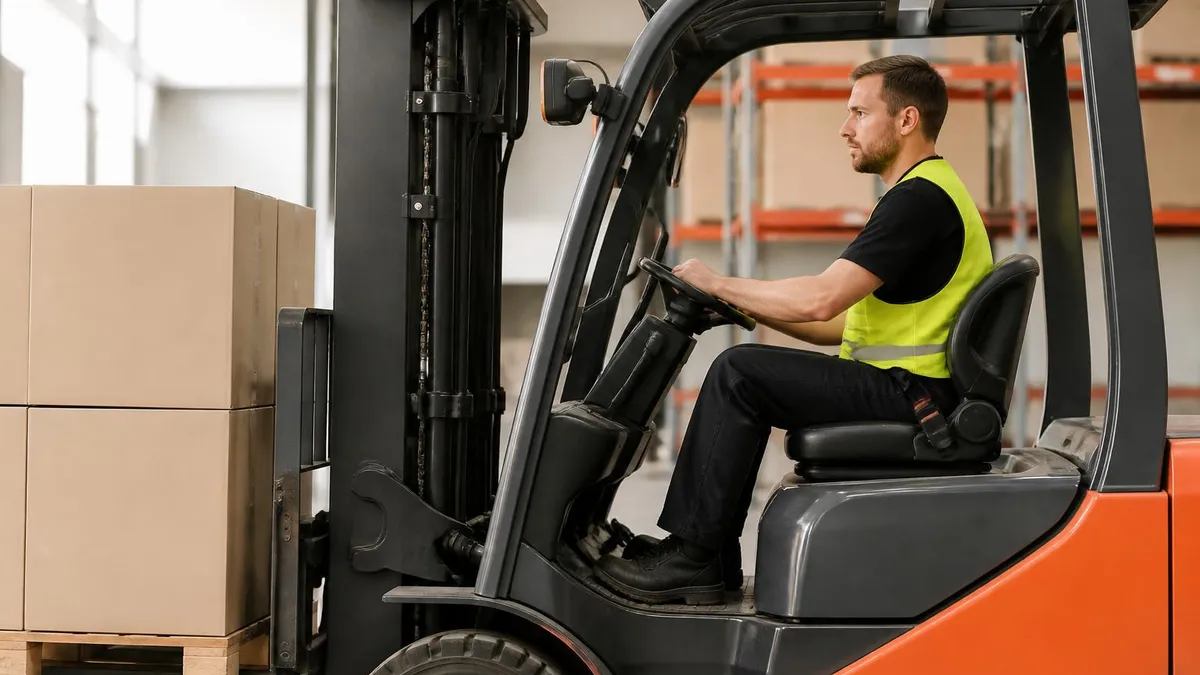
Traffic Management Plan Forklift: Complete Guide to Forklift Safety and Operations for TLILIC0003 Operators in Australia
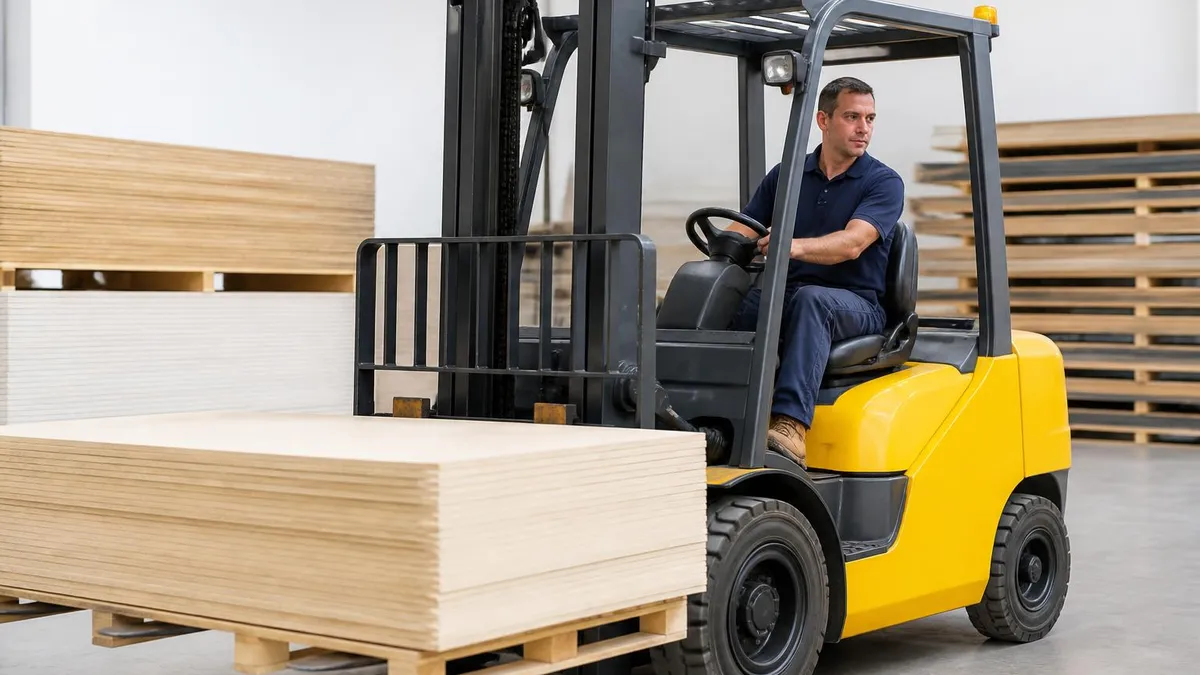
Forklift Licence Near Me: How to Find Local TLILIC0003 Training Providers in Australia
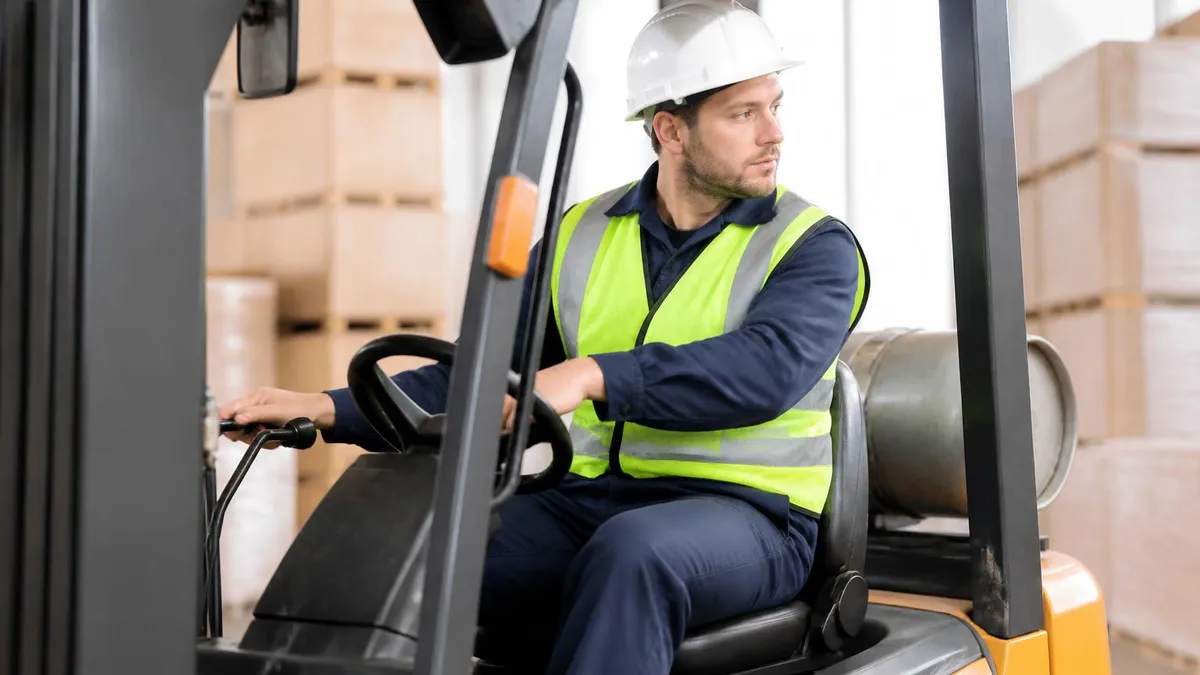
Forklift Hydraulic System: Complete Guide to Hydraulic Components, Operation, and Safety for TLILIC0003 Operators in Australia
How this page was made: written with AI tools and published by Nathan Beja, founder of Practice Test Geeks, who is responsible for its content. Exam facts are checked against the official sources listed below. Not reviewed by a subject-matter expert. Editorial policy
Sources & references
Exam facts on this page (fees, format, dates, passing scores) are checked against these official sources; the date is our last check. Editorial policy
- training.gov.au — Test delivery, exam information · verified Oct 2026
- worksafe.vic.gov.au — Fees, renewal · verified Oct 2026
- wa.gov.au — Fees, renewal · verified Oct 2026
- safework.nsw.gov.au — Fees, renewal, eligibility · verified Oct 2026
- safeworkaustralia.gov.au — Registration deadline, score validity · verified Oct 2026
- app.safework.sa.gov.au — Renewal · verified Oct 2026