
What Is a State Trooper? Career, Duties, and Salary Explained 2026 August
🏆 What is a state trooper? Learn the duties, salary, training, and career path of state troopers in Texas, Florida, Illinois, Arizona, and beyond.
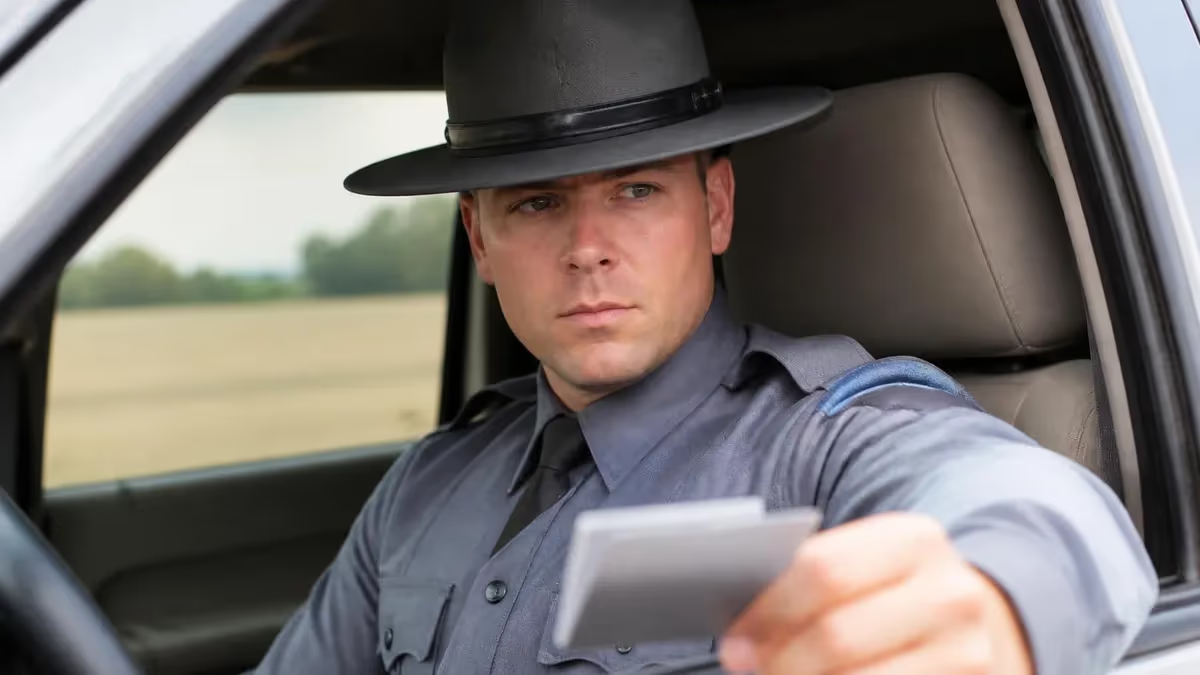
If you have ever wondered what is a state trooper, the simplest answer is that a state trooper is a sworn law enforcement officer who works for a statewide police agency rather than a city or county department. Troopers patrol highways, enforce traffic and criminal law, respond to crashes, and provide backup to local agencies across thousands of miles of jurisdiction. The viral phrase "state trooper texas a" comes from a famous moment involving a state trooper at Texas A&M, but the role itself is far broader than any single meme suggests.
Unlike a municipal police officer who answers calls inside one city, a state trooper has authority across an entire state. That means a single trooper might investigate a fatal collision on an interstate in the morning, assist with a drug interdiction stop at noon, and help a stranded family change a tire in the afternoon. The badge carries statewide power, which is why the selection and training process is famously demanding and competitive.
The Texas Department of Public Safety, known as Texas DPS, employs some of the most recognized troopers in the country. A texas state trooper is responsible for patrolling rural farm roads, busy urban interstates, and the long stretches of highway between major cities. Texas is enormous, so DPS troopers often cover vast patrol zones alone, relying on radio dispatch and mutual aid from sheriff's deputies when situations escalate quickly.
State troopers also handle specialized assignments that most people never see. Many serve on commercial vehicle inspection teams, crash reconstruction units, K-9 divisions, dignitary protection details, and aircraft or marine patrols. Others work undercover narcotics investigations or join multi-agency task forces targeting human trafficking and organized crime. The uniform, the wide-brimmed hat, and the marked patrol car are only the most visible part of a much deeper job description.
Public fascination with troopers exploded thanks to social media clips, dash-cam videos, and the instantly recognizable state trooper texas a imagery that circulates online. Those clips show the calm, procedural professionalism that troopers are trained to display during high-pressure traffic stops. Behind every clean stop is months of academy instruction covering law, firearms, defensive tactics, emergency vehicle operation, and de-escalation communication skills.
This guide breaks down exactly what a state trooper does, how the job differs across states like Texas, Florida, Illinois, Arizona, and the Carolinas, what the salary looks like, and how to become one. Whether you are exploring a career, studying for an entrance exam, or just curious about that viral video, you will leave with a clear, accurate picture of the profession and the path that leads people into it.
Throughout the article we will reference real numbers, state-by-state differences, and the daily realities of patrol work. State policing is not glamorous every shift, but it offers stability, strong benefits, and a genuine sense of public service that keeps recruits applying year after year despite the rigorous standards.
State Troopers by the Numbers

Core Duties of a State Trooper
Troopers spend much of each shift enforcing speed limits, seat belt laws, and impaired-driving statutes on interstates and rural roads, working to reduce fatal crashes across the state's vast highway network.
When collisions occur, troopers secure the scene, document evidence, interview witnesses, and reconstruct what happened. Serious or fatal crashes may trigger detailed forensic mapping and criminal charges.
Routine traffic stops often uncover drug trafficking, stolen vehicles, weapons, or wanted fugitives. Troopers are trained to recognize indicators and conduct lawful searches and arrests during these encounters.
Troopers help stranded motorists, respond to natural disasters, and back up local police and sheriffs. In rural counties, a trooper is sometimes the closest available officer for miles.
Many troopers join K-9, SWAT, dive teams, aviation, commercial vehicle enforcement, or executive protection details, expanding the role far beyond standard road patrol duties.
To fully understand what is a state trooper, it helps to compare the role with a city police officer or county sheriff's deputy. A municipal officer enforces local ordinances within one city's limits, while a deputy serves a single county and often runs the local jail and courthouse security. A state trooper, by contrast, holds jurisdiction across the entire state, which dramatically changes the scope and rhythm of the work they perform every day.
Because troopers cover so much ground, their patrol zones are large and frequently rural. A texas state trooper assigned to West Texas might be the only sworn officer within a forty-mile radius during a night shift. That isolation demands strong independent judgment, sharp radio discipline, and the confidence to handle volatile situations alone until backup arrives, sometimes fifteen or twenty minutes away on remote highways.
State agencies also tend to specialize in highway safety and major-crime support. While a city department fields domestic disturbance calls and neighborhood disputes, troopers concentrate on crashes, commercial vehicle safety, drug interdiction corridors, and statewide investigations. This focus means troopers develop deep expertise in traffic law, accident reconstruction, and the criminal patterns that travel along interstate highways between major metropolitan areas.
Another key difference is structure. State police organizations are typically divided into regional troops or districts, each commanded by a captain or major and overseen by a central headquarters. If you want to see how this hierarchy works in practice, the breakdown of state trooper salary and troop organization shows how agencies divide territory and rank troopers from recruit to colonel across the chain of command.
Training requirements for troopers are often more intensive than for many local departments. State academies frequently run as live-in, military-style programs lasting five to seven months, during which recruits study constitutional law, firearms, defensive tactics, emergency vehicle operations, first aid, and report writing. The attrition rate can be high because the physical and academic standards are deliberately tough to ensure only capable candidates earn the badge.
Pay and benefits also differ. Because state agencies draw from statewide budgets, troopers often receive competitive salaries, strong pensions, and statewide assignment flexibility. The tradeoff is that new troopers may be posted far from home, sometimes hundreds of miles away, and must relocate based on agency needs rather than personal preference, especially during their first few years of service.
Finally, the public image of troopers tends to be more uniform and recognizable nationwide. The campaign hat, the crisp uniform, and the marked cruiser create a consistent symbol of authority that people associate with highway safety. That recognizability is part of why trooper videos go viral so quickly and why the profession holds such a strong place in American culture.

State Trooper Practice Test Questions
Prepare for the State Trooper exam with our free practice test modules. Each quiz covers key topics to help you pass on your first try.
State Trooper Criminal and Traffic Law
State Trooper Exam Questions covering Criminal and Traffic Law. Master State Trooper Test concepts for certification prep.
State Trooper General
Free State Trooper Practice Test featuring General. Improve your State Trooper Exam score with mock test prep.
State Trooper MCQ
State Trooper Mock Exam on MCQ. State Trooper Study Guide questions to pass on your first try.
State Trooper Patrol and Investigation Pro...
State Trooper Test Prep for Patrol and Investigation Procedures. Practice State Trooper Quiz questions and boost your score.
State Trooper
State Trooper Questions and Answers on State Trooper. Free State Trooper practice for exam readiness.
State Trooper Random
State Trooper Mock Test covering Random. Online State Trooper Test practice with instant feedback.
State Trooper Reading Comprehension and Re...
Free State Trooper Quiz on Reading Comprehension and Reasoning. State Trooper Exam prep questions with detailed explanations.
State Trooper Report Writing and Grammar
State Trooper Practice Questions for Report Writing and Grammar. Build confidence for your State Trooper certification exam.
State Trooper Situational Judgment and Ethics
State Trooper Test Online for Situational Judgment and Ethics. Free practice with instant results and feedback.
State Trooper Trivia
State Trooper Study Material on Trivia. Prepare effectively with real exam-style questions.
State Trooper Use of Force Principles
Free State Trooper Test covering Use of Force Principles. Practice and track your State Trooper exam readiness.
State Trooper Ultimate State Trooper
State Trooper Exam Questions covering Ultimate State Trooper. Master State Trooper Test concepts for certification prep.
State Trooper Community Relations and Comm...
Free State Trooper Practice Test featuring Community Relations and Communication. Improve your State Trooper Exam score with mock test prep.
State Trooper Constitutional Rights and Ci...
State Trooper Mock Exam on Constitutional Rights and Civil Liberties. State Trooper Study Guide questions to pass on your first try.
State Trooper Criminal Law Fundamentals
State Trooper Test Prep for Criminal Law Fundamentals. Practice State Trooper Quiz questions and boost your score.
State Trooper Emergency Response and Crisi...
State Trooper Questions and Answers on Emergency Response and Crisis Management. Free State Trooper practice for exam readiness.
State Trooper Emergency Vehicle Operations
State Trooper Mock Test covering Emergency Vehicle Operations. Online State Trooper Test practice with instant feedback.
State Trooper Ethics and Professional Conduct
Free State Trooper Quiz on Ethics and Professional Conduct. State Trooper Exam prep questions with detailed explanations.
State Trooper Firearms Safety and Use of F...
State Trooper Practice Questions for Firearms Safety and Use of Force. Build confidence for your State Trooper certification exam.
State Trooper Incident Report Writing
State Trooper Test Online for Incident Report Writing. Free practice with instant results and feedback.
State Trooper Investigation Procedures
State Trooper Study Material on Investigation Procedures. Prepare effectively with real exam-style questions.
State Trooper Map Reading and Navigation
Free State Trooper Test covering Map Reading and Navigation. Practice and track your State Trooper exam readiness.
State Trooper Patrol Operations and Proced...
State Trooper Exam Questions covering Patrol Operations and Procedures. Master State Trooper Test concepts for certification prep.
State Trooper Patrol Procedures and Tactics
Free State Trooper Practice Test featuring Patrol Procedures and Tactics. Improve your State Trooper Exam score with mock test prep.
State Trooper Physical Fitness and Wellnes...
State Trooper Mock Exam on Physical Fitness and Wellness Standards. State Trooper Study Guide questions to pass on your first try.
State Trooper Reading Comprehension and Logic
State Trooper Test Prep for Reading Comprehension and Logic. Practice State Trooper Quiz questions and boost your score.
State Trooper Report Writing and Documenta...
State Trooper Questions and Answers on Report Writing and Documentation. Free State Trooper practice for exam readiness.
State Trooper Differences Across Texas, Florida, and More
A texas state trooper works for the Texas Department of Public Safety, one of the largest state law enforcement agencies in the nation. DPS troopers patrol everything from sprawling interstate corridors to remote ranch roads, and they frequently support border security operations alongside federal partners in the southern regions of the state.
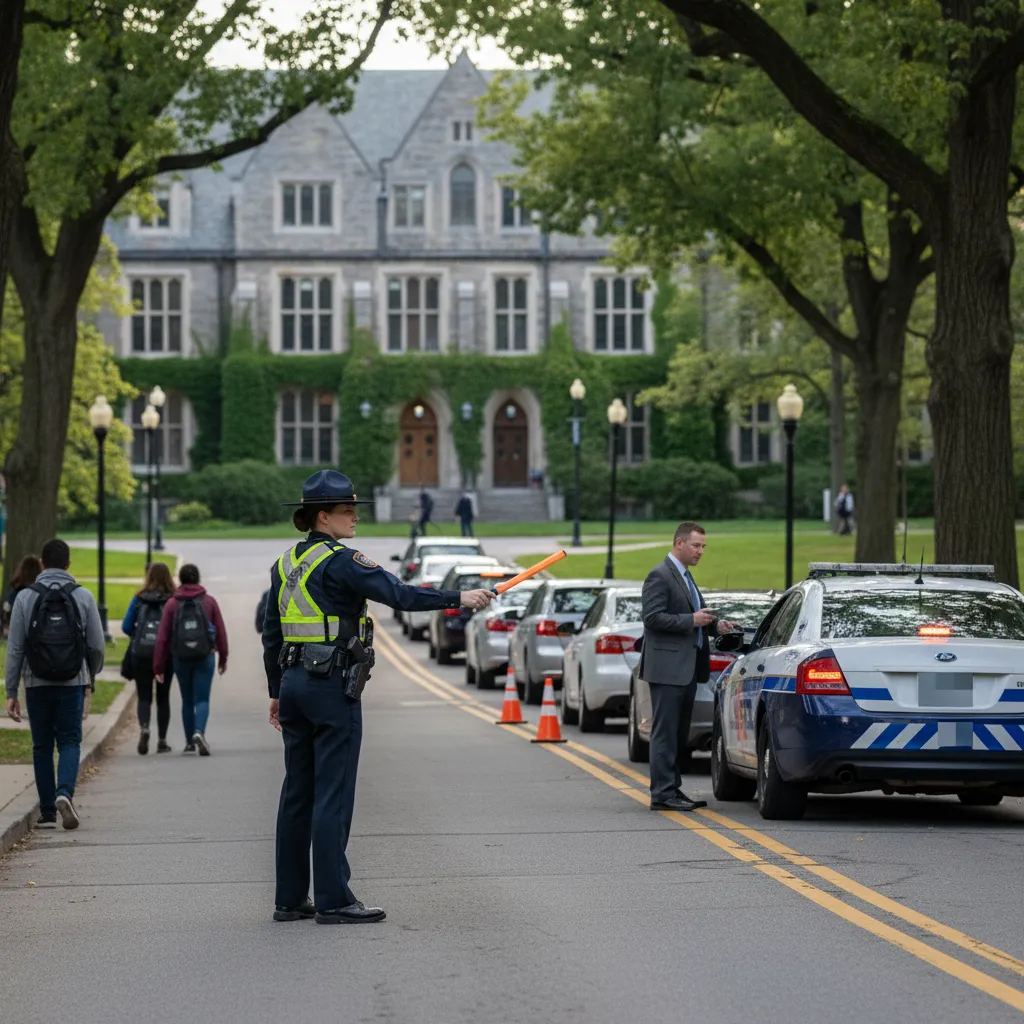
Texas troopers are known for their distinctive uniforms and their visible presence at major events, including college campuses. The famous "texas a&m state trooper" moment that circulated online showed exactly the kind of calm, by-the-book professionalism Texas DPS expects from its highly trained troopers during routine public encounters.
Is Becoming a State Trooper Right for You?
- +Strong job security with a stable statewide government employer
- +Competitive salary plus pension and health benefits
- +Clear promotional ladder from trooper to senior command ranks
- +Variety of specialized units like K-9, aviation, and SWAT
- +Meaningful public service and community impact
- +Paid academy training and ongoing professional development
- −Demanding live-in academy with high attrition rates
- −Initial assignments may require relocating far from home
- −Long shifts, night work, weekends, and holiday coverage
- −Physical danger from traffic stops and high-speed pursuits
- −Emotional toll from fatal crashes and critical incidents
- −Strict hiring standards including background and fitness tests

State Trooper Eligibility & Application Checklist
- ✓Confirm you meet the minimum age requirement, usually 21 at appointment.
- ✓Hold a high school diploma or GED; some states prefer college credits.
- ✓Possess a valid driver's license with a clean driving record.
- ✓Be a U.S. citizen and meet state residency rules.
- ✓Pass a thorough criminal background investigation.
- ✓Complete the written entrance examination successfully.
- ✓Pass the physical fitness and agility assessment.
- ✓Clear the medical exam, vision, and hearing standards.
- ✓Pass a polygraph and psychological evaluation.
- ✓Graduate from the live-in state police training academy.
The badge carries statewide authority
Unlike city police, a state trooper can enforce the law anywhere within the state's borders. That jurisdiction is exactly why training is so rigorous and why troopers must master traffic law, criminal procedure, and independent decision-making before ever patrolling alone.
One of the most searched topics about the profession is state trooper salary, and the honest answer is that pay varies dramatically depending on the state, region, and an officer's years of experience. Nationally, troopers tend to earn a median salary in the mid-sixty-thousand-dollar range, but high-cost states and senior ranks can push total compensation well above one hundred thousand dollars when overtime, hazard pay, and pension contributions are included in the full picture.
Entry-level troopers typically start lower, often in the high forties to low sixties, while in the academy or during their first probationary year. Many agencies pay recruits a salary during training, which is a significant advantage over careers that require expensive unpaid certification. After graduation and field training, troopers receive scheduled step increases that raise their base pay steadily over the first several years of service on patrol.
Geography is the biggest single factor. A trooper in a high-wage, high-cost state like California, New Jersey, or New York may earn far more than a counterpart in a lower-cost southern or midwestern state. However, those higher salaries usually come with higher living expenses, so the real purchasing power across states is often closer than the raw numbers suggest at first glance to job seekers.
Beyond base salary, the benefits package is where state policing truly shines. Troopers commonly receive defined-benefit pensions that allow retirement after twenty to twenty-five years of service, sometimes as early as their mid-forties. Health insurance, paid leave, uniform allowances, take-home patrol vehicles, and life insurance add substantial value that pure salary comparisons frequently overlook when candidates evaluate the career.
Overtime and special assignments can boost income significantly. Troopers who work major events, holiday enforcement campaigns, disaster response, or court appearances often earn time-and-a-half. Those who join specialized units like commercial vehicle enforcement, narcotics, or aviation may qualify for additional pay differentials that reward their advanced training and the increased responsibility their assignments demand year after year.
Promotions raise pay meaningfully. A trooper who advances to corporal, sergeant, lieutenant, or captain sees clear salary jumps at each rank. Reaching command staff positions, such as major or colonel, can place an officer's compensation among the highest in state government. The structured promotional ladder gives ambitious troopers a transparent path to grow their income over a full career.
When comparing offers, candidates should look at total compensation rather than starting salary alone. Pension multipliers, retirement age, health coverage for dependents, and cost of living all matter enormously over a twenty-five-year career. A slightly lower base salary in a state with a generous pension and low living costs can easily outperform a higher headline number elsewhere over time for most troopers.
State police agencies disqualify applicants for serious driving violations, felony records, certain drug history, and integrity issues uncovered in the polygraph or background check. Review your state's specific disqualifiers before applying so you do not waste time on a process you cannot pass.
A typical day on patrol rarely looks like the dramatic clips that go viral online. Most shifts begin with a briefing, equipment check, and review of recent crashes, wanted persons, and enforcement priorities in the trooper's assigned zone. From there, the trooper heads out to patrol assigned highways, balancing proactive traffic enforcement with responding to dispatched calls for crashes, disabled vehicles, and motorist assistance throughout the shift.
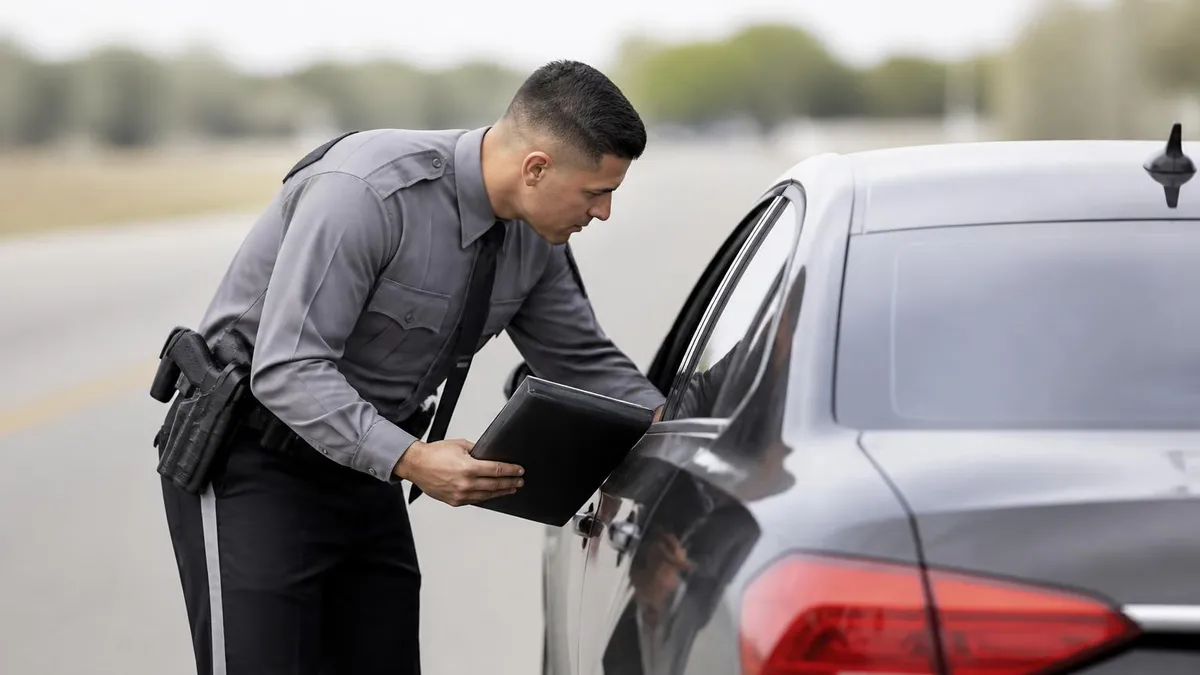
Traffic stops form the backbone of the work. Each stop requires the trooper to approach safely, communicate clearly, verify documents, and decide whether to warn, cite, or investigate further. The professionalism shown in viral moments like the texas a&m state trooper clip reflects the de-escalation training that academies drill into every recruit until calm, controlled communication becomes second nature on the road.
Crash response is another major part of the job. When a serious collision happens, the trooper secures the scene, directs traffic, coordinates medical and tow services, and documents everything for the official report. Fatal crashes demand meticulous evidence collection and reconstruction, and troopers may spend hours at a single scene before completing the paperwork that follows such a difficult and emotionally heavy event.
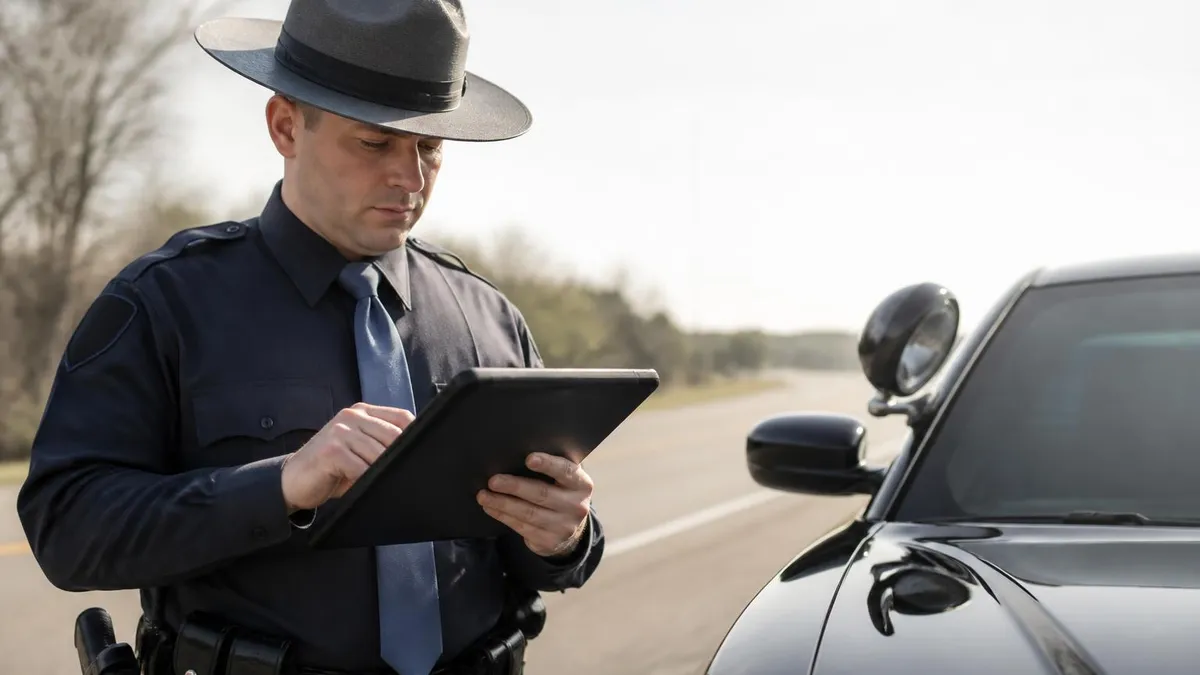
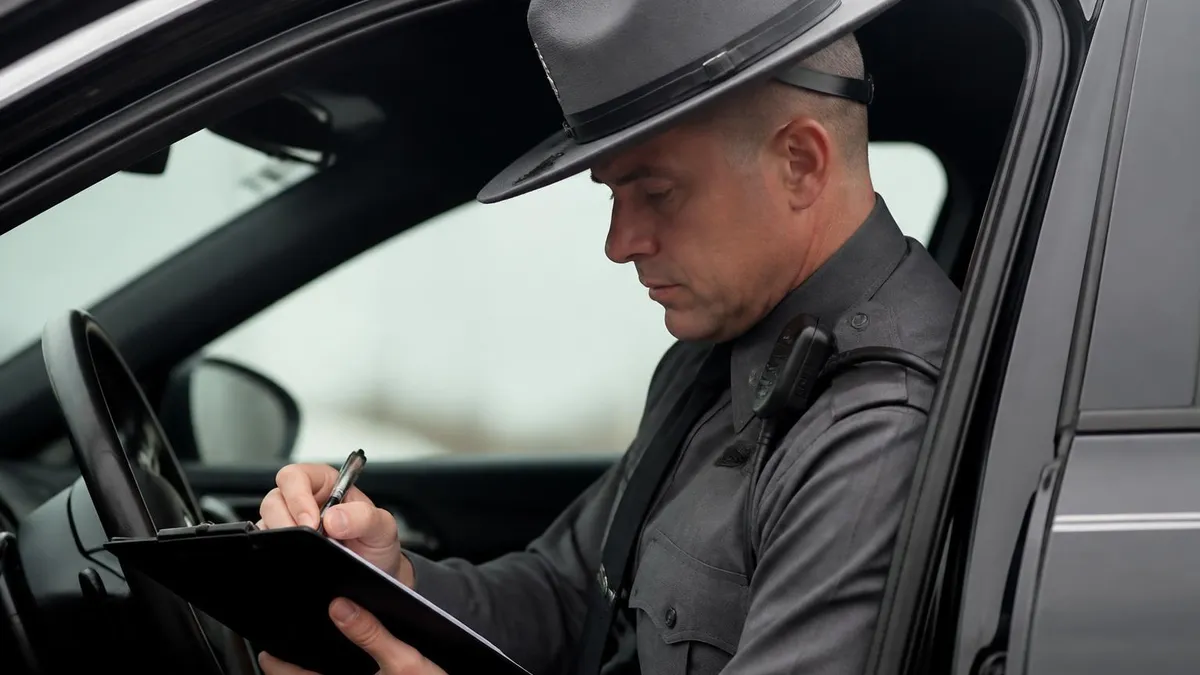
Troopers also spend significant time writing. Reports, citations, supplements, and court documents must be accurate and detailed because they may become evidence in criminal or civil proceedings. Strong writing skills are genuinely essential to the role, and academies dedicate substantial classroom time to report writing because a sloppy report can undermine an otherwise solid arrest or investigation in court.
Court appearances punctuate the schedule. Troopers testify about traffic citations, DUI arrests, and criminal cases, sometimes on days off, which is why agencies often pay overtime for court time. Testifying clearly and truthfully under cross-examination is a skill troopers refine over years, and it reinforces the importance of careful documentation captured at the scene during the original encounter.
Weather and geography shape every shift. A trooper in Arizona battles extreme heat and dust storms, while an Illinois trooper navigates ice and lake-effect snow. Florida troopers manage hurricane evacuations, and Carolina troopers respond to coastal flooding. Adapting to environmental hazards is part of the job, and emergency vehicle operations training prepares troopers to drive safely in the worst possible conditions imaginable.
Finally, troopers build community relationships. Beyond enforcement, many participate in school programs, public safety campaigns, and disaster relief efforts. The job blends authority with service, and the troopers who thrive long-term are usually those who genuinely enjoy helping people on what may be the worst day of their lives, not just writing tickets along the highway.
If you are seriously considering this career, smart preparation makes the difference between passing the entrance process and washing out early. Start by researching your specific state agency's requirements, because eligibility rules, exam formats, and fitness standards vary widely. A future arizona state trooper and an illinois state trooper face different climates, jurisdictions, and even slightly different testing procedures, so tailor your preparation to the exact agency you intend to join.
Begin physical training months before your fitness test. Most agencies measure push-ups, sit-ups, a timed run, and sometimes a flexibility or agility course. Building cardiovascular endurance and core strength gradually reduces injury risk and ensures you arrive at the academy already conditioned. Recruits who wait until the last minute frequently struggle through the physically demanding live-in training program and risk failing out early.
Study the written exam thoroughly. Most state trooper tests cover reading comprehension, report writing, basic math, situational judgment, and memory recall. Free practice questions and full-length practice tests help you identify weak areas and build test-taking confidence. Treat the written exam seriously, because a strong score can offset weaker areas elsewhere and demonstrate your commitment to the demanding profession you are pursuing.
Prepare for the background investigation by cleaning up your digital footprint and gathering documentation early. Investigators review your driving record, credit history, employment, references, and social media. Be completely honest on every form, because integrity violations and lies discovered during the polygraph are among the most common reasons strong candidates get disqualified, often more than the underlying issues themselves would have been.
Practice for the oral board and interview. Panels assess your communication, judgment, and motivation through scenario questions and behavioral prompts. Rehearse clear, structured answers about why you want to serve, how you handle stress, and how you make ethical decisions. Mock interviews with someone in law enforcement can sharpen your delivery and calm your nerves before the real evaluation day arrives.
Stay mentally prepared for the academy itself. The live-in, military-style environment tests discipline, time management, and resilience under pressure. Recruits juggle academic exams, firearms qualification, defensive tactics, and physical training simultaneously. Going in with realistic expectations, strong study habits, and a support system at home dramatically improves your odds of graduating and pinning on the badge you have worked so hard to earn.
Finally, talk to current troopers and use every free study resource available. Ride-alongs, recruiter conversations, and online practice quizzes give you authentic insight into the job and the testing process. The more you understand the realities of patrol life before you commit, the more confident and prepared you will be when you finally begin your own career protecting the highways of your state.
State Trooper Questions and Answers

Join the Discussion
Connect with other students preparing for this exam. Share tips, ask questions, and get advice from people who have been there.
View discussion (3 replies)