
SNHD Health Permit: Complete Guide to Getting Your Food Handlers Card in Las Vegas
Get your food handlers card fast. Complete SNHD health permit guide — requirements, costs, test tips & practice questions. ✅

If you work in the food service industry anywhere in Clark County, Nevada, obtaining an SNHD health permit — specifically a food handlers card — is not optional. It is a legal requirement enforced by the Southern Nevada Health District, and failure to carry a valid card while on the job can result in fines for you and your employer.
Whether you are a new hire at a Las Vegas restaurant, a convenience store clerk, or a hotel banquet server, the food handlers card process starts at snhd and follows a clear, structured path that this guide will walk you through from start to finish.
The Southern Nevada Health District is the primary public health authority for Clark County and the greater Las Vegas metropolitan area. It oversees environmental health, disease control, vital records, and — most critically for food service workers — the permitting and certification of anyone who handles, prepares, or serves food to the public. The SNHD food handlers card is separate from a food manager certification; it is specifically designed for front-line workers who need a foundational understanding of safe food handling practices without the full management-level curriculum.
Every year, tens of thousands of Nevada residents complete the food handlers permit process to enter or remain in the food and beverage industry. Las Vegas alone employs more than 200,000 people in hospitality-related roles, and a substantial portion of those positions require proof of a current, valid health card issued by the SNHD. Employers are required by Nevada state law to ensure their food-contact employees carry valid cards, which means your job may literally depend on passing the food handlers test.
The food handlers card practice test is one of the most effective ways to prepare for the real exam. The actual SNHD assessment covers temperature danger zones, proper handwashing techniques, cross-contamination prevention, allergen awareness, personal hygiene standards, and correct procedures for warewashing. Practice tests let you identify which of these domains you already understand well and which require additional study before you sit for the official assessment at an SNHD-approved testing site.
Many first-time applicants are surprised by how straightforward the food handlers test is when they prepare adequately. The exam itself is not designed to trick you — it tests practical knowledge that any food service worker genuinely needs on the job. Questions are scenario-based and pull directly from the SNHD food handler training manual, so reading that document and reinforcing your knowledge with practice questions is the most direct path to a passing score on your first attempt.
This article covers every aspect of the SNHD health permit process, including who needs one, how to register, what to expect on the test, how long the card remains valid, and what happens if you need to renew or replace a lost card. We also highlight the best free practice resources available through PracticeTestGeeks.com, so you can walk into your exam with confidence and complete the process without delays or repeated testing fees.
Completing the food handlers card process correctly the first time saves you money, protects your employment status, and ensures you are contributing to the kind of safe, sanitary food environment that customers in Las Vegas and throughout Clark County deserve. Let this guide serve as your roadmap from zero knowledge to certified food handler — ready for any kitchen, buffet line, or food preparation role in southern Nevada.
SNHD Food Handlers Card by the Numbers

How to Get Your SNHD Food Handlers Card: Step-by-Step
Confirm You Need a Card
Study the SNHD Food Handler Manual
Practice with Online Test Questions
Schedule and Pay for Your Exam
Pass the 30-Question Exam
Receive and Carry Your Card
Registering for the SNHD food handlers test is easier than many applicants expect. The Southern Nevada Health District offers testing at several Clark County locations, and the entire registration process can be started online. To begin, visit the official SNHD website and navigate to the food handlers section, where you will find current testing schedules, location addresses, accepted payment methods, and language options. The fee is currently $20, payable by cash, money order, or credit card depending on the testing location you select.
Testing is conducted at SNHD district offices and at several approved third-party providers throughout the Las Vegas Valley, including locations in Henderson, North Las Vegas, and Laughlin. This geographic distribution is intentional — the snhd las vegas service area covers a large and geographically diverse population, and making testing accessible in multiple communities reduces barriers for workers who rely on public transportation or have limited availability to travel to a central office.
Before you arrive for testing, gather the required documentation. You will need a valid, government-issued photo ID such as a driver's license, state ID, or passport. Bring your payment if you have not already paid online. If you are testing in Spanish or another available language, notify the testing center in advance so they can prepare the appropriate exam version. There is no advance notice required for English-language exams at most locations.
The food handlers test itself consists of 30 multiple-choice questions drawn from the official SNHD food handler training curriculum. You have a limited time to complete the exam, and questions cover topics including proper handwashing steps, temperature danger zones, the correct procedures for cooling hot foods, safe thawing methods, chemical sanitizer concentrations for the three-compartment sink, cross-contamination prevention, and the symptoms of foodborne illnesses that require a worker to be excluded from food handling duties.
If you do not pass on your first attempt, do not panic. The SNHD allows retakes, though you will need to pay the examination fee again for each attempt. Most applicants who fail on their first try do so because they underestimated specific topics like exact temperature thresholds or sanitizer concentration levels. Reviewing those specific areas with targeted practice questions after a failed attempt significantly improves retake pass rates, with many retakers passing on their second attempt.
Once you pass, your food handlers card is issued either immediately at the testing site or mailed to the address on file, depending on the location. The card is valid for three years from the date of issue. Your employer may ask you to provide a photocopy for their employment files, as food establishments are required during health inspections to demonstrate that all food-contact staff hold current certifications. Keep both a physical and digital copy of your card in a secure location.
New employees in Nevada's food service industry are typically given a grace period — usually 30 days from their start date — to obtain their food handlers card. However, this policy varies by employer, and some establishments require proof of a current card before your first shift. Always confirm your employer's specific requirement when you accept a job offer in a food service setting so you can plan your testing timeline accordingly and avoid any last-minute scrambles before your first day.
What the Food Handlers Test Covers: Key Topic Areas
Temperature control is the single most heavily tested topic on the SNHD food handlers exam. You need to know that the temperature danger zone runs from 41°F to 135°F, that hot foods must be held at 135°F or above, and that cold foods must be stored at 41°F or below. Memorize that poultry must reach an internal cooking temperature of 165°F, ground meats 155°F, and whole fish 145°F. The two-hour rule — that food should not remain in the danger zone for more than two hours cumulatively — appears frequently in scenario questions.
Cooling procedures are equally important. Cooked food must be cooled from 135°F to 70°F within two hours, then from 70°F to 41°F within an additional four hours — six hours total. Acceptable rapid-cooling methods include ice baths, blast chillers, shallow pans, and ice wands stirred through the product. Questions often present a scenario and ask whether the described cooling method is safe and compliant with SNHD standards, so understanding both the numbers and the approved techniques is essential for a passing score.

Online vs. In-Person SNHD Food Handlers Testing: Which Is Better?
- +Online testing available 24/7 — no need to match your schedule to a testing center's hours
- +Complete the food handlers test from home without transportation costs or wait times
- +Instant digital card delivery upon passing for online-approved testing providers
- +Online format allows you to revisit questions before final submission at your own pace
- +Multiple language options often more consistently available through online platforms
- +Lower stress environment may improve performance for test-anxious applicants
- −Not all employers accept cards from every online provider — verify acceptance before testing
- −Technical issues, poor internet connection, or device incompatibility can disrupt your exam
- −In-person proctoring provides immediate help if you have questions about the process
- −Some in-person locations issue physical cards immediately — online cards may require printing
- −Identity verification for online exams can be more cumbersome for some applicants
- −In-person locations offer Spanish-language support with live staff available for assistance
SNHD Food Handlers Card Test Day Checklist
- ✓Bring a valid government-issued photo ID such as a driver's license, passport, or state ID card.
- ✓Carry exact payment or confirm you paid online before arriving at the testing location.
- ✓Arrive at least 15 minutes early to complete any required intake paperwork without rushing.
- ✓Eat a meal beforehand — a low blood sugar level impairs focus and recall during the exam.
- ✓Review temperature thresholds (41°F, 135°F, 145°F, 155°F, 165°F) one final time the morning of your test.
- ✓Memorize the six-hour cooling rule: 135°F to 70°F in 2 hours, then 70°F to 41°F in 4 more hours.
- ✓Confirm the correct sanitizer concentrations for chlorine (50-100 ppm) and quat (200 ppm) solutions.
- ✓Review the Big 9 allergens list: milk, eggs, fish, shellfish, tree nuts, peanuts, wheat, soybeans, sesame.
- ✓Know the five foodborne illness exclusion diagnoses that require reporting to the health authority.
- ✓Notify the testing center in advance if you need the exam administered in a language other than English.
The #1 Reason Applicants Fail the Food Handlers Test
The most common reason applicants fail the SNHD food handlers exam is not a lack of general food knowledge — it is uncertainty about exact temperature numbers and sanitizer concentration ranges. Flashcard drills on the five critical cooking temperatures and the correct ppm ranges for chlorine and quaternary ammonium sanitizers can be the difference between passing on your first attempt and paying for a retake. Spend at least 30 minutes specifically on these two topics the day before your exam.
Renewing your SNHD food handlers card before it expires is far simpler than obtaining it the first time, but many workers let their cards lapse because they do not track the three-year expiration date closely enough.
An expired card is treated the same as no card at all during a health inspection, which means your employer could face a violation and you could be temporarily removed from food-handling duties until a current card is obtained. Set a calendar reminder at least one month before your card's expiration date so you have plenty of time to schedule and complete the renewal test.
The renewal process mirrors the initial certification process almost exactly. You must retake and pass the 30-question food handlers exam, pay the current testing fee, and receive a new card valid for another three years. There is no shortened or waived exam for renewals — every applicant, regardless of how many times they have previously certified, must demonstrate current knowledge by passing the standard assessment. This policy reflects the SNHD's commitment to ensuring that all food handlers remain current on evolving food safety regulations and practices.
Lost or damaged cards can be replaced through the SNHD by submitting a replacement request and paying a small replacement fee. You will need to provide your name, date of birth, and the approximate date you originally tested so SNHD staff can verify your record in their database. Processing time for replacement cards is typically five to seven business days, though expedited options may be available in some circumstances. While waiting for a replacement, having a digital copy of your original card on your phone can help demonstrate compliance to an employer or inspector.
Name changes, such as those following a marriage or legal name change proceeding, require you to update your card with the SNHD. Present your updated legal ID and any relevant court or marriage documents to the nearest SNHD office. The health district will issue a corrected card reflecting your current legal name. This is important because the name on your food handlers card must match the name your employer has on file to satisfy audit and inspection requirements during routine regulatory visits.
For workers who hold certifications from other states or counties, Nevada does not automatically recognize out-of-state food handlers cards. If you move to Clark County from another jurisdiction, you will need to obtain a new SNHD food handlers card even if your previous certification is still technically valid in your former state. This is one of the most common surprises for food service workers relocating to Las Vegas. The good news is that experienced food handlers typically find the SNHD exam straightforward given their prior hands-on experience in professional kitchens.
Employers in Clark County bear legal responsibility for maintaining records showing that all food-contact employees carry valid certifications. During a routine SNHD health inspection, inspectors may request to see employee food handler cards as part of their standard documentation review. Employers who cannot produce valid cards for their staff may receive violation citations and be required to take corrective action within a specified timeframe. This regulatory framework creates a shared incentive — both worker and employer benefit when certifications are kept current and accessible.
Understanding the snhd las vegas health card system in its full context helps food service workers appreciate why these requirements exist and how they protect the public. The SNHD's food safety program is ultimately about preventing the kind of foodborne illness outbreaks that can sicken hundreds of people, close businesses, and damage the reputation of Las Vegas's world-class hospitality industry. Viewing certification as a professional credential rather than a bureaucratic hurdle helps build the mindset of a truly safety-conscious food service professional.

Nevada law requires food handlers to hold a valid SNHD card at all times while performing food-contact duties. If your card expires and you continue working, your employer risks a health code violation that can result in fines and mandatory corrective action. The SNHD does not send automatic renewal reminders, so tracking your own expiration date is your responsibility. Renew at least 30 days before expiration to avoid any gap in coverage.
Building an effective study plan for the SNHD food handlers test does not require weeks of intensive preparation. For most applicants, two to four hours of focused study spread across two or three days is sufficient to achieve a comfortable passing score. The key is study quality over study quantity — passive reading of the entire manual cover to cover is far less effective than active recall practice, which is why food handlers card practice tests are such a powerful preparation tool for this particular exam.
Begin your study session by reading the SNHD food handler training manual in full, taking brief notes on the sections covering temperature control, handwashing, allergen management, and warewashing. These four areas represent the bulk of the exam content and are also the topics most directly applicable to real-world food service scenarios. After your initial read-through, take a full practice test without reviewing your notes first. This diagnostic approach reveals your true knowledge gaps much more honestly than reading with the answer key in front of you.
After identifying your weak areas from the diagnostic test, return to the manual sections covering those topics and read them again with focused attention. Then take a second targeted practice test — ideally one that concentrates on your identified weak spots. Most test-preparation experts refer to this process as spaced repetition with deliberate practice, and it is the same technique used by medical students, pilots, and law enforcement professionals to master high-stakes certification content efficiently and durably.
The SNHD food handlers exam uses scenario-based questions that require you to apply knowledge rather than simply recall facts. For example, a question might describe a worker who arrives at their shift feeling nauseous and ask what the worker should do. The correct answer involves the worker notifying their manager and being excluded from food-handling duties rather than continuing to work. Scenario questions reward applicants who genuinely understand food safety principles over those who merely memorized lists, so studying the reasoning behind each rule — not just the rule itself — pays dividends on exam day.
Group study sessions can be surprisingly effective for the food handlers test if organized around active discussion rather than passive review. Quiz each other on temperature thresholds, describe allergen protocols aloud, and work through cross-contamination scenarios verbally. Teaching a concept to someone else is one of the most reliable indicators of genuine comprehension. Even if your study partner is not taking the test, explaining the difference between food restriction and food exclusion to another person will reinforce that knowledge far more effectively than rereading the same paragraph three times.
Time management during the actual exam is rarely a concern for prepared applicants — the 30-question exam is generous in its time allotment. However, applicants who overthink individual questions or second-guess their initial answers tend to perform worse than those who trust their preparation and answer decisively. If a question genuinely stumps you, mark it, move on, and return to it after completing all other questions. Fresh eyes after working through the rest of the exam often unlock the answer that seemed elusive on first read.
For workers at food establishments regulated by the clarke county health department and SNHD system, understanding the full regulatory picture — not just the food handlers card requirements — provides a professional edge. Knowing how health inspections work, what inspectors look for, and how food safety violations are classified helps you become a more valuable team member and a more proactive participant in maintaining your workplace's compliance. The food handlers card is an entry point to a deeper professional knowledge base that separates average food service workers from truly excellent ones.
Beyond the basic food handlers card, many Las Vegas food service professionals choose to pursue additional certifications that demonstrate advanced competency and open doors to higher-paying supervisory roles. The most common next step after obtaining a food handlers card is pursuing a food manager certification, such as the ServSafe Manager Certification or the National Registry of Food Safety Professionals (NRFSP) exam. These manager-level certifications are more demanding than the food handlers test and typically require 8 to 16 hours of study, but they significantly expand your career options and earning potential.
Food manager certifications are required by Nevada law for at least one designated manager at every permitted food establishment. This creates consistent demand for certified food managers throughout Clark County's hospitality industry, and workers who hold both a food handlers card and a manager certification are far more attractive to employers than those with only the basic card. If you are serious about a long-term career in food service, viewing the food handlers card as the first step on a professional development path rather than a one-time compliance requirement positions you for meaningful career growth.
Specialty certifications in allergen management, responsible alcohol service (such as the TIPS certification), and HACCP (Hazard Analysis and Critical Control Points) systems are also valuable additions to a food service professional's credentials portfolio. The growing public awareness of food allergies, in particular, has created demand for workers who can confidently manage allergen protocols. Restaurants that cater to guests with dietary restrictions actively seek staff who have demonstrated allergen training beyond the basics covered by the standard food handlers card curriculum.
The hospitality industry in Las Vegas is one of the most competitive and dynamic in the world. Major casino-resorts, award-winning restaurants, catering companies, and convention food service operations all operate within the SNHD's jurisdiction, and they collectively employ a workforce that must maintain rigorous food safety standards to protect guests and maintain operating permits. Working in this environment rewards preparation, professionalism, and a genuine commitment to food safety that goes beyond minimal compliance.
Online resources for SNHD exam preparation have improved dramatically over the past several years. PracticeTestGeeks.com offers free, exam-aligned practice questions covering every major topic in the SNHD food handler curriculum — from warewashing procedures to allergen identification to temperature control scenarios. These practice resources are developed to reflect the current SNHD testing format and are updated regularly as the official curriculum evolves. Using multiple practice sets across several sessions provides the repetition needed to build durable, exam-day-ready knowledge.
Regardless of which food service role you are pursuing — server, prep cook, line cook, food truck operator, school cafeteria worker, or catering assistant — the SNHD food handlers card is your professional license to operate safely in Clark County's food system. Treat the process of obtaining it with the same seriousness you bring to every other aspect of your job, and you will not only pass the exam but carry forward a body of knowledge that makes you a safer, more skilled food handler throughout your entire career in southern Nevada's remarkable hospitality industry.
Remember that the food handlers permit process, while procedurally simple, represents a meaningful public health commitment. Every time you wash your hands properly, check a food temperature, or prevent cross-contamination in a commercial kitchen, you are applying the knowledge your food handlers card certifies. The Las Vegas food service industry handles millions of meals every day, and every certified food handler who takes their training seriously makes that system safer for everyone — guests, coworkers, and the broader community that depends on a healthy, well-regulated food supply.
SNHD Questions and Answers
SNHD Practice Test Video Answers

SNHD Website Guide: How to Get Your Food Handlers Card in Las Vegas

Southern Nevada Health District Death Certificate & Food Handlers Card: Complete Las Vegas Guide
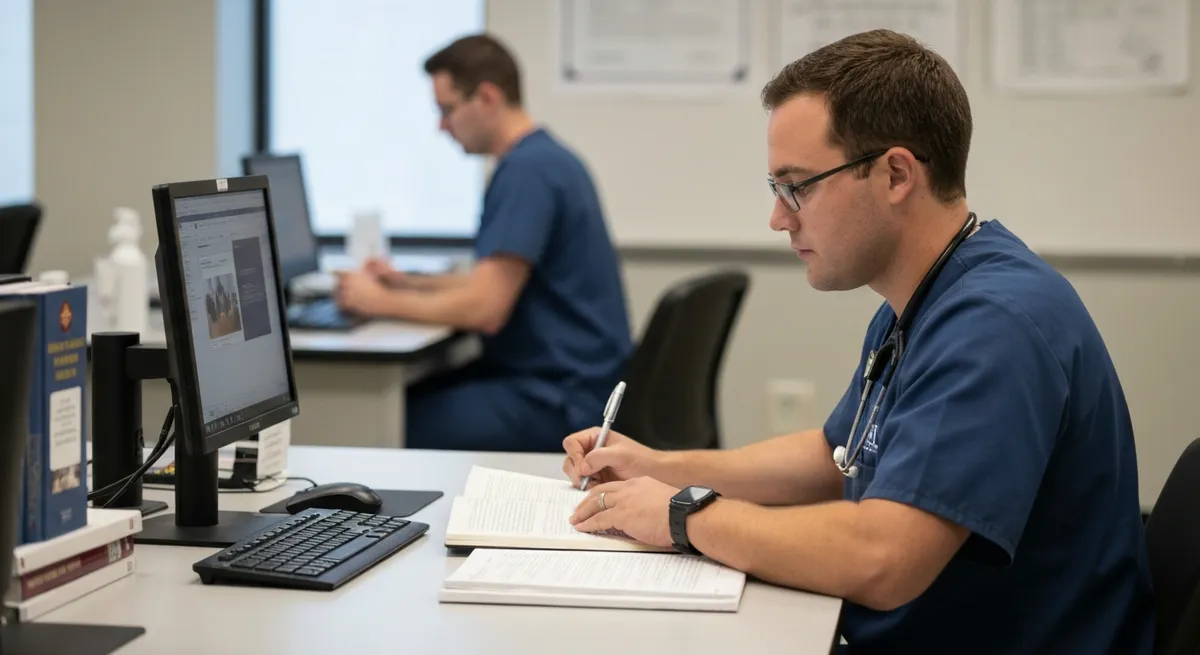
SNHD - Southern Nevada Health District: Complete Study Guide 2026
SNHD - Southern Nevada Health District: Career Paths, Salary, and Requirements 2026
About the Author

Educational Psychologist & Academic Test Preparation Expert
Columbia University Teachers CollegeDr. Lisa Patel holds a Doctorate in Education from Columbia University Teachers College and has spent 17 years researching standardized test design and academic assessment. She has developed preparation programs for SAT, ACT, GRE, LSAT, UCAT, and numerous professional licensing exams, helping students of all backgrounds achieve their target scores.
Join the Discussion
Connect with other students preparing for this exam. Share tips, ask questions, and get advice from people who have been there.
View discussion (8 replies)