
Southern Nevada Health District Death Certificate & Food Handlers Card: Complete Las Vegas Guide
Get your food handlers card in Las Vegas fast. 🎯 SNHD requirements, costs, study tips & free practice tests for the southern nevada health district exam.

Getting your food handlers card through the Southern Nevada Health District is one of the most important steps any food service worker in Clark County must take before starting a new job. Whether you work at a casino buffet on the Strip, a quick-service restaurant in Henderson, or a catering company in North Las Vegas, Nevada law requires you to obtain a valid food handler permit before handling any food intended for public consumption.
The southern nevada health district death certificate process and the SNHD food handler card system are both managed by the same public health agency, reflecting how central SNHD is to life events across the region.
The southern nevada health district oversees public health programs that touch every resident of Clark County, from birth records and vital statistics to restaurant inspections and communicable disease surveillance. Most working adults in Las Vegas, however, interact with SNHD primarily when they need a food handlers card. More than 300,000 food handler cards are issued or renewed in Clark County each year, making this one of the highest-volume public health certification programs in the entire United States. Understanding the process before you walk through the door saves time, reduces stress, and helps you pass the exam on your first attempt.
The food handlers permit exam is designed to test your knowledge of basic food safety principles, including proper temperature control, personal hygiene, cross-contamination prevention, and safe food storage. The exam is administered in multiple languages and is available at several SNHD locations throughout the valley. Most test-takers who prepare adequately pass on their first try, but those who walk in cold frequently struggle with questions about specific temperature thresholds, handwashing procedures, and the rules governing the handling of raw proteins. This guide covers everything you need to know to succeed.
Many job seekers are surprised to learn that the food handlers card is distinct from a food manager certification. The card — sometimes called the SNHD health card or the Clarke County health department food handler permit — is required for virtually every employee who touches food, utensils, or food-contact surfaces. It must be renewed every year and must be kept on your person or readily available at your worksite during all working hours. Employers can be fined if their staff members cannot produce valid cards during a health inspection.
In addition to the food handler card, SNHD manages vital records including birth and death certificates for residents of Clark County. While this article focuses primarily on the food handler certification process, it is worth knowing that both services are administered through the same agency. If you need a southern nevada health district death certificate for a family member who passed away in Clark County, you can request it through the SNHD Vital Records office, which is located at 280 S. Decatur Blvd in Las Vegas and is open Monday through Friday during regular business hours.
Preparing for the food handlers test does not have to be difficult. The exam covers a relatively narrow set of topics, and free practice resources are widely available online. This article walks you through every aspect of the process: where to go, what to bring, how much it costs, what topics appear on the test, and how to study effectively so you can earn your card with confidence. Whether you are a first-time applicant or renewing an expired card, the information below gives you a complete roadmap for success.
Clark County's hospitality industry employs hundreds of thousands of people, and the food handlers card is the entry point for nearly all of them. By understanding exactly what SNHD requires and preparing thoroughly for the exam, you position yourself to start working sooner and avoid the cost and inconvenience of a retake. Read on for a step-by-step breakdown of the entire food handler card process in Southern Nevada.
SNHD Food Handlers Card by the Numbers
Key Facts at a Glance
| Item | Value | Details |
|---|---|---|
| Card Fee | $20 | Standard SNHD food handler card cost |
| Card Validity | 1 Year | Must renew annually |
| Exam Questions | 30–40 | Multiple choice format |
| Passing Score | 70% | Minimum required to pass |

How to Get Your SNHD Food Handler Card Step by Step
Complete a Food Handler Course
Pass the Food Handlers Test
Pay the Card Fee
Receive Your Food Handler Card
Renew Before Expiration
Studying for the SNHD food handlers test is far more straightforward than many applicants expect, but that does not mean you should skip preparation entirely. The exam is designed to assess practical, real-world food safety knowledge rather than academic theory, so the most effective study strategy focuses on understanding core principles deeply rather than memorizing obscure facts.
Start by reviewing the SNHD Food Handler Manual, which is available for free on the SNHD website and covers every topic that appears on the exam. Pay particular attention to the sections on temperature danger zones, proper handwashing technique, and the handling of the Big 9 food allergens.
Temperature control is one of the most heavily tested areas on the food handlers exam. You should be able to recall key temperature thresholds without hesitation: the temperature danger zone runs from 41°F to 135°F, and food must not remain in this range for more than four hours total. Hot foods must be held at 135°F or above, while cold foods must be kept at 41°F or below.
When cooking, specific proteins have defined minimum internal temperatures — poultry must reach 165°F, ground beef must reach 155°F, and whole cuts of pork and beef must reach 145°F. Knowing these numbers cold will help you answer a significant portion of the exam questions quickly and accurately.
Personal hygiene is another major exam category. The SNHD food handler manual devotes considerable space to handwashing requirements, illness reporting obligations, and the rules governing jewelry, fingernail length, and hair restraints in food service environments. You must wash your hands for at least 20 seconds using soap and warm water, and you must do so after handling raw food, using the restroom, touching your face, coughing or sneezing, handling garbage, and returning from any break. The exam often presents scenario-based questions asking you to identify when handwashing is required, so practice thinking through these situations in advance.
Cross-contamination prevention is the third pillar of food safety tested on the SNHD exam. Cross-contamination occurs when harmful microorganisms transfer from one food or surface to another — most commonly from raw proteins to ready-to-eat foods. To prevent it, food workers must store raw proteins below ready-to-eat foods in the refrigerator, use separate cutting boards and utensils for different food types, and sanitize food-contact surfaces between uses.
The exam tests both the causes of cross-contamination and the specific corrective actions required to prevent it. Understanding the logic behind these rules — rather than just memorizing them — makes it much easier to answer novel scenario questions correctly.
If you have access to the snhd health card complete study guide, it is an excellent supplement to the official manual. Third-party study guides often organize information more clearly and include practice questions that closely mirror the style and difficulty of the actual exam. Practice tests are particularly valuable because they help you identify gaps in your knowledge before test day and build the confidence that comes from successfully answering questions under timed conditions. Aim to complete at least two or three full practice exams before your scheduled test date.
Many test-takers also find it helpful to study the specific rules governing food storage, receiving, and the proper operation of a three-compartment sink. The three-compartment sink — used for washing, rinsing, and sanitizing dishes and utensils — is a frequent topic on the SNHD food handlers exam.
The correct procedure involves washing in hot soapy water, rinsing with clean water, and sanitizing with an approved chemical solution at the proper concentration. Common sanitizers include chlorine bleach solution at 50–100 ppm and quaternary ammonium compounds at 200–400 ppm. Understanding the proper order of steps and the required chemical concentrations will help you answer several warewashing questions correctly.
Finally, do not overlook the allergen section of the exam. The Big 9 food allergens — milk, eggs, fish, shellfish, tree nuts, peanuts, wheat, soybeans, and sesame — must be disclosed on menus and ingredient labels. Food service workers are expected to understand how to prevent allergen cross-contact, how to communicate with guests who have food allergies, and what steps to take if an allergic reaction is suspected. The SNHD exam typically includes several allergen-related questions, and getting them right is an easy way to boost your score if you have studied this material thoroughly.
SNHD Food Handlers Test: Key Topic Areas
Temperature control is the foundation of food safety and one of the most tested subjects on the SNHD food handlers exam. The temperature danger zone — 41°F to 135°F — is where bacteria multiply most rapidly, doubling every 20 minutes under ideal conditions. Food workers must monitor temperatures diligently, use calibrated thermometers, and never leave potentially hazardous foods in the danger zone for more than four cumulative hours. Hot-holding equipment must maintain foods at 135°F or above at all times.
Cooking temperatures are equally critical on the exam. Poultry, including ground poultry, must reach 165°F for 15 seconds. Ground beef and pork must reach 155°F for 15 seconds. Whole cuts of pork, beef, veal, and lamb must reach 145°F with a 3-minute rest time. Fish must reach 145°F. Understanding these thresholds — and being able to apply them to scenario-based questions — is essential for passing the SNHD food handlers test on your first attempt.

Getting Your Food Handlers Card Online vs. In Person
- +Online courses allow you to study at your own pace from home
- +In-person classes offer immediate Q&A with a certified instructor
- +Online testing is available 24/7, fitting any work schedule
- +In-person testing provides a structured environment that minimizes distractions
- +Online completion certificates are accepted at most SNHD locations
- +In-person classes may include printed study materials and practice tests
- −Online courses may not cover all locally specific SNHD rules in depth
- −In-person classes require travel to an SNHD-approved training site
- −Online test environments vary in quality and technical reliability
- −In-person class schedules may not align with your availability
- −Some online providers charge more than the SNHD direct in-person option
- −In-person retakes require scheduling another appointment and traveling again
SNHD Food Handler Card Exam Day Checklist
- ✓Bring a valid government-issued photo ID such as a driver's license or passport.
- ✓Know your Social Security Number — it is required for card issuance in Nevada.
- ✓Arrive at least 15 minutes early to complete any required paperwork.
- ✓Bring $20 in cash or an accepted payment method to cover the card fee.
- ✓Review temperature danger zone numbers one final time the morning of your exam.
- ✓Memorize the Big 9 food allergens and the minimum cooking temperatures for major proteins.
- ✓Review three-compartment sink procedures and common sanitizer concentration ranges.
- ✓Eat beforehand — the testing environment can be stressful on an empty stomach.
- ✓Turn off your phone or set it to silent before entering the testing area.
- ✓Read every exam question carefully — many wrong answers are designed to sound plausible.
Spend 90 Minutes Reviewing Before Your Exam
Studies of food handler exam results across major US cities show that the vast majority of first-time failures occur on just three topic areas: temperature thresholds, illness exclusion rules, and three-compartment sink procedures. Spending 30 minutes on each of these areas the night before your exam dramatically improves your odds of passing on the first attempt and saves you the $20 retake fee.
Renewing your SNHD food handler permit is just as important as obtaining it the first time. Nevada law does not provide a grace period for expired cards — the moment your card expires, you are legally prohibited from performing food handling duties until you obtain a new valid card.
Many workers discover this the hard way when an SNHD health inspector visits their workplace and checks the expiration dates on employee cards. Both the worker and the employer can face penalties if an expired card is discovered during an inspection, so it is critical to renew proactively before your expiration date arrives.
The renewal process is functionally identical to the original application: you must complete an approved food safety course and pass the food handlers test again. SNHD does not offer a simplified renewal option for experienced workers, reflecting the agency's commitment to ensuring that all food service employees maintain current knowledge of food safety practices. The renewal fee is the same $20 as the original card fee. Some employers will cover this cost as part of their onboarding or annual compliance programs, so check with your HR department before paying out of pocket.
If you work for multiple employers in Clark County — a common situation in the Las Vegas hospitality industry — your single SNHD food handler card is valid at all of them simultaneously. You do not need separate cards for each job. However, you must carry the card with you or ensure it is accessible at each worksite where you are scheduled to work.
If you lose your card, you can request a replacement from SNHD by providing your personal information and paying a small replacement fee. Keep a photo of your card on your phone as a backup while you wait for the replacement to arrive.
SNHD also issues temporary food handler cards in some circumstances, particularly for workers who are in the process of completing their certification requirements. A temporary card is valid for a limited period — typically 30 days — and is intended to allow workers to begin employment while they complete the required course and exam. Employers must verify that temporary card holders complete their permanent certification before the temporary period expires. If you are given a temporary card, prioritize scheduling your exam immediately rather than waiting until the last minute.
For food service workers who speak languages other than English, the SNHD food handlers exam is available in Spanish, Tagalog, French, Chinese, and several other languages. This reflects the diverse workforce that powers Clark County's hospitality industry. To request an exam in a specific language, contact SNHD in advance to confirm availability and scheduling. The course materials are also available in multiple languages, so non-English speakers can prepare fully without being disadvantaged by language barriers. This multilingual access is one of the features that makes the SNHD program more accessible than comparable programs in other states.
Understanding the broader scope of snhd las vegas health card requirements can also be helpful if you are considering a career in food service management. While the standard food handler card is sufficient for line workers, food service managers and supervisors are often required to obtain a higher-level Food Safety Manager Certification through a nationally accredited program such as ServSafe or the National Registry of Food Safety Professionals. This advanced certification requires more extensive study and a proctored exam, but it opens doors to higher-paying management positions and demonstrates a deeper commitment to food safety leadership.
Clark County's food service industry is one of the most dynamic and demanding in the world. The combination of high-volume casino dining rooms, thousands of independent restaurants, and a constant influx of tourists creates an environment where food safety standards must be exceptionally high. SNHD inspects food service establishments regularly and takes enforcement action against businesses that fail to maintain compliance.
Workers who understand and follow food safety principles not only protect public health but also protect their employers from costly violations, closures, and reputational damage. Your food handler card is both a legal requirement and a professional credential that signals your commitment to safe food handling practices.

Your SNHD food handler card expires exactly one year from the date it was issued. Nevada does not provide a grace period, and working with an expired card is a violation that can result in fines for both you and your employer. Set a calendar reminder 30 days before your expiration date so you have time to schedule and complete the renewal process without any interruption to your employment.
The food handlers test covers a wide range of food safety topics, but certain subjects appear with much greater frequency than others. By focusing your study time on the highest-yield areas, you can maximize your exam score without spending dozens of hours on material that rarely shows up.
Based on the structure of the SNHD food handler manual and the topics that consistently challenge test-takers, the five most important areas to master are: temperature control, personal hygiene and illness policies, cross-contamination prevention, cleaning and sanitizing procedures, and food allergen awareness. Every hour you spend on these five areas returns more value than time spent on peripheral topics.
Temperature control questions often present scenarios where you must identify whether a food has been handled correctly based on temperature readings and time elapsed. For example, a question might describe a pan of chicken that was cooked to 170°F, held at 130°F for three hours, and then refrigerated.
You would need to recognize that the chicken was held below the required 135°F minimum for hot holding, that it accumulated three hours of time in the danger zone, and that it should be discarded. These scenario questions test your ability to apply temperature rules to real situations, not just recite the numbers from memory — which is why practice tests are so effective as a study tool.
Personal hygiene questions frequently focus on when handwashing is required and how to handle worker illness. A common exam scenario describes a food worker who calls in sick with diarrhea and asks what the correct response is. The answer is that the worker must be excluded from food handling duties until they have been symptom-free for at least 24 hours, or — in the case of certain diagnosed illnesses — until cleared by a physician.
Workers who report back too soon after illness are one of the leading causes of foodborne illness outbreaks in food service settings. Understanding why these rules exist makes them easier to remember and apply on the exam.
Cleaning and sanitizing are distinct processes that many test-takers confuse. Cleaning removes visible dirt and food residue from surfaces, while sanitizing reduces the number of microorganisms to a safe level. Both steps are required — sanitizing alone is ineffective if food residue remains on a surface, because organic material can neutralize chemical sanitizers.
The three-compartment sink embodies this principle: the first compartment washes, the second rinses, and the third sanitizes. Surfaces must always be cleaned before they are sanitized, and the sanitizer must be at the correct concentration and contact time to be effective. The clarke county health department practice test PDF is a useful resource for reviewing these procedures with realistic exam-style questions.
Food allergen questions on the SNHD exam test both knowledge and practical judgment. You should know all nine of the major allergens declared by the FDA — milk, eggs, fish, shellfish, tree nuts, peanuts, wheat, soybeans, and sesame — and understand that even trace amounts can trigger life-threatening reactions in sensitized individuals.
Cross-contact, where an allergen from one food is inadvertently transferred to another, is different from cross-contamination and requires its own set of prevention measures. When a guest informs you of a food allergy, the correct response is to communicate the information to kitchen staff, verify the ingredients of every dish the guest will receive, and prepare the meal using clean utensils and surfaces that have not contacted the allergen.
Many test-takers benefit from studying with a study partner or group. Explaining a concept to someone else is one of the most effective ways to solidify your own understanding, and a study partner can quiz you on temperature numbers, allergen names, and illness exclusion policies until you can answer instantly without thinking.
If you do not have access to a study partner, try explaining the material out loud to yourself — the process of articulating your reasoning forces you to identify gaps in your understanding. Online forums and community groups for SNHD exam-takers can also be valuable sources of study tips, shared experiences, and moral support.
Finally, do not underestimate the value of a good night's sleep before your exam. Test anxiety is real, and it is harder to recall temperature thresholds or illness exclusion policies when you are exhausted. Aim for at least seven to eight hours of sleep the night before your exam, eat a nutritious meal beforehand, and arrive at the testing location with time to spare.
Mental preparation is as important as content knowledge, and candidates who approach the exam in a calm, focused state consistently outperform those who cram until midnight and arrive tired and stressed. Confidence built on solid preparation is your best tool for passing the SNHD food handlers test on the first try.
Practical preparation strategies can make a measurable difference in your exam outcome. One of the most effective techniques is active recall — instead of passively reading the food handler manual, close the book and try to recite key facts from memory. What is the minimum internal temperature for cooking ground beef? What are the Big 9 food allergens? How many seconds must handwashing last? Testing yourself on these questions repeatedly is far more effective than reading the same page multiple times, because active recall strengthens memory consolidation in a way that passive reading does not.
Spaced repetition is another powerful study technique. Rather than studying all material in one long session, spread your review across multiple shorter sessions over several days. Research in cognitive science consistently shows that spaced repetition produces better long-term retention than massed practice, even when total study time is equal.
If you have a week before your exam, study temperature control on day one, personal hygiene on day two, cross-contamination on day three, and cleaning and sanitizing on day four. Then spend days five and six doing practice tests that draw from all topic areas, using your performance to identify which areas need more review before exam day.
When working through practice tests, pay close attention to the explanations for both correct and incorrect answers. Understanding why a wrong answer is wrong is often more instructive than simply confirming that the right answer is right. Many food handler exam questions are designed so that two or three of the answer choices are plausible — the distinguishing factor is usually a specific detail like a temperature threshold, a time limit, or a specific procedure step. Training yourself to notice and evaluate these details is the key to answering ambiguous questions correctly when you encounter them on the real exam.
Consider creating flashcards for the most frequently tested facts: minimum cooking temperatures for each protein type, the Big 9 allergens, the temperature danger zone boundaries, required handwashing duration, and the correct order of steps for three-compartment sink cleaning. Physical flashcards or digital tools like Anki can help you review these facts in brief sessions throughout the day — during a lunch break, while commuting, or before bed. The goal is to make these facts instantly retrievable, so you do not have to spend time on the exam reconstructing them from incomplete memory.
If you fail the exam on your first attempt, do not be discouraged. SNHD allows retakes, and the experience of taking the exam — even unsuccessfully — gives you valuable information about which topics need more study. Review the topics you found most difficult, spend a few more days studying, and retake the exam with renewed focus.
Most candidates who fail the first time pass on their second attempt because they have a much clearer picture of where their knowledge gaps are. The $20 retake fee is a small price to pay for the certainty that you are fully prepared the second time around.
Employers in the Las Vegas food service industry are extremely familiar with the SNHD food handler card process, and many offer onboarding programs that include time for new employees to complete their certification. If you have just accepted a new food service job and have not yet obtained your card, communicate proactively with your employer about your timeline.
Most employers will work with you to schedule your card within the first few days of employment, especially if you demonstrate that you are actively preparing and taking the process seriously. Some larger employers — including major casino resorts — partner with approved training providers to offer on-site food handler certification classes at no cost to employees.
The food handlers card is ultimately more than a legal requirement — it is a foundation of professionalism in the food service industry. Workers who genuinely understand food safety principles bring real value to their employers and their communities.
Every time you properly cool a batch of soup, separate raw chicken from ready-to-eat salad ingredients, or decline to work through an illness, you are protecting the health of the guests who trust you with their food. That responsibility is worth taking seriously, and the effort you invest in earning and maintaining your SNHD food handler card reflects your commitment to doing your job with integrity and care.
Sample SNHD - Southern Nevada Health District Practice Questions
Try these questions from our free SNHD - Southern Nevada Health District practice tests. The correct answer and an explanation follow each question.
Under Nevada food handler regulations, food handlers must obtain their health card within how many days of beginning work?
- A. 7 days
- B. 14 days
- C. 30 days
- D. 60 days
Answer: C. 30 days
Nevada law requires food handlers to obtain a valid food handler health card within 30 days of starting work in a food service establishment in Clark County.
How long is a Nevada food handler health card valid?
- A. 1 year
- B. 2 years
- C. 3 years
- D. 5 years
Answer: C. 3 years
A Nevada food handler health card is valid for 3 years from the date of issue. Food handlers must renew their card before it expires to continue working legally in food service.
SNHD's online food handler card testing platform benefits which group MOST?
- A. SNHD inspectors who no longer need to conduct inspections
- B. Food handlers who can complete required training and testing without visiting an SNHD office
- C. Restaurants that want to avoid health permit requirements
- D. Tourists who want to learn about Nevada food safety laws
Answer: B. Food handlers who can complete required training and testing without visiting an SNHD office
Online food handler training and testing platforms allow food workers to complete their required certification at their own pace and location, improving accessibility and compliance rates — especially for shift workers with irregular schedules.
If a food handler notices their glove is torn or ripped while working, what must they do immediately?
- A. Finish the current task as quickly as possible.
- B. Stop the task, remove the gloves, wash hands, and put on a new pair.
- C. Get a new glove for just the hand with the torn glove.
- D. Cover the tear with another glove or tape.
Answer: B. Stop the task, remove the gloves, wash hands, and put on a new pair.
A torn glove compromises the barrier between hands and food, creating a direct path for contamination. The correct procedure is to stop the task, properly remove the gloves, wash hands thoroughly, and put on a new, intact pair.
Take the full SNHD - Southern Nevada Health District practice test
SNHD Questions and Answers
SNHD Practice Test Video Answers
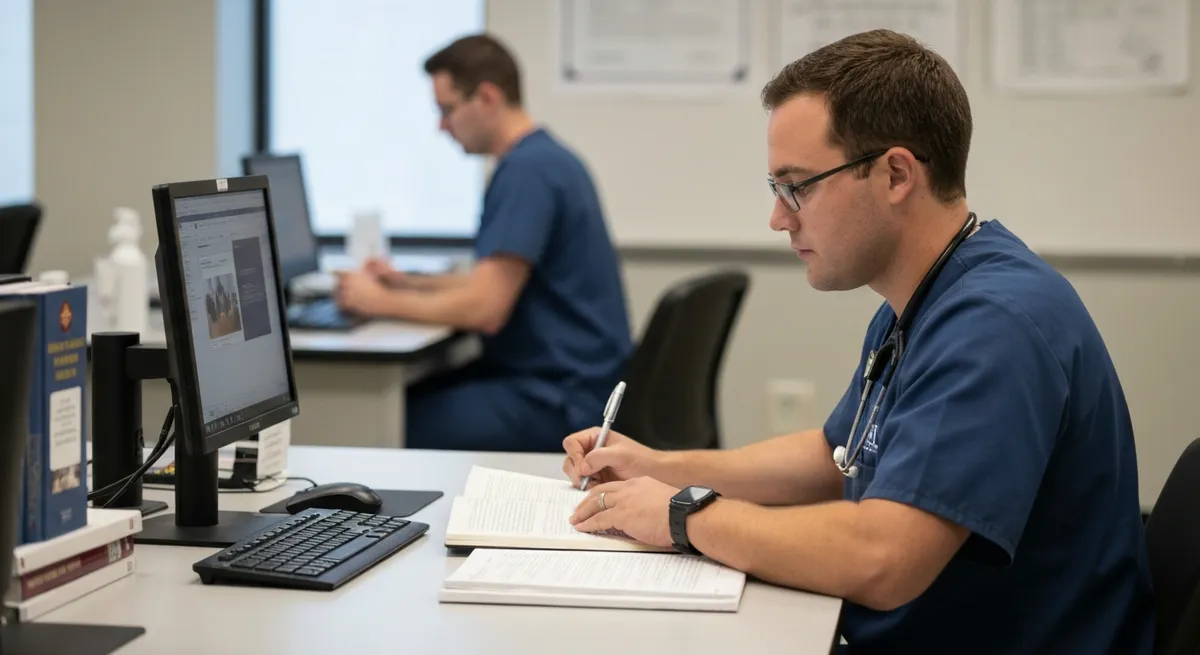
SNHD - Southern Nevada Health District: Complete Study Guide 2026
SNHD - Southern Nevada Health District: Career Paths, Salary, and Requirements 2026

SNHD Food Handler Card Practice Test PDF (Free Printable 2026)

SNHD Birth Certificate & Food Handlers Card: Complete Las Vegas Guide
About the Author

Educational Psychologist & Academic Test Preparation Expert
Columbia University Teachers CollegeDr. Lisa Patel holds a Doctorate in Education from Columbia University Teachers College and has spent 17 years researching standardized test design and academic assessment. She has developed preparation programs for SAT, ACT, GRE, LSAT, UCAT, and numerous professional licensing exams, helping students of all backgrounds achieve their target scores.
Join the Discussion
Connect with other students preparing for this exam. Share tips, ask questions, and get advice from people who have been there.
View discussion (8 replies)