
SNHD Body Art Card: Complete Guide to Getting Your Food Handlers Card in Las Vegas
Get your food handlers card through SNHD. Complete guide to the body art card, permit requirements, and test prep. ✅ Las Vegas 2026 October.
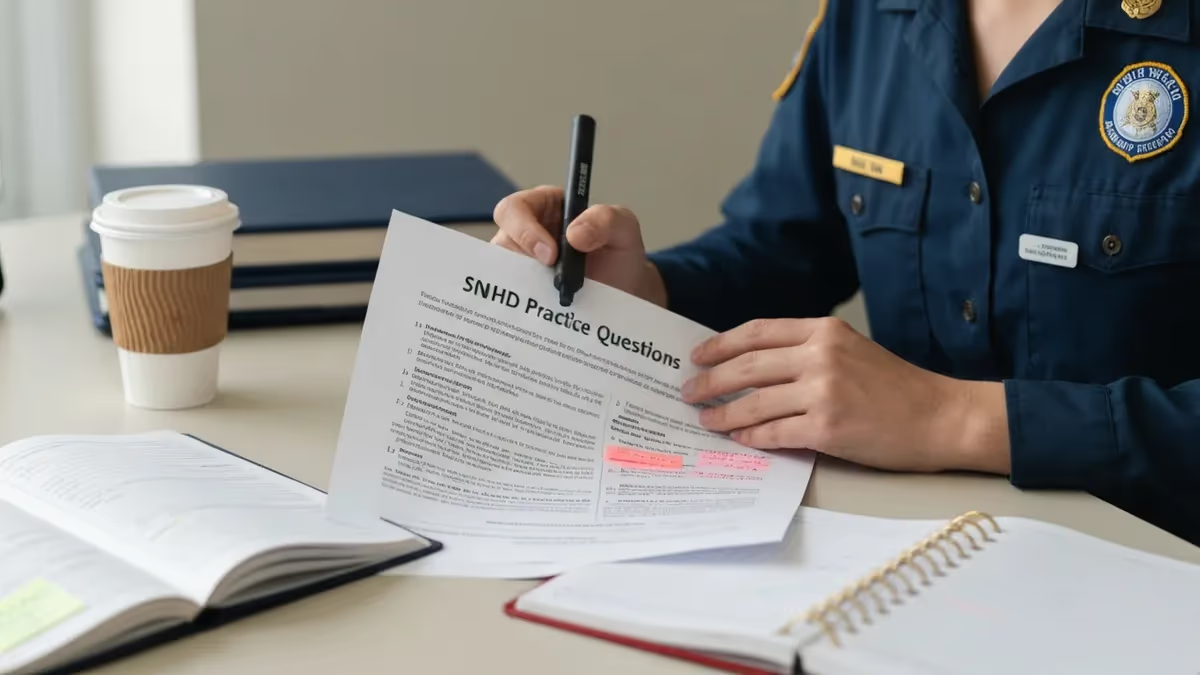
The food handlers card issued by the Southern Nevada Health District is one of the most important credentials for anyone working in the food service industry in Clark County, Nevada. Whether you are employed at a restaurant on the Las Vegas Strip, a food truck on Fremont Street, or a hotel banquet kitchen, state law requires you to hold a valid SNHD health card before handling food professionally.
The SNHD body art card requirement extends that same framework to tattoo artists, body piercers, and practitioners who perform invasive cosmetic procedures, ensuring that everyone who works in direct contact with clients meets rigorous public health standards.
Understanding the difference between a food handlers card and a body art card is essential before you start the application process. Both credentials are administered by the snhd health card office, and both require applicants to pass a knowledge exam that covers hygiene, sanitation, cross-contamination prevention, and pathogen control. However, the body art card adds specific content related to bloodborne pathogens, sterilization protocols, skin preparation, and proper disposal of sharps — topics that are critical for practitioners who routinely break the skin during their work.
Las Vegas is one of the most competitive hospitality and entertainment markets in the world, which means that public health enforcement is taken seriously by regulators and employers alike. The Southern Nevada Health District conducts routine inspections of food establishments and body art facilities, and employees who cannot produce a valid food handlers card or body art card on demand may face fines, suspension, or termination. Keeping your credentials current is not just a legal formality — it is a professional obligation that protects both you and your clients from preventable illness and infection.
Many applicants are surprised to learn that the food handlers card exam administered by SNHD covers a broader range of topics than they initially expect. The test includes questions about temperature danger zones, proper handwashing technique, the correct sequence for cleaning a three-compartment sink, the nine major food allergens, and the symptoms of common foodborne illnesses. For body art card applicants, the exam also includes questions about hepatitis B, HIV transmission, proper use of personal protective equipment, and the importance of maintaining sterile work environments.
Preparation is the single most important factor in passing the SNHD exam on your first attempt. Many test-takers underestimate the difficulty of the exam because they assume that everyday kitchen experience is sufficient preparation. In reality, the exam is designed to assess formal knowledge of food safety principles, and many questions are phrased in ways that require careful reading and a solid understanding of the underlying science. Using practice tests, flashcards, and study guides tailored specifically to the SNHD curriculum dramatically increases your chances of passing without the need to retake the exam and pay additional fees.
This comprehensive guide covers everything you need to know about obtaining your food handlers card and body art card through the Southern Nevada Health District. We will walk you through the application process step by step, explain what topics to expect on the exam, share proven study strategies, and provide access to free practice tests that mirror the actual SNHD exam format.
Whether you are applying for the first time or renewing a card that has recently expired, you will find all the information you need right here to succeed on exam day and maintain your credentials for years to come.
The Southern Nevada Health District serves Clark County, which includes Las Vegas, Henderson, North Las Vegas, Boulder City, and all unincorporated communities in the region. If you work anywhere in this jurisdiction in a role that involves handling food or performing body art procedures, you are required by law to hold the appropriate SNHD credential. Let this guide be your starting point for achieving that goal efficiently and with confidence.
SNHD Food Handlers Card by the Numbers
Key Facts at a Glance
| Item | Value | Details |
|---|---|---|
| Questions on the SNHD Exam | 50 | Multiple choice format |
| Minimum Passing Score | 70% | 35 correct answers required |
| Exam Fee | $20 | Per attempt at SNHD office |
| Card Validity Period | 3 Years | Before renewal required |

SNHD Body Art Card: Core Requirements at a Glance
All applicants must be at least 18 years of age to qualify for the SNHD body art card. Applicants for the standard food handlers card must be at least 16 years old. Valid government-issued photo identification is required at the time of the exam.
Applicants must pass a 50-question multiple-choice exam with a score of 70% or higher. The exam covers food safety, personal hygiene, cross-contamination, allergen awareness, sanitation, and — for body art — bloodborne pathogen protocols and sterilization procedures.
Body art card applicants are strongly encouraged to provide proof of Hepatitis B vaccination. While not always mandatory for all body art roles, health inspectors may request vaccination records during facility inspections, and many employers require it as a condition of hire.
A non-refundable fee of approximately $20 is required at the time of testing at the SNHD office. Fees are subject to change, so always verify current rates on the official Southern Nevada Health District website before your appointment.
Upon passing the exam, your food handlers card or body art card is issued and valid for three years. The card must be renewed before expiration, and holders must repass the knowledge exam to demonstrate continued competency in health and safety standards.
The SNHD written exam draws from a detailed curriculum that covers both universal food safety principles and Nevada-specific regulations. Understanding the major topic areas in advance gives you a significant strategic advantage when preparing for the test. The exam is not designed to trick you, but it does require that you understand the reasoning behind each rule — not just the rule itself.
For example, knowing that the temperature danger zone spans from 41°F to 135°F is a start, but the exam will also ask you to identify which foods are most susceptible to bacterial growth within that range and what steps a food handler must take to minimize risk.
One of the most heavily tested areas on the SNHD exam is proper handwashing procedure. The exam typically includes multiple questions about when handwashing is required, how long the process should take, and which situations require glove changes in addition to handwashing. Exam-takers are frequently surprised to learn that simply rinsing hands under water does not count as proper handwashing, and that the use of hand sanitizer is not a substitute for soap-and-water washing in most food handling contexts. These distinctions matter on the exam and in the real-world kitchen environment.
The three-compartment sink is another major topic area that receives consistent coverage on the SNHD exam. The correct order of operations — wash, rinse, sanitize — must be memorized along with the proper chemical concentrations for common sanitizing agents like chlorine bleach, quaternary ammonium, and iodine. The exam will also test your knowledge of water temperature requirements for each compartment and the circumstances under which a mechanical dishwasher may be used instead of a manual warewashing setup. Practicing with our three-compartment sink quiz is one of the most effective ways to master this topic before your exam.
Food allergen awareness has become an increasingly important component of the SNHD exam in recent years, reflecting both regulatory changes and growing public health concern about allergic reactions in restaurant settings. The exam covers the nine major food allergens recognized by the FDA: milk, eggs, fish, shellfish, tree nuts, peanuts, wheat, soybeans, and sesame. Food handlers must know how to prevent allergen cross-contact, how to communicate with customers about allergen risks, and what steps to take if a customer reports an allergic reaction. For anyone pursuing a snhd las vegas credential, this section of the exam deserves particular attention.
Personal hygiene requirements are tested extensively throughout the SNHD exam. This includes rules about wearing hair restraints, keeping fingernails short and clean, avoiding the use of nail polish in food preparation areas, and prohibitions on wearing jewelry on the hands and arms while handling food. The exam also covers illness reporting requirements, which mandate that food handlers notify their supervisors immediately if they experience symptoms such as vomiting, diarrhea, jaundice, or a sore throat with fever. Knowingly working while ill is a serious violation that can result in card suspension.
Pest control and facility sanitation are additional topics that appear regularly on the SNHD exam. Questions in this area test your knowledge of integrated pest management principles, proper food storage to deter pests, and the signs that indicate a pest infestation. The exam also covers proper waste disposal, cleaning and sanitizing food contact surfaces, and the frequency with which high-touch surfaces must be sanitized during food service operations. Understanding the distinction between cleaning (removing visible dirt and debris) and sanitizing (reducing pathogens to safe levels) is essential for answering these questions correctly.
For body art card applicants, the exam extends into bloodborne pathogen training that mirrors the content covered in OSHA's Bloodborne Pathogen Standard. This includes understanding how HIV, hepatitis B, and hepatitis C are transmitted through blood and bodily fluids, the proper use of personal protective equipment such as gloves, masks, and eye protection, and the correct procedure for disposing of sharps, needles, and contaminated waste. The exam also covers autoclave sterilization, single-use instrument requirements, and the importance of maintaining client intake records that document known health conditions and allergies.
For a fuller set of questions on this topic, see our nevada food handlers card practice test resource.
For a fuller set of questions on this topic, see our nevada food handlers card practice test resource.
For a fuller set of questions on this topic, see our snhd food handler practice test resource.
Food Handlers Card vs Body Art Card: Key Differences
The standard food handlers card issued by the Southern Nevada Health District is required for all employees who handle unpackaged food, food equipment, utensils, or food-contact surfaces in Clark County. The exam covers core food safety topics including temperature control, personal hygiene, cross-contamination prevention, allergen awareness, and proper cleaning and sanitizing procedures. Applicants must score at least 70% on a 50-question multiple-choice exam to earn their card.
The food handlers card is valid for three years from the date of issuance and must be renewed before it expires. Employers are required by law to ensure that all relevant employees hold a current card, and they may face fines or permit suspensions if inspectors find uncredentialed staff. The card costs approximately $20 per exam attempt, and the test is available in multiple languages at the SNHD office located on West Charleston Boulevard in Las Vegas.

Online SNHD Prep vs In-Person Study: Which Is Better?
- +Online practice tests are available 24/7, allowing you to study on your own schedule around work or family commitments
- +Digital flashcard tools and interactive quizzes provide immediate feedback on wrong answers, accelerating learning
- +Free online resources eliminate the cost barrier of paid prep courses, making exam prep accessible to all applicants
- +Timed practice exams online help you build the pace and stamina needed to complete the actual 50-question test efficiently
- +Online platforms track your progress over multiple sessions, showing which topic areas need the most additional review
- +Video explanations of complex topics like the three-compartment sink sequence make abstract concepts easier to visualize and remember
- −Online-only prep can leave some applicants underprepared for the specific phrasing and terminology used in the official SNHD exam
- −Without a structured study schedule, online self-study can feel directionless and may lead to uneven preparation across topic areas
- −Technical issues such as poor internet connectivity can disrupt study sessions at critical preparation moments
- −Some online resources contain outdated information that does not reflect the most current SNHD regulations and exam content
- −In-person classes provide direct interaction with instructors who can answer specific questions that online materials may not address
- −Applicants who struggle with self-motivation may find it harder to maintain consistent study habits without the accountability of a classroom setting
SNHD Body Art Card Application Checklist
- ✓Confirm you meet the minimum age requirement of 18 years for the body art card (16 for food handlers card).
- ✓Gather a valid government-issued photo ID such as a driver's license, state ID, or passport.
- ✓Review the current SNHD exam fee schedule on the official SNHD website before your visit.
- ✓Complete at least five full-length practice exams covering food safety, allergens, and sanitation topics.
- ✓Study the bloodborne pathogen module thoroughly, including HIV, hepatitis B, and hepatitis C transmission routes.
- ✓Memorize the correct three-compartment sink sequence: wash at 110°F minimum, rinse, then sanitize.
- ✓Learn all nine major food allergens recognized by the FDA and understand cross-contact prevention techniques.
- ✓Review Nevada-specific regulations on body art facility licensing and client intake documentation requirements.
- ✓Schedule your exam appointment at the SNHD office on West Charleston Boulevard in Las Vegas.
- ✓Arrive early with your ID and payment ready, and bring proof of Hepatitis B vaccination if applicable.
Most Test-Takers Who Fail Do So on Allergen and Temperature Questions
Data from food safety educators consistently shows that the two topic areas responsible for the most failures on food handlers card exams are allergen cross-contact prevention and temperature control. Spending at least 30% of your total study time on these two subjects — and using targeted practice tests for each — significantly improves first-attempt pass rates and reduces the cost and stress of retaking the exam.
Developing an effective study strategy for the SNHD exam begins with understanding how the content is organized and weighted. Rather than reading the entire SNHD food safety manual from cover to cover, experienced test-takers recommend focusing on the topic areas that appear most frequently on the exam. Based on the official SNHD curriculum, the highest-weighted subjects are personal hygiene and handwashing, temperature control and the cold chain, cross-contamination prevention, allergen management, and sanitation of equipment and surfaces. These five areas together account for the majority of questions on the exam, so mastering them should be your primary goal.
Active recall is significantly more effective than passive reading when it comes to retaining food safety information for the SNHD exam. Rather than simply re-reading your notes or the SNHD manual, challenge yourself to answer questions without looking at the material first. This technique, known as retrieval practice, has been shown in multiple educational studies to improve long-term retention by as much as 50% compared to re-reading alone. Our free practice tests are specifically designed to support active recall by presenting questions in the same format and difficulty level as the actual SNHD exam.
Spaced repetition is another powerful study technique that works exceptionally well for exam preparation. Instead of cramming all your studying into one or two long sessions immediately before your exam appointment, spread your preparation over at least one to two weeks. Study for 30 to 45 minutes per day, reviewing previously learned material alongside new content at gradually increasing intervals. This approach takes advantage of the brain's natural memory consolidation processes and results in much stronger retention on exam day when it matters most.
Using mnemonics and memory aids can help you remember complex rules and sequences that are commonly tested on the SNHD exam. For example, the phrase FATTOM (Food, Acidity, Temperature, Time, Oxygen, Moisture) summarizes the six conditions that support bacterial growth, and remembering this acronym can help you answer multiple related questions throughout the exam. Similarly, creating a personal mental story or visualization of the three-compartment sink process — walking through the steps in your mind as if you were physically standing at the sink — can make the correct sequence much easier to recall under exam pressure.
Group study can be a valuable supplement to individual preparation, particularly for applicants who learn well through discussion and explanation. Forming a small study group with coworkers who are also preparing for the SNHD exam allows you to quiz each other, share different explanations of confusing concepts, and stay motivated through mutual accountability. However, be careful to verify that the information shared within your group is accurate and up to date, since incorrect information learned from peers can be just as harmful as no preparation at all.
One of the most overlooked aspects of SNHD exam preparation is practicing the management of exam-day anxiety. Many applicants experience test anxiety that causes them to second-guess correct answers or struggle to recall information they know well under normal circumstances.
Strategies that help manage test anxiety include arriving at the SNHD office early to reduce time pressure, taking slow deep breaths before and during the exam, reading each question carefully before reviewing the answer choices, and skipping difficult questions to return to them after completing easier ones. A calm, systematic approach to the exam dramatically improves performance across all score levels.
The snhd las vegas health card credential opens doors to employment across one of the most vibrant hospitality markets in the country. Once you hold your food handlers card or body art card, you become eligible for a wide range of positions in restaurants, hotels, casinos, catering companies, tattoo studios, and medical spas throughout Clark County. Investing the time to prepare thoroughly for the SNHD exam is not just about passing a test — it is about building a professional foundation that will serve you throughout your career in Nevada's dynamic service industry.

The Southern Nevada Health District actively enforces health card requirements during routine facility inspections. Working as a food handler or body art practitioner with an expired or missing credential can result in immediate removal from the schedule, employer fines of up to $1,000 per violation, and potential suspension of the facility's operating permit. Begin your renewal process at least 30 days before your card's expiration date to avoid any gaps in employment eligibility.
Renewing your SNHD food handlers card or body art card before it expires is a straightforward process, but it requires advance planning to ensure there is no lapse in your credentials. The Southern Nevada Health District does not offer a grace period for expired cards, which means that the moment your card expires, you are no longer legally authorized to work in a covered role.
Unlike some professional licenses in other states, the SNHD does not automatically send renewal reminders, so it is your personal responsibility to track your card's expiration date and initiate the renewal process in a timely manner.
The renewal exam covers the same content as the original exam, which means that all the preparation strategies discussed in this guide apply equally to renewal candidates. Many experienced food handlers and body art practitioners are surprised to discover that they struggle with the renewal exam because food safety regulations evolve over time and the exam is updated to reflect current standards.
For example, the addition of sesame as the ninth major food allergen under the FASTER Act took effect in 2023, and applicants who learned the original eight allergens and never updated their knowledge may miss questions related to sesame cross-contact and labeling requirements.
If you work in a large establishment such as a casino hotel or a multi-unit restaurant chain, your employer may coordinate group renewal sessions through the Southern Nevada Health District. These sessions bring SNHD staff to the workplace and allow multiple employees to take the renewal exam at the same location, reducing the time and logistical burden associated with individual visits to the SNHD office. Contact your human resources department or food safety coordinator to find out whether your employer offers this option and how to sign up.
For body art practitioners who have changed the scope of their services since their last card renewal — for example, a tattoo artist who has added permanent makeup or microblading to their offerings — it is important to verify that your current credential covers all the procedures you now perform. Different body art categories may require different or additional certifications under Nevada administrative code, and the SNHD can advise you on whether your existing card is sufficient or whether additional testing is required for your updated service menu.
Continuing education is not formally required to maintain your SNHD card between renewal cycles, but staying informed about changes in food safety regulations and body art best practices is a professional responsibility that serious practitioners take seriously. Industry organizations such as the National Environmental Health Association, the Association of Food and Drug Officials, and professional tattoo and piercing associations regularly publish updates on regulatory changes, emerging pathogens, and new sanitation technologies that can help you stay ahead of exam content and workplace compliance requirements.
The southern nevada health district also offers educational resources through its Environmental Health Division that can help practitioners stay current between formal exam cycles. These resources include online guidance documents, inspection checklists, and periodic training workshops on topics such as outbreak investigation, allergen management updates, and new state regulations affecting food and body art facilities. Bookmarking the SNHD website and checking it periodically is a simple habit that pays dividends when renewal time comes around and you want to ensure your knowledge reflects the most current standards.
For those who are new to Las Vegas and transferring a food handlers card from another state, it is important to know that the snhd does not accept out-of-state health cards as a substitute for the Nevada credential. All food handlers and body art practitioners working in Clark County must hold a valid SNHD-issued card regardless of credentials held in other jurisdictions. The process is the same for out-of-state applicants as for Nevada residents — take and pass the SNHD written exam, pay the fee, and receive your card upon successful completion.
On the day of your SNHD exam, preparation extends beyond simply knowing the material. Arriving at the SNHD office well-rested, well-fed, and on time sets the right conditions for peak cognitive performance. The SNHD office on West Charleston Boulevard is open during standard business hours on weekdays, and appointments are typically required rather than walk-ins being accepted. Confirm your appointment time the day before and plan your route in advance to account for traffic, which can be unpredictable in the Las Vegas metro area during peak hours.
During the exam itself, read every question carefully before reviewing the answer choices. Many SNHD exam questions are designed to test nuanced understanding, and rushing through the stem of the question without fully absorbing it is one of the most common causes of careless errors. Pay particular attention to qualifying words such as ALWAYS, NEVER, MUST, and EXCEPT, which signal that the question may be testing a specific edge case or regulatory requirement rather than a general principle. Eliminating obviously wrong answer choices first is a reliable strategy for increasing your odds on questions where you are uncertain.
If you encounter a question on the exam that you are not immediately sure of, mark it and move on rather than spending excessive time on a single item. The SNHD exam allows you to review and change answers before final submission, so circling back to difficult questions after completing the ones you know well often produces better results than agonizing over a single item in real time. Returning to a question with fresh eyes after completing the rest of the exam frequently triggers the recall you need to answer it correctly.
After passing your SNHD exam, your food handlers card or body art card is typically issued on the same day or within a few business days. Keep your card in a safe place and make a digital copy using your phone's camera so that you always have a backup record of your credential information including your card number and expiration date. Many employers require you to present your physical card at the time of hire, while others maintain a copy in your personnel file for inspection purposes.
Building a strong personal food safety practice in your workplace reinforces the knowledge you gained during exam preparation and helps you maintain those habits over the three-year period before your renewal. This means consistently monitoring food temperatures with calibrated thermometers, practicing proper handwashing without shortcuts even during busy service periods, labeling and dating all stored food items, and reporting equipment failures that could compromise food safety to management immediately. Inspectors look for this kind of systematic, disciplined approach to sanitation, and employees who demonstrate it contribute to the overall health and reputation of their establishment.
For body art practitioners, maintaining a sterile work environment every single day — not just during inspections — is the hallmark of a professional who takes the public health responsibilities of their craft seriously.
This means autoclaving reusable instruments before every use, using single-use needles and ink caps without exception, maintaining a clean client intake form that documents health conditions relevant to the procedure, and following proper aftercare instruction protocols that protect both the client and the practitioner during the healing process. The SNHD body art card is not just a legal requirement; it is a signal to your clients that you are committed to their safety.
Whether you are pursuing a food handlers card for your first job at a Las Vegas restaurant or renewing a body art card that you have held for years, the investment you make in thorough exam preparation pays compounding dividends throughout your career.
Every hour spent studying, every practice test completed, and every concept mastered makes you a safer, more knowledgeable professional who is better equipped to protect the health of every client and customer you serve. Use the resources in this guide, commit to a structured study plan, and approach your SNHD exam with confidence — your credential is within reach.
Sample SNHD - Southern Nevada Health District Practice Questions
Try these questions from our free SNHD - Southern Nevada Health District practice tests. The correct answer and an explanation follow each question.
How long is a Nevada food handler health card valid?
- A. 1 year
- B. 2 years
- C. 3 years
- D. 5 years
Answer: C. 3 years
A Nevada food handler health card is valid for 3 years from the date of issue. Food handlers must renew their card before it expires to continue working legally in food service.
How does SNHD reach food handlers who may not have reliable internet access for online food safety training?
- A. SNHD requires all food handlers to purchase smartphones before obtaining their health card
- B. SNHD maintains in-person testing locations and partners with community organizations to provide accessible training
- C. SNHD only offers food handler testing via mail-in paper exams
- D. Food handlers without internet access are exempt from the health card requirement
Answer: B. SNHD maintains in-person testing locations and partners with community organizations to provide accessible training
SNHD maintains in-person testing centers and partners with community organizations to ensure food handlers without reliable internet access can still complete their required food safety training and exam.
When must food handlers wash their hands? (Select the most complete answer)
- A. Only before starting their shift
- B. After using the restroom, before food prep, after handling raw meat, and after touching their face
- C. Every two hours during the shift
- D. Only after handling raw poultry or seafood
Answer: B. After using the restroom, before food prep, after handling raw meat, and after touching their face
Handwashing is required at multiple critical points throughout a shift, including after restroom use, before food prep, after raw meat contact, and after touching the face or hair.
A food handler tells their manager they have been diagnosed with Hepatitis A. The manager must:
- A. Restrict the employee to washing dishes
- B. Exclude the employee from the establishment
- C. Allow them to work if they wear double gloves and a mask
- D. Tell them to take the day off and return tomorrow if they feel better
Answer: B. Exclude the employee from the establishment
A diagnosis of Hepatitis A, one of the 'Big 6' foodborne illnesses, requires mandatory exclusion from the food establishment. The employee cannot work in any capacity and may only return with clearance from a doctor and the health authority.
Take the full SNHD - Southern Nevada Health District practice test
SNHD Questions and Answers
SNHD Practice Test Video Answers
Southern Nevada Health District Death Certificate & Food Handlers Card: Complete Las Vegas Guide
SNHD - Southern Nevada Health District: Complete Study Guide 2026
SNHD - Southern Nevada Health District: Career Paths, Salary, and Requirements 2026

SNHD Health Card: Complete Guide to Getting Your Food Handlers Card in Las Vegas
About the Author

Educational Psychologist & Academic Test Preparation Expert
Columbia University Teachers CollegeDr. Lisa Patel holds a Doctorate in Education from Columbia University Teachers College and has spent 17 years researching standardized test design and academic assessment. She has developed preparation programs for SAT, ACT, GRE, LSAT, UCAT, and numerous professional licensing exams, helping students of all backgrounds achieve their target scores.
Join the Discussion
Connect with other students preparing for this exam. Share tips, ask questions, and get advice from people who have been there.
View discussion (8 replies)