
ServSafe Sample Exam: Free Practice Test Questions for 2026 September
Ace your ServSafe manager exam with free practice tests. 90-question sample exams, answer explanations, and test prep tips. 🏆 Start practicing today!
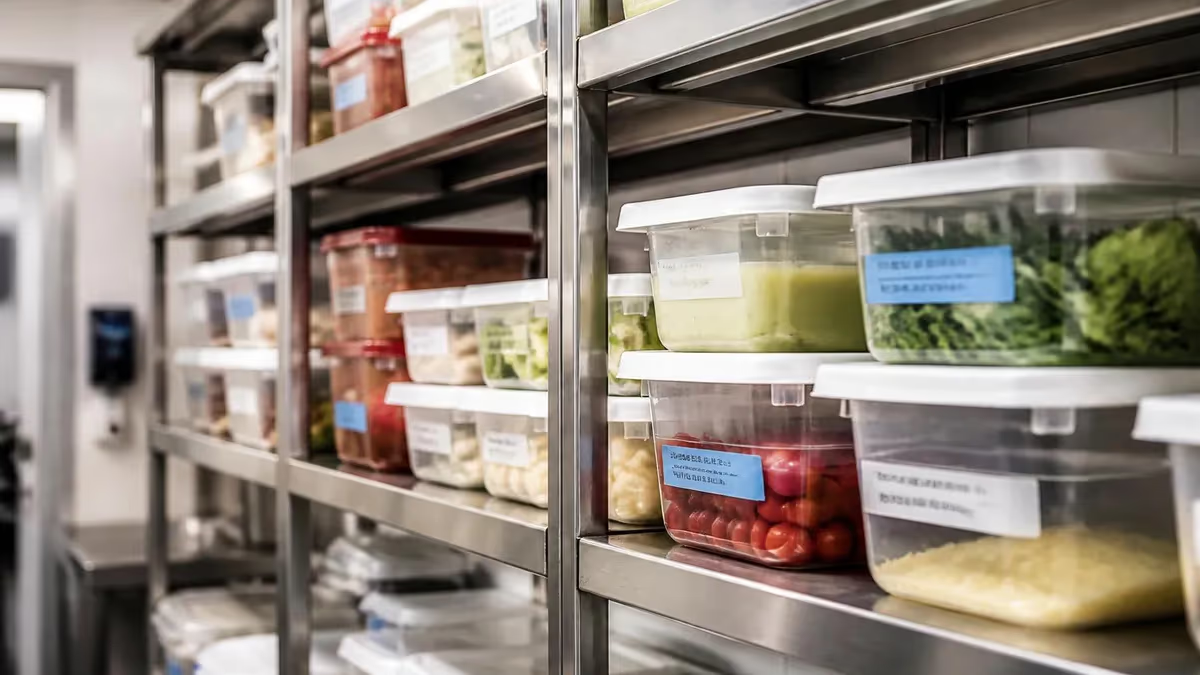
A quality servsafe sample exam is the single most effective tool you can use to prepare for your ServSafe certification test. Whether you're studying for the ServSafe Manager certification or the Food Handler credential, working through realistic practice questions exposes the precise topics covered on exam day and trains your brain to apply food safety principles under timed conditions. Our free servsafe practice test collection mirrors the format, difficulty, and subject distribution of the actual National Restaurant Association (NRA) assessments, so every minute you spend practicing translates directly into a higher score.
The ServSafe Manager exam consists of 90 questions drawn from eight core domains — from personal hygiene and purchasing to HACCP principles and foodborne illness prevention. Because the test pulls questions from all eight areas, cramming a single topic rarely produces a passing score. Candidates who train with a balanced servsafe manager practice test library consistently outperform those who rely solely on reading the textbook. Research from food service training programs shows that practice-test-based study increases first-attempt pass rates by roughly 25 percent compared to passive review alone.
One of the biggest mistakes test-takers make is underestimating the exam's applied-knowledge questions. The ServSafe test doesn't just ask you to recite a temperature — it asks you to identify which of four plausible scenarios represents an imminent hazard. That's a reasoning skill you build through repetition, not memorization. A well-structured servsafe test prep routine includes immediate answer review after every question set so you understand not only what the correct answer is, but why the three incorrect options fail. That level of analysis is built into every practice set on this site.
If you've been searching for servsafe test 90 questions and answers pdf free download, you've probably noticed that generic PDFs floating around online are often outdated, missing answer explanations, or based on earlier editions of the ServSafe curriculum. The ServSafe program updates its content to reflect current FDA Food Code guidance, which means study materials from more than two years ago may test you on superseded temperature thresholds or outdated cooling procedures. Our practice questions are reviewed and refreshed to align with current ServSafe Manager Book editions.
Beyond simple memorization, servsafe test questions frequently test your ability to prioritize competing food safety concerns — for example, deciding whether a temperature violation or a cross-contamination risk poses the greater immediate threat to public health. Developing this clinical judgment requires repeated exposure to scenario-based questions across every exam domain. Think of each practice session as a low-stakes simulation of the real exam: same format, same cognitive demands, zero consequences for wrong answers except an invaluable lesson.
This page gives you everything you need in one place: a complete breakdown of the servsafe manager exam format, domain-by-domain study strategies, multiple free practice quiz sets, a study schedule, expert tips for exam day, and a comprehensive FAQ section covering the questions food service workers ask most. Whether you have two weeks or two months before your exam date, the resources here will help you walk into the testing center with genuine confidence. Let's start with the numbers that matter most.
ServSafe Manager Exam by the Numbers

ServSafe Manager Exam Format
| Section | Questions | Time | Weight | Notes |
|---|---|---|---|---|
| Providing Safe Food | 15 | ~17 min | 19% | Foodborne illness causes, FAT TOM, high-risk populations |
| Forms of Contamination | 12 | ~13 min | 15% | Biological, chemical, physical hazards |
| Personal Hygiene | 9 | ~10 min | 11% | Handwashing, illness reporting, personal practices |
| Flow of Food: Purchasing Through Cooking | 16 | ~18 min | 20% | TCS food temps, receiving, storing, thawing, cooking |
| Flow of Food: Holding, Serving, Re-serving, Cooling | 10 | ~11 min | 13% | Hot/cold holding, cooling methods, reheating |
| Food Safety Management Systems | 11 | ~12 min | 14% | Active managerial control, HACCP, PRPs |
| Safe Facilities, Pest Management, Cleaning & Sanitizing | 10 | ~12 min | 13% | Equipment standards, cleaning procedures, IPM |
| Pilot / Unscored Questions | 10 | N/A | 0% | Unidentified; answer every question seriously |
| Total | 90 | 2 hours | 100% |
Understanding exactly what the servsafe manager test covers helps you allocate your study time intelligently instead of reviewing material at random. The exam is built around eight content domains that reflect the daily operational decisions a food service manager must make. The largest domain — Flow of Food: Purchasing Through Cooking — accounts for roughly 20 percent of scored questions, meaning a strong command of temperature controls, safe receiving procedures, and proper cooking temperatures alone can meaningfully raise your score. However, neglecting any single domain risks dropping below the 75 percent passing threshold.
The Forms of Contamination domain trips up more candidates than almost any other section. It tests your ability to distinguish between biological hazards (bacteria, viruses, parasites, fungi), chemical hazards (cleaning agents, pesticides, naturally occurring toxins), and physical hazards (glass fragments, metal shavings, bone chips). The tricky part is that many real-world scenarios involve overlapping hazard types, and the exam rewards candidates who can identify the primary risk quickly and accurately. Repeated exposure to contamination scenarios through a servsafe manager sample test is the fastest path to mastering this domain.
Personal hygiene questions on the ServSafe exam are deceptively straightforward but carry hidden complexity. Candidates often know that handwashing is required after handling raw meat — but the exam also probes when to exclude an employee from the food service area entirely versus when to restrict them to non-food-contact duties. For instance, a worker with jaundice must be excluded from the establishment, while a worker with a minor skin infection on their arm may be restricted but not necessarily excluded, provided the wound is properly covered. These distinctions require careful study, not casual reading.
The Food Safety Management Systems domain is where candidates who understand servsafe manager test answers really shine. This section covers Active Managerial Control (AMC), Prerequisite Programs (PRPs), and full HACCP plan development including identifying Critical Control Points (CCPs), establishing critical limits, and implementing corrective actions. HACCP questions make up a significant portion of this domain, and the exam frequently presents multi-step scenarios that require you to identify which HACCP principle applies to a given situation. Memorizing the seven HACCP principles in order is essential groundwork.
Facilities, pest management, and cleaning and sanitizing round out the exam's final major domain. Questions here test your knowledge of proper sanitizer concentrations (chlorine at 50–99 ppm, iodine at 12.5–25 ppm, quaternary ammonium at label instructions), water temperature requirements for manual and mechanical dishwashing, and the difference between cleaning (removing visible soil) and sanitizing (reducing microbial load to safe levels). Pest control questions focus on Integrated Pest Management (IPM) principles — denying pests food, water, and entry — rather than specific pesticide chemistry.
One frequently overlooked aspect of servsafe manager practice tests is that they help you build time awareness. At 90 questions in 2 hours, you have roughly 80 seconds per question. That sounds generous until you encounter a complex scenario with a four-option answer set where three options are plausible. Practicing under realistic time pressure — even self-imposed — trains you to make confident decisions without over-analyzing. Set a timer during your practice sessions to simulate real exam pacing and identify which question types slow you down the most.
The Food Safety Management Systems domain also introduces regulatory and legal context that surprises some candidates. Questions may reference the FDA Food Code, the role of the regulatory authority in inspecting establishments, or the conditions under which an establishment may be required to close immediately.
Knowing that a sewage backup, extended power outage affecting refrigeration, or evidence of rodent infestation in food storage areas all constitute grounds for immediate closure — while a single temperature deviation may not — is the kind of regulatory nuance the exam tests regularly. Our servsafe practice tests include questions from this regulatory landscape so nothing on exam day catches you off guard.
ServSafe Test Prep: Domain-by-Domain Study Strategies
Temperature control is the single most tested concept on the ServSafe manager exam, appearing across multiple domains. You must memorize the Temperature Danger Zone (41°F–135°F / 5°C–57°C), minimum internal cooking temperatures for all protein categories (145°F for whole beef and pork, 155°F for ground meat, 165°F for poultry), and the two cooling benchmarks: food must cool from 135°F to 70°F within 2 hours, then from 70°F to 41°F within an additional 4 hours — totaling no more than 6 hours for the complete cooling process.
Practice applying these numbers to scenario questions, not just reciting them. A common exam format presents a cooling log and asks you to identify the first hour at which the food entered an unsafe range. Another format gives you a delivery scenario with a specific product temperature and asks whether the shipment should be accepted or rejected. For ready-to-eat TCS foods, remember the 7-day rule: these foods held at 41°F or below must be used or discarded within 7 days of preparation, and they require date labels the moment they are prepared or opened.
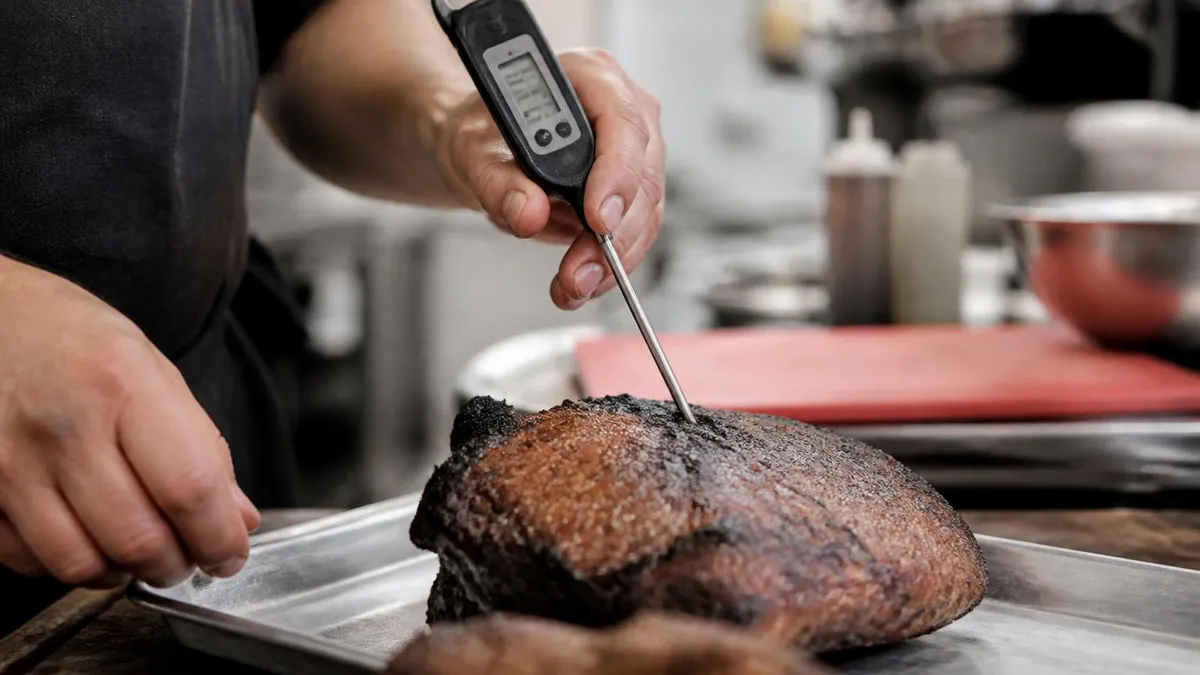
ServSafe Practice Tests vs. Textbook-Only Study: Which Works Better?
- +Exposes you to exact question formats and wording used on the real exam
- +Immediate feedback after each question reinforces correct reasoning
- +Identifies weak domains before exam day so you can redirect study time
- +Builds time-management instincts through repeated timed practice
- +Scenario-based questions develop applied critical thinking, not just recall
- +Simulates exam stress in a low-stakes environment, reducing test anxiety
- −Practice tests alone won't teach concepts you've never encountered — reading is still necessary
- −Low-quality practice tests with outdated content can reinforce incorrect answers
- −Overconfidence risk if you score well on easy questions and stop studying
- −Does not replicate proctored exam environment including ID check and supervision
- −Some candidates use answer-pattern shortcuts that don't transfer to the real exam
- −Without explanation review, wrong answers on practice tests teach nothing
ServSafe Test Prep Checklist: 10 Things to Do Before Exam Day
- ✓Complete at least three full-length 90-question servsafe manager practice tests under timed conditions.
- ✓Review every wrong answer immediately after each practice session — read the explanation, not just the correct letter.
- ✓Memorize all minimum internal cooking temperatures for the eight major food categories.
- ✓Write out the 7-step HACCP principles from memory until you can list them without hesitation.
- ✓Study the FDA Food Code's five risk factors and link each one to a real-world kitchen scenario.
- ✓Practice calculating cooling timelines: confirm you can apply the 2-hour / 4-hour cooling rule to complex examples.
- ✓Review all three sanitizer types (chlorine, iodine, quat) including correct concentration ranges and water temperatures.
- ✓Take a full-length servsafe sample exam the day before your scheduled test to check readiness.
- ✓Confirm your exam appointment, testing location, and accepted forms of photo ID at least 48 hours in advance.
- ✓Prepare your exam-day materials: two forms of ID, any required enrollment confirmation, and a light snack for breaks.

The 10 Unscored Questions Cannot Be Identified — Treat All 90 Equally
Every ServSafe Manager exam includes 10 pilot questions that are being field-tested for future exams and do not count toward your score. Because these questions are distributed randomly throughout the exam and are completely indistinguishable from scored questions, the only safe strategy is to answer every single question with full effort. Candidates who try to guess which questions are pilots and skip them risk discarding scored points they cannot afford to lose.
Scoring well on the servsafe manager exam requires not just subject knowledge but strategic test-taking skills that most candidates underestimate. The exam uses a multiple-choice format where each question has four answer options, and the wrong answers are engineered to be plausible — they often reflect common misconceptions or half-true statements. Learning to identify these distractors systematically is just as important as knowing the correct answer. The most reliable approach is process of elimination: identify any option that is clearly incorrect, then compare the remaining candidates against the specific principle being tested.
One powerful pattern to recognize is the ServSafe exam's use of superlatives and absolute language. When a question asks what a manager should do "first" or which action is "most important," it's probing your understanding of priority hierarchies in food safety. For example, if a food worker reports symptoms of vomiting and diarrhea, the correct first action is to remove the worker from food handling areas immediately — before consulting a doctor, before notifying management, before any other step. Recognizing priority-order questions and answering them systematically will save you from second-guessing yourself on exam day.
Time allocation strategy matters more than most candidates realize going into the exam. With 90 questions and 120 minutes, the math suggests roughly 80 seconds per question — but that average conceals wide variation. Simple recall questions ("What is the minimum internal cooking temperature for poultry?") should take you 15–20 seconds. Complex scenario questions with four plausible options may legitimately require 90–120 seconds. The key is to recognize when you're overthinking: if you've spent more than 90 seconds on a question, mark it for review and move on. Return to it after completing the rest of the exam.
Many candidates benefit from taking the servsafe manager practice test multiple times rather than working through many different question banks. Research on spaced repetition shows that revisiting the same difficult questions at increasing intervals produces stronger long-term retention than encountering each question only once. If you scored below 80 percent on a practice test, retake that same test two days later. You'll likely score higher, but more importantly, you'll identify which questions you're still missing due to genuine knowledge gaps versus which you missed the first time due to misreading or rushing.
The passing score for the ServSafe Manager certification exam is 75 percent, which means you can answer up to 22 of the 80 scored questions incorrectly and still pass. While that might sound forgiving, it's important to remember that your weakest domains — the ones you haven't studied adequately — can collectively account for far more than 22 errors.
If you consistently score below 75 percent on one specific domain in practice, that domain alone could sink your overall score. Use your practice test results to calculate domain-specific accuracy rates and allocate additional study time to any domain where you fall below 80 percent.
Beyond the cognitive preparation, physical and logistical preparation for exam day is an underrated factor in performance. Poor sleep the night before an exam has been shown to reduce cognitive performance by the equivalent of moderate alcohol impairment — the kind of impairment that turns a straightforward temperature recall question into a frustrating guessing exercise.
Aim for seven to nine hours of sleep the two nights before your exam. Eat a protein-rich meal before testing rather than a high-sugar option, which can cause energy crashes mid-exam. Arrive at the testing location at least 15 minutes early to allow time for check-in procedures without rushing.
If you are planning to take the servsafe manager exam practice version through an online proctored format rather than at a physical testing center, ensure your technical setup is verified at least 24 hours in advance. Test your webcam, microphone, internet connection speed (minimum 1 Mbps upload is typically required), and browser compatibility.
Clear your testing area of non-permitted materials — books, notes, secondary monitors, and mobile phones must be out of reach and out of frame. Technical issues on exam day that could have been prevented with advance preparation are an avoidable source of stress that can undermine an otherwise well-prepared candidate.
If you do not pass the ServSafe Manager exam, you must wait at least 24 hours before retaking it. After three failed attempts within a 12-month period, you are required to complete additional ServSafe training before testing again. Some proctored exam sessions are offered through third-party testing centers and may have their own scheduling requirements. Always confirm the current retake policy with your exam provider, as policies can vary by delivery method.
After you pass the servsafe test and receive your certification, the next phase of your food safety career begins. A ServSafe Manager certificate is valid for five years from the date of the exam — not from the date the certificate is printed or mailed. This distinction matters because some candidates assume the five-year clock starts when they receive the physical document, but it actually begins on the day you sat for and passed the exam. Mark your calendar with both your exam date and your renewal deadline to avoid an inadvertent lapse in certification status.
Renewal requires retaking and passing the ServSafe Manager exam; there is no abbreviated recertification pathway. However, many food service professionals find that the renewal exam feels significantly easier than the original exam because they've been applying food safety principles in daily operations for five years. The practical experience you accumulate as a certified food safety manager — monitoring temperatures, conducting staff training, performing self-inspections — reinforces exactly the knowledge the exam tests. In this sense, the job itself becomes continuous servsafe test prep.
Your ServSafe Manager certification can also open doors to advanced career opportunities. Many state health departments and local regulatory authorities recognize ServSafe as the benchmark food safety credential, and some jurisdictions legally require at least one certified food protection manager (CFPM) to be employed at each food service establishment. If you're managing a restaurant, catering company, school cafeteria, or healthcare food service operation, your certification may be a condition of the establishment's operating permit — which means your credential directly protects not just your own career but also the legal operating status of your employer.
For candidates interested in expanding their credentials beyond the manager certification, ServSafe also offers specialized modules including ServSafe Allergens, ServSafe Alcohol, and the ServSafe Food Handler certificate. The Allergens module is particularly valuable given the increasing prevalence of severe food allergies and the growing patchwork of state-level allergen training mandates. The servsafe managers practice test resources available here can help you prepare for the manager exam while our allergen practice tests (linked throughout this page) address the allergens module specifically.
Many employers cover the cost of ServSafe certification for their management staff because the credential protects the business from regulatory violations, reduces liability exposure, and signals professionalism to health inspectors and customers alike. If your employer offers tuition assistance or professional development funding, the ServSafe Manager exam fee — typically in the $35–$150 range depending on how and where you test — is a legitimate qualifying expense. Ask your HR department or direct supervisor about reimbursement before paying out of pocket, as employer sponsorship of food safety certification is common throughout the industry.
Once certified, consider sharing your knowledge with your team members even before they sit for their own certifications. Conducting brief food safety huddles — 5-minute pre-shift discussions of a single food safety topic — reinforces the culture of safety in your establishment and helps your staff perform better if they ever choose to pursue their own credentials. Topics like proper handwashing technique, the importance of date labels on TCS foods, or how to recognize signs of pest activity are immediately applicable to daily operations and can be sourced directly from the ServSafe curriculum you mastered during your own exam preparation.
Looking ahead, the landscape of food safety certification is evolving. The FDA's New Era of Smarter Food Safety initiative, launched in 2020 and actively implemented through the mid-2020s, emphasizes traceability, preventive controls, and tech-enabled monitoring — themes that align closely with the HACCP and Active Managerial Control content already tested on the ServSafe exam. Staying current with FDA Food Code updates and participating in continuing education through the National Restaurant Association's resources ensures that your food safety knowledge remains valid and actionable well beyond your initial certification date.
Building an effective daily study routine is the difference between feeling prepared and actually being prepared for your servsafe sample exam. The most successful candidates don't study for marathon sessions the night before — they distribute their preparation across two to four weeks in focused 45-to-60-minute sessions. This spaced-practice approach leverages the brain's natural memory consolidation process, which occurs during sleep and requires time between exposures to the same material. If you try to cram eight hours of ServSafe content into two days, you'll recognize material on practice tests but struggle to retrieve it accurately under exam pressure.
Start each study session by reviewing notes or flashcards from your previous session before introducing new material. This retrieval practice — the act of actively pulling information from memory rather than passively re-reading it — has been shown in cognitive science research to increase retention by up to 50 percent compared to re-reading alone. After the 5-minute review, spend 30 minutes on new content (one exam domain per session works well), then close the session with 15 minutes of practice questions specifically targeting that domain. This structure ensures you build both breadth and depth across the eight exam areas.
Flashcards are particularly effective for the high-density factual content the ServSafe exam tests: temperature thresholds, time limits, sanitizer concentrations, HACCP principles, Big 9 allergens. Digital flashcard tools that use spaced-repetition algorithms automatically resurface cards you've struggled with at increasing intervals, which efficiently targets your weakest knowledge areas without wasting time on material you already know well. Physical index cards work just as well if you prefer analog tools — the act of writing information by hand itself aids encoding in long-term memory.
Group study can be a powerful supplement to individual practice, particularly for scenario-based reasoning questions. When you discuss a complex exam question with a peer who initially chose a different answer, you both benefit: the person who was wrong learns the correct reasoning, while the person who was right reinforces their understanding by explaining it. If you have colleagues who are also preparing for the servsafe manager test, schedule one or two group sessions per week where you take turns explaining domain concepts and challenging each other with practice questions.
One study technique that few candidates use but that pays outsized dividends is teaching the material. After you've studied a domain, write a short explanation of it as if you were training a new employee who has never worked in food service. This forces you to translate technical knowledge into plain language, and the process of translation quickly reveals gaps in your own understanding that passive review conceals. If you can explain the difference between a Critical Control Point and a Prerequisite Program in two minutes using a real kitchen example, you understand it at the depth the exam demands.
In the final three days before your exam, shift your focus from learning new material to consolidating what you already know. Take one full-length servsafe practice test on day three before the exam and review every answer — both correct and incorrect. On day two, review your flashcards for temperature controls, HACCP principles, and sanitizer concentrations, then do a light 20-question review focused on your weakest domain. On exam eve, do no heavy studying. A gentle review of your key flashcards is fine, but the priority is rest, nutrition, and logistical preparation. Trust the work you've already done.
When you sit down in the testing room and the exam begins, read each question twice before looking at the answer choices. Many wrong answers are chosen not because the candidate didn't know the material, but because they misread the question — particularly questions that use negatives like "which of the following is NOT a correct practice" or "which action would LEAST effectively control this hazard." Circle or underline the key qualifier in the question stem before evaluating the options.
This simple habit eliminates a surprising number of careless errors and can make a meaningful difference in your final score on the ServSafe Manager certification exam.
ServSafe Questions and Answers





About the Author

Registered Sanitarian & Food Safety Certification Expert
Cornell University College of Agriculture and Life SciencesThomas Wright is a Registered Sanitarian and HACCP-certified food safety professional with a Bachelor of Science in Food Science from Cornell University. He has 17 years of experience in food safety auditing, regulatory compliance, and foodservice management training. Thomas prepares food industry professionals for ServSafe Manager, HACCP certification, and state food handler examinations.
Join the Discussion
Connect with other students preparing for this exam. Share tips, ask questions, and get advice from people who have been there.
View discussion (7 replies)