
Practical Nursing vs CNA: Differences in Training, Scope, and Pay 2026 September
📝 Prepare for the Practical Nursing vs CNA: Differences certification. Practice questions with answer explanations covering all exam domains.
Practical nursing sits one rung above the CNA on the clinical ladder — and that single rung changes almost everything about what you're allowed to do at the bedside. Licensed Practical Nurses (LPNs), called Licensed Vocational Nurses (LVNs) in Texas and California, complete a 12-to-18-month diploma program, pass the NCLEX-PN, and earn a median salary around $48,000 a year. CNAs finish training in 4 to 12 weeks and earn closer to $35,000. Same healthcare setting, very different responsibilities.
So what does the practical nursing vs CNA debate really come down to? Time, money, and scope. LPNs can administer medications, start IVs in some states, insert catheters, and document patient assessments — tasks a CNA isn't licensed to perform. CNAs handle vital signs, mobility assistance, bathing, and feeding under direct RN or LPN supervision. Both roles matter. But the question is practical nursing the same as CNA? Not even close.
If you're weighing these two paths, this article breaks down training length, cost, daily duties, salary trajectories, and advancement options so you can pick the route that matches your timeline, budget, and long-term goals. Already leaning toward the CNA track? Check out the cna practical nursing program options through Goodwill — they're free in many states and can get you working within weeks.
Here's what we'll cover: education requirements, licensure differences, day-to-day scope, pay comparisons by state, and the bridge programs that let CNAs transition into practical nursing without starting from scratch.

Is practical nursing the same as CNA? That question comes up constantly — and the short answer is no. A CNA is a certified nursing assistant. A practical nurse is a licensed nurse. Different credential, different training, different legal authority. The confusion makes sense, though, because both roles work directly with patients in hospitals, nursing homes, and home health settings. From the outside, the jobs can look similar.
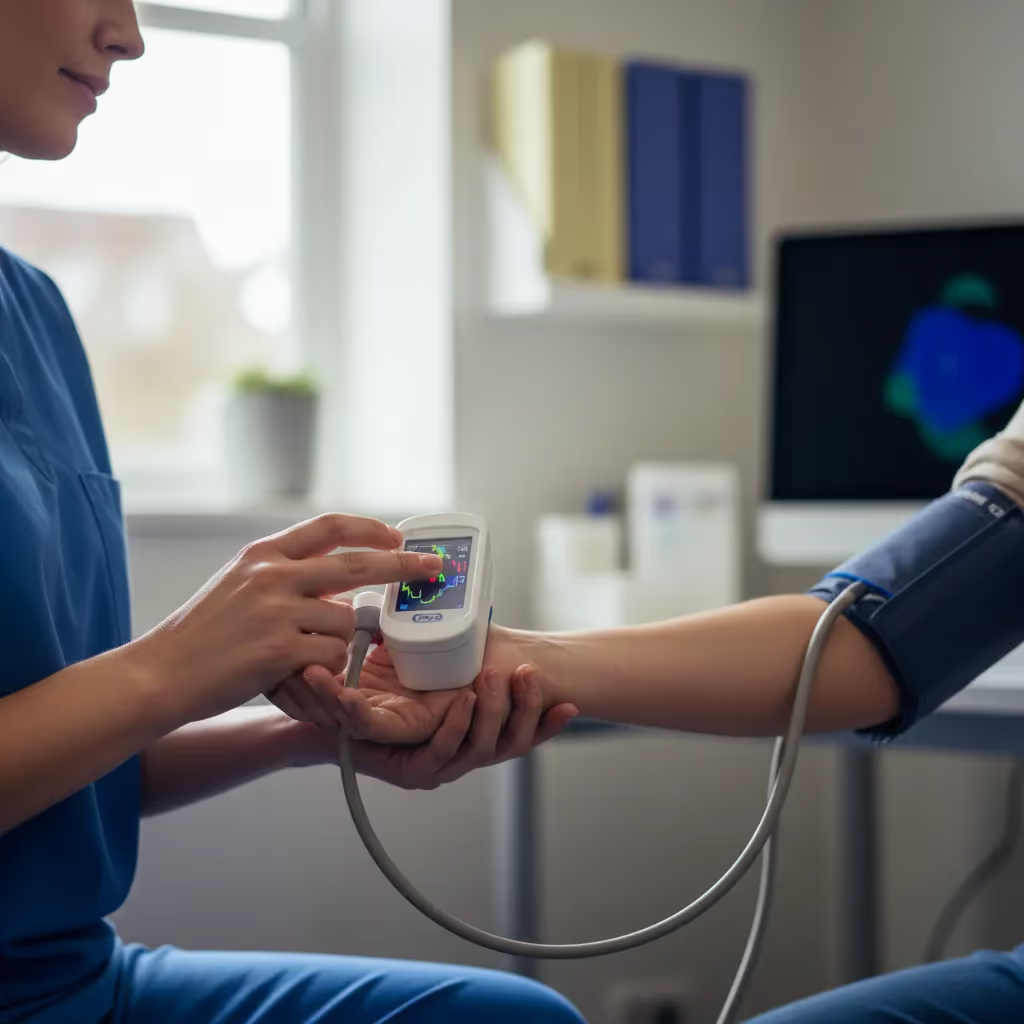
The distinction matters most when you look at CNA practical nursing scope boundaries. A CNA can take blood pressure, record intake and output, help patients move from bed to wheelchair, and report changes to the nurse. That's important work. But a CNA can't interpret those vital signs, adjust a care plan, or give medications based on what the numbers say. An LPN can — and does, every shift.
State boards of nursing draw these lines clearly. CNAs work under supervision. LPNs work under the direction of an RN or physician, but they exercise independent clinical judgment within their scope. That independence is what the extra year of school buys you. It's also why LPNs earn roughly $13,000 more per year on average.
Worth knowing: some states are expanding LPN scope. Others are tightening it. Check your state board's practice act before committing to either path — it determines exactly what you'll be allowed to do once you're credentialed.
Training Requirements: CNA vs Practical Nursing Programs
CNA training programs run between 4 and 12 weeks. Most states require 75 hours of instruction — a mix of classroom and clinical — though some set the bar higher. You'll cover basic patient care: hygiene, feeding, positioning, infection control, vital signs. The state competency exam at the end tests those same skills. Pass it, you're on the registry. Total cost? Anywhere from free (through a cna practical nursing program like Goodwill or Red Cross) to around $2,000 at a community college.
Practical nursing programs are a different commitment entirely. Most run 12 to 18 months — occasionally 10 months for accelerated tracks. You'll take anatomy and physiology, pharmacology, nutrition, medical-surgical nursing, maternal-child health, and mental health nursing. Clinical rotations put you in real patient care settings under instructor supervision. The NCLEX-PN waits at the end. Tuition ranges from $10,000 at community colleges to $30,000 or more at private vocational schools.
The gap between these two tracks isn't just time — it's depth. CNA programs teach you to perform tasks. LPN programs teach you to understand why those tasks matter clinically, and what to do when something goes wrong. That's a meaningful difference when you're standing at a patient's bedside at 2 AM and the charge nurse is across the floor.
One more thing about CNA programs: they're often the entry point. Many nursing students start as CNAs to get clinical exposure, earn income, and figure out whether bedside care is really what they want before committing to a longer program.
CNA vs LPN: Side-by-Side Comparison
CNA: 4–12 week certificate program. 75+ hours classroom and clinical. No college prerequisite — just a high school diploma or GED in most states. Cost: $0–$2,000.
LPN: 12–18 month diploma or certificate. College-level courses in pharmacology, A&P, and nursing fundamentals. Prerequisite: high school diploma, sometimes a CNA certificate. Cost: $10,000–$30,000.
Scope of Practice: What Each Role Can Actually Do
Here's where the CNA practical nursing program distinction becomes concrete. A CNA's scope is assistance-based. You help patients with activities of daily living — bathing, dressing, toileting, eating, ambulation. You take and record vital signs. You observe and report. That last part is critical: observe and report, not assess and intervene. The language matters legally.
LPNs operate under a clinical scope. They administer oral and injectable medications, perform wound care, insert urinary catheters, monitor IV infusions (in most states), collect specimens, and document nursing assessments. In long-term care facilities, LPNs often function as the primary nurse on the floor, supervising CNAs and reporting to an RN supervisor who may cover multiple units.
The supervision structure looks like this: physicians direct the care plan, RNs coordinate and delegate, LPNs carry out skilled nursing tasks, and CNAs assist with basic care. Everyone works together — but the legal accountability chain flows upward. If a CNA performs a task outside their scope, the supervising nurse can be held liable.
One practical example. A patient's blood pressure spikes to 190/110. The CNA can take the reading, document it, and immediately notify the nurse. That's appropriate. The LPN can assess the patient for symptoms (headache, visual changes, chest pain), check the medication administration record, give a PRN antihypertensive if one's ordered, and notify the physician with a full SBAR report. Same patient, same reading — totally different response authority.
Salary Comparison: How Much Do LPNs and CNAs Actually Earn?
Money talks. The median annual salary for an LPN is $48,070, according to the Bureau of Labor Statistics. For CNAs, it's $35,740. That $12,330 gap adds up — over a 20-year career, an LPN earns roughly $246,000 more than a CNA doing the same weekly hours. The investment in a CNA practical nursing program upgrade pays for itself within the first two to three years.
But averages don't tell the full story. Location matters enormously. California LPNs earn a median of $65,000. Mississippi LPNs earn closer to $40,000. CNA pay follows a similar geographic curve — $42,000 in Massachusetts versus $27,000 in Louisiana. If you're planning a nursing career, research your specific state and metro area.
Setting matters too. Hospital LPNs tend to earn more than those in skilled nursing facilities. Home health LPNs earn less in base pay but sometimes more per-visit in private duty. CNAs in hospitals generally out-earn those in nursing homes by $3,000–$5,000 annually. Night shift and weekend differentials can add $2–$4 per hour to either role.
Here's something people overlook: benefits. Full-time hospital positions usually include health insurance, retirement contributions, tuition reimbursement, and paid time off. A CNA earning $35,000 with full benefits may take home more total compensation than an LPN earning $48,000 as a PRN (as-needed) worker with no benefits. Always calculate total compensation, not just hourly rate.
Pros and Cons: CNA vs Practical Nursing
- +CNA training takes weeks, not months — you can start earning quickly
- +LPN salary is $12K+ higher annually with the same employer
- +CNA programs are often free through community organizations
- +LPNs have broader clinical scope and more career advancement paths
- +Both roles offer high job security with growing demand through 2032
- +CNA experience counts toward LPN program admission at many schools
- −CNA pay plateaus quickly without further education
- −LPN programs cost $10K–$30K and take over a year
- −CNAs have limited autonomy — every task requires delegation
- −LPNs still work under RN supervision and can't practice independently
- −CNA work is physically demanding with high injury rates
- −LPN scope varies wildly by state — some states restrict IV access
CNA-to-LPN Bridge Programs: Upgrading Your Credential
Already working as a CNA and wondering about the jump to practical nursing? Bridge programs exist for exactly this situation. A CNA practical nursing program bridge typically shaves 2 to 4 months off the standard LPN curriculum by granting credit for your existing clinical training and work experience. Not every school offers this — community colleges and vocational schools are your best bet.
Admission requirements for bridge programs usually include an active CNA certification, 6 to 12 months of work experience, a high school diploma or GED, and sometimes prerequisite courses in biology or anatomy. Some programs require a minimum GPA of 2.5. Competitive programs may ask for letters of recommendation or a personal statement.
Cost varies. Community college bridge programs run $8,000–$15,000. Private schools charge more — sometimes $25,000 or above. Financial aid applies: Pell Grants, state grants, employer tuition reimbursement, and workforce development scholarships can cover a significant portion. Many hospitals offer tuition assistance specifically for CNAs pursuing LPN credentials because it helps them retain trained staff.
The return on investment is straightforward. You'll spend roughly $10,000 and 10–14 months in school. Your salary jumps $12,000+ per year immediately after licensure. The program pays for itself within 12 months of graduation. That's a better ROI than most college degrees.
Steps to Transition from CNA to LPN
- ✓Verify your CNA certification is current and in good standing with your state
- ✓Research accredited LPN or CNA-to-LPN bridge programs in your area
- ✓Complete prerequisite courses (anatomy, biology) if required by your chosen program
- ✓Apply for financial aid — FAFSA, Pell Grants, state workforce scholarships
- ✓Ask your employer about tuition reimbursement programs for nursing education
- ✓Enroll and maintain the minimum GPA required to stay in the program
- ✓Complete all clinical rotation hours — these are non-negotiable for licensure
- ✓Study for the NCLEX-PN using practice tests and review courses
- ✓Apply for your LPN license through your state board of nursing
- ✓Update your resume and apply for LPN positions — many facilities promote internal CNAs first
The job market for both CNAs and LPNs looks strong through the next decade. The Bureau of Labor Statistics projects 4% growth for nursing assistants and 5% growth for LPNs through 2032. That's roughly average for all occupations — but the raw numbers matter more than the percentage. Healthcare adds thousands of positions every year just to replace turnover, and nursing has consistently high turnover rates.
Long-term care is where most of these openings concentrate. America's aging population needs more hands at the bedside — and that need isn't going away. Nursing homes, assisted living facilities, and home health agencies employ the majority of both CNAs and LPNs. Hospitals employ a smaller share, but hospital positions tend to pay better and offer stronger benefits.
A CNA practical nursing program credential opens doors that a CNA cert alone doesn't. LPNs can work in physician offices, outpatient clinics, schools, correctional facilities, and insurance companies — settings that rarely hire CNAs. If you want geographic flexibility and setting variety, the LPN license gives you more options.
Remote work isn't really a thing for either role — bedside care requires a bedside. But telehealth triage positions for LPNs are slowly emerging, particularly in insurance and managed care organizations. It's niche now. Could grow.
Day-to-day life as a CNA versus an LPN feels different in ways that job descriptions don't capture. CNAs spend most of their shift in direct physical contact with patients — turning, lifting, feeding, toileting. It's rewarding and exhausting in equal measure. The physical toll is real: CNAs have one of the highest injury rates in healthcare, mostly back injuries from patient handling.
LPNs spend more time on clinical tasks — medication passes, wound care, documentation — and less time on physical labor, though they still help with patient care when the unit is short-staffed. The cognitive load is higher. You're making clinical decisions, prioritizing care for multiple patients, and communicating with physicians. Stress comes from different sources: not physical strain, but clinical responsibility.
Both roles deal with staffing shortages, mandatory overtime, and difficult patients. Neither one is easy. But the CNA practical nursing program difference in daily work is substantial enough that many CNAs who bridge to LPN say they'd never go back. The pay bump helps — but it's the expanded scope that changes how you feel about your work.
Talk to people doing both jobs before you decide. Shadow a CNA for a shift. Shadow an LPN. The lived experience matters more than any comparison chart. What looks good on paper doesn't always match what you'll enjoy doing for 12 hours at a stretch, three or four days a week.
LPN scope of practice differs by state. Some states allow LPNs to start IVs, push IV medications, and perform advanced wound care. Others restrict these tasks to RNs only. Before enrolling in a practical nursing program, check your state board of nursing's practice act to understand exactly what you'll be licensed to do after graduation.
Financial planning for either path deserves more attention than it usually gets. CNA programs cost little — often free — but the earning ceiling is real. After 5 years, most CNAs are within $2–$3 of their maximum hourly rate unless they move into a higher-cost metro area or take on specialized roles like dialysis tech (which requires additional training).
LPN programs require a bigger upfront investment. Student loans are common. But here's the math that matters: a CNA practical nursing program bridge costing $12,000 produces a $12,000+ annual salary increase. Borrow the full amount at 6% interest and you'll pay roughly $135/month for 10 years — while earning an extra $1,000/month. The numbers work.
Employer tuition reimbursement changes the equation even further. Many hospital systems and large nursing home chains offer $3,000–$5,000 per year in tuition assistance for employees pursuing nursing degrees. Some cover the full cost. Ask your HR department — this benefit is underutilized because people don't know it exists.
Tax credits help too. The Lifetime Learning Credit covers up to $2,000 per year in education expenses. The American Opportunity Credit covers more but only applies to students in a degree program, not certificate programs. Check with a tax professional or use IRS Form 8863 to see what you qualify for.
CNA Practice Test Questions
Prepare for the CNA - Certified Nursing Assistant exam with our free practice test modules. Each quiz covers key topics to help you pass on your first try.
CNA Activities of Daily Living
CNA Exam Questions covering Activities of Daily Living. Master CNA Test concepts for certification prep.
CNA Aging Process
Free CNA Practice Test featuring Aging Process. Improve your CNA Exam score with mock test prep.
CNA Anatomy and Physiology Basics
CNA Mock Exam on Anatomy and Physiology Basics. CNA Study Guide questions to pass on your first try.
CNA Assisting with Daily Living
CNA Test Prep for Assisting with Daily Living. Practice CNA Quiz questions and boost your score.
CNA Assisting with Range of Motion Exercises
CNA Questions and Answers on Assisting with Range of Motion Exercises. Free CNA practice for exam readiness.
CNA Basic Human Anatomy and Age-Related Ch...
CNA Mock Test covering Basic Human Anatomy and Age-Related Changes. Online CNA Test practice with instant feedback.
CNA Basic Nursing Skills
Free CNA Quiz on Basic Nursing Skills. CNA Exam prep questions with detailed explanations.
CNA Basic Nursing Skills 10
CNA Practice Questions for Basic Nursing Skills 10. Build confidence for your CNA certification exam.
CNA Basic Nursing Skills 11
CNA Test Online for Basic Nursing Skills 11. Free practice with instant results and feedback.
CNA Basic Nursing Skills 1
CNA Study Material on Basic Nursing Skills 1. Prepare effectively with real exam-style questions.
CNA Basic Nursing Skills 12
Free CNA Test covering Basic Nursing Skills 12. Practice and track your CNA exam readiness.
CNA Basic Nursing Skills 13
CNA Exam Questions covering Basic Nursing Skills 13. Master CNA Test concepts for certification prep.
CNA Basic Nursing Skills 14
Free CNA Practice Test featuring Basic Nursing Skills 14. Improve your CNA Exam score with mock test prep.
CNA Basic Nursing Skills 15
CNA Mock Exam on Basic Nursing Skills 15. CNA Study Guide questions to pass on your first try.
CNA Basic Nursing Skills 16
CNA Test Prep for Basic Nursing Skills 16. Practice CNA Quiz questions and boost your score.
CNA Basic Nursing Skills 17
CNA Questions and Answers on Basic Nursing Skills 17. Free CNA practice for exam readiness.
CNA Basic Nursing Skills 18
CNA Mock Test covering Basic Nursing Skills 18. Online CNA Test practice with instant feedback.
CNA Basic Nursing Skills 19
Free CNA Quiz on Basic Nursing Skills 19. CNA Exam prep questions with detailed explanations.
CNA Basic Nursing Skills 20
CNA Practice Questions for Basic Nursing Skills 20. Build confidence for your CNA certification exam.
CNA Basic Nursing Skills 21
CNA Test Online for Basic Nursing Skills 21. Free practice with instant results and feedback.
CNA Basic Nursing Skills 2
CNA Study Material on Basic Nursing Skills 2. Prepare effectively with real exam-style questions.
CNA Basic Nursing Skills 3
Free CNA Test covering Basic Nursing Skills 3. Practice and track your CNA exam readiness.
CNA Basic Nursing Skills 4
CNA Exam Questions covering Basic Nursing Skills 4. Master CNA Test concepts for certification prep.
CNA Basic Nursing Skills 5
Free CNA Practice Test featuring Basic Nursing Skills 5. Improve your CNA Exam score with mock test prep.
CNA Basic Nursing Skills 6
CNA Mock Exam on Basic Nursing Skills 6. CNA Study Guide questions to pass on your first try.
CNA Basic Nursing Skills 7
CNA Test Prep for Basic Nursing Skills 7. Practice CNA Quiz questions and boost your score.
CNA Basic Nursing Skills 8
CNA Questions and Answers on Basic Nursing Skills 8. Free CNA practice for exam readiness.
CNA Basic Nursing Skills 9
CNA Mock Test covering Basic Nursing Skills 9. Online CNA Test practice with instant feedback.
CNA Basic Restorative Services
Free CNA Quiz on Basic Restorative Services. CNA Exam prep questions with detailed explanations.
CNA Basic Restorative Services 1
CNA Practice Questions for Basic Restorative Services 1. Build confidence for your CNA certification exam.
CNA Bathing and Dressing
CNA Test Online for Bathing and Dressing. Free practice with instant results and feedback.
CNA Body Mechanics
CNA Study Material on Body Mechanics. Prepare effectively with real exam-style questions.
CNA Career Advancement and Opportunities
Free CNA Test covering Career Advancement and Opportunities. Practice and track your CNA exam readiness.
CNA Career Opportunities and Benefits
CNA Exam Questions covering Career Opportunities and Benefits. Master CNA Test concepts for certification prep.
CNA Care for Residents with Cognitive Impa...
Free CNA Practice Test featuring Care for Residents with Cognitive Impairment. Improve your CNA Exam score with mock test prep.
CNA Care of Cognitively Impaired Residents
CNA Mock Exam on Care of Cognitively Impaired Residents. CNA Study Guide questions to pass on your first try.
CNA Care of Cognitively Impaired Residents 1
CNA Test Prep for Care of Cognitively Impaired Residents 1. Practice CNA Quiz questions and boost your score.
CNA Care Of Cognitively Impaired Residents 4
CNA Questions and Answers on Care Of Cognitively Impaired Residents 4. Free CNA practice for exam readiness.
CNA Common Medical Terms and Abbreviations
CNA Mock Test covering Common Medical Terms and Abbreviations. Online CNA Test practice with instant feedback.
CNA Communication and Interpersonal Skills
Free CNA Quiz on Communication and Interpersonal Skills. CNA Exam prep questions with detailed explanations.
CNA Communication and Interpersonal Skills 1
CNA Practice Questions for Communication and Interpersonal Skills 1. Build confidence for your CNA certification exam.
CNA Communication And Interpersonal Skills 4
CNA Test Online for Communication And Interpersonal Skills 4. Free practice with instant results and feedback.
CNA Eligibility and Qualifications
CNA Study Material on Eligibility and Qualifications. Prepare effectively with real exam-style questions.
CNA Emergency Procedure
Free CNA Test covering Emergency Procedure. Practice and track your CNA exam readiness.
CNA Ethics and Professionalism
CNA Exam Questions covering Ethics and Professionalism. Master CNA Test concepts for certification prep.
CNA Exam Structure and Content
Free CNA Practice Test featuring Exam Structure and Content. Improve your CNA Exam score with mock test prep.
CNA Feeding and Hydration
CNA Mock Exam on Feeding and Hydration. CNA Study Guide questions to pass on your first try.
CNA Infection Control
CNA Test Prep for Infection Control. Practice CNA Quiz questions and boost your score.
CNA Infection Control and Safety
CNA Questions and Answers on Infection Control and Safety. Free CNA practice for exam readiness.
CNA Isolation Precautions
CNA Mock Test covering Isolation Precautions. Online CNA Test practice with instant feedback.
CNA Legal & Ethical Behaviours
Free CNA Quiz on Legal & Ethical Behaviours. CNA Exam prep questions with detailed explanations.
CNA Legal & Ethical Behaviours 1
CNA Practice Questions for Legal & Ethical Behaviours 1. Build confidence for your CNA certification exam.
CNA Legal & Ethical Behaviours 4
CNA Test Online for Legal & Ethical Behaviours 4. Free practice with instant results and feedback.
CNA Mental Health and Social Services Needs
CNA Study Material on Mental Health and Social Services Needs. Prepare effectively with real exam-style questions.
CNA Mental Health and Social Services Needs 1
Free CNA Test covering Mental Health and Social Services Needs 1. Practice and track your CNA exam readiness.
CNA Mental Health And Social Services Needs 4
CNA Exam Questions covering Mental Health And Social Services Needs 4. Master CNA Test concepts for certification prep.
CNA Nutrition and Hydration Management
Free CNA Practice Test featuring Nutrition and Hydration Management. Improve your CNA Exam score with mock test prep.
CNA Patient Care Procedure
CNA Mock Exam on Patient Care Procedure. CNA Study Guide questions to pass on your first try.
CNA Personal Care Skills
CNA Test Prep for Personal Care Skills. Practice CNA Quiz questions and boost your score.
CNA Personal Care Skills 1
CNA Questions and Answers on Personal Care Skills 1. Free CNA practice for exam readiness.
CNA Personal Care Skills 4
CNA Mock Test covering Personal Care Skills 4. Online CNA Test practice with instant feedback.
CNA Personal Care Skills 5
Free CNA Quiz on Personal Care Skills 5. CNA Exam prep questions with detailed explanations.
CNA Personal Hygiene and Grooming
CNA Practice Questions for Personal Hygiene and Grooming. Build confidence for your CNA certification exam.
CNA Practice Test - Basic Nursing Skills #2
CNA Test Online for Practice Test - Basic Nursing Skills #2. Free practice with instant results and feedback.
CNA Practice Test - Basic Nursing Skills #2 1
CNA Study Material on Practice Test - Basic Nursing Skills #2 1. Prepare effectively with real exam-style questions.
CNA Preventing Patient Falls and Injuries
Free CNA Test covering Preventing Patient Falls and Injuries. Practice and track your CNA exam readiness.
CNA Promoting Resident Independence and Ch...
CNA Exam Questions covering Promoting Resident Independence and Choice. Master CNA Test concepts for certification prep.
CNA Proper Hand Hygiene and PPE Usage
Free CNA Practice Test featuring Proper Hand Hygiene and PPE Usage. Improve your CNA Exam score with mock test prep.
CNA Resident Rights and Communication
CNA Mock Exam on Resident Rights and Communication. CNA Study Guide questions to pass on your first try.
CNA Resident’s Rights
CNA Test Prep for Resident’s Rights. Practice CNA Quiz questions and boost your score.
CNA Resident's Rights 1
CNA Questions and Answers on Resident's Rights 1. Free CNA practice for exam readiness.
CNA Resident's Rights 4
CNA Mock Test covering Resident's Rights 4. Online CNA Test practice with instant feedback.
CNA Roles and Responsibilities
Free CNA Quiz on Roles and Responsibilities. CNA Exam prep questions with detailed explanations.
CNA Safety and Emergency Procedures
CNA Practice Questions for Safety and Emergency Procedures. Build confidence for your CNA certification exam.
CNA Safety and Emergency Procedures 1
CNA Test Online for Safety and Emergency Procedures 1. Free practice with instant results and feedback.
CNA Safety And Emergency Procedures 4
CNA Study Material on Safety And Emergency Procedures 4. Prepare effectively with real exam-style questions.
CNA Safety and Infection Control
Free CNA Test covering Safety and Infection Control. Practice and track your CNA exam readiness.
CNA Scope of Practice
CNA Exam Questions covering Scope of Practice. Master CNA Test concepts for certification prep.
CNA Skills and Competencies
Free CNA Practice Test featuring Skills and Competencies. Improve your CNA Exam score with mock test prep.
CNA Supporting Rehabilitation Activities
CNA Mock Exam on Supporting Rehabilitation Activities. CNA Study Guide questions to pass on your first try.
CNA The Nurse Aide's Role and Responsibili...
CNA Test Prep for The Nurse Aide's Role and Responsibilities. Practice CNA Quiz questions and boost your score.
CNA Time Management and Prioritization
CNA Questions and Answers on Time Management and Prioritization. Free CNA practice for exam readiness.
CNA Toileting and Elimination
CNA Mock Test covering Toileting and Elimination. Online CNA Test practice with instant feedback.
CNA Using Adaptive Devices
CNA Practice Questions for Using Adaptive Devices. Build confidence for your CNA certification exam.
Clinical specialization options expand significantly once you hold an LPN license. In long-term care, LPNs can focus on wound care certification, IV therapy certification, or gerontology. In outpatient settings, LPNs work in dermatology, gastroenterology, orthopedics, and other specialty clinics where they perform procedures specific to that field.
CNAs have fewer specialization paths, but they exist. Certified Medication Aide (CMA) is available in about 20 states — it allows CNAs to distribute medications under nurse supervision. Home health aide (HHA) certification opens private-duty and hospice work. Some CNAs pursue phlebotomy or EKG technician certifications to add clinical skills without going back to school full-time.
The ultimate question behind CNA practical nursing program decisions is usually this: do you want to stay at the bedside as a helper, or do you want to move up the clinical ladder? Neither answer is wrong. Some people love the CNA role — the direct patient contact, the hands-on care, the relationships you build. Others hit a wall after a year or two and want more clinical authority, better pay, and a path toward RN.
Whatever you decide, get started. Healthcare needs people at every level. The demand isn't slowing down, the training is accessible, and the work matters. Pick the path that fits your life right now — you can always advance later.
CNA Questions and Answers
About the Author

Registered Nurse & Healthcare Educator
Johns Hopkins University School of NursingDr. Sarah Mitchell is a board-certified registered nurse with over 15 years of clinical and academic experience. She completed her PhD in Nursing Science at Johns Hopkins University and has taught NCLEX preparation and clinical skills courses for nursing students across the United States. Her research focuses on evidence-based exam preparation strategies for healthcare certification candidates.
Join the Discussion
Connect with other students preparing for this exam. Share tips, ask questions, and get advice from people who have been there.
View discussion (8 replies)