
PCA Job Description: Complete Guide to Personal Care Assistant Duties, Skills, and Responsibilities in 2026 October
Complete PCA description covering duties, skills, qualifications, and daily responsibilities. 🎯 Learn what personal care assistants do and how to become one.
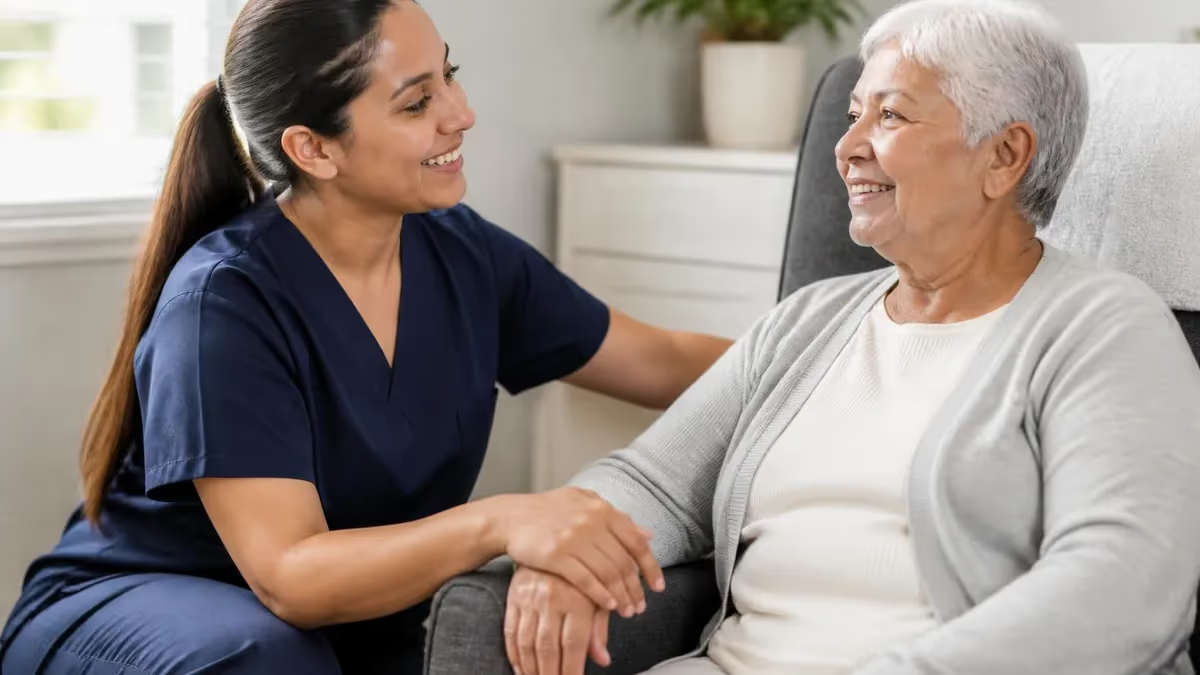
A clear pca description starts with understanding the heart of the role: a Personal Care Assistant provides hands-on support to clients who cannot fully care for themselves due to age, disability, chronic illness, or recovery from surgery. PCAs work in homes, assisted living communities, group homes, and rehabilitation centers, helping people maintain dignity and independence through daily tasks. The job description blends physical caregiving with emotional support, observation, and basic health monitoring under the supervision of nurses or case managers.
The pca meaning in healthcare staffing has evolved significantly over the past decade. Originally a narrow role focused on bathing and dressing, the modern PCA position now includes light medical observation, medication reminders, mobility assistance, and even basic documentation in electronic care records. Employers expect PCAs to be reliable, compassionate, and detail-oriented, with the ability to follow a written care plan while adapting to unexpected client needs throughout each shift.
Understanding what is a pca job description helps both candidates and employers set realistic expectations. The typical posting outlines required certifications, physical demands such as lifting up to 50 pounds, expected schedules including evenings and weekends, and a list of personal care tasks like toileting, transfers, and meal preparation. It also addresses soft skills: patience, communication, cultural sensitivity, and the ability to handle stressful situations calmly when clients become agitated or experience medical events.
For job seekers entering the field, the pca description provides a roadmap of exactly what your day will look like. You may begin a shift by reading the previous caregiver's notes, then helping your client out of bed, assisting with grooming, preparing breakfast, administering medication reminders, and accompanying them to appointments. Throughout the day you document changes in behavior, appetite, or skin condition, then report concerns to the supervising nurse before handing off to the next shift.
Employers benefit from a precise pca description because it reduces turnover and protects both clients and staff. When duties are clearly listed, new hires know their boundaries, supervisors can evaluate performance fairly, and clients receive consistent care regardless of which PCA arrives that morning. A well-written job description also satisfies state licensing requirements, Medicaid waiver documentation rules, and agency accreditation standards that govern home care across the United States.
This complete guide unpacks every element of the modern PCA role, drawing from real agency postings, state regulations, and interviews with practicing caregivers. You will learn the core responsibilities, required qualifications, working conditions, salary ranges, advancement paths, and how the role compares to similar positions like CNA and HHA. For a deeper foundation in exam content and skills, see our porsche experience with the PCA study guide that maps every competency tested on certification assessments.
By the end of this article you will be able to read any PCA job posting and quickly identify whether the role suits your skills, schedule, and career goals. You will also understand red flags in poorly written descriptions, such as vague duty lists, missing supervision details, or unrealistic client loads that signal an agency cutting corners. The information here applies to PCAs working in private homes, agencies, and facility settings nationwide.
PCA Job Description by the Numbers

Core Duties Listed in Every PCA Job Description
Help clients with bathing, oral care, grooming, toileting, and dressing. PCAs respect privacy, follow infection control, and adapt techniques for clients with limited mobility or cognitive challenges throughout daily routines.
Assist with walking, transferring from bed to wheelchair, repositioning to prevent pressure sores, and using assistive devices like Hoyer lifts, gait belts, and walkers safely without causing injury to client or self.
Plan and prepare meals following dietary restrictions, assist clients who cannot feed themselves, monitor hydration, and document intake for diabetic, cardiac, renal, or dysphagia diet protocols set by care plans.
Maintain a clean, safe environment by laundering linens, washing dishes, vacuuming client areas, taking out trash, and organizing medications. Heavy cleaning is typically excluded from PCA scope per state regulation.
Monitor vital signs when trained, note skin changes, behavioral shifts, appetite changes, and medication compliance. PCAs document observations in care logs and immediately report concerning findings to supervising nurses or family.
The qualifications section of a pca description varies by state but consistently requires a high school diploma or equivalent, completion of an approved training program, and successful background check clearance. Most states mandate between 40 and 120 hours of classroom instruction covering body mechanics, infection control, communication, client rights, and emergency procedures. Federal Medicaid rules layer additional requirements when the PCA bills public payers, including competency evaluation and ongoing in-service education each calendar year.
Training requirements often overlap with related healthcare roles, which creates confusion among applicants. A PCA is not the same as a CNA, though some employers use the titles interchangeably. CNAs complete state-tested nurse aide programs averaging 75 to 150 hours and can work in skilled nursing facilities under federal CMS rules. PCAs typically have shorter training and work in less regulated settings like private homes. Both roles share core competencies in personal care, but documentation and clinical scope differ.
Background check standards have tightened significantly since 2020. Employers run state criminal history, federal FBI checks, abuse registry searches, and motor vehicle reports when driving clients is part of the job. Disqualifying offenses include any conviction for elder abuse, theft from a vulnerable adult, violent crime, or recent drug-related felonies. Some states allow conditional employment with a waiver process for older non-violent offenses, but agencies maintain final hiring discretion based on insurance and liability requirements.
Physical qualifications appear in virtually every PCA job description and protect both worker and client. Expect requirements like lifting 50 pounds, standing for extended periods, bending repeatedly, pushing wheelchairs, and providing CPR. Tuberculosis screening, hepatitis B vaccination offer, COVID-19 vaccination policies, and drug screening are standard pre-employment steps. Some clients with compromised immunity require additional vaccinations like influenza and pertussis boosters before the PCA can begin assignment.
Beyond formal credentials, the best PCA candidates demonstrate intangible qualities employers actively screen for during interviews. These include emotional stability when clients become difficult, patience with repeated questions from dementia clients, observational sharpness to catch early signs of illness, and dependability that means showing up on time during snowstorms and holidays. Strong PCAs build trust quickly, which is essential when clients allow them into the most private moments of daily life.
Continuing education is built into the modern PCA description because regulations and best practices evolve constantly. Topics like dementia care, end-of-life support, diabetes monitoring, fall prevention, and trauma-informed care are added to annual training schedules. Many agencies offer paid in-service hours and tuition reimbursement for staff pursuing CNA, LPN, or RN credentials. For a deeper look at the medical responsibilities that overlap with nursing supervision, review our pca medical duties guide which breaks down clinical observation skills.
Specialty certifications can boost both pay and job security within the PCA career path. Common add-ons include certified home health aide, certified dementia practitioner, medication aide, hospice aide, and certified nursing assistant. Each certification opens doors to higher-paying client populations and reduces competition from less-trained applicants. Agencies often pay for certification courses for committed staff, treating training as a retention tool in a labor market with chronic caregiver shortages projected through 2033.

PCA Practice Test Questions
Prepare for the PCA - Personal Care Assistant exam with our free practice test modules. Each quiz covers key topics to help you pass on your first try.
PCA Duties and Responsibilities
Free PCA Practice Test featuring Duties and Responsibilities. Improve your PCA Exam score with mock test prep.
PCA Qualifications
PCA Mock Exam on Qualifications. PCA Study Guide questions to pass on your first try.
PCA Working Conditions
PCA Test Prep for Working Conditions. Practice PCA Quiz questions and boost your score.
PCA Assisting with Daily Living Activities
PCA Questions and Answers on Assisting with Daily Living Activities. Free PCA practice for exam readiness.
PCA Basic Nursing Skills
PCA Mock Test covering Basic Nursing Skills. Online PCA Test practice with instant feedback.
PCA Basic Patient Care Skills
Free PCA Quiz on Basic Patient Care Skills. PCA Exam prep questions with detailed explanations.
PCA Communication and Interpersonal Skills
PCA Practice Questions for Communication and Interpersonal Skills. Build confidence for your PCA certification exam.
PCA Ethical and Legal Responsibilities
PCA Test Online for Ethical and Legal Responsibilities. Free practice with instant results and feedback.
PCA Health and Safety Procedures
PCA Study Material on Health and Safety Procedures. Prepare effectively with real exam-style questions.
PCA Health & Safety Protocols
Free PCA Test covering Health & Safety Protocols. Practice and track your PCA exam readiness.
PCA Infection Control
PCA Exam Questions covering Infection Control. Master PCA Test concepts for certification prep.
PCA Mental Health & Emotional Support
Free PCA Practice Test featuring Mental Health & Emotional Support. Improve your PCA Exam score with mock test prep.
PCA Nutrition & Hydration
PCA Mock Exam on Nutrition & Hydration. PCA Study Guide questions to pass on your first try.
PCA Patient Mobility & Transfers
PCA Test Prep for Patient Mobility & Transfers. Practice PCA Quiz questions and boost your score.
PCA Work Settings: Home, Facility, and Community
Home care PCAs work one-on-one with clients in private residences, often spending four to twelve hour shifts per assignment. This setting offers deeper relationships and a calmer pace than facility work, but requires self-direction since no supervisor is physically present. PCAs follow a written care plan, communicate by phone or app with a case manager, and document each visit using electronic visit verification systems mandated by Medicaid in most states since 2020.
Challenges in home care include isolation, variable home conditions, pets, and family dynamics that can complicate routines. PCAs may encounter cluttered homes, broken air conditioning, or family members who disagree about care decisions. Strong communication and clear professional boundaries protect the caregiver and ensure consistent service. Compensation in home care has improved with state minimum wage increases and Medicaid rate adjustments, though pay still trails facility roles in most regions.
Is the PCA Role Right for You? Pros and Cons
- +Steady job growth projected at 22 percent through 2033, far above the national average for all occupations
- +Low barrier to entry with most states requiring fewer than 120 training hours and no college degree
- +Flexible schedules including part-time, overnight, weekend, and live-in options that fit student or parent life
- +Meaningful work building genuine relationships with clients who become like extended family over months and years
- +Clear career ladder into CNA, LPN, RN, social work, or healthcare administration with employer tuition support
- +Demand exists in every community, urban and rural, making relocation and career portability straightforward across all 50 states
- +Hands-on training that builds real medical, observational, and communication skills transferable to any healthcare career
- −Physical demands include lifting, transferring, and standing that can lead to back and shoulder injuries over time
- −Emotional toll of caring for clients who decline, pass away, or face difficult family situations week after week
- −Lower starting wages in many states compared to retail or warehouse work despite the skill and responsibility required
- −Exposure to infectious disease, bodily fluids, and aggressive behaviors from clients with dementia or mental illness
- −Irregular schedules and short-notice cancellations when clients are hospitalized or family takes over caregiving temporarily
- −Limited supervision in home care can leave new PCAs feeling unsupported during complex or emergency situations on shift
Pros and Cons at a Glance
| Pros | Cons |
|---|---|
| Flexible schedules including part-time, overnight, weekend, and live-in options that fit student or parent life | Physical demands include lifting, transferring, and standing that can lead to back and shoulder injuries over time |
| Meaningful work building genuine relationships with clients who become like extended family over months and years | Emotional toll of caring for clients who decline, pass away, or face difficult family situations week after week |
| Clear career ladder into CNA, LPN, RN, social work, or healthcare administration with employer tuition support | Lower starting wages in many states compared to retail or warehouse work despite the skill and responsibility required |
| Hands-on training that builds real medical, observational, and communication skills transferable to any healthcare career | Exposure to infectious disease, bodily fluids, and aggressive behaviors from clients with dementia or mental illness |

Essential PCA Skills Checklist for Every Job Description
- ✓Demonstrate proper hand hygiene before and after every client contact using soap and water or alcohol-based rub
- ✓Use correct body mechanics during transfers, lifting with legs and keeping the load close to your center of gravity
- ✓Communicate clearly with clients who have hearing loss, limited English, dementia, or speech impairment caused by stroke
- ✓Document each shift accurately including tasks completed, observations made, medications reminded, and incidents reported to supervisor
- ✓Recognize early warning signs of stroke, heart attack, low blood sugar, infection, and dehydration in elderly clients
- ✓Maintain client confidentiality under HIPAA rules in conversations, on social media, and when handling care documents
- ✓Follow infection control standards including proper use of personal protective equipment and disposal of contaminated materials
- ✓Respond to falls, choking, seizures, and other emergencies by calling 911 and providing basic first aid as trained
- ✓Respect cultural, religious, and personal preferences in food, dress, hygiene routines, and end-of-life decisions of each client
- ✓Manage your own stress, set boundaries with families, and seek supervisor support when situations exceed your scope of practice
The Best PCA Descriptions Are Specific
Avoid postings that say only general personal care duties as required. The strongest PCA job descriptions list exact tasks, expected client count, supervision structure, documentation tools, and physical demands. This specificity protects you legally and ensures you can perform the role safely without unexpected duties piled on after hire.
Salary, benefits, and outlook are the financial heart of any pca description and the data tells an encouraging story for new caregivers entering the field in 2026. The Bureau of Labor Statistics reports median annual wages of $33,530 for personal care aides as of May 2024, with the top ten percent earning more than $42,000 in higher-cost markets. Hourly rates range from $13 in low-cost rural areas to $22 or more in cities like Boston, Seattle, San Francisco, and New York where minimum wage laws push entry rates higher.
Benefits packages have expanded as agencies compete for scarce labor in a market where demand outpaces supply. Common benefits in 2026 include partial health insurance contributions, paid time off accruing at one hour per thirty worked, retirement plans with employer match up to three percent, free uniforms and supplies, mileage reimbursement for travel between clients, and signing bonuses ranging from $500 to $2,500 depending on region. Larger agencies and hospital-affiliated home care divisions tend to offer the richest packages.
State-specific pay differences are striking and worth researching before accepting any PCA offer. Minnesota, Massachusetts, Washington, Oregon, and New York lead the country in PCA wages thanks to strong Medicaid reimbursement rates and union-negotiated minimums. Southern and rural states typically pay 30 to 40 percent less for identical work. Cost of living adjustments narrow the gap somewhat, but PCAs willing to relocate or work in border counties can boost lifetime earnings substantially over a decade.
Tax implications matter because many home care PCAs work as W-2 employees while others operate as independent contractors paid by clients directly. W-2 employment provides workers compensation, unemployment insurance, and tax withholding handled by the employer. Contractor status offers schedule flexibility and potential for higher take-home pay but requires the PCA to handle quarterly estimated taxes, self-employment Social Security contributions, and personal liability insurance. Most state Medicaid programs now require W-2 status to reduce caregiver misclassification.
Demand projections through 2033 show 22 percent growth in personal care aide employment, adding roughly 718,000 jobs nationwide. This rate is more than five times the national average across all occupations and reflects the aging baby boomer population reaching ages 75 and beyond. Every state faces caregiver shortages, with some rural counties unable to staff existing client cases. PCAs entering the field in 2026 enjoy strong job security, frequent raise opportunities, and ability to switch employers easily when working conditions deteriorate.
Hidden costs of the role include uniforms, transportation, smartphone with data plan for documentation apps, and continuing education fees not always covered by employers. Some PCAs incur out-of-pocket expenses for personal protective equipment when agencies fall short on supplies. Smart job seekers calculate net income after these costs when comparing offers, especially when one position pays slightly more but requires fifty mile daily commutes versus a closer assignment at a marginally lower hourly rate.
Long-term financial stability in the PCA field comes from layering certifications, working overtime strategically, and building a regular client roster that minimizes gap time between assignments. PCAs who add hospice, dementia, or medication aide credentials can command $3 to $5 above standard PCA rates. Live-in arrangements with stable clients can produce annual incomes above $50,000 when room and board are included in the compensation package alongside hourly pay during waking hours.
PCAs cannot legally perform tasks reserved for nurses such as injections, wound packing, catheter insertion, or sterile dressing changes. If an employer or family pressures you to perform these tasks, refuse and report to your supervisor immediately. Working outside scope risks your certification, employment, and personal liability if a client is harmed.
Career advancement from PCA into higher-paying healthcare roles is one of the most rewarding aspects of the role and a major reason the position attracts ambitious workers. The clearest path leads to Certified Nursing Assistant, which adds skilled facility work, higher pay, and credentialing recognized in every state. CNA programs typically last four to twelve weeks and many employers reimburse tuition or offer paid training in exchange for a one-year work commitment. From CNA, the next steps include Licensed Practical Nurse and Registered Nurse training.
Beyond the traditional nursing ladder, PCAs can pivot into specialized roles that better fit individual interests and personalities. Hospice aides earn premium wages caring for end-of-life clients and require additional training in pain management and family support. Dementia care specialists work in memory care units and command higher pay through certification programs offered by the National Council of Certified Dementia Practitioners. Pediatric home care, ventilator care, and traumatic brain injury support are additional specialties with strong demand and dedicated training pipelines.
Administrative paths offer alternatives for PCAs whose bodies need a break from physical caregiving. Care coordinator, scheduler, intake nurse assistant, and quality assurance roles inside home care agencies allow experienced PCAs to use their field knowledge while working in office settings. These positions often pay $40,000 to $55,000 annually and offer normal business hours, benefits, and reduced physical strain. Many agency leaders began as front-line PCAs themselves, giving them credibility with both staff and clients during difficult conversations.
Education benefits provided by larger employers make career advancement financially feasible even for PCAs supporting families. Tuition reimbursement programs commonly cover $3,000 to $5,000 per year toward nursing school, social work, or healthcare administration degrees. Some hospital systems offer full tuition coverage for PCAs who commit to working a set number of years post-graduation. State workforce development grants add another funding layer, with programs in Minnesota, New York, Massachusetts, and California paying full CNA and LPN training costs for low-income caregivers.
Faith-based and community caregiving networks provide additional career resources that often go overlooked. Organizations connected to the pca church health ministries, Catholic Charities, Jewish Family Services, Lutheran Senior Services, and similar groups frequently offer training scholarships, mentorship, and direct hiring into stable agencies. Community college partnerships with these networks create accelerated pathways for working PCAs to earn credentials while continuing employment. Networking through professional associations like the Home Care Association of America also opens doors.
Lateral moves within healthcare add variety and skill diversification to a PCA career. Working in different settings such as adult day services, schools as a one-on-one paraprofessional, group homes for adults with disabilities, hospice respite, and pediatric private duty all develop unique competencies that strengthen a resume. PCAs who can demonstrate experience across multiple populations and settings become attractive candidates for supervisory roles, training positions, and consulting work later in their careers.
Finally, entrepreneurial paths exist for experienced PCAs who want to build their own agencies or private caregiving practices. State licensing requirements vary, but with three to five years of field experience and a business plan, former PCAs can open small home care companies, register as private hire caregivers through state Medicaid programs, or build coaching businesses helping families navigate the caregiver hiring process. These ventures combine field expertise with business ownership and can produce six-figure incomes for those who succeed.
Practical tips for using a pca description effectively start with reading every section carefully before applying or accepting an offer. Highlight the required certifications and confirm yours match exactly, since some states require state-specific PCA registration on top of training certificates. Identify the supervision structure: who is your supervisor, how often will you see them, and how do you reach them after hours. Vague supervision language is the most common red flag in problematic agencies.
When interviewing for a PCA position, prepare specific examples that match the responsibilities listed in the job description. If the posting emphasizes dementia care, share stories about clients with memory loss, communication strategies you used, and how you handled wandering or sundowning. Hiring managers screen out generic answers quickly and remember candidates who connect their personal experiences to the exact tasks listed in the posting. Practice telling three to five short caregiving stories before every interview.
Salary negotiation is possible even at the PCA level despite assumptions that wages are fixed. Agencies have flexibility in starting rate, shift differentials for nights and weekends, certification bonuses, and mileage reimbursement. Always ask for a slight bump above the posted rate, particularly if you bring CNA training, dementia certification, second language skills, or reliable transportation. Worst case, the answer is no and you accept the original offer with no harm done to the relationship.
Documentation skills separate good PCAs from great ones and protect your career when complications arise. Use the SOAP format when possible: subjective complaints from the client, objective observations you witnessed, your assessment of what they mean, and the plan you followed or recommended to the supervisor. Time-stamped entries with specific details defend you in any future dispute over care quality, missed signs of illness, or allegations of neglect. Document everything important, even when it feels excessive.
Self-care is a non-negotiable element of long-term PCA success and should be planned from your first week on the job. Schedule recovery time between physically demanding shifts, see a primary care doctor annually, address back and joint pain immediately before it becomes chronic, and use employer-provided mental health benefits when caregiving stress accumulates. PCAs who burn out leave the field within two years, while those who pace themselves build careers spanning decades and reach the higher pay tiers that come with experience.
Building relationships with the families of your clients pays dividends throughout your career. Treat family members as partners in care rather than obstacles, communicate proactively about changes you observe, and respect their decision-making authority even when you disagree with choices. Strong family relationships lead to referrals to other potential clients, written recommendations for promotion or specialty roles, and emotional support during the inevitable difficult moments when clients decline or pass away during your watch.
Finally, stay current with industry changes that affect your role and compensation. Subscribe to home care association newsletters, follow your state Medicaid agency announcements about wage adjustments and rule changes, attend free webinars on dementia and chronic disease care, and connect with peers through Facebook groups or local meetups. The PCA field is evolving rapidly with technology, telehealth integration, and new reimbursement models. Caregivers who stay informed position themselves for the best assignments, raises, and advancement opportunities. For local agency research, see our guide on what is a pca agency search strategy in your area.
Sample Personal Care Assistant Practice Questions
Try these questions from our free Personal Care Assistant practice tests. The correct answer and an explanation follow each question.
Why is Personal Hygiene & Grooming crucial for daily care?
- A. It is not relevant for daily care.
- B. It is crucial for providing comprehensive and effective care.
- C. It only applies to patients with physical disabilities.
- D. It is only necessary during emergencies.
Answer: B. It is crucial for providing comprehensive and effective care.
Personal hygiene and grooming are not merely cosmetic; they are foundational components of holistic patient care. Integrating these practices into daily routines helps maintain skin integrity, prevent infections, and promote a sense of well-being, all of which are vital for a patient's overall health and recovery. It ensures that care is thorough, comprehensive, and addresses fundamental human needs.
A PCA accidentally splashes blood on their eyes while performing personal care. What is the first action?
- A. Notify the supervisor and complete an incident report
- B. Flush the eyes with clean running water or saline for at least 15 minutes immediately
- C. Apply antibiotic eye drops and monitor for redness
- D. Cover the eyes and seek medical attention the next morning
Answer: B. Flush the eyes with clean running water or saline for at least 15 minutes immediately
Immediate flushing of the eyes for at least 15 minutes is the first step after a mucous membrane blood exposure.
What does 'range of motion exercises' refer to in a PCA's care duties?
- A. Exercises that strengthen muscles beyond normal capacity
- B. Movements that keep joints flexible and prevent contractures
- C. High-intensity aerobic workouts for the client
- D. Exercises performed only by physical therapists
Answer: B. Movements that keep joints flexible and prevent contractures
Range of motion exercises move joints through their full natural movement to maintain flexibility and prevent stiffness or contractures.
Which action is most important immediately AFTER removing soiled gloves during personal care?
- A. Apply hand lotion
- B. Wash hands with soap and water for at least 20 seconds
- C. Put on a new pair of gloves
- D. Document the care provided
Answer: B. Wash hands with soap and water for at least 20 seconds
Handwashing with soap and water for at least 20 seconds after glove removal is essential to prevent cross-contamination.
PCA Questions and Answers

PCA - Personal Care Assistant: Complete Study Guide 2026
What Does a PCA Do? Complete Guide to Personal Care Assistant Duties and Daily Responsibilities
PCA Nurse: Complete Guide to the Personal Care Assistant Role in Modern Nursing Teams
PCA Agencies Near Me: How to Find, Evaluate, and Choose a Local Personal Care Assistant Agency in 2026
PCA - Personal Care Assistant: Career Paths, Salary, and Requirements 2026
About the Author

Registered Nurse & Healthcare Educator
Johns Hopkins University School of NursingDr. Sarah Mitchell is a board-certified registered nurse with over 15 years of clinical and academic experience. She completed her PhD in Nursing Science at Johns Hopkins University and has taught NCLEX preparation and clinical skills courses for nursing students across the United States. Her research focuses on evidence-based exam preparation strategies for healthcare certification candidates.