
OSHA Trip Hazard Height: Complete Guide to Standards, Compliance, and Workplace Safety
Learn OSHA trip hazard height standards, thresholds, and compliance steps. ✅ Protect your worksite and pass your safety exam.

Understanding trip hazard height OSHA regulations is essential for every construction supervisor, safety officer, and crane operator working on US job sites. OSHA defines a trip hazard as any surface irregularity that rises more than one-quarter inch (0.25 inches) above the surrounding surface, or any gap, crack, or depression that creates a risk of tripping. These thresholds apply to walking and working surfaces across general industry, construction, and maritime workplaces, making compliance a universal obligation regardless of sector or job title.
Trip and fall incidents are among the leading causes of workplace injuries and fatalities in the United States. The Bureau of Labor Statistics consistently ranks slips, trips, and falls as the second most common cause of occupational injury after overexertion. In construction alone, falls account for roughly one-third of all worker deaths annually. Many of these incidents originate with surface irregularities that could have been identified and corrected through routine inspection and adherence to OSHA trip hazard height standards — a straightforward compliance step that saves lives and prevents costly citations.
OSHA's primary authority over walking and working surfaces comes from 29 CFR 1910 Subpart D for general industry and 29 CFR 1926 Subpart X for construction. Both standards require employers to maintain floors, ramps, aisles, and passageways free of hazards including protruding nails, splinters, holes, and uneven surfaces. The quarter-inch threshold — while not always explicitly stated in a single OSHA paragraph — is derived from the Americans with Disabilities Act (ADA) Accessibility Guidelines, which OSHA enforcement officers routinely reference when evaluating surface conditions during inspections.
For crane operators and rigging personnel, trip hazard awareness extends beyond the office floor or warehouse aisle. Crane pads, outrigger mats, access walkways around equipment, and the areas immediately surrounding lift zones all present potential tripping risks. Crane operators must navigate these surfaces while managing heavy loads, visual distractions, and time pressure — making the identification and elimination of trip hazards a direct safety issue that intersects with crane operation standards under 29 CFR 1926 Subpart CC.
Employers who want to stay ahead of OSHA inspections should implement a written hazard identification program that specifically addresses walking surface conditions. This program should include daily pre-shift inspections of all work areas, a threshold of action when surface irregularities exceed one-quarter inch in height difference, a documented repair-or-barricade protocol, and employee training that covers how to identify and report trip hazards. Workers who understand osha trip hazard height standards are better equipped to protect themselves and their coworkers.
Citations for trip hazard violations can be issued under OSHA's General Duty Clause (Section 5(a)(1)) when specific standards do not explicitly enumerate a threshold, or under the specific surface standards mentioned above. Penalties for serious violations start at several thousand dollars per citation item and can reach $16,550 per willful or repeat violation as of current OSHA penalty schedules. Understanding what constitutes a trip hazard under OSHA guidance is therefore not just a safety best practice — it is a financial and legal necessity for any employer operating in a regulated industry.
This comprehensive guide breaks down exactly what OSHA considers a trip hazard, how height thresholds are measured and enforced, what steps employers must take to achieve compliance, and how this knowledge applies to crane and rigging work environments. Whether you are preparing for an OSHA inspection, studying for a safety certification, or simply trying to build a safer worksite, this article covers everything you need to know about OSHA trip hazard height requirements from the ground up.
OSHA Trip Hazard Height by the Numbers
How OSHA Trip Hazard Height Standards Are Applied on the Job
Identify Walking and Working Surfaces
Measure Surface Irregularities
Classify the Severity of the Hazard
Implement Immediate Controls
Document Findings and Corrective Actions
Verify Correction and Conduct Follow-Up
The regulatory framework governing trip hazard height under OSHA spans multiple standards depending on the industry sector. For general industry employers — including warehouses, manufacturing facilities, and industrial plants — 29 CFR 1910.22 is the primary standard. This regulation requires that all walking and working surfaces be maintained in a clean and dry condition where possible, free of hazards including holes, splinters, loose boards, and irregular surfaces. The standard applies to every employer covered under the OSH Act, making it one of the most broadly applied OSHA requirements in existence.
In the construction sector, 29 CFR 1926.502 addresses fall protection, but the broader surface requirements are found throughout 29 CFR 1926 Subpart X, which covers stairways and ladders, and in the General Duty Clause obligations that apply to all walking surfaces not specifically covered by more targeted standards. Construction sites present unique challenges because walking surfaces change daily as work progresses. Crane pads shift, trench boards warp, lumber scraps accumulate, and concrete forms leave uneven edges — each of these conditions can create a trip hazard if not managed proactively.
The Americans with Disabilities Act Accessibility Guidelines, while technically a civil rights law rather than an OSHA safety standard, establish the quarter-inch threshold that OSHA compliance officers commonly cite. The ADAAG specifies that vertical changes in level up to one-quarter inch may be vertical (untreated), changes between one-quarter and one-half inch must be beveled with a slope no steeper than 1:2, and changes greater than one-half inch must be ramped.
OSHA inspectors apply these same thresholds in evaluating whether an employer has adequately addressed a surface irregularity, particularly in shared-use facilities where the public or workers with varying physical abilities are present.
For maritime workplaces, 29 CFR 1915 and 29 CFR 1917 contain provisions governing walking and working surfaces on vessels, docks, and marine terminals. These environments present additional complexity because surfaces may be wet, coated with marine growth, angled with the vessel's list, or subject to movement from wave action. Trip hazard thresholds remain consistent with general industry standards, but enforcement officers apply additional scrutiny to the condition of gratings, deck plates, and gangways where height irregularities are common and especially dangerous in moving environments.
OSHA's updated Walking-Working Surfaces standard (29 CFR 1910 Subpart D), finalized in 2017, expanded requirements significantly. The updated rule added provisions for personal fall protection systems, specifically addressing mezzanines, hatch covers, and elevated walking surfaces that previously existed in a regulatory gray area. Employers with crane operations that include elevated walkways, platform areas, or operator cab access stairs must ensure that all surfaces on these elevated structures also comply with trip hazard height standards — not just at ground level but throughout the entire vertical footprint of the crane setup.
Enforcement of trip hazard standards typically occurs through programmed inspections (those conducted as part of OSHA's national or local emphasis programs) and unprogrammed inspections triggered by worker complaints, referrals, or fatality investigations. During a surface inspection, the OSHA compliance officer will walk all areas of the worksite, photograph conditions, and use measuring tools to document irregularities. Employers should understand that the presence of a trip hazard, even without a resulting injury, is sufficient grounds for citation — OSHA does not require an accident to have occurred before issuing a violation notice for an identifiable surface hazard.
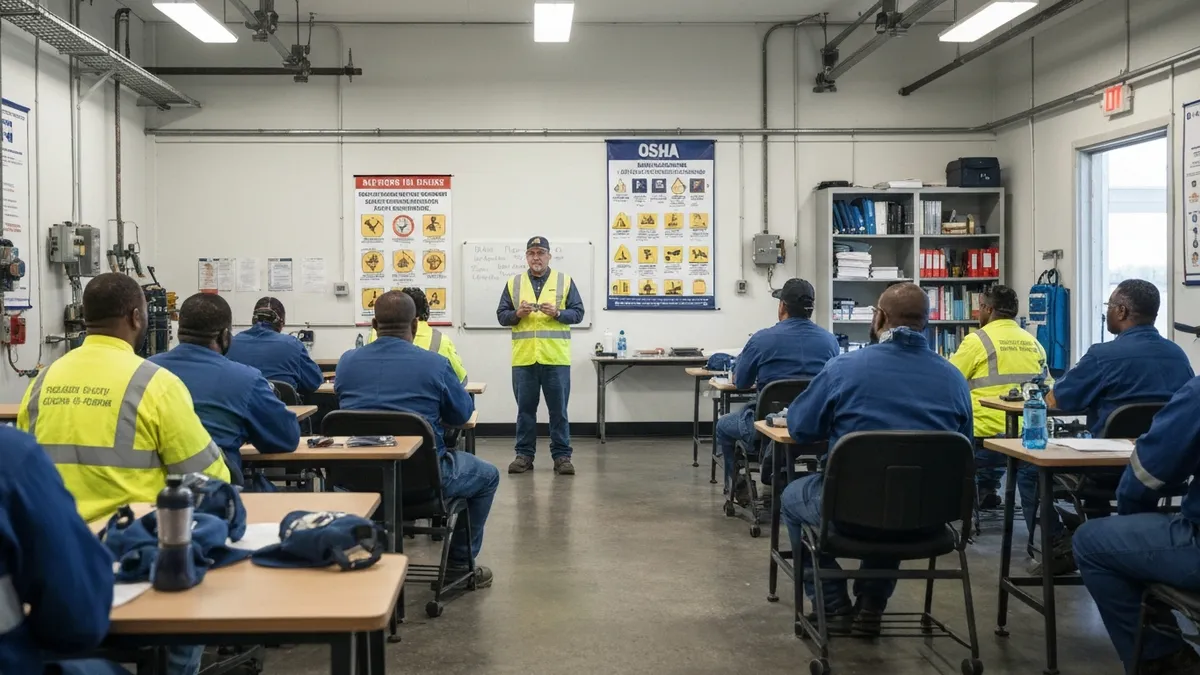
Training is a critical component of compliance with OSHA surface standards. Employers must train workers to recognize trip hazard conditions, understand the quarter-inch threshold, know the proper procedure for reporting hazards, and understand temporary controls that may be used while permanent corrections are implemented. Training records should be maintained, with documentation of the date, the content covered, and the employees who participated. For crane operators preparing for certification exams, understanding these regulatory foundations is not just a safety requirement — it is part of the OSHA knowledge base tested on credentialing examinations.
Common Trip Hazard Types Found on OSHA-Regulated Worksites
Construction sites generate trip hazards at an exceptional rate due to the dynamic nature of the work. Exposed rebar stubs protruding above slab surfaces, uneven concrete pours with high edges, form lumber left in walkways, and temporary flooring panels with mismatched heights are among the most frequently cited surface hazards on active construction projects. OSHA compliance officers conducting construction inspections specifically look for these conditions in access corridors, staging areas, and the immediate surroundings of crane and equipment operation zones.
The quarter-inch threshold is particularly relevant in areas where concrete finishing transitions to adjacent surfaces. A concrete pour that is not properly screeded to match the height of an adjacent surface — even by as little as three-eighths of an inch — can create a trip hazard that results in a serious citation. Employers should assign a competent person to monitor all surface transitions during and immediately after concrete pours, and should document the height of all surface changes as part of their daily inspection records to demonstrate ongoing compliance with OSHA trip hazard height standards.

Proactive vs. Reactive Approaches to OSHA Trip Hazard Compliance
- +Prevents injuries before they occur, reducing workers' compensation costs and lost-time incidents
- +Demonstrates good-faith compliance efforts that can reduce OSHA penalty amounts if a citation is issued
- +Establishes a documented inspection record that protects employers in litigation
- +Builds a safety culture where workers actively identify and report surface hazards
- +Reduces equipment downtime caused by load drops or crane repositioning due to unstable ground surfaces
- +Qualifies employers for OSHA's Voluntary Protection Programs (VPP), which provide recognition and reduced inspection frequency
- −Requires ongoing investment of time and labor for daily pre-shift surface inspections
- −Surface repairs on active construction sites may need to be repeated as work conditions change
- −Measuring and documenting every surface transition adds administrative burden to foremen and safety officers
- −Temporary controls such as ramps and fill materials may be displaced by equipment movement, requiring repeated correction
- −Workers may become desensitized to frequent hazard reports if the volume of findings is high and repairs are slow
- −Compliance with both OSHA standards and ADA guidelines can create confusion about which threshold or specification applies in a given situation
OSHA Trip Hazard Height Compliance Inspection Checklist
- ✓Measure all surface transitions in walking areas and verify no vertical change exceeds 0.25 inches without beveling or ramping.
- ✓Inspect all floor-to-threshold transitions at doorways, dock levelers, and between rooms for height irregularities.
- ✓Check crane pad and outrigger mat edges for height differentials above surrounding grade that could catch a worker's foot.
- ✓Verify all expansion joint fillers are flush with the surrounding floor and have not receded below the surface level.
- ✓Confirm all temporary flooring panels and trench covers are level with adjacent surfaces and secured against displacement.
- ✓Inspect access walkways and platforms on crane and aerial work equipment for non-compliant surface changes or unsecured grating.
- ✓Document all findings with photographs, measurements, and location descriptions in the daily hazard inspection log.
- ✓Assign corrective actions with a responsible party and a target completion date for each identified trip hazard.
- ✓Post temporary warning signs or barricades immediately for any trip hazard that cannot be corrected before the next work shift.
- ✓Verify completed repairs bring the surface to within the quarter-inch threshold and document the verification with a follow-up inspection entry.
The Quarter-Inch Rule: OSHA's Trip Hazard Threshold in Practice
OSHA compliance officers use the quarter-inch (0.25-inch) vertical height change as the standard trip hazard threshold when evaluating walking surfaces, derived from ADA Accessibility Guidelines. Surface changes between 0.25 and 0.5 inches must be beveled at no steeper than a 1:2 slope. Any change exceeding 0.5 inches must be ramped. Knowing these specific measurements — not just the general concept — is critical for both daily compliance and for answering OSHA exam questions accurately.
When OSHA enforcement officers identify trip hazard violations during workplace inspections, they have the authority to classify citations across several severity levels, each carrying different penalty implications. The classification determines whether a violation is characterized as Other-Than-Serious, Serious, Willful, or Repeat — and the distinction matters significantly for employers facing penalty assessments. Understanding how enforcement officers make these determinations can help employers prioritize their compliance investments and avoid the most costly outcomes.
A Serious violation is issued when the hazard could cause death or serious physical harm and the employer knew or should have known of the hazard. For trip hazards, this means that if a surface irregularity exceeds the quarter-inch threshold in a high-traffic area, and the employer conducted no inspection or took no corrective action, the violation is likely to be classified as Serious.
Serious violation penalties under current OSHA schedules can reach $16,550 per item, and OSHA may issue one citation item per distinct hazardous condition, meaning a worksite with multiple non-compliant surfaces could face a significantly larger total penalty.
Willful violations — those where the employer intentionally and knowingly committed a violation or was aware that conditions were hazardous and made no reasonable effort to eliminate them — carry penalties up to $165,514 per violation as of the most recent OSHA penalty adjustments.
A Willful classification for trip hazard violations is most commonly issued when an employer received prior notice of the hazard (such as a worker complaint, a previous OSHA citation, or a documented internal inspection finding) and still failed to correct it. Courts have consistently upheld Willful citations in cases where documented evidence showed employer awareness without corrective action.
Repeat violations are issued when an employer has been cited for substantially similar conditions within the previous five years. The penalty for a Repeat violation is up to $165,514 per item, making repeat citations among the most expensive OSHA consequences an employer can face. Repeat classifications are particularly common in industries with high worker turnover where institutional knowledge of past citations may not be communicated effectively to new safety personnel. Maintaining a well-organized file of prior OSHA citations and tracking compliance with corrective actions is essential for avoiding repeat classifications.
OSHA's informal conference process allows employers to contest citations and negotiate settlements before formal litigation. During informal conferences, employers can present evidence of good-faith compliance efforts, demonstrate that the hazard has been corrected, or argue that the citation was misclassified. In many cases, OSHA will reduce penalty amounts for employers who demonstrate a strong safety program, rapid corrective action, and a genuine commitment to preventing recurrence. This process is most effective when employers maintain thorough documentation of their inspection and correction activities — exactly the kind of records that a robust trip hazard identification program generates.
State OSHA programs add another layer of complexity to enforcement. Twenty-two states and two territories operate their own OSHA programs approved by federal OSHA. These state plans must be at least as effective as federal OSHA but may adopt more stringent standards or higher penalties.
California's Division of Occupational Safety and Health (Cal/OSHA), for example, applies more detailed requirements for walking surfaces and can assess penalties that exceed federal amounts in some categories. Employers operating in states with approved state plans must be familiar with both the federal standards and any state-specific additions that may apply to trip hazard identification and correction.
Insurance carriers and workers' compensation programs increasingly use OSHA citation history as a factor in premium calculations and risk assessments. An employer with a history of trip hazard citations — even if all penalties were paid and violations corrected — may face higher premiums, increased audit frequency, and additional requirements from their insurer.
Some insurers require employers with prior surface-related citations to implement formal written hazard identification programs, conduct third-party audits, or provide documented evidence of employee training as a condition of continued coverage. These secondary financial consequences of OSHA citations can equal or exceed the direct penalty costs over a multi-year period.
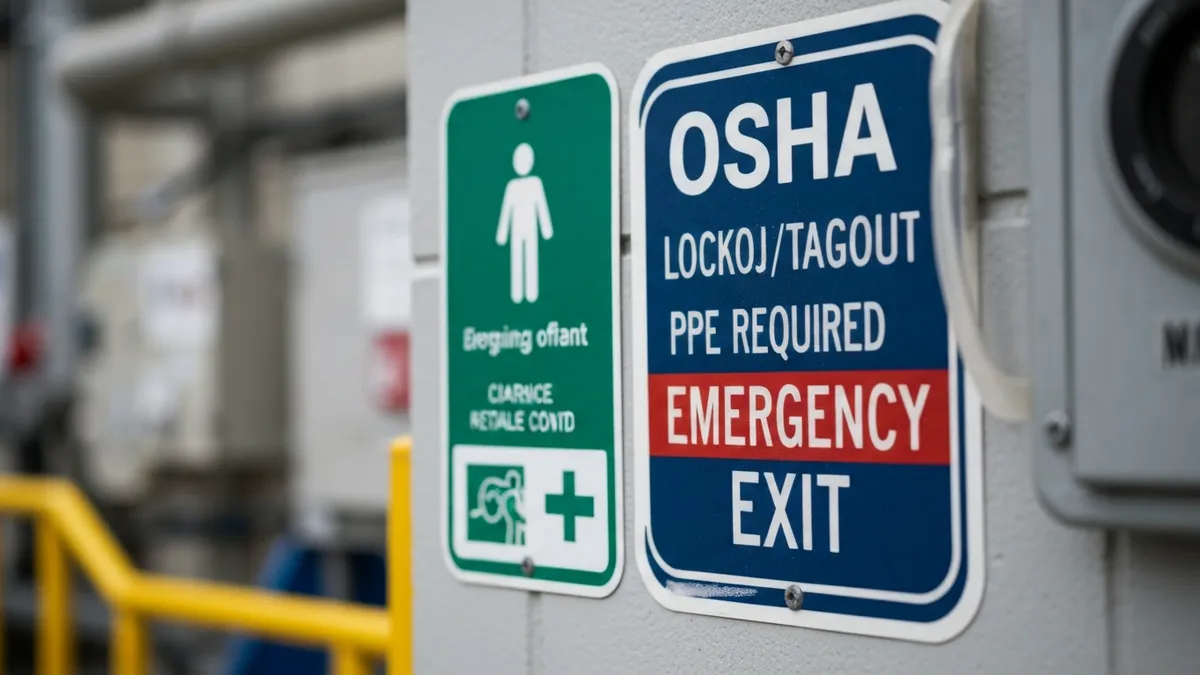
OSHA does not require an injury to occur before issuing a citation for a trip hazard violation. The presence of a surface irregularity exceeding the quarter-inch threshold is itself sufficient for a Serious citation. Employers who are aware of a hazard and delay correction — even for a few days — risk both a higher penalty classification and potential Willful designation if the hazard causes an injury before it is fixed. Correct identified trip hazards immediately or barricade them until permanent repairs can be completed.
Developing and maintaining an effective trip hazard prevention program requires more than periodic inspections and reactive repairs. Best-practice employers integrate trip hazard identification into every phase of project planning, from site design and surface selection through daily operations and closeout. This systematic approach reduces the frequency of hazards that reach the threshold requiring correction and creates a documented trail of compliance activity that serves both safety and regulatory purposes.
Site design is the most cost-effective point for addressing trip hazard risk. When flooring materials, surface transitions, and access routes are selected and laid out with OSHA's quarter-inch threshold in mind, the number of correction events that occur during operations drops dramatically. Specifying flooring materials with consistent thickness, designing smooth transitions between different surface types, and planning access routes that avoid areas subject to settlement or equipment-induced surface damage all reduce the baseline trip hazard risk that workers face throughout the project lifecycle.
Employee involvement is a force multiplier for any trip hazard prevention program. Workers who spend hours each day traversing job site surfaces notice developing hazards long before they appear on a scheduled inspection. Employers should create formal mechanisms for workers to report observed hazards — including anonymous reporting channels for workers who may fear retaliation — and should establish a visible feedback loop that shows workers their reports result in action. Recognition programs that acknowledge workers for identifying and reporting hazards can significantly increase the volume and quality of hazard reports received.
Technology is increasingly available to support trip hazard identification and documentation. Digital inspection apps allow safety personnel to photograph, GPS-tag, and log surface hazards directly to a cloud-based safety management system. These platforms automatically generate corrective action assignments, track completion, and produce compliance reports that can be provided to OSHA inspectors on demand. Some employers have begun using drone-based photogrammetry to create three-dimensional surface maps of large work areas, enabling precise measurement of surface height variations across areas that would take hours to inspect manually.
Training programs for trip hazard prevention should go beyond regulatory awareness to include practical skill development. Workers should be taught how to physically measure surface height differences using a straightedge and depth gauge, how to install temporary ramps or bevels correctly, how to set up effective barriers and warning systems for hazards that cannot be immediately corrected, and how to document findings in the employer's hazard tracking system. Hands-on training exercises using actual surface conditions found on the specific job site tend to produce better retention and application than classroom-only instruction.
Contractors and subcontractors working on multi-employer worksites have specific obligations under OSHA's multi-employer worksite doctrine. The controlling employer — typically the general contractor — has an obligation to correct hazardous conditions on the site even if the controlling employer's own workers are not exposed to those conditions.
This means that a general contractor whose subcontractor creates a trip hazard in a shared-use access corridor is responsible for ensuring the hazard is corrected, even if the general contractor's crew does not walk that specific route. Clear contractual language and daily coordination between the general contractor's safety personnel and subcontractor supervisors are essential for managing this shared compliance obligation effectively.
For workers preparing for OSHA certification exams, mastery of trip hazard standards represents a core knowledge area that appears across multiple question categories. Surface safety questions on OSHA exams may address the specific height threshold, the applicable standard numbers, the hierarchy of corrective controls, documentation requirements, or penalty structures for violations.
Candidates who understand not just the quarter-inch rule but the broader regulatory context — which standards apply in which industries, how enforcement officers classify violations, and what corrective options are available to employers — will be better prepared for both the exam and for applying this knowledge in real workplace situations.
Applying OSHA trip hazard height standards in practical day-to-day operations requires both knowledge and consistent habits. Safety professionals and crane operators who have internalized these standards approach every new work area with the same disciplined eye: scanning surfaces for irregularities, mentally measuring transitions against the quarter-inch benchmark, and identifying the corrective action required before the next worker traverses the area. This habit of observation, practiced consistently, is what separates worksites with strong safety records from those that accumulate citations and injury claims over time.
Pre-shift inspections are the single most effective operational tool for trip hazard prevention. A well-designed pre-shift checklist prompts the inspector to evaluate every defined walking surface in the work area systematically, rather than relying on visual sweeps that may miss subtle surface changes.
The checklist should include specific measurement steps for transitions that have previously been identified as borderline cases — areas where the height differential is close to the quarter-inch threshold and may change as temperatures, moisture, or equipment loads vary. Documenting these borderline conditions with measurements over time allows safety personnel to identify trends and schedule proactive corrections before the threshold is crossed.
Weather significantly affects surface conditions and trip hazard risk. Freeze-thaw cycles cause concrete and asphalt to heave and crack, creating surface irregularities that can develop overnight in cold climates. Heavy rain can wash away fill material used to level ground-level walking surfaces around crane pads and outrigger positions. Thermal expansion can cause floor joints and expansion gaps to change height as temperatures rise and fall throughout a work day. Employers in regions with significant weather variation should build weather-driven inspection protocols into their hazard identification programs, scheduling additional surface inspections after significant weather events.
Personal protective equipment plays a supporting role in trip hazard risk reduction, though OSHA's hierarchy of controls requires that engineering and administrative controls be prioritized over PPE. Slip-resistant footwear with adequate ankle support and a low heel height reduces the severity of outcomes when a trip occurs but does not eliminate the hazard itself.
Employers who rely primarily on PPE to manage trip hazard risk are likely to face citation classification as Serious or Willful, because the hazard itself has not been controlled — only the potential injury outcome has been partially mitigated. PPE requirements should be stated in the hazard control documentation as a supplementary measure, not a primary one.
Coordination with crane manufacturers and equipment rental companies is an underutilized resource for managing trip hazards in crane operation zones. Manufacturers can provide technical specifications for outrigger pad dimensions and rated ground bearing pressures, information that directly informs how crane pads are sized and positioned relative to surrounding grade.
Rental companies familiar with local soil and surface conditions can advise on the thickness and type of matting required to achieve a stable, level surface for crane setup. Equipment that is leveled correctly not only improves lift safety but also reduces the height differential between the crane pad surface and the surrounding grade, directly managing the trip hazard risk at the perimeter of the outrigger positions.
Safety leadership at the organizational level is the foundation on which all operational trip hazard controls depend. When senior leaders visibly prioritize surface safety — conducting their own pre-shift inspections, recognizing workers who report hazards, and holding supervisors accountable for documented compliance — the organizational culture shifts toward proactive identification and correction.
Research on safety culture consistently shows that the behavior of leaders is the strongest predictor of frontline worker safety behavior. An organization where leaders model the quarter-inch inspection mindset will generate fewer trip hazard violations, fewer worker injuries, and fewer OSHA citations than one where surface safety is treated as a compliance checkbox to be completed by junior personnel.
For those studying for the OSHA Certified Crane Operator exam or related OSHA certification programs, the practical application of trip hazard standards is a tested knowledge domain. Exam questions in this area often present scenario-based situations — a crane pad that is three-eighths of an inch above surrounding grade, a floor transition that has not been beveled, or an access walkway where a surface panel has shifted — and ask the candidate to identify the applicable standard, classify the severity of the hazard, or select the correct corrective action from a list of options.
Candidates who have studied not just the surface standards themselves but also the enforcement framework, the inspection process, and the hierarchy of corrective controls will be well positioned to answer these scenario questions correctly and confidently.
OSHA Questions and Answers
360 Training OSHA 10: Complete Guide to Online OSHA 10-Hour Construction and General Industry Certification Courses
OSHA (OSHA Certified Crane Operator) Test Guide

OSHA Flammable Cabinet Rules: Complete Guide to Storage Requirements, Compliance, and Workplace Safety

OSHA Fire Extinguishers: Complete Guide to Workplace Fire Safety Standards and Compliance

OSHA 100: Complete Guide to Crane Safety Awareness Training and Certification
About the Author

Certified Safety Professional & OSHA Compliance Expert
Indiana University of Pennsylvania Safety SciencesDr. William Foster holds a PhD in Safety Science from Indiana University of Pennsylvania and is a Certified Safety Professional (CSP) and Certified Hazardous Materials Manager. With 20 years of occupational health and safety management experience across construction, manufacturing, and chemical industries, he coaches safety professionals through OSHA certification, CSP, CHST, and safety management licensing programs.
Join the Discussion
Connect with other students preparing for this exam. Share tips, ask questions, and get advice from people who have been there.
View discussion (8 replies)