
OSHA Fire Extinguishers: Complete Guide to Workplace Fire Safety Standards and Compliance
Master OSHA fire extinguisher requirements for the workplace. ✅ Placement, inspection, training rules & compliance tips for US workers.

OSHA fire extinguishers regulations are among the most consequential workplace safety standards that American employers must understand and follow. Under 29 CFR 1910.157, the Occupational Safety and Health Administration sets detailed rules governing how fire extinguishers are selected, placed, inspected, maintained, and how workers are trained to use them.
Whether you manage a construction site, a manufacturing floor, or a general office environment, knowing these rules is not optional — violations carry steep fines and, more critically, can cost lives when a fire breaks out unexpectedly. Employers who take these standards seriously build workplaces where workers feel confident responding to small fires before they escalate into catastrophic events.
Understanding the full scope of osha fire extinguishers requirements starts with recognizing that OSHA does not mandate portable fire extinguishers in every workplace situation. Employers have two fundamental options: provide extinguishers and train workers to use them, or implement a written policy requiring total evacuation when a fire starts. If an employer chooses evacuation-only, no extinguishers are required and the regulations under 1910.157 largely do not apply. However, if extinguishers are provided — even voluntarily — the full suite of OSHA inspection, maintenance, and training rules kicks in automatically, making it essential to understand exactly what compliance entails.
The fire classes recognized by OSHA directly influence which extinguisher types must be available in a given workspace. Class A fires involve ordinary combustibles like wood, paper, and cloth. Class B fires involve flammable liquids and gases such as gasoline, oil, and propane. Class C fires involve energized electrical equipment.
Class D fires involve combustible metals, and Class K fires involve cooking oils and fats in commercial kitchens. Selecting the wrong extinguisher class for the hazards present in your facility is a compliance failure and a genuine safety hazard — using a water extinguisher on a Class B fire, for example, can cause a violent flare-up that turns a small incident into a serious emergency.
OSHA placement requirements are specific and non-negotiable. For Class A hazards, extinguishers must be positioned so that no worker has to travel more than 75 feet to reach one. For Class B hazards involving flammable liquids, that maximum travel distance drops to 50 feet. Class C extinguishers follow the travel distance of the underlying A or B hazard they co-address.
These distances are measured along a walking path, not as a straight line through walls or obstructions, which means facility layout genuinely affects how many units you must install. In high-hazard environments, OSHA may require even shorter travel distances, so always consult the specific standard that applies to your industry sector.
Inspection is a cornerstone of OSHA fire extinguisher compliance, and the standard distinguishes between two types: monthly visual checks and annual maintenance inspections. Monthly checks must be performed by a designated employee who verifies that the extinguisher is in its assigned location, has not been obstructed or tampered with, and that the pressure gauge reads within the operable range.
Annual maintenance goes much deeper — a trained professional must examine the mechanical components, check the agent charge, verify that seals and tamper indicators are intact, and document the inspection on a tag attached to the unit. Failing to maintain these records is itself a citable violation, separate from any underlying equipment deficiency.
Training is the element of OSHA fire extinguisher compliance that employers most frequently underestimate. The standard requires that when extinguishers are provided for employee use, workers must receive initial training upon hire and then annual refresher training. This training must cover the general principles of fire extinguisher use, the hazards involved in incipient-stage firefighting, and the evacuation procedures workers should follow if a fire grows beyond the capacity of a portable extinguisher.
OSHA does not require hands-on live-fire training — classroom and video instruction can satisfy the requirement — but employees must genuinely understand how to operate an extinguisher, recognize when to use it, and when to abandon the attempt and evacuate immediately.
The consequences of non-compliance with OSHA fire extinguisher standards extend well beyond regulatory fines. When a workplace fire occurs in a facility with inadequate extinguisher coverage or untrained employees, the results can be catastrophic: injuries, fatalities, property destruction, business interruption, and civil liability.
OSHA citations for serious violations can reach $16,131 per violation as of 2024, and willful or repeat violations can reach $161,323 per instance. Beyond the financial penalties, a documented history of fire safety violations can affect insurance rates, contractor eligibility, and public reputation. Building a robust fire extinguisher compliance program is one of the most cost-effective investments an employer can make in long-term workplace safety.
OSHA Fire Extinguishers by the Numbers

OSHA Fire Extinguisher Types and Classifications
Designed for ordinary combustibles like wood, paper, cloth, and plastic. Water, foam, and multipurpose dry chemical agents are all effective. Required within 75 feet of any Class A hazard in most general industry settings.
For flammable liquids and gases including gasoline, paint, and solvents. CO2, dry chemical, and foam types are approved. Maximum travel distance is reduced to 50 feet due to faster fire spread in liquid fuel fires.
Used on energized electrical equipment. Must be non-conductive agents — CO2 or dry chemical. Travel distance follows the underlying A or B hazard. Never use water on electrical fires due to electrocution risk.
Class D handles combustible metals like magnesium and titanium; requires specialized dry powder agents. Class K covers commercial cooking oils and fats using wet chemical agents rated for high-temperature grease fires.
Proper placement and mounting of fire extinguishers are among the most frequently cited deficiencies during OSHA workplace inspections, yet they are also among the easiest standards to satisfy with a systematic approach. OSHA 29 CFR 1910.157(c) requires that extinguishers be installed on hangers or in brackets, in cabinets, or positioned on shelves where they are visible and accessible at all times.
Units must never be placed behind equipment, inside locked rooms without universal access, or in locations where they can be blocked by stored materials. OSHA also specifies that extinguishers must not be installed in areas where temperatures fall outside the range specified by the manufacturer, since extreme cold or heat degrades both the agent and the operating mechanism.
Height requirements for mounted extinguishers are precise and designed to ensure safe handling by a wide range of worker body types. Extinguishers weighing 40 pounds or less must be installed so that the top of the unit is no more than 5 feet above the floor. Heavier units — those exceeding 40 pounds — must be mounted with the top no higher than 3.5 feet from the floor.
This distinction exists because heavier extinguishers require two-handed operation and can cause musculoskeletal injuries if a worker must reach overhead to pull them from a bracket. The minimum clearance from the floor is 4 inches for any extinguisher, which prevents units from sitting directly on damp or dirty surfaces that could accelerate corrosion of the cylinder.
Visibility is a key factor in OSHA placement compliance that goes beyond simply hanging a unit on a wall. Extinguishers must be readily visible, which OSHA interprets as being identifiable without searching. In areas where extinguishers might not be immediately visible due to equipment, shelving, or room layout, employers must post location signs or use directional arrows that workers can see from a distance.
In large open warehouses, facilities commonly hang overhead signs with fire extinguisher symbols to guide workers across long sightlines. In multi-story buildings, extinguishers are typically required on every floor, with placement near stairwells to allow access during evacuation scenarios where workers may not be able to return to their primary work area.
Travel distance calculations deserve special attention because OSHA measures the path a worker actually walks — not the straight-line distance between two points. In facilities with complex floor plans, machinery arrangements, or partitioned areas, the actual walking path to the nearest extinguisher can be significantly longer than it appears on a building schematic.
Safety managers should conduct walk-through surveys with a measuring wheel or digital distance tool to verify compliance, not simply estimate based on blueprints. In facilities where hazard zones change seasonally or with production shifts — for example, warehouses that reconfigure storage layouts — extinguisher placement should be reassessed whenever the floor plan changes significantly to ensure travel distances remain within OSHA limits.
Outdoor work environments and construction sites present unique placement challenges that OSHA addresses through specific standards in 29 CFR 1926 for construction. Portable fire extinguishers must be available within 100 feet of where more than 5 gallons of flammable or combustible liquids are being used or stored.
Vehicles and equipment that carry flammable materials — fuel trucks, welding rigs, generator sets — must carry appropriate extinguishers rated for the hazards on board. In crane operations specifically, the operator cab must have an extinguisher accessible without the operator leaving the cab during emergency situations, reflecting the reality that crane fires can escalate rapidly at height where traditional emergency response is delayed.
Cold weather and extreme heat environments add another layer of complexity to extinguisher placement compliance. Water-based extinguishers cannot be stored in environments that fall below 40 degrees Fahrenheit without freeze protection, so outdoor installations in northern climates during winter require either insulated cabinets with heating elements or replacement with CO2 or dry chemical units rated for cold temperatures.
Conversely, extinguishers stored in direct sunlight in hot climates can experience pressure buildup that affects gauge readings and may trigger a discharge. Employers operating in these environments should consult both OSHA placement standards and the manufacturer's operating temperature specifications — the more restrictive of the two governs the installation requirement.
Finally, extinguisher placement must account for the dynamic nature of workplaces where machinery is moved, renovations are completed, or new processes are introduced. An extinguisher program that was compliant when initially installed can fall out of compliance within months if facility changes are not documented and reviewed against OSHA requirements. Best practice is to designate a fire safety coordinator who reviews placement as part of the monthly visual inspection process, flagging any changes in hazard zones, travel distances, or mounting conditions that require corrective action before the next formal OSHA inspection cycle.
OSHA Fire Extinguisher Inspection and Maintenance Standards
OSHA requires monthly visual inspections of every portable fire extinguisher in the workplace. During these checks, a designated employee verifies that each unit is in its assigned location, unobstructed, and has not been discharged or tampered with. The pressure gauge must read in the green operating range, the pull pin must be intact with the tamper seal in place, and the exterior of the cylinder must show no visible damage, corrosion, or leakage. Any deficiencies found must be corrected immediately and documented in the inspection log.
Monthly inspections must be recorded, and OSHA accepts either a tag attached to the extinguisher or an electronic log system as documentation. The record must show the month and year of the inspection and identify the person who performed it. Units that fail the monthly visual check must be removed from service and replaced with a fully operational extinguisher before the deficient unit is sent for repair or recharge. Never leave an empty bracket in service — even a brief gap in extinguisher coverage constitutes a violation if OSHA conducts an inspection during that period.

Portable Fire Extinguishers vs. Evacuation-Only Policies
- +Workers can suppress incipient fires before they spread, reducing property damage significantly
- +Provides an immediate response option while fire department response is en route
- +Trained employees feel more confident and empowered during emergency situations
- +Can prevent business interruption losses that result from uncontrolled fire spread
- +Demonstrates proactive safety culture to OSHA inspectors and insurance carriers
- +Reduces risk of injury from smoke inhalation during early-stage fire events
- −Requires ongoing training, inspection, and maintenance costs to stay compliant
- −Untrained workers attempting to fight fires can put themselves in greater danger
- −Incorrect extinguisher selection can worsen a fire rather than suppress it
- −Workers may delay evacuation while attempting to fight fires that are beyond control
- −Annual maintenance and six-year internal inspections add recurring operational expenses
- −Improper placement or missed monthly checks create OSHA citation exposure
OSHA Fire Extinguisher Compliance Checklist
- ✓Select the correct extinguisher class for each fire hazard present in your facility.
- ✓Ensure Class A extinguisher travel distance does not exceed 75 feet from any worker location.
- ✓Ensure Class B extinguisher travel distance does not exceed 50 feet from flammable liquid areas.
- ✓Mount extinguishers so the top is no higher than 5 feet (40 lbs or less) or 3.5 feet (over 40 lbs).
- ✓Post visible signs or directional arrows wherever extinguishers are not immediately visible.
- ✓Conduct and document monthly visual inspections for all portable extinguishers.
- ✓Schedule annual maintenance by a certified fire equipment technician and update service tags.
- ✓Immediately recharge any extinguisher that has been partially or fully discharged.
- ✓Provide initial fire extinguisher training to all new employees upon hire.
- ✓Conduct annual refresher training covering fire classes, PASS technique, and evacuation procedures.
The PASS Technique Is Non-Negotiable in OSHA Training
OSHA requires that all trained employees know the PASS method: Pull the pin, Aim at the base of the fire, Squeeze the handle, and Sweep side to side. Workers who cannot demonstrate this technique during an inspection are considered untrained under 29 CFR 1910.157, which can trigger a citation even if all extinguishers are perfectly placed and maintained. Include a PASS demonstration in every annual refresher session.
OSHA fire extinguisher violations consistently rank among the top ten most frequently cited standards across general industry, and understanding the specific patterns of non-compliance is the most efficient way to build a program that withstands scrutiny. The single most common citation involves inadequate inspection records — not the absence of inspections, but the failure to document them in a manner that satisfies OSHA's recordkeeping requirements.
A monthly visual inspection that goes unrecorded is treated by OSHA as an inspection that never occurred. Employers must establish a formal log or tag system from day one and train the designated inspector on how to complete documentation properly, not just how to look at the extinguisher.
The second most frequently cited violation involves obstructed access to fire extinguishers. In active workplaces, boxes get stacked in front of wall-mounted units, equipment migrates into clearance zones, and seasonal storage changes block brackets that were once fully accessible. OSHA requires that extinguishers be accessible at all times, and even a temporary blockage discovered during an inspection is citable.
The practical solution is to incorporate extinguisher access zones into housekeeping policies, paint floor markings around extinguisher locations, and train supervisors to treat blocked extinguisher access the same way they treat other immediate hazard conditions — requiring correction before the end of the work shift.
Expired or overdue hydrostatic testing is another common violation that catches employers off guard because the testing intervals feel distant when extinguishers are first installed. Stored-pressure dry chemical units require hydrostatic testing every 12 years, while CO2 units require testing every 5 years.
Units that have not been tested within the required interval must be taken out of service even if they appear to be in excellent physical condition. Employers who inherit equipment from building purchases or facility transfers often discover that test dates are overdue, making it critical to audit the service history of all inherited fire safety equipment before assuming it is compliant.
Inadequate training documentation is a violation pattern that overlaps with the broader OSHA recordkeeping requirements but deserves specific attention in the fire extinguisher context. OSHA does not specify a precise format for training records, but expects employers to be able to demonstrate that each employee received instruction on extinguisher use.
Training logs should capture the employee's name, the date of training, the topics covered, and the name of the trainer. Electronic systems that require an employee login and electronic signature are increasingly popular because they create an automatic audit trail. Paper logs must be stored in a location where they can be retrieved quickly during an inspection — ideally in the same binder as the monthly inspection records.
Improper extinguisher type selection is a violation that often originates during initial facility setup and goes unaddressed for years. When a facility's processes change — adding a welding station, installing commercial cooking equipment, storing new chemical products — the hazard profile shifts, but the existing extinguisher inventory may not be updated to match.
OSHA expects employers to conduct a hazard assessment whenever operations change materially, and fire extinguisher selection should be part of that review. A Class A water extinguisher that was appropriate for a storage room before it became a chemical mixing area is now not only non-compliant but actively dangerous if a Class B fire occurs.
Corroded, damaged, or visually defective extinguishers that remain in service represent both a safety hazard and a compliance failure. Monthly visual inspections are specifically designed to catch physical deterioration before it becomes a critical failure, but inspection programs sometimes treat the process as a checkbox exercise rather than a genuine assessment.
Inspectors should be trained to recognize early signs of corrosion at the cylinder base, cracked or brittle hose materials, bent or damaged discharge nozzles, and pressure gauges with cracked faces or stuck needles. Any of these conditions require immediate removal from service, and the documentation should specify the exact deficiency observed so the servicing technician can address the root cause rather than simply recharging a compromised unit.
Finally, the failure to have a written fire safety program that encompasses extinguisher policy is a systemic violation that underlies many of the individual compliance failures described above. OSHA does not explicitly require a standalone fire extinguisher policy document, but the combination of requirements under 1910.157 — hazard assessment, selection, placement, inspection, maintenance, training, and evacuation integration — effectively demands a written program to be administered consistently. Employers with written programs are significantly better positioned during OSHA inspections because they can demonstrate deliberate compliance management rather than ad hoc responses to regulatory pressure.
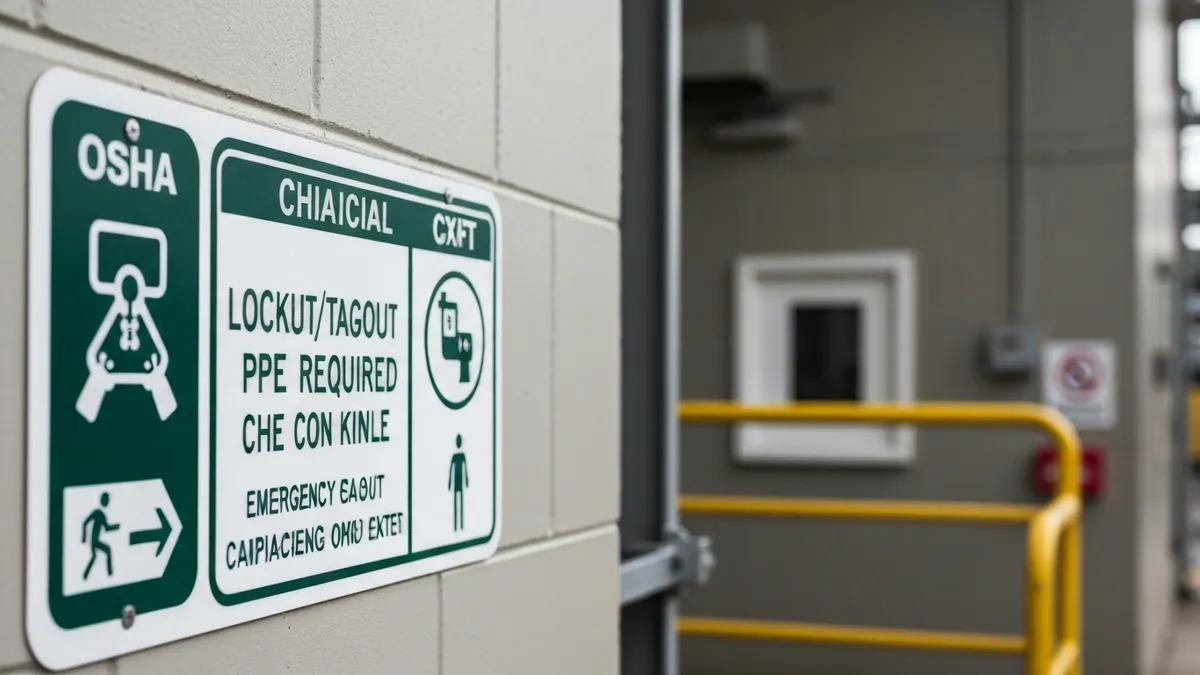
OSHA training requirements emphasize that portable fire extinguishers are effective only on incipient-stage fires — fires that are small, contained, and have not yet spread to surrounding materials. If a fire has spread beyond the immediate ignition point, produces heavy smoke that impairs visibility, or involves structural materials, workers must evacuate immediately and call 911. Attempting to fight a growing fire with a portable extinguisher is the leading cause of fire-related worker fatalities in OSHA-regulated workplaces.
Building a comprehensive OSHA fire extinguisher compliance program requires moving beyond reactive maintenance and toward a proactive safety management system. The foundation of any effective program is a thorough facility hazard assessment that catalogs every fire risk by location, hazard class, and severity. This assessment should be documented, dated, and reviewed on a schedule tied to operational changes in the facility — not just on an annual calendar cycle.
When the assessment is complete, the extinguisher selection and placement plan flows directly from the hazard map, creating a logical, defensible rationale for every unit in the inventory. This documentation also serves as powerful evidence of good-faith compliance during OSHA inspections and in any post-incident legal proceedings.
Designating and training a fire safety coordinator is one of the highest-return investments an employer can make in extinguisher compliance. This individual does not need to be a full-time safety professional in smaller organizations — a trained line supervisor or facilities manager can fill the role effectively with proper instruction.
The coordinator should understand the applicable OSHA standards in detail, be capable of conducting monthly inspections, and have authority to remove deficient equipment from service and order replacements without bureaucratic delay. When the coordinator position is embedded in the organizational chart with clear responsibilities and reporting lines, compliance becomes a continuous operational function rather than a periodic scramble before scheduled inspections.
Vendor relationships are a practical cornerstone of extinguisher compliance that many employers undervalue. A reliable fire equipment service company provides not just annual maintenance but also strategic advice on equipment selection, placement optimization, and emerging regulatory changes.
Employers should vet vendors carefully, confirming that technicians are certified by NAFED (National Association of Fire Equipment Distributors) or a comparable credentialing body, and that the company carries adequate liability insurance. Service agreements that include automatic scheduling of annual maintenance and six-year internal inspections remove the risk of missed service deadlines that are among the most common sources of OSHA citations in mature compliance programs.
Training program design significantly affects both employee retention of safety information and OSHA compliance status. Research on workplace safety training consistently shows that hands-on practice produces better knowledge retention than lecture or video-only instruction. While OSHA does not require live-fire training, many safety-conscious employers partner with local fire departments or training providers to offer annual outdoor live-fire exercises where employees can practice the PASS technique on controlled training fires.
These sessions create memorable, visceral understanding of how quickly fires escalate and how physically demanding extinguisher operation can be — context that cannot be replicated through video alone. Training records from these sessions should capture attendance, content, and any employee-specific performance observations.
Integration of fire extinguisher policy with the broader emergency action plan (EAP) required under OSHA 29 CFR 1910.38 is a compliance step that many employers overlook. The EAP must include procedures for reporting fires, evacuation routes, assembly points, and methods for accounting for all employees after evacuation.
The fire extinguisher policy should explicitly define the decision point at which workers transition from attempting to suppress a fire to evacuating — typically framed as the time it takes to discharge one extinguisher, approximately 15-30 seconds. If the fire is not visibly suppressed within that window, evacuation is mandatory. This clear decision rule prevents the hesitation and second-guessing that can trap workers in dangerous conditions while they wait to see if the fire is dying down.
Regular drills that incorporate fire extinguisher scenarios are a high-value component of program maintenance that go beyond the minimum OSHA training requirement. Tabletop exercises where supervisors walk through fire response scenarios help identify gaps in communication chains, extinguisher location awareness, and evacuation trigger recognition.
Full evacuation drills conducted without advance notice provide the most realistic test of whether workers can execute the emergency action plan under stress conditions. Documenting these drills and reviewing them for lessons learned creates an ongoing improvement loop that strengthens compliance and saves lives simultaneously, making the investment in drill design and execution clearly worthwhile from both safety and regulatory perspectives.
Ultimately, the most effective OSHA fire extinguisher compliance programs share a common characteristic: they treat fire safety as a genuine operational priority rather than a regulatory burden to be minimized. When leadership communicates that extinguisher compliance matters — through visible equipment maintenance, meaningful training, and swift corrective action when deficiencies are found — that message permeates the workforce and creates a safety culture where workers take ownership of the extinguisher inspection process themselves.
This cultural dimension is impossible to mandate through regulation alone, but it is the factor that most reliably determines whether a workplace's fire safety program functions as designed when an actual emergency occurs.
Practical preparation for OSHA fire extinguisher compliance begins with a self-audit that does not require outside expertise. Walk every area of your facility with a copy of the relevant OSHA standards — 29 CFR 1910.157 for general industry or 29 CFR 1926.150 for construction — and a tape measure. Verify travel distances to the nearest extinguisher from every work station and every storage area.
Check that mounting heights meet the 5-foot and 3.5-foot thresholds. Confirm that every unit has a current service tag and a monthly inspection log. This first-person audit creates an immediate baseline picture of where your program is strong and where it has gaps that need correction before a formal inspection occurs.
When gaps are identified, prioritize corrective action by risk severity. An area with no extinguisher coverage for Class B flammable liquids is a higher priority than a unit whose monthly inspection log is missing one month's entry.
Regulatory compliance and genuine worker safety usually align in this prioritization, but occasionally they diverge — for example, a missing inspection record may generate a citation, but it poses less physical risk than an extinguisher that is present but has been obstructed by equipment. Address physical hazards first, then close documentation gaps, and finally implement system improvements that prevent the same deficiencies from recurring in the future.
Purchasing decisions for replacement or supplemental extinguishers should balance multiple factors: the hazard class match, the unit's rating (expressed as a number-letter combination like 2-A:10-B:C), ease of operation under stress, and environmental suitability. Multipurpose ABC dry chemical extinguishers are the most versatile choice for most general industry environments because they address the three most common fire hazard classes with a single unit type.
However, dry chemical agents leave a corrosive residue that can damage sensitive electronic equipment, so data centers, server rooms, and precision manufacturing areas often use CO2 or clean-agent extinguishers despite their higher purchase cost. Document the rationale for each extinguisher type selection as part of the hazard assessment record.
Worker engagement in the fire extinguisher program is one of the most powerful and underutilized compliance tools available to safety managers. Employees who understand why extinguisher placement rules exist — and who have personally walked through the facility locating every unit — retain that knowledge far longer than employees who received a passive lecture about extinguisher locations during new-hire orientation.
Consider incorporating extinguisher location identification as a hands-on component of all new employee orientations, requiring each new hire to physically locate the three nearest extinguishers to their workstation and describe the fire classes they address. This active learning approach converts orientation content into operational knowledge that workers can access under the stress of an actual emergency.
OSHA inspections often focus on fire extinguisher compliance as a leading indicator of broader safety culture quality. Inspectors who find excellent extinguisher records, well-maintained units, and evidence of meaningful employee training are likely to view the rest of the facility through a more favorable lens.
Conversely, obvious extinguisher deficiencies — a unit missing from its bracket, a tag showing annual maintenance three years overdue, workers who cannot identify the nearest extinguisher — signal to inspectors that the safety program may have broader weaknesses worth investigating. Investing in fire extinguisher compliance is therefore a strategic choice that affects the outcome of inspections across all program areas, not just the fire safety standards themselves.
For employers in industries that also require OSHA certification — including crane operators who must comply with the operator certification requirements under 29 CFR 1926.1427 — fire extinguisher compliance is one component of a comprehensive safety management framework. Crane operations are particularly fire-vulnerable environments due to the presence of hydraulic fluids, electrical systems, and fuel-powered components at significant heights where conventional emergency response is delayed.
Crane operators should know the location of the extinguisher in the cab, how to operate it without leaving the operator station, and the conditions under which fire emergencies require immediate boom lowering and evacuation of the cab versus immediate evacuation without lowering the load.
The long-term return on investment from a well-run fire extinguisher compliance program is difficult to quantify precisely but clearly positive across every measurable dimension. Facilities with documented compliance programs experience fewer fire-related injuries, lower insurance premiums, faster return-to-operations after minor incidents, and stronger relationships with local fire departments and OSHA area offices.
Workers who trust that their employer takes fire safety seriously are more likely to report potential hazards proactively, creating a feedback loop that improves safety outcomes well beyond the fire extinguisher program itself. Starting with the fundamentals — correct equipment, proper placement, regular inspection, meaningful training — and building systematically toward a mature program is the path that delivers these benefits most reliably.
OSHA Questions and Answers

360 Training OSHA 10: Complete Guide to Online OSHA 10-Hour Construction and General Industry Certification Courses

OSHA (OSHA Certified Crane Operator) Test Guide

OSHA 100: Complete Guide to Crane Safety Awareness Training and Certification

What Makes OSHA Requirements Applicable for Federal Agencies: A Complete Guide

Does OSHA Cover Maritime? Complete Guide to OSHA Maritime Coverage, Jurisdiction, and Worker Protections
About the Author

Certified Safety Professional & OSHA Compliance Expert
Indiana University of Pennsylvania Safety SciencesDr. William Foster holds a PhD in Safety Science from Indiana University of Pennsylvania and is a Certified Safety Professional (CSP) and Certified Hazardous Materials Manager. With 20 years of occupational health and safety management experience across construction, manufacturing, and chemical industries, he coaches safety professionals through OSHA certification, CSP, CHST, and safety management licensing programs.
Join the Discussion
Connect with other students preparing for this exam. Share tips, ask questions, and get advice from people who have been there.
View discussion (8 replies)