
Does OSHA Cover Maritime? Complete Guide to OSHA Maritime Coverage, Jurisdiction, and Worker Protections
Does OSHA cover maritime workers? ✅ Learn which laws apply, how coverage works, and what protections exist for longshoremen, shipyard workers & more.
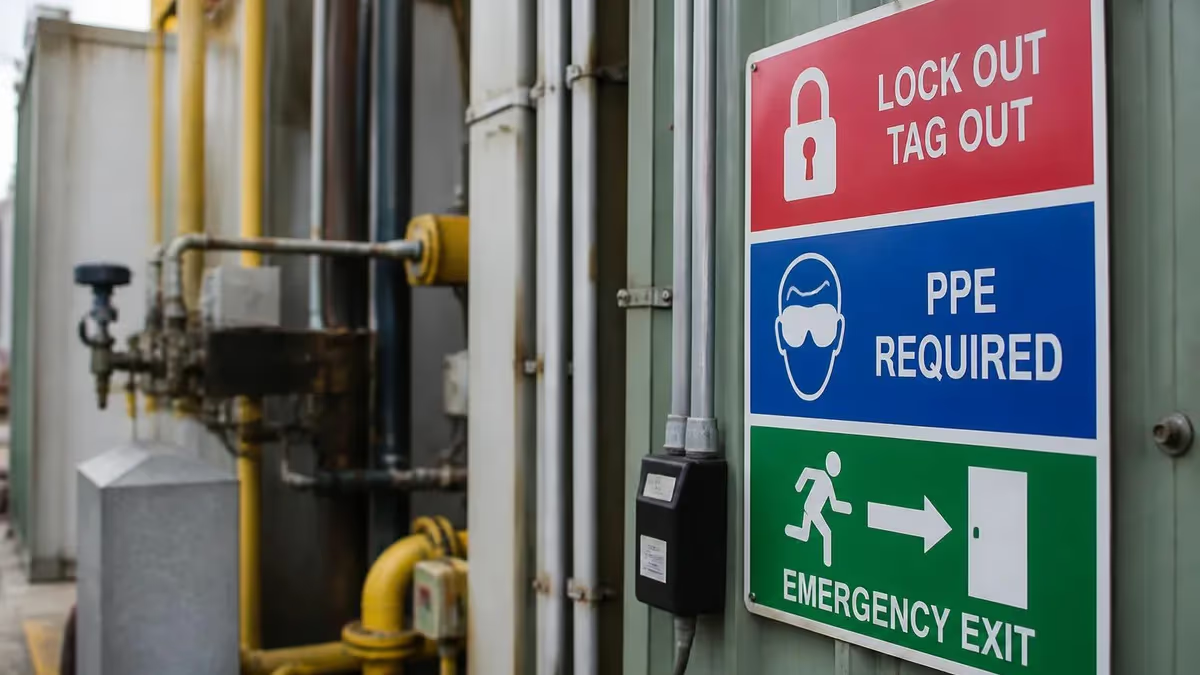
Does OSHA cover maritime workers? This is one of the most commonly misunderstood questions in occupational safety law, and the answer is more nuanced than a simple yes or no. The Occupational Safety and Health Administration does have authority over maritime industries, but that authority is shared with other federal agencies and specialized statutes that sometimes take precedence. Understanding exactly where OSHA's jurisdiction begins and ends can mean the difference between a worker receiving full federal protections and being left with a confusing patchwork of partial coverage.
Maritime work encompasses a remarkably broad range of occupations, from longshoremen loading container ships at major ports to shipyard welders repairing naval vessels, from harbor workers maintaining dockside facilities to crane operators hoisting cargo across vessel decks. Each of these roles may fall under a different legal framework depending on where the work occurs, what vessel or structure is involved, and whether the work is considered maritime commerce under federal definitions. OSHA has developed specific maritime standards precisely because general industry rules do not always translate to the unique hazards of waterfront environments.
The foundation of maritime safety law in the United States rests on three primary OSHA standards: 29 CFR Part 1915 for shipyard employment, 29 CFR Part 1917 for marine terminals, and 29 CFR Part 1918 for longshoring. Together, these regulations form a comprehensive framework that governs the vast majority of waterfront work performed by employees who are not actually sailing on vessels as crew members. Workers covered by these standards enjoy the same rights to a safe workplace, hazard reporting, and protection from retaliation as any other OSHA-covered employee in the United States.
However, maritime coverage becomes complicated at the intersection of OSHA authority and the United States Coast Guard, the Maritime Administration, and the Longshore and Harbor Workers' Compensation Act. The Coast Guard, for example, retains primary jurisdiction over vessels in navigation and the safety of crew members who are classified as seamen under admiralty law.
This means that a deckhand on a tugboat operating in navigable waters may not fall under OSHA's purview in the same way that a shore-based crane operator loading that same tugboat would. Navigating these distinctions requires workers and employers alike to understand the specific facts of each situation.
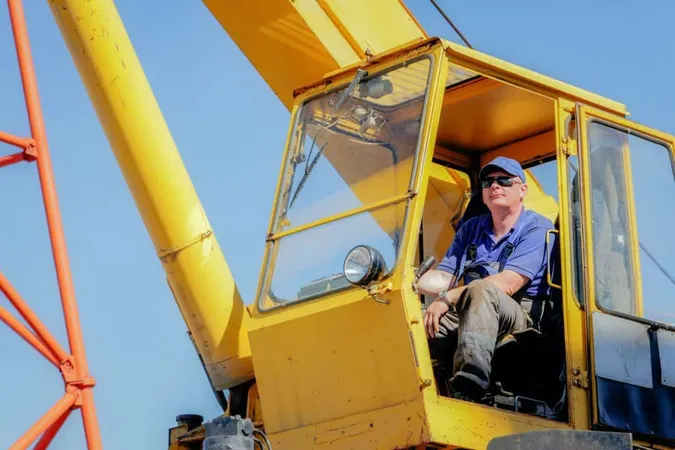
For workers in crane operations specifically, osha maritime coverage overlaps significantly with general OSHA crane and derrick standards, creating a layered set of requirements that crane operators near or over water must satisfy. A crane operator working on a marine terminal is subject to 29 CFR Part 1917 requirements, while a crane operator performing work aboard a vessel in drydock falls under the shipyard employment standard in Part 1915. Knowing which standard applies directly affects training requirements, inspection protocols, and certification obligations.
The practical stakes of maritime OSHA coverage are significant. In 2023, the Bureau of Labor Statistics reported that transportation and material moving occupations — which include many maritime roles — had one of the highest rates of fatal occupational injuries in the country. Waterfront environments introduce hazards including falls into water, being struck by swinging loads, exposure to confined spaces aboard vessels, and the dangers of working near energized equipment on unstable surfaces. OSHA's maritime standards are designed to address these specific risks through targeted requirements for fall protection, hazard communication, and equipment safety.
This guide breaks down every major dimension of OSHA maritime coverage: who is covered and who is not, which specific standards apply to different types of maritime work, how OSHA coordinates with other federal agencies, and what workers and employers need to know to stay compliant. Whether you are studying for an OSHA crane operator certification, managing a marine terminal, or working on the waterfront, understanding these rules is essential for both legal compliance and personal safety.
OSHA Maritime Coverage by the Numbers

Who Is Covered Under OSHA Maritime Standards
Employees who load, unload, move, or handle cargo on vessels or at docks. Covered under 29 CFR Part 1918 with specific standards for gangways, cargo handling, vehicle operations, and marine terminal equipment.
Workers who build, repair, break down, or outfit ships and floating structures. Covered under 29 CFR Part 1915, including welders, painters, pipefitters, and crane operators working in drydock or on vessels under construction.
Employees working at facilities that receive, handle, hold, and deliver waterborne shipments. Covered under 29 CFR Part 1917, addressing hazards from forklifts, cranes, conveyors, and waterfront infrastructure.
Operators working near or over water at marine terminals or shipyards must comply with both general crane standards (29 CFR 1926 Subpart CC) and applicable maritime OSHA parts depending on the specific worksite location.
The three core OSHA maritime regulations — 29 CFR Part 1915, Part 1917, and Part 1918 — each address a distinct segment of the maritime industry, and understanding the scope of each is essential for compliance. Part 1915, which governs shipyard employment, is the broadest of the three. It covers all work performed in connection with the construction, conversion, alteration, repair, breaking, and cleaning of vessels and vessel sections. This includes not just work performed aboard a ship but also work done in drydocks, graving docks, marine railways, and on floats or barges used in those operations.
Part 1917 addresses marine terminals and is perhaps the most operationally complex of the three standards because marine terminals blend maritime and general industry activities in a single location. The standard defines a marine terminal as a facility that receives, handles, holds, consolidates, and delivers waterborne shipments. This definition is broad enough to encompass not only traditional cargo docks but also certain warehouse facilities and distribution centers that are physically connected to waterfront operations. Within these facilities, OSHA exercises authority over virtually all work activities, from operating forklifts to maintaining overhead cranes used to position containers.
Part 1918, governing longshoring operations, focuses specifically on the act of loading and unloading vessels. It imposes detailed requirements for the rigging and use of ship's gear, for the safe operation of powered industrial trucks aboard vessels, and for the protection of workers from falls into holds and over the sides of ships.
Longshoring is statistically one of the most dangerous occupations in the United States, with fatality rates historically running five to seven times higher than the national average for all workers. Part 1918's requirements for cargo nets, draft limits, and safe working loads for ship's gear are direct responses to decades of injury and fatality data from American ports.
Beyond these three core standards, OSHA's general industry standards in 29 CFR Part 1910 apply to maritime facilities in situations not specifically addressed by Parts 1915, 1917, or 1918. This means that a shipyard that operates a machine shop or office building on its property must still comply with general industry electrical, ergonomics, and hazard communication standards for those areas.
Similarly, a marine terminal's maintenance garage would be subject to general industry standards for automotive repair and vehicle maintenance rather than the specialized maritime rules. This layered approach ensures that no worker is left unprotected simply because their specific task does not fit neatly into one of the maritime-specific standards.
One of the most practically important elements of OSHA's maritime standards is the confined space provisions in Part 1915 Subpart B. Vessels are filled with confined spaces — tanks, voids, double bottoms, and cofferdams — that present serious risks of oxygen deficiency, toxic gas accumulation, and engulfment.
Part 1915's confined space requirements are more stringent than the general industry confined space standard in many respects, requiring pre-entry atmospheric testing, forced air ventilation, and standby personnel for virtually all vessel tank entries. Workers unfamiliar with these heightened requirements have been seriously injured or killed by assuming that standard confined space procedures are sufficient in a shipyard context.
Fall protection in maritime environments is governed by a combination of the specific maritime standards and the general industry walking-working surfaces rules. Marine terminals, for example, must provide fall protection for workers at the edges of piers, wharves, and quays where a fall into the water or onto a lower deck would be likely. The distances and configurations involved in maritime fall hazards often differ substantially from those encountered in construction or general manufacturing, and OSHA's maritime-specific requirements reflect these differences with rules tailored to gangways, vessel gangplanks, and the edges of floating work platforms.
Hazard communication under the maritime standards also has unique features. Ship's crews and terminal workers routinely handle bulk chemicals, fuels, and specialty coatings that may not be labeled in the same way as containers in a standard industrial setting. OSHA requires that maritime employers maintain safety data sheets for all hazardous chemicals used in covered operations and that workers receive training adequate to allow them to identify and respond to chemical hazards specific to their work environment, including those that may be encountered when entering cargo spaces containing residual gases from prior shipments.
OSHA Maritime Jurisdiction: Key Distinctions Explained
The most significant jurisdictional divide in maritime safety law is between OSHA and the United States Coast Guard. The Coast Guard holds exclusive authority over vessel safety, crew certification, navigation equipment, and the working conditions of merchant mariners who are classified as seamen under the Jones Act. This means that the captain, officers, and unlicensed crew of a vessel in navigation are generally not covered by OSHA standards, even when performing tasks that would be OSHA-regulated if performed on shore by non-seamen employees.
OSHA's authority attaches when shore-based workers — including longshore workers, marine terminal employees, and shipyard workers — perform work on or near vessels that are not in navigation. When a ship is docked at a terminal for loading or unloading, or is in drydock for repairs, OSHA's maritime standards govern the safety of the non-crew workers performing those operations. The dividing line can be complex when vessels are partially manned while in port, but as a general rule, OSHA covers the work, not the vessel.

Federal Maritime Safety Law: Strengths and Gaps
- +Specialized maritime standards address unique waterfront hazards not covered by general industry rules
- +Federal preemption ensures uniform safety standards across all US ports regardless of state law
- +Workers retain OSHA complaint and whistleblower protection rights under the OSH Act
- +LHWCA provides strong federal compensation when maritime injuries occur despite safety precautions
- +OSHA's maritime confined space rules are among the most protective in federal safety law
- +Crane operators at marine terminals benefit from both crane-specific and maritime-specific OSHA standards
- −Jurisdictional overlap between OSHA, Coast Guard, and state agencies creates compliance complexity
- −Seamen aboard vessels in navigation are excluded from OSHA coverage entirely
- −Small maritime employers may lack resources to understand and implement all applicable standards
- −Maritime OSHA standards are updated less frequently than construction standards, creating potential gaps
- −Enforcement resources are limited relative to the number and geographic spread of maritime worksites
- −Workers near the OSHA/Coast Guard jurisdictional boundary may experience confusion about which agency to contact
Maritime Worker Safety Compliance Checklist
- ✓Verify which OSHA maritime standard (Part 1915, 1917, or 1918) governs your specific work activity and location
- ✓Ensure all confined space entries aboard vessels are preceded by atmospheric testing and documented in a permit system
- ✓Confirm that all crane operators at marine terminals hold current OSHA-compliant certification from an accredited testing organization
- ✓Maintain a current inventory of safety data sheets for all hazardous chemicals used in maritime operations
- ✓Inspect all rigging equipment, slings, and ship's gear before each use and document findings in a logbook
- ✓Provide fall protection for all workers exposed to unguarded edges of piers, vessel decks, and cargo holds
- ✓Train all workers on the specific emergency procedures for man-overboard events and vessel flooding
- ✓Conduct pre-shift safety briefings whenever crane operations are planned over or near water
- ✓Establish a hot work permit system for welding, cutting, and grinding operations aboard vessels and in shipyards
- ✓Audit your facility annually against the applicable OSHA maritime standard to identify and correct compliance gaps before an inspection
Federal OSHA Overrides State Plans for Maritime Work
Even if your business operates in a State Plan state like California, Washington, or Michigan, federal OSHA retains exclusive jurisdiction over all maritime employment covered by Parts 1915, 1917, and 1918. You cannot achieve compliance with federal maritime standards simply by following your state's OSHA rules — you must apply the federal maritime-specific regulations to all covered waterfront operations, regardless of which state your facility is located in.
Crane operators working in maritime environments face a uniquely complex web of OSHA requirements that draws from both the general crane and derrick standard at 29 CFR 1926 Subpart CC and the applicable maritime-specific standard depending on where the work is performed. A crane operator lifting cargo containers onto a vessel at a commercial marine terminal must comply with Part 1917 of OSHA's maritime standards, which includes requirements for the inspection and maintenance of cranes and derricks used in terminal operations, as well as requirements for the qualification and supervision of crane operators at those facilities.
Part 1917.45 specifically addresses cranes and derricks in marine terminal operations and imposes requirements that go beyond what general industry standards require. The standard mandates rated load markings on all cranes, prohibits the use of cranes with defective components for lifting operations, and requires that crane operators be competent — demonstrating by training, experience, and testing that they can safely operate the specific type of crane they are assigned to use.
Marine terminal crane operators must also be familiar with the load charts for their specific equipment and must refuse to perform any lift that would exceed the rated capacity of the crane.
In shipyards, crane operations are governed by Part 1915.116, which similarly requires that cranes be inspected before each use, that operators be qualified through training and testing, and that all lifts be planned with reference to the rated capacity of the equipment. Shipyard cranes frequently operate in confined quarters, over open water, and in proximity to other workers performing repair and maintenance tasks. These conditions create significant risks of load swing, contact with vessel structures, and dropped objects that require exceptional skill and planning from the crane operator and the lift supervisor.
The intersection of maritime crane operations and OSHA's general crane standard at 29 CFR 1926.1400 is a frequent source of confusion for employers. The construction crane standard was significantly revised in 2010 and again in subsequent rulemaking to require third-party certification for crane operators, but its application to maritime worksites has been the subject of ongoing regulatory interpretation. OSHA has generally taken the position that maritime employers must satisfy both the crane operator qualification requirements in the applicable maritime standard and any additional requirements imposed by the general crane rules to the extent those rules apply to their operations.
For workers seeking OSHA crane operator certification that will allow them to work in maritime settings, the most important certifications come from accredited testing organizations recognized by OSHA, such as the National Commission for the Certification of Crane Operators (NCCCO) or Crane Institute Certification (CIC). These organizations offer certifications for specific crane types — including lattice boom cranes, telescopic boom cranes, and overhead and gantry cranes — that are commonly used in marine terminal and shipyard settings. Achieving one of these certifications demonstrates the operator's knowledge of OSHA requirements, load chart interpretation, crane inspection, and safe operating practices.
Marine terminal crane operators who are certified and working under OSHA's maritime standards enjoy important legal protections. If an employer asks a certified operator to perform an unsafe lift — one that exceeds the crane's rated capacity, uses defective rigging, or would put workers in the path of a suspended load — the operator has both the right and the obligation under OSHA standards to refuse the task.
OSHA's anti-retaliation provisions under Section 11(c) of the OSH Act protect workers who exercise this right, prohibiting employers from disciplining, demoting, or terminating workers who report safety concerns or refuse demonstrably unsafe work.
Beyond certification, maritime crane operators must maintain their knowledge of site-specific hazards at the terminals and shipyards where they work. Wind conditions near open water can dramatically affect the behavior of suspended loads and must be factored into lift planning. Tidal changes can affect the height difference between a vessel's deck and a pier, changing the geometry of a lift during an operation. The stability of barges and floating cranes used for heavy lifts in harbor environments must be evaluated before every use, with stability calculations completed and documented by a qualified engineer when required by OSHA's maritime standards.
If you are a merchant mariner — a captain, officer, or unlicensed crew member who works aboard a vessel as part of the ship's permanent crew — you are generally NOT covered by OSHA's maritime standards. Your workplace safety is regulated primarily by the U.S. Coast Guard under the Safety of Life at Sea (SOLAS) conventions and domestic vessel inspection statutes. Filing an OSHA complaint about conditions aboard a vessel in navigation will typically result in a referral to the Coast Guard rather than an OSHA inspection.
Preparing for an OSHA maritime inspection requires a thorough understanding of what compliance looks like under the applicable standard, as well as a realistic assessment of where gaps may exist in your current safety program. OSHA's Area Offices that cover ports and waterfront areas typically have compliance officers with specialized training in maritime safety standards, and those officers are likely to examine your operations with a level of expertise that goes beyond what a general industry inspection might involve. Employers who have never received a maritime OSHA inspection are often surprised by the depth and specificity of the compliance review.
OSHA maritime inspections are typically triggered by one of four events: a worker fatality or catastrophic injury, a worker complaint filed through OSHA's online or telephone reporting system, a programmed inspection targeting high-hazard industries, or a referral from another federal agency such as the Coast Guard or the National Transportation Safety Board. Fatality inspections at marine terminals and shipyards receive priority handling and often result in multi-citation penalties if significant violations are found. Employers who experience a serious incident should immediately consult legal counsel and begin preserving all relevant records, equipment, and documentation while cooperating with OSHA's investigation requirements.
For crane operators specifically, an OSHA maritime inspection will focus intensively on operator certifications, pre-use inspection records, and load chart compliance. Inspectors will ask to see documentation showing that each crane operator has been evaluated and found competent for the type of crane they are operating, and they will examine maintenance logs to verify that required periodic inspections have been completed on schedule.
If an inspector finds that a crane has been operated in excess of its rated capacity, the employer faces potential willful violation citations, which carry penalties up to $156,259 per violation as of 2024 — substantially higher than the maximum for serious violations.
The most effective way to prepare for an OSHA maritime inspection is to conduct your own internal audit using the applicable OSHA standard as your guide. Walk through your facility with the specific requirements of Part 1915, 1917, or 1918 in hand, and document any conditions that may not fully satisfy those requirements.
Create a corrective action plan for each gap and assign responsibility for completing the correction within a defined timeframe. OSHA gives significant credit to employers who can demonstrate good-faith efforts to identify and correct hazards, and a documented internal audit program is one of the strongest indicators of that good faith.
Employee training is another critical element of maritime OSHA compliance that inspectors examine closely. Workers must receive initial training before they begin covered work, refresher training when hazards change or after an incident, and ongoing training to maintain their knowledge of current safe work practices. Training records must document the content of each training session, the date it was conducted, and the names of the employees who participated. Maritime employers who rely on informal or undocumented training programs frequently receive citations for training violations even when the substantive hazards in their facility are well controlled.
OSHA's maritime standards also require employers to investigate workplace incidents and near misses to identify root causes and prevent recurrence. An employer that has a strong incident investigation program — one that goes beyond simply filling out a workers' compensation first report of injury — demonstrates a commitment to continuous improvement that OSHA views favorably. Investigation findings should drive updates to safety procedures, equipment maintenance practices, and training programs rather than simply identifying the immediate cause of the incident. Workers who participate in incident investigations should be protected from retaliation for their honest account of what happened.
Finally, employers should be aware that OSHA provides free consultation services through its On-Site Consultation Program, which is separate from enforcement. Under this program, a trained consultant will visit your facility, review your safety program, and identify hazards and compliance gaps — all without issuing citations or sharing findings with OSHA enforcement staff. This is an exceptionally valuable resource for maritime employers who want to understand their compliance status before an enforcement inspection occurs. Taking advantage of consultation services demonstrates proactive engagement with workplace safety and can significantly improve your program before any formal OSHA contact occurs.
For workers and employers who want to fully understand OSHA maritime coverage and prepare for the OSHA Certified Crane Operator exam, a structured study approach that covers all relevant regulatory frameworks is essential. The OSHA crane operator certification exam tests knowledge not just of equipment operation but also of the regulatory landscape in which crane operators work, including the specific standards that apply in maritime and shipyard settings.
Candidates who study only the construction crane standard at 29 CFR 1926 Subpart CC without also reviewing the maritime-specific requirements may find themselves unprepared for questions about marine terminal and shipyard crane operations.
The most effective study plans for OSHA maritime and crane certification content divide preparation into several distinct phases. The first phase focuses on regulatory literacy — understanding the structure of the Code of Federal Regulations, how to read an OSHA standard, and which parts of the CFR apply to different types of maritime work. This foundational knowledge allows workers to look up specific requirements quickly during on-the-job situations and to understand the reasoning behind safety rules rather than simply memorizing them as disconnected facts. Regulatory literacy is a skill that pays dividends throughout a career in maritime safety.
The second phase of effective maritime OSHA study focuses on equipment-specific knowledge, particularly for crane operators. This includes understanding crane load charts, calculating net capacities under different boom angle and radius configurations, and knowing the inspection criteria that determine whether rigging hardware is fit for service. Marine terminal cranes often operate at or near rated capacity when handling fully loaded shipping containers, and crane operators in those environments must be completely comfortable with load chart interpretation under time pressure and in variable weather conditions.
The third study phase should address emergency procedures and incident response in maritime environments. OSHA's maritime standards require employers to have emergency action plans that address the specific hazards of waterfront work, including man-overboard procedures, vessel flooding response, and the handling of hazardous material spills at marine terminals. Workers who understand these plans — and who have practiced them in drills — are better positioned to respond effectively when emergencies occur and to avoid the secondary injuries that often happen when workers improvise responses to unanticipated crises.
Practice testing is one of the highest-value activities a worker can undertake in preparing for any OSHA certification exam or maritime safety assessment. Practice questions expose gaps in knowledge that reading alone may not reveal, reinforce correct answers through repetition, and build the test-taking confidence that allows candidates to perform at their best on exam day. The practice questions available through PracticeTestGeeks are specifically designed to reflect the content and difficulty level of actual OSHA certification exams, making them an invaluable resource for candidates at any stage of their preparation.
Finally, workers preparing for maritime OSHA certification should take advantage of every opportunity for hands-on learning in their actual work environment. Reading about the requirements for a pre-use crane inspection is valuable, but performing that inspection on a real crane — under the supervision of an experienced operator or safety professional — builds a depth of understanding that no amount of reading can fully replicate. Employers who invest in hands-on training for their crane operators and other maritime workers consistently see better safety outcomes and higher certification pass rates than those who rely exclusively on classroom instruction or self-study.
The combination of regulatory knowledge, equipment expertise, emergency preparedness, practice testing, and hands-on experience represents the complete package that a successful maritime safety professional needs. Whether you are just beginning your career on the waterfront or are an experienced operator seeking formal certification, the effort you invest in thorough preparation will pay off not just on the exam but throughout a career in one of the country's most challenging and rewarding industries. Use the resources available through PracticeTestGeeks to build that preparation systematically and confidently.
OSHA Questions and Answers
OSHA Restaurant Safety: Complete Guide to Workplace Compliance, Hazard Prevention, and Employee Training for Food Service Operations
360 Training OSHA 10: Complete Guide to Online OSHA 10-Hour Construction and General Industry Certification Courses
OSHA (OSHA Certified Crane Operator) Test Guide

OSHA 100: Complete Guide to Crane Safety Awareness Training and Certification

OSHA Safety Training Answers: Complete Guide to Crane Operator Certification Prep
About the Author

Certified Safety Professional & OSHA Compliance Expert
Indiana University of Pennsylvania Safety SciencesDr. William Foster holds a PhD in Safety Science from Indiana University of Pennsylvania and is a Certified Safety Professional (CSP) and Certified Hazardous Materials Manager. With 20 years of occupational health and safety management experience across construction, manufacturing, and chemical industries, he coaches safety professionals through OSHA certification, CSP, CHST, and safety management licensing programs.
Join the Discussion
Connect with other students preparing for this exam. Share tips, ask questions, and get advice from people who have been there.
View discussion (8 replies)