
OSHA Establishment Search and Man Basket Requirements: Crane Personnel Platform Rules Explained
🔎 Use the OSHA establishment search and learn OSHA requirements for man baskets: crane personnel platforms, proof tests, fall protection and inspections.
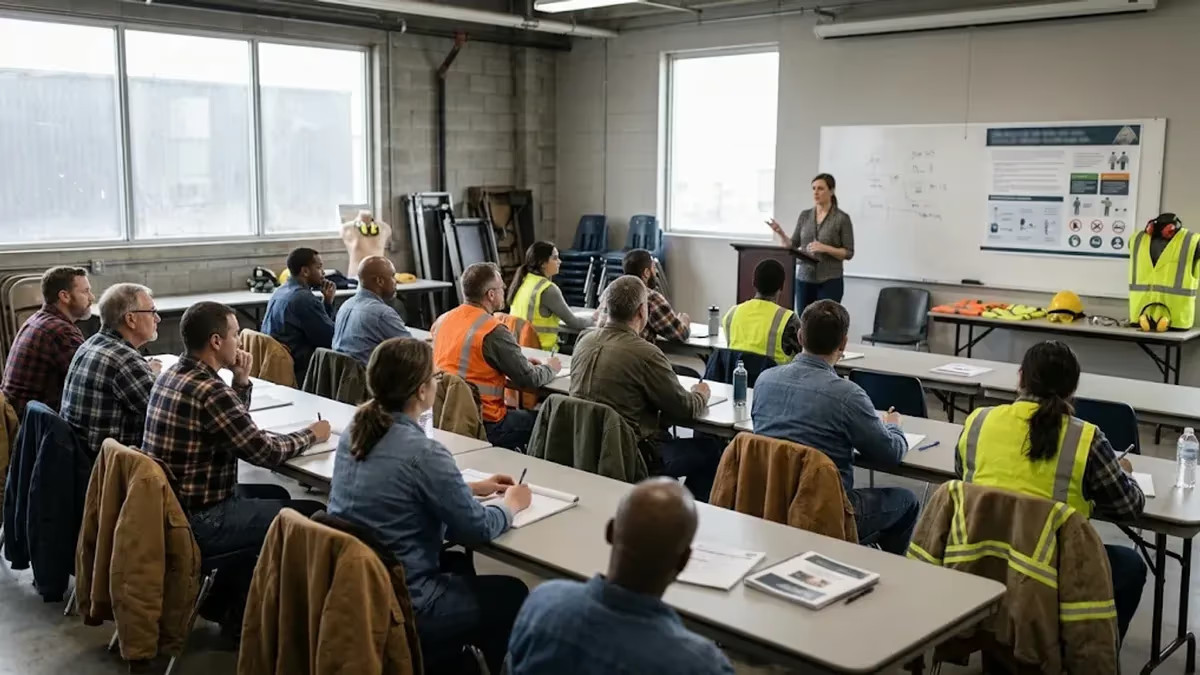
Anyone searching for OSHA requirements for man baskets is usually trying to answer one practical question: can we put people on a crane, and if so, what must be true before the hook leaves the ground? Some readers type it as "osha requierments for man baskets" and land here looking for the federal rule. The short answer is that 29 CFR 1926.1431 allows crane-hoisted personnel platforms only under tightly controlled conditions, with testing, documentation, and fall protection at every step. Practice with the free OSHA - OSHA Certified Crane Operator practice test on PracticeTestGeeks (21 questions with answer explanations).
A man basket, formally called a personnel platform, is a cage or platform suspended from a crane's load line to lift workers to elevated positions. OSHA treats it as an exception, not a convenience. The employer must show that conventional access, such as a scaffold, aerial lift, ladder, or stair tower, would be more hazardous or is impossible because of structural design or worksite conditions. Cost, speed, and convenience alone never justify hoisting a worker.
Why does OSHA hold such a firm line? Because the failure modes are severe. A two-blocking event, a rope failure, a sudden gust, or an operator distraction can drop a platform with several workers aboard. Falls remain the leading cause of death in construction, and crane incidents often involve multiple victims. The standard is written to stack redundant protections so that no single mistake can send a basket and its occupants to the ground.
Compliance starts well before the lift. The employer needs a qualified person to design the platform, a trained operator and signal person, a documented pre-lift meeting, a trial lift, and a proof test at 125 percent of the platform's rated load. Each requirement has its own paragraph in the rule, and inspectors check them one by one. Missing a single item, such as the posted capacity marking, can turn a clean job into a citation.
Enforcement data is public, which brings us to the OSHA establishment search. This free database on osha.gov lets you look up any employer's inspection history by name, state, industry code, and date range. Contractors use it to vet subcontractors, safety managers use it to benchmark peers, and workers use it to learn whether a crane company has prior serious violations. Reading real citations is one of the fastest ways to understand how the personnel hoisting rule is enforced.
This guide walks through the rule, the testing sequence, the inspection and documentation duties, and the most common citation patterns. It also shows how to run an establishment search and interpret the results. Fall protection ties directly into basket work, and our companion article covering osha requirements general for guardrails explains the barrier systems that every platform must match. Treat this page as awareness content, not a substitute for the regulation text.
One note before we begin: federal OSHA covers private-sector employers in many states, while roughly twenty-two states run approved State Plans that must be at least as effective and sometimes add stricter rules. Always confirm which agency has jurisdiction over your site. Whether you operate cranes, supervise riggers, or simply want to understand what a safe lift looks like, the sections below give you concrete numbers and steps you can verify against the regulation.
Free OSHA - OSHA Certified Crane Operator Study Tools
Interactive OSHA - OSHA Certified Crane Operator resources on PracticeTestGeeks, free to start:
- OSHA Electrical Hazards & Power Line Safety — 21 questions with instant scoring and answer explanations
- OSHA - OSHA Certified Crane Operator flashcards — review key terms and concepts card by card
- OSHA - OSHA Certified Crane Operator study guide — topic-by-topic overview of what the exam covers
- OSHA - OSHA Certified Crane Operator cheat sheet — one-page printable summary for last-minute review
Man Basket Rules by the Numbers

Four Gates Every Man Basket Lift Must Pass
The employer must show that scaffolds, aerial lifts, ladders, or stair towers are more hazardous or impossible because of structural design or site conditions. Document this reasoning in the lift plan before scheduling the crane, and keep it available for inspectors.
A qualified person designs the platform with guardrails, a grab rail, a toeboard, and posted capacity. The crane needs anti two-block protection, a boom angle indicator, controlled load line lowering, and firm, level setup with outriggers fully deployed.
Run the pre-lift meeting, then the trial lift with an unoccupied platform at every new location. New or modified platforms also need the 125 percent proof test, held five minutes and followed by a competent person's inspection.
The operator stays at the controls, communication is continuous, workers are tied off, loads stay under 50 percent of rated capacity, and weather is monitored. Any malfunction, signal loss, or hazard stops the lift immediately.
What OSHA Requires for Crane Personnel Platforms
The governing rule is 29 CFR 1926.1431, Hoisting personnel, found in Subpart CC for cranes and derricks in construction. It begins with a prohibition: the employer must not use a crane or derrick to hoist employees on a personnel platform unless any other access method would be more hazardous or is not possible because of structural design or worksite conditions. That threshold must be real, and employers should document the reasoning before the first lift is planned.
Equipment matters. The crane must have a functioning anti two-block device or equivalent protection, a boom angle indicator, and a load line that is power-lowered, because free fall of the load line is prohibited. It must also sit on firm ground, level to within one percent, with outriggers or stabilizers fully deployed as the manufacturer requires. Boom length, radius, and rated capacity charts determine whether the lift is even possible.
Load limits are conservative on purpose. The combined weight of the platform, its rigging, the occupants, and their tools must not exceed 50 percent of the crane's rated capacity at the working radius and boom configuration. For example, if the chart rates a crane at 12,000 pounds at 60 feet, the total suspended weight, including a 600-pound platform and three workers with gear, may not exceed 6,000 pounds. This margin guards against shock loading and dynamic effects.
Platform design is the next pillar. A qualified person must design the platform, and the design must include a guardrail system with a top rail and mid-rail, plus a toeboard, enclosed at least from the toeboard to the mid-rail. A grab rail must run inside the perimeter, any access gate must be prevented from swinging outward during the lift, and overhead protection is required when occupants face falling object hazards. All edges must be smooth.
Fall protection works in layers. Guardrails alone do not satisfy the rule, because each occupant must also use a personal fall arrest system or a fall restraint system. Workers wear a full body harness, and the lanyard must connect to an anchor point that is designed for the purpose. When employees leave the platform at height, the same harness system governs how they tie off to the structure, so the anchor plan must be settled in advance.
Marking and documentation follow. The platform must display its empty weight and its rated capacity or maximum intended load in a conspicuous place. The employer must keep the design information, proof test records, and trial lift documentation available for review. Rigging components such as shackles, hooks, and wire rope have their own strength requirements, and hooks must be closed and locked or replaced with a shackle arrangement that cannot be released accidentally.
Operating limits close out the rule. The operator must remain at the controls whenever workers are aboard, and travel with an occupied platform is tightly restricted. Hoisting stops when weather creates a hazard, and many employers treat sustained winds near 20 miles per hour as a hard stop unless the manufacturer or qualified person allows otherwise. Workers keep all body parts inside the platform, and any equipment malfunction, signal confusion, or newly observed hazard ends the lift.
OSHA Establishment Search: Three Ways to Put Inspection Data to Work
The OSHA establishment search lives on osha.gov under the Inspection Data tools. You can filter by establishment name, state, OSHA area office, industry code (SIC or NAICS), inspection type, and opening date range. Start broad: enter a partial company name and a state, because employers often operate under several legal names, abbreviations, or project-specific entities. Narrow the date range to the last five years to focus on current practices.
For crane and rigging work, try NAICS codes tied to construction and equipment rental, or search a specific subcontractor you plan to hire. Results display each inspection as a row, with an activity number, opening date, and inspection type. Clicking the activity number opens the case detail, where the standards cited and any penalties appear. Save the activity numbers you want for later reference or comparison.
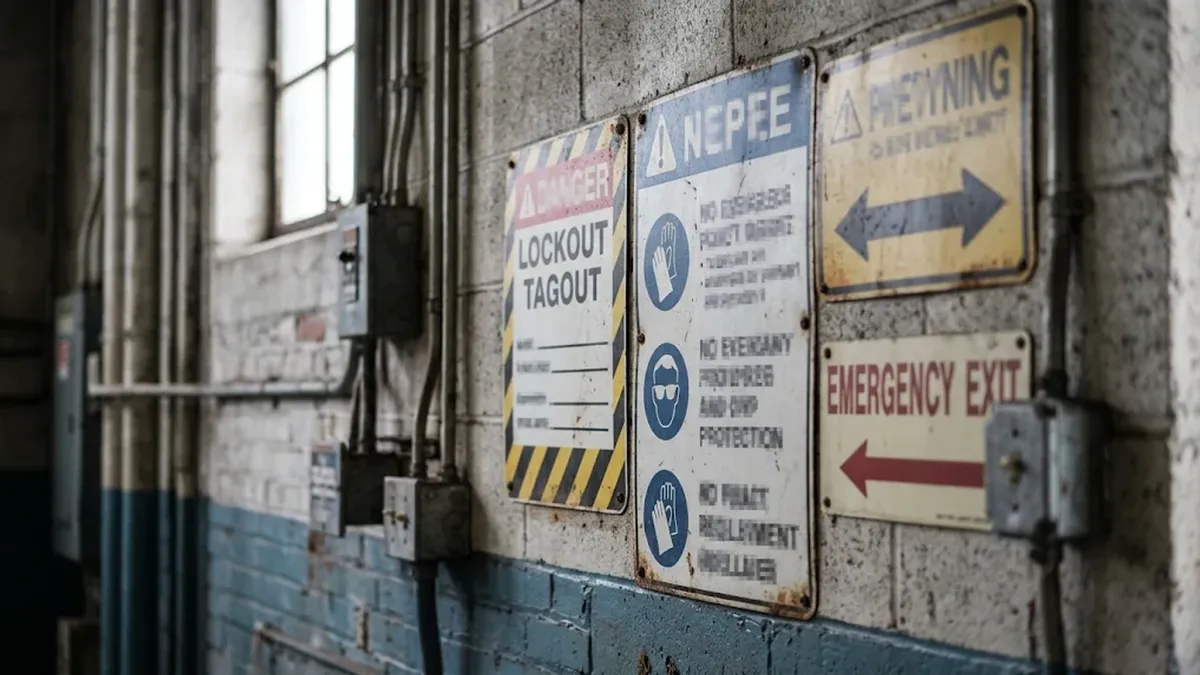
Crane Man Baskets vs. Other Access Methods: Is the Basket Worth It?
- +Reaches locations that scaffolds and aerial lifts cannot, such as tall steel connections and tower tops
- +Can be faster than building temporary access for a short, one-time task
- +Uses a crane that is already on site, avoiding extra equipment rental
- +Strict testing requirements give a documented margin of safety
- +Works in confined or congested sites where lift footprints are limited
- +Allows precise positioning when the operator and signal person coordinate well
- −Requires proof testing, trial lifts, and pre-lift meetings that add time and paperwork
- −Limits the crane to 50 percent of rated capacity, reducing lifting flexibility
- −Consumes the crane's full attention, halting other lifts on the site
- −Weather and wind restrictions can stop work with little warning
- −Employers must prove other access methods are more hazardous or impossible
- −A failure can injure several workers at once, and citation risk is high if any step is skipped
Pros and Cons at a Glance
| Pros | Cons |
|---|---|
| Reaches locations that scaffolds and aerial lifts cannot, such as tall steel connections and tower tops | Requires proof testing, trial lifts, and pre-lift meetings that add time and paperwork |
| Can be faster than building temporary access for a short, one-time task | Consumes the crane's full attention, halting other lifts on the site |
| Uses a crane that is already on site, avoiding extra equipment rental | Weather and wind restrictions can stop work with little warning |
| Strict testing requirements give a documented margin of safety | Employers must prove other access methods are more hazardous or impossible |
| Works in confined or congested sites where lift footprints are limited | A failure can injure several workers at once, and citation risk is high if any step is skipped |
OSHA Requirements for Man Baskets: Pre-Lift Checklist
- ✓Document why scaffolds, aerial lifts, or ladders are not feasible.
- ✓Confirm a qualified person designed the platform.
- ✓Verify the posted empty weight and rated capacity are legible.
- ✓Check guardrails, toeboard, grab rail, gates, and overhead protection.
- ✓Confirm the crane's anti two-block device and boom angle indicator work.
- ✓Verify the crane is level within one percent with outriggers extended.
- ✓Calculate total load and keep it under 50 percent of rated capacity.
- ✓Hold the pre-lift meeting with operator, signal person, and occupants.
- ✓Complete the trial lift and inspect the platform and rigging.
- ✓Inspect harnesses and lanyards, then confirm every occupant is tied off.
The 50 Percent Rule Is the Number Inspectors Check First
Total suspended weight, meaning platform, rigging, workers, and tools, must stay at or below 50 percent of the crane's rated capacity for the exact radius and boom configuration. Write the calculation in the lift plan and recheck it whenever the radius changes.
Trial Lifts and Proof Testing Explained
Proof testing verifies that a platform and its rigging can safely carry more than they ever will in service. Before a new platform is used, or after it is repaired or modified, it must be tested at 125 percent of its rated load. Suppose the platform is rated for 1,000 pounds. The employer places 1,250 pounds of evenly distributed weight in it and suspends it from the crane for the full five-minute hold.
After the hold, a competent person inspects the platform and rigging for deformation, weld cracks, bent members, and loose hardware. Any defect requires correction and a new proof test before use. The employer should record the date, test load, hold time, inspector, and results, because inspectors routinely ask for proof test records first. Skipping this record is one of the simplest ways to earn a citation.
The trial lift is a separate step done with the platform unoccupied. It is performed at each new work location, before workers step aboard, and again if the crane is moved or reconfigured. The platform is loaded with the anticipated weight of personnel and materials, then moved through the entire path it will follow, including each position where workers will stop. The operator confirms clearances, boom behavior, and communication along the way.
At the end of the trial lift, the platform is hoisted a few inches and held so the operator and a competent person can check that it hangs level and secure. They examine the rigging, load line, and attachments while the load is on the hook. Only after this inspection, with all findings resolved, may employees enter the basket. This slow, deliberate pause catches mismatched slings, twisted lines, and unbalanced loads before they involve people.
A pre-lift meeting ties everything together. The crane operator, signal person, employees to be lifted, and the person responsible for the task meet before the trial lift to review the procedures, the intended load, hazards, and communication method. Everyone should know the stop signal, who can call it, and what happens if radio contact fails. New workers joining mid-project need the same briefing, and the meeting should be repeated whenever the plan changes.
Communication during the lift must be continuous. Operators and platform occupants talk by dedicated two-way radio or by a signal person using standard hand signals when direct voice contact is impractical. The signal person and operator should have no other duties during hoisting. If communication is lost, the lift stops and the platform is lowered or held safely until contact is restored. Crowded radio channels are a common root cause of near misses.
Consider a practical walkthrough. A steel erector must bolt a connection 40 feet above the ground where an aerial lift cannot reach. The team documents why, calculates the load at the working radius, completes the proof test, runs the pre-lift meeting, conducts the trial lift, and inspects at a few inches of height. Only then do two workers enter, tied off, and the operator raises them at controlled speed with continuous radio contact.
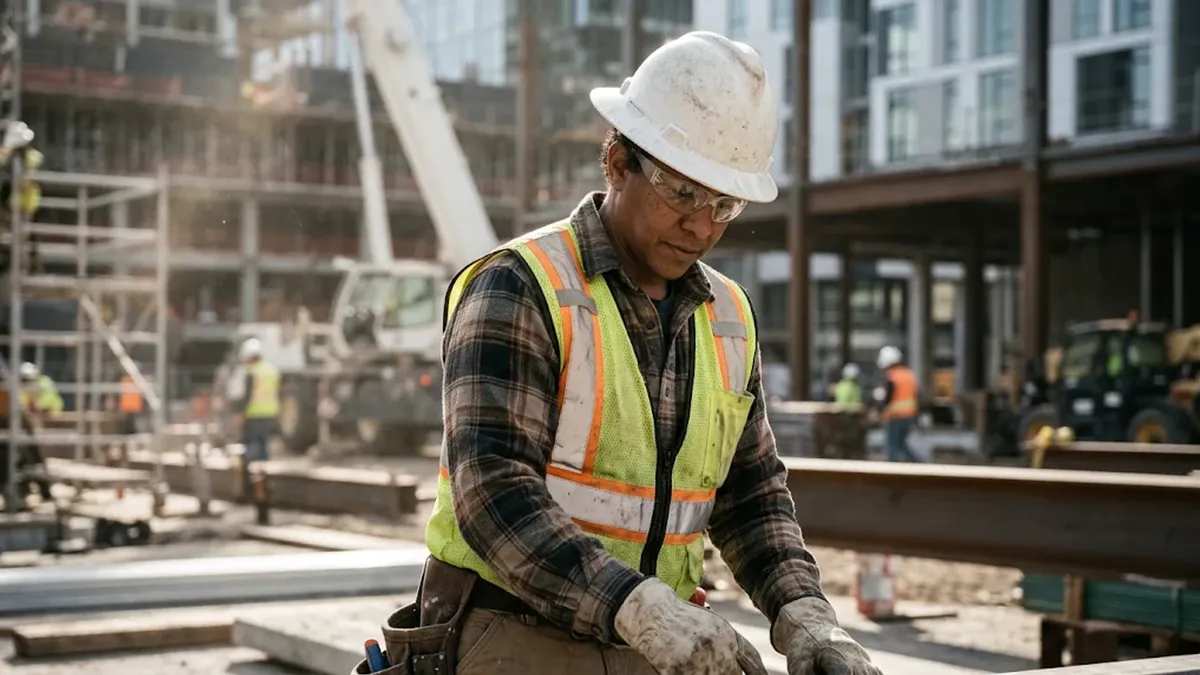
Inspectors often cite the paperwork even when the lift itself went well. Keep the justification memo, platform design details, proof test record, trial lift notes, and pre-lift meeting attendance sheet at the site. If a record is missing, OSHA may treat the step as never performed.
Enforcement, Penalties, and Common Citations
OSHA inspections involving cranes and personnel platforms arise from several triggers. Employers must report any work-related fatality within eight hours, and any in-patient hospitalization, amputation, or loss of an eye within 24 hours. Those reports often prompt an accident inspection. Complaints from workers, referrals from other agencies, and programmed inspections of high-hazard industries also bring compliance officers to crane sites, where they can observe a personnel lift in progress.
Penalties scale with severity and intent. As of 2025, a serious violation carries a maximum penalty of about $16,550, while willful or repeat violations can reach roughly $165,000 each. These figures are adjusted annually for inflation. Failure to abate a cited condition adds daily penalties. Actual proposed amounts depend on gravity, employer size, good-faith efforts, and history, so a well-documented safety program can reduce the final figure significantly.
Which citations show up most often in personnel hoisting cases? Typical findings include no documented proof test, no trial lift at the work location, platforms without posted capacity, missing or improper fall protection, lack of a pre-lift meeting, and loads exceeding the 50 percent limit. Another frequent finding is using a crane basket when an aerial lift or scaffold was feasible, which challenges the core justification the employer must establish.
Operator qualification is a major enforcement theme. Under 1926.1427, crane operators on construction sites must be certified or qualified through an accredited testing organization or an audited employer program, and employers must evaluate and document each operator's competence for the equipment they run. An uncertified operator running a personnel lift compounds every other violation. Many contractors now require operator certification records before allowing any employee into a crane-suspended platform.
Contractors and owners also face multi-employer citation policy. Under OSHA's policy, a general contractor can be cited as the controlling employer if it knew, or should have known, of a hazard and failed to exercise reasonable care to correct it. This means a general contractor cannot simply assume a crane subcontractor has handled the platform requirements. Verifying testing records and observing lifts are practical ways to meet that duty.
This is where the establishment search proves valuable again. Before awarding a crane or erection subcontract, search the company's history and read any serious or repeat citations. Look for patterns involving 1926.1431, 1926.1427, and fall protection standards under Subpart M. Combine what you find with references and safety program reviews. Documenting that you screened a subcontractor strengthens your good-faith position if something later goes wrong on site.
Finally, remember that state plans may differ. California, Washington, Oregon, and other state plan jurisdictions enforce their own crane and personnel hoisting rules, and some add stricter requirements such as additional certification or inspection steps. If your project crosses state lines, build the lift plan around the strictest applicable rule. Check the state agency's website for current standards and contact an area office if you need clarification before the lift.
Practical Tips for Safer Lifts and Certification Prep
Start with a written lift plan for every personnel hoist. Include the justification, crane model and configuration, radius, load calculation, platform description, test records, communication method, weather limits, and emergency procedures. Keep the plan on site and review it with the crew. A one-page plan that is actually read beats a thick binder nobody opens, and it gives inspectors immediate evidence that the lift was planned.
Build a recurring audit habit using the establishment search. Each quarter, search your own company name and your key subcontractors, review new inspections, and note which standards were cited. If peers in your industry are being cited for the same issue repeatedly, add it to your toolbox talks. Treat other companies' citations as free lessons, because the narrative in a case often describes precisely how the failure happened.
Train for the unexpected, not only the routine. Run drills for lost radio contact, sudden wind gusts, and a stuck gate. Everyone aboard should know how to signal a stop, and the operator should know exactly how to bring the platform down safely. Rescue planning for workers stranded at height deserves equal attention, since a suspended platform with an injured worker needs a rehearsed response, not improvisation.
Inspect before every shift, not just at setup. A competent person should check the platform welds, guardrails, gates, rigging, load line, and attachments, and the operator should test limit devices and controls. Replace worn slings, bent shackles, and frayed rope immediately. Keep a simple inspection log with initials and dates. Small defects found at 6 a.m. are inexpensive to fix, while the same defects found after an incident are catastrophic.
If you are studying for crane operator certification, focus on the personnel hoisting concepts that appear repeatedly: the 50 percent capacity limit, the 125 percent proof test, trial lift timing, required guardrail components, fall protection requirements, and operator responsibilities. Make flashcards for these numbers and practice explaining each one aloud. Teaching a concept to a colleague is among the fastest ways to move it into long-term memory.
Practice questions build exam speed and expose gaps. Work through timed sets on signals, load handling, hazard prevention, and inspection standards, then review every missed question and read the underlying regulation. Track your scores by topic so you can see whether personnel hoisting, rigging, or inspection rules need more time. Retake sets after a few days, because spaced repetition produces better retention than a single marathon session.
Finally, stay current. OSHA updates penalty amounts yearly and occasionally revises crane standards, and state plans change their own rules on separate schedules. Subscribe to OSHA news releases, check your state agency's page before large projects, and verify details against the current text of 29 CFR 1926 Subpart CC. This article is educational awareness content, so confirm requirements with the regulation and a qualified safety professional before any lift.
Sample OSHA - OSHA Certified Crane Operator Practice Questions
Try these questions from our free OSHA - OSHA Certified Crane Operator practice tests. The correct answer and an explanation follow each question.
What is the most critical safety requirement in code compliance?
- A. Speed of completion
- B. Following all applicable safety regulations and wearing required PPE
- C. Cost minimization
- D. Working alone to avoid delays
Answer: B. Following all applicable safety regulations and wearing required PPE
Safety regulations and proper PPE use are the most critical requirements in code compliance to prevent injury and ensure compliance.
What is the most critical safety requirement in maintenance protocols?
- A. Speed of completion
- B. Following all applicable safety regulations and wearing required PPE
- C. Cost minimization
- D. Working alone to avoid delays
Answer: B. Following all applicable safety regulations and wearing required PPE
Safety regulations and proper PPE use are the most critical requirements in maintenance protocols to prevent injury and ensure compliance.
A wire rope sling in a basket hitch is wrapped around a pin whose diameter equals the rope diameter (D/d = 1). What happens to its efficiency?
- A. It increases
- B. It stays the same
- C. It drops to about 50%
- D. It is unaffected if the rope is new
Answer: C. It drops to about 50%
Very tight bends sharply reduce wire rope strength, and at a D/d of 1:1 efficiency falls to about 50%.
What is the most critical safety requirement in material selection?
- A. Speed of completion
- B. Following all applicable safety regulations and wearing required PPE
- C. Cost minimization
- D. Working alone to avoid delays
Answer: B. Following all applicable safety regulations and wearing required PPE
Safety regulations and proper PPE use are the most critical requirements in material selection to prevent injury and ensure compliance.
Take the full OSHA - OSHA Certified Crane Operator practice test
OSHA Questions and Answers

OSHA Guardrail Requirements for Construction: Complete Compliance Guide for Contractors and Workers

OSHA Scaffolding Rules: Complete Guide to Construction Site Safety Standards and Compliance
OSHA (OSHA Certified Crane Operator) Test Guide

OSHA 1910 Crane Training Requirements: Complete Guide to Certification, Qualification, and Compliance
OSHA Outdoor Lighting Requirements: Foot-Candle Rules, Night Work, and Crane Site Compliance
How this page was made: written with AI tools and published by Nathan Beja, founder of Practice Test Geeks, who is responsible for its content. Exam facts are checked against the official sources listed below. Not reviewed by a subject-matter expert. Editorial policy
Sources & references
Exam facts on this page (fees, format, dates, passing scores) are checked against these official sources; the date is our last check. Editorial policy