
OSHA Guardrail Requirements for Construction: Complete Compliance Guide for Contractors and Workers
Master construction OSHA guardrail requirements: heights, specs, materials & compliance tips. ✅ Avoid costly violations and keep workers safe.
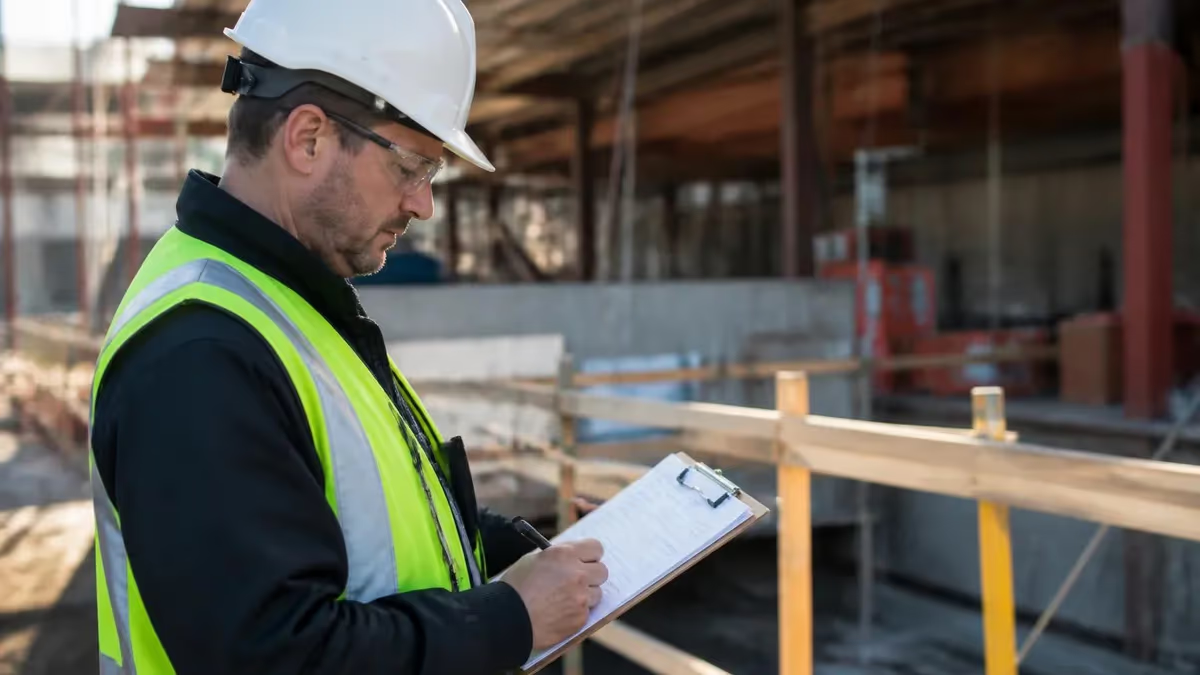
Understanding construction OSHA guardrail requirements is one of the most critical responsibilities any contractor, site supervisor, or safety officer carries on a job site. Falls remain the leading cause of fatalities in the construction industry, accounting for more than one-third of all construction deaths each year according to the Bureau of Labor Statistics.
OSHA's fall protection standards — primarily found in 29 CFR 1926 Subpart M — establish clear, enforceable rules for when guardrails must be installed, what materials are acceptable, and how those systems must perform under load. Ignoring or misunderstanding these rules exposes workers to life-threatening hazards and employers to penalties that can reach tens of thousands of dollars per violation.
Guardrail systems are one of three primary fall protection methods recognized by OSHA for construction sites, alongside personal fall arrest systems and safety nets. When workers are exposed to vertical drops of six feet or more — whether on scaffolds, floors with open-sided edges, ramps, runways, or excavations — employers must implement an engineered fall protection solution.
Guardrails are often the preferred choice because they provide passive, continuous protection without requiring workers to take any individual action. Unlike a harness that a worker must clip in correctly every time, a properly installed guardrail is always on duty, protecting everyone who approaches the edge.
OSHA's standards specify precise dimensional requirements that guardrail systems must meet. The top rail must sit between 39 and 45 inches above the walking and working surface. A mid-rail is required when there is no wall or parapet at least 21 inches high between the top rail and the surface below.
Toeboards, which prevent tools and materials from sliding off elevated surfaces and striking workers below, must be at least 3.5 inches tall. These measurements are not suggestions — inspectors measure them, and deviations trigger citations. Workers and supervisors alike benefit from memorizing these numbers because they apply to virtually every open-sided elevation on a construction project.
The strength requirements for guardrail systems are equally important and frequently misunderstood. OSHA requires that the top rail withstand a force of at least 200 pounds applied in any outward or downward direction at any point along the top edge. Mid-rails must withstand 150 pounds of force applied in a similar manner.
These load requirements exist because a guardrail must actually stop a person who leans against it, stumbles into it, or falls toward it — not merely mark the edge of a surface. Systems that look sturdy but fail to meet these force thresholds provide a false sense of security that can be deadlier than having no guardrail at all.
Wire rope guardrails, pipe systems, structural steel, and even wood framing can satisfy OSHA's requirements if they are engineered and installed correctly. Wood top rails must be at least 2x4 inches in cross-section. Wire ropes must be flagged at intervals not exceeding six feet with high-visibility material so workers can see the rope clearly in low-light conditions.
Manila, plastic, or synthetic rope can be used for mid-rails and top rails if they have sufficient strength ratings, but these materials are subject to environmental degradation and require more frequent inspection. Employers who choose alternative materials bear the responsibility of demonstrating compliance if questioned by a compliance officer.
For workers studying for the osha guardrail requirements construction examination or seeking to deepen their professional knowledge, understanding the full regulatory framework is essential. OSHA's 29 CFR 1926.502 lays out the specific performance criteria for all fall protection systems, while 1926.503 addresses training requirements.
Inspectors evaluate not just whether a guardrail is physically present, but whether workers have been trained on its purpose, limitations, and proper maintenance. A guardrail that has been damaged, improperly modified, or left with a gap large enough for a worker to fall through is treated as a serious violation even if the original installation was compliant.
The financial consequences of non-compliance are significant and escalating. OSHA's serious violation penalty currently reaches up to $16,550 per violation, and willful or repeated violations can climb to $165,514 each. Beyond fines, employers face increased insurance premiums, litigation exposure, project shutdowns, and reputational damage. More importantly, every citation represents a moment where a worker could have been seriously injured or killed. Investing time to understand and correctly implement OSHA guardrail requirements is not merely a compliance exercise — it is a commitment to bringing every worker home safely at the end of each shift.
OSHA Guardrail Requirements by the Numbers
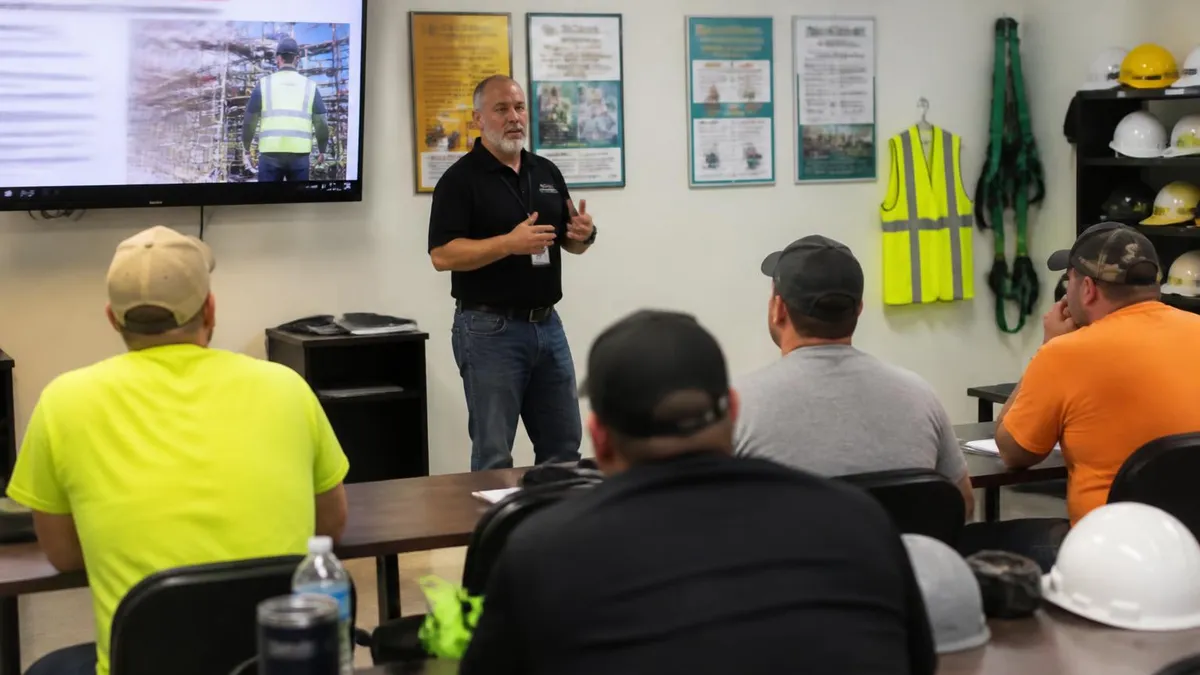
When Are Guardrails Required? Height Triggers and Dimensional Standards
6-Foot Trigger: General Construction
Top Rail: 39 to 45 Inches
Mid-Rail: 21-Inch Minimum Clearance
Toeboard: 3.5-Inch Minimum Height
Scaffolding: 10-Foot Trigger
Excavations: 6-Foot or Greater Depth
Selecting the right materials for a guardrail system is not simply a matter of picking something strong-looking from the job site. OSHA's 29 CFR 1926.502(b) specifies performance requirements, and the choice of material must be backed by engineering data or manufacturer specifications that demonstrate compliance. Steel pipe, structural steel tubing, wire rope, and properly dimensioned lumber are among the most commonly used materials in the field.
Each has distinct advantages and limitations depending on the environment, the duration of the installation, and the specific fall hazard being mitigated. Understanding those trade-offs allows site supervisors to make compliant choices efficiently rather than defaulting to the most expensive option.
Structural steel and pipe guardrails are among the most durable options for long-term installations on large commercial or industrial projects. Schedule 40 steel pipe with a minimum diameter of 1.5 inches typically satisfies both the 200-pound top rail load requirement and the 150-pound mid-rail load requirement when correctly supported and anchored.
Steel systems are resistant to environmental degradation and do not weaken over time the way organic materials like wood or rope can. However, they require more planning for installation and are less practical for temporary short-term applications where the guardrail will be relocated frequently as work progresses across the site.
Wire rope systems provide flexibility and light weight while still meeting OSHA's performance standards when installed correctly. The rope must be flagged at intervals not exceeding six feet with high-visibility material such as orange tape or flags so that workers can identify the hazard boundary at a glance, particularly in low-light or dusty conditions.
Rope sag is a critical compliance issue — OSHA requires that the top rope not deflect below 39 inches when the 200-pound load is applied. This means that the rope must be installed with enough tension and supported at frequent enough intervals to hold its shape under load, which is a calculation that depends on the rope's diameter, material, and span length.
Wood guardrails remain common on residential construction sites because lumber is readily available, easy to work with, and cost-effective for short-duration installations. To comply with OSHA, wood top rails must have a minimum cross-section of 2x4 nominal inches. Mid-rails require at least 1x6 nominal lumber. All wood components must be free of visible defects including splits, knots larger than acceptable limits, and decay. Untreated wood exposed to prolonged moisture, heat cycling, or chemical contact may degrade faster than visual inspection suggests, which is why OSHA emphasizes the need for regular inspection and immediate replacement of damaged components.
Pre-engineered modular guardrail systems have grown dramatically in popularity over the past decade. These systems — manufactured from aluminum, galvanized steel, or high-density polyethylene — arrive on site with documented load ratings and installation instructions that have already been tested and certified. They can be assembled quickly without specialized tools, repositioned as work areas change, and stored efficiently between projects.
Because they come with manufacturer certification of compliance, they simplify documentation during OSHA inspections. The upfront cost is higher than field-fabricated systems, but the savings in installation labor, inspection time, and potential citation avoidance often make them the economical choice over the lifecycle of a multi-phase project.
Regardless of material, the anchorage and support structure of a guardrail system is as important as the rail itself. A top rail that meets every dimensional and load specification will still fail if its posts pull out of a deteriorated concrete slab or if the base plates are not secured to the work surface. OSHA holds employers responsible for the entire system's performance, not just individual components.
Post spacing is typically determined by engineering analysis based on the rail material, anticipated load distribution, and environmental factors. As a general field rule, posts spaced no more than eight feet apart provide a reasonable margin of safety for most standard materials, but this must be verified against the specific system being installed.
Inspection and maintenance are ongoing obligations, not one-time events. OSHA requires that guardrail systems be inspected regularly and repaired or replaced promptly when damage is found. A rail that has been struck by equipment, loaded with materials stacked against it, or weakened by corrosion must be treated as non-compliant until it is restored to its original condition or replaced. Supervisors should document inspections, including dates, findings, and corrective actions taken. This documentation serves a dual purpose: it helps ensure continuous compliance and provides a defensible record in the event of an incident investigation or OSHA audit.
OSHA Guardrail Requirements by Construction Work Area
Open-sided floors and roof edges are among the most common guardrail installation locations on construction sites. OSHA's 29 CFR 1926.502 requires guardrails on any unprotected side or edge where a worker could fall six feet or more to a lower level. This includes the perimeter of upper floors during framing, concrete decks before permanent walls are erected, and roof surfaces where parapet walls have not yet been constructed. Guardrails must be installed before workers are permitted to approach within six feet of the unprotected edge during normal work activities.
Roof work presents unique challenges because surfaces are sloped, materials are constantly moving across the deck, and work areas shift throughout the day. OSHA allows certain alternative fall protection methods for low-slope roofs — including warning line systems combined with safety monitoring — but standard guardrails remain the most protective option and the default requirement. When a warning line system is used instead of guardrails on low-slope roofs, the lines must be rigged at least 6 feet from the unprotected edge and must meet specific flagging, height, and tensile strength specifications outlined in 1926.502(f).
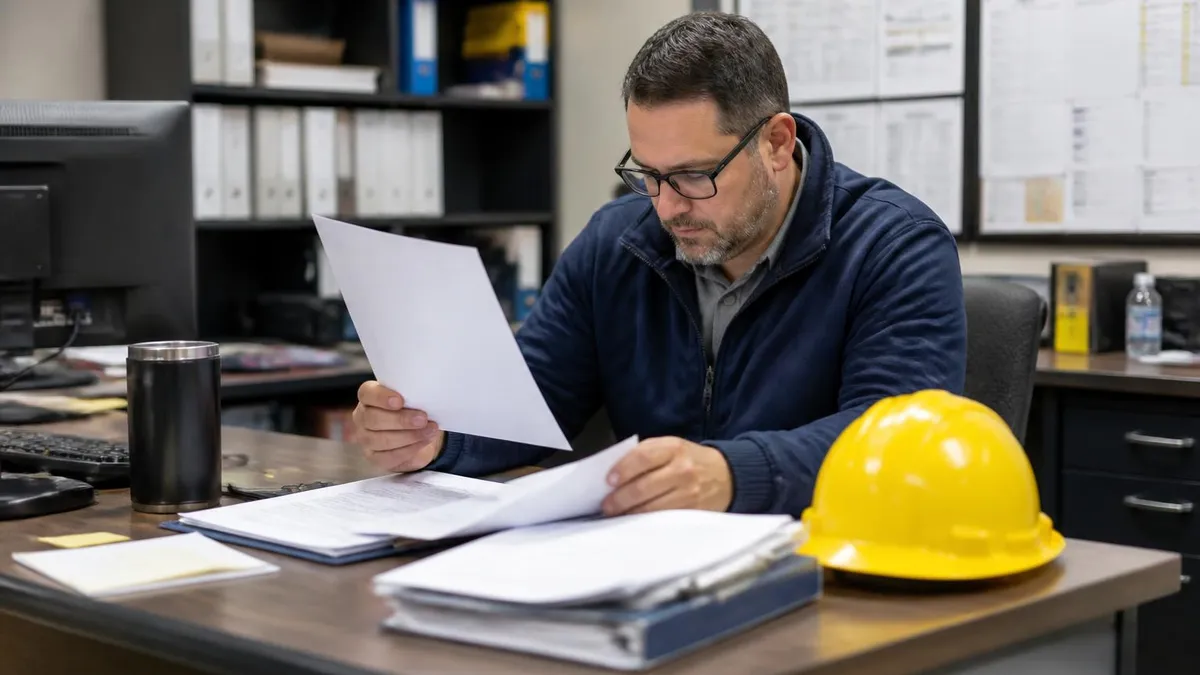
Guardrail Systems vs. Personal Fall Arrest Systems: Key Trade-offs
- +Passive protection requires no action from individual workers to function effectively
- +Continuously guards all workers near the edge, including visitors and inspectors
- +No training required for workers to benefit from guardrail protection
- +Eliminates risk of incorrect harness attachment that can lead to fatal fall arrest failure
- +Generally lower ongoing cost than managing, inspecting, and replacing harness equipment
- +OSHA's preferred primary method for many construction edge conditions
- −Cannot be used in all environments — some work requires removing guardrails temporarily
- −Higher upfront installation cost and labor compared to deploying personal fall arrest gear
- −Does not protect workers who must lean out beyond the rail to perform certain tasks
- −Requires engineering or manufacturer certification to document load compliance
- −Can impede workflow when materials must be moved across protected edges
- −Damage from equipment strikes or material loading may not be immediately visible
Construction Site Guardrail Compliance Checklist
- ✓Verify that all open-sided surfaces with 6-foot or greater fall exposures have guardrails installed before workers access those areas.
- ✓Measure top rail height and confirm it falls between 39 and 45 inches above the walking surface.
- ✓Inspect mid-rails to confirm they are positioned midway between the top rail and the floor wherever required.
- ✓Check toeboard installation on all elevated surfaces where workers or equipment operate below.
- ✓Apply the 200-pound load test mentally to all top rails — confirm posts and anchors could withstand that force.
- ✓Flag wire rope guardrails at maximum six-foot intervals with high-visibility material.
- ✓Inspect all wood guardrail components for splits, excessive knots, decay, and moisture damage weekly.
- ✓Document that all workers near fall hazards have received guardrail-specific fall protection training.
- ✓Confirm that any temporary guardrail openings at hoist areas are restored immediately after each lifting operation.
- ✓Review OSHA 300 log and near-miss reports monthly to identify recurring guardrail-related hazards on site.
The 200-Pound Rule Is a Performance Standard, Not a Suggestion
Many contractors install guardrails that look solid but have never been verified against OSHA's 200-pound top rail load requirement. OSHA compliance officers can and do apply force tests in the field. A rail that deflects excessively, pulls a post anchor, or visibly deforms under a 200-pound load will trigger a citation — even if the rail's height and mid-rail spacing are perfect. Always verify your anchorage system, not just your rail dimensions, before signing off on any guardrail installation.
Falls from elevation account for a disproportionate share of the most severe injuries and deaths in construction, which is why OSHA treats guardrail violations with particular seriousness. In any given year, OSHA's fall protection standard — 29 CFR 1926.501 — ranks as the most frequently cited construction standard in the entire agency. The sheer volume of citations reflects both the prevalence of the hazard and the consistency with which employers fail to address it correctly. Understanding the most common violation patterns helps safety professionals prioritize their inspection efforts and implement preventive measures before an OSHA compliance officer arrives on site.
One of the most frequently cited guardrail deficiencies is the presence of a gap large enough for a worker to fall through. This occurs when guardrails are installed with sections missing, when temporary access points are left open after work is completed, or when sections are removed for material delivery and not promptly reinstalled.
OSHA's standard is clear: the guardrail system must provide continuous protection along the full length of the unprotected edge. Even a brief period of unprotected exposure constitutes a violation if workers are present near the opening. Supervisors must establish and enforce strict protocols for managing any temporary interruptions in guardrail continuity.
Incorrect height is the second most common deficiency. Top rails installed below 39 inches — often because workers used shorter posts or because the walking surface has been built up since the original installation — fail to intercept a falling body effectively.
Conversely, rails installed above 45 inches may cause workers to instinctively duck under them when moving quickly along the edge, creating a behavioral workaround that defeats the protective intent of the system. Site supervisors should make a habit of measuring rail heights whenever the walking surface changes, such as after concrete pours, decking installation, or the placement of equipment mats.
Inadequate anchorage is a less visible but equally dangerous violation. Posts that are toenailed into wood framing without proper structural connection, base plates secured with a single bolt into deteriorating concrete, or clamps attached to scaffold pipes that are themselves inadequately braced can all appear visually compliant while providing negligible protection.
A guardrail that fails its anchorage in a real fall event is worse than no guardrail at all, because it may give a falling worker a false grip point that collapses under load. Engineering review of post anchorage, particularly at corners and transition points, is a best practice that protects both workers and employers.
Missing mid-rails represent a persistent source of citations on sites where top rails are installed but the space between the rail and the floor is left open. Workers have fallen through the unprotected space below a top rail in documented incidents across multiple industries.
The mid-rail requirement is especially critical where workers perform tasks near edges while in a kneeling, crouching, or seated position, since their center of gravity is lower and they are more likely to exit through the lower portion of the opening. Safety officers should verify mid-rail presence as an independent inspection step rather than assuming it is present whenever a top rail is visible.
Damaged guardrails that remain in service represent a willful violation category when employers are aware of the damage and fail to act. Equipment strikes, falling materials, and overloading can deform or weaken guardrail components in ways that are not immediately obvious. A post that has been struck by a forklift may appear straight but have cracked welds or fractured base connections that reduce its load capacity to near zero.
A wood top rail that was soaked repeatedly during rainy weather may have internal decay while the surface still appears sound. Establishing a formal inspection and replacement protocol — with written documentation — is the most effective defense against both worker injury and willful violation citations.
Employers are also frequently cited for failing to provide adequate fall protection training as required under 29 CFR 1926.503. Workers must be trained by a competent person to recognize fall hazards, understand the limitations of the fall protection measures in use, and know the correct procedures for erecting, maintaining, and disassembling fall protection systems including guardrails.
Training must be provided before workers are exposed to fall hazards and must be repeated whenever there is reason to believe a worker does not understand the training or when conditions change. Documentation of training sessions, including attendee signatures and training content summaries, is essential for demonstrating compliance during inspections.
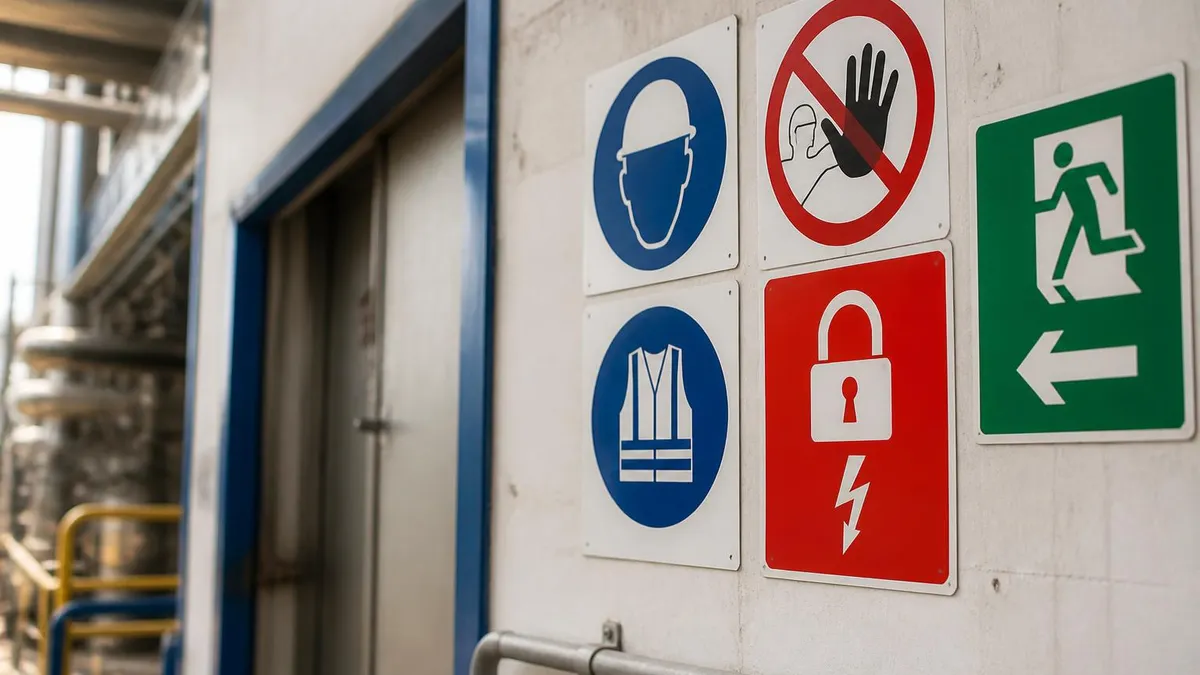
When OSHA determines that an employer knowingly failed to install or maintain required guardrails — or deliberately removed fall protection and allowed workers to continue — the violation is classified as willful. Willful citations carry maximum penalties of $165,514 per violation and may be referred for criminal prosecution if a worker death results. Document every guardrail installation, inspection, and repair to demonstrate your good-faith compliance effort and avoid the willful classification in any future enforcement action.
For crane operators and construction professionals pursuing OSHA certification, guardrail requirements are a tested topic that appears across multiple certification domains. The OSHA Certified Crane Operator examination and related safety credentials assess not just crane-specific knowledge but broader site safety awareness, including fall protection standards that apply whenever cranes are used near elevated work areas, floor openings, or excavations. A crane operator who understands guardrail requirements can better coordinate lifts near protected edges, communicate hazards to ground crews, and avoid inadvertently striking or compromising fall protection systems during operations.
Certification examinations typically test candidates on the specific dimensional requirements — the 39-to-45-inch top rail range, the 200-pound load standard, the six-foot height trigger — as well as the regulatory framework under which these requirements fall. Questions may ask candidates to identify which standard governs a particular scenario, distinguish between requirements for construction versus general industry, or recognize conditions that constitute a violation based on a described fact pattern.
Candidates who have practical field experience with guardrail installation often find these questions straightforward, but those coming from a purely theoretical background benefit greatly from visualizing the requirements in context before the examination.
Study resources for OSHA certification candidates should include a thorough review of 29 CFR 1926 Subpart M in its entirety, not just the guardrail sections. The subpart covers all fall protection systems, and questions frequently require candidates to apply the correct standard to a specific situation involving multiple potential fall protection methods.
Understanding when guardrails are the required method versus when personal fall arrest or safety nets are equally acceptable requires familiarity with the full subpart rather than isolated memorization of individual sections. Regulatory cross-references to scaffolding standards (Subpart Q) and steel erection (Subpart R) are also fair game on comprehensive examinations.
Practice examinations are among the most effective preparation tools available to certification candidates. They expose gaps in knowledge while simulating the pressure and format of the actual test. Candidates who complete multiple timed practice exams consistently outperform those who rely solely on reading study materials, because the active recall required to answer questions reinforces retention in a way that passive review cannot match. Practice questions focused on OSHA guardrail requirements construction scenarios are particularly valuable because they translate regulatory language into applied decision-making, which is the cognitive skill the examination actually measures.
Beyond the examination, understanding guardrail requirements has direct career value. Construction supervisors and safety officers who can confidently interpret and apply OSHA standards without needing to look up every detail are more efficient and more credible with both their teams and regulatory inspectors. Employers increasingly value safety competency as a hiring differentiator, and candidates who can demonstrate working knowledge of fall protection standards — including guardrail specifications — position themselves favorably in a competitive labor market where OSHA compliance expertise commands a premium.
Continuing education in OSHA standards is not a one-time achievement. OSHA updates its standards periodically, and interpretive guidance from the agency can significantly clarify or expand how existing rules are applied in the field. The OSHA website publishes letters of interpretation that address specific scenarios — such as whether a particular alternative material meets the load standard or whether a specific work activity qualifies for an exception to the general guardrail requirement. Safety professionals who monitor these updates and incorporate them into their training programs maintain a compliance posture that is current, defensible, and genuinely protective of their workers.
Finally, building a culture of fall protection on a construction site requires more than regulatory compliance — it requires consistent leadership. When supervisors model safe behavior near elevated edges, enforce guardrail installation before work begins rather than retroactively, and respond quickly to damage and gaps, they signal to the entire workforce that fall protection is a non-negotiable value rather than a bureaucratic checkbox.
Workers who see that leadership takes guardrails seriously are more likely to report hazards, follow procedures, and hold each other accountable — creating a self-reinforcing safety culture that reduces incidents far more effectively than penalties alone ever could.
Practical implementation of OSHA guardrail requirements begins before the first worker sets foot on an elevated surface. The most effective safety programs build guardrail planning into the project schedule from the earliest stages of site preparation. When project managers and site superintendents identify fall hazards during pre-construction planning, they can allocate materials, schedule installation crews, and sequence work activities to ensure that fall protection is in place before it is needed rather than being improvised under production pressure. This proactive approach is far less expensive and far safer than reacting to hazards after workers have already been exposed.
Job hazard analyses (JHAs) are the primary tool for systematic identification and control of fall hazards at the task level. A well-written JHA for any task performed near an unprotected edge will identify the fall hazard, specify the required guardrail system, identify who is responsible for installation and inspection, and document the training requirements for workers performing the task. When JHAs are completed before work begins and reviewed with the crew at the start of each shift, they create a shared awareness of the hazards and controls that empowers every worker to participate in maintaining safe conditions throughout the day.
Pre-shift inspection routines are a simple, high-value practice that catches guardrail deficiencies before they result in incidents. The designated competent person — someone with the knowledge and authority to identify fall hazards and take corrective action — should walk the perimeter of all elevated work areas at the start of each day and after any significant weather event, equipment operation, or material delivery near the guardrails.
A brief inspection log noting the date, areas inspected, findings, and corrective actions taken provides documentation that demonstrates an active compliance program and helps identify recurring problem areas that may require a more permanent engineering solution.
Subcontractor coordination is a frequently overlooked aspect of guardrail compliance on multi-trade projects. When multiple subcontractors share an elevated work area, responsibility for fall protection can become ambiguous. General contractors retain ultimate OSHA responsibility for the site, but individual subcontractors must also comply with fall protection standards for their own workers. Clear contractual language specifying who installs, maintains, and inspects guardrails in shared work zones — along with coordination meetings at the start of each new phase — prevents the dangerous assumption that someone else has already taken care of fall protection in a given area.
Workers should be empowered and encouraged to stop work when they identify a missing or damaged guardrail. Stop-work authority — the formal right of any worker to halt an operation they believe is unsafe without fear of retaliation — is a hallmark of mature safety cultures and is consistent with OSHA's general duty clause obligations.
When workers know that leadership will support their decision to stop work over a guardrail deficiency, they are far more likely to act on what they see rather than proceeding with the rationalization that someone else will handle it or that the risk is acceptable for just this one task.
Technology is increasingly available to support guardrail compliance management. Digital inspection platforms allow safety officers to document guardrail conditions with photos, GPS coordinates, and timestamps using a smartphone or tablet. Corrective action workflows route deficiency notifications to the responsible supervisor automatically and track completion.
Aggregated data from these platforms can reveal patterns — particular floor levels, subcontractors, or phases of work where guardrail compliance is consistently weaker — allowing safety managers to target their coaching and enforcement efforts with precision. Investing in these tools is especially worthwhile on large, complex projects where manual tracking across dozens of work areas becomes impractical.
The ultimate measure of an effective guardrail compliance program is not the absence of OSHA citations — it is the absence of worker injuries and deaths. Sites that achieve genuine fall protection excellence do so because every person on the project, from the owner to the newest laborer, understands why guardrails matter and takes personal responsibility for maintaining them.
OSHA's standards provide the floor of acceptable performance, not the ceiling. The best construction companies set their own internal standards that exceed OSHA's minimums, regularly audit their compliance, and continually improve their practices in response to near-miss data, industry developments, and lessons learned from incidents elsewhere in the industry.
OSHA Questions and Answers
OSHA Restaurant Safety: Complete Guide to Workplace Compliance, Hazard Prevention, and Employee Training for Food Service Operations
360 Training OSHA 10: Complete Guide to Online OSHA 10-Hour Construction and General Industry Certification Courses
OSHA (OSHA Certified Crane Operator) Test Guide

What Is Involved in Safety Monitoring Under OSHA: Complete Guide for Crane Operators

OSHA 1910 Crane Training Requirements: Complete Guide to Certification, Qualification, and Compliance
About the Author

Certified Safety Professional & OSHA Compliance Expert
Indiana University of Pennsylvania Safety SciencesDr. William Foster holds a PhD in Safety Science from Indiana University of Pennsylvania and is a Certified Safety Professional (CSP) and Certified Hazardous Materials Manager. With 20 years of occupational health and safety management experience across construction, manufacturing, and chemical industries, he coaches safety professionals through OSHA certification, CSP, CHST, and safety management licensing programs.
Join the Discussion
Connect with other students preparing for this exam. Share tips, ask questions, and get advice from people who have been there.
View discussion (8 replies)