
NREMT Study Test: 7 Essential Tips for Passing Your EMT Exam 2026
Get ready for your NREMT Study certification. Practice questions with step-by-step answer explanations and instant scoring.
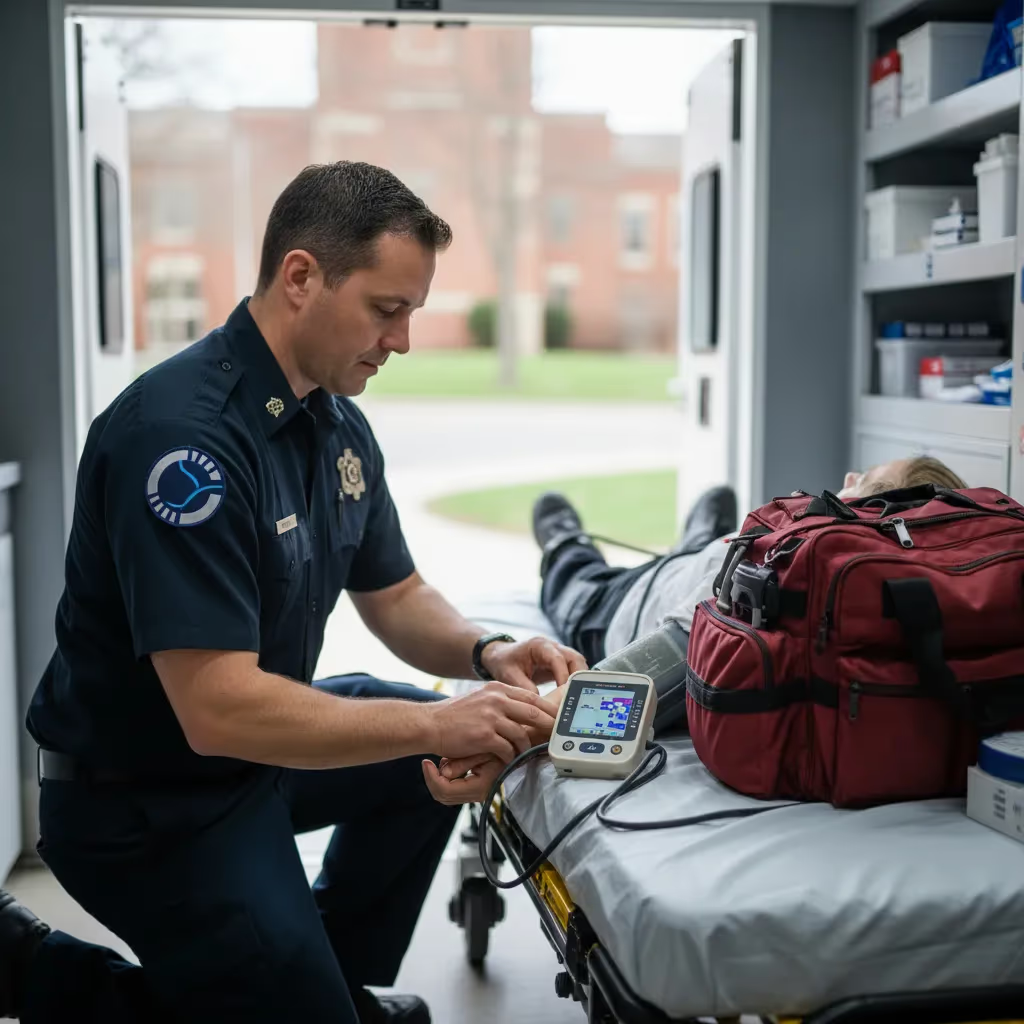
Passing the NREMT isn't just about knowing the material — it's about knowing how to take the test. This NREMT study test guide covers 7 essential tips to know before you sit for the cognitive exam. Whether you're a first-time EMT candidate or retaking after a rough attempt, these strategies give you a concrete edge. The right NREMT test prep approach makes the difference between walking out confident and wondering what went wrong.
The NREMT cognitive exam uses computer adaptive testing (CAT), which means the algorithm adjusts question difficulty based on your answers. Get a question right, and the next one gets harder. Get it wrong, the next gets easier. The test ends somewhere between 70 and 120 questions — and a shorter test doesn't always mean you failed. It means the algorithm reached a decision. Understanding this format is your first step toward an effective NREMT test prep strategy.
Most candidates spend weeks memorizing protocols and drug dosages. That's necessary but not sufficient. The NREMT tests clinical judgment — your ability to prioritize interventions, recognize life threats, and make decisions under pressure. An NREMT prep test that mimics this scenario-based format prepares you far better than flashcards alone. Let's break down exactly what works.

Tip #1: Start your NREMT prep test routine at least three weeks before your exam date. Cramming doesn't work with this material — you need spaced repetition to lock in airway management sequences, cardiac arrest algorithms, and trauma assessment protocols. Study in 45-minute blocks with 10-minute breaks. Your brain consolidates information during rest, not during marathon sessions.
Tip #2: Use practice NREMT tests as diagnostic tools, not just score generators. After each practice exam, don't just check your score. Go back to every question you got wrong and figure out why. Was it a knowledge gap? A misread question? A careless mistake? Each error type requires a different fix. Knowledge gaps need targeted study. Misreads need slower reading habits. Carelessness needs discipline. Check out our full NREMT prep test guide for structured study plans.
Tip #3: Focus on the "why" behind each protocol. The NREMT rarely asks you to recall a fact in isolation. Instead, it presents a scenario and asks what you'd do next. If you understand why epinephrine is the first-line drug for anaphylaxis — not just that it is — you can reason through unfamiliar scenarios. That reasoning ability is what separates candidates who pass from those who don't.
Tip #4: Knowing how to pass the NREMT test means training your brain for the CAT format specifically. Standard multiple-choice quizzes test recall. The NREMT tests your ability to choose the best answer among several correct-sounding options. Practice with questions that have plausible distractors — answers that would be correct in a slightly different scenario. This is where generic study apps fall short and dedicated AEMT NREMT test prep resources shine.
Here's a pattern that trips up most first-time test-takers: the "most appropriate next step" question. You'll get a patient scenario with vital signs, symptoms, and scene information. All four answer choices describe legitimate interventions. But only one is the correct next step given the specific clinical picture. Train yourself to read every word of the scenario — the difference between a 22-year-old and a 72-year-old patient changes the right answer entirely. For more targeted practice, try our practice NREMT tests.
Don't skip the psychomotor component either. Many candidates focus entirely on the cognitive exam and then struggle with skills stations. Practice patient assessments out loud — verbalize your findings, interventions, and reassessments as if you're being evaluated. This builds the muscle memory and communication habits that skills evaluators look for. Recording yourself on your phone helps catch gaps you'd otherwise miss. Watch the playback critically — notice where you hesitate, skip steps, or lose your train of thought. Those moments reveal what you need to drill before test day.
NREMT Content Areas Breakdown
Airway, Respiration, and Ventilation accounts for roughly 18-22% of your NREMT exam. Cardiology and Resuscitation covers another 20-24%. Together, these two areas make up nearly half the test. Master BLS/ALS algorithms, oxygen delivery devices, airway adjuncts, and cardiac rhythm recognition. These sections heavily favor scenario-based questions.
Tip #5: When searching for the best NREMT test prep app, look for one thing above all else — adaptive question banks. Static question pools let you memorize answers after enough repetitions. Adaptive pools serve you harder questions as you improve, mirroring the actual NREMT algorithm. Some solid options include Pocket Prep, EMT-B Prep, and Limmer Education. Each offers scenario-based questions aligned with current National EMS Education Standards.
Essential NREMT test tips for app-based studying: don't just take practice tests on your phone during TV commercial breaks. Treat each practice session like the real thing. Sit at a desk. Remove distractions. Time yourself. The NREMT gives you two hours — that's roughly one minute per question at the maximum 120-question length. You need to build pacing habits now, not figure them out on test day.
Also rotate between study methods. Use apps for question practice, textbooks for deep content review, and YouTube channels like PrepMedic for visual explanations of procedures. Each method activates different types of memory encoding. The combination sticks better than any single approach. Aim for at least 500 practice questions before your exam date — that gives you enough exposure to cover the full content spectrum and identify persistent weak spots.
Tip #6: NREMT AEMT test prep requires a different mindset than basic EMT prep. AEMT-level questions assume you understand pharmacology, IV access, and advanced airway management beyond basic BVM ventilation. If you're preparing for the AEMT cognitive exam, you'll face questions about medication administration — dosing, routes, contraindications, and side effects. The question format is identical to the EMT exam (CAT-based), but the content depth increases significantly.
Resources like JBLearning NREMT test prep offer structured AEMT study tracks with chapter-aligned question banks. Jones & Bartlett's Navigate platform includes case-based scenarios that mirror NREMT question styles. Their advantage is direct alignment with the textbooks most EMS programs use — if your class used a JBLearning text, their practice platform will feel familiar. To understand how to pass the NREMT test, matching your study resources to your certification level matters.
Don't overlook free resources either. The NREMT's own website offers a practice analysis document that breaks down exactly what percentage of questions come from each content area. Print it out. Tape it to your wall. Use it to allocate study time proportionally — spend more hours on Airway and Cardiology (40%+ of the exam) than on EMS Operations (10-14%). Efficient studying beats total volume every time. Pin that document above your desk and reference it every time you plan a study session — it keeps you honest about where your time goes.
Pros and Cons of NREMT Test Prep Methods
- +Practice tests build familiarity with CAT format and question pacing
- +Study apps allow flexible learning during commutes and breaks
- +Scenario-based prep develops clinical decision-making skills
- +Group study sessions expose you to different perspectives on patient care
- +Timed practice reduces test-day anxiety and builds confidence
- +Free resources from NREMT.org provide official content breakdowns
- −Generic study apps may not align with current NREMT question formats
- −Over-relying on apps can neglect hands-on psychomotor skills
- −Some paid prep courses are expensive ($100+) with limited refund policies
- −Memorizing practice questions leads to false confidence on real exam
- −Study groups can waste time if participants aren't equally prepared
- −Too many resources cause decision paralysis — pick 2-3 and commit
Pros and Cons at a Glance
| Pros | Cons |
|---|---|
| Practice tests build familiarity with CAT format and question pacing | Generic study apps may not align with current NREMT question formats |
| Study apps allow flexible learning during commutes and breaks | Over-relying on apps can neglect hands-on psychomotor skills |
| Scenario-based prep develops clinical decision-making skills | Memorizing practice questions leads to false confidence on real exam |
| Group study sessions expose you to different perspectives on patient care | Study groups can waste time if participants aren't equally prepared |
Beyond apps, JBLearning NREMT test prep stands out because it integrates directly with Jones & Bartlett textbooks. If your EMT course used "Emergency Care and Transportation of the Sick and Injured" (the orange book), their Navigator platform syncs practice questions to each chapter. You can study exactly what you covered in class, then test yourself on that material before moving to the next topic. This systematic approach prevents the common trap of studying random questions without structure.
Tip #7: Schedule your exam strategically. Most candidates perform best when they test within 2-4 weeks of completing their EMT course. Wait longer, and knowledge decay starts working against you. The forgetting curve is real — without active review, you'll lose roughly 50% of newly learned material within a week. If your course ended a month ago and you haven't been studying, spend at least two solid weeks in active review before booking your test date.
The night before your exam, stop studying by 8 PM. Seriously. Last-minute cramming creates anxiety and interferes with sleep — and sleep is when your brain consolidates everything you've learned. Get eight hours. Eat a real breakfast. Arrive at the testing center 30 minutes early. These mundane logistics matter more than most people realize. Your cognitive performance drops measurably when you're tired, hungry, or rushed. Bring a water bottle if the testing center allows it. Staying hydrated helps maintain focus through the full two-hour window.
NREMT Exam Day Checklist
- ✓Confirm your testing center location and check-in time the night before
- ✓Bring two forms of valid photo ID (driver's license + second ID)
- ✓Get at least 8 hours of sleep — cognitive performance drops with fatigue
- ✓Eat a balanced breakfast with protein and complex carbs for sustained energy
- ✓Arrive 30 minutes early to complete check-in procedures
- ✓Leave your phone, notes, and smartwatch in your car or a locker
- ✓Read every question completely before looking at answer choices
- ✓Don't panic if the test ends at 70 questions — it doesn't mean you failed
- ✓Use the full time allotted — rushing costs more points than it saves
- ✓After finishing, don't obsess over specific questions — results come within 2 business days
Your JBLearning NREMT test prep account — or whatever platform you chose — should include a progress tracker. Use it. Track which content areas you're scoring above 80% in and which ones you're below 70% in. Spend double the time on your weak areas. Most candidates instinctively practice what they already know because it feels good to get questions right. Resist that urge. Growth happens in the discomfort zone.
Here's a study schedule that works for most candidates: Monday through Friday, 45 minutes of focused study. Alternate between practice questions (Mon/Wed/Fri) and content review (Tue/Thu). On Saturday, take a full-length timed practice test. Sunday, review the results and adjust your weekly plan. This six-day cycle builds consistency without burning you out. Visit our AEMT NREMT test prep page if you're preparing for the advanced-level exam.
Track your practice test scores over time. You should see steady improvement if your study method is working. If your scores plateau or drop, something needs to change — either your study materials aren't targeting the right content, or you're not reviewing your mistakes effectively. Don't keep doing the same thing and expect different results. Adjust your approach every week based on data, not feelings. A spreadsheet tracking daily scores by content area takes five minutes to update and gives you clear signals about what's working and what isn't.
What if you're retaking? JBLearning NREMT test prep and similar platforms let you reset your question bank and start fresh. But don't just retake the same practice questions — your brain will recognize them and give you inflated confidence. Find a second question bank from a different provider. Use Pocket Prep if you studied with JBLearning the first time, or vice versa. Fresh questions expose genuine knowledge gaps that familiar ones mask.
After a failed attempt, the NREMT provides a performance report showing which content areas fell below the passing standard. This report is gold. It tells you exactly where to focus your remediation. Don't treat it as a vague guide — if Cardiology was below standard, spend 60% of your study time there. If Airway was borderline, give it 25%. Allocate the remaining time to maintenance review of your strong areas. Precision beats volume when you're preparing for a retake.
You've got six attempts within two years. After three failures, you'll need a remedial training program before trying again. Most candidates who follow a structured study plan pass on their second attempt. The key difference between attempt one and attempt two should be strategy, not just effort. Study smarter by targeting your documented weak areas with the right resources and realistic practice conditions.
Knowledge decay is real. Candidates who wait more than 30 days after completing their EMT course score significantly lower on the NREMT. If you've delayed, invest at least two weeks in active daily review before scheduling. Use practice tests to benchmark your readiness — consistently scoring 80%+ signals you're ready to sit for the real exam.
When comparing study platforms, JBLearning NREMT test prep works best for students who want textbook-aligned content. Pocket Prep is better for on-the-go studying with shorter question sessions. EMT-B Prep offers a solid free tier for budget-conscious candidates. Limmer Education provides video-based explanations alongside practice questions. Each has strengths — pick the one that matches your learning style and certification level.
Don't forget about in-person study groups. Find 2-3 classmates who scored similarly on practice tests and meet weekly. Quiz each other on scenarios. Practice verbal patient assessments. Work through drug calculation problems together. The social accountability alone makes you more likely to study consistently. Plus, explaining a concept to someone else is one of the most effective ways to cement your own understanding of it. Teaching forces you to organize knowledge in ways that passive reading never does — and your partners will ask questions you hadn't considered yet.
Your NREMT certification opens real career doors — from ambulance services to fire departments to hospital emergency departments. The effort you put into preparation now pays dividends for years. Treat your study time as an investment in your future career, not just a hurdle to clear. Every practice question you work through builds the clinical foundation that makes you a better provider on the street — and that's the whole point of getting certified in the first place.
NREMT Practice Test Questions
Prepare for the NREMT - National Registry of Emergency Medical Technicians exam with our free practice test modules. Each quiz covers key topics to help you pass on your first try.
NREMT EMT Airway and Breathing Practice Test
NREMT Exam Questions covering EMT Airway and Breathing Practice Test. Master NREMT Test concepts for certification prep.
NREMT EMT Cardiology Practice Test
NREMT Mock Exam on EMT Cardiology Practice Test. NREMT Study Guide questions to pass on your first try.
NREMT EMT/NREMT Practice Test (Cardiology)
Free NREMT Quiz on EMT/NREMT Practice Test (Cardiology). NREMT Exam prep questions with detailed explanations.
NREMT EMT/NREMT Practice Test (Medical)
NREMT Practice Questions for EMT/NREMT Practice Test (Medical). Build confidence for your NREMT certification exam.
NREMT EMT/NREMT Practice Test (Operations)
NREMT Test Online for EMT/NREMT Practice Test (Operations). Free practice with instant results and feedback.
NREMT EMT/NREMT Trauma Practice Test
NREMT Study Material on EMT/NREMT Trauma Practice Test. Prepare effectively with real exam-style questions.
NREMT EMT Trauma Practice Test
NREMT Exam Questions covering EMT Trauma Practice Test. Master NREMT Test concepts for certification prep.
NREMT EMT Practice Test
Free NREMT Practice Test featuring EMT Practice Test. Improve your NREMT Exam score with mock test prep.
NREMT Ethical Considerations & Legal Respo...
NREMT Mock Exam on Ethical Considerations & Legal Responsibilities. NREMT Study Guide questions to pass on your first try.
NREMT Neurological Emergencies & Stroke Cares
NREMT Questions and Answers on Neurological Emergencies & Stroke Cares. Free NREMT practice for exam readiness.
NREMT Obstetrics & Gynecology Emergencies
NREMT Mock Test covering Obstetrics & Gynecology Emergencies. Online NREMT Test practice with instant feedback.
NREMT Patient Assessment & Decision-Making
Free NREMT Quiz on Patient Assessment & Decision-Making. NREMT Exam prep questions with detailed explanations.
NREMT Pediatric Assessment & Neonatal Care
NREMT Practice Questions for Pediatric Assessment & Neonatal Care. Build confidence for your NREMT certification exam.
NREMT Pharmacology & Medication Administra...
NREMT Test Online for Pharmacology & Medication Administration. Free practice with instant results and feedback.
NREMT Practice Test
NREMT Study Material on Practice Test. Prepare effectively with real exam-style questions.
NREMT Respiratory Emergencies & Oxygen Del...
Free NREMT Test covering Respiratory Emergencies & Oxygen Delivery. Practice and track your NREMT exam readiness.
Beyond the cognitive exam, remember that JBLearning NREMT test prep and most study platforms don't cover the psychomotor skills testing component. Skills stations — like patient assessment, cardiac arrest management, and spinal immobilization — require hands-on practice with actual equipment. Partner up with a classmate and run through each station's checklist multiple times. Your EMT program should provide open lab hours for this purpose. Use them.
The NREMT recently updated several content areas to reflect current evidence-based practice guidelines. Make sure your study materials are current — anything older than two years might reference outdated protocols. For example, recent updates to cardiac arrest management emphasize high-quality CPR with minimal interruptions, and trauma assessment now prioritizes hemorrhage control earlier in the primary survey. Using outdated materials means studying the wrong answers. Check publication dates on any resource you use — if it predates 2024, verify protocols against current AHA and NAEMSP guidelines.
Final thought: confidence matters. Not fake confidence — earned confidence built through hundreds of practice questions, thorough content review, and honest self-assessment. When you walk into that testing center knowing you've put in the work, your test anxiety drops. Your reading comprehension improves. Your decision-making sharpens. Trust the preparation process, follow these seven tips, and you'll be ready to earn that NREMT certification.
Sample NREMT Practice Questions
Try these questions from our free NREMT practice tests. The correct answer and an explanation follow each question.
Your patient is not responding to your loud verbal stimuli. You find the following medications: Glucophage and Lipitor. What is the likely cause of the patient’s problem?
- A. High cholesterol
- B. High blood pressure
- C. Diabetic reaction
- D. Coronary Artery Disease
Answer: C. Diabetic reaction
The presence of Glucophage (metformin), a medication for Type 2 diabetes, strongly suggests the patient has a history of diabetes. An unresponsive state in a diabetic patient is most commonly caused by a severe diabetic reaction, either hypoglycemia (low blood sugar) or hyperglycemia (high blood sugar). Therefore, a diabetic reaction is the most likely primary field diagnosis.
Your neuro assessment of an unresponsive patient reveals pin point pupils. What is your primary field diagnosis?
- A. Beta blocker overdose
- B. Insulin overdose
- C. Aspirin
- D. Narcotic
Answer: D. Narcotic
Pinpoint pupils (miosis) are a classic and highly indicative sign of opioid (narcotic) overdose. Opioids stimulate the parasympathetic nervous system, causing the pupils to constrict significantly. In an unresponsive patient, this finding should immediately raise suspicion for a narcotic overdose, requiring prompt intervention.
Your patient is a 62-year-old man with a history of heart disease. He is experiencing chest pain. Your first action should be to ____________?
- A. Place the pads for the automated external defibrillator on his chest.
- B. Begin CPR while preparing the automated external defibrillator.
- C. Ask him if he has taken his nitroglycerin, and if not, offer to assist him.
- D. Place him in a comfortable position and administer high-flow oxygen.
Answer: D. Place him in a comfortable position and administer high-flow oxygen.
For a patient with a history of heart disease experiencing chest pain, the immediate priorities are to ensure patient comfort and optimize oxygenation. Placing the patient in a comfortable position (often semi-Fowler's) and administering high-flow oxygen via a nonrebreather mask helps reduce myocardial workload and improve oxygen supply to the heart. These actions are fundamental initial steps in prehospital cardiac care.
Take the full NREMT practice test
NREMT Questions and Answers
How this page was made: written with AI tools. Exam facts are checked against the official sources listed below. Not reviewed by a subject-matter expert. Editorial policy
Sources & references
Exam facts on this page (fees, format, dates, passing scores) are checked against these official sources; the date is our last check. Editorial policy