
University of Florida Nurse Practitioner Program: Complete Training Guide and Requirements
University of Florida nurse practitioner program: admissions, curriculum, costs, and career outcomes. 🎯 Complete 2026 September training guide for aspiring NPs.
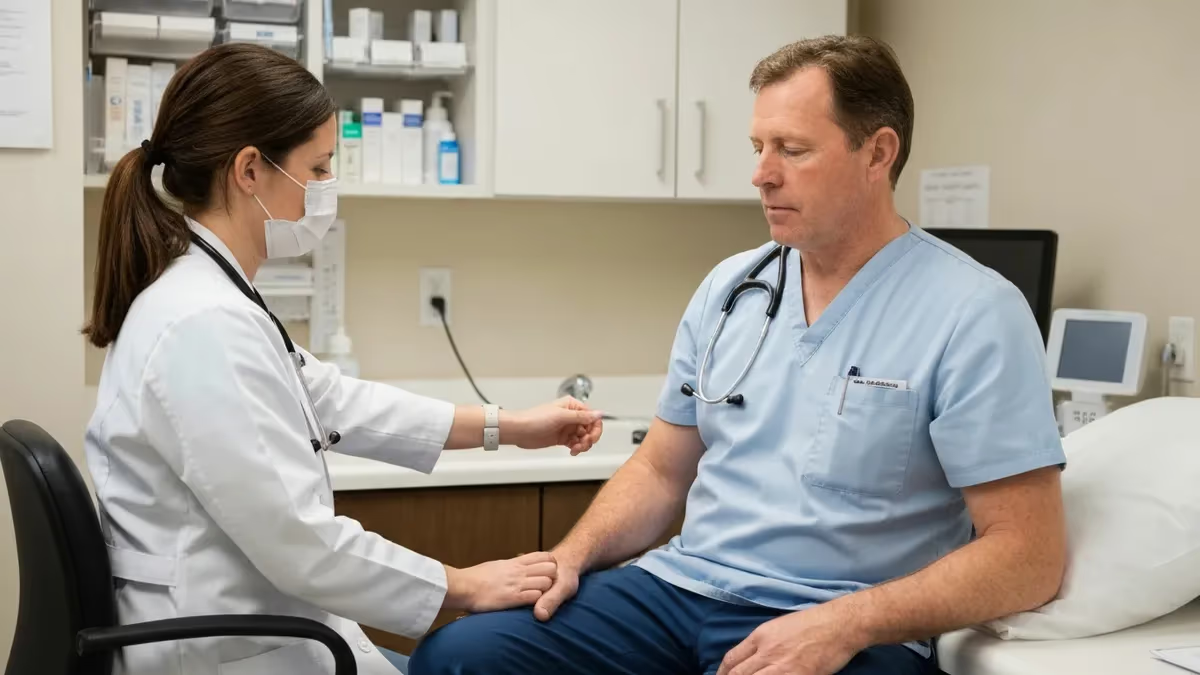
The university of florida nurse practitioner program stands among the most respected advanced practice nursing pathways in the southeastern United States, offering students a rigorous academic environment combined with clinical training that prepares graduates to deliver high-quality, patient-centered care across diverse healthcare settings. Whether you are a registered nurse looking to advance your career or a healthcare professional exploring graduate education, understanding the full scope of what UF offers is an essential first step toward becoming a licensed nurse practitioner.
The University of Florida College of Nursing, located in Gainesville, has built a decades-long reputation for producing clinical leaders who go on to serve in hospitals, community health centers, private practices, and underserved rural communities throughout Florida and beyond. The college consistently ranks among the top nursing schools nationally, with faculty who are active researchers, clinicians, and policy advocates shaping the future of advanced practice nursing education.
Prospective students often want to know what makes the UF program distinct. The answer lies in a combination of factors: nationally accredited curricula aligned with current competency frameworks, a strong emphasis on population health and evidence-based practice, access to UF Health's expansive clinical network, and faculty mentorship that guides students from their first didactic course through board certification preparation. These elements create a learning environment that goes well beyond textbook knowledge.
UF's nurse practitioner tracks span several specialty areas including Family Nurse Practitioner, Adult-Gerontology Primary Care, Adult-Gerontology Acute Care, Pediatric Nurse Practitioner, and Psychiatric-Mental Health Nurse Practitioner, among others. Each track carries its own credit hour requirements, clinical hour benchmarks, and board exam preparation strategies, allowing students to choose a specialty that aligns with their professional goals and patient population interests.
Admission to UF's graduate nursing programs is competitive and requires careful planning. Applicants typically need a current RN license, a bachelor of science in nursing from an accredited institution, a minimum undergraduate GPA (usually 3.0 or higher), relevant clinical experience, letters of recommendation, and a personal statement that articulates both professional experience and future goals. Some tracks may also require GRE scores, though many programs have moved away from this requirement in recent years.
Financial considerations are also top of mind for most graduate students. UF offers a range of funding opportunities including graduate assistantships, scholarships through the College of Nursing, federal HRSA workforce development grants targeting primary care shortages, and standard federal student loan programs. In-state tuition provides a significant cost advantage for Florida residents, making UF one of the more affordable top-tier NP programs available in the region.
Throughout this guide, you will find detailed information about UF's NP program structure, admission requirements, curriculum highlights, clinical training expectations, costs, and career outcomes. Whether you are just beginning your research or narrowing down your final list of schools, this comprehensive overview will give you the clarity and confidence to take the next step toward your advanced practice nursing career at the University of Florida.
UF Nurse Practitioner Program by the Numbers
UF Nurse Practitioner Program Tracks and Specialties
The most flexible and widely recognized NP track, preparing graduates to care for patients across the lifespan from pediatrics through geriatrics in primary care settings. FNP graduates are eligible to sit for the AANP or ANCC board certification exam.
Focused on adults and older adults in outpatient and community health environments. This track emphasizes chronic disease management, preventive care, and the complex medical needs of aging populations across ambulatory care settings.
Designed for NPs who want to practice in high-acuity settings such as ICUs, emergency departments, and inpatient units. Graduates manage complex, critically ill adult and geriatric patients and are eligible for AGACNP board certification.
One of the fastest-growing NP specialties nationally, this track prepares graduates to provide mental health assessment, diagnosis, and pharmacological and psychotherapeutic treatment across the lifespan in inpatient and outpatient settings.
Available in both primary care and acute care concentrations, this track equips NPs to care for neonates through adolescents. Graduates practice in pediatric clinics, children's hospitals, and specialty care offices with board certification from PNCB.
Understanding the admission requirements for UF's graduate nursing programs is critical for applicants who want to put their best foot forward in a competitive selection process. The College of Nursing reviews applications holistically, meaning that no single factor determines admission. However, several core requirements apply across nearly all NP tracks and must be in place before an application can be considered complete and reviewed by the admissions committee.
First and foremost, applicants must hold a current, unencumbered RN license in the state of Florida or be eligible for Florida licensure at the time of enrollment. This requirement exists because clinical rotations are conducted in Florida-based healthcare facilities governed by Florida Board of Nursing regulations. If you are licensed in another state, UF's admissions team can guide you through the endorsement or compact licensure process well before your program start date arrives.
Educational prerequisites are equally important. Applicants need a Bachelor of Science in Nursing (BSN) from a regionally accredited, ACEN- or CCNE-accredited nursing program. A minimum undergraduate GPA of 3.0 on a 4.0 scale is the standard benchmark, although competitive applicants typically present GPAs of 3.3 or higher. Some tracks with higher applicant volume may informally raise this bar, so it is worth contacting the program office to understand current competitive averages for your chosen specialty.
Clinical experience requirements are a distinguishing feature of UF's review process. Most NP tracks expect applicants to have at least one year of full-time RN experience, with two or more years strongly preferred. More importantly, the quality and relevance of that experience matters greatly. Applicants to the Adult-Gerontology Acute Care track, for example, benefit from ICU or step-down unit experience, while those applying to the Psychiatric-Mental Health track may strengthen their application with behavioral health or ED experience where psychiatric presentations are common.
Letters of recommendation play a meaningful role in demonstrating an applicant's professional readiness and academic potential. UF typically requires three letters from individuals who can speak to your clinical competence, leadership potential, and academic capability. The strongest letters come from direct supervisors, charge nurses, nurse managers, or faculty from your BSN program who have observed your work firsthand and can provide specific, evidence-based endorsements of your skills and character.
The personal statement is your opportunity to articulate why you are choosing NP practice, why you have selected your specific specialty, and what distinguishes you as a candidate. Admissions committees at UF look for clarity of purpose, self-awareness, and a realistic understanding of the advanced practice role. Vague statements about wanting to help people are far less effective than specific narratives that connect your clinical experiences to your professional aspirations and explain why the UF program is the right environment to achieve them.
Some applicants also wonder about prerequisite coursework. While UF does not universally require statistics or research methods courses completed prior to admission, having a foundational understanding of evidence-based practice and basic biostatistics will serve you well in the program's first semester. Students who enter with this background report feeling more confident during the epidemiology and nursing research courses that anchor the early curriculum. Taking an online statistics refresher before your start date is a proactive step many successful students recommend.
International applicants or those whose primary language is not English must submit TOEFL or IELTS scores meeting UF Graduate School minimums, unless they completed their BSN in an English-language program. The application cycle at UF is competitive and periodic, with most tracks accepting cohorts once annually. Deadlines typically fall in the fall for spring or summer start dates, though the exact schedule varies by track, so checking the College of Nursing website regularly is essential for accurate, current information.
UF NP Curriculum, Clinical Training, and Board Prep
UF's NP curriculum is built around three foundational pillars: advanced health assessment, advanced pathophysiology, and advanced pharmacology. These three core courses, often called the three Ps, form the academic backbone of every NP track and must be completed early in the program. Beyond these, students take courses in evidence-based practice, epidemiology, healthcare policy, leadership, and informatics that build the systems-level thinking modern NPs need to thrive in complex healthcare environments.
Specialty-specific didactic courses follow the core curriculum and vary significantly by track. FNP students, for example, take dedicated courses in primary care across the lifespan, whereas Psychiatric-Mental Health students complete coursework in psychopharmacology, psychotherapy modalities, and psychiatric diagnostics. Each specialty course is carefully sequenced so that classroom learning directly precedes and supports the clinical practicums where students begin applying skills with real patients under preceptor supervision.
Is the UF Nurse Practitioner Program Right for You?
- +CCNE-accredited program with a nationally recognized reputation and strong employer recognition across Florida and beyond
- +Access to UF Health's large clinical network provides diverse and high-quality preceptorship and practicum opportunities
- +Multiple specialty tracks available under one institutional umbrella, allowing track changes or dual-role exploration
- +Competitive in-state tuition rates make UF one of the most cost-effective top-tier NP programs in the Southeast
- +Strong faculty research output and clinical expertise enrich the academic experience beyond standard didactic instruction
- +Florida's growing population and NP-friendly practice laws create excellent post-graduation employment demand for UF graduates
- −Highly competitive admissions mean that applicants with GPAs below 3.3 or limited RN experience may face challenges
- −Clinical placement in rural or underserved areas may require travel and logistical planning not all students can accommodate
- −Part-time options are limited in some tracks, making it difficult for students who cannot reduce their work hours significantly
- −Preceptor sourcing responsibility falls partly on the student, which requires networking skills and advance planning
- −Gainesville campus location may not be convenient for students in South Florida or other distant regions of the state
- −Program intensity during the final clinical year can create significant workload and personal schedule challenges for many students
Pros and Cons at a Glance
| Pros | Cons |
|---|---|
| CCNE-accredited program with a nationally recognized reputation and strong employer recognition across Florida and beyond | Clinical placement in rural or underserved areas may require travel and logistical planning not all students can accommodate |
| Access to UF Health's large clinical network provides diverse and high-quality preceptorship and practicum opportunities | Part-time options are limited in some tracks, making it difficult for students who cannot reduce their work hours significantly |
| Multiple specialty tracks available under one institutional umbrella, allowing track changes or dual-role exploration | Preceptor sourcing responsibility falls partly on the student, which requires networking skills and advance planning |
| Competitive in-state tuition rates make UF one of the most cost-effective top-tier NP programs in the Southeast | Gainesville campus location may not be convenient for students in South Florida or other distant regions of the state |
| Strong faculty research output and clinical expertise enrich the academic experience beyond standard didactic instruction | Program intensity during the final clinical year can create significant workload and personal schedule challenges for many students |
UF NP Application and Enrollment Checklist
- ✓Verify your RN license is active, unencumbered, and Florida-eligible before submitting your application
- ✓Confirm your BSN is from a regionally accredited, CCNE- or ACEN-accredited nursing program
- ✓Calculate your undergraduate GPA and request official transcripts from all institutions attended
- ✓Accumulate at least one to two years of relevant RN clinical experience in a setting related to your chosen NP specialty
- ✓Contact three professional references early and give them at least four to six weeks to submit recommendation letters
- ✓Draft and revise your personal statement to clearly articulate your specialty choice, clinical background, and professional goals
- ✓Review the specific prerequisite coursework requirements for your chosen NP track on the UF College of Nursing website
- ✓Submit your TOEFL or IELTS scores if English is not your primary language or your BSN was completed in a non-English program
- ✓Complete the UF Graduate School online application and pay the application fee by the posted deadline for your track
- ✓Begin identifying potential clinical preceptors in your area and reach out to introduce yourself well before rotations begin
Start Your Preceptor Search Before You Are Admitted
One of the most common reasons UF NP students fall behind schedule is difficulty securing clinical preceptors, especially in subspecialty areas. Begin reaching out to potential preceptors in your community as soon as you submit your application — experienced NPs and physicians appreciate early, professional outreach and are far more likely to commit when given adequate lead time before your rotation starts.
Tuition and total program costs are naturally a major factor for any prospective graduate student, and understanding the full financial picture at UF requires looking beyond tuition per credit hour to include fees, supplies, clinical requirements, and living expenses. For Florida residents, UF's graduate nursing tuition is among the most competitive available at a ranked public research university, making it an attractive option for in-state students who want a high-quality NP education without taking on the debt burden associated with private institutions.
As of the most recent published rates, in-state tuition for UF's College of Nursing graduate programs runs approximately $550 to $600 per credit hour, depending on the specific degree level and any associated fees. For a 40-credit-hour FNP program, resident students can expect tuition costs in the range of $22,000 to $24,000 before fees. Out-of-state tuition rates are approximately double this amount, which is why Florida licensure and residency status significantly affect the financial calculus for non-Florida applicants considering UF.
Beyond tuition, students must budget for several additional costs. These include the cost of liability insurance during clinical rotations (typically $100 to $200 per year), background check fees, drug screening, required immunizations and health screenings, HIPAA and OSHA certification, and clinical supplies such as a high-quality diagnostic kit. Students in programs requiring national certification board exams should also budget $300 to $500 for exam fees, with additional costs for board review materials and practice question banks.
UF offers several funding mechanisms to help offset program costs. Graduate assistantships, while more common in PhD programs, are occasionally available to MSN students engaged in faculty research projects. The UF College of Nursing Foundation administers a number of scholarships specifically for graduate nursing students, with awards ranging from a few hundred to several thousand dollars per semester. Applications for these scholarships are typically due in the spring, so identifying and applying for them early in your first academic year is essential.
Federal funding through HRSA's Nurse Corps Scholarship Program and Nurse Education Loan Repayment Program represents another significant avenue for NP students. HRSA programs prioritize students committed to working in Health Professional Shortage Areas (HPSAs) after graduation — a population health mission that aligns naturally with primary care-focused NP specialties like FNP and Adult-Gerontology Primary Care. Florida has numerous designated HPSAs, particularly in rural North Florida and the agricultural communities of central and southwest Florida.
The Florida Scholarship for Service program and various hospital-sponsored tuition reimbursement programs are also worth exploring. Many of Florida's major health systems, including UF Health, HCA Florida, and AdventHealth, offer tuition assistance programs that reimburse graduate nursing employees for educational expenses. These programs typically require a work commitment following graduation, but for students already employed within these systems, the combination of employer tuition reimbursement and UF's competitive in-state rates can dramatically reduce out-of-pocket costs.
Students are encouraged to meet with UF's Financial Aid Office during or before the first semester to review their complete financial picture, including eligibility for federal unsubsidized graduate loans. While borrowing should always be approached thoughtfully, it is reassuring to note that the return on investment for NP education is strong. Florida NPs earn a median annual salary exceeding $115,000, meaning that a well-managed loan balance can typically be serviced comfortably within the first few years of post-graduation employment.

UF nurse practitioner program application deadlines vary by specialty track and cohort year, and many tracks fill quickly due to high demand. Check the UF College of Nursing admissions page at least six months before your intended start date to confirm current deadlines. Missing the priority deadline often means waiting an entire additional year for the next available cohort opening.
Career outcomes for graduates of UF's nurse practitioner programs are consistently strong, reflecting both the quality of the education and the sustained demand for advanced practice nurses throughout Florida and nationally. Florida is one of the largest and fastest-growing states in the country, with a population that skews older and includes a significant proportion of individuals managing complex chronic conditions — a demographic reality that translates directly into sustained demand for primary care, acute care, and specialty NP services across every region of the state.
Florida operates under a collaborative practice model for nurse practitioners, meaning NPs practice with a required collaborative practice agreement with a supervising physician in most clinical settings. While Florida has not yet joined the growing number of states that have granted full practice authority to NPs, the practical reality in many settings — particularly federally qualified health centers, rural health clinics, and large health systems — is that experienced NPs function with a high degree of clinical autonomy supported by collaborative structures that are often relatively flexible in implementation.
Salary data for Florida NPs is encouraging. According to the Bureau of Labor Statistics and supplementary salary surveys conducted by the American Association of Nurse Practitioners, Florida NPs earn a median annual salary in the range of $110,000 to $120,000 depending on specialty, setting, and geographic location. Acute care specialties such as AGACNP and CRNA-adjacent roles tend to command the highest salaries, while primary care FNPs in community health settings may earn slightly less but often benefit from loan forgiveness programs and federal incentive pay that can significantly close the gap.
Geographic factors within Florida also play a meaningful role in salary variation. NPs practicing in the Tampa Bay, Orlando, and Miami metropolitan markets tend to earn at or above the state median, while those in rural North Florida or smaller markets may earn somewhat less base salary but often face lower costs of living and may qualify for HRSA rural health incentives. UF's location in Gainesville positions its graduates well for opportunities throughout North and Central Florida, regions that are experiencing significant population growth and corresponding increases in healthcare demand.
Employment timelines for UF NP graduates are typically short. The combination of UF's strong brand recognition among Florida employers and the persistent statewide NP workforce shortage means that most graduates secure employment before or shortly after passing their board certification exam. The UF College of Nursing career services office actively facilitates employer connections through job fairs, alumni networking events, and an online job board accessible to students and recent graduates throughout the academic year.
Specialty-specific career paths diverge meaningfully after graduation. FNP graduates often move into family medicine practices, urgent care centers, or retail health clinics, while AGACNP graduates are recruited heavily by hospital systems for inpatient and critical care roles. Psychiatric-Mental Health NP graduates are particularly in demand given the national mental health workforce crisis, with employers actively recruiting and offering signing bonuses at levels that would have been unusual in this specialty just five years ago. Pediatric NP graduates find strong placement in children's hospitals, pediatric subspecialty clinics, and school-based health programs.
Long-term career trajectories for UF NP graduates extend well beyond clinical practice. Many alumni go on to pursue doctoral education — either the Doctor of Nursing Practice (DNP) to deepen clinical expertise, or the PhD in Nursing to pursue research and faculty roles. UF itself offers DNP programs that FNP and other master's-prepared NPs can transition into, creating a natural educational pipeline that keeps successful clinicians connected to the university's academic community throughout their career development.
Success in UF's nurse practitioner program — and on the board certification exam that follows — requires a strategic approach to studying, clinical preparation, and self-management throughout what is typically two to three of the most academically demanding years of a healthcare professional's life. Students who thrive in NP programs tend to share a set of habits and mindsets that distinguish them from those who struggle, and understanding these patterns early can make an enormous difference in your experience and outcomes.
Time management is arguably the single most critical skill for NP students. Graduate nursing programs combine heavy reading loads, case-based assignments, simulation lab sessions, and clinical hours into schedules that leave little room for inefficiency. Successful students block study time on their calendars weeks in advance, treat their academic commitments like professional appointments, and resist the temptation to catch up rather than stay current. Falling behind in a content-heavy course like pathophysiology or pharmacology can quickly create a compounding problem that is very difficult to reverse mid-semester.
Active learning strategies significantly outperform passive review for the type of clinical reasoning that NP programs develop and board exams assess. Rather than re-reading notes or highlighting textbooks, the most effective NP students engage in question-based learning from the earliest weeks of the program. Working through board-style practice questions daily — even when the content feels unfamiliar — builds the pattern recognition and differential diagnosis thinking that both clinical practice and certification exams demand. Resources like question banks and free practice tests aligned to specific NP specialties are invaluable tools throughout the program.
Building a peer study community is another high-impact strategy. NP cohorts are typically small enough that students can form lasting professional relationships, and study groups that meet regularly to work through cases, quiz each other on pharmacology, and debrief clinical experiences accelerate everyone's learning. UF's cohort model facilitates these connections naturally, but students who actively invest in peer relationships during the first semester report significantly higher satisfaction and stronger academic performance throughout the program.
Clinical practicums require a specific form of preparation that goes beyond classroom study. Before each clinical rotation begins, review the patient population, common diagnoses, key medications, and relevant clinical guidelines for that setting. Arrive at each shift with specific learning objectives in mind rather than waiting for learning opportunities to come to you. Ask your preceptor to observe you performing specific skills, request feedback after patient encounters, and document your clinical hours and cases carefully from day one to avoid administrative problems during the final semester.
Board exam preparation should begin in earnest during the final year of the program, not after graduation. Students who integrate board review into their regular study habits — dedicating even 30 to 60 minutes per day to practice questions and content review — arrive at exam day with confidence and familiarity rather than anxiety and unfamiliar material. UF's board preparation workshops are valuable supplements, but the foundation should be daily individual practice across all content domains throughout the entire final year of clinical training.
Mental health and physical wellness are often underestimated factors in NP program success. The intensity of graduate nursing education, combined with the emotional weight of clinical work and the financial stress of tuition and reduced work hours, creates conditions that make burnout a real and documented risk among NP students. Proactive self-care — maintaining sleep, exercise, social connection, and access to counseling services when needed — is not a luxury but a professional necessity. UF provides robust student wellness resources that many students underutilize, and seeking support early before problems escalate is a sign of clinical wisdom, not weakness.
Finally, stay connected to the broader nursing profession throughout your program. Joining the Florida Association of Nurse Practitioners (FLANP) or the American Association of Nurse Practitioners (AANP) as a student member provides access to professional development resources, networking opportunities, legislative advocacy updates, and discounts on certification review materials. Developing a professional identity as a future NP — rather than simply a student completing requirements — positions you to take full advantage of the opportunities that your UF education will open during and after your graduation.
NP Questions and Answers

Nurse Practitioner Taxonomy Code: Complete 2026 Guide to NPI Classification, Specialty Codes, and Billing Compliance

Family Nurse Practitioner Remote Jobs: Complete 2026 Guide to Telehealth Careers

Nursing Practitioner Online Programs: Complete Training Guide and Requirements for 2026

Psychiatric Nurse Practitioner Programs Online: Complete Training Guide and Requirements

Nurse Practitioner Colleges in Ohio: Complete Training Guide and Requirements
About the Author

Registered Nurse & Healthcare Educator
Johns Hopkins University School of NursingDr. Sarah Mitchell is a board-certified registered nurse with over 15 years of clinical and academic experience. She completed her PhD in Nursing Science at Johns Hopkins University and has taught NCLEX preparation and clinical skills courses for nursing students across the United States. Her research focuses on evidence-based exam preparation strategies for healthcare certification candidates.