
Nurse Practitioner Colleges in Ohio: Complete Training Guide and Requirements
Explore nurse practitioner colleges in Ohio — admission requirements, top programs, costs, and career paths. 🎓 Your complete 2026 September training guide.
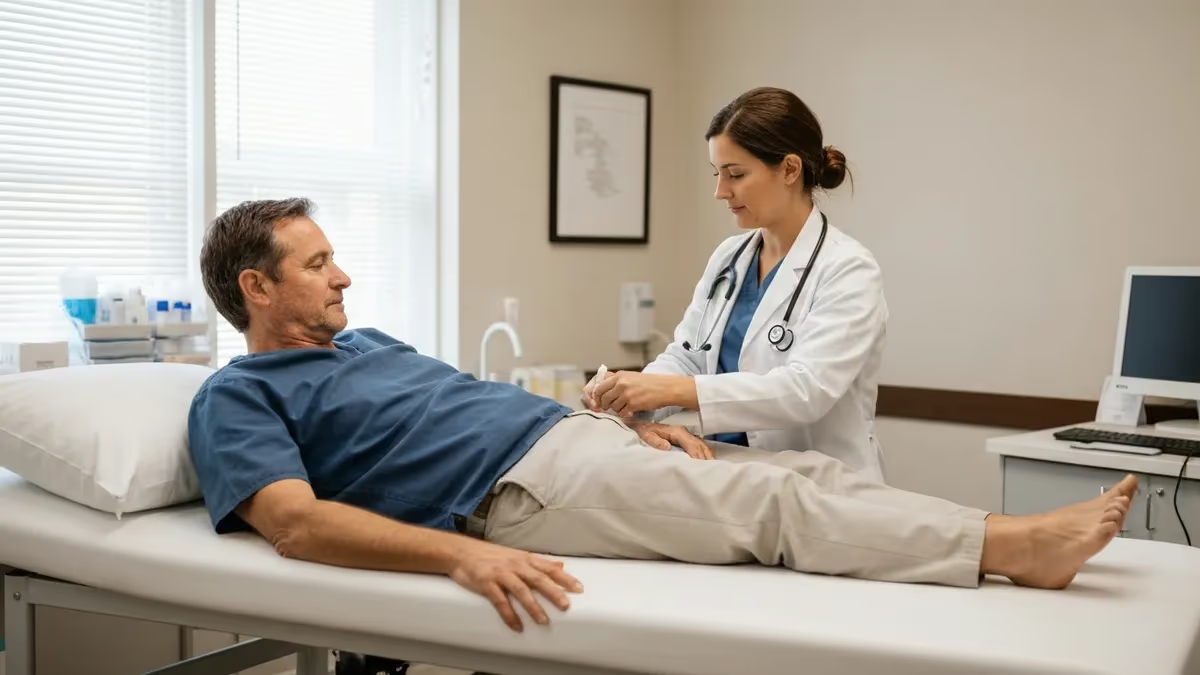
Choosing among nurse practitioner colleges in Ohio is one of the most consequential decisions a registered nurse can make on the path to advanced practice. Ohio is home to more than two dozen accredited MSN and DNP programs spanning public universities, private institutions, and hybrid online formats, giving aspiring NPs a broad range of options that fit different schedules, budgets, and specialty interests. Understanding how programs differ in clinical hour requirements, admission criteria, and certification outcomes is essential before submitting a single application.
The demand for nurse practitioners across Ohio has never been stronger. The Ohio State Medical Board and the Ohio Board of Nursing report continued growth in NP licensure applications each year, driven by an aging population, expanded Medicaid coverage, and a persistent physician shortage in rural counties. According to the Bureau of Labor Statistics, employment of nurse practitioners nationally is projected to grow 46 percent through 2033, far outpacing almost every other healthcare occupation — and Ohio mirrors that trend closely.
Ohio NP programs differ significantly in how they structure clinical education. ACEN- and CCNE-accredited programs must meet rigorous clinical hour minimums: MSN programs typically require 500 to 700 direct patient care hours, while post-master's and DNP programs may require 1,000 hours or more. The distribution of those hours across primary care, acute care, and specialty rotations shapes how well graduates perform on national certification exams administered by AANPCB and ANCC.
Admission requirements at Ohio NP schools generally include an active, unencumbered RN license, a BSN from an accredited program, a minimum GPA of 3.0 on a 4.0 scale, at least one year of clinical RN experience, letters of recommendation, a personal statement, and official transcripts. Some programs — particularly DNP tracks — also require GRE scores or proof of statistical coursework, so checking each school's specific requirements well in advance of the application cycle is critical.
Tuition at Ohio NP programs ranges from roughly $600 to $1,200 per credit hour depending on residency status and institution type. A 48-credit MSN program at an Ohio public university may cost $30,000 to $45,000 in total, while a private university DNP program can exceed $75,000. Many students fund their education through federal graduate loans, employer tuition reimbursement, HRSA nursing workforce scholarships, and Ohio-specific grant programs available through the Ohio Board of Regents.
When evaluating nurse practitioner colleges, prospective students should also consider NCLEX-style and specialty certification pass rates published by each program. Programs with first-time ANCC or AANPCB pass rates above 90 percent signal strong curriculum alignment with national exam blueprints. Peer-reviewed rankings from U.S. News & World Report and specialty nursing organization accreditation lists provide additional benchmarks for comparing program quality across the state.
This guide covers everything you need to know about Ohio NP programs: top schools by specialty, admission timelines, clinical hour expectations, cost breakdowns, and strategies for passing certification exams on the first attempt. Whether you are a bedside RN considering a family nurse practitioner track or an experienced nurse weighing a psychiatric-mental health NP concentration, the information below will help you build a focused, realistic plan for entering advanced practice.
Ohio NP Education by the Numbers
Top Ohio NP Program Requirements at a Glance
All Ohio NP programs require a current, unencumbered Ohio RN license. Some programs accept applicants licensed in compact states, but Ohio licensure must be obtained before clinical rotations begin. Verify your license is in good standing through the Ohio Board of Nursing portal before applying.
A Bachelor of Science in Nursing from a regionally accredited, ACEN- or CCNE-approved program is mandatory. Applicants holding an ADN may qualify for RN-to-MSN bridge tracks offered by schools like Ohio University and Ursuline College, which integrate BSN-level coursework into the NP curriculum.
Most Ohio NP programs set a cumulative undergraduate GPA floor of 3.0 on a 4.0 scale. Competitive DNP applicants often present GPAs of 3.5 or higher. Programs at The Ohio State University and Case Western Reserve may consider professional experience as a mitigating factor for borderline GPA cases.
One to two years of full-time RN experience is standard. Acute care NP tracks — such as AGACNP and PMHNP — typically prefer applicants with ICU, emergency, or inpatient psychiatric experience. Family NP and pediatric NP tracks accept outpatient and community health backgrounds as well as hospital floor nursing.
Two to three professional letters from nursing supervisors, physicians, or faculty members are required at virtually every Ohio program. A compelling personal statement (500 to 750 words) should explain your specialty choice, career goals, and how the specific program's resources align with your clinical interests and professional trajectory.
Navigating the admission process for Ohio NP programs requires careful planning that begins at least 12 to 18 months before your target enrollment date. Most programs admit students once per year for fall entry, though a growing number of schools — including Ohio University eCampus and Walden University's Ohio-based cohorts — now offer rolling or spring admission. Missing a single deadline can set your timeline back by an entire academic year, so building a master calendar is non-negotiable.
The first concrete step is requesting official transcripts from every college or university you attended. Transcript requests can take two to six weeks depending on the institution, and many Ohio NP programs require transcripts to be sent directly from the issuing registrar to the graduate admissions office. Digital transcript services like the National Student Clearinghouse have sped up this process considerably, but plan for delays by initiating requests early in the application cycle.
Letters of recommendation deserve more attention than most applicants give them. Identify recommenders who can speak specifically to your clinical judgment, communication skills, and capacity for graduate-level academic work. Generic letters from physicians who barely know your practice are far less effective than detailed letters from a charge nurse, clinical supervisor, or nursing faculty member who has observed you manage complex patients firsthand. Give recommenders at least four to six weeks and a copy of your personal statement to guide their narrative.
Your personal statement should do three things: explain why you are pursuing NP practice rather than remaining at the bedside, why you have chosen your target specialty, and why this particular program is the right fit. Admissions committees at Ohio State, Case Western Reserve, and Cincinnati read hundreds of statements; the ones that stand out are specific, clinically grounded, and honest about career trajectory. Avoid generic statements about wanting to help people — instead, describe a defining patient encounter that crystallized your path toward advanced practice.
GRE requirements have been dropped by many Ohio programs in recent years, but roughly a third still require them for DNP applicants. If you need to take the GRE, allow three to four months for preparation and at least two testing attempts in case you need to resit. A quantitative score above 150 is generally considered competitive, and a strong verbal score reinforces the analytical writing skills necessary for graduate-level NP coursework.
After submitting your application, most Ohio programs conduct a structured interview — either in person or via video — before making an admissions decision. Interview questions typically probe your understanding of the NP role, your chosen specialty rationale, and your ability to balance graduate coursework with continued clinical or professional commitments. Practicing answers to common NP interview prompts and reviewing the program's mission statement beforehand significantly improves your performance.
Once admitted, you will typically have two to four weeks to accept the offer and submit a non-refundable enrollment deposit ranging from $200 to $500. Use this window to verify that your expected clinical hours will be completed at approved sites, confirm financial aid packaging, and connect with your assigned faculty advisor to map out your individualized plan of study before the first semester begins.
NP Specialty Tracks at Ohio Colleges
The Family Nurse Practitioner track is the most widely offered specialty at Ohio NP colleges, available at Ohio State University, the University of Cincinnati, Kent State, Ohio University, and more than a dozen other institutions. FNP programs typically span 48 to 54 credit hours and require a minimum of 500 direct patient care hours completed across lifespan rotations in pediatrics, adult primary care, women's health, and geriatrics. Graduates are eligible to sit for the AANPCB Family Nurse Practitioner Certification (FNP-C) or the ANCC Family Nurse Practitioner Board Certification (FNP-BC).
Ohio FNP graduates enjoy strong job market demand, with the Ohio Department of Job and Family Services identifying primary care NPs as a high-priority shortage occupation in 60 of Ohio's 88 counties. Median salaries for FNPs in Ohio range from $105,000 in rural southeastern Ohio to $128,000 in the Columbus and Cleveland metro areas. Many FNP graduates secure positions in federally qualified health centers, which may qualify for Public Service Loan Forgiveness — a major financial advantage for graduates carrying federal student loan debt from their NP education.
Pros and Cons of Attending an Ohio NP Program
- +Ohio has 26+ accredited NP programs, giving applicants a wide range of specialty and format options
- +In-state tuition at Ohio public universities is significantly lower than comparable out-of-state or private programs
- +Strong clinical placement networks in urban health systems like Cleveland Clinic and OhioHealth
- +Ohio's high demand for NPs in rural and underserved areas creates loan repayment and scholarship opportunities
- +Multiple hybrid and fully online options allow RNs to continue working while completing coursework
- +Ohio's full practice authority movement continues to expand NP scope, improving post-graduation career flexibility
- −Securing clinical preceptors independently is required at many Ohio programs, which can be stressful and time-consuming
- −Tuition at private Ohio NP programs can exceed $75,000 for a DNP, rivaling out-of-state program costs
- −Ohio has not yet enacted full practice authority, requiring NPs to maintain a collaborative practice agreement with a physician
- −Competitive programs like Ohio State and Case Western have selective admission with GPA and experience cutoffs that screen out many applicants
- −Part-time DNP tracks can stretch to five or six years, creating long periods of financial stress for working nurses
- −Rural clinical placements may require significant travel, adding indirect costs not reflected in tuition figures
NP Licensure and Certification Checklist for Ohio Graduates
- ✓Verify your Ohio RN license is current, active, and free of any encumbrances before applying for NP licensure
- ✓Confirm your NP program is accredited by CCNE or ACEN, as Ohio requires graduation from an accredited program
- ✓Complete the required minimum clinical hours in your population focus as documented by your program director
- ✓Pass your national certification exam (AANPCB or ANCC) within the post-graduation eligibility window
- ✓Submit the Ohio Board of Nursing Advanced Practice Registered Nurse licensure application with all required documentation
- ✓Obtain a collaborative practice agreement with an Ohio-licensed physician if practicing in a restricted-authority setting
- ✓Apply for your Ohio DEA registration to prescribe controlled substances once APRN licensure is granted
- ✓Complete Ohio-required prescriber education on opioid prescribing and controlled substance regulations
- ✓Enroll in the Ohio Automated Rx Reporting System (OARRS) to access the state prescription drug monitoring program
- ✓Confirm your national provider identifier (NPI) is updated to reflect your new NP specialty and taxonomy code
Ohio's Collaborative Practice Requirement Affects Your Job Search
Unlike the 27 states that grant full practice authority to NPs, Ohio currently requires NPs to maintain a collaborative practice agreement (CPA) with a supervising physician. When evaluating job offers, confirm that a CPA arrangement is included in your contract or that your employer provides physician collaborators — this requirement can limit solo or independent practice opportunities until Ohio legislation changes.
Understanding the true cost of an Ohio NP education requires looking beyond tuition to include fees, clinical travel, technology requirements, certification exam costs, and opportunity costs from reduced work hours. Public university MSN programs — such as those at Ohio University, Wright State, and the University of Toledo — offer the best per-credit-hour value for Ohio residents, with tuition often ranging from $600 to $850 per credit hour. A 48-credit MSN program at these schools can total $29,000 to $41,000 in tuition before fees, making them among the most affordable pathways in the Midwest.
Private Ohio NP programs — including Otterbein University, Ursuline College, and Mount St. Joseph University — typically charge $900 to $1,200 per credit hour, pushing total program costs to $45,000 to $65,000 for an MSN or $70,000 to $90,000 for a DNP. These programs often offset higher tuition with stronger mentorship ratios, dedicated clinical placement coordinators, and smaller cohort sizes that facilitate more individualized attention from faculty. For many students, the trade-off is worth the additional cost.
Funding options for Ohio NP students are more varied than most applicants realize. The Health Resources and Services Administration (HRSA) Nurse Corps Scholarship Program covers full tuition plus a monthly stipend in exchange for a two-year service commitment at a critical shortage facility. The Ohio Board of Regents Ohio Nurse Education Assistance Loan Program (ONEALP) offers low-interest loans with forgiveness provisions for NPs who practice in Ohio for a specified period after graduation. Many Ohio health systems — including Cleveland Clinic, OhioHealth, and Mercy Health — provide tuition reimbursement of $5,000 to $15,000 per year for employees pursuing NP credentials.
Federal Public Service Loan Forgiveness (PSLF) is one of the most powerful debt-management tools available to Ohio NP graduates who plan to work at nonprofit hospitals, federally qualified health centers, or government agencies. After 120 qualifying monthly payments under an income-driven repayment plan while employed full-time at an eligible employer, the remaining federal loan balance is forgiven tax-free. Given that many Ohio NP graduates carry $40,000 to $80,000 in federal student loans, PSLF can be worth hundreds of thousands of dollars over a career.
Return on investment calculations for Ohio NP education are generally very favorable. An FNP earning $115,000 per year — common in Ohio primary care settings — nets approximately $50,000 to $60,000 more annually than the median Ohio RN salary of $65,000. Even after accounting for $50,000 in educational costs and two to three years of reduced income during part-time graduate enrollment, most NP graduates achieve full educational cost recovery within three to four years of entering practice, often sooner in high-demand specialties like psychiatric-mental health NP.
Cost-conscious applicants should also factor in indirect expenses that programs rarely advertise. NCLEX-style national certification exam fees run $290 for AANPCB and $395 for ANCC. Ohio APRN licensure application fees are approximately $75. DEA registration for controlled substance prescribing costs $888 for a three-year period. Liability insurance through NSO or Proliability runs $100 to $200 annually for NP students and $1,000 to $2,000 annually for practicing NPs, depending on specialty and coverage limits.
Students who complete their NP education while maintaining full-time or part-time RN employment have the best outcomes financially. Online and hybrid Ohio programs are specifically designed to accommodate working nurses, with asynchronous coursework that can be completed evenings and weekends and clinical rotations scheduled around existing work commitments. The ability to continue earning an RN salary — even at reduced hours — dramatically improves the financial calculus of an Ohio NP program compared to leaving the workforce entirely for full-time study.

Ohio NPs cannot legally practice independently without a signed collaborative practice agreement (CPA) in place before seeing patients. If your CPA physician retires, relocates, or terminates the agreement, you must secure a new collaborating physician within 30 days or suspend practice. Build a network of potential CPA partners before graduation — waiting until your first week of employment creates serious legal exposure.
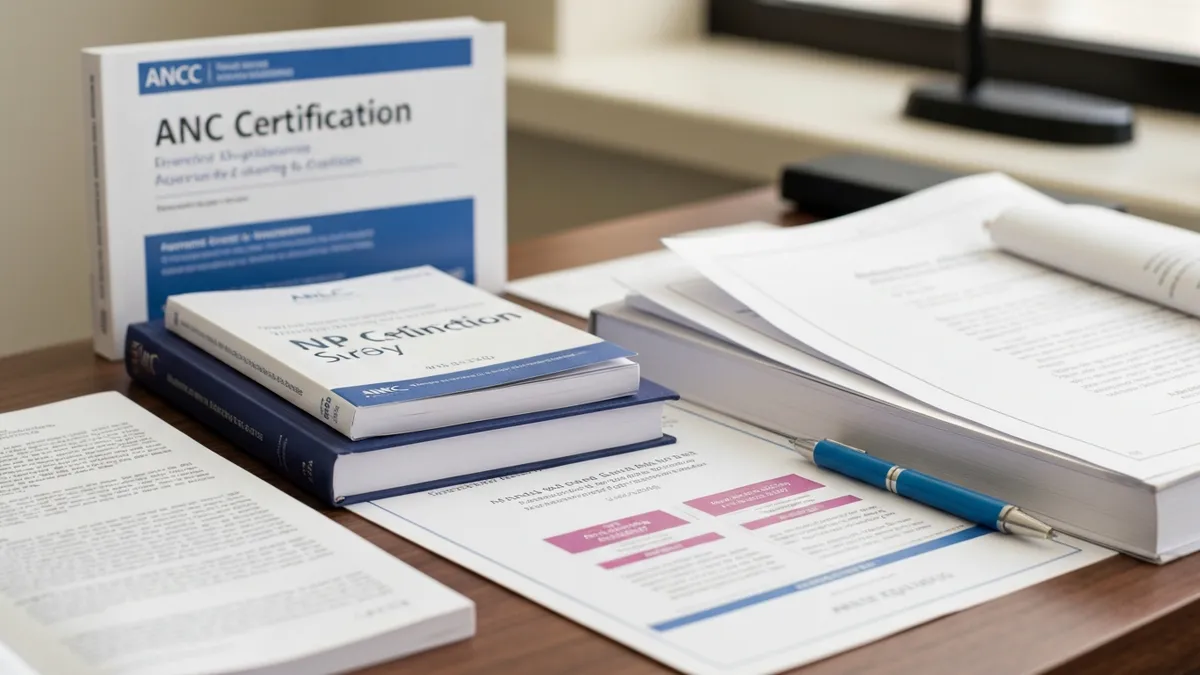
Preparing effectively for national NP certification exams is arguably the most important thing you can do after completing your Ohio NP program. The ANCC and AANPCB exams have first-time pass rates that hover around 80 to 86 percent for FNP candidates, which means roughly one in six first-time takers does not pass — a sobering statistic that underscores the need for structured exam preparation rather than relying on clinical experience alone. Building a disciplined study plan in the final semester of your program is far more effective than cramming in the weeks after graduation.
The ANCC FNP-BC examination consists of 175 questions (150 scored, 25 unscored pretest items) covering health promotion and disease prevention, assessment and diagnosis, clinical management, and professional role. The AANPCB FNP-C exam contains 150 questions testing clinical knowledge across the lifespan. Both exams are computer-adaptive or linear formats depending on testing center location. Understanding the specific blueprint weighting for your target exam — available free on each certifying body's website — is essential for allocating study time across content domains.
High-quality question banks are the cornerstone of NP certification preparation. Products like Fitzgerald Health Education Associates, Barkley & Associates, and Blueprint NCLEX-PN offer NP-specific question banks with detailed rationales, performance analytics, and timed exam simulations. Aim to complete a minimum of 1,500 to 2,000 practice questions before your exam date, paying close attention to rationales for both correct and incorrect answer choices. Pattern recognition across pharmacology, differential diagnosis, and management guidelines builds the clinical reasoning speed that certification exams require.
Pharmacology is consistently cited by Ohio NP graduates as the highest-stakes content area on certification exams. NP programs cover hundreds of drug classes across multiple organ systems, and exam questions test not just mechanism of action but prescribing nuances, contraindications, monitoring parameters, and patient education requirements. Creating drug class summary cards — particularly for cardiovascular, endocrine, pulmonary, psychiatric, and anti-infective agents — and reviewing them daily in the final six weeks before the exam is a strategy used by high-performing candidates across Ohio NP programs.
Clinical guidelines from organizations such as the AHA, ADA, USPSTF, CDC, and JNC provide the evidentiary framework for the vast majority of NP exam management questions. Rather than memorizing individual guidelines exhaustively, focus on understanding the screening intervals, first-line treatment recommendations, and monitoring protocols for the highest-prevalence conditions tested: hypertension, type 2 diabetes, hyperlipidemia, depression, COPD, asthma, and STIs. Ohio NP faculty routinely emphasize that exam success comes from understanding clinical reasoning, not from rote memorization of guideline tables.
Time management during the exam itself is a skill that must be practiced deliberately. Both the ANCC and AANPCB exams allow approximately one minute per question on average. Students who spend three to four minutes on difficult questions early in the exam often run out of time near the end, leading to careless errors or unanswered items. Practice timed sessions — 50 questions in 50 minutes — during your preparation period to build the pacing discipline that translates directly to exam day performance under real testing conditions.
After passing your certification exam, the final steps involve Ohio Board of Nursing APRN licensure, DEA registration, NPI taxonomy code updates, and securing your collaborative practice agreement before your start date. Ohio NP programs at most major universities assign a dedicated post-graduation advisor to help graduates navigate these administrative steps, but the responsibility for completing them on time falls on the individual. Delaying any one of these steps can push your first day of practice back by weeks or months, so treat post-graduation paperwork with the same urgency as the exam itself.
Practical preparation for Ohio NP programs begins long before your first day of class. Nurses who systematically build their clinical skills, professional network, and academic readiness during the one to two years before applying are measurably better positioned for both admission and graduation success. Start by auditing your current RN practice: identify gaps in physical assessment, diagnostic interpretation, and pharmacological knowledge that graduate coursework will demand you master at a higher level.
One of the most underappreciated preparation strategies is finding a mentoring NP in your target specialty before you even apply. Shadow your mentor during clinic hours, ask about their clinical decision-making process, and learn what a typical patient panel looks like in your specialty of interest. This exposure does two things simultaneously: it confirms that your specialty choice aligns with daily practice realities, and it gives you authentic, specific material for your personal statement that admissions committees find compelling compared to generic career narrative essays.
Strengthening your academic profile before applying also matters more than most working nurses assume. If your undergraduate GPA was below 3.0, many Ohio programs will consider a strong performance in prerequisite graduate-level courses — statistics, pathophysiology, or research methods — as evidence that you can handle MSN-level rigor. Taking one or two graduate courses as a non-degree-seeking student at a local Ohio university is a low-risk strategy that can substantially improve your application's competitiveness without committing to a full program.
Clinical preceptor acquisition is one of the most stressful aspects of many Ohio NP programs, particularly for students in online tracks that do not guarantee placement. Begin building relationships with potential preceptors — family practice physicians, NPs, and clinical faculty — at least two semesters before your clinical rotations are scheduled to begin. Professional associations like the Ohio Association of Advanced Practice Nurses (OAAPN) and local nursing chapters of Sigma Theta Tau offer networking events that are excellent venues for identifying and cultivating preceptor relationships before you need them urgently.
Technology proficiency is increasingly important in Ohio NP programs. Most programs use learning management systems like Canvas or Blackboard for asynchronous coursework, and clinical documentation skills in EHR systems such as Epic, Cerner, or Athenahealth are tested during objective structured clinical examinations (OSCEs). If your current RN position does not expose you to advanced EHR functions — order entry, note writing, prescription generation — seek opportunities to expand your EHR skills before graduate school begins so that documentation does not slow your clinical learning during rotations.
Building financial resilience before starting an Ohio NP program protects you against the income disruption that graduate education creates. Financial advisors who work with healthcare professionals recommend accumulating three to six months of living expenses in liquid savings before beginning a program, reducing your dependence on high-interest personal loans during periods of reduced work hours. Couples and families should model the household budget impact of reduced income scenarios — particularly during intensive clinical semesters — before committing to a specific program start date.
Finally, invest time in understanding what life as a practicing NP actually looks like in Ohio before you commit to the financial and time investment of graduate education. Read the Ohio Board of Nursing's collaborative practice regulations, review the scope of practice guidelines on the OAAPN website, and speak with NPs practicing in your target specialty and practice setting.
The more clearly you understand both the rewards and the operational realities of NP practice in Ohio — including prescribing authority limitations, billing and reimbursement structures, and collaborative agreement requirements — the better equipped you will be to make an informed, durable decision about your educational path forward.
NP Questions and Answers
Nurse Practitioner vs Physician Assistant: Side-by-Side

Nurse Practitioner Taxonomy Code: Complete 2026 Guide to NPI Classification, Specialty Codes, and Billing Compliance

Family Nurse Practitioner Remote Jobs: Complete 2026 Guide to Telehealth Careers

Nursing Practitioner Online Programs: Complete Training Guide and Requirements for 2026

Psychiatric Nurse Practitioner Programs Online: Complete Training Guide and Requirements
About the Author

Registered Nurse & Healthcare Educator
Johns Hopkins University School of NursingDr. Sarah Mitchell is a board-certified registered nurse with over 15 years of clinical and academic experience. She completed her PhD in Nursing Science at Johns Hopkins University and has taught NCLEX preparation and clinical skills courses for nursing students across the United States. Her research focuses on evidence-based exam preparation strategies for healthcare certification candidates.