
Family Nurse Practitioner Remote Jobs: Complete 2026 October Guide to Telehealth Careers
Find family nurse practitioner remote jobs near me. ✅ Compare telehealth roles, salaries, employers, requirements, and how to land a 100% remote FNP

The surge in virtual care has transformed how clinicians practice, and searching for family nurse practitioner remote jobs near me has become one of the most common career queries among advanced practice nurses in 2026. Telehealth visits now account for roughly 22% of all primary care encounters, and major employers like Teladoc, Included Health, Amwell, and traditional health systems are aggressively hiring credentialed FNPs to staff their virtual clinics. The result is a strong marketplace where geography matters less than licensure portfolio, technology fluency, and asynchronous communication skills.
Remote FNP roles typically fall into three categories: synchronous video visits handling acute concerns like UTIs and upper respiratory infections, asynchronous messaging care for chronic disease management, and hybrid telephonic triage roles supporting urgent care platforms. Compensation ranges from $110,000 to $165,000 base depending on volume expectations, with productivity bonuses pushing top earners past $200,000. Most employers require an unencumbered RN license, board certification through AANP or ANCC, and the willingness to apply for additional state licenses through the NLC or individual boards.
What makes 2026 particularly attractive for remote FNPs is the maturation of the regulatory landscape. The Interstate Medical Licensure Compact has expanded, the APRN Compact now includes 11 states with three more pending, and DEA registration requirements for controlled-substance e-prescribing have been clarified. These changes mean a competent FNP can realistically practice across 20 to 30 states from a single home office, dramatically increasing job options compared with location-bound clinic roles.
The clinical work itself differs from brick-and-mortar primary care in subtle but important ways. Without the ability to perform a full physical exam, remote FNPs lean heavily on patient-reported history, photo uploads, home blood pressure readings, smart thermometer data, and validated screening instruments. Documentation tends to be more rigorous because liability scrutiny is higher when no laying-on-of-hands occurred. Strong clinical reasoning, conservative prescribing habits, and clear escalation criteria separate top-performing telehealth FNPs from those who struggle.
For nurses considering the leap, the foundational credential remains the family nurse practitioner certification. If you are not yet certified or want to brush up before interviews, sharpen your clinical reasoning with our Family Nurse Practitioner resource hub, which covers role scope, salary benchmarks, and certification pathways in depth. This article focuses specifically on the remote and hybrid job landscape — who hires, what they pay, how to apply, and how to thrive once you start.
We will also walk through the practical mechanics of building a remote-ready FNP practice: setting up a HIPAA-compliant home workspace, managing multi-state licensure cost-effectively, negotiating contracts that include CME and malpractice tail coverage, and avoiding the productivity traps that lead to burnout in high-volume virtual clinics. Whether you want a fully remote position or a hybrid arrangement that lets you work two days from home, the playbook below will give you concrete next steps.
By the end of this guide you will know exactly which employers post the most FNP remote roles, what salary ranges to anchor in negotiations, which states offer the best return on licensure investment, and how to position your resume and LinkedIn profile to attract telehealth recruiters. Bookmark the FAQ section near the bottom — it answers the questions our readers ask most often about taxes, equipment stipends, malpractice coverage, and transitioning from in-person work.
Remote FNP Jobs by the Numbers (2026)

Top Employers Hiring Remote Family Nurse Practitioners
The largest pure-play telehealth company in the U.S. Hires hundreds of FNPs annually for both general medical and primary care 360 product lines. Offers W-2 and 1099 arrangements, productivity-based pay, and licensure reimbursement for additional state licenses.
Premium virtual primary care employer focused on member experience and longer visit slots. Pays at the higher end of the market with strong benefits, RSU eligibility, and panel-based care models that reward continuity rather than visit volume.
Established platforms partnering with insurers and large employers. Roles range from on-demand urgent care shifts to scheduled chronic disease management. Flexible scheduling makes them popular with FNPs seeking part-time or per-diem remote work.
Major integrated health systems increasingly hire remote FNPs to staff their virtual care divisions. These roles often include defined panels, EMR integration with in-person colleagues, and traditional pension-style benefits.
Companies like Galileo, Hims & Hers, Ro, Nurx, and Galileo hire FNPs for asynchronous care, weight management, hormonal health, and dermatology adjacent services. Equity compensation and rapid scope expansion are common.
Compensation for remote family nurse practitioners has converged toward national benchmarks rather than local cost-of-living scales, which is good news for FNPs in lower-paying regions. A 2026 MGMA-adjacent compensation survey pegged the median base salary for a full-time W-2 remote FNP at approximately $138,000, with the 25th percentile at $118,000 and the 90th percentile crossing $172,000. Productivity bonuses, sign-on payments, and stock grants at venture-backed telehealth companies can add another $15,000 to $40,000 annually for high-volume clinicians.
Pay structures generally come in three flavors. The first is straight salary with a soft RVU or visit-count expectation — common at health systems and Included Health. The second is base plus productivity, where you earn a per-visit incentive after meeting a daily threshold, popular at Teladoc and Amwell. The third is pure 1099 piece-rate, where you bill per completed encounter (often $18 to $35 per asynchronous message visit or $35 to $65 per video visit) with no benefits but maximum scheduling flexibility.
Benefits packages at established remote FNP employers now rival those of traditional health systems. Expect employer-paid medical, dental, and vision insurance, 401(k) matching of 3% to 6%, 15 to 25 days of PTO, paid CME stipends of $1,500 to $3,500, and full coverage of multi-state licensure fees. Better employers also pay for DEA registrations in every state, professional society dues, and malpractice insurance including tail coverage, which can be worth thousands if you ever leave a position.
Tax treatment varies considerably. W-2 roles offer simplicity, automatic withholding, and access to FSAs and HSAs, but they limit deductions. 1099 contracts allow home-office, internet, equipment, and CME deductions but require quarterly estimated payments and self-funded retirement vehicles like SEP-IRAs or solo 401(k)s. Many remote FNPs blend both — a primary W-2 role for benefits stability plus a part-time 1099 gig for marginal income and tax flexibility. Always consult a CPA familiar with healthcare professionals before negotiating contract structure.
Geography still influences remote FNP compensation in two specific ways. First, employers may anchor pay to your state of residence, meaning a Texas-based FNP could earn slightly less than a California-based colleague for the same role. Second, multi-state licensure unlocks access to higher-paying patient populations — FNPs licensed in California, New York, Massachusetts, and Washington often see preferential scheduling and bonus opportunities because demand exceeds clinician supply in those markets. Reviewing the broader landscape of Nurse Practitioner Jobs by State can help you map where licensure investments will pay off fastest.
Negotiation use is highest when you bring multiple state licenses, fluency in a second language (especially Spanish), board certification in addition to FNP (such as PMHNP or AGACNP cross-credentials), and documented telehealth experience. Even one year of virtual care reduces the perceived onboarding risk for employers and frequently justifies a 5% to 10% salary premium. Always ask for a productivity floor guarantee during your first 90 days — it protects you while you learn the platform.
Finally, remember that total compensation extends beyond the offer letter. Ask about equipment stipends (most employers provide a laptop and second monitor but few cover ergonomic chairs or webcams), reimbursement for compact state licenses, sabbatical eligibility after tenure milestones, and parental leave that goes beyond statutory FMLA minimums. These line items can add $5,000 or more in annual value and signal whether an employer genuinely respects clinician wellbeing.
NP Practice Test Questions
Prepare for the NP - Nurse Practitioner exam with our free practice test modules. Each quiz covers key topics to help you pass on your first try.
NP Adult-Gerontology Acute Care Nurse Prac...
NP Exam Questions covering Adult-Gerontology Acute Care Nurse Practitioner. Master NP Test concepts for certification prep.
NP Family Nurse Practitioner
Free NP Practice Test featuring Family Nurse Practitioner. Improve your NP Exam score with mock test prep.
NP Pediatric Nurse Practitioner
NP Mock Exam on Pediatric Nurse Practitioner. NP Study Guide questions to pass on your first try.
NP Case Studies & Practical Application
NP Test Prep for Case Studies & Practical Application. Practice NP Quiz questions and boost your score.
NP Communication & Stakeholder Relations
NP Questions and Answers on Communication & Stakeholder Relations. Free NP practice for exam readiness.
NP Diagnosis & Clinical Decision-Making
NP Mock Test covering NP Diagnosis & Clinical Decision-Making. Online NP Test practice with instant feedback.
NP Patient Education & Health Promotion
Free NP Quiz on NP Patient Education & Health Promotion. NP Exam prep questions with detailed explanations.
NP Pharmacology & Prescribing
NP Practice Questions for NP Pharmacology & Prescribing. Build confidence for your NP certification exam.
NP Professional Standards & Competencies
NP Test Online for Professional Standards & Competencies. Free practice with instant results and feedback.
NP Quality Control & Assurance
NP Study Material on Quality Control & Assurance. Prepare effectively with real exam-style questions.
NP Regulatory Frameworks & Compliance
Free NP Test covering Regulatory Frameworks & Compliance. Practice and track your NP exam readiness.
NP Research & Evidence-Based Practice
NP Exam Questions covering Research & Evidence-Based Practice. Master NP Test concepts for certification prep.
Types of Family Nurse Practitioner Remote Jobs
Synchronous video visits are the closest analog to traditional primary care, except the encounter happens through a HIPAA-compliant video platform. The FNP greets the patient, performs a focused history, reviews uploaded vitals and photos, and renders a diagnosis and treatment plan within a 10 to 20 minute slot. Documentation typically occurs during or immediately after the visit, with auto-populated templates accelerating the workflow.
These roles suit clinicians who enjoy face-to-face interaction and rapid clinical decision-making. Common presentations include UTIs, sinusitis, conjunctivitis, dermatologic complaints, contraceptive counseling, and uncomplicated mental health concerns. Productivity expectations range from 16 to 30 visits per eight-hour shift depending on employer, and top performers earn meaningful productivity bonuses for sustaining volume without sacrificing quality scores or patient satisfaction metrics.

Should You Take a Remote FNP Job? Pros and Cons
- +Zero commute reclaims 5 to 10 hours weekly for family, exercise, or additional income
- +Geographic flexibility lets you live anywhere with reliable broadband, not just near a clinic
- +Multi-state licensure expands your career options and insulates you from local market downturns
- +Productivity-based pay rewards efficiency and can exceed $200,000 for high performers
- +Lower exposure to infectious disease and workplace violence than in-person settings
- +Flexible scheduling supports parenting, caregiving, and personal health priorities
- +Technology-forward environment builds skills relevant to the future of healthcare delivery
- −Reduced collegial interaction can feel isolating, especially for new graduates
- −Limited physical exam capability raises clinical risk and demands stronger documentation
- −Multi-state licensure costs and renewals require ongoing financial and administrative effort
- −Performance metrics like NPS scores, visit volume, and audit pass rates can create pressure
- −Home office setup, ergonomics, and utility costs are largely your responsibility
- −Some employers require nights, weekends, or holiday coverage to maintain on-demand availability
Application Checklist for Remote Family Nurse Practitioner Jobs
- ✓Confirm your RN and APRN licenses are unencumbered in your home state and any compact partners
- ✓Update your AANP or ANCC certification and verify the expiration date is at least 12 months out
- ✓Obtain a current federal DEA registration and individual state controlled-substance registrations as required
- ✓Tailor your resume to highlight any prior telehealth, urgent care, or high-volume clinic experience
- ✓Build a LinkedIn profile mentioning telehealth, virtual care, and the platforms you can use
- ✓Set up a HIPAA-compliant home office with locking door, dedicated webcam, and wired ethernet
- ✓Run a broadband speed test confirming at least 50 Mbps download and 10 Mbps upload
- ✓Request three professional references — ideally physicians, NPs, or clinical managers from recent roles
- ✓Prepare a short clinical case to discuss at interview demonstrating telehealth-appropriate decision-making
- ✓Have a current copy of your malpractice claims history and CV ready for credentialing packages
Licensure use beats experience use in 2026
Recruiters tell us that an FNP licensed in 6 to 10 states almost always gets the interview ahead of equally experienced single-state candidates. Before you apply, list every state where you hold an unencumbered license on the first line of your resume. If you only hold one license, prioritize joining the APRN Compact (if eligible) and applying for California, Texas, Florida, and New York individually — those four states unlock roughly 35% of the addressable telehealth patient population.
Licensure is the single biggest operational hurdle in remote FNP careers, and understanding the regulatory landscape will save you months of frustration. Under U.S. law, the location of the patient — not the clinician — determines which state license is required. That means a Tennessee-based FNP treating a New Yorker over video must hold a New York APRN license at the time of the encounter. There is no federal telehealth license, and waivers passed during the COVID-19 public health emergency have largely expired.
The APRN Compact, modeled after the Nurse Licensure Compact for RNs, offers a path to multi-state practice without applying individually to each board. As of 2026, eleven states have enacted the compact and three more have legislation pending. If your home state is a compact member, you can apply for a multistate APRN license that authorizes practice in every other compact state, dramatically simplifying paperwork. Renewal happens through your home state board on its normal cycle.
For non-compact states, you must apply individually through each board of nursing. Application fees range from $100 in low-cost states to $500 in California, with processing times spanning two weeks to six months. Some states require additional steps: a jurisprudence exam (Texas), continuing education in opioid prescribing (Massachusetts), or a separate prescriptive authority application (Florida). Build a spreadsheet tracking each state’s requirements, fees, renewal dates, and CE obligations to avoid lapses.
DEA registration adds another layer. Federal law now requires a separate DEA registration for each state in which you prescribe controlled substances. At $888 per three-year registration, costs add up quickly. Many remote employers reimburse DEA fees, but smaller startups expect you to absorb them. If you only plan to prescribe non-controlled medications in some states, you can skip DEA registration there — but verify that your employer’s formulary supports that limitation before declining.
Collaborative practice agreements remain a wildcard in restricted-practice states like California, Texas, and Florida. Even when you hold a valid APRN license, you may still need a written collaboration or supervision agreement with a physician licensed in the patient’s state. Remote employers usually arrange these collaborations, but you should confirm during the interview process. Practice scope also varies — some states limit NP prescribing of Schedule II medications, which can affect what conditions you can treat from a distance.
Malpractice coverage deserves equal scrutiny. Confirm whether your employer’s policy is occurrence-based (covers any claim filed about events during the policy period, even years later) or claims-made (only covers claims filed while the policy is active, requiring tail coverage when you leave). Tail coverage for an FNP can cost $3,000 to $10,000 out of pocket if your employer doesn’t pay it. Negotiate tail coverage into your offer letter — it is a cheap concession for the employer and a significant financial protection for you.
For a fuller exploration of NP practice authority and the specialty landscape, our Nurse Practitioner Specialties guide breaks down how scope, certification, and state regulations interact across every NP track. Many remote employers prefer cross-credentialed FNPs who can also handle pediatric well-checks or basic mental health follow-ups, so dual certifications meaningfully expand your remote job options.
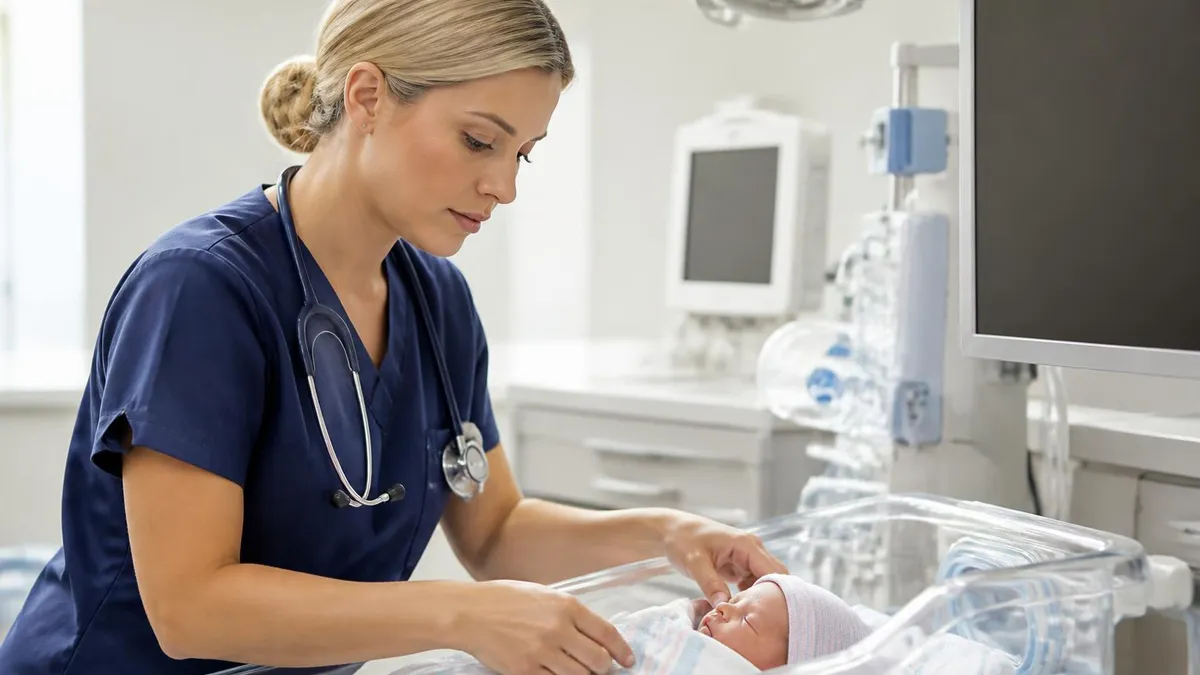
Many new remote FNPs assume their home-state DEA registration covers prescribing across state lines. It does not. The DEA requires separate registration in every state where you maintain a principal place of business — and remote prescribing to patients in another state counts. Failure to comply can trigger civil penalties and licensure action. Confirm registration in every patient-facing state before your first shift, and ask your employer to reimburse the fees in writing.
Landing a competitive remote FNP offer is part credentialing, part marketing, and part interview craft. The market is strong, but premium roles at Included Health, Galileo, and large health systems attract dozens of qualified applicants per posting. The candidates who get hired share three traits: a clean credentialing file, a clear narrative about why they want telehealth (beyond convenience), and concrete examples of clinical judgment when information is incomplete.
Start with credentialing readiness. Before applying anywhere, request a complete copy of your nursing licensure history from every state board where you have ever been licensed. Order a National Practitioner Data Bank self-query ($4) to confirm there are no surprises. Update your AANP or ANCC certification status, refresh BLS and ACLS if relevant, and pull together your malpractice claims history. Credentialing committees move slowly, and a clean, complete packet shaves weeks off your start date.
Resume strategy matters more in telehealth than traditional roles because hiring managers screen for specific signals. Lead with a credential line listing all active licenses, certifications, and DEA states. Use action verbs that emphasize independence, judgment, and volume — “managed panel of 1,400 chronic disease patients,” “completed 28 acute care visits per shift,” “precepted three new graduate FNPs.” Quantify everything. Avoid hospital-centric jargon and replace it with telehealth-relevant language like “virtual visit,” “asynchronous encounter,” and “remote patient monitoring.”
Interview preparation should focus on three predictable question categories. First, clinical judgment scenarios with deliberately incomplete information — for example, a patient reporting chest pain over video with only home blood pressure data. Practice articulating your decision tree out loud, including escalation triggers. Second, behavioral questions about asynchronous communication, conflict resolution with patients you cannot see, and managing a long queue. Third, technology fluency questions about EMRs, video platforms, and how you would handle an outage mid-visit.
Negotiation deserves real preparation. Most candidates accept the first offer; the best candidates negotiate base salary, signing bonus, productivity floor, CME stipend, licensure reimbursement, and tail coverage. A polite ask like “I’m excited about this role. Based on my multi-state licensure and three years of telehealth experience, I was hoping for a base of $145,000 — is there flexibility?” succeeds far more often than candidates assume. Have specific numbers ready and a written list of non-salary items.
Onboarding is where many new remote FNPs stumble. Block calendar time for asynchronous training modules, EMR sandbox practice, and shadowing experienced colleagues before going live with patients. Build relationships with your assigned medical director and peer NPs through Slack or Teams; isolation is the leading driver of remote clinician turnover. Schedule weekly chart reviews for your first 90 days to catch documentation and prescribing patterns that could trigger audit findings.
Finally, plan your long-term remote career arc. Many FNPs use telehealth as a flexible base while building a side specialty (functional medicine consulting, weight management, telepsych comanagement) that can eventually replace the W-2 income. Others pursue leadership tracks — medical director, clinical operations, quality improvement — that grow naturally out of strong individual performance. Either way, set 12-month and 36-month goals during onboarding and revisit them quarterly. Drift is the enemy of a great remote career.
The most successful remote FNPs treat their home workspace like a real clinical environment, not a corner of the kitchen table. Invest in a dedicated room with a door that locks, soundproofing material (foam panels or heavy curtains), professional lighting positioned in front of you rather than behind, and a neutral background. Patients judge your competence partly on visual presentation — clean, well-lit, and uncluttered settings signal professionalism and reinforce trust during the first 15 seconds of every video visit.
Equipment matters too. A wired ethernet connection beats Wi-Fi every time for video stability; if your employer permits, run a cable directly from your router to your workstation. Use a separate professional-grade webcam (1080p minimum, 60fps preferred) rather than your laptop’s built-in camera. A dedicated USB microphone or quality headset improves audio clarity and reduces patient frustration. A height-adjustable desk and ergonomic chair are non-negotiable for clinicians spending eight or more hours daily seated.
Workflow discipline separates burned-out remote FNPs from sustainable ones. Block your calendar in 90-minute focus segments rather than letting patients schedule unpredictably throughout the day. Take a full lunch break away from your screen — eat outside if possible. Use micro-recovery techniques between visits: 30 seconds of box breathing, a sip of water, a quick stretch. These small habits prevent the cognitive fatigue that drives prescribing errors and documentation shortcuts.
Documentation is your single biggest legal protection in telehealth. Document every clinical reasoning step, every reason for not ordering a test, every patient education point, and every escalation criterion you discussed. Use structured templates but customize them with patient-specific details — auditors and plaintiff attorneys both look for copy-paste patterns that suggest careless practice. Aim to close every chart within 24 hours; backlogged notes are both a quality risk and a major source of clinician anxiety.
Continuing education in telehealth-specific competencies pays dividends. Topics worth pursuing include forensic interviewing (especially for domestic violence and child safety concerns over video), virtual examination techniques (using patient-collected data effectively), telehealth ethics and informed consent, and emerging asynchronous AI-assisted triage workflows. Many state boards now require dedicated telehealth CE hours, so plan ahead to satisfy renewal requirements without scrambling at the deadline.
Community matters even when your job is solitary. Join the American Telemedicine Association, your state NP association, and at least one online peer community of remote FNPs (the FNP Remote Jobs subreddit and several private Facebook groups are active and supportive). These networks surface job openings before they hit public boards, share employer reviews, and provide informal mentorship that replaces what you lose by not sharing a breakroom with colleagues.
Finally, monitor your own wellbeing with the same rigor you bring to patient care. Schedule a primary care visit, dental cleaning, and eye exam annually — remote clinicians are notorious for neglecting their own health. Use PTO completely each year. If you notice cynicism, declining engagement, or sleep disruption, treat it as a clinical finding requiring intervention rather than a character flaw. The careers that last are the ones built on intentional self-care alongside excellent patient care.
NP Questions and Answers
Nurse Practitioner Jobs by State: Florida, Texas, California, and Beyond — A Complete 2026 Guide

Nurse Practitioner Day: Honoring NPs and Celebrating the Profession in 2026

Family Nurse Practitioner: Role, Salary & How to Become One
Nurse Practitioner Specialties: Complete 2026 Guide to Every NP Track
Psychiatric Mental Health Nurse Practitioner Guide
About the Author

Registered Nurse & Healthcare Educator
Johns Hopkins University School of NursingDr. Sarah Mitchell is a board-certified registered nurse with over 15 years of clinical and academic experience. She completed her PhD in Nursing Science at Johns Hopkins University and has taught NCLEX preparation and clinical skills courses for nursing students across the United States. Her research focuses on evidence-based exam preparation strategies for healthcare certification candidates.