
Psychiatric Mental Health Nurse Practitioner Guide 2026 October
PMHNP career guide — 🎯 scope of practice, education pathway, certification, settings, compensation, advancement, and emotional demands of the role.
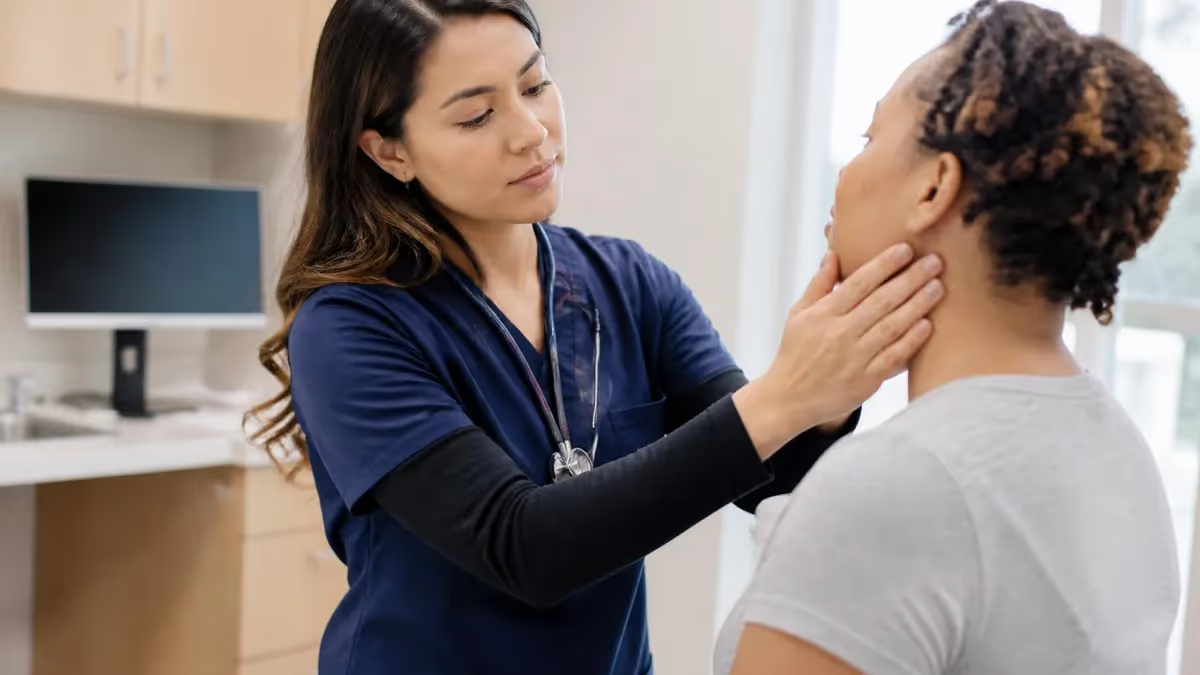
A psychiatric mental health nurse practitioner (PMHNP) is an advanced practice registered nurse specializing in mental health care across the lifespan. PMHNPs assess patients with mental health concerns, diagnose psychiatric conditions, prescribe and manage psychiatric medications, provide therapy in some practice settings, and coordinate comprehensive mental health care for individuals across various populations including children, adolescents, adults, and elderly patients. The role addresses substantial unmet mental healthcare need across the United States given persistent shortages of psychiatrists and growing recognition of mental health's importance in overall health and well-being.
This guide walks through the PMHNP role including scope of practice, educational pathway, certification, work settings, compensation, career trajectory, and how PMHNPs differ from related practitioners like psychiatrists, therapists, and other nurse practitioner specialties. Information here applies broadly across the United States with notes where state regulations create meaningful differences. Whether you're considering PMHNP education as a career direction, a current FNP wondering about transition to mental health practice, a healthcare consumer wanting to understand who provides your psychiatric care, or working in mental health interested in NP roles, this overview covers the essentials.
The PMHNP specialty has grown substantially as mental health needs have outpaced traditional psychiatric workforce capacity. Bureau of Labor Statistics projects nurse practitioner employment growth of 38% through 2032 — among the fastest-growing occupations. Mental health subspecialty growth particularly strong given expanding mental health awareness, expanded insurance coverage of mental health services, and increased acceptance of psychiatric care across populations. PMHNPs help fill the gap between mental health need and psychiatrist supply, providing psychiatric medication management and various therapeutic interventions to populations that might otherwise wait months or years for psychiatrist appointments in many regions.
PMHNP Quick Facts
Education: MSN or DNP with PMHNP focus. Certification: American Nurses Credentialing Center (ANCC) Psychiatric-Mental Health Nurse Practitioner-Board Certified (PMHNP-BC). State licensure: APRN license in practice state. Scope: Mental health assessment, diagnosis, prescription of psychiatric medications, therapy in some settings, care coordination. Settings: Outpatient psychiatric practices, hospitals, community mental health, addiction treatment, telepsychiatry, schools. Median pay: Approximately $130,000-$160,000+ depending on region and setting (often higher than other NP specialties). Education timeline: 6-8 years total from BSN to PMHNP licensure.
The PMHNP scope of practice covers comprehensive mental health care across the lifespan. Mental health assessment includes detailed psychiatric history-taking, mental status examination, evaluation of mood, thought processes, anxiety, suicide risk, and various other elements of comprehensive psychiatric evaluation. Diagnostic skill involves applying DSM-5-TR criteria to differentiate among psychiatric conditions including depression, anxiety disorders, bipolar disorder, schizophrenia, ADHD, autism spectrum, substance use disorders, and various other conditions. Treatment planning includes medication selection and management, therapy referrals or direct provision in some settings, care coordination with primary care and other specialty services, and various other elements of comprehensive mental health care.
Specific clinical activities PMHNPs perform daily include initial psychiatric evaluations (typically 60-90 minutes for comprehensive assessment), follow-up medication management visits (typically 20-30 minutes), psychotherapy sessions in practice settings where this is part of the role (typically 45-50 minutes), care coordination with therapists, primary care providers, and various other care team members, documentation requirements that are particularly substantial in psychiatric practice, and ongoing risk assessment for patients with safety concerns including suicide and homicide risk. The cognitive complexity of psychiatric diagnosis combined with the emotional weight of mental health work distinguishes PMHNP from many other NP specialties.

PMHNP Practice Areas
Comprehensive psychiatric assessment, history, mental status exam, diagnostic formulation.
Antidepressants, mood stabilizers, antipsychotics, anxiolytics, ADHD medications, others.
Individual therapy in some practice settings. Modalities include CBT, supportive, others.
Addiction medicine including medication-assisted treatment for opioid use disorder.
Suicide risk evaluation, hospitalization decisions, emergency mental health intervention.
Collaboration with therapists, primary care, social services, family members.
The educational pathway to becoming a PMHNP follows the standard nurse practitioner education sequence with psychiatric mental health specialization. Begin with Bachelor of Science in Nursing (BSN) — typically 4-year undergraduate degree. Pass NCLEX-RN for registered nurse licensure.
Build clinical experience as RN, often in mental health settings (psychiatric units, mental health clinics, addiction treatment) — typically 1-3+ years before PMHNP school admission though some programs accept new graduates. Apply to MSN or DNP program with PMHNP focus. Complete graduate coursework and 500-700 supervised clinical hours specifically in psychiatric settings. Sit for ANCC PMHNP-BC certification examination. Apply for state APRN licensure with PMHNP recognition.
PMHNP graduate programs include both didactic coursework and supervised psychiatric clinical training. Didactic content covers advanced pathophysiology with focus on neurobiology of psychiatric conditions, advanced pharmacology emphasizing psychotropic medications, advanced health assessment with psychiatric focus, and various psychiatric specialty content including diagnostic systems, therapy modalities, special populations (children, adolescents, geriatric), substance use disorders, crisis intervention, and various other specialty topics. Clinical training requirements typically range 500-700 hours specifically in psychiatric settings working with experienced PMHNPs and psychiatrists across diverse mental health practice contexts.
ANCC certification through the PMHNP-BC examination is the standard credential for PMHNP practice. The examination tests knowledge across the full PMHNP scope including psychiatric assessment, diagnosis using DSM-5-TR criteria, psychopharmacology, therapy modalities, crisis assessment, ethical and legal issues, special populations, substance use disorders, and various other content areas. Pass rates for first-time test takers from accredited programs typically run 80-90%+. Certification is initially valid for 5 years with continuing education requirements for renewal. Most PMHNP positions require PMHNP-BC certification — without it, employment opportunities are substantially limited despite having graduated from a PMHNP program.
1. Earn Bachelor of Science in Nursing (BSN) — 4 years. 2. Pass NCLEX-RN, obtain RN license. 3. Build RN experience in mental health settings (1-3+ years typical). 4. Apply to and complete MSN or DNP program with PMHNP focus (2-4 years). 5. Complete 500-700 supervised clinical hours in psychiatric settings. 6. Pass ANCC PMHNP-BC certification examination. 7. Apply for state APRN license with PMHNP recognition. Total time: 6-8+ years from starting BSN.
PMHNP work settings include several common practice environments. Outpatient psychiatric practices represent the most common setting — independent psychiatric practices, group practices, and integrated mental health clinics employ many PMHNPs for medication management and follow-up care. Community mental health centers serve Medicaid and uninsured populations through public and nonprofit organizations — substantial PMHNP employment exists in these settings serving patients who would otherwise lack access to mental health care.
Hospital inpatient psychiatric units employ PMHNPs alongside psychiatrists for acute mental health care. Addiction treatment programs including medication-assisted treatment for opioid use disorder use PMHNPs extensively. Telepsychiatry has grown dramatically post-pandemic supporting remote mental health services across geographic boundaries.
Compensation for PMHNPs is among the highest of any nurse practitioner specialty, reflecting the substantial mental health workforce demand and complexity of psychiatric work. Median compensation runs approximately $130,000-$160,000+ depending on region and setting. Some highly compensated PMHNP positions in private practice or telehealth platforms can reach $200,000+ for established practitioners with strong client bases.
Geographic variation is substantial — major metropolitan areas typically pay 20-30% more than rural areas, though the rural mental health shortage creates premium opportunities for PMHNPs willing to serve underserved areas. Independent practice (private practice or contractor work) often pays more than employee positions but requires business operations management.
Career development for PMHNPs follows several paths. Many begin in established outpatient practices building experience for several years. Some progress to specialty subspecialties like child and adolescent psychiatry, addiction medicine, or geriatric psychiatry. Others move to leadership roles in community mental health, hospital programs, or various other organizational contexts. Some pursue independent practice once they've built clinical reputation and patient base supporting private business. Some transition to academic settings teaching PMHNP students. Some pursue doctoral education for additional career flexibility. The mental health field offers diverse career paths supporting various interests and life circumstances over careers spanning many decades.

PMHNP work has substantial emotional and psychological demands beyond other nurse practitioner specialties. Reality: Working with psychiatric patients exposes practitioners to substantial trauma, suffering, and complex emotional content. Suicide risk assessment is regular practice. Patient deaths by suicide affect practitioners deeply. Vicarious trauma from extensive trauma history exposure affects mental health workers. Work-life balance challenges affect retention. Self-care essential: Strong self-care practices including peer support, supervision, therapy if needed, and various coping strategies are professional requirements rather than optional. The work is rewarding but demanding — match role to your emotional capabilities and self-care practices honestly.
For users considering PMHNP careers, several factors warrant honest reflection. Drawing specifically to mental health is essential — the role is highly specialized and unsuited for those wanting broader populations or those who don't connect with mental health work. Comfort with substantial emotional content is required — psychiatric work involves trauma, suffering, complex emotions throughout daily practice. Diagnostic complexity requires sustained intellectual engagement — psychiatric diagnosis involves substantial uncertainty and complexity beyond medical conditions. Communication skills with diverse patients across age, culture, and presentation matter substantially. Match the role to your interests and emotional capabilities honestly before pursuing PMHNP education.
For users specifically considering child and adolescent psychiatry as PMHNP subspecialty, important considerations apply. Pediatric mental health requires substantial additional expertise beyond standard PMHNP training. Working with children and adolescents involves family system considerations beyond just individual patient care. Specific subspecialty training and supervised experience supports competent pediatric practice. ANCC offers Pediatric Mental Health Specialist certification for those wanting formal subspecialty recognition. Demand for child and adolescent PMHNPs is particularly strong given persistent shortages in pediatric mental health workforce. The subspecialty offers meaningful work serving children and adolescents while requiring additional preparation beyond standard PMHNP credentialing.
For users wanting to understand current trends in PMHNP practice, several developments matter. Telepsychiatry has expanded PMHNP practice options dramatically post-pandemic — many psychiatric visits including medication management work well via video conference. Substance use treatment has expanded substantially with addiction medicine playing larger role in PMHNP practice including medication-assisted treatment for opioid use disorder. Integration with primary care through collaborative care models is growing. Cultural competency and trauma-informed care have become more central to practice. Reproductive psychiatry has emerged as recognized specialty area within mental health care including perinatal mental health and women's mental health.
Becoming a PMHNP Action Steps
- ✓Verify mental health is your specific career interest with appropriate emotional capabilities
- ✓Earn Bachelor of Science in Nursing (BSN) — 4-year undergraduate degree
- ✓Pass NCLEX-RN to obtain registered nurse licensure
- ✓Build clinical experience as RN, ideally in mental health settings
- ✓Research and apply to MSN or DNP programs with PMHNP focus
- ✓Complete graduate coursework and 500-700 clinical hours in psychiatric settings
- ✓Sit for and pass ANCC PMHNP-BC certification examination
- ✓Apply for state APRN license with PMHNP recognition
- ✓Begin career in established psychiatric practice for clinical experience
- ✓Develop self-care practices supporting sustainable career in mental health
For users transitioning from other NP specialties to PMHNP, the process typically involves additional certification rather than complete program redo. Family Nurse Practitioners (FNPs) interested in mental health focus can complete post-graduate certificate programs adding PMHNP credentials — typically 12-24 months of additional coursework and clinical hours building on existing FNP foundation. Adult-Gerontology NPs face similar pathway. The post-graduate certificate route is faster than complete PMHNP program for already-credentialed NPs but still requires meaningful additional psychiatric-specific commitment. Some NPs pursue dual certifications maintaining both their original specialty and PMHNP, supporting career flexibility across patient populations.
For users considering PMHNP work in different practice settings, characteristics vary substantially. Outpatient psychiatric practices typically offer steady patient volume, predictable scheduling, and consultation with experienced colleagues but may have productivity pressure. Community mental health centers offer mission-driven work serving diverse populations including those with severe mental illness — high patient volumes per day with complex psychosocial issues.
Hospital inpatient psychiatry offers acute care work with substantial team support but variable patient acuity and challenging environments. Telepsychiatry offers location flexibility with substantial business operations needs in independent practice. Each setting has trade-offs around pace, complexity, autonomy, mission alignment, and various other factors.
For users considering whether independent practice as PMHNP is appropriate after building experience, several considerations apply. Independent practice offers maximum clinical autonomy and earning potential. Building patient base takes time — typical practitioners build to full practice over 1-2 years. Business operations include billing, scheduling, marketing, insurance contracting, and various administrative tasks beyond just clinical work.
State scope of practice rules affect what's possible — full practice authority states permit independent PMHNP practice; restricted practice states require collaborative agreements. Telepsychiatry has substantially lowered barriers to independent practice through reduced overhead. The decision warrants careful consideration of business comfort, financial situation, and clinical readiness for autonomous practice.
For users wanting to understand the broader mental health workforce landscape PMHNPs work within, several considerations matter. Psychiatrists provide the most comprehensive psychiatric care including complex medication management, ECT, and various specialized interventions PMHNPs typically don't provide. Therapists (psychologists, LCSWs, LPCs, LMFTs) provide psychotherapy without prescribing authority — collaborate with PMHNPs and psychiatrists for medication management.
Primary care providers (PCPs) handle substantial mental health care for milder conditions and coordinate referrals for more complex needs. Each role has appropriate scope; the mental health system functions through collaboration among these various practitioners with PMHNPs filling important gap between primary care and psychiatry.
For users specifically dealing with the medication management focus that dominates many PMHNP practices, several considerations apply. Many PMHNP practices emphasize medication management with limited time for therapy. Visits may be 20-30 minutes for follow-up med management rather than 50-minute therapy sessions. Some PMHNPs specifically pursue practice models supporting longer therapy-included visits. Integration with separate therapists handles psychotherapy while PMHNP handles medications. Each practice model has trade-offs — medication management efficiency vs comprehensive integrated care. Find practice settings matching your clinical preferences when choosing employment versus independent practice options after completing training.
For patients wondering about choosing a PMHNP for their care, several considerations help. PMHNPs provide comprehensive mental health care for routine and many complex needs, often with longer visits than psychiatrists and more emphasis on patient education. For routine medication management, common psychiatric conditions, and integrated mental health care, PMHNP care typically equals psychiatrist care in quality and patient satisfaction. For complex cases (severe persistent mental illness, treatment-resistant conditions, complex medical-psychiatric comorbidity, ECT or other specialized treatments), psychiatrist consultation may be needed alongside PMHNP care. Most PMHNP practices coordinate with psychiatrists for complex needs providing patients appropriate care level.
The bottom line on PMHNP careers: this specialty offers meaningful clinical work serving substantial mental health needs across populations with strong compensation, multiple practice settings, and various career advancement paths. The pathway requires nursing education plus specialized graduate training plus certification, totaling 6-8+ years from BSN start. Working conditions involve substantial emotional demands requiring strong self-care practices. For those drawn to mental health work and willing to invest in the educational pathway and ongoing emotional self-care, PMHNP careers provide rewarding professional work with strong job market support across most U.S. regions where mental health services are needed throughout the population.

PMHNP Quick Facts
PMHNP Specialty Areas
Adult mental health across diagnostic spectrum. Most common practice area.
Pediatric mental health requiring additional subspecialty training and experience.
Elderly mental health including dementia, late-life depression, complex medical-psychiatric issues.
Substance use disorders including medication-assisted treatment for opioid use disorder.
Court-related psychiatric assessments, treatment in correctional settings.
Perinatal mental health, women's mental health across reproductive lifespan.
For users dealing with the legal and ethical complexities of psychiatric practice, several considerations matter. Suicide risk assessment is regular and consequential practice — wrong assessments have serious consequences. Hospitalization decisions involve civil commitment processes varying by state. Mandatory reporting requirements apply to certain situations (child abuse, elder abuse, threats to specific individuals) varying by state. Documentation requirements are substantial in psychiatric practice given legal scrutiny common in mental health work. Professional liability requires careful attention given substantial litigation in psychiatric practice. Each legal/ethical complexity warrants understanding through specific training and ongoing professional development across PMHNP careers.
For users considering compensation comparison between PMHNP and other nurse practitioner specialties, the data shows PMHNP often paying premium versus other NP specialties. Base compensation typically $20,000-$40,000 higher annually than family NP or other primary care specialties. Independent practice and specialty subspecialty work often pay even more. The premium reflects mental health workforce demand exceeding supply in most regions. The premium also reflects the substantial complexity and emotional demands of psychiatric work that some practitioners find too challenging for sustainable careers. Financial reward is real but accompanied by substantial work demands that affect long-term career sustainability for many practitioners.
For users dealing with the specific challenges of practicing in restrictive scope-of-practice states, several considerations apply. Restricted practice states require collaborative agreements with psychiatrists or general physicians that affect practice flexibility. Reduced practice states require some collaboration without full requirement. Full practice authority states permit independent PMHNP practice. The substantial state variation creates career planning considerations — some PMHNPs specifically target full practice authority states for professional flexibility. Research your specific state's scope of practice through state board of nursing before committing to specific employment or practice plans that depend on particular scope assumptions.
Looking forward, PMHNP practice will continue evolving with mental health treatment trends. Telepsychiatry continues expanding making mental health care more accessible. Psychedelic-assisted psychotherapy is emerging as recognized treatment area though regulatory status varies. Integration of measurement-based care (using rating scales and outcome tracking) is becoming more standard. Genetic testing for medication selection (pharmacogenomics) is expanding. Each trend affects PMHNP practice patterns. Stay current through professional associations including American Psychiatric Nurses Association (APNA) and various other organizations supporting ongoing professional development across mental health practice evolution.
PMHNP Career: Pros and Cons
- +High compensation among NP specialties ($130-160K+ typical)
- +Strong job market demand exceeding supply in most regions
- +Multiple practice settings and subspecialty options
- +Independent practice opportunities in full practice authority states
- +Meaningful work addressing substantial mental health needs
- −Substantial emotional demands requiring strong self-care
- −Suicide risk and patient safety concerns regularly affect practice
- −Documentation burden particularly heavy in psychiatric practice
- −Legal and ethical complexity throughout practice
- −Vicarious trauma from extensive trauma history exposure
Pros and Cons at a Glance
| Pros | Cons |
|---|---|
| Strong job market demand exceeding supply in most regions | Substantial emotional demands requiring strong self-care |
| Multiple practice settings and subspecialty options | Suicide risk and patient safety concerns regularly affect practice |
| Independent practice opportunities in full practice authority states | Documentation burden particularly heavy in psychiatric practice |
| Meaningful work addressing substantial mental health needs | Legal and ethical complexity throughout practice |
Sample NP - Nurse Practitioner Practice Questions
Try these questions from our free NP - Nurse Practitioner practice tests. The correct answer and an explanation follow each question.
Which of the following is the PRIMARY goal of health information exchange (HIE) for a nurse practitioner treating an unresponsive patient in an urgent care setting?
- A. To retrieve the patient's insurance billing history
- B. To quickly access the patient's current medication list, allergies, and recent diagnoses from outside facilities to guide immediate treatment decisions
- C. To transfer the patient's social media health posts into the EHR
- D. To automate prior authorization for diagnostic tests
Answer: B. To quickly access the patient's current medication list, allergies, and recent diagnoses from outside facilities to guide immediate treatment decisions
HIE enables rapid access to existing clinical data from disparate sources, preventing medication errors and enabling informed urgent care decisions for patients who cannot provide history.
What is the purpose of regular risk reviews in Nurse Practitioner practice?
- A. To generate reports
- B. To identify new risks, evaluate control effectiveness, and update mitigation strategies
- C. To satisfy auditors only
- D. To reduce workload
Answer: B. To identify new risks, evaluate control effectiveness, and update mitigation strategies
This is fundamental to Nurse Practitioner practice. To identify new risks, evaluate control effectiveness, and update mitigation strategies represents the professional standard for risk management in the NP certification framework.
A nurse practitioner's practice adopts a Lean QI approach. Which concept is Lean PRIMARILY focused on eliminating?
- A. Statistical variation in outcomes
- B. Waste in processes that does not add patient value
- C. Hierarchical decision-making structures
- D. Unnecessary clinical documentation
Answer: B. Waste in processes that does not add patient value
Lean methodology, derived from the Toyota Production System, targets elimination of waste (muda) in all forms to maximize patient value.
The nurse practitioner's professional obligation under the standard of 'collaboration' includes:
- A. Deferring all clinical decisions to the supervising physician
- B. Consulting and referring to other providers when the situation exceeds the NP's competence
- C. Sharing login credentials with trusted colleagues for efficiency
- D. Avoiding specialist referrals to reduce healthcare costs
Answer: B. Consulting and referring to other providers when the situation exceeds the NP's competence
Collaboration standards require NPs to recognize the limits of their competence and involve other healthcare professionals through consultation or referral.
NP Questions and Answers
About the Author

Registered Nurse & Healthcare Educator
Johns Hopkins University School of NursingDr. Sarah Mitchell is a board-certified registered nurse with over 15 years of clinical and academic experience. She completed her PhD in Nursing Science at Johns Hopkins University and has taught NCLEX preparation and clinical skills courses for nursing students across the United States. Her research focuses on evidence-based exam preparation strategies for healthcare certification candidates.