
Psychiatric Nurse Practitioner Programs Online: Complete Training Guide and Requirements
🎓 Explore psychiatric nurse practitioner programs online — requirements, costs, top schools, and career outcomes for aspiring PMHNPs.
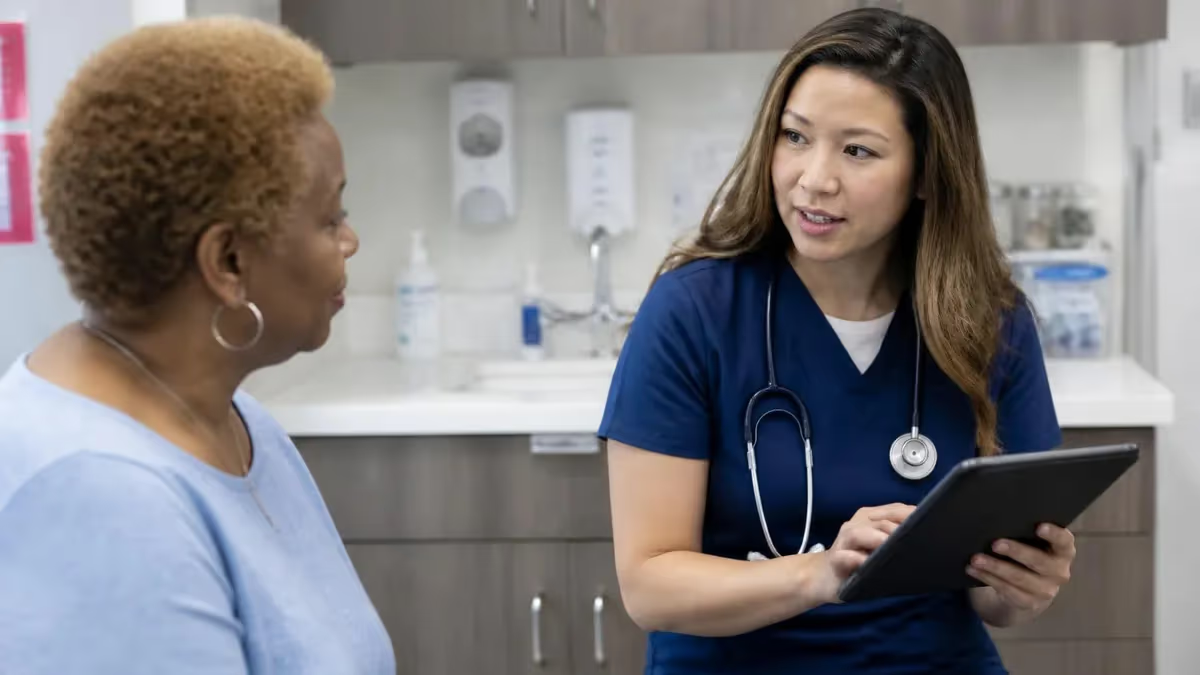
If you are considering a career in mental health advanced practice, psychiatric nurse practitioner programs online offer one of the most flexible and high-demand pathways available today. A Psychiatric-Mental Health Nurse Practitioner (PMHNP) is trained to assess, diagnose, and treat a full spectrum of mental health conditions — from depression and anxiety to schizophrenia and bipolar disorder — across the lifespan. With the national mental health crisis intensifying each year, PMHNPs are among the most sought-after advanced practice providers in the country.
Online PMHNP programs have transformed access to graduate-level psychiatric nursing education. Students who live in rural areas, who are working full-time as registered nurses, or who have family obligations can now earn their Master of Science in Nursing (MSN) or Doctor of Nursing Practice (DNP) degree without relocating. Most accredited programs blend asynchronous coursework with synchronous clinical components, allowing students to learn at their own pace while still meeting rigorous hands-on training requirements set by national accrediting bodies.
The educational path to becoming a PMHNP typically begins with a Bachelor of Science in Nursing (BSN) and an active RN license, followed by a graduate program that includes advanced coursework in psychopharmacology, neuroscience, psychiatric assessment, and evidence-based therapeutic modalities. Programs range from 2 to 4 years depending on full-time or part-time enrollment, and most require between 500 and 700 supervised clinical hours in psychiatric and mental health settings.
After completing an accredited program, graduates are eligible to sit for the ANCC's Psychiatric-Mental Health Nurse Practitioner board certification exam, which is required for licensure in most states. This credential, often written as PMHNP-BC, demonstrates competency across the full scope of psychiatric NP practice and is recognized by employers, insurance panels, and state boards of nursing nationwide. Maintaining certification requires ongoing continuing education every five years.
Choosing the right online PMHNP program requires careful evaluation of several factors: CCNE or ACEN accreditation status, clinical placement support, faculty credentials, NCLEX and board exam pass rates, and the degree of flexibility offered for working nurses. Some programs offer post-master's certificates for already-credentialed NPs seeking to add psychiatric specialty training, while others are designed as direct-entry MSN or DNP tracks for nurses with a BSN who are entering the field for the first time.
The demand for qualified PMHNPs is extraordinary and shows no sign of slowing. According to federal workforce data, the United States faces a shortage of more than 7,500 mental health providers, with psychiatric nurse practitioners filling a critical gap — particularly in underserved communities where psychiatrists are unavailable. Graduates of accredited online PMHNP programs enjoy broad scope of practice in most states, including the authority to diagnose mental health conditions, prescribe controlled substances, and provide psychotherapy independently or in collaboration with physicians.
This comprehensive guide walks you through everything you need to know about online psychiatric nurse practitioner programs: admission requirements, curriculum structure, clinical hour expectations, costs, certification pathways, and career outcomes. Whether you are an RN exploring your options or an MSN-prepared NP considering a specialty transition, this resource will help you make an informed decision about one of the most impactful careers in modern healthcare.
Psychiatric NP Programs by the Numbers
Steps to Enroll in an Online PMHNP Program
Earn Your BSN and RN License
Gain Clinical RN Experience
Research and Apply to Accredited Programs
Complete Graduate Coursework
Fulfill Clinical Hour Requirements
Pass ANCC Certification Exam
The curriculum of an online psychiatric nurse practitioner program is designed to build competency across both the biomedical and psychological dimensions of mental health care. In the first semester, students typically complete advanced health assessment and pathophysiology courses that bridge their RN-level knowledge to graduate-level clinical reasoning. These foundational courses establish the physiological basis for understanding how psychiatric conditions manifest in the body and how medications interact with neurological systems at a molecular level.
Psychopharmacology is one of the most rigorous and clinically essential courses in any PMHNP curriculum. Students learn the mechanisms of action, therapeutic uses, dosing strategies, and adverse effect profiles of every major class of psychiatric medication — including antidepressants, antipsychotics, mood stabilizers, anxiolytics, and stimulants. Because PMHNPs have prescriptive authority in all 50 states, this course is often taken in two or three sequential modules to ensure comprehensive mastery before students begin clinical rotations.
Psychiatric assessment courses teach students to conduct thorough mental status examinations, interpret standardized screening tools (such as the PHQ-9, GAD-7, AUDIT, and Columbia Suicide Severity Rating Scale), and formulate DSM-5-TR diagnoses across patient populations. These courses blend video-based clinical simulations with faculty-supervised telehealth encounters, giving online students realistic exposure to diagnostic reasoning before they enter in-person clinical placements.
Evidence-based therapeutic modalities represent another core curriculum component. Students learn to deliver or supervise cognitive behavioral therapy (CBT), dialectical behavior therapy (DBT), motivational interviewing, and trauma-focused interventions. While PMHNP graduates are primarily recognized for their prescribing authority, a growing number practice psychotherapy alongside medication management — a dual-role model that dramatically improves patient outcomes in outpatient settings and is especially valuable in underserved communities.
Clinical practicum hours are the cornerstone of PMHNP training and represent the most logistically complex aspect of online programs. Unlike traditional campus-based programs that maintain established clinical site networks, online students often have greater flexibility in selecting their own clinical placements close to home. Most accredited online programs employ dedicated clinical placement coordinators who help students identify and secure preceptors in outpatient psychiatric clinics, community mental health centers, Veterans Affairs facilities, inpatient psychiatric units, and substance use disorder treatment programs.
Students complete clinical rotations across multiple population foci, including child and adolescent psychiatry, adult psychiatry, and geriatric mental health — reflecting the ANCC's requirement that PMHNPs be competent to practice across the lifespan. Each rotation is supervised by a board-certified PMHNP or psychiatrist preceptor who evaluates student performance on clinical skill competencies, documentation quality, and professional communication. These evaluations feed directly into graduate program outcomes data and influence future accreditation reviews.
Advanced practice nursing courses in leadership, health policy, and evidence-based practice round out the curriculum. These courses prepare graduates not only to deliver exceptional patient care but to advocate for systemic improvements in mental health service delivery, participate in interprofessional teams, and lead quality improvement initiatives in their clinical settings. DNP-track students additionally complete a scholarly capstone project that addresses a real-world problem in psychiatric nursing practice, demonstrating readiness for the highest level of clinical practice and academic scholarship in the field.
Online PMHNP Program Types: MSN, DNP, and Post-Master's Certificate
The Master of Science in Nursing with a PMHNP concentration is the most common entry point for registered nurses pursuing psychiatric specialty practice. Typically spanning 2–3 years for full-time students, MSN programs cover advanced pharmacology, psychiatric assessment, evidence-based therapies, and 500–700 clinical hours. Graduates are eligible to sit for the ANCC PMHNP-BC certification exam immediately upon program completion, and most programs have first-time pass rates above 85% at nationally recognized institutions.
Online MSN-PMHNP programs are particularly attractive to working nurses because asynchronous lecture delivery allows students to complete readings, discussions, and recorded content on their own schedule. Live synchronous sessions are typically scheduled once or twice per week for case-based seminars and faculty-led clinical debriefs. Tuition for online MSN programs ranges from $25,000 at public universities to over $65,000 at private institutions, with most students completing the degree within 2.5 years while maintaining part-time or full-time RN employment.
Pros and Cons of Online Psychiatric NP Programs
- +Complete coursework on your own schedule while maintaining RN employment and income
- +Choose clinical placements near your home rather than relocating for in-person rotations
- +Access top-ranked programs regardless of your geographic location or local school availability
- +Lower overall cost at many public universities compared to on-campus tuition and living expenses
- +Asynchronous learning accommodates family responsibilities, shift work, and time zone differences
- +Strong online peer networks and faculty mentorship through virtual collaboration platforms
- −Students are responsible for finding their own clinical preceptors in some programs, which can be stressful
- −Lack of in-person campus community can reduce spontaneous networking and peer support opportunities
- −Technology requirements and reliable internet access are non-negotiable for clinical simulations and virtual labs
- −Some employers or state boards may scrutinize online credentials — accreditation verification is essential
- −Self-directed learning demands exceptional time management and discipline without daily on-campus structure
- −Clinical simulation labs for physical assessment skills may require travel to campus for occasional intensives
PMHNP Program Admission Checklist
- ✓Obtain a BSN from a CCNE- or ACEN-accredited nursing program with a minimum GPA of 3.0
- ✓Hold a current, unencumbered RN license in the state where you will complete clinical hours
- ✓Accumulate at least 1 year of clinical RN experience, preferably in behavioral health or medical-surgical settings
- ✓Request official transcripts from all undergraduate and graduate institutions attended
- ✓Obtain 2–3 letters of recommendation from clinical supervisors, nursing faculty, or healthcare leaders
- ✓Write a compelling personal statement describing your clinical experiences and motivation for psychiatric NP practice
- ✓Prepare your professional resume or curriculum vitae highlighting clinical experience, certifications, and leadership roles
- ✓Submit GRE scores if required by your target program (many programs have waived this requirement post-pandemic)
- ✓Verify the program holds CCNE or ACEN accreditation and is approved in your state of practice
- ✓Confirm the program provides clinical placement assistance or has an established preceptor network in your area
Accreditation Is Non-Negotiable
Only graduates of CCNE- or ACEN-accredited programs are eligible to sit for the ANCC PMHNP-BC certification exam. Before applying to any online program, verify its accreditation status directly on the CCNE or ACEN website — not just on the school's marketing materials. Attending an unaccredited program means you cannot obtain national certification, and without certification, you cannot obtain licensure as a PMHNP in any U.S. state.
Understanding the cost of an online PMHNP program is essential for financial planning and selecting a program that aligns with your budget and long-term earning potential. Tuition varies significantly depending on program type, institution type (public vs. private), and whether you qualify for in-state rates. Public university online MSN-PMHNP programs typically charge between $400 and $800 per credit hour, while private institutions may charge $900 to $1,500 per credit hour. A typical MSN program spans 42–60 credit hours, meaning total tuition ranges from roughly $25,000 at an affordable public school to more than $70,000 at a private university.
In addition to tuition, students should budget for mandatory fees, textbooks, clinical supplies (including a stethoscope, blood pressure cuff, and diagnostic equipment for in-person encounters), liability insurance, licensing application fees, and the ANCC certification examination fee, which is $395 for ANA members and $495 for non-members as of 2025. Some programs also require students to travel to campus for brief intensives or simulation labs, adding travel and accommodation costs that are easy to overlook during initial financial planning.
Financial aid options for PMHNP students are more robust than many nurses realize. Federal student loans (Stafford and Grad PLUS loans) are available to students enrolled at least half-time in accredited graduate programs. The NURSE Corps Scholarship Program, funded by the Health Resources and Services Administration (HRSA), covers tuition, fees, and living stipends for nursing students who commit to practicing in Health Professional Shortage Areas — a particularly compelling option for students who want to address mental health disparities in underserved communities after graduation.
Many states offer loan repayment programs specifically for PMHNPs and other mental health providers who practice in rural or underserved areas. The National Health Service Corps Loan Repayment Program awards up to $50,000 in loan repayment assistance in exchange for a two-year service commitment, with the option to renew annually. State-specific programs in states like California, New York, and Texas offer additional repayment incentives for psychiatric NPs who work in community mental health centers, federally qualified health centers, or correctional facilities.
Employer tuition reimbursement is another underutilized resource for working RNs pursuing PMHNP education. Many hospital systems, large outpatient groups, and VA medical centers offer annual tuition assistance ranging from $2,500 to $10,000 for employees pursuing advanced degrees in nursing. Some employers will even increase reimbursement amounts for nurses who agree to remain employed at the organization for one to three years after graduation — a smart arrangement that benefits both the nurse and the health system that will eventually benefit from their advanced practice skills.
Scholarships specifically targeted at psychiatric nursing students are available through professional organizations including the American Psychiatric Nurses Association (APNA), the American Association of Nurse Practitioners (AANP) Foundation, and the National League for Nursing. These awards range from $1,000 to $10,000 and are awarded based on academic merit, clinical achievement, commitment to underserved populations, or research interest in mental health policy. Applying for multiple scholarships simultaneously during the spring cycle can meaningfully reduce your total debt burden.
When calculating the return on investment for a PMHNP program, it is important to consider that the median salary for psychiatric NPs exceeds $123,000 annually, with experienced practitioners in high-demand markets earning $140,000 to $160,000 or more. In states with full practice authority — where PMHNPs can operate independently without physician supervision — the earning ceiling is even higher, particularly for those who open private practices or contract with multiple telehealth platforms simultaneously. By most analyses, the investment in a PMHNP credential pays for itself within two to three years of graduation and provides decades of high-income, high-impact career satisfaction.

PMHNP scope of practice differs significantly by state. As of 2025, 27 states plus D.C. grant full practice authority — meaning PMHNPs can assess, diagnose, and prescribe without a physician collaboration agreement. In remaining states, collaborative practice agreements are required, which can limit job options and reduce earning potential. Research your state's APRN laws before enrolling, and consider whether you are willing to relocate after graduation for a better practice environment.
The career landscape for graduates of psychiatric nurse practitioner programs online is remarkably diverse and continues to expand as mental health awareness grows, telehealth infrastructure matures, and legislative momentum toward full practice authority accelerates across the country. PMHNPs work in a wide range of settings — from private outpatient practices and community mental health centers to inpatient psychiatric hospitals, correctional facilities, Veterans Affairs medical centers, school-based health programs, and telehealth platforms that serve patients in all 50 states simultaneously.
Telehealth has fundamentally transformed PMHNP practice since 2020. With the widespread adoption of synchronous video-based psychiatric visits during the COVID-19 pandemic, payers — including Medicare, Medicaid, and most commercial insurers — permanently expanded telehealth coverage for mental health services. Today, many PMHNPs run entirely virtual practices, seeing patients across multiple states through interstate licensure compacts, treating conditions ranging from major depressive disorder to opioid use disorder without any brick-and-mortar overhead. This model offers exceptional schedule flexibility and dramatically lower startup costs for entrepreneurially minded practitioners.
Subspecialty focus is another avenue through which PMHNPs maximize their impact and earning potential. Some practitioners develop expertise in child and adolescent psychiatry, filling a critical national shortage of pediatric mental health providers. Others specialize in addiction medicine, forensic psychiatry, geriatric psychiatry, or perinatal mental health — areas where the combination of prescribing authority, psychotherapy skills, and nursing's holistic perspective makes PMHNPs uniquely effective clinicians. Subspecialty expertise is typically developed through fellowship programs, continuing education certificates, and targeted clinical experience rather than additional formal degree programs.
Leadership and academia represent additional career trajectories for DNP-prepared PMHNPs. Nursing schools nationwide are actively recruiting doctorally prepared psychiatric NPs for faculty positions, given the national shortage of qualified nursing educators. Clinical leadership roles — such as director of behavioral health services, chief nursing officer of a mental health organization, or regional medical director for a telehealth company — are increasingly open to DNP-prepared PMHNPs who combine deep clinical expertise with the health systems and organizational management skills emphasized in doctoral-level curricula.
International opportunities are also expanding for PMHNPs, particularly through global health organizations, military service, and humanitarian missions that seek advanced practice nurses with psychiatric expertise. While international credentialing varies by country, the combination of prescribing authority, diagnostic competency, and psychotherapy training makes PMHNP graduates highly versatile clinicians in any healthcare system that serves populations with mental health needs — which, of course, includes every healthcare system on earth.
Continuing professional development is essential for all PMHNPs, both for certification maintenance and for staying current with rapidly evolving psychopharmacology, diagnostic criteria, and evidence-based therapeutic approaches. The ANCC requires 75 contact hours of continuing education every five years for PMHNP-BC renewal, with specific requirements for pharmacotherapeutics content. Professional organizations such as the American Psychiatric Nurses Association (APNA) and the AANP offer robust continuing education programming, annual conferences, and specialty interest networks that help PMHNPs stay connected to the cutting edge of the field throughout their careers.
For nurses at any stage of their career who are drawn to mental health — whether due to personal experience, professional calling, or recognition of where the most critical healthcare needs lie — the PMHNP credential represents one of the most meaningful and financially rewarding investments in advanced nursing education available today. With more than 180 accredited online programs to choose from and a job market that is growing at more than four times the rate of the average occupation, there has never been a better time to pursue this transformative specialty in psychiatric advanced practice nursing.
Succeeding in an online PMHNP program requires more than academic aptitude — it demands strategic planning, disciplined time management, and proactive engagement with faculty and clinical partners. One of the most important early steps is to secure your clinical preceptors well before they are needed.
Preceptor shortages are real and widely reported; students who wait until their final semester to find a clinical supervisor often face significant delays. Reach out to local psychiatric practices, community mental health centers, and VA facilities at least six months before your clinical semester begins, and ask your program's clinical coordinator to advise on pre-approved preceptor lists.
Build a study system that matches the volume of graduate-level content you will encounter. Many PMHNP students find that spaced repetition software (such as Anki) is highly effective for memorizing the complex pharmacology content that forms the backbone of board certification exams. Create drug class flashcard decks organized by mechanism of action, clinical indications, black box warnings, and key drug interactions from the first week of your psychopharmacology course — do not try to memorize everything at once in the final weeks before graduation.
Maximize every clinical hour by treating each patient encounter as a learning laboratory. Before each shift, review the diagnoses on your preceptor's schedule and identify one specific learning goal — such as practicing a structured suicidality assessment using the Columbia protocol, or differentiating the presentation of bipolar I from schizoaffective disorder in a patient who presents with acute psychosis.
After each shift, write a brief reflective note documenting what you observed, what you would have done differently, and one clinical question to research before your next encounter. This reflective practice habit will compound over 600+ clinical hours into an extraordinary clinical education.
Engage actively with your program's virtual learning community. Online programs can feel isolating if you approach them passively, but most platforms offer discussion boards, group projects, virtual office hours, and peer study groups that can be just as intellectually stimulating as in-person seminars when used intentionally. Seek out one or two study partners early in the program, and commit to weekly or bi-weekly virtual sessions where you quiz each other on case-based clinical scenarios, debate differential diagnoses, and review psychopharmacology together. Peer teaching is one of the most evidence-based learning strategies available and costs nothing.
Prepare for the ANCC PMHNP-BC certification exam from day one of your program, not the week before you graduate. The most successful certification candidates treat board prep as a parallel process that runs alongside their coursework throughout the entire program.
Review ANCC's test content outline early in your first year so you understand the domains the exam covers — lifespan psychiatric assessment, psychopharmacology, evidence-based therapies, professional issues, and legal/ethical practice — and intentionally map each course you take onto one or more of those domains. When you encounter a topic in class that appears on the exam blueprint, go deeper than the minimum assigned reading.
Self-care is not optional during PMHNP training. The vicarious traumatization risk in psychiatric nursing is well-documented, and graduate students who spend clinical hours with patients experiencing suicidal ideation, trauma, psychosis, and severe substance use disorders are not immune to secondary traumatic stress.
Build sustainable wellness practices into your weekly routine — regular exercise, adequate sleep, social connection outside of nursing, and if possible, your own relationship with a therapist or counselor who understands the demands of healthcare work. Students who model the self-care they will eventually prescribe to their own patients are more resilient, more empathic, and more likely to complete their programs successfully.
Finally, begin building your professional network and brand during your training, not after graduation. Join the American Psychiatric Nurses Association as a student member for reduced rates, attend virtual conferences, follow thought leaders in psychiatric nursing on LinkedIn and social media, and participate in APNA's special interest networks for students and new graduates.
The relationships you build during your PMHNP program will shape your first job search, your referral network, and your professional reputation for decades to come. Investing in these connections early is one of the highest-return activities available to any nursing student aspiring to a long and impactful career in psychiatric advanced practice.
NP Questions and Answers
Nurse Practitioner vs Physician Assistant: Side-by-Side
How Long to Become a Nurse Practitioner: 6-8 Year Timeline
Travel Nurse Practitioner Salary: 2026 Pay Guide, Contract Rates, Stipends, and How to Maximize Your Earnings
Nurse Practitioner Taxonomy Code: Complete 2026 Guide to NPI Classification, Specialty Codes, and Billing Compliance
Nurse Practitioner to MD Degree: Complete 2026 Guide to Bridge Programs, Costs, and Career Paths
About the Author

Registered Nurse & Healthcare Educator
Johns Hopkins University School of NursingDr. Sarah Mitchell is a board-certified registered nurse with over 15 years of clinical and academic experience. She completed her PhD in Nursing Science at Johns Hopkins University and has taught NCLEX preparation and clinical skills courses for nursing students across the United States. Her research focuses on evidence-based exam preparation strategies for healthcare certification candidates.